Categories
Blog

Rewarding Integrity: Five Lessons from the DOJ – USPS Whistleblower MOU

As compliance professionals, we stand at the forefront of integrity, transparency, and accountability within our organizations. Recently, an important document has emerged from the Antitrust Division of the United States Department of Justice (Antitrust Division), the United States Postal Service (USPS), and the United States Postal Service Office of Inspector General (USPS OIG)—the Memorandum of Understanding (MOU) regarding the Whistleblower Rewards Program. This MOU represents a significant advancement in promoting corporate transparency, encouraging ethical behavior, and strengthening the reporting channels for criminal antitrust violations.

Understanding the MOU

The MOU is a collaborative agreement among the Antitrust Division of the DOJ, the USPS, and the USPS OIG, designed to establish and operationalize a Whistleblower Rewards Program. The overarching purpose is to incentivize whistleblowers to step forward and report credible and substantial evidence of criminal violations, especially those related to antitrust activities that directly impact the Postal Service’s operations or revenues.

Specifically, this program addresses serious federal criminal offenses, including price fixing, bid rigging, market allocation, and other forms of economic collusion, as well as associated fraud schemes that undermine the integrity of government procurement processes. The initiative reflects a comprehensive and coordinated effort among the Antitrust Division, the USPS, and the USPS OIG to foster accountability and transparency in federal contracts, procurements, and market practices.

A critical component of this MOU is the articulated process for whistleblower engagement and eligibility for rewards. Whistleblowers are encouraged to voluntarily submit original information, which must be specific, credible, timely, and previously unknown to any of the enforcement authorities. Once submitted, this information undergoes a rigorous review by the Antitrust Division, which evaluates its validity, specificity, and potential impact. If the initial assessment finds merit, the information is forwarded to the USPS Inspection Service (USPIS), which determines its relevance to the Postal Service’s operations or finances.

A distinctive feature of the Whistleblower Rewards Program, as detailed in the MOU, is the financial incentive offered to successful whistleblowers. Individuals whose reports lead directly to a criminal prosecution, conviction, deferred prosecution agreement, or non-prosecution agreement resulting in a monetary fine or recovery of at least $1 million may receive financial rewards ranging from 15% to 30% of the collected fine. This explicit reward structure serves to underscore the commitment of federal authorities to rewarding transparency, integrity, and courageous reporting of wrongdoing, providing a clear incentive for ethical action within organizations.

By outlining clear processes, defined roles, specific reporting criteria, and attractive financial incentives, this MOU establishes a strong blueprint for enhancing corporate and governmental compliance efforts, underscoring the critical role whistleblowers play in upholding economic integrity and ethical business conduct.

Five Key Takeaways for the Compliance Professional

1. Embrace Proactive Whistleblower Policies

A primary lesson from this MOU is the importance of proactively establishing robust whistleblower frameworks within your organization. This program demonstrates how structured whistleblower initiatives, backed by clear protocols and monetary incentives, significantly bolster compliance efforts. Organizations should similarly adopt proactive approaches, ensuring their whistleblower programs are transparent, well-publicized, and accessible to all employees and stakeholders. Always remember that 80% of all reported whistleblowers either attempt or do report internally. It is the remaining 20% who go to the government.

2. Original Information and Clear Reporting Channels

Compliance programs must ensure clarity around what constitutes “original information,” as defined by this MOU. Information must be independently obtained, credible, specific, and previously unknown to the enforcement authorities. Clear communication channels and robust internal reporting mechanisms are essential for employees to feel confident in sharing valuable insights, thus fostering an internal culture of integrity and vigilance.

3. Integration with Law Enforcement

Another critical takeaway is the integration and alignment of organizational compliance with external law enforcement agencies. By closely coordinating with entities such as the DOJ Antitrust Division, organizations not only enhance their compliance measures but also demonstrate their commitment to lawful operations and proactive detection of violations. Regular dialogue and clear lines of communication with regulatory and enforcement authorities can ensure alignment and swift action on identified risks.

4. Transparency in Award Determination

The MOU emphasizes transparency and fairness in the distribution of rewards. Rewards are stipulated to range from 15% to 30% of the collected criminal fines, promoting trust and clarity among potential whistleblowers. Compliance professionals must adopt a similarly transparent approach within internal reward and recognition structures, clearly communicating criteria, processes, and the rationale behind award decisions. Transparency fosters trust, boosts morale, and encourages active participation in compliance initiatives.

5. Limitations and Conditions for Whistleblowers

Understanding the MOU’s explicit exclusions and conditions is essential. Individuals excluded from whistleblower eligibility include those who instigated the violation, those with privileged or confidential compliance responsibilities, and those employed by law enforcement or regulatory bodies. Compliance professionals must delineate roles and responsibilities within their organizations, ensuring all team members understand their obligations, the nature of confidential and privileged information, and the boundaries of reporting mechanisms.

Final Thoughts

This Whistleblower Rewards Program MOU is a robust model for fostering a compliance culture and encouraging ethical conduct within corporations. By providing clear incentives, establishing transparent processes, and maintaining close collaboration with regulatory bodies, this program sets a high standard for organizations across industries.

As compliance leaders, it is our responsibility to champion these principles within our organizations, advocating for stronger whistleblower protections, clearer reporting channels, and greater collaboration with external oversight authorities. Only by doing so can we build resilient, transparent, and ethically robust organizations prepared to face tomorrow’s compliance challenges head-on.
Categories
Blog

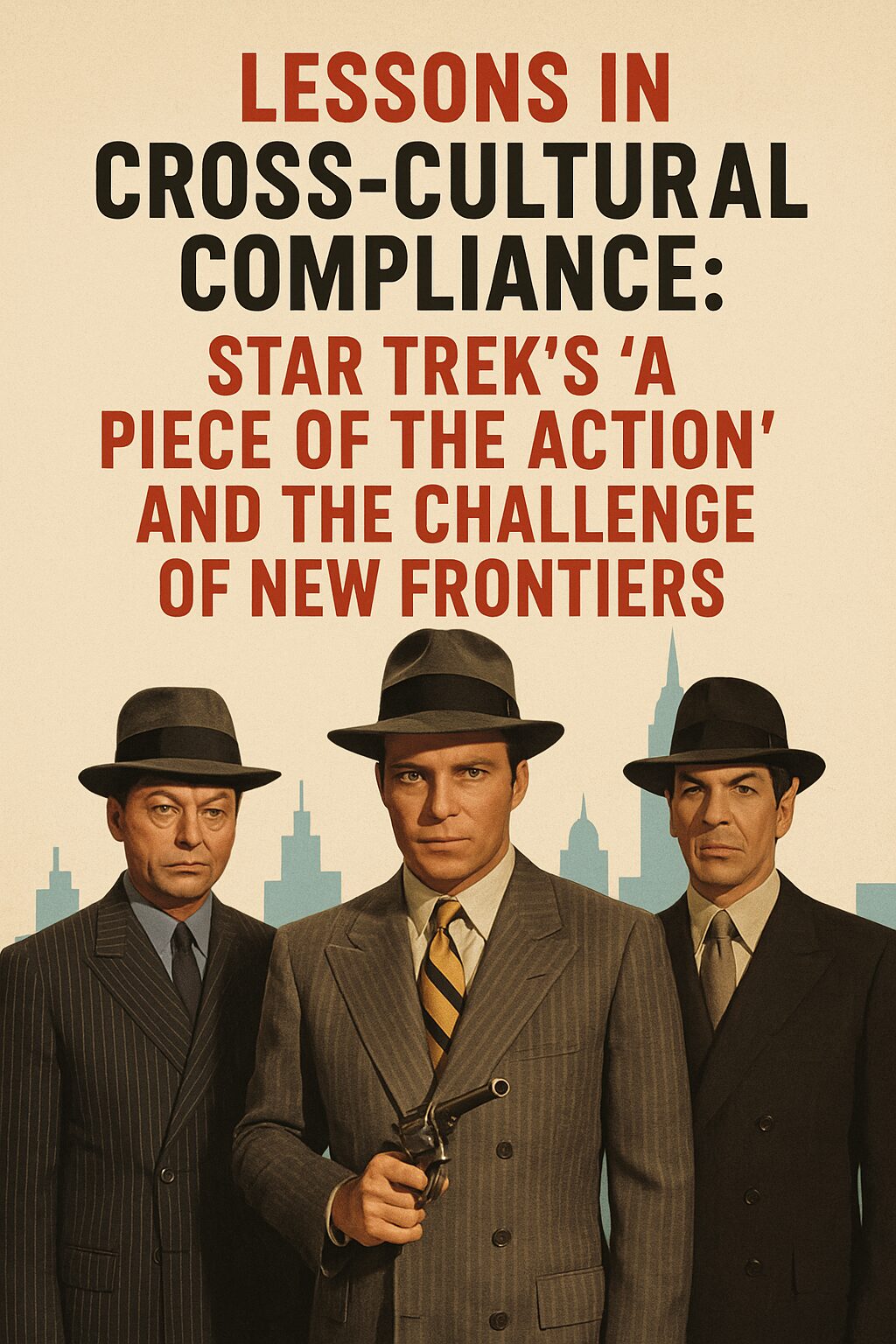
Lessons in Cross-Cultural Compliance: Star Trek’s “A Piece of the Action” and the Challenge of New Frontiers

Any compliance professional who has ever led a team into a new country, or even a new region, knows that the journey is never as simple as applying the same playbook. Corporate values may be universal, but their application, reception, and risk profile shift dramatically with local context. Cross-cultural compliance isn’t just about checking legal boxes; it’s about building trust, ensuring fairness, and embedding institutional justice in systems often shaped by histories and norms foreign to headquarters.

No pop culture episode illustrates this challenge better than Star Trek: The Original Series’ classic, “A Piece of the Action.” In this memorable hour, Captain Kirk and crew beam down to Sigma Iotia II, a planet whose entire society has been shaped by a 1920s Chicago gangster book accidentally left behind by an earlier Earth expedition. The result? A world where the “rules” are alien, an uneasy blend of familiar legality, foreign morality, and institutional chaos.

For the compliance professional, this episode serves as a mirror to our modern experience of entering new regulatory territories. It forces us to ask: How do you enforce ethical standards in a place where the “rules of the game” are so different? How do you model institutional justice when even the definitions of “fairness” and “justice” seem up for grabs?

Today, we boldly go where few compliance professionals have gone before: into the heart of cross-cultural lessons inspired by Kirk, Spock, and McCoy’s misadventures on the planet Vulcan.

Lesson 1: Don’t Assume Your Ethics Are Universal

Illustrated By: Kirk, Spock, and McCoy are bewildered as they realize the entire Iotian society is based on a book about Earth’s 1920s gangsters. What is “normal” here is extortion, double-crossing, and violence.

Compliance Lesson: The first mistake many organizations make is assuming their ethical and compliance frameworks are immediately translatable. On Sigma Iotia II, Kirk’s appeals to law, order, and morality fall flat. Here, the “institutional justice system” is a patchwork of mob bosses, each enforcing their version of fairness.

For Compliance Pros:

  • Start by listening and observing. Before launching training or rolling out policies, invest in local cultural assessments.
  • Engage local stakeholders. They can provide insights into what “justice” and “fairness” mean in practice.
  • Translate—not just language, but values. If your hotline program, reporting mechanisms, or disciplinary systems rely on local trust, learn what earns (or erodes) that trust.

Lesson 2: Institutional Justice Depends on Transparent Processes

Illustrated By: Kirk tries to “play the game,” cutting a deal with mob boss Bela Okmyx for the greater good, but quickly learns that without clear rules, every agreement is subject to double-cross and confusion.

Compliance Lesson: The absence of a transparent and impartial system leads to chaos. Each boss claims to enforce their version of “justice,” but it’s arbitrary and self-serving. For compliance professionals, this is a cautionary tale: if your processes aren’t transparent and predictable, your program risks devolving into selective enforcement or, worse, simply window dressing.

For Compliance Pros:

  • Ensure transparency in policies and procedures. Local teams should understand not only what is expected but also why and what will happen if expectations aren’t met.
  • Communicate the process for raising and resolving concerns. Is there an appeal? Who reviews the case? How are outcomes explained?
  • Build in fairness at every step. Avoid any appearance of “playing favorites” or tailoring decisions to the powerful.

Lesson 3: The Dangers of Imposed Systems and the Need for Adaptation

Illustrated By: Kirk realizes that simply imposing Federation law will not be effective. The Iotians are not ready for those systems, and the crew’s heavy-handed attempts nearly spark more violence and instability.

Compliance Lesson: When entering new markets, resist the temptation to impose home-country rules without considering the local context. This is not just ineffective. It can backfire, causing resentment or noncompliance.

For Compliance Pros:

  • Adapt, don’t transplant. Find ways to harmonize your code of conduct with local customs while upholding core values.
  • Use a risk-based approach. Focus first on the highest-risk behaviors that truly endanger your organization or people.
  • Empower local leaders. Give them ownership over adapting processes and communications so that they are effective and resonate with their audience.

Lesson 4: Speak the Local Language—Literally and Culturally

Illustrated By: Spock tries to explain Federation rules logically, but it’s Kirk’s willingness to “talk the talk,” even using gangster slang, that opens doors and earns a modicum of respect.

Compliance Lesson: Effective compliance communications must be locally relevant. This is more than translation; it’s cultural adaptation. What resonates in Houston might be meaningless (or counterproductive) in Hanoi.

For Compliance Pros:

  • Leverage local stories and examples. Bring policies to life through scenarios that employees recognize.
  • Use local champions. The right messenger can make or break your training or reporting program.
  • Culturally tailor your hotline and reporting mechanisms. In some cultures, direct reporting is perceived as a form of betrayal; consider finding culturally sensitive alternatives (e.g., mediation, ombuds channels).

Lesson 5: Leave a Positive Legacy—Don’t Repeat “Book Mistakes”

Illustrated By: In the final act, McCoy discovers he’s left his communicator behind, prompting a worried Kirk and Spock to realize the Iotians might reverse-engineer the technology and reshape their society once again.

Compliance Takeaway: Every compliance professional leaves a legacy. When you introduce policies, training, or reporting mechanisms, they will be interpreted and possibly misused by future leaders. Are you leaving behind tools for justice or weapons for the next “mob boss” to exploit?

For Compliance Pros:

  • Train for sustainability. Do not just deliver training; build local capacity for ongoing education and oversight.
  • Monitor unintended consequences. Regularly review your program’s impact on local dynamics.
  • Commit to continuous improvement. Don’t just “set it and forget it.” Be prepared to revisit, revise, and reinforce your approach as conditions change.

Final ComplianceLog Reflections

Cross-cultural compliance is ultimately about humility, adaptability, and respect for institutional justice as it’s lived and experienced on the ground. “A Piece of the Action” teaches us that leadership is not about enforcing rules by fiat, but about fostering a culture where fairness and justice are owned locally, embedded in hearts, not just in handbooks.

When we boldly enter new markets, we do so not as conquerors, but as collaborators. Listen, learn, adapt, and, above all, build compliance programs that leave a legacy of justice, fairness, and integrity. Only then will our actions, however small, become a positive piece of the action for years to come.

Resources:

Excruciatingly Detailed Plot Summary by Eric W. Weisstein

MissionLogPodcast.com

Memory Alpha

Categories
Trekking Through Compliance

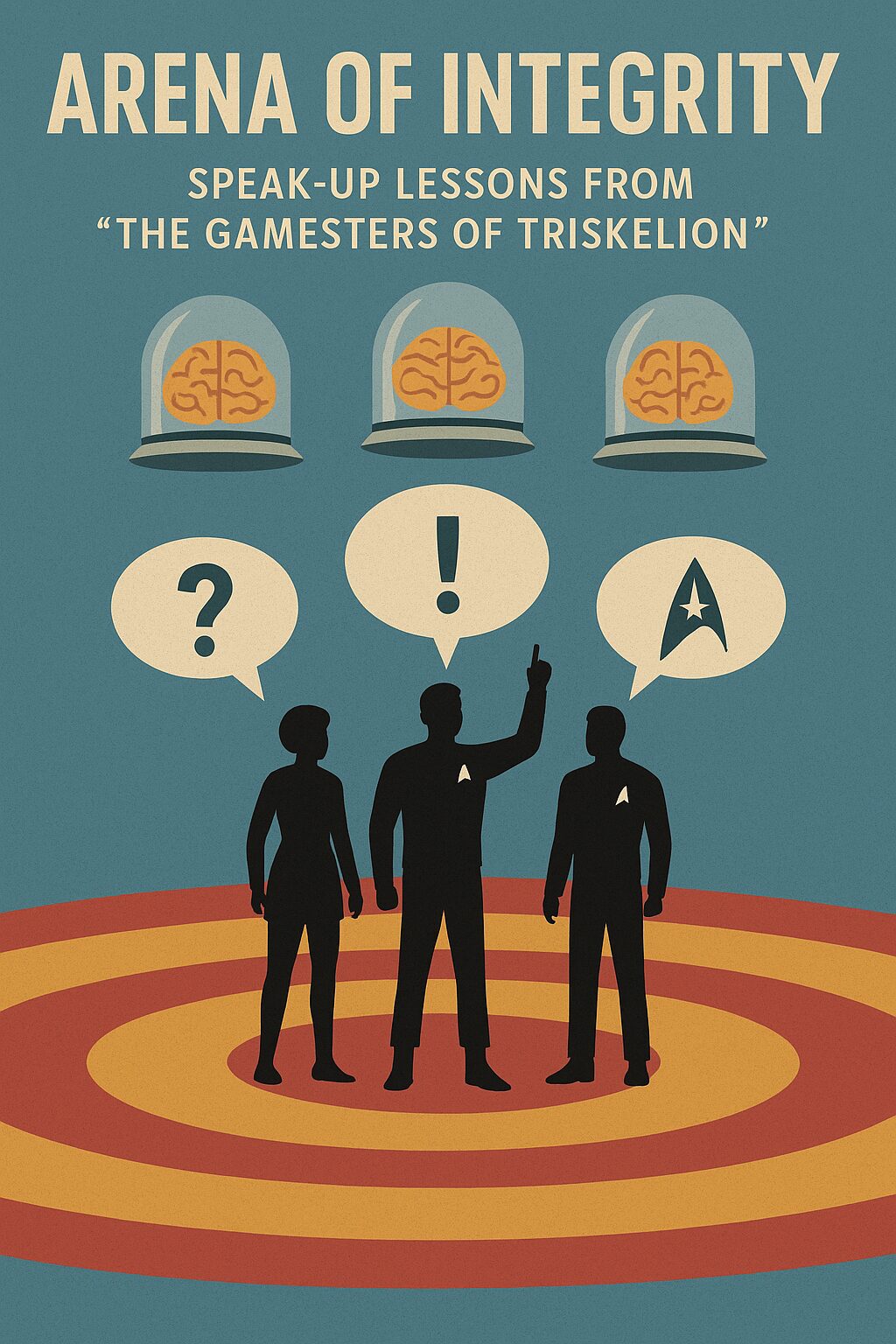
Trekking Through Compliance: Episode 45 – Beyond the Arena: Compliance Hotlines, Speak-Up Culture, and Lessons from “The Gamesters of Triskelion”

For compliance professionals, building a culture where employees feel empowered to speak up, whether as victims or as bystanders, is both an ethical imperative and a business necessity. Yet, fostering this environment goes far beyond simply installing a hotline or posting policies on the intranet. It requires trust, accessibility, and leadership that encourages all voices, especially those witnessing misconduct, not just those experiencing it firsthand.

No episode of Star Trek: The Original Series illustrates the importance of courage, communication, and the role of bystanders quite like “The Gamesters of Triskelion.” It is an allegory that resonates in the modern workplace, where power imbalances, fear, and bystander inaction can allow harassment and misconduct to flourish in the shadows.

But just as Kirk and his crew refuse to be mere pawns, so too must organizations encourage employees to break free from silence, whether as victims or witnesses, to foster a truly ethical and accountable culture.

Lesson 1: Accessibility and Trust—The Foundation of Any Hotline Program

Illustrated By: Kirk’s first attempts to communicate with the Providers, demanding answers and voicing his protest against the system.

Compliance Lesson: A hotline or internal reporting system is only as effective as its accessibility and the trust employees have in it.

Lesson 2: Bystander Empowerment—Everyone Has a Role in Speaking Up

Illustrated By: Uhura witnesses Chekov being attacked by another thrall and later supports Shahna when she faces abuse from the Providers.

Compliance Lesson: A true speak-up culture extends beyond encouraging direct victims to report. It actively enlists bystanders, colleagues, supervisors, and contractors who observe misconduct or questionable behavior.

Lesson 3: Remove Barriers to Reporting—Simplify and Normalize the Process

Illustrated By: Kirk negotiates with the Providers, insisting on open communication, transparency, and fair treatment for himself and the others.

Compliance Lesson: Internal reporting mechanisms should be straightforward and widely communicated. Complicated processes or unclear outcomes deter people from coming forward.

Lesson 4: Leadership Sets the Tone—Champion Speak-Up Behavior at the Top

Illustrated By: Kirk rallies Uhura, Chekov, and Shahna, modeling courage and vocal opposition even under surveillance.

Compliance Lesson: Tone at the top matters. Leaders who demonstrate, support, and reward speaking up create an environment where others feel safe to do the same.

Lesson 5: Close the Loop—Respond, Resolve, and Communicate Outcomes

Illustrated By: After Kirk’s defiance and challenge, the Providers agree to his terms, ultimately restoring freedom and dignity to the captives.

Compliance Lesson: Effective reporting systems require not only intake but meaningful response. Employees must see that their concerns are taken seriously and addressed appropriately.

Final ComplianceLog Reflections

The Gamesters of Triskelion” demonstrates that courage, solidarity, and a voice can challenge even the most entrenched power structures. For compliance professionals, the episode serves as a poignant reminder that hotlines and policies are only the starting point. The real work is building an environment where every employee, victim, or bystander knows they have the right, the tools, and the support to speak up, and that their concerns will be heard and acted upon.

Live long, prosper, and always encourage your crew to speak up.

Resources:

Excruciatingly Detailed Plot Summary by Eric W. Weisstein

MissionLogPodcast.com

Memory Alpha

Categories
Blog

Beyond the Arena: Compliance Hotlines, Speak-Up Culture, and Lessons from Star Trek’s “The Gamesters of Triskelion”

For compliance professionals, building a culture where employees feel empowered to speak up, whether as victims or as bystanders, is both an ethical imperative and a business necessity. Yet, fostering this environment goes far beyond simply installing a hotline or posting policies on the intranet. It requires trust, accessibility, and leadership that encourages all voices, especially those witnessing misconduct, not just those experiencing it firsthand.

No episode of Star Trek: The Original Series illustrates the importance of courage, communication, and the role of bystanders quite like “The Gamesters of Triskelion.” In this memorable installment, Captain Kirk, Lieutenant Uhura, and Chekov are kidnapped and forced to fight as gladiators for the amusement of alien “Providers.” While the spectacle is one of brute force, the true victory comes not from physical strength but from challenging the system, refusing to remain silent, and advocating for oneself and others.

Today, we beam down and explore the key compliance lessons, literally scene by scene, from this classic episode, and see how it can help us reimagine our approach to hotlines, internal reporting, and speak-up culture in today’s organizations.

The Gamesters of Triskelion” places our heroes in an alien arena, stripped of their autonomy and pitted against each other. Their every move is watched, wagered upon, and manipulated by unseen masters. It’s an allegory that resonates in the modern workplace, where power imbalances, fear, and bystander inaction can allow harassment and misconduct to flourish in the shadows.

But just as Kirk and his crew refuse to be mere pawns, so too must organizations encourage employees to break free from silence, whether as victims or witnesses, to foster a truly ethical and accountable culture.

Lesson 1: Accessibility and Trust—The Foundation of Any Hotline Program

Illustrated By: Kirk’s first attempts to communicate with the Providers, demanding answers and voicing his protest against the system. When Captain Kirk is abducted, his first instinct is to seek information, challenge authority, and demand a platform for his concerns. But the providers initially deny him any means to voice his objections. Reflecting a system where grievances are suppressed and channels for reporting are inaccessible.

Compliance Lesson: A hotline or internal reporting system is only as effective as its accessibility and the trust employees have in it. Too often, organizations install a hotline as a check-the-box exercise, but if employees don’t trust the process or fear retaliation, it becomes as useless as shouting into the void. Build trust by ensuring anonymity, robust anti-retaliation protections, and transparent processes for follow-up. Empower all employees, not just those harmed directly but also those who witness wrongdoing, to report concerns with confidence.

Lesson 2: Bystander Empowerment—Everyone Has a Role in Speaking Up

Illustrated By: Uhura witnesses Chekov being attacked by another thrall and later supports Shahna when she faces abuse from the Providers. Uhura’s actions exemplify the power of the bystander. Though she is a victim of abduction, she does not remain passive when she witnesses Chekov in danger or Shahna being mistreated. She steps forward, speaks up, and supports those around her, even putting herself at risk.

Compliance Lesson: An authentic speak-up culture extends beyond encouraging direct victims to report. It actively enlists bystanders, colleagues, supervisors, and contractors who observe misconduct or questionable behavior. Compliance professionals should provide training on bystander intervention, communicate that speaking up is a shared responsibility, and recognize those who do. This not only prevents harm but also signals to all employees that silence is not neutrality; it is complicity.

Lesson 3: Remove Barriers to Reporting—Simplify and Normalize the Process

Illustrated By: Kirk negotiates with the providers, insisting on open communication, transparency, and fair treatment for himself and the others. Throughout the episode, Kirk persistently challenges the opaque rules of the Triskelion arena. He demands not just a voice, but a fair and understandable process—something the providers grudgingly grant after repeated confrontation.

Compliance Lesson: Internal reporting mechanisms should be straightforward and widely communicated. Complicated processes or unclear outcomes deter people from coming forward. Normalize reporting by making it a routine, non-threatening part of workplace culture, much like regular safety drills or team meetings. Remind employees frequently, in plain language, of how and why to report concerns, and ensure that doing so is free from bureaucratic or emotional hurdles.

Lesson 4: Leadership Sets the Tone—Champion Speak-Up Behavior at the Top

Illustrated By: Kirk rallies Uhura, Chekov, and Shahna, modeling courage and vocal opposition even under surveillance. Kirk’s leadership in the arena is marked by his refusal to comply quietly with unjust commands. He models courage and vocal opposition, inspiring those around him, especially Shahna, a bystander-turned-ally, to question the status quo and ultimately join his cause.

Compliance Lesson: Tone at the top matters. Leaders who demonstrate, support, and reward speaking up create an environment where others feel safe to do the same. Encourage managers and executives to share stories of when they reported concerns or acted as ethical bystanders. Celebrate transparency and moral courage, not just technical compliance. When leaders set the example, the entire organization takes notice.

Lesson 5: Close the Loop—Respond, Resolve, and Communicate Outcomes

Illustrated By: After Kirk’s defiance and challenge, the Providers agree to his terms, ultimately restoring freedom and dignity to the captives. The climax of the episode comes when the Providers, confronted with Kirk’s unwavering demands and the support of his crew, capitulate. They not only allow complaints to be aired, but they also listen, act, and restore justice.

Compliance Lesson: Effective reporting systems require not only intake but meaningful response. Employees must see that their concerns are taken seriously and addressed appropriately. This includes timely investigation, resolution, and, where possible, communication back to the reporter (even if only in general terms). When employees see real action and outcomes, trust grows and participation in the system increases. Closing the loop is essential to sustaining a robust speak-up culture.

Final ComplianceLog Reflections

The Gamesters of Triskelion” demonstrates that courage, solidarity, and a voice can challenge even the most entrenched power structures. For compliance professionals, the episode serves as a poignant reminder that hotlines and policies are only the starting point. The real work is building an environment where every employee, victim, or bystander knows they have the right, the tools, and the support to speak up, and that their concerns will be heard and acted upon.

As you assess your organization’s internal reporting and speak-up culture, ask yourself:

  • Are your hotlines and reporting channels truly accessible and trusted?
  • Have you equipped and empowered bystanders, not just victims, to act?
  • Are you constantly removing barriers to speaking up and normalizing the process?
  • Does your leadership model champion the values you expect from everyone?
  • Do you always close the loop by providing feedback and taking visible action?

True compliance is not measured by silence, but by the willingness of all to speak, intervene, and challenge injustice. Like Kirk and his crew, our mission is not just to survive the arena but to change it for the better.

Live long, prosper, and always encourage your crew to speak up.

Resources

Excruciatingly Detailed Plot Summary by Eric W. Weisstein

MissionLogPodcast.com

Memory Alpha

Categories
Blog

Operationalizing AI for Compliance: Turning Potential into Practice

If you have spent any time around corporate compliance in the past several months, you have undoubtedly heard a great deal about artificial intelligence (AI). It is promised as a game changer, touted as the next big thing, and often presented with buzzwords that sound more like science fiction than practical business tools. Indeed, I wrote a book about its promise, Upping Your Game. However, compliance professionals consistently face one crucial question: How can we operationalize AI effectively within our compliance functions?

I used this title, as I have long advocated Operationalizing Compliance. Indeed, in 2016, I published a book with just that title. Therefore, in today’s blog, we will explore precisely that: how compliance leaders can strategically integrate AI solutions into existing compliance frameworks, drive effectiveness, and transform potential into sustainable value.

Understanding AI’s Value Proposition for Compliance

Operationalizing AI begins with recognizing why AI matters in the context of compliance. Fundamentally, compliance is about managing risk through monitoring, detection, investigation, and remediation. AI excels in these core compliance activities due to its ability to process massive volumes of data rapidly, identify patterns that humans may miss, and provide predictive insights.

AI, in short, enhances your compliance team’s ability to stay ahead of risk, transforming reactive processes into proactive strategies. Consider the traditional compliance approach to monitoring. Usually reliant on sampling and periodic audits, it can leave gaps for misconduct to slip through. AI-driven continuous monitoring solutions eliminate these gaps, spotting anomalies in real-time and flagging them immediately for action.

Yet, for all its promise, AI is not a “plug and play” solution. To operationalize AI, compliance teams must approach it methodically, intentionally, and with transparent governance in place.

Step 1: Define Your Objectives Clearly

The first step in operationalizing AI for compliance is clarity of purpose. Compliance leaders must define the specific outcomes they hope to achieve through AI. Ask yourself, “What problem are we trying to solve, and why is AI a suitable solution?”

Objectives may include:

  • Real-time detection of suspicious financial transactions.
  • Automated due diligence on third-party vendors.
  • Predictive analytics to flag high-risk regions or business units.
  • Enhanced hotline management through AI-powered triage.

Articulated objectives become the roadmap guiding your AI initiative, helping you select appropriate tools and measure success effectively.

Step 2: Data Readiness and Integration

Next, compliance professionals must tackle a critical operational requirement: data readiness. AI thrives on data; thus, operationalizing AI depends on ensuring your data is accessible, reliable, secure, and comprehensive.

Data silos present a significant challenge. Compliance functions often manage fragmented data from HR systems, financial databases, third-party diligence platforms, and internal reporting channels. Integrating these data streams into a unified compliance data lake or repository is a foundational step.

A successful integration strategy includes:

  • Conducting a data inventory and assessing data quality.
  • Standardizing data formats across various systems.
  • Implementing robust data governance practices ensures the accuracy and integrity of data.

Addressing these integration challenges upfront ensures your AI compliance solutions have high-quality fuel to drive accurate and valuable insights.

Step 3: Choose the Right AI Technology Partners and Tools

There’s no shortage of AI vendors promising solutions tailored for compliance needs. But choosing the right partner requires thorough due diligence, evaluating both technological capability and ethical alignment.

Compliance leaders should look for partners with:

  • Demonstrable experience in corporate compliance and regulatory environments.
  • Transparent and auditable AI algorithms to ensure explainability.
  • Robust data privacy and cybersecurity frameworks.
  • Scalable solutions that evolve with regulatory demands and business needs.

Furthermore, compliance professionals should carefully pilot and test AI solutions before implementing them on a full scale. Start small by piloting the solution within a specific compliance area, such as third-party due diligence or fraud detection, and expand gradually based on proven outcomes and clear metrics.

Step 4: Build AI Ethics into Your Compliance Framework

Operationalizing AI comes with significant ethical implications, particularly regarding bias, transparency, and accountability. Compliance officers play a pivotal role in ensuring that AI systems align with a company’s values, ethics, and regulatory expectations.

An ethical AI framework includes:

  • Regular algorithmic auditing to detect and mitigate bias.
  • Transparent processes that allow for the explainability of AI-driven decisions.
  • Mechanisms to oversee and correct AI systems continuously.

AI ethics isn’t an add-on; rather, it is integral to operationalizing AI responsibly. Compliance teams should be at the forefront of this conversation, partnering with data scientists and technology leaders to integrate ethical oversight into AI deployment from the outset.

Step 5: Training, Culture, and Change Management

Operationalizing AI also means preparing your team and organization to adapt to new ways of working. AI is not a replacement for compliance professionals; it’s a tool to augment their expertise. However, integrating AI successfully demands a culture receptive to technology-driven change.

Compliance leaders must focus on:

  • Continuous AI literacy training to ensure that compliance teams understand how to interact effectively with AI tools.
  • Establishing clear communication channels explaining AI’s role, scope, and limitations.
  • Encouraging a culture of curiosity and innovation within compliance teams, reinforcing that AI enables them to perform their roles more effectively, not replace them.

Managing organizational change proactively reduces resistance, fosters engagement, and ensures your compliance team leverages AI’s full potential.

Step 6: Establish Metrics and Measure Impact

Operationalizing AI requires rigorous performance monitoring. Compliance professionals must establish clear benchmarks and metrics to assess the effectiveness of AI continually. Typical metrics could include:

  • Reduction in false positives during transaction monitoring.
  • Improvements in detection accuracy and timeliness.
  • Reduction in compliance breaches and associated remediation costs.
  • Increased efficiency in compliance investigation processes.

These metrics provide tangible evidence of AI’s impact, allowing compliance leaders to make data-driven decisions about expanding or adjusting their AI initiatives.

Step 7: Continuous Improvement and Adaptation

Finally, operationalizing AI is not a one-time event but an ongoing cycle of continuous improvement. AI models and technologies evolve rapidly, as do regulatory environments and compliance risks. Regularly revisiting your AI strategy ensures continued alignment with organizational needs and compliance objectives.

Embrace a feedback loop approach:

  • Regularly solicit feedback from users about the AI tool’s effectiveness.
  • Stay informed about regulatory changes that may impact AI compliance practices.
  • Update algorithms and recalibrate models to maintain accuracy and relevance.

A compliance function committed to continuous learning, adaptation, and iteration is best positioned to reap long-term benefits from AI.

Turning AI from Concept to Compliance Reality (Operationalizing AI)

Operationalizing AI for compliance is not merely about adopting cutting-edge technology; it is about strategic integration, ethical oversight, proactive training, and continuous improvement. When compliance leaders approach AI thoughtfully, methodically, and responsibly, the result is transformative, turning AI’s promise into a practical reality that enhances compliance effectiveness, risk mitigation, and organizational integrity.

As compliance professionals, we stand at an exciting crossroads. AI has moved beyond theoretical potential; it is a tangible, operational reality. By clearly defining objectives, managing data effectively, choosing the right partners, embedding ethics, preparing our teams, and committing to continuous improvement, compliance can lead the way in responsibly harnessing AI’s power.

The AI revolution in compliance is here. The question is not whether compliance teams can operationalize AI but how effectively and ethically they can do so. The answer lies in the strategic, thoughtful, and deliberate steps we take today.

Categories
Blog

Chasing Shadows: Five Compliance Lessons from the Hound of the Baskervilles

The Hound of the Baskervilles,” penned by Sir Arthur Conan Doyle, is not only the most famous Sherlock Holmes story and a riveting detective tale but also presents timeless lessons in compliance applicable to corporate governance and risk management. Through its intricate plot and detailed character portrayals, the novel underscores several critical principles that every compliance professional should heed.

The story itself blends mystery, suspense, and supernatural elements. Sherlock Holmes and Dr. Watson investigate Sir Charles Baskerville’s mysterious death on the eerie Devonshire moors, connected to a legendary demonic hound curse. Holmes sends Watson with his heir, Sir Henry Baskerville, to the estate, where suspicious servants, an escaped convict, and peculiar neighbors—the Stapletons—heighten tensions. Watson’s observations reveal Jack Stapleton’s instability and jealousy over Sir Henry’s attention to Beryl Stapleton. Secretly investigating, Holmes identifies Stapleton as a Baskerville relative plotting Sir Henry’s death to claim the inheritance. Stapleton’s deception includes staging supernatural events to exploit local superstition. In the climax, Stapleton releases a phosphorus-painted hound to kill Sir Henry, but Holmes and Watson intervene, killing the beast. Stapleton flees, presumed dead in the Grimpen Mire. Holmes’s rational deductions triumph, dismissing supernatural fears and reinforcing logic and reason. Watson’s meticulous work is instrumental, showcasing his courage and skill. The novel concludes by affirming reason over superstition, demonstrating the dangers of irrational fear.

Here are five key compliance lessons derived from specific events within this classic tale.

Lesson 1: Avoiding Complacency in Risk Assessment

The initial approach to the mystery of Sir Charles Baskerville’s death illustrates a critical lesson in risk assessment: the importance of maintaining vigilance. Dr. Mortimer initially attributes the death to supernatural causes, influenced by local legends of a family curse. Sherlock Holmes immediately challenges this complacency, emphasizing the need for rational investigation over reliance on myths or unexamined assumptions. Holmes insists on examining evidence logically rather than accepting straightforward, sensational explanations.

Compliance professionals must similarly avoid complacency. It is easy for an organization to rely on historical assumptions or superficial risk assessments. However, genuine vigilance requires continuous questioning and reevaluation of all potential threats. By regularly revisiting risk assessments and remaining skeptical of conventional wisdom, compliance teams can better anticipate, mitigate, and respond to potential compliance failures before they escalate into significant issues.

Lesson 2: Effective Use of Data and Evidence

Throughout “The Hound of the Baskervilles,” Holmes’s meticulous use of evidence exemplifies the necessity of thorough documentation and analysis in achieving effective compliance outcomes. One key example is Holmes’s careful examination of Sir Henry Baskerville’s stolen boots. Holmes correctly deduces that the shoes were stolen to provide the hound with Sir Henry’s scent. This attention to minute detail and systematic analysis underscores the importance of robust documentation and record-keeping.

Compliance professionals should similarly prioritize precise data collection, rigorous documentation, and evidence-based decision-making. Proper documentation provides transparency, facilitates effective audits, and ensures clarity when addressing compliance issues or regulatory inquiries. By fostering a culture where data-driven decision-making is standard practice, organizations can strengthen their compliance programs and more effectively prevent violations.

Lesson 3: Maintaining Independence and Objectivity

A pivotal moment in the novel occurs when Holmes secretly arrives on the moor, independent of Watson’s investigation. Holmes understands the importance of maintaining independence to gather unbiased information. By conducting a parallel investigation that is free from local biases and personal relationships, Holmes preserves objectivity and ultimately identifies the true culprit, Jack Stapleton.

For compliance professionals, maintaining independence and objectivity is equally vital. Conflicts of interest can obscure judgment and compromise investigations. Compliance officers must be empowered to act independently, free from undue influence, to ensure the integrity of their findings and recommendations. Establishing clear reporting structures and supporting unbiased investigative procedures can significantly enhance an organization’s overall compliance effectiveness.

Lesson 4: Transparent Communication and Reporting

Transparency is repeatedly highlighted as essential throughout Conan Doyle’s narrative. Watson’s regular and detailed correspondence with Holmes exemplifies clear, transparent reporting. Watson meticulously records his observations, suspicions, and interactions, ensuring Holmes remains informed of developments in real time. This ongoing communication proves instrumental in Holmes’s eventual successful intervention.

In the realm of corporate compliance, transparent communication and reporting are equally critical. Employees must feel encouraged and supported in reporting suspicious activities or compliance concerns without fear of retaliation or retribution. Implementing precise and accessible reporting mechanisms, while ensuring open lines of communication, fosters a culture that is compliant-friendly. This transparency enables compliance teams to detect and address issues promptly, thereby reducing organizational exposure to risk and promoting an ethical business environment.

Lesson 5: Importance of Culture and Ethics

The actions and eventual downfall of Jack Stapleton underscore a profound lesson in compliance regarding organizational culture and ethics. Stapleton manipulates local fears and exploits the legend of the supernatural hound to facilitate his criminal plans. His unethical behavior, driven by greed and a disregard for human life, ultimately led to his ruin.

Organizations must prioritize building and maintaining a strong ethical culture. Leadership should exemplify ethical behavior, clearly communicate expectations, and swiftly address unethical actions. Regular training and communication regarding ethical standards reinforce an organization’s values and expectations. By cultivating a robust ethical culture, organizations not only reduce the likelihood of compliance violations but also enhance their reputation and long-term sustainability.

The Hound of the Baskervilles” offers rich insights for compliance professionals. Avoiding complacency, emphasizing evidence-based decision-making, maintaining independence, ensuring transparent communication, and fostering a robust ethical culture are foundational principles that are vividly highlighted throughout Conan Doyle’s timeless narrative. These lessons, illustrated through specific events and character decisions within the story, remain deeply relevant in guiding modern corporate compliance practices.

Categories
Trekking Through Compliance

Trekking Through Compliance: Episode 44 – Furry Lessons: The Case for Humor in Compliance Training, from The Trouble with Tribbles

If you ask any Star Trek fan to name a classic episode that brings a smile to their face, you’re likely to hear a chorus of “The Trouble with Tribbles! ” The episode, famous for its furry creatures and lighthearted spirit, stands out not just as a fan favorite but as a masterclass in the effective use of humor to deliver meaningful lessons, something all compliance professionals can learn from when it comes to training and engagement.

Why does this matter for compliance? Too often, compliance training is seen as dry, mandatory, and, for even the most well-intentioned teams, something to be “gotten through” rather than truly absorbed. Here are five key training lessons, each tied to a classic scene, that show why humor belongs in your compliance toolbox.

Lesson 1: Humor Lowers Defenses—Use It to Open the Door to Learning

Illustrated By: The first appearance of Tribbles in the Enterprise rec room, as Lieutenant Uhura and crew are charmed by the adorable creatures, leading to laughter and playful banter. Humor, at its core, is a universal icebreaker. In this scene, the crew’s initial reaction to the Tribbles—coos, smiles, and gentle teasing—sets the tone for a more relaxed and open environment. No one is bracing for a lecture; they’re engaged, curious, and, most importantly, willing to participate.

Compliance Lesson: Start your training with humor, an anecdote, a funny compliance video, or a self-deprecating story about compliance “gone wrong.” This isn’t about making light of serious subjects but about lowering barriers and inviting employees to engage. When people laugh, they are not defensive; they are receptive. Set the tone early, and the message will go farther.

Lesson 2: Humor Makes the Message Memorable—Embed It in Your Key Points

Illustrated By: Kirk’s deadpan reaction as he opens a storage compartment, only to be buried under an avalanche of Tribbles. Few moments in compliance (or television history) are as iconic as Captain Kirk being engulfed by a cascade of Tribbles. Why does this stick in our collective memory? Because it’s funny, unexpected, and visually memorable.

Compliance Lesson: Tie humor directly to your key training points. Whether it’s a short skit, a humorous meme, or a role-play gone slightly sideways, link your core compliance lesson to a moment of levity. Employees are more likely to remember “that time the manager dressed up as a ‘compliance villain’” than another slide about policy violations. Humor etches learning into memory.

Lesson 3: Humor Builds Camaraderie—Make Compliance a Team Effort

Illustrated By: The barroom brawl between the Enterprise crew and Klingons, sparked by good-natured ribbing and escalating into comic chaos. This classic scene is not just slapstick; rather, it is a reminder that shared laughter unites a team. The brawl, though farcical, reveals camaraderie and loyalty among the crew.

Compliance Lesson: Use humor to create shared experiences during training; try team quizzes, compliance-themed games, or humorous competitions. When employees laugh together, they build bonds, and those bonds foster a culture where compliance is everyone’s responsibility. Humor turns compliance from an individual burden into a collective mission.

Lesson 4: Humor Allows for Safe Failure—Encourage Experimentation and Questions

Illustrated By: Scotty sheepishly admitting to Captain Kirk that he started the fight with the Klingons, not to defend the Captain’s honor, but the Enterprise’s. When Kirk questions his crew after the barroom incident, Scotty’s honest (and hilarious) confession, delivered with perfect comic timing, creates a safe space for truth. The crew knows they can speak candidly, even about mistakes.

Compliance Lesson: Use humor to create an environment where mistakes are learning opportunities, not sources of shame. Incorporate funny compliance “fails” into your sessions and invite employees to share their own stories, anonymously or otherwise. When the cost of failure is laughter (not punishment), people are more willing to ask questions, admit confusion, and truly learn.

Lesson 5: Humor Reveals Hidden Risks—Spotting Problems Before They Multiply

Illustrated By: Dr. McCoy’s revelation that Tribbles are born pregnant, and their exponential population growth threatens the Enterprise’s operations. The Tribbles’ explosive reproduction is played for laughs, but it serves as a brilliant metaphor for how small issues, if left unchecked, can spiral into major crises. The crew’s laughter quickly gives way to action as the true scope of the problem emerges.

Compliance Lesson: Inject humor into hypothetical scenarios that illustrate how minor compliance lapses can escalate—think of the “snowball effect” as the “Tribble effect.” By making risk tangible (and a little bit funny), you highlight the importance of vigilance and early intervention. Employees will be more likely to remember the “Tribbles in the grain” than an abstract risk chart.

Final ComplianceLog Reflections

Too often, compliance training is a solemn, check-the-box affair. But “The Trouble with Tribbles” reminds us that humor is not the enemy of seriousness; it is an ally. Humor can make difficult topics more approachable, encourage open conversation, and ultimately drive better learning outcomes.

Captain Kirk didn’t solve the Tribble crisis with a stern lecture; he solved it by staying nimble, engaging his crew, and responding with creativity—qualities every compliance professional should embrace. When training is infused with laughter, employees lean in. When they lean in, they learn.

So, the next time you design a compliance training session, ask yourself: Where can I find the “Tribbles”? Where can I use humor to open minds, break down silos, and make the message stick? You’ll find that laughter, much like Tribbles, spreads quickly, multiplies engagement, and leaves your organization stronger (and perhaps a little furrier) than before.

Resources:

Excruciatingly Detailed Plot Summary by Eric W. Weisstein

MissionLogPodcast.com

Memory Alpha

Categories
Innovation in Compliance

Innovation in Compliance – Allison Lagosh on Proactive Compliance Planning for Regulatory Changes

Innovation is present in many areas, and compliance professionals must not only be prepared for it but also actively embrace it. Join Tom Fox, the Voice of Compliance, as he visits with top innovative minds, thinkers, and creators in the award-winning Innovation in Compliance podcast. In this episode, host Tom Fox visits with Allison Lagosh, Head of Compliance at Saifr.ai, to discuss the current and future landscape of regulatory compliance.

With over two decades of experience in asset management, compliance, and regulatory affairs, Lagosh anticipates a pivotal shift towards AI and cryptocurrency regulations. She predicts a lighter enforcement landscape but stresses the importance of a conservative, informed approach to compliance, encouraging firms to future-proof their programs by staying abreast of regulatory changes and engaging in cross-team collaboration. Her insights, shared on platforms like the “Innovation in Compliance” podcast, highlight the necessity of strong leadership support and continuous learning to effectively navigate the dynamic regulatory environment, particularly in the realm of emerging technologies.

Key highlights:

  • Regulatory Futurism: AI and Crypto Compliance
  • “Colorado’s Groundbreaking AI Safety Legislation”
  • Proactive Compliance Planning for Regulatory Changes
  • Navigating Compliance Uncertainties with AI Integration
  • Regulatory Insights on Safer.AI Website

Resources:

Allison Lagosh on LinkedIn

Saifr.ai

Tom Fox

Instagram

Facebook

YouTube

Twitter

LinkedIn

Check out my latest book, Upping Your Game—How Compliance and Risk Management Move to 2023 and Beyond, available from Amazon.com.

Innovation in Compliance was recently honored as the number 4 podcast in Risk Management by 1,000,000 Podcasts.

Categories
Adventures in Compliance

Adventures in Compliance: The Novels – The Hound of the Baskervilles: Uncovering Compliance – Lessons from The Hound of the Baskervilles

In this new season of Adventures in Compliance, host Tom Fox takes a deep dive into the Sherlock Holmes novels. Over this season Tom will take a deep dive into each novel over a four part series. The four novels we will consider from the ethics and compliance perspective are A Study in Scarlet, The Sign of Four, The Hound of the Baskervilles and The Valley of Fear. For the month of July we are considering lessons from The Hound of the Baskervilles.

Fiona and Timothy are back to extract five key compliance lessons from the story, including combating complacency, effective data use, maintaining objectivity, transparent communication, and ethical culture. These principles, drawn from a Victorian mystery, prove profoundly relevant for modern corporate compliance.

Highlights include:

  • Overview of Compliance Lessons from Sherlock Holmes
  • Lesson 1: Avoiding Complacency
  • Lesson 2: Power of Effective Data and Evidence
  • Lesson 3: Independence and Objectivity
  • Lesson 4: Transparent Communication and Reporting
  • Lesson 5: Importance of Culture and Ethics

Resources:

The New Annotated Sherlock Holmes

Sherlock Holmes FAQ by Dave Thompson

Sherlock Holmes, The Novels, with an introduction by Michael Dirda

Connect with Tom Fox

Instagram

Facebook

YouTube

Twitter

LinkedIn

Categories
Trekking Through Compliance

Trekking Through Compliance: Episode 43 – In the Shadow of Doubt: Lessons from Star Trek’s “Wolf in the Fold”

Every compliance professional, sooner or later, must confront the uncomfortable truth that sometimes the system gets it wrong. Whether due to circumstantial evidence, unconscious bias, or institutional inertia, there are moments when the innocent stand accused and the integrity of the investigative process itself is on trial. Star Trek: The Original Series’ “Wolf in the Fold” is a cautionary tale about just such a scenario, offering invaluable insights for anyone who cares about justice, fairness, and the reputation of their organization. Today, we explore the investigative and fairness lessons compliance professionals can glean from this classic Star Trek whodunit.

Lesson 1: Presume Innocence—Don’t Rush to Judgment

Illustrated By: After the first murder, all evidence seems to point to Scotty. He’s found with the victim, holding a knife, but claims to have no memory of the incident. The local authorities and some Enterprise personnel are quick to suspect him due to the seemingly damning circumstances.

Compliance Lesson: A foundational principle of any fair investigative process is the presumption of innocence. It’s easy to rush to judgment when circumstantial evidence piles up, especially under pressure from leadership or regulators. But professionalism and institutional integrity require that we suspend bias and keep our minds open until the facts are thoroughly explored.

Bake the presumption of innocence into your investigative policies and training. Remind every team member and stakeholder that even the most “obvious” cases demand impartial investigation. Document early assumptions and check for bias throughout the inquiry.

Lesson 2: Avoid Tunnel Vision—Expand the Investigative Lens

Illustrated By: As more murders occur and Scotty continues to be in the wrong place at the wrong time, suspicion remains fixed on him. However, Spock and Kirk resist the urge to focus solely on their friend. They consider alternate explanations, explore technical anomalies, and even question the possibility of non-human involvement.

Compliance Lesson: Tunnel vision is a persistent risk in any investigation, especially when a plausible suspect fits the facts. True institutional fairness demands that compliance professionals look beyond the immediate and obvious, systematically considering alternative scenarios and other suspects.

Develop “red team” protocols or assign a “devil’s advocate” role in major investigations to challenge prevailing theories deliberately. Require documentation of all hypotheses considered and make alternate scenario analysis part of your standard investigative checklist.

Lesson 3: Leverage Expertise and Technology—But Don’t Abdicate Human Judgment

Illustrated By: Kirk and Spock seek help from Sybo, the Argelian empath, and use the Enterprise computer to analyze the evidence, eventually exposing the supernatural entity Redjac as the true culprit. However, they do not blindly trust the results. Kirk and Spock synthesize the technological findings with their reasoning, refusing to let the investigation be dictated by technology alone.

Compliance Lesson: While data analytics, forensics, and investigative technology are powerful tools, they are not infallible. Technology should augment, not replace, the judgment of experienced investigators. Relying solely on computer output or external expertise without human analysis can lead to catastrophic mistakes, especially in nuanced, high-stakes cases.

Balance the use of forensic technology with critical thinking and seasoned judgment. Always validate technological findings with multiple sources, and require human review before making conclusions. Foster a culture where “computer says so” is never an excuse for poor process.

Lesson 4: Champion Institutional Justice—Even When It’s Uncomfortable

Illustrated By: The Argelian prefect, Jaris, is pressured to resolve the case swiftly due to local customs and a desire to preserve order. Kirk, however, insists that the process be fair and thorough, even at the risk of offending local sensibilities or extending the investigation. He appeals to both Argelian law and Federation principles, ensuring that institutional justice, not expediency, prevails.

Compliance Lesson: Institutional justice means doing what’s right, not just what’s easy or convenient. The pressure to resolve allegations quickly to satisfy regulators, shareholders, or media can be immense. But caving to expediency undermines fairness, risks wrongful discipline, and erodes long-term trust in the compliance function.

Institute explicit policies prioritizing fairness over speed in investigations. Communicate to leadership that thoroughness is a core compliance value. Protect investigators from undue pressure to deliver quick “results” at the expense of real justice.

Lesson 5: Transparent Communication Restores Trust

Illustrated By:

When Redjac is finally exposed and Scotty’s innocence is proven, Kirk doesn’t just close the case and move on. He explains the whole sequence of events to both the Argelian authorities and his crew, restoring Scotty’s reputation and demonstrating that the investigative process, however difficult, was ultimately fair and transparent.

Compliance Lesson: When someone is wrongfully accused, it isn’t enough to quietly correct the record. Institutional fairness requires public restoration and clear communication about what happened, how the mistake was identified, and what steps will be taken to prevent recurrence. Transparency is about accountability, but it’s also about healing wounds and rebuilding organizational trust.

Develop protocols for communicating exonerations and corrective actions to all relevant stakeholders. Where privacy allows, share lessons learned broadly, emphasizing the organization’s commitment to justice and fairness. Make it clear that the compliance function values both truth and reputation.

Final ComplianceLog Reflections

“Wolf in the Fold” reminds us that even the most rigorous institutions are vulnerable to error, especially under stress, bias, or pressure. For compliance professionals, the episode is a touchstone for the values that must guide every investigation: presumption of innocence, investigative rigor, openness to alternative theories, balanced use of technology, commitment to institutional justice, and, above all, transparent communication.

Wrongful accusations are more than a risk; they are a litmus test for the soul of an organization’s compliance program. The real victory isn’t just exonerating the innocent, but demonstrating to every employee, stakeholder, and regulator that fairness and justice are not negotiable.

So, the next time you face a difficult case or feel the pressure to resolve an issue quickly, remember the lesson of Scotty and the Argelians. Take the time, expand your lens, leverage every resource, and communicate your findings with integrity. In doing so, you’ll ensure that your compliance program isn’t just a set of rules but a living embodiment of the principles of justice and fairness.

Resources:

Excruciatingly Detailed Plot Summary by Eric W. Weisstein

MissionLogPodcast.com

Memory Alpha