Categories
Blog

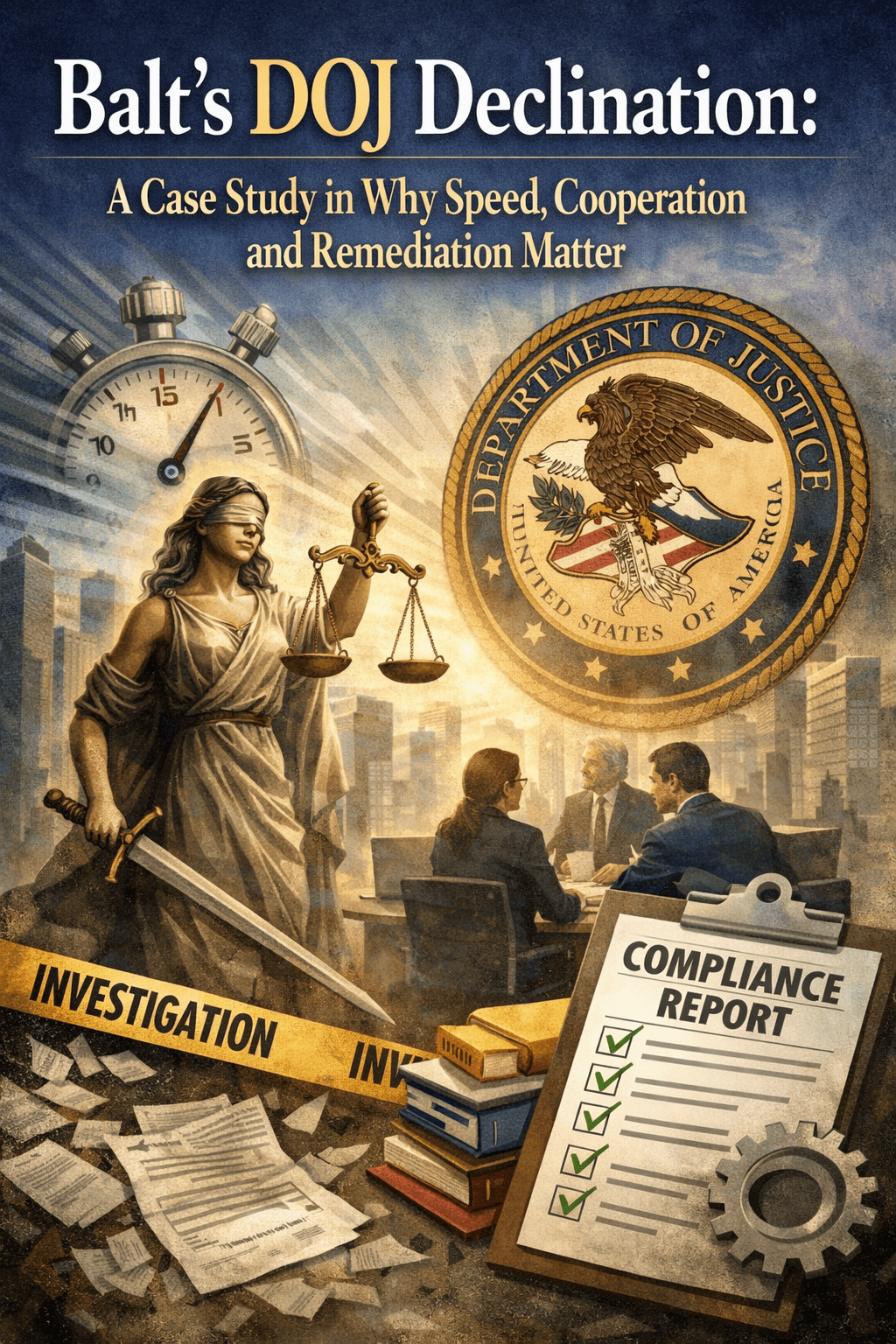
A Textbook Declination: Lessons Learned from the USRA Declination

In the fast-moving world of enforcement actions and corporate misconduct, we rarely get an actual “bottle episode” of compliance—a neatly wrapped case that functions almost like a compliance case study come to life. That is precisely what we see in the recent declination issued to the Universities Space Research Association (USRA), a nonprofit organization working with NASA on advanced scientific research. The Declination is found here.

This declination tells us as much about what to do right as it does about what went wrong. USRA’s prompt and resolute response to employee misconduct provides a blueprint for companies, regardless of size, to attain the ideal result: a DOJ declination. This decline in the Trump Administration’s second term provided crucial lessons for compliance professionals.

The Story: Export Controls and a Rogue Employee

The facts are obvious. Between April 2017 and September 2020, USRA employee Jonathan Soong used his position to oversee export compliance and sell restricted software and source code to Beihang University in China. Mr. Soong did not simply mishandle sensitive materials; he willfully bypassed export laws, concealed his actions, and even embezzled from USRA in the process. Soong pleaded guilty to violating export control laws in connection with secretly funneling sensitive aeronautics software to a Beijing university.

But here is the key takeaway: once USRA learned of the misconduct, they acted fast. They alerted NASA. They conducted an internal investigation. They self-reported to the Department of Justice within days. They cooperated fully. And in the end, the DOJ rewarded them, not with a fine, but with a complete declination.

The Power of Prompt Self-Disclosure

USRA’s leadership did not wait to see if the issue would disappear or downplay it internally. Instead, they engaged with enforcement agencies early and often. This fits squarely within the DOJ’s National Security Division Guidance, which outlines how voluntary self-disclosure, cooperation, and timely remediation can mitigate or eliminate penalties.

Let’s be clear: this was a national security matter, not just a regulatory breach. The software involved may have had potential military applications, making USRA’s response all the more commendable and critical.

Internal Controls and Oversight: Where the Breakdown Happened

As much as this is a story of compliance success, it is also a reminder that internal controls must work in practice, not just on paper. There were three key control failures:

  1. Export compliance oversight was left to the same employee who committed the fraud.
  2. Internal monitoring failed to detect red flags.
  3. Supervisory negligence enabled the misconduct to continue for three years.

One of Mr. Soong’s supervisors was eventually disciplined or terminated. However, the lesson is that even well-designed controls fail when not executed or appropriately monitored.

What Made This Declination Possible?

  1. Voluntary, timely self-disclosure within days of learning of the misconduct.
  2. When the USRA discovered potential wrongdoing, they didn’t hesitate; they immediately self-reported the issue to NASA and the Department of Justice. This type of proactive disclosure is precisely what the DOJ expects when evaluating a company’s response to misconduct. The timeliness demonstrates a functioning internal control system and an ethical culture prioritizing transparency. Rather than hiding behind bureaucracy or launching a months-long internal cover-up, USRA made the call within days. That decision set the tone for everything that followed and paved the way for trust-based engagement with enforcement authorities.
  3. Full cooperation, including sharing internal findings and offering access to witnesses.
  4. USRA didn’t just make a phone call and then sit back. They actively cooperated with investigators at every stage. Their actions included providing access to key internal documents, conducting an internal investigation, and turning over their findings to the DOJ. Equally important, they facilitated interviews with relevant employees, supported the legal process, and ensured that authorities had all the resources necessary to pursue the case against the wrongdoer. In short, USRA became a partner to the government, not an adversary. Comprehensive, good-faith cooperation carries tremendous weight in a declination decision.
  5. Swift and meaningful remediation, including terminating the wrongdoer and disciplining supervisors.
  6. USRA didn’t stop at self-reporting. They took tangible steps to clean the house. Mr. Soong, the employee at the center of the misconduct, was promptly terminated. However, the company didn’t stop there; USRA also reviewed its supervisors’ actions (or inactions). At least one supervisor was disciplined or let go for failing to oversee export control responsibilities properly. The move sends a strong message internally and externally, emphasizing that accountability extends throughout the entire chain of command. This swift and meaningful remediation satisfies DOJ expectations and helps rebuild trust with business partners, regulators, and the broader public.
  7. Strong risk awareness of their role in handling sensitive, export-controlled material.
  8. USRA operates in a field where national security risks are inherent. As a NASA contractor handling sensitive aerospace research, they were well aware of the dangers posed by improper exports of data and source codes. The incident wasn’t just a case of a company claiming ignorance, as they were aware of the potential consequences. Their compliance failures came down to one rogue actor and a breakdown in oversight, not a lack of awareness. When problems surfaced, they acted with the urgency such risks demand. This situational awareness, recognizing how export control violations could ripple across global security, played a major role in helping the DOJ see them as a responsible actor.
  9. Responsiveness to the DOJ and NASA, including prompt answers and evidence production.
  10. Throughout the investigation, USRA maintained consistent and open lines of communication with both NASA and the DOJ. They promptly responded to any questions posed. They delivered the requested documents promptly and in excellent order. Such responsiveness isn’t just about meeting deadlines; it is about demonstrating respect for the investigative process and showing that the company values ethical resolution over self-preservation. By staying accessible, professional, and efficient throughout the inquiry, USRA signaled to prosecutors that they were committed to helping resolve the matter fairly and thoroughly. That level of responsiveness is precisely what the DOJ wants to see.

Lessons Learned for Compliance Professionals

  1. Speed Matters
  2. In the world of corporate enforcement, timing can be everything. Companies do not always receive declinations for self-reporting, but it often makes a significant difference when they do.  USRA moved within days to notify NASA and the DOJ of serious misconduct. That speed demonstrated a culture of integrity, robust internal reporting, and a commitment to doing the right thing even under pressure. Quick action also preserves evidence, signals accountability, and allows enforcement agencies to act more efficiently. The faster a company responds, the more credible its leadership appears and the more likely it is to be viewed as a trusted partner.
  3. Controls Must Work in Real Life
  4. Too often, compliance programs look good on paper but fail in execution. A policy isn’t controllable or effective unless it’s well-designed and implemented correctly. In the USRA case, while policies existed, execution faltered, and an employee responsible for oversight violated the law. That’s a stark reminder: your controls must work in the real world. We must regularly evaluate the effectiveness of supervisory review, dual controls, cross-checks, and audit testing. Failure to test a control could result in liability, enforcement, or worse.
  5. Know Your Risk Profile
  6. USRA dealt with export-controlled scientific software, which is a high-risk domain. Their failure wasn’t in identifying risk but in adequately mitigating and monitoring it. For every company, the starting point must be understanding your unique risk profile. Is it corruption and bribery? Data privacy? Sanctions exposure? What are the ethics of the supply chain? Compliance officers must align risk assessment, control design, and resource allocation accordingly. Implementing a universally applicable compliance program can lead to failure. Regulators expect a risk-based approach that demonstrates thoughtfulness and proportionality. You can’t mitigate what you don’t understand or defend a program that overlooks its most critical vulnerabilities.
  7. Use the Right Tone from the Top
  8. When the misconduct came to light, USRA leadership did not equivocate. They acted decisively, demonstrating a tone from the top that prioritizes ethical behavior and transparency. That tone matters. It influences how quickly issues are escalated, how freely employees speak up, and how credible regulators perceive your organization. Leadership must consistently communicate that compliance is not just a legal necessity but a core business priority. Words are important, but so is behavior: executives who support investigations, invest in controls, and respond to crises with accountability send a powerful message. That tone sets the cultural foundation for the entire compliance program.
  9. Partner with Enforcement, Don’t Oppose Them
  10. USRA’s interaction with NASA and the DOJ reflected a cooperative mindset. They partnered; they didn’t stonewall, delay, or obscure the facts. That approach is increasingly essential in today’s enforcement environment. Regulators are clear: they are looking for good-faith actors. A company that cooperates, provides relevant data promptly, and engages constructively in dialogue is far more likely to receive credit, whether in a declination, reduced penalties, or favorable settlement terms. Fighting regulators at every turn rarely results in positive outcomes. Instead, view enforcement as an opportunity to demonstrate integrity and operational maturity. Compliance should be a bridge, not a barricade.

Final Thoughts: Don’t Wait for the Crisis

USRA did not plan to become a compliance case study. However, they were ready when the time arrived. And preparation, coupled with integrity, made all the difference. This declination was not granted out of charity. We earned it. It resulted from a well-executed compliance framework, fast action, and an unrelenting drive to do the right thing. If your company faced a similar incident tomorrow, would you be ready to act like USRA? That’s the benchmark. And that’s the challenge for every compliance officer reading this.

So, take this as more than a good news story. Take it as your Monday morning prompt: check your controls, reassess your key risks, and remind your leadership that compliance isn’t about fear but readiness.

Categories
10 For 10

10 For 10: Top Compliance Stories For the Week Ending May 10, 2025

Welcome to 10 For 10, the podcast that brings you the week’s Top 10 compliance stories in one podcast each week. Tom Fox, the Voice of Compliance, brings you the compliance professional and the compliance stories you need to know to end your busy week. Sit back, and in 10 minutes, hear the stories every compliance professional should know from the prior week. Every Saturday, 10 For 10 highlights the most important news, insights, and analysis for the compliance professional, all curated by the Voice of Compliance, Tom Fox. Get your weekly filling of compliance stories with 10 for 10, a podcast produced by the Compliance Podcast Network.

  • Malaysia wants Tim Leissner. (WSJ)
  • Aussie regulator goes after Macquarie Bank for corruption. (Reuters)
  • Only $1MM in legal fees for a Presidential pardon. (Bloomberg)
  • UnitedHealth sued over response to exec’s death. (Reuters)
  • The EU Parliament cracks down on lobbyists. (Politico)
  • Adani tries to settle the corruption case. (Bloomberg)
  • Albemarle gets out of the DPA early. (ComplianceWeek)
  • Whistleblower payments coming to the UK? (FT)
  • Amtrak bribery scandal. (Railway Supply)
  • China likens ABC to preparing for war. (South China Morning Post)

You can check out the Daily Compliance News for four curated compliance- and ethics-related stories each day here.

Connect with Tom 

Instagram

Facebook

YouTube

Twitter

LinkedIn

You can purchase a copy of my new book, Upping Your Game, on Amazon.com

Categories
Everything Compliance

Everything Compliance: Episode 153, The CW 25 Edition

Welcome to this edition of the award-winning Everything Compliance. In this episode, the quartet of Matt Kelly, Jonathan Armstrong, Karen Moore, and Karen Woody is hosted by Tom Fox, the Compliance Evangelist.

  1. Karen Moore looks at state, international, and private prosecutions of various ABC laws. She rants at the Department of Education for setting up a 1984-style anonymous reporting line for students to report on their teachers.
  2. Matt Kelly reviews the Glencore DPA record. He has a shout-out to Microsoft for picking up Jenner & Block as counsel and rants about the GOP effort to abolish the PCAOB.
  3. Jonathan Armstrong reviews changes at the UK SFO. He shouts out to the compliance community for their support of Diana Trevley and encourages her continuing recovery now that she is back in the US.
  4. Karen Woody considers tariffs as a new source for FCA claims and shouts out to the movie Conclave.
  5. Tom Fox shouts out to former San Antonio Spurs coach Gregg Popovich, who announced his retirement on May 1.

The members of Everything Compliance are:

Tom Fox, the Voice of Compliance, is the host, producer, and sometimes panelist of Everything Compliance. He can be reached at tfox@tfoxlaw.com. The award-winning Everything Compliance is part of the Compliance Podcast Network.

Categories
Compliance Into the Weeds

Compliance into the Weeds: USRA Declination Case Study: Self-Disclosure Best Practices

The award-winning Compliance into the Weeds is the only weekly podcast that takes a deep dive into a compliance-related topic, literally going into the weeds to explore a subject more fully. Are you looking for some hard-hitting insights on compliance? Look no further than Compliance into the Weeds! In this Compliance into the Weeds episode, Tom Fox and Matt Kelly take a deep dive into the declination recently given by the DOJ to the Universities Space Research Association (USRA).

In this episode, Tom and Matt dive deeply into a recent decline issued by the Department of Justice (DOJ) to the University Space Research Association (USRA). The discussion focuses on the organization’s exemplary behavior in self-disclosure and cooperation during an investigation into an employee’s misconduct. This misconduct included unauthorized export of software to Beijing University. The hosts highlight the case as a textbook example of effective compliance practices, self-reporting, and cooperation with regulators. They also explore the DOJ’s guidelines on self-disclosure and the importance of internal controls in high-risk areas.

Key highlights:

  • Case Overview: USRA Declination
  • DOJ Press Release Insights
  • Details of the Misconduct
  • USRA’s Response and Cooperation

Resources:

DOJ Press Release on Universities Space Research Association Declination

Tom

Instagram

Facebook

YouTube

Twitter

LinkedIn

Compliance into the Weeds was recently honored as one of a Top 25 Regulatory Compliance Podcast and a Top 10 Business Law Podcast, and a Top 12 Risk Management Podcast.

Categories
Daily Compliance News

Daily Compliance News: April 23, 2025, The R-E-S-P-E-C-T Edition

Welcome to the Daily Compliance News. Each day, Tom Fox, the Voice of Compliance, brings you compliance-related stories to start your day. Sit back, enjoy morning coffee, and listen to the Daily Compliance News. All, from the Compliance Podcast Network. Each day, we consider four stories from the business world: compliance, ethics, risk management, leadership, or general interest for the compliance professional. Yesterday, Trump rolled back almost all tariffs he had imposed 48 hours earlier. We look at four stories on that issue from the compliance angle.

Top stories include:

  • Show some respect in meetings. (FT)
  • What is the Administration’s Anti-Trust policy? (WSJ)
  • 3 Adams prosecutors resign rather than lie. (NYT)
  • In UAE, AI writes the laws. (CIO)
Categories
2 Gurus Talk Compliance

2 Gurus Talk Compliance – Episode 50 – The Tariffs Tariffs Tariffs Edition

What happens when two top compliance commentators get together? They talk compliance, of course. Join Tom Fox and Kristy Grant-Hart in 2 Gurus Talk Compliance as they discuss the latest compliance issues in this week’s episode!

Stories this week include:

  • Trump is redefining what corruption is. (Axios)
  • The pain of doing business with the Trump Administration. (FT)
  • The fired DOJ lawyer accused the current DOJ leadership of corruption. (AP)
  • 8 arrested in Huawei corruption probe. (Bloomberg)
  • Whistleblowers awarded $6.7 million against Texas AG. (Houston Chronicle)
  • New Tariffs Promise Increased False Claims Act Scrutiny on Importers and Other Companies in the Import Chain (Gibson Dunn)
  • Justice Department Scales Back Crypto Enforcement (WSJ)
  • DOJ Monitorship Policy Disappears (Radical Compliance)
  • Navigate Career Chaos: 5 Steps to Find Clarity Now (Psychology Today)
  • Woman arrested after accidentally texting sheriff’s department instead of drug dealer (KKTV)


Resources:

Kristy Grant-Hart on LinkedIn

Prove Your Worth

Tom

Instagram

Facebook

YouTube

Twitter

LinkedIn

Categories
Compliance Into the Weeds

Compliance into the Weeds: The Uncertain Future of Compliance Monitors under the Trump Administration

The award-winning Compliance into the Weeds is the only weekly podcast that takes a deep dive into a compliance-related topic, literally going into the weeds to explore a subject more fully. Are you looking for some hard-hitting insights on compliance? Look no further than Compliance into the Weeds! In this Compliance into the Weeds episode, Tom Fox and Matt Kelly take a deep dive into the future role of compliance monitors in the corporate world under the Trump administration.

Despite the potential for changes, federal prosecutors are expected to continue using compliance monitors as a critical tool. However, the criteria for assigning these monitors may become more limited. The episode critically examines the trustworthiness of statements from the Trump administration and its Justice Department, emphasizing the uncertainty facing corporations and compliance professionals moving forward.

Key highlights:

  • Trump Administration’s Stance on Monitors
  • Criteria for Assigning Monitors
  • Skepticism Towards Statements

Resources:

Matt in Radical Compliance

Tom

Instagram

Facebook

YouTube

Twitter

LinkedIn

Compliance into the Weeds was recently honored as one of the Top 25 Regulatory Compliance Podcasts, a Top 10 Business Law Podcast, and a Top 12 Risk Management Podcast.

Categories
10 For 10

10 For 10: Top Compliance Stories For the Week Ending, April 12, 2025

Welcome to 10 For 10, the podcast that brings you the week’s Top 10 compliance stories in one podcast each week. Tom Fox, the Voice of Compliance, brings you the compliance professional and the compliance stories you need to know to end your busy week. Sit back, and in 10 minutes, hear about the stories every compliance professional should know from the prior week. Every Saturday, 10 For 10 highlights the most important news, insights, and analysis for the compliance professional, all curated by the Voice of Compliance, Tom Fox. Get your weekly filling of compliance stories with 10 for 10, a podcast produced by the Compliance Podcast Network.

  • China has a trade-war arsenal ready. (WSJ)
  • Was tariff whiplash ‘open corruption’?(TNR)
  • How Intel complies with steel and aluminum tariffs. (Tom’s Hardware)
  • DOJ wipes out crypto enforcement. (WSJ)
  • HBO does on dark money corruption in Ohio. (Columbus Dispatch)
  • Meta whistleblower says the company aided China in the AI race. (Bloomberg)
  • Whistleblowers awarded $6.7 against Texas AG. (Houston Chronicle)
  • Clothes rental company CaaStle mired in allegations of fraud. (Forbes)
  • Head of Cayman Islands AML efforts found dead in burning car. (Cayman Compass)
  • 8 arrested in Huawei corruption probe. (Bloomberg)

You can check out the Daily Compliance News for four curated compliance- and ethics-related stories each day here.

Connect with Tom 

Instagram

Facebook

YouTube

Twitter

LinkedIn

Categories
Daily Compliance News

Daily Compliance News: April 9, 2025, The Corruption at the DOJ Edition

Welcome to the Daily Compliance News. Each day, Tom Fox, the Voice of Compliance, brings you compliance-related stories to start your day. Sit back, enjoy a cup of morning coffee, and listen to the Daily Compliance News—all from the Compliance Podcast Network. Each day, we consider four stories from the business world: compliance, ethics, risk management, leadership, or general interest for the compliance professional.

Top stories include:

  • Wall Street bursts over the stupidity of Trump tariffs. (NYT)
  • The fired DOJ lawyer accused the current DOJ leadership of corruption. (AP)
  • Paul Atkins for SEC chair advances in Senate. (Reuters)
  • Hackers have spied on OCC for over a year, undetected. (Bloomberg)
Categories
Daily Compliance News

Daily Compliance News: April 8, 2025, The End of Monitors Edition

Welcome to the Daily Compliance News. Each day, Tom Fox, the Voice of Compliance, brings you compliance-related stories to start your day. Sit back, enjoy a cup of morning coffee, and listen to the Daily Compliance News—all from the Compliance Podcast Network. Each day, we consider four stories from the business world: compliance, ethics, risk management, leadership, or general interest for the compliance professional.

Top stories include:

  • Huawei fires two staffers in response to corruption allegations. (Politico)
  • Two CBP agents were charged with bribery. (AP)
  • Boeing settles crash victim’s claims. (Reuters)
  • End of monitors? (at least under Trump). (Bloomberg)