Categories
Blog

Muddle in the Middle Week: Part 2, Middle Managers as an Ethical Cornerstone

We continue our exploration of middle managers as a key to effective compliance. Middle managers often find themselves unfairly characterized and depicted as bottlenecks or bureaucratic hurdles, and their essential contributions to corporate culture and ethics are frequently overlooked. However, these unsung heroes in corporate compliance are crucial in promoting compliance and upholding ethical business practices. In Brooke Vuckovic’s article “Employees See Middle Managers as an Organization’s Moral Compass,” the author wrote how middle managers made a meaningful difference in their teams’ lives and upheld their organizations’ moral compass. In Part 2, I want to demonstrate that middle managers can be your organization’s ethical cornerstones.

Becoming the middle manager whom others genuinely respect, admire, and recall as a moral role model requires deep work. She noted two areas in particular where middle managers can assist compliance: first, by taking a regular self-inventory to gauge their existing standing and willingly correcting habits and behaviors; second, by monitoring them on an ongoing basis. I wanted to use her article to highlight what lessons compliance professionals can learn from recognizing and empowering middle managers as vital moral compasses within their organizations.

The Quiet Power of Everyday Ethics

When asked about exemplary moral business leaders, MBA students in Vuckovic’s survey commonly referenced high-profile CEOs known for their ethical stances, such as Yvon Chouinard and Ratan Tata. However, far more frequently, they cited their middle managers, whose day-to-day actions and decisions consistently demonstrated integrity and moral leadership. These managers reinforced ethics through small, repeated actions, showing politeness, offering genuine compliments, and consistently supporting their teams.

Lesson 1: Commitment Matters Most

Compliance begins with genuine care and commitment to people. Middle managers earn trust and respect through simple, consistent actions, following promises, actively advocating for their teams, and being genuinely attentive to concerns. When managers demonstrate such commitment, compliance becomes an authentic expression of the organization’s culture rather than merely procedural adherence.

One powerful example from the research illustrates a manager who carefully paced workloads and fairly distributed responsibilities, creating an environment where employees willingly stepped up during urgent situations. “I would have followed her over a cliff,” stated one respondent, reflecting profound respect earned through everyday integrity and empathy.

Lesson 2: Upholding Values Under Pressure

Middle managers frequently face the dual pressures of organizational demands and ethical considerations. Compliance professionals must recognize and empower managers who are willing to stand firm on ethical grounds, even when faced with significant pressure. In Vuckovic’s findings, managers prioritizing integrity over expediency gained the deepest admiration. For example, one manager’s decision not to hurriedly approve complex financial changes without thorough review demonstrated an unwavering commitment to doing the right thing, reinforcing the critical compliance principle of diligence over speed.

Lesson 3: Proactive Protection of Team Culture

Managers who proactively address ethical and behavioral issues before they escalate provide critical protection for their teams and organizations. Effective compliance involves early intervention, and middle managers are ideally positioned to identify and correct behaviors that could undermine conformity. For instance, managers praised by respondents were those who confronted team members withholding crucial information or engaging in behaviors detrimental to organizational integrity. Such proactive stances resolved immediate issues and set lasting expectations for ethical behavior.

Lesson 4: Continuous Ethical Inventory

Compliance professionals can leverage Vuckovic’s recommendation of regular ethical self-inventories to encourage middle managers to consistently reflect on their commitments to their teams and higher ethical standards. This method involves routinely examining instances where managers have demonstrated integrity, fairness, and moral courage. Managers are encouraged to regularly ask themselves critical questions, such as “Have I demonstrated a commitment to integrity under pressure?” This type of assessment can deeply embed ethical considerations into daily managerial practices.

Lesson 5: Learning from Ethical Role Models

Finally, the importance of role modeling in compliance cannot be overstated. Middle managers who actively engage in ethical practices provide practical, observable models for their teams, cultivating an organizational culture where compliance and ethics are deeply valued and proactively pursued. Managers who publicly advocate for clear policies and consistently reinforce ethical priorities, such as data privacy and integrity, set benchmarks that elevate the entire organization. Compliance professionals should celebrate and highlight such ethical exemplars, making their behaviors visible and emulated across the company.

Empowering Middle Management for Stronger Compliance

Compliance professionals have a clear role in reframing how middle management is viewed within their organizations, not as obstacles or bureaucratic necessities, but as indispensable ethical leaders. As Vuckovic compellingly illustrates, middle managers who regularly demonstrate care, integrity, and moral courage form the backbone of an authentic compliance culture.

By championing the ethical contributions of middle managers, organizations reinforce compliance at every level and build a resilient, trustworthy culture that sustains ethical excellence in the face of daily pressures and complex dilemmas. Middle managers not only play a crucial role in corporate compliance, but they also serve as exemplary role models.

I hope you will join me tomorrow when I consider how to elevate your compliance regime by empowering middle managers.

For more on this topic, check out The Compliance Handbook, a Guide to Operationalizing Your Compliance Program, 6th edition, which LexisNexis recently released. It is available here.
Categories
Blog

Muddle in the Middle Week: Part 1 – Middle Managers as Compliance Change Agents

Is there confusion within your company, especially regarding compliance issues and your SpeakUp/ListenUp culture? As a compliance professional, what tools can you bring to your organization’s middle managers? This week, I will explore several aspects of middle managers and middle management, all from the compliance perspective.

A recent article in the Harvard Business Review entitled What’s the Future of Middle Management?  by authors Gretchen Gavett and Vasundhara Sawhney got me thinking about those questions and several more regarding middle managers.  The authors considered the role of middle management going forward, particularly with the rise of AI and a trend toward flatter organizations. One set of experts they spoke with was Raffaella Sadun, the Charles Edward Wilson Professor of Business Administration at HBS, and Jorge Tamayo, an assistant professor at the Harvard Business School. Their current research examines the pivotal role of middle managers in driving performance disparities within firms. I have taken their article and adapted it for a corporate compliance perspective.

There is a recurring narrative that middle managers are on the brink of obsolescence, destined to disappear into corporate history, replaced by sleek algorithms and streamlined organizational charts. Gartner forecasts that by 2026, AI will flatten organizational structures, eliminating over half of current middle management positions. Korn Ferry intensifies the discussion by highlighting a notable decrease in manager-level roles. Yet, intriguingly, middle managers still represent a significant and even growing proportion of the workforce, now 13% of the U.S. labor force, up from 9.2% four decades ago.

This juxtaposition begs important questions for corporate compliance professionals: Is there a fundamental misunderstanding of the role of middle managers? What lessons can compliance teams draw from evolving middle management trends, particularly regarding regulatory adherence, ethical culture, and organizational agility? I have distilled five crucial lessons for compliance professionals about the pivotal role middle managers can and should play as agents of compliance change.

Lesson 1: Recognize Middle Managers as Compliance Catalysts

Compliance, at its core, involves more than adhering to regulations; it’s about fostering an ethical, responsive, and adaptive organizational culture. Middle managers, positioned between senior leadership and frontline staff, uniquely enable this cultural alignment. They possess direct access to nuanced frontline insights about emerging compliance risks, ethical dilemmas, and policy adherence trends.

As highlighted in recent research, middle managers serve as essential links, providing feedback loops that alert senior leadership to compliance risks early enough to address them proactively. Acknowledging and enhancing this catalytic role of middle managers can significantly strengthen your compliance infrastructure.

Lesson 2: Empower Managers to Drive Ethical Behavior Through Mentorship

In times of rapid technological and regulatory shifts, employees require more than compliance training; they need ongoing mentorship and coaching. Middle managers are ideally situated to fulfill this role. They do not merely translate senior management’s strategic visions; they actively coach employees on ethical decision-making, guide them through regulatory changes, and reinforce organizational values daily.

The article emphasizes middle managers’ critical function in guiding employees through transitions, notably those driven by technological change. This skill is invaluable for compliance professionals; managers who mentor and encourage ethical behavior significantly decrease the likelihood of non-compliance and misconduct incidents.

Lesson 3: Reallocate Administrative Tasks Through Strategic Automation

A significant hurdle identified in the analysis is the misallocation of managerial duties, with middle managers often burdened by routine administrative functions better suited to automation. From a compliance perspective, this inefficient allocation hinders their ability to engage deeply in strategic risk management and ethical coaching.

Compliance professionals should advocate and support the integration of automated tools to handle administrative compliance tasks. Such an approach would free managers to tackle more complex issues, such as facilitating compliance training, monitoring risk culture, and promoting ethical decision-making practices across their teams.

Lesson 4: Provide Comprehensive Skills Training Tailored to Compliance Goals

It is not enough to reassign tasks; middle managers require substantial upskilling in both soft and technical skills to function effectively as compliance change agents. The article emphasizes a gap in consistent, high-quality training, especially concerning the essential soft skills needed for mentoring and coaching. Moreover, with AI increasingly managing lower-order tasks, middle managers must enhance their analytical and strategic capabilities to complement technology.

For compliance teams, this translates into designing and advocating training programs explicitly aimed at enhancing managerial competencies in ethics, risk assessment, regulatory interpretation, and communication—the critical pillars of effective compliance programs.

Lesson 5: Redefine Evaluation Metrics to Incentivize Compliance Leadership

Perhaps most importantly, companies must rethink evaluation criteria and career advancement pathways to fully harness middle managers as compliance allies. The article points to a common pitfall: promoting individuals based solely on unrelated performance metrics, such as sales achievements, rather than their capacity to mentor, coordinate, or promote an ethical culture.

Compliance professionals need to persuade top leaders to change the rewards and evaluation systems so that managers are clearly recognized for being great at mentoring employees, promoting ethical awareness, encouraging teamwork, and participating in compliance-related activities.

Middle Managers—Vital Compliance Partners in an Era of Change

The narrative of middle managers as obsolete bureaucratic layers is fundamentally flawed when viewed through a compliance lens. Instead, middle managers are essential enablers of organizational agility, ethical integrity, and adaptive responsiveness—all crucial compliance objectives.

Compliance teams must champion this transformative vision, advocating for middle managers’ empowerment, targeted skill development, task reallocation, and revised performance metrics. In doing so, they reinforce compliance effectiveness and elevate their organization’s ethical resilience in a rapidly evolving business landscape.

In an era marked by transformative technological and regulatory challenges, middle managers are not barriers to progress; they are the vital linchpins of a proactive compliance culture. Those organizations that invest thoughtfully and strategically in their middle managers today will build stronger, smarter, and more ethically robust enterprises for tomorrow.

By embracing these five lessons, compliance professionals can respond more effectively to regulatory challenges and position their organizations to thrive ethically and competitively in a future defined by rapid change.

I hope you’ll join me tomorrow in Part 2, where I’ll explain why your company should view middle managers as ethical cornerstones.

For more on this topic, check out The Compliance Handbook, a Guide to Operationalizing Your Compliance Program, 6th edition, which LexisNexis recently released. It is available here.
Categories
Compliance Tip of the Day

Compliance Tip of the Day – Empowering Middle Managers

Welcome to “Compliance Tip of the Day,” the podcast where we bring you daily insights and practical advice on navigating the ever-evolving landscape of compliance and regulatory requirements. Whether you’re a seasoned compliance professional or just starting your journey, our aim is to provide you with bite-sized, actionable tips to help you stay on top of your compliance game. Join us as we explore the latest industry trends, share best practices, and demystify complex compliance issues to keep your organization on the right side of the law. Tune in daily for your dose of compliance wisdom, and let’s make compliance a little less daunting, one tip at a time.

Today we present some tips to empower middle managers to become leading advocates of your compliance program.

For more information on the Ethico Toolkit for Middle Managers, available at no charge by clicking here.

Check out the full 3-book series, The Compliance Kids on Amazon.com.

Categories
Blog

Empowering Middle Managers: A Compliance Training Guide

A culture where employees feel safe to voice concerns through a speak-up culture is foundational to an ethical and compliant organization. However, fostering this environment is a two-way street; employees must feel encouraged to raise issues and confident that their voices will be heard and respected. Middle managers play a vital role in this process, serving as a bridge between employees and leadership. Training these managers to be effective listeners and supportive leaders is critical to embedding a true speak-up and listen-up culture. Today, I want to provide a comprehensive guide to structuring compliance training for middle managers to empower them in this essential role.

Establishing a Foundation for Openness and Trust

Middle managers are often employees’ first contact when they have questions, suggestions, or concerns. For this reason, the training should prioritize methods to create a welcoming and open environment. Employees are more likely to speak up in a space where psychological safety is present.

Training should focus on helping managers:

  • Set a Positive Tone. Managers can model openness by actively seeking input, acknowledging diverse viewpoints, and demonstrating that they value honest feedback.
  • Practice Respectful Communication. Respect and empathy should be at the core of all interactions. Managers should receive guidance on fostering a culture where positive or critical feedback is welcomed and used constructively.
  • Address Barriers to Speaking Up. Training should include understanding common barriers, such as fear of retaliation or judgment, that might deter employees from sharing their concerns. Managers need to learn techniques to overcome these barriers, assuring employees that feedback is welcomed and issues are handled impartially

Mastering the Art of Active Listening

Active listening is the cornerstone of a listen-up culture. To create a sense of safety and encourage more openness, managers should learn to develop strong listening skills:

  • Concentrate on the Speaker. Active listening involves more than just hearing words; it means being fully engaged and present. Managers should learn techniques to eliminate distractions, maintain eye contact, and show genuine interest in the employee’s concerns.
  • Show Empathy and Support. Employees feel more valued when managers respond with empathy. Compliance training should include exercises to help managers practice empathy in real-time, learn to listen without judgment, and offer support without prematurely reaching conclusions.
  • Utilize Non-Verbal Communication. Body language and facial expressions are powerful communicators. Managers should be trained to become aware of their non-verbal cues, such as maintaining an open posture, nodding, and mirroring, to convey that they are fully engaged and receptive to what the employee shares.

Reinforcing Confidentiality and Non-Retaliation

One of the most significant obstacles to a speak-up culture is the fear of retaliation or breach of confidentiality. Employees need assurance that speaking up will not negatively impact their role or relationships within the company. Training should address these concerns by teaching managers how to:

  • Communicate Non-Retaliation Policies. Emphasize that the organization has a strict non-retaliation policy and that any reports made in good faith will not be used against the employee. Managers should be trained on what this means in practice and how to reiterate this assurance to their team.
  • Model Confidential Handling of Concerns. Managers must understand the importance of discretion and keeping sensitive information within appropriate boundaries. Training should cover practical examples and role-playing exercises to help managers practice discretion when handling real-life scenarios.
  • Know When and How to Escalate. Managers should learn the correct escalation protocols for concerns beyond their control, including when to involve HR, compliance, or other internal functions. This keeps matters within formal channels, allowing for a structured and consistent response to concerns.

Responding to Concerns with Consistency, Integrity, and Fairness

Consistency in handling concerns signals to employees that their voices are valued and treated equally. To encourage this, compliance training should incorporate strategies for managing responses to sensitive issues fairly and respectfully:

  • Role-Playing Scenarios. Managers should engage in simulated situations where they practice responding to different concerns, such as interpersonal conflicts, compliance issues, or ethical dilemmas. By exploring these scenarios, managers can prepare for potential challenges in a controlled environment, making them better equipped to handle real situations confidently.
  • Guided Self-Reflection and Assessments. Managers should regularly evaluate their response styles to ensure they meet company fairness, integrity, and transparency standards. Compliance training can include guided assessments that help managers identify areas for improvement, such as biases or tendencies that may unintentionally affect their responses.
  • Implement Escalation Protocols. Managers must understand that not all concerns can or should be handled independently. Training should include guidance on the importance of escalating certain issues, such as legal or safety concerns, to the compliance department or other designated channels. This structured process ensures consistency, limits liability, and enhances employee trust in it.

Using Feedback Loops to Promote Continuous Improvement

For a speak-up culture to thrive, there should be an ongoing feedback and improvement process. Regular communication and consistent messaging from middle managers are essential to reinforcing this culture:

  • Creating a Culture of Continuous Dialogue. Managers should be encouraged to check in with their teams regularly rather than wait for annual reviews or structured feedback sessions. This open, continuous dialogue builds familiarity and trust, making it easier for employees to speak up when they have concerns.
  • Leveraging Digital Communication Tools. Managers can integrate compliance reminders, policy updates, and reinforcement of ethical standards into digital platforms where employees frequently engage. For example, using intranet channels or corporate social media platforms allows periodic messages, reminders, and success stories to be shared, helping employees internalize compliance messages over time.
  • Self-Assessments for Managers. Incorporate periodic self-assessment exercises, where managers reflect on their actions and impact on the speak-up culture. This can include anonymous feedback from employees, allowing managers to gain insight into their perceptions and identify improvement areas. Regular self-assessments reinforce accountability and ensure that managers remain aligned with the company’s compliance goals.

Instilling the “Listen-Up” Culture in Managerial Training

A listen-up culture goes hand-in-hand with a speak-up culture. For managers to effectively handle the concerns brought forward, they must receive dedicated training on what it means to listen up:

  • Developing Emotional Intelligence. Managers should be trained to be aware of their emotions and biases. Emotional intelligence is crucial in handling sensitive topics, as it allows managers to approach discussions with patience, empathy, and a genuine willingness to understand employees’ perspectives.
  • Creating Safe Spaces in Daily Operations. Rather than waiting for formal review sessions, managers can be trained to set aside dedicated time during team meetings to allow employees to voice questions or concerns. Encouraging open discussions in a safe environment reinforces that the company values and listens to employee feedback on compliance issues.

A Continuous, Proactive Approach to Compliance Culture

By empowering middle managers to build trust, actively listen, and foster an open dialogue, a company can lay the groundwork for a resilient compliance culture. The speak-up and listen-up approach is about avoiding ethical or legal breaches and creating a workplace where employees feel valued and respected, leading to better overall engagement and performance. Compliance training that encourages middle managers to foster this culture of openness is an investment in the company’s ethical foundation and its long-term success. Ultimately, a strong compliance culture is only as robust as those who support and enact it, and middle managers are a critical part of that foundation.

Categories
Daily Compliance News

Daily Compliance News: November 11, 2024 – The Veteran’s Day Edition

Welcome to the Daily Compliance News. Each day, Tom Fox, the Voice of Compliance, brings you compliance-related stories to start your day. Sit back, enjoy a cup of morning coffee, and listen in to the Daily Compliance News—all from the Compliance Podcast Network. Each day, we consider four stories from the business world: compliance, ethics, risk management, leadership, or general interest for the compliance professional.

  • NetEase executives arrested for bribery and money laundering.  (gamesindustry.biz)
  • Hidden cost of textile and apparel non-compliance. (Homeland Security Today)
  • Handling a difficult employee with health issues. (NYT)
  • Telefónica Venezuela settles FCPA action. (WSJ)

For more information on the Ethico Toolkit for Middle Managers, available at no charge, click here.

Check out the full 3-book series, The Compliance Kids, on Amazon.com.

Categories
Sunday Book Review

Sunday Book Review: November 10, 2024 – The Books on Middle Manager Edition

In the Sunday Book Review, Tom Fox considers books that interest the compliance professional, the business executive, or anyone curious. It could be books about business, compliance, history, leadership, current events, or anything else that might interest Tom.

In today’s edition of the Sunday Book Review, Tom Fox looks at four top books on being a middle manager and the importance of the role of middle management in November 2024.

  1. Beyond the Hammer by Brian Gottlieb
  2. Leading from the Middle by Scott Mautz
  3. Managing from the Middle by Ken Wilkins
  4. Power to the Middle by Schaninger, Hancock, and Field


Resources:

For more information on the Ethico Toolkit for Middle Managers, available at no charge, click here.

For more information on the first Annual Compliance Podcast Network Agora Awards for Excellent in Podcasting and to register, click here. There is no charge for this event.

Categories
Innovation in Compliance

Unlocking Success: The Crucial Role of Culture in Compliance: Part 3 – Jessica Czeczuga on Creating a Strategy to Manage Culture

Welcome to a special series on building a stronger culture of compliance through targeted and effective training sponsored by Diligent. I will visit with Yvette Hollingsworth-Clark, Viktor Culjak, Jessica Czeczuga, Michael Parker, and Alexander Cotoia. Over this series, we will consider what culture is, how to assess culture, putting together a strategy to manage culture based upon this assessment, monitoring that strategy in the future, and using information from your monitoring to improve your culture continuously. In Part 3, we visit with Jessica Czeczuga on how to develop a strategy to manage your culture risk.

Jessica Czeczuga is a seasoned professional with over two decades of experience in training and development, specializing in areas such as finance, quality, compliance and ethics, leadership, and communication training. Jessica brings a unique perspective to the compliance space, emphasizing the pivotal role of managers in shaping and reinforcing company culture. She believes that managers, the most influential group within an organization, should be adequately trained to align with the desired culture and equipped with the necessary tools to communicate and reinforce cultural values effectively. Jessica also advocates for collaboration between compliance professionals and HR to improve culture, leveraging their counseling skills and creating clear processes for reporting and addressing culture-related issues. Join Tom Fox and Jessica Czeczuga as we dive deeply into this topic in this Unlocking Success: The Crucial Role of Culture podcast episode.

Key Highlights: 

  • The Impact of Managers on Company Culture
  • Collaborative Partnership: HR and Compliance Driving Reporting
  • The Role of Managers in Shaping Culture

Ready for Purpose-Driven Compliance? Diligent equips leaders with the tools to build, monitor, and maintain an open, transparent ethics and compliance culture. For more information and to book a demo, visit Diligent.com.

 Join us tomorrow, where we consider how to monitor culture going forward.

Categories
Compliance Into the Weeds

Compliance into the Weeds: Compliance and Middle Managers

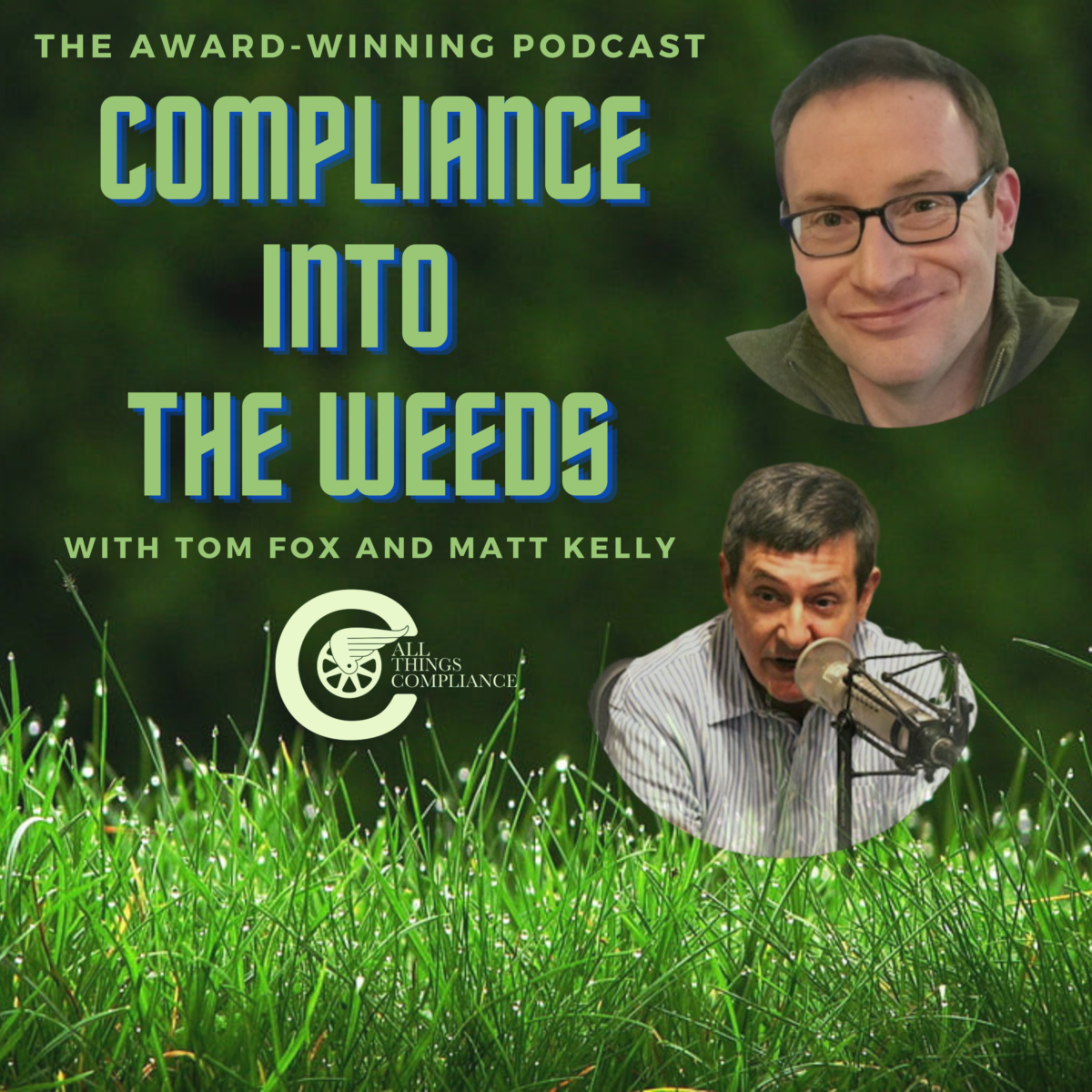
The award-winning, Compliance into the Weeds is the only weekly podcast that takes a deep dive into a compliance-related topic, going into the weeds to explore a subject more fully and looking for some hard-hitting insights on sanctions compliance. Look no further than Compliance into the Weeds!

Join Tom and Matt as they delve into middle managers’ crucial role in fostering a culture of ethics and compliance within organizations. In this episode, the hosts discuss compliance officers’ challenges in working with middle managers and share some practical tips on building alliances, teaching soft skills, and developing personal relationships. They also examine the use of incentives and consequence management in promoting compliance and highlight the need for positive incentives for middle managers. Take advantage of this insightful and thought-provoking discussion on enforcing internal controls in a compliance program and learn more about the different ways to ensure compliance in gift travel and entertainment expenses. Tune in now to stay ahead in the world of compliance!

Key Highlights:

  • The Role of Middle Managers in Compliance
  • Training Middle Managers on Ethical Leadership
  • Investing in middle managers for ethical conduct
  • Compliance: Incentives and Consequence Management

 Notable Quotes:

“Compliance officers need to think about because you live and die in the success of your corporate culture, and the middle managers are the custodians of that culture.”

“Compliance officers should think about how do I help middle managers. How do I coach them on how to be good leaders?”

“Nothing is as significant as that personal touch point.”

“If the middle manager either turned a blind eye to the unethical practice or should have known about it but was just so aimless about it and didn’t care, should that middle manager suffer consequences along with the frontline employees who committed the offense? And the answer was generally yes.”

 Resources

Matt 

LinkedIn

Blog Post in Radical Compliance

Tom 

Instagram

Facebook

YouTube

Twitter

LinkedIn

Categories
Daily Compliance News

October 22, 2022 the Managers are Not Alright Edition

In today’s edition of Daily Compliance News:

  • Avoiding corruption in Ukraine reconstruction. (Brookings Institute)
  • Middle managers are not OK. (Bloomberg)
  • Meta continues to seek debarment of FTC chief. (Reuters)
  • Senate asks DOJ to publish white-collar prosecution data. (WSJ)