Categories
Compliance Tip of the Day

Compliance Tip of the Day – Compliance Lessons from Shell

Welcome to “Compliance Tip of the Day,” the podcast that brings you daily insights and practical advice on navigating the ever-evolving landscape of compliance and regulatory requirements. Whether you’re a seasoned compliance professional or just starting your journey, our goal is to provide you with bite-sized, actionable tips to help you stay ahead in your compliance efforts. Join us as we explore the latest industry trends, share best practices, and demystify complex compliance issues to keep your organization on the right side of the law. Tune in daily for your dose of compliance wisdom, and let’s make compliance a little less daunting, one tip at a time.

This week, we begin a look at how companies are using AI in their business operations and draw compliance lessons from this use for compliance professionals. Today, we continue with lessons from Shell Oil Company.

For more information on this topic, refer to The Compliance Handbook: A Guide to Operationalizing Your Compliance Program, 6th edition, recently released by LexisNexis. It is available here.

Categories
Blog

Fighting Fraud, Waste, and Abuse: Ten Lessons for the Compliance Professional

Fraud, waste, and abuse are often bundled together in compliance conversations, but they are not interchangeable. Fraud is intentional deception, waste is the careless misuse of resources, and abuse is the opportunistic exploitation of gray areas. Each carries unique risks. Each erodes value. And each, if left unchecked, creates fertile ground for corruption and regulatory exposure.

Throughout this series, we have examined each element in depth. Fraud remains the most familiar, often linked directly to corruption. Waste, though usually unintentional, drains millions from corporate coffers each year. Abuse occupies the murky middle ground where rationalizations and loopholes open the door to larger misconduct. Finally, we examined how an integrated framework, spanning from controls to culture, can help compliance professionals address fraud, waste, and abuse in a holistic manner.

What emerges is clear: fighting fraud, waste, and abuse is not an optional add-on to anti-corruption programs. It is central to them. Fraud cannot thrive without weak controls. Waste creates the conditions that foster corruption. Abuse normalizes rule-bending until bribery becomes a natural extension of it.

For compliance professionals, the question is not whether to address fraud, waste, and abuse but how. Here are ten key lessons that stand out.

1. Know the Difference

The first lesson is definitional clarity. Fraud, waste, and abuse often overlap, but they are distinct categories of risk. Fraud is intentional and prosecutable. Waste is careless and costly. Abuse is opportunistic and corrosive. Treating them as one dulls your controls. Compliance programs must tailor messaging, policies, and monitoring to each risk. For example, fraud requires forensic controls, waste requires efficiency metrics, and abuse demands cultural reinforcement. Clarity sharpens strategy and ensures that prevention is precise, not blunt.

2. Fraud Prevention Requires Strong Controls

Fraud rarely occurs in isolation. Bribery schemes rely on falsified invoices, manipulated expenses, or deceptive contracts. Preventing fraud means embedding strong controls: segregation of duties, third-party due diligence, mandatory job rotations, and robust hotlines. Data analytics adds another critical layer, identifying anomalies in billing, procurement, or expenses before they metastasize. Fraud prevention is not just about legal risk; it is about stopping corruption before it takes root.

3. Waste Is More Than Inefficiency

Waste may lack intent, but its impact is devastating. It drains profits, frustrates shareholders, and weakens culture. Waste in corporate travel, maintenance, or software licenses often reflects poor oversight and sends the wrong cultural message: accountability is optional. Compliance cannot dismiss waste as “just operations.” Regulators and boards increasingly demand stewardship. Waste that goes unchecked creates cover for fraud and abuse, turning inefficiency into risk. Compliance leaders must treat waste as a core governance issue, not an afterthought.

4. Predictive Analytics Is a Compliance Tool

Our review of Shell’s predictive maintenance program offers a powerful analogy for compliance. By embedding sensors and utilizing predictive analytics, Shell reduced waste, minimized downtime, and enhanced safety. Compliance can achieve the same results. Predictive analytics enables compliance officers to move from reactive investigations to proactive risk detection. Expense anomalies, hotline spikes, or vendor irregularities can be flagged in real time, preventing issues before they escalate. Predictive analytics is no longer a “nice to have.” It is the future of compliance risk management.

5. Abuse Is the Gateway to Fraud

Abuse thrives in gray areas, exploiting loopholes, stretching policies, or rationalizing questionable conduct. It often starts small, such as recreating a lost taxi receipt, but escalates when unchecked. AI-generated fake receipts illustrate how easily abuse morphs into fraud. Abuse corrodes culture by teaching employees that rules can be bent without consequence. Compliance must treat abuse as seriously as fraud, because, in practice, abuse is often a precursor to fraud. Ignoring it is an invitation to systemic misconduct.

6. Technology Must Match the Threat

Employees are already using AI to generate fake receipts. Compliance must use AI to detect them. Modern expense-auditing platforms now flag anomalies in fonts, metadata, or behavior patterns. Similar tools analyze procurement, payroll, and travel data for red flags. The lesson is clear: compliance cannot fight tomorrow’s threats with yesterday’s tools. Technology must evolve as quickly as the risks do. Matching technology to the danger is no longer optional; it is essential for credibility and effectiveness.

7. Culture Is the Ultimate Control

Policies and tools matter, but culture determines outcomes. Fraud, waste, and abuse thrive where accountability is negotiable, where entitlement is tolerated, and where corner-cutting is excused. Conversely, a culture of transparency and stewardship closes the space in which misconduct thrives. Compliance officers must partner with leadership to model integrity, reinforce accountability, and celebrate stewardship. Culture sends the clearest message: fraud, waste, and abuse are not tolerated here. Without cultural reinforcement, even the strongest controls will eventually fail.

8. Empower Whistleblowers as Early Warning Systems

Whistleblowers are often the first to spot fraud, waste, or abuse. Yet too many organizations undercut their own defenses by failing to protect or empower employees who speak up. Robust reporting channels, anti-retaliation policies, and timely follow-up are essential. In the fight against fraud, waste, and abuse, whistleblowers are not just informants; they are strategic allies. Empowering them demonstrates that the company values integrity, deters misconduct, and surfaces risks before regulators do.

9. Build Cross-Functional Coalitions

Fraud, waste, and abuse cut across silos. Fraud may surface in finance, waste may occur in operations, and abuse may be present in HR. Compliance cannot fight these battles alone. Cross-functional coalitions with audit, procurement, IT, and HR ensure risks do not slip through the cracks. Coalitions also strengthen messaging: stewardship is everyone’s responsibility. When functions share data, align incentives, and coordinate responses, blind spots shrink and resilience grows. Compliance professionals must position themselves as connectors across the enterprise.

10. Continuous Improvement Is Non-Negotiable

Fraud, waste, and abuse risks are not static; they are dynamic. Predictive models require recalibration. Fraud schemes evolve. Waste emerges in new technologies and processes. Abuse shifts as policies and cultures change. Compliance programs must continually improve by reviewing data, updating controls, and reassessing cultural vulnerabilities to ensure ongoing effectiveness. Static programs become obsolete, leaving gaps for misconduct to exploit. Dynamic, evolving compliance programs, by contrast, remain credible, resilient, and aligned with regulatory expectations.

Conclusion

Fraud, waste, and abuse represent a continuum of risks that, if left unchecked, will erode profitability, corrode culture, and undermine trust. Fraud is the most visible, but waste and abuse are equally insidious. Together, they form the ecosystem in which corruption thrives.

For compliance professionals, the fight against fraud, waste, and abuse is both a mandate and an opportunity for growth. By understanding the differences, strengthening controls, leveraging predictive analytics, addressing abuse early, deploying technology, fostering a culture of compliance, empowering whistleblowers, forming coalitions, and committing to continuous improvement, compliance can lead the fight.

The message is simple: fraud, waste, and abuse are not just a financial issue; it is also a compliance issue. When compliance professionals treat it as such, they not only protect their organizations from regulatory exposure but also create cultures of stewardship, accountability, and integrity. That is the true mandate of modern compliance to ensure that fraud, waste, and abuse cannot take root and that corporate integrity remains strong.

Resources:

Untangling Fraud, Waste, and Abuse: A Primer for the Compliance Professional

From Controls to Culture: Building Anti-Corruption Programs that Address Fraud, Waste, and Abuse

Culture, Costs, and Compliance: Tackling Corporate Waste with Data-Driven Solutions

Culture, Controls, and Consequences: Why Compliance Should Address Abuse Before It Escalates

Categories
Blog

Culture, Costs, and Compliance: Tackling Corporate Waste with Data-Driven Solutions

When compliance professionals hear the phrase “fraud, waste, and abuse,” their attention almost always gravitates toward the concept of fraud. Fraud makes headlines, triggers DOJ enforcement actions, and carries obvious reputational risk. But waste, the second component in that trio, costs corporations millions of dollars annually and often goes unnoticed. Waste is not always the result of intentional misconduct. Instead, it is the unnecessary, careless, or inefficient use of resources.

Left unchecked, waste can sap profits, drain morale, and erode organizational culture. Worse, it creates vulnerabilities that open the door to fraud and abuse. As compliance officers, we have a role to play in combating waste, not just as a financial drain, but also as a risk factor that undermines long-term business sustainability.

We continue our review of the role of compliance in combating fraud, waste, and abuse. Today, we consider the role of compliance in the fight against waste. One of the most promising tools in this fight is predictive analytics. We review how Shell used predictive analytics to transform its maintenance programs and discuss how compliance officers can harness these same principles to anticipate, identify, and prevent waste before it spirals into a major liability.

What Is Waste?

Waste is the misuse of corporate resources without necessarily crossing the line into fraud. It may include:

  1. Excessive travel or entertainment expenses.
  2. Over-maintenance of equipment that does not need servicing.
  3. Duplication of tasks due to poor communication.
  4. Paying for unused licenses, subscriptions, or services.
  5. Poorly designed processes that consume time and labor unnecessarily.

Unlike fraud, waste is not always intentional. An employee may not realize that expensing unnecessary upgrades or double-booking a supplier constitutes waste. Yet the cumulative impact is enormous. According to industry surveys, corporate waste can cost companies millions annually, and much of it is preventable through better monitoring and smarter resource allocation.

The Cost of Waste

Waste rarely grabs headlines, but its financial impact is staggering. Consider how often corporations schedule routine maintenance on equipment, even when it is not actually needed. The expense of replacing parts “on schedule” rather than based on actual performance data runs into the billions across industries. Similarly, compliance functions themselves can generate waste by deploying broad, unfocused training or redundant audits instead of targeting resources where they matter most.

Waste also undermines culture. Employees who see inefficiencies tolerated may conclude that the company does not take stewardship seriously. This normalization can spread: if no one cares about wasted money, why should they care about ethical gray zones? In this way, waste weakens the very cultural foundation compliance programs are designed to strengthen.

Lessons from Shell: Predictive Analytics and Maintenance

Shell provides a vivid example of how predictive analytics can transform waste into efficiency. Historically, Shell relied on calendar-based maintenance schedules, servicing equipment at predetermined intervals regardless of actual wear and tear. While effective in preventing breakdowns, this method was wasteful, resulting in unnecessary part replacements, downtime, and inefficient resource allocation.

By adopting predictive analytics, Shell embedded sensors across its global assets, collecting real-time data on vibration, temperature, and pressure. Machine learning models analyzed this data to detect anomalies, allowing Shell to service equipment only when necessary—the result: reduced downtime, lower costs, and improved reliability.

The compliance parallel is clear. Just as Shell transitioned from reactive repairs to predictive maintenance, compliance must also shift from reactive investigations to proactive monitoring. Waste in compliance, whether in resources, training, or oversight, can be dramatically reduced when programs are data-driven and predictive rather than static and calendar-based.

The Compliance Angle: Why Waste Matters

Waste is not just an operational issue. It is a compliance issue for three reasons:

  1. Regulatory scrutiny: Regulators are increasingly expecting companies to utilize data-driven tools to ensure efficiency and accountability. Wasteful practices, particularly in government contracting, can lead to legal exposure.
  2. Fraud adjacency: Waste creates gray areas that fraudsters exploit. If duplicate payments or unused services go unnoticed, bad actors can hide fraudulent charges within the noise.
  3. Cultural risk: Tolerating waste sends a signal to employees that accountability is negotiable. This undermines compliance culture and makes it harder to enforce policies consistently.

How Compliance Can Fight Waste

1. Leveraging Predictive Analytics

Compliance officers can use predictive analytics to spot wasteful spending patterns, such as duplicate vendor payments, recurring unused subscriptions, or expense anomalies. By analyzing large datasets in real-time, predictive analytics reveals inefficiencies that traditional audits often miss.

2. Targeting Resources

Much like Shell’s predictive maintenance conserved resources, compliance can use analytics to deploy training, audits, and investigations where they are most needed. This prevents the waste of blanket initiatives that consume time and budget without addressing real risk.

3. Building Proactivity into Culture

Predictive analytics fosters a culture of proactivity rather than reactivity. Employees learn to anticipate risks and inefficiencies before they escalate, creating a compliance culture that values stewardship of resources alongside ethical conduct.

4. Enhancing Decision-Making

Predictive models provide compliance leaders with actionable insights that sharpen their decision-making. Instead of guessing where to allocate limited resources, compliance officers can point to data-driven evidence, increasing credibility with leadership.

5. Continuous Improvement

Just as Shell recalibrates its predictive models with real-world data, compliance must treat waste reduction as a continuous improvement process. Predictive models should evolve in tandem with business practices, regulatory shifts, and emerging risks.

Five Key Takeaways for the Compliance Professional

1. Waste Is More Than Inefficiency

Waste is the misuse of resources, whether intentional or not, and it costs corporations millions annually. Beyond financial impact, tolerating waste erodes culture and creates openings for fraud.

2. Predictive Analytics Reduces Waste

Just as Shell cut costs and improved reliability through predictive maintenance, compliance programs can use predictive analytics to identify inefficiencies, anticipate risks, and allocate resources effectively.

3. Compliance Has a Role in Fighting Waste

Waste may appear to be an operational issue, but it is also a compliance issue. Regulators expect efficient use of resources, and unchecked waste can conceal fraud or abuse.

4. Proactivity Strengthens Culture

Predictive analytics fosters a proactive compliance culture that anticipates risks and addresses them before they escalate, reinforcing accountability and resource stewardship.

5. Continuous Improvement Is Key

Predictive analytics and waste reduction are not one-off projects. Compliance must continuously reassess data, refine models, and adapt to evolving risks to remain effective and credible.

Conclusion

Waste may not carry the same drama as fraud or abuse, but it represents a critical vulnerability for corporations. The financial cost is real, the cultural cost is corrosive, and the compliance implications are significant.

By taking a page from Shell’s predictive analytics playbook, compliance officers can transform their programs from passive monitors to proactive risk managers. Predictive analytics enables compliance to identify inefficiencies before they escalate, conserve resources, and enhance credibility with leadership. Most importantly, it positions compliance as a strategic partner in building a culture of accountability and efficiency.

In today’s environment, where regulators demand real-time monitoring and organizations face constant pressure to do more with less, fighting waste is not optional. It should be a compliance imperative.

Categories
Regulatory Ramblings

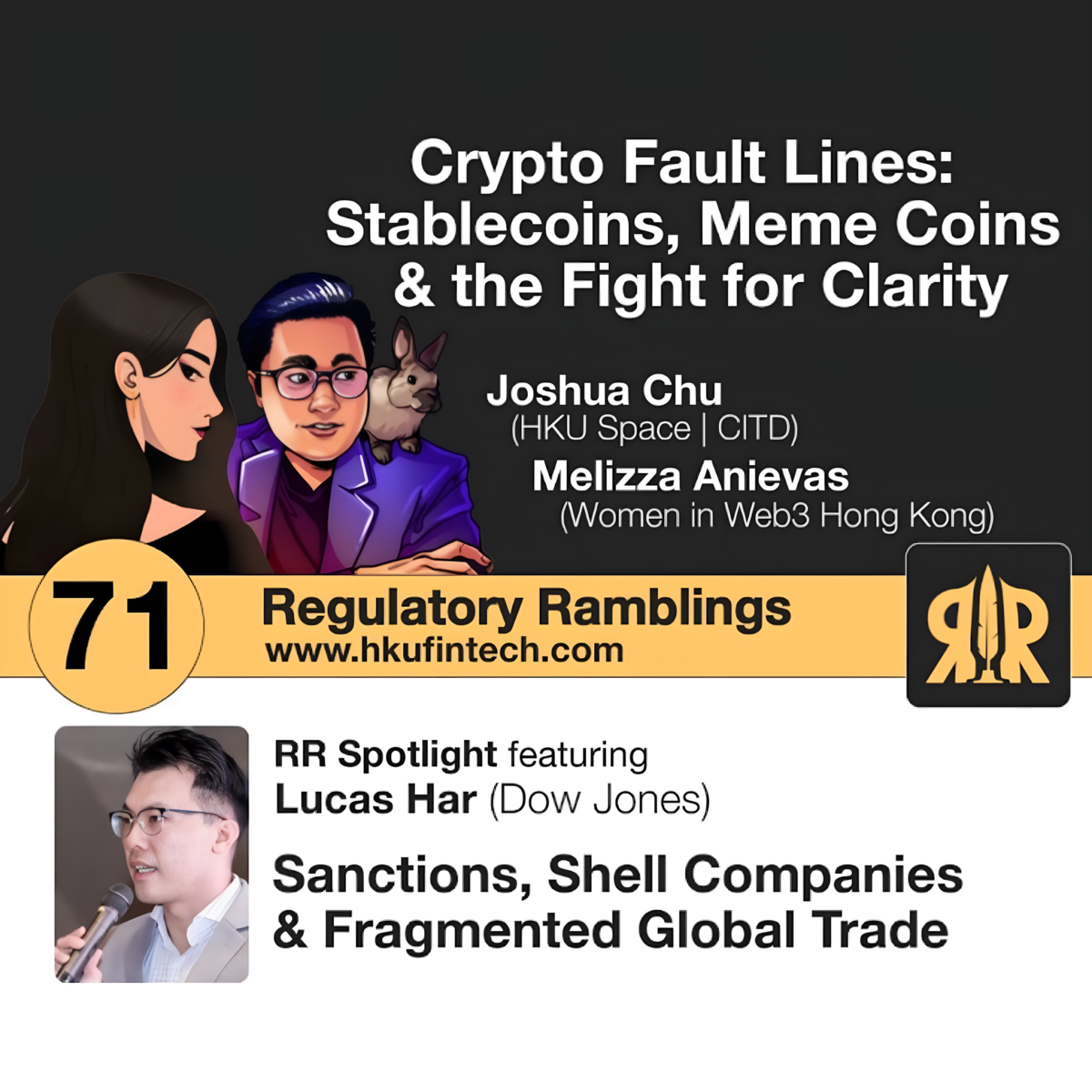
Regulatory Ramblings: Episode 71 – Crypto Fault Lines: Stablecoins, Meme Coins & the Fight for Clarity PLUS: Sanctions, Shell Companies & Fragmented Global Trade

This episode begins with a brief spotlight chat with Lucas Har from Dow Jones in Singapore, discussing trade compliance, sanctions, dual-use goods, and supply chain risk, particularly in the context of the currently strained US-China trade relationship following the recent increase in US tariffs on China and Hong Kong.

We then proceed to a discussion with Hong Kong-based Joshua Chu and Melizza Anievas to explore Hong Kong’s recently enacted Stablecoin Ordinance, including the distinction between meme coins and stablecoins, as well as the ever-evolving global landscape for virtual assets in light of recent regulatory developments in the US.

On May 21, 2025, the Hong Kong Legislative Council passed the Stablecoins Ordinance, creating a formal licensing regime for fiat-referenced stablecoin (FRS) issuers. While local in implementation, the regulatory milestone decisively places Hong Kong at the forefront of a broader Asian effort to shape the future of legitimate, rules-based decentralized finance (DeFi) and tokenized financial infrastructure.

The move came just one day after the US Senate passed the GENIUS Act. Against this backdrop, Hong Kong’s move added momentum to global harmonization efforts on stablecoin regulation, directing the policy debate more towards developing trustworthy digital asset ecosystems with practical, real-world utility and functionality.

The territory’s new framework requires all issuers promoting fiat-backed stablecoins to the general public locally to be licensed by the Hong Kong Monetary Authority (HKMA)—the city’s banking regulator and de facto central bank.

Additionally, issuers must hold reserves in either cash or high-quality, highly liquid assets, such as short-term government securities. Stablecoins must be redeemable at par value at any time. Issuers must regularly disclose their reserve holdings and undergo audits. AML/CFT compliance and risk controls are also required.

This regulatory clarity is paired with active development. For example, Hong Kong’s Stablecoin Sandbox, launched last year, has enabled companies such as Standard Chartered, Animoca Brands, and JD Coinlink to test real-world use cases across payments, capital markets, and trade finance. Ultimately, it reflects a coordinated effort to turn policy into practical rails for tokenized activity.

Joshua Chu

Joshua Chu is a prominent Hong Kong lawyer specializing in fintech and crypto matters, as well as a prolific writer. His opinion and insights are much sought after by the local press and correspondents of major foreign news organizations operating in the city. You can often hear him at his most candid on the radio at RTHK.

Joshua is also co-chair of the Hong Kong Web 3 Association and legal advisor to the Hong Kong Blockchain Association.


Melizza Anievas

Melizza Anievas is a co-founder and executive director of Women in Web3 Hong Kong. Under her leadership, Women in Web3 Hong Kong has grown to over 1,500 members and secured over HK$300,000 in sponsorships within a year, establishing working relationships with notable partners such as Google Cloud Hong Kong, The Sandbox, and Animoca Brands. A Web3 veteran since 2019, Melizza excels at devising growth-driven strategies and operating hyper-growth businesses.


Lucas Har

Lucas Har is based in Singapore and has been with Dow Jones Risk & Compliance for nearly a decade. He began his career with a focus on Anti-Money Laundering (AML) and Counter-Terrorism Financing (CTF) research across a diverse portfolio of Asia-Pacific jurisdictions.

Later, Lucas took on a leadership role overseeing the company’s content curation team, where he was responsible for news curation and monitoring adverse media.

In his current position, he manages the firm’s global trade compliance product suite, spearheading innovation and strategic growth.

He has also extensively engaged with financial institutions, corporations, and regulators across multiple regional jurisdictions, fostering discussions on export control compliance and further strengthening Dow Jones’s expertise in such an increasingly vital and complex area.

Discussion:

As our guests flesh out, several common threads emerge linking the two segments of today’s episode. The first is that of regulatory fragmentation across jurisdictions such as the US, mainland China, Hong Kong, and the EU.

There is also the issue of extraterritorial overreach and competition, particularly between China’s export rules and US crypto laws, as well as a global push for clarity in fast-moving, high-risk sectors, including the international trade of goods and virtual assets more broadly. Simply put, the heavy geopolitical undertones in both export control and digital asset regulation cannot be avoided, as they cast a shadow on the role of trust and credibility, or the lack thereof, in navigating both trade and cryptocurrency systems.

With that in mind, the podcast begins with Regulatory Ramblings host Ajay Shamdasani asking Lucas about the evolving regulatory landscape shaping international trade and its implications for Hong Kong businesses, as well as the impact of mainland China’s new export control regulations on dual-use goods.

Lucas shares what legal and compliance specialists need to know about the regulatory hurdles the firms they serve must adhere to, including sanctions and export control regulations, as well as best practices for enhancing due diligence procedures to mitigate trade-related risks.

Following that, Joshua and Melizza share their thoughts on what the new stablecoin ordinance will mean for Hong Kong, as well as the importance of recent US regulations. Securities and Exchange Commission clarifications on meme coins and their potential impact on legal, risk, and compliance strategies for developers and investors.

The three of them go on to discuss the key operational and regulatory challenges stablecoin issuers face under Hong Kong’s new licensing regime and how the US GENIUS and STABLE Acts might reshape the US stablecoin market and influence global regulatory approaches.

Indeed, something worth asking—and which Joshua and Melizza do not shy away from commenting on⁠ — is whether the relatively ‘light touch’ regulation of meme coins encourages innovation or exposes investors to undue risk.

The conversation concludes with a chat about how projects can effectively balance innovation with regulatory compliance amid differing US and APAC frameworks. Most memorable is how Melizza distinguishes between Web 3.0 and Web3.

Useful links in this episode:

You might also be interested in:

Connect with RR Podcast at:

LinkedIn: https://hk.linkedin.com/company/hkufintech 
Facebook: https://www.facebook.com/hkufintech.fb/
Instagram: https://www.instagram.com/hkufintech/ 
Twitter: https://twitter.com/HKUFinTech 
Threads: https://www.threads.net/@hkufintech
Website: https://www.hkufintech.com/regulatoryramblings 

Connect with the Compliance Podcast Network at:

LinkedIn: https://www.linkedin.com/company/compliance-podcast-network/
Facebook: https://www.facebook.com/compliancepodcastnetwork/
YouTube: https://www.youtube.com/@CompliancePodcastNetwork
Twitter: https://twitter.com/tfoxlaw
Instagram: https://www.instagram.com/voiceofcompliance/
Website: https://compliancepodcastnetwork.net

Categories
Daily Compliance News

Daily Compliance News: April 3, 2025, The Tribute to Ice Edition

Welcome to the Daily Compliance News. Each day, Tom Fox, the Voice of Compliance, brings you compliance-related stories to start your day. Sit back, enjoy a cup of morning coffee, and listen to the Daily Compliance News—all from the Compliance Podcast Network. Each day, we consider four stories from the business world: compliance, ethics, risk management, leadership, or general interest for the compliance professional.

Top stories include:

  • End of SEC FCPA bribery unit. (Reuters)
  • Ex-Shell boss tasked with cleaning up Nigerian National Petroleum Company (NNPC).  (BBC)
  • The judge dismisses Adams’s case with prejudice. (NYT)
  • DOJ moves to dismiss FCPA trial of former Cognizant execs. (Law360) sub req’d
Categories
10 For 10

10 For 10: Top Compliance Stories For the Week Ending February 15, 2025

Welcome to 10 For 10, the podcast that brings you the week’s Top 10 compliance stories in one podcast each week. Tom Fox, the Voice of Compliance, brings you the compliance professional and the compliance stories you need to know to end your busy week. Sit back, and in 10 minutes, hear the stories every compliance professional should know from the prior week. Every Saturday, 10 For 10 highlights the most important news, insights, and analysis for the compliance professional, all curated by the Voice of Compliance, Tom Fox. Get your weekly filling of compliance stories with 10 for 10, a podcast produced by the Compliance Podcast Network.

  • SEC looks to muzzle shareholders. (WSJ)
  • Was Shell scammed on oil cleanup? (BBC)
  • Acting US Attorney for SDNY quits over Trump interference. (NYT)
  • CFIUS enforcement is likely to continue under Trump. (Reuters)
  • US drops again on TI-CPI. (WaPo)
  • Mike Madigan was found guilty. (Law360) sub req’d
  • A green light for corruption. (FT)
  • CFPB ordered all work to be stopped ‘immediately’. (NYT)
  • Musk is now making referrals to the US Attorney. (Reuters)
  • McKinsey asks if China is too risky. (Bloomberg)

For more information on the Ethico Toolkit for Middle Managers, available at no charge, click here.

You can check out the Daily Compliance News for four curated compliance and ethics-related stories each day here.

Connect with Tom 

Instagram

Facebook

YouTube

Twitter

LinkedIn

Categories
Daily Compliance News

Daily Compliance News: February 14, 2025, The Valentine’s Day Edition

Welcome to the Daily Compliance News. Each day, Tom Fox, the Voice of Compliance, brings you compliance-related stories to start your day. Sit back, enjoy a cup of morning coffee, and listen in to the Daily Compliance News—all from the Compliance Podcast Network. Each day, we consider four stories from the business world: compliance, ethics, risk management, leadership, or general interest for the compliance professional.

Top stories include:

  • SEC looks to muzzle shareholders. (WSJ)
  • Was Shell scammed on oil cleanup? (BBC)
  • Acting US Attorney for SDNY quits over Trump interference. (NYT)
  • CFIUS enforcement is likely to continue under Trump. (Reuters)

For more information on the Ethico Toolkit for Middle Managers, available at no charge, click here.

Check out the FCPA Survival Guide on Amazon.com.

Categories
10 For 10

10 For 10: Top Compliance Stories For the Week Ending November 16, 2024

Welcome to 10 For 10, the podcast that brings you the week’s Top 10 compliance stories in one podcast each week. Tom Fox, the Voice of Compliance, brings you the compliance professional and the compliance stories you need to know to end your busy week. Sit back, and in 10 minutes, hear the stories every compliance professional should know from the prior week. Every Saturday, 10 For 10 highlights the most important news, insights, and analysis for the compliance professional, all curated by the Voice of Compliance, Tom Fox. Get your weekly filling of compliance stories with 10 for 10, a podcast produced by the Compliance Podcast Network.

  • Meta fined $840MM in EU for anti-trust violations. (NYT)
  • SBF LT. Builds fraud detection tool for DOJ. (Reuters)
  • Shell wins appeal in landmark climate case. (NYT)
  • ADM CCO steps down amid probe.  (Bloomberg)
  • End of ESG and crypt initiatives at SEC. (WSJ)
  • What science reveals about corruption. (El Pais)
  • Telefónica Venezuela settles FCPA action. (WSJ)
  • Handling a difficult employee with health issues. (NYT)
  • Hidden cost of textile and apparel non-compliance. (Homeland Security Today)
  • NetEase execs arrested for bribery and money laundering.  (biz)

For more information on the Ethico Toolkit for Middle Managers, available at no charge, click here.

You can check out the Daily Compliance News for four curated compliance and ethics-related stories each day here.

Check out the full 3-book series, The Compliance Kids, on Amazon.com.

Connect with Tom 

Instagram

Facebook

YouTube

Twitter

LinkedIn

Categories
Daily Compliance News

Daily Compliance News: November 14, 2024 – The Matt Gaetz as AG Edition

Welcome to the Daily Compliance News. Each day, Tom Fox, the Voice of Compliance, brings you compliance-related stories to start your day. Sit back, enjoy a cup of morning coffee, and listen in to the Daily Compliance News—all from the Compliance Podcast Network. Each day, we consider four stories from the business world: compliance, ethics, risk management, leadership, or general interest for the compliance professional.

  • Shell wins appeal in landmark climate case. (NYT)
  • Trump Administration, anti-trust and Big Tech. (FT)
  • Latvian bank clean up. (Bloomberg)
  • ADM CCO steps down amid probe.  (Bloomberg)

For more information on the Ethico Toolkit for Middle Managers, available at no charge, click here.

Check out the full 3-book series, The Compliance Kids, on Amazon.com.

Categories
Daily Compliance News

Daily Compliance News: April 2, 2024 – The Welcome to CW24 Edition

Welcome to the Daily Compliance News. Each day, Tom Fox, the Voice of Compliance, brings you compliance-related stories to start your day. Sit back, enjoy a cup of morning coffee and listen in to the Daily Compliance News. All from the Compliance Podcast Network.

Each day, we consider four stories from the business world: compliance, ethics, risk management, leadership, or general interest for the compliance professional.

In today’s edition of Daily Compliance News:

  • Autonomy paid whistleblower for wrongful termination. (Law360)
  • Shell appeals climate change ruling. (FT)
  • More 1KDB-Swiss bankers are on trial. (Bloomberg)
  • More apartment seizures in NYC, this time in Trump bldg. (forbes)

For more information on the Ethico ROI Calculator and a free White Paper on the ROI of Compliance, click here.