Categories
#RiskNYC Speaker Series

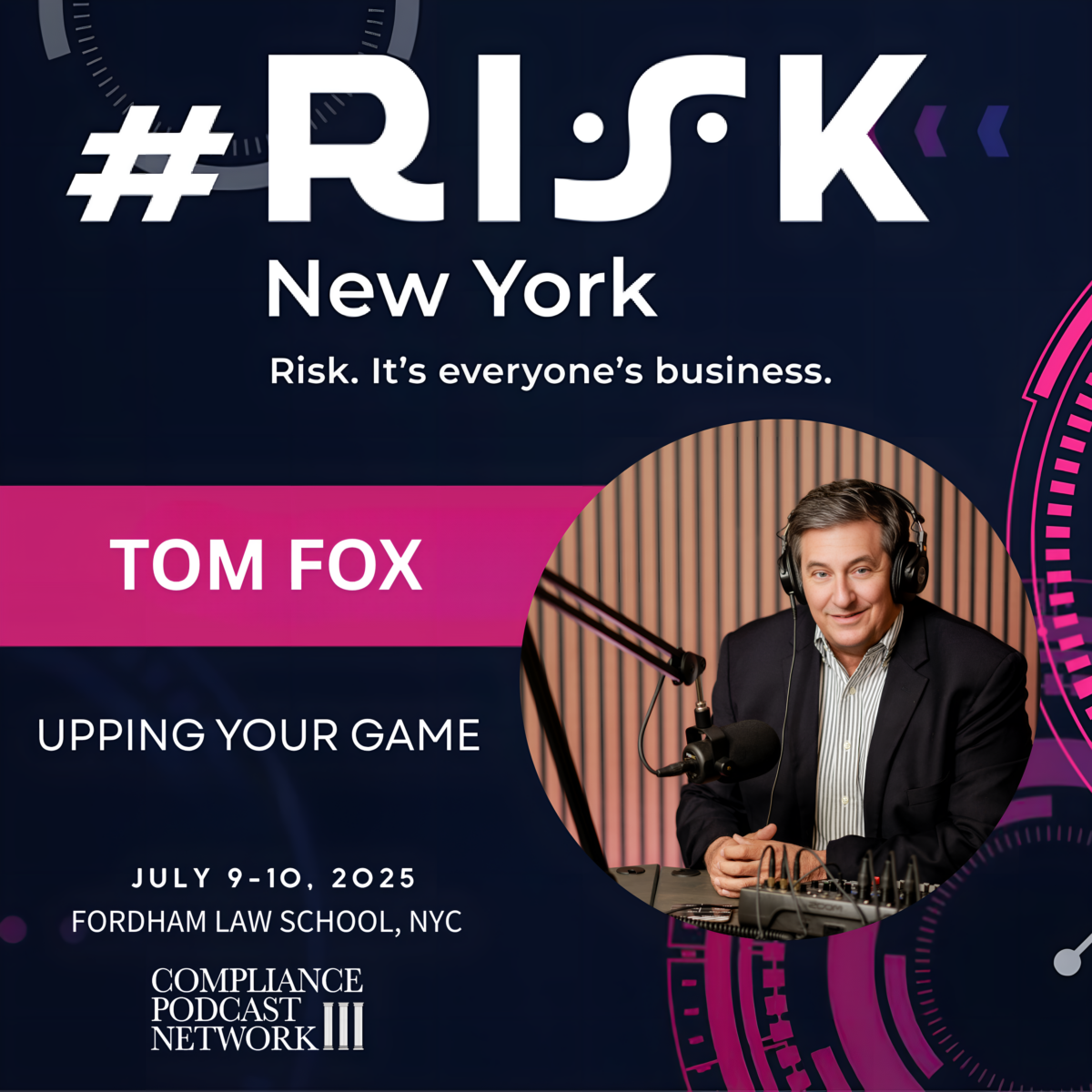
#Risk New York Speaker Series- Upping Your Game with Tom Fox

Join myself and hundreds of other GRC professionals in the city that never sleeps, New York City on July 9 & 10 for one of the top conferences around #Risk New York. current US landscape – shaped by evolving policies, rapid AI advancements, and shifting global dynamics – demands adaptive strategies and cross-functional collaboration.

At #RISK New York you will master the New Regulatory Reality by Getting ahead of US regulatory shifts and their impact. Conquer AI & Tech Risk by Safeguarding your organization in an AI-driven world and understand the implications of major tech investments. Navigate Financial & Crypto Volatility by Protecting assets and explore solutions in a dynamic market. Strengthen Your GRC Framework by Leverage governance, risk, and compliance for strategic advantage. Protect Digital Trust by Addressing challenges in cybersecurity, data privacy, and combating misinformation. All while meeting

In this episode of the Risk New York podcast series, Tom Fox introduces the upcoming Risk New York Conference, scheduled for July 9-10 at Fordham Law School. The conference, hosted by GRC World Forums, will focus on various aspects of risk management, including AI, tech risk, financial and crypto risk, and GRC frameworks. Tom discusses his keynote based on his book ‘Upping the Game’ and highlights key speakers and exhibitors, including Robert Clark from Howard University, Bill Coffin and Erica Alburn from Ecosphere, and Michael Rasmussen, known as the father of GRC. The episode emphasizes the significance of the conference and provides information on discounted tickets and other details available in the show notes.

Resources

#Risk Conference Series

#RiskNYC-Tickets and Information

Categories
FCPA Compliance Report

#Risk New York Speaker Series – Upping Your Game with Tom Fox

Join Tom Fox and hundreds of other GRC professionals in the city that never sleeps, New York City, on July 9 & 10 for one of the top conferences around, #Risk New York. The current US landscape, shaped by evolving policies, rapid advancements in AI, and shifting global dynamics, demands adaptive strategies and cross-functional collaboration.

At #RISK New York, you will master the New Regulatory Reality by getting ahead of US regulatory shifts and their impact. Conquer AI and Tech Risk by Safeguarding Your Organization in an AI-Driven World and Understanding the Implications of Major Tech Investments. Navigate Financial and Crypto Volatility by Protecting Your Assets and Exploring Solutions in a Dynamic Market. Strengthen Your GRC Framework by Leveraging Governance, Risk, and Compliance for Strategic Advantage. Protect Digital Trust by addressing challenges in cybersecurity and data privacy and combating misinformation. All while meeting with the country’s top #Risk management professionals.

In this episode of the Risk New York podcast series, Tom Fox introduces the upcoming Risk New York Conference, scheduled for July 9-10 at Fordham Law School. The conference, hosted by GRC World Forums, will focus on various aspects of risk management, including AI, tech risk, financial and crypto risk, and GRC frameworks. Tom discusses his keynote based on his book ‘Upping the Game’ and highlights key speakers and exhibitors, including Robert Clark from Howard University, Bill Coffin and Erica Alburn from Ecosphere, and Michael Rasmussen, known as the father of GRC. The episode highlights the importance of the conference and provides details on discounted tickets, as well as other information available in the show notes.

Resources:

#Risk Conference Series

#RiskNYC—Tickets and Information

Compliance Podcast Network Website

Tom Fox

Instagram

Facebook

YouTube

Twitter

LinkedIn

Categories
SBR - Authors' Podcast

SBR-Author’s Podcast: Upping Your (Compliance) Game

Welcome to the SBR-Authors Podcast! In this podcast series, host Tom Fox visits with authors in the compliance arena and beyond. Today, the tables are turned as Caitlyn Tobey and Ellen Hunt from The Seven Elements Compliance Book Club host Tom to talk about his most recent book, Upping Your Game.

They explore how AI and machine learning can transform compliance operations, turning them into strategic business functions. He discusses the operationalization of compliance, the importance of integrating ethics into business practices, and the role of AI in enhancing the effectiveness of compliance. Notable examples, such as Wells Fargo’s use of AI in compliance and the concept of compliance by design, demonstrate how technology can facilitate more efficient business processes and foster a proactive compliance culture.

Key highlights:

  • Reframing Compliance in the Trump Era
  • The Role of AI in Compliance
  • Ethics and Compliance: A Strategic Partnership
  • Challenges and Risks of AI in Compliance
  • AI Chatbots in Compliance

Resources:

Upping Your Game on Amazon.com

Tom Fox

Instagram

Facebook

YouTube

Twitter

LinkedIn

Categories
FCPA Compliance Report

FCPA Compliance Report – Upping Your Game in Compliance

Welcome to the award-winning FCPA Compliance Report, the longest-running podcast in compliance. This is a very special episode. This podcast comes from a webinar hosted by KonaAI on Tom Fox’s latest book, Ûpping Your Game. On this webinar, Tom is joined by Vince Walden, CEO of konaAI; Hemma Lomax, Deputy General Counsel, Vice President, Global Head of Ethics and Compliance at Docusign; and Carl Hahn and Matt Galvin, both from Gentic Global Advisors PLLC.

The discussion revolves around compliance, with thought leaders delving into how organizations can enhance their performance by utilizing emerging technologies and compliance strategies. The conversation begins with a focus on the transformative role of AI in compliance, highlighting its ability to support continuous monitoring, predictive analytics, and embedding compliance into day-to-day business operations. The panel emphasizes the rise of “compliance as a service” and the growing need to prioritize user experience, particularly in third-party risk management and digital transformations. The panel addresses key challenges, such as overcoming resistance from business process owners, and emphasizes the importance of using data strategically to drive better compliance outcomes. The panel introduces the concept of the “Office of Unlock” as a collaborative model to break down silos and promote agility. They also discuss change management, AI governance, and tailoring compliance communications to specific audiences. The episode concludes with practical advice for compliance officers and a forward-looking discussion on aligning compliance programs with evolving organizational and regulatory landscapes.

Key highlights:

  • Upping Your Game
  • Embedded Compliance
  • What’s the business value?
  • What steps should you take right now

Resources:

Hemma Lomax on LinkedIn

Vince Walden on LinkedIn

Matt Galvin on LinkedIn

Carl Hahn on LinkedIn

KonaAI

Gentic Global Advisors

Tom Fox

Instagram

Facebook

YouTube

Twitter

LinkedIn

For more information on the use of AI in compliance programs, see Tom Fox’s new book, Upping Your Game. You can purchase a copy of the book on Amazon.com.

Categories
Compliance Tip of the Day

Compliance Tip of the Day – Role of Chatbots in Compliance

Welcome to “Compliance Tip of the Day,” the podcast where we bring you daily insights and practical advice on navigating the ever-evolving landscape of compliance and regulatory requirements. Whether you’re a seasoned compliance professional or just starting your journey, we aim to provide bite-sized, actionable tips to help you stay on top of your compliance game. Join us as we explore the latest industry trends, share best practices, and demystify complex compliance issues to keep your organization on the right side of the law. Tune in daily for your dose of compliance wisdom, and let’s make compliance a little less daunting, one tip at a time.

Today, we look at how chatbots can enhance and improve engagement with your compliance program. 

For more on embedded compliance, check out my new book, Upping Your Game: How Compliance and Risk Management Move to 2030 and Beyond, available from ⁠Amazon.com⁠.

Categories
Blog

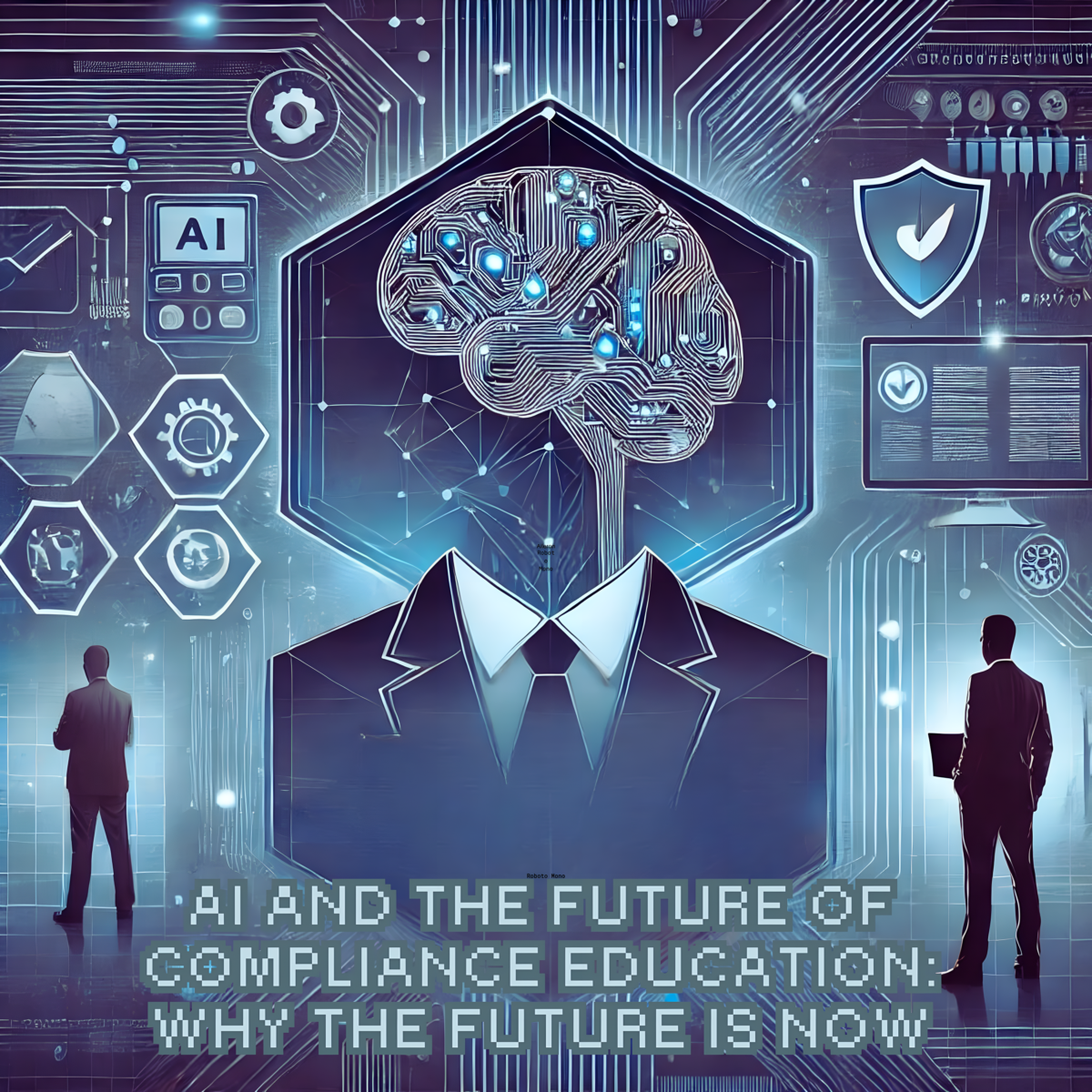
AI and the Future of Compliance Education: Why the Future is Now

For too long, compliance training has been seen as little more than a necessary evil, a one-size-fits-all exercise in checking a regulatory box. Employees shuffled through mandatory seminars, PowerPoint decks, and click-through e-learning modules, treating them as hurdles to clear, not learning opportunities. That world is dead. Buried. In 2025, compliance education is radically transforming, and AI is leading the way.

The future of compliance education is personal, immediate, engaging, and embedded. It’s about delivering the right knowledge to the right employee at the right time, i.e.,. Before a violation occurs. Compliance is no longer a periodic event; it’s a continuous experience. How can AI, microlearning, gamification, and VR completely change the game, and what lessons must compliance professionals learn today to build a better tomorrow?

Lesson 1: Traditional Training is Outdated—AI is Leading the Way

First, yesterday’s training models cannot keep up with the proper pace of modern regulatory risk. Static, annual training modules don’t resonate with today’s workforce or dangers. Enter AI. Smart compliance platforms now personalize training based on individual employee roles, learning styles, risk exposure, and past behavior. Employees are no longer passive listeners but active participants in scenario-based simulations that mirror real-world dilemmas. Imagine practicing an FCPA dilemma in a gamified environment rather than skimming through a bullet-point list.

Even better, AI does not simply deliver content; it measures how employees engage with it. Advanced analytics track progress, flag disengagement, and allow compliance teams to adjust real-time training strategies. The result? A proactive, continuously evolving compliance culture.

If you’re still relying on static training in a dynamic risk environment, you are not only behind; you are exposed.

Lesson 2: Customization is Key—One Size Fits Nobody

Let’s be blunt: Generic compliance training wastes everyone’s time. Different employees face different risks. Your sales team in Latin America needs training that is different from your engineering team in Berlin. A one-size-fits-all approach is not simply ineffective; it can indeed be counterproductive.

AI-driven compliance platforms address this head-on by customizing content at the individual level. They analyze roles, responsibilities, risk profiles, and even upcoming activities. Imagine this: An employee traveling to a high-risk country automatically receives reminders about anti-bribery policies, gift-giving guidelines, and applicable trade sanctions before they step on the plane.

This proactive, role-specific approach exceeds DOJ expectations around tailored training (first articulated in the 2017 Evaluation of Corporate Compliance Programs and reinforced in the 2024 ECCP). It embeds compliance into employees’ day-to-day decision-making.

Customization drives engagement. Engagement drives behavior change. Behavior change protects the organization. It is that simple.

Lesson 3: Real-Time Compliance Training is Proactive, Not Reactive

Historically, compliance teams operated in a reactive mode. Violations occurred, investigations followed, and training was assigned as a remedial slap on the wrist—no more. With AI, compliance training can now be real-time and predictive. Imagine an AI system that monitors workflow data and employee behavior, delivering just-in-time reminders before a decision is made, not after a violation occurs.

Picture this: An employee processing an unusual third-party payment receives an instant alert reminding them of anti-corruption controls. Another employee about to click a suspicious email gets a real-time warning about phishing attacks. AI can even draw insights from external events. If a major competitor is penalized in China for export control violations, your employees operating in that region can immediately receive a warning and updated guidance.

Real-time training transforms compliance from a “policing” function into a “partnering” function, guiding employees to make better decisions in the moment. That’s the future we should be building toward.

Lesson 4: Gamification and Microlearning Supercharge Retention

We’ve known for years that traditional long-form compliance training doesn’t stick. Most employees forget 70% of what they learned within a week. Why? Because brains aren’t wired to retain dense information delivered in passive, hour-long blocks. Gamification and microlearning flip the script.

Microlearning delivers bite-sized, focused modules that employees can absorb quickly, perfectly tailored to today’s fast-paced work environments. Gamification adds points, badges, competitions, and rewards to incentivize engagement. Together, they create training experiences that are not only more effective but also fun. And the results aren’t theoretical. Studies show that microlearning can improve knowledge retention by up to 75%. Walmart’s use of VR compliance training led to a reported 30% decrease in policy violations.

When employees are immersed in gamified simulations where decisions have consequences and feel the real-world weight of ethical challenges, they build the muscle memory to act correctly under pressure. Compliance becomes instinct, not obligation.

If you are serious about building a culture of compliance, gamification and microlearning must be part of your toolkit.

Lesson 5: AI is the Ultimate Training Effectiveness Engine

Finally, AI does not just deliver better training; it measures and improves it.

Modern AI-powered compliance platforms track every interaction. They identify which employees are struggling, which departments face higher risks, and which topics aren’t sticking. They can predict which employees are most likely to face ethical dilemmas—and target interventions accordingly. This feedback loop is transformative. Instead of guessing whether training “worked,” compliance professionals can know and take swift action when needed. AI-driven insights allow for dynamic course corrections, ensuring compliance education stays aligned with emerging risks, regulatory updates, and organizational changes.

By embedding continuous improvement into training, AI moves compliance education from a static obligation to a living, breathing strategy for risk management and corporate resilience.

Conclusion: The Future Is Now—Are You Ready?

The transformation of compliance education isn’t a “someday” concept. It is happening right now. Leading companies are already embedding AI, gamification, microlearning, real-time alerts, and VR simulations into their compliance ecosystems—and they’re seeing measurable results. Compliance training is no longer a boring box to check. It’s a dynamic, personal, data-driven force multiplier for ethics, integrity, and business performance.

The real question for compliance professionals today isn’t whether AI will reshape compliance education. It’s whether your organization will be a leader or a laggard in embracing change. The future of compliance education is here. It is immersive, predictive, personal, and powered by AI.

Are you ready to lead the way?

In short, the future of whistleblower programs is here—and it’s intelligent.

The above is from my latest book, Upping Your Game: How Compliance and Risk Management Move to 2030 and Beyond, available from Amazon.com.


Categories
10 For 10

10 For 10: Top Compliance Stories For the Week Ending April 26, 2025

Welcome to 10 For 10, the podcast that brings you the week’s Top 10 compliance stories in one podcast each week. Tom Fox, the Voice of Compliance, brings you the compliance professional and the compliance stories you need to know to end your busy week. Sit back, and in 10 minutes, hear the stories every compliance professional should know from the prior week. Every Saturday, 10 For 10 highlights the most important news, insights, and analysis for the compliance professional, all curated by the Voice of Compliance, Tom Fox. Get your weekly filling of compliance stories with 10 for 10, a podcast produced by the Compliance Podcast Network.

  • New book on the use of AI in Compliance. (Amazon)
  • Trump now sues law firms for representing clients or issues he disapproves of. (Reuters)
  • EU fines Meta and Apple for anti-trust violations. (FT)
  • DOJ wipes out crypto enforcement. (WSJ)
  • 3 Adams prosecutors resign rather than lie. (NYT)
  • In UAE, AI writes the laws. (CIO)
  • China built a Nepali airport through corruption. (NYT)
  • US banks urged to pull from Chinese securities offerings. (WSJ)
  • Binance gets compliance. (Bitcoin.com News)
  • Jaime Dimon says to tighten up meetings. (FT)

You can check out the Daily Compliance News, which features four curated compliance and ethics stories each day, here.

Connect with Tom 

Instagram

Facebook

YouTube

Twitter

LinkedIn

You can purchase a copy of my new book, Upping Your Game, on Amazon.com.

Categories
Daily Compliance News

Daily Compliance News: April 22, 2025, The Upping Your Game Edition

Welcome to the Daily Compliance News. Each day, Tom Fox, the Voice of Compliance, brings you compliance-related stories to start your day. Sit back, enjoy morning coffee, and listen to the Daily Compliance News. All, from the Compliance Podcast Network. Each day, we consider four stories from the business world: compliance, ethics, risk management, leadership, or general interest for the compliance professional. Yesterday, Trump rolled back almost all tariffs he had imposed 48 hours earlier. We look at four stories on that issue from the compliance angle.

Top stories include:

  • On the use of AI in a compliance program. (LinkedIn)
  • Nadine Menendez was convicted. (WSJ)
  • Why do you need a tariffs chaos playbook? (NYT)
  • SEC awards whistle-blowing tipsters. (Bloomberg)
Categories
Blog

Embedded Compliance – The Future is Integrated

For compliance professionals, it is time we discussed the groundbreaking shift happening right beneath our feet: embedded compliance. Traditionally, compliance has been viewed as a separate, distinct entity within organizations, performing manual, reactive tasks often separate from the pulse of daily business. The DOJ tried to fight this siloed approach beginning in the 2020 Update to the Evaluation of Corporate Compliance Programs (ECCP) and running through to the 2024 ECCP. A siloed approach caused inefficiencies and frequently resulted in gaps in oversight that organizations cannot afford in our hyper-regulated, fast-moving world.

Embedded compliance flips this traditional script, creating a framework where compliance checks, regulatory adherence, and risk controls are woven directly into the operational workflows. Leveraging the powerful combination of API-driven solutions, artificial intelligence (AI), and RegTech tools, embedded compliance promises seamless integration, greater agility, and significantly fewer errors. Today, I want to articulate why embedded compliance matters, how organizations integrate it into their workflows, and the practical steps compliance professionals can take to champion and lead this transformation.

From Reactive Compliance to Real-Time Integration

Historically, compliance functions often resembled firefighters, who were called upon to extinguish compliance breaches after they were already ablaze. The traditional process was linear, reactionary, and manual: compliance teams would wait for business operations to complete, then audit and identify breaches, correcting mistakes long after they occurred. Such methods left organizations vulnerable, inefficient, and frequently scrambling due to regulatory breaches.

Embedded compliance fundamentally shifts this paradigm. It brings compliance checks into the real-time business flow, using automated systems to instantly flag, halt, or address potential issues before they can materialize into full-blown compliance problems. As Andrew McBride succinctly noted, compliance is no longer separate—it’s seamlessly integrated into business processes facilitated by API-driven technology.

The Power of APIs and AI: Automating Compliance Checks

How exactly does embedded compliance work? It relies heavily on Application Programming Interfaces (APIs) and AI-driven tools integrated within existing systems to enforce real-time compliance. Let’s consider some prime examples:

1. Automated Policy Checks

A key element is embedding automated policy checks within workflows. Corporate policies and regulatory rules are encoded into a rules engine accessible via APIs. When an employee submits a transaction or expense request, the system instantly cross-checks against these policies. If an irregularity or breach is detected, such as exceeding spending limits or using unauthorized vendors, the system immediately flags or blocks it. Banks have adopted this method extensively, ensuring that products offered to customers comply with cross-border regulations at the point of sale. Embedding such checks drastically reduces the incidence of inadvertent breaches and the workload of compliance teams.

2. AI-Powered Contract Reviews

Another powerful implementation is in contract review processes. AI tools, integrated through APIs into contract management systems, scan contracts in real-time, flagging non-compliant language or omissions. Modern AI systems can instantly verify GDPR clauses, regulatory adherence, and internal policy compliance, offering corrections on the fly. Platforms like DocuSign use AI-assisted reviews to empower business users, ensuring regulatory and internal policy compliance even before a human legal team reviews the agreement, thus significantly speeding up the contracting process without adding compliance risk.

3. Real-Time Compliance Scoring

Companies today need continuous visibility into their compliance status. Real-time compliance scoring achieves this by dynamically assessing operations against regulatory standards or risk models. Cybersecurity platforms, for instance, can continuously update an organization’s compliance status against benchmarks like PCI DSS or ISO 27001. Likewise, financial institutions apply this approach to anti-money laundering (AML), using automated systems that score transactions against risk models and halt those flagged as high-risk, ensuring AML compliance on the fly.

4. Policy Review and Continuous Update

Embedded compliance also transforms how compliance policies are developed, reviewed, and refined. AI-driven solutions synthesize real-time feedback and employee queries into valuable insights, ensuring policies remain current and relevant. Automated tracking and analysis allow compliance professionals to swiftly identify problem areas, triggering targeted updates, training, and internal communications that foster a robust compliance culture.

Practical Lessons for Compliance Professionals

As compliance shifts from a manual, reactive function into a proactive, integrated approach, the role of compliance officers is undergoing a profound evolution. Here are five practical lessons compliance professionals must embrace to champion embedded compliance successfully:

Lesson 1: Embrace Technology as an Enabler, Not a Replacement

AI and automation are critical tools that free compliance professionals from repetitive, manual tasks. However, these technologies augment rather than replace human judgment. Professionals should retain oversight, interpret AI-generated alerts, tune automated models, and handle nuanced decisions that technology alone cannot navigate effectively.

Lesson 2: Design Compliance into Processes from the Start

Compliance must not be a postscript; it needs to be embedded from the inception of any business process. By collaborating closely with product development, operations, and IT teams, compliance professionals ensure regulatory and policy compliance is integral from the outset, preventing costly and disruptive corrective actions later.

Lesson 3: Leverage APIs and Automation to Reduce Manual Work

Compliance teams should proactively identify manual, repetitive compliance tasks suitable for automation via APIs or Robotic Process Automation (RPA). By automating these routine tasks, compliance officers can focus on higher-value activities such as strategic oversight, risk assessment, and complex investigations, maximizing efficiency and accuracy.

Lesson 4: Maintain Data Quality and Tackle Silos

Embedded compliance effectiveness depends critically on data quality. Compliance professionals must champion initiatives to improve data accuracy, consistency, and integration, ensuring that automated checks and AI-driven analyses rely on trusted data sources. Breaking down data silos is essential; an integrated data landscape strengthens the effectiveness and reliability of compliance efforts.

Lesson 5: Champion a Culture of Compliance and Train for Adoption

Finally, embedding compliance successfully requires widespread adoption and cultural buy-in. Compliance professionals should take active roles as educators, clearly communicating the benefits and functions of embedded compliance systems. Regular training, openness to feedback, and continuous improvement ensure frontline employees adopt and value embedded compliance, making compliance everyone’s responsibility and elevating the organizational compliance culture.

Shaping the Future of Compliance

Embedded compliance marks a significant departure from traditional compliance methods. It presents an exciting opportunity for compliance professionals to become proactive, strategic architects of integrated, real-time compliance solutions.

In this brave new world, compliance officers no longer merely enforce rules; they actively shape business processes, data integrity, and technological innovations to safeguard their organizations. By embracing APIs, AI-driven solutions, and the principles of compliance by design, compliance teams can help their organizations navigate regulatory landscapes with unprecedented agility, effectiveness, and efficiency. The future of compliance is integrated, proactive, and embedded. Are you ready to lead your organization into this transformative era?

This is taken from the new book Upping Your Game: How Compliance and Risk Management Move to 2030 and Beyond, available from Amazon.com.

Categories
Blog

Upping Your Game – Compliance Moves into the 2030s

On February 10, 2025, the Trump Administration suspended investigations under and enforcement of the Foreign Corrupt Practices Act via Executive Order. Many compliance professionals have since wondered what this will mean for corporate compliance programs. Hui Chen, in a blog post entitled Pause in FCPA Enforcement: Crisis or Opportunity?, said, “Many in the compliance world have expressed lament, concerns, and anger. Understandably so. This may feel like an existential crisis for an industry so dependent on enforcement as its raison d’être. Yet, in every crisis, there is an opportunity. This is no exception.” She stated, “We will have the opportunity to find out which companies do not believe they need to engage in bribery to be competitive. But we will also see companies recalibrate their risk tolerance not because the door to foreign bribery has been wedged open, but because their past fear-driven strategy resulted in a sometimes overly narrow view of corporate risk and responsibility in this space.” She listed three key areas to start, the third being “it’s time to up your game.”

I agreed wholeheartedly with Chen. Inspired by Chen, I wanted to write a book for compliance professionals about how they could think through ‘Upping Their Game’ using currently existing Generative AI (GenAI) tools to improve their compliance programs dramatically. It all starts with the precept from Carl Hahn, “To me, the animating reason for our compliance program was to deliver business value. And that was my proposition on day one. It is a positive business-forward proposition based on returning on investment, returning value to the business, being part of the business strategy, enabling the achievement of strategic goals, and enabling the company to successfully deliver to its customers, investors, stakeholders, and employees.” As compliance professionals, it is critical to recognize that this moment is not merely about incremental improvements. The Trump Executive Order brings to the compliance profession a rare inflection point where revolutionary technological advancements, if harnessed strategically, can elevate our profession to a new level of effectiveness, efficiency, and organizational value.

Once reliant on manual oversight, reactive reporting, and periodic audits, compliance monitoring is evolving into a proactive, real-time capability empowered by sophisticated AI technologies. Compliance professionals historically functioned as gatekeepers, viewed as necessary but inconvenient barriers to business velocity. But now, driven by AI, compliance stands poised to shed that restrictive image, embedding directly into core operational workflows and thus shifting from gatekeeper to integral business partner.

Today, the cutting edge of compliance is driven by two primary strands of AI: predictive analytics, leveraging machine learning, and GenAI. Each has distinct capabilities, but combined, they represent a powerhouse able to address the vast majority of traditional compliance challenges and emerging risks. At its core, compliance seeks to identify, manage, and mitigate risks. Traditionally, this has meant looking backward, investigating past issues, and reacting to problems after they occur. AI fundamentally shifts compliance from this rearview mirror perspective to a forward-looking, predictive posture. Machine learning technologies empower compliance officers to train AI models on vast quantities of historical data, teaching systems to recognize patterns and indicators that suggest elevated risk in real-time.

Today, a compliance officer can use predictive analytics to tag transactional data by risk category, identifying potential bribes, improper payments, fraud, conflicts of interest, and sanctions violations. With these capabilities, compliance teams can proactively identify, isolate, and remediate issues before they escalate, significantly reducing organizational exposure and regulatory risk.

This shift from reactive to proactive risk management also enhances compliance agility. Organizations equipped with AI-powered monitoring can swiftly pivot to address new regulatory developments or emerging business risks. Because AI can integrate and analyze data in real-time from diverse sources, such as financial records, employee communications, operational metrics, and third-party data, the organization is positioned to respond to regulatory inquiries swiftly, accurately, and effectively, thus greatly enhancing compliance resilience.

AI offers a transformative capacity to integrate compliance directly into essential business processes by embedding compliance directly into an organization’s operations. Andrew McBride’s approach is termed the “Holy Grail” for compliance professionals who seek to seamlessly embed compliance responsibilities within operational workflows, enabling employees to carry out compliance tasks without interrupting their regular business activities.

For all these reasons and more, I am thrilled to announce the publication of my latest book, Upping Your Game: How Compliance and Risk Management Move to 2030 and Beyond. The compliance function is uniquely situated to lead the management of risk going forward, and in this book, I provide every compliance professional with key tactics, concepts, and strategies to move forward with GenAI today to answer the call to Up Your Game. Each chapter is dedicated to one area of a compliance program: risk management, third parties, training, chatbots, and embedded compliance. I provide key lessons for compliance professionals in each chapter and a case study on how one or more companies have created GenAI tools that can be adapted for compliance. Each one of these strategies meets Hahn’s precept to enhance business value.

I  interviewed some of the top thinkers on GenAI in the compliance field for this book. Contributors included Vincent Walden, CEO of konaAI, a global, AI-driven technology company focused on anti-fraud, anti-corruption, and compliance risks. Matt Galvin, co-founder of Gentic Global Advisors. Carl Hanh, co-founder of Gentic Global Advisors. Dr. Hemma Lomax, Deputy General Counsel, Vice President, Global Head of Ethics and Compliance at Docusign. Jag Lamba is the founder and CEO of Certa. Eric Sydell is a co-founder and CEO of Vero AI.

I hope you check out the book and use it as a basis for Upping Your Game going forward. KonaAI, a leading data analytics firm, sponsored this book.

You can purchase a copy of the book on Amazon.com.