Categories
FCPA Compliance Report

FCPA Compliance Report: Venezuela Re-Entry: A Strategy of Watchful Waiting

Welcome to the award-winning FCPA Compliance Report, the longest-running podcast in compliance. In this episode, Tom welcomes Morgan Lewis partners Carl Valenstein (international corporate law, Latin America) and Katelyn Hilferty (international trade, export controls and sanctions) on whether businesses should consider returning to Venezuela after Maduro’s arrest and President Trump’s announcement. Ed. Note: this podcast was recorded in February, and since then, OFAC has issued New and amended Venezuelan-related General Licenses. The situation remains fluid.

Valenstein leads off by noting that he is counselling businesses to engage in “watchful waiting” due to continued instability, corruption, weakened institutions, security risks, uncertainty about elections, and a lack of clear U.S. incentives, such as political risk insurance. Hilferty explains that sanctions relief is narrow: two limited OFAC general licenses focused on Venezuelan-origin oil and U.S.-origin diluents, while most sanctions and broad export control restrictions remain in effect, with licenses revocable. They discuss payment and transparency concerns, large outstanding debts, and major capital and operational challenges to restore oil production. They advise companies to review licenses, establish compliance guardrails, screen counterparties, and draft contract and payment terms before pursuing opportunities.

Key highlights:

  • What Changed in Venezuela
  • Watchful Waiting Reality Check
  • License Reversals and Uncertainty
  • Compliance Starting Point Checklist
  • Cartels and Terror Designations
  • Beyond Oil and Gas Opportunities

Resources:

Morgan Lewis

Carl Valenstein

Katelyn Hilferty

Tom Fox

Instagram

Facebook

YouTube

Twitter

LinkedIn

Returning to Venezuela on Amazon.com

Categories
Daily Compliance News

Daily Compliance News: February 18, 2026, The Stupid Is as Stupid Does Edition

Welcome to the Daily Compliance News. Each day, Tom Fox, the Voice of Compliance, brings you compliance-related stories to start your day. Sit back, enjoy a cup of morning coffee, and listen in to the Daily Compliance News. All, from the Compliance Podcast Network. Each day, we consider four stories from the business world, compliance, ethics, risk management, leadership, or general interest for the compliance professional.

Top stories include:

  • Just how big is Ukraine’s corruption problem? (TheIndependent)
  • HB-1 visas and GOP racial hatred. (NYT)
  • More energy investments in Venezuela. (WSJ)
  • The Trump Administration wants history and science removed from federal parks. (Reuters)
Categories
FCPA Compliance Report

FCPA Compliance Report: Navigating Security Threats In Venezuela with Marc Duncan – A Comprehensive Approach to Risk Management

Welcome to the award-winning FCPA Compliance Report, the longest-running podcast in compliance. In this episode, Marc Duncan, Chief Operating Officer at Salus Solutions, joins Tom to discuss security issues that US companies returning to Venezuela need to address upon reentering the country.

They deep dive into understanding and managing security threats across domains such as finance, personnel, corporate structure, and cyber operations. Duncan discusses the importance of viewing problems abstractedly, conducting full-scale threat assessments, and the crucial role of continuous monitoring. He shares insights into working with local communities, ensuring physical and operational security, and developing crisis communication strategies. The conversation also touches on insider threats, technical surveillance countermeasures, and the need for a responsive, flexible security team. Learn how companies, including those operating in high-risk environments such as Venezuela, can effectively prepare for and mitigate risks.

Key highlights:

  • Comprehensive Threat Assessment
  • Corporate Security and Board Involvement
  • Assessing Organizational Risk Culture
  • Insider and External Threats
  • Logistics and Local Partnerships
  • The Importance of Crisis Communication Training
  • Final Thoughts and Recommendations

Resources:

Marc Duncan on LinkedIn

Salus Solutions

Tom Fox

Instagram

Facebook

YouTube

Twitter

LinkedIn

Returning to Venezuela on Amazon.com

Categories
Blog

Returning to Venezuela: Why “Yes, If” Is the Only Defensible Compliance Answer

Most of you readers know that sometimes when I get going on a project, it (the project, not me) just keeps on growing. What started as a podcast with Matt Ellis on the risks of going back into Venezuela expanded out into a series of podcasts on the FCPA Compliance Report and with Mike DeBernardis on All Things Investigations. The podcasts led to a five-part blog post series on the same topic in the FCPA Compliance and Ethics Blog. I then needed to expand the blogs into a book and provide forms, checklists, frameworks, and deployment packs for compliance professionals to help them think through the issues presented in Venezuela and in other similarly high-risk jurisdictions.

All of that has led to the only book on how to return to Venezuela, Returning to Venezuela: The Compliance Guide to Yes, If (Title inspired by Mike DeBernardis). It is available in both print and eBook versions on Amazon.com.

When companies talk about returning to Venezuela, the conversation almost always begins with opportunity. Oil reserves. Market access. First-mover advantage. What the book Returning to Venezuela does is effectively reset that conversation where it belongs for compliance professionals: with reality. It is a disciplined, compliance-first analysis of what it actually means to operate in one of the world’s highest-risk jurisdictions.

The core message is uncompromising but straightforward: Venezuela is not a place for optimism, informal controls, or siloed compliance. It is a stress test. If your compliance program can function there, it can function anywhere. If it cannot, no license, policy, or assurance letter will save you. The book is not a warning label about Venezuela. It is a working manual for how a compliance function should assess risk, design controls, and govern decision-making before commercial momentum takes over.

Step One: Reframing the Risk Assessment

The first way a compliance professional should use Returning to Venezuela is to recalibrate how risk assessments are performed. Traditional country risk assessments often ask abstract questions: corruption perception scores, sanctions status, and enforcement history. Those inputs are necessary, but insufficient. Returning to Venezuela pushes compliance professionals to replace abstract scoring with operational mapping.

Instead of asking whether Venezuela is high risk, the framework asks:

  • Where will government discretion arise?
  • Where can delay be monetized?
  • Where does the business depend on intermediaries?
  • Where does value move, pause, or change form?

This is a critical shift. Risk is no longer treated as a country attribute. It becomes a process attribute. Compliance professionals can use Returning to Venezuela’s structure to redesign their risk assessment around real business steps: procurement, logistics, payment, security, licensing, and dispute resolution.

Step Two: Identifying Pressure Points Before They Become Incidents

Returning to Venezuela is especially useful in helping compliance professionals identify pressure points, not just risk categories. Pressure points are moments where the business is most likely to face demands for improper value, shortcuts, or exceptions. Procurement is one. Customs clearance is another. Security access, utilities, labor approvals, and payment routing are others.

Using Returning to Venezuela, compliance professionals can document:

  • Where pressure is expected;
  • Who owns the decision at that point?
  • What escalation looks like; and
  • When refusal or exit becomes mandatory.

This transforms compliance from a reactive role into a proactive role in designing decision architecture.

Step Three: Using the Checklists as Control Gates, Not Paper Artifacts

A common compliance failure is treating red flags as documentation exercises rather than control mechanisms. One of the strengths of Returning to Venezuela is that its red flags are designed as gates, not records. Each checklist answers a single question: Is this activity governable under our current assumptions?

Compliance professionals can deploy these checklists at defined moments:

  • Market entry discussions
  • Vendor and JV selection
  • Transaction structuring
  • Payment and banking design
  • Security and logistics planning

If a red flag cannot be cleared, the activity cannot proceed. That discipline is what makes the framework defensible. It also protects compliance officers personally, because decisions are anchored in documented governance rather than informal judgment.

Step Four: Integrating Risk Domains Instead of Managing Them in Silos

Another way compliance professionals should use Returning to Venezuela is as a blueprint for breaking down internal silos. The book makes clear that in Venezuela, corruption, export controls, AML, sanctions, security, and extortion are not separate risks. They are interconnected expressions of the same operating pressure. Treating them separately guarantees blind spots.

Practically, this means compliance can use the book to justify:

  • Integrated risk reviews instead of sequential sign-offs;
  • Shared escalation forums across functions;
  • Unified monitoring rather than separate dashboards; and
  • Common exit triggers across risk domains.

This is particularly important for AML. Returning to Venezuela positions money laundering risk not as a standalone compliance obligation, but as the capstone test of whether the entire framework works.

Step Five: Structuring Board Oversight Around Decisions, Not Updates

Too often, boards receive high-level compliance updates that provide comfort but not clarity. Returning to Venezuela gives compliance professionals a way to reframe board oversight around decisions, not reports. Using the board materials and decision templates, compliance can:

  • Force explicit risk acceptance;
  • Document assumptions that underpin approvals;
  • Secure delegated authority to pause or exit operations; and
  • Establish clear revisit and escalation triggers.

This protects both the organization and the compliance function. When conditions change, the discussion is no longer “Why did this happen? ” but “Which assumption failed, and what decision does that trigger? ” That is governance functioning as intended.

Step Six: Building a Repeatable Risk Management Framework

The final and most important way to use Returning to Venezuela is as a template, not a one-off Venezuela playbook. While the facts are Venezuela-specific, the framework is portable. Compliance professionals can lift this framework and apply it to:

  • Other high-risk markets;
  • Post-merger integration;
  • Sanctions-heavy environments; and
  • Complex third-party ecosystems.

The Appendices: The Operational Backbone of Returning to Venezuela: Yes, If

One of the defining features of Returning to Venezuela: The Compliance Guide to Yes, If is that it does not stop at analysis. The appendices convert risk identification into governance, decision-making, and operational control. They are not academic supplements. They are the machinery that makes a “yes, if” decision possible in practice.

Taken together, the appendices form an integrated compliance control stack designed for one purpose: to govern decision-making in an environment where corruption, coercion, sanctions, AML exposure, and weak rule of law are not edge cases but daily conditions.

Appendix A: One-Page Operational Checklists

Appendix A contains a series of one-page checklists, each focused on a distinct but interconnected risk domain. These are not policy summaries. They are operational gating tools meant to be used before decisions are made, not after problems occur.

Appendix B: The CCO Deployment Pack

Appendix B is written from the perspective of the Chief Compliance Officer and is explicitly operational. It is designed to be deployed internally to executive leadership, business sponsors, and control functions.

Appendix C: Board of Directors Materials

Appendix C is aimed squarely at directors and audit or compliance committees. Its function is not to educate boards on Venezuela generally but to structure how boards make, record, and revisit risk acceptance decisions.

Appendix D: Decision-Making Frameworks

Appendix D pulls together the logic underlying the entire book. It provides decision-making frameworks that force organizations to confront uncomfortable realities before committing resources.

How the Appendices Work Together

Individually, each appendix addresses a specific audience or function. Collectively, they form an integrated control system that aligns:

  • Operational decision-making.
  • Compliance authority.
  • Board oversight.
  • Exit discipline.

The appendices are designed to prevent the most common failure pattern in high-risk jurisdictions: waiting until conditions deteriorate before asking hard questions. By then, leverage is gone.

Final Thought

The most important contribution of Returning to Venezuela is that it does not accurately describe risk. It shows compliance professionals how to operate in the real world without surrendering control.

Used correctly, the book becomes a working tool:

  • To assess risk honestly;
  • To design controls that hold under pressure;
  • To align management and the board, and finally
  • To decide when “yes” becomes “no.”

For compliance professionals, that is not just risk management. It is about meeting the business in an operational setting with a risk management strategy for literally the highest risk on earth.

You can purchase Returning to Venezuela: The Compliance Guide to Yes, if on Amazon.com.

Categories
Daily Compliance News

Daily Compliance News: January 30, 2026, The Super Charged Hiring Pool Edition

Welcome to the Daily Compliance News. Each day, Tom Fox, the Voice of Compliance, brings you compliance-related stories to start your day. Sit back, enjoy a cup of morning coffee, and listen in to the Daily Compliance News. All, from the Compliance Podcast Network. Each day, we consider four stories from the business world, compliance, ethics, risk management, leadership, or general interest for the compliance professional.

Top stories include:

  • French casino chief found guilty of fraud. (FT)
  • Trump’s corruption with Venezuelan oil already. (USAToday)
  • The founder of First Brands and his brother were indicted for fraud. (FT)
  • Trump Administration legal exodus in 2025. (Reuters)
Categories
Blog

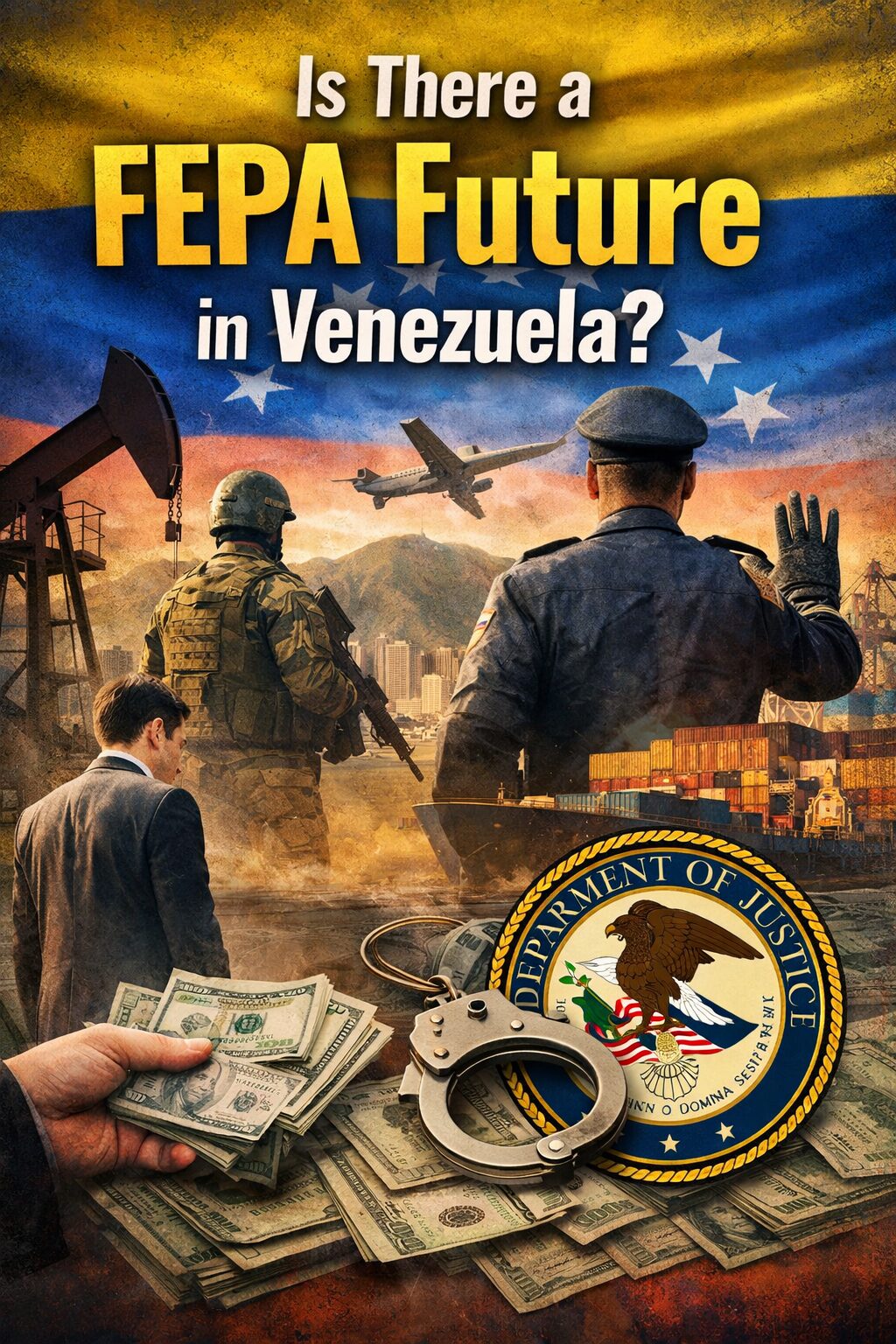
Is there a FEPA Future in Venezuela?

For U.S. compliance professionals, few jurisdictions raise as many red flags as Venezuela. Decades of entrenched corruption, state capture of key industries, economic collapse, weak rule of law, and the legacy of PdVSA have made the country a case study in what happens when corruption becomes systemic rather than episodic. Now that geopolitical and energy realities are shifting, some U.S. companies are again evaluating whether and how to reenter the Venezuelan market.

Against that backdrop, the passage of the Foreign Extortion Prevention Act (FEPA) represents one of the most significant developments in anti-corruption enforcement in nearly half a century. The question compliance officers are now asking is a practical one: can FEPA actually be used to prevent bribery and corruption for U.S. companies returning to Venezuela, or is it merely a symbolic addition to an already strained enforcement framework?

The answer, as with most compliance questions, is nuanced. FEPA is not a silver bullet. But when properly understood and operationalized, it can meaningfully change the risk calculus for companies operating in high-extortion environments like Venezuela.

The Historic Gap in the FCPA

For decades, the compliance community has lived with a fundamental asymmetry in U.S. anti-corruption law. The Foreign Corrupt Practices Act is a supply-side statute. It criminalizes the offering or payment of bribes by U.S. companies and individuals, but it does not criminalize the demand for those bribes by foreign officials. This gap has long distorted incentives on the ground.

In jurisdictions such as Venezuela, bribery is rarely framed as a voluntary transaction. It is far more often presented as a demand, a condition of doing business, or even a threat, as in the case of extortion. Officials do not ask politely. They delay permits, block shipments, threaten arrests, or endanger employee safety. Until FEPA, U.S. law largely treated this as background noise rather than a prosecutable offense.

FEPA directly addresses that gap by criminalizing the solicitation or acceptance of bribes by foreign officials from U.S. persons or companies. In doing so, it finally targets the demand side of corruption and aligns U.S. law more closely with how bribery actually operates in high-risk countries.

Why Venezuela Is the Ultimate Test Case

If FEPA can work anywhere, it should work in Venezuela. The country’s corruption ecosystem is characterized by pervasive extortion across customs, energy, transportation, security, immigration, and tax authorities. Payments are often demanded not to gain an advantage but to avoid harm. This distinction matters. In Venezuela, the compliance challenge is not simply rogue employees paying bribes. It is employees facing credible threats to liberty, safety, or health. FEPA explicitly recognizes this reality by treating extortion by a foreign official as a criminal act rather than merely a compliance failure by the company.

That framing gives compliance officers something they have long lacked: a legal backbone to support a firm refusal posture. Companies can now say, with credibility, that the demand itself is illegal under U.S. law and subject to DOJ enforcement, even if the official is located abroad.

Extortion, Facilitation, and the Compliance Trap

One of the most dangerous compliance traps in Venezuela has always been the mislabeling of extortion payments. Under the FCPA, facilitation payments occupy a narrow and controversial exception. Extortion payments, however, were never facilitation payments. They were survival payments. FEPA eliminates any lingering ambiguity. Extortion payments involving threats to life, liberty, or health are now clearly illegal, not merely discouraged. This forces compliance programs to confront uncomfortable operational realities.

Policies must explicitly distinguish facilitation from extortion. Employees must be trained that the company will support them if they are threatened, but that any such payment must be immediately documented, accurately recorded, and escalated. Book and record accuracy becomes critical. Mischaracterizing extortion as a routine expense is now a standalone risk under FEPA, not merely an FCPA accounting issue.

FEPA as a Deterrent Tool, Not Just an Enforcement Tool

One of the most overlooked aspects of FEPA is its potential deterrent effect. The statute introduces the possibility of DOJ investigations targeting foreign officials, including public naming and reporting requirements. For officials who interact with U.S. companies, this creates reputational and diplomatic risk that did not previously exist. In Venezuela, where many officials rely on international travel, financial access, and political legitimacy, even the threat of U.S. scrutiny can matter. FEPA does not require immediate extradition to have an impact. The mere existence of a credible enforcement pathway can alter behavior at the margins.

For compliance officers, this means FEPA can be used proactively. Risk assessments should explicitly incorporate FEPA exposure. Third-party due diligence should assess patterns of extortion, not just a history of bribery. Contractual language should reference the reporting obligations for extortion. Training should include scenario-based exercises where employees practice refusing demands and escalating threats.

The Limits of FEPA in Venezuela

None of this should be overstated. FEPA will not cleanse Venezuela of corruption. Extradition of Venezuelan officials is unlikely. Local enforcement cooperation will be minimal. Many officials operate with de facto immunity. But compliance effectiveness has never depended on perfect enforcement. It depends on shifting incentives, setting expectations, and protecting employees. FEPA strengthens all three. From a DOJ perspective, FEPA also changes cooperation dynamics. Companies that proactively document extortion demands, preserve evidence, and report credible threats may be viewed very differently from companies that quietly pay and rationalize. In a Venezuela reentry scenario, that distinction could be outcome-determinative.

What Compliance Officers Should Do Now

For companies considering Venezuela, FEPA must be embedded into program design from day one. This includes updating anti-corruption policies, revising travel and security protocols, enhancing incident reporting mechanisms, and briefing boards on the new enforcement landscape. Most importantly, compliance officers must be realistic. FEPA does not eliminate the need for robust internal controls. It heightens the consequences of getting them wrong. Venezuela will remain a high-risk jurisdiction regardless of statutory innovation.

Five Key Takeaways for the Compliance Professional

1. FEPA Changes the Risk Conversation, Not Just the Law

FEPA fundamentally alters how compliance officers should frame corruption risk in high-extortion jurisdictions like Venezuela. It is no longer only about preventing improper employee payments. It is now about recognizing, documenting, and escalating illegal demands by foreign officials. This allows compliance to move from a defensive posture to a principled refusal backed by U.S. law.

2. Extortion Must Be Explicitly Addressed in Policies and Training

Companies can no longer afford vague language that blurs the distinction between facilitation payments and extortion. Compliance programs must clearly define extortion as illegal, explain how it differs from facilitation payments, and provide step-by-step guidance for employees facing threats to health, safety, or liberty. Scenario-based training is no longer optional in Venezuela risk operations.

3. Books and Records Exposure Has Increased Under FEPA

Accurate documentation is now a frontline compliance control. Any payment made under duress must be recorded precisely and transparently. Mischaracterizing extortion payments as routine expenses or facilitation payments creates a separate and serious compliance failure. Accounting controls, escalation protocols, and audit reviews must be aligned accordingly.

4. FEPA Should Be Embedded in Risk Assessments and Third-Party Due Diligence

Venezuela reentry assessments should explicitly evaluate extortion risk, not merely bribery history. Third parties, customs brokers, security providers, and logistics partners are often the point of pressure. FEPA requires compliance officers to assess whether business partners operate in ways that expose the company to extortion demands and reporting failures.

5. FEPA Strengthens Compliance’s Role as a Strategic Advisor

FEPA gives compliance professionals a credible legal framework to advise management and the board on when and how business can be conducted safely. It reinforces the message that walking away from certain transactions is not risk aversion but risk management. In Venezuela, FEPA can help compliance professionals draw clearer red lines and protect both the company and its people.

The Bottom Line

So, could FEPA be used to prevent bribery and corruption for U.S. companies returning to Venezuela? Not entirely. But it can materially reduce risk, empower employees, and change how companies engage with corrupt systems. For the first time, U.S. law squarely acknowledges what compliance professionals have always known: bribery often begins with a demand. By criminalizing that demand, FEPA gives companies a stronger legal and ethical foundation to say no.

In a country like Venezuela, that may be the most important compliance tool of all.

Categories
FCPA Compliance Report

FCPA Compliance Report – Navigating Export Control and Trade Sanction Challenges in Venezuela: Insights from Brent Carlson

Welcome to the award-winning FCPA Compliance Report, the longest-running podcast in compliance. In this inaugural episode of 2026, Tom Fox welcomes back Brent Carlson, a specialist in trade and economic sanctions, focusing on compliance issues related to Venezuela.

Tom and Brent discuss the shifting political landscape, potential business opportunities in the energy sector, and the steps compliance professionals need to take to navigate new regulations and restrictions from the export control and trade sanctions perspective. Brent emphasizes the importance of a robust, business-aligned compliance strategy, a non-siloed approach involving all risk disciplines, and proactive dialogue with regulators. They also discuss the heightened enforcement landscape and the need for companies to remain vigilant and adaptable in a rapidly changing global environment.

Key highlights:

  • Focus on Venezuela: Navigating Export Controls and Sanctions
  • Business Opportunities and Risks in Venezuela
  • Importance of Understanding Business Operations
  • Board of Directors: Asking the Right Questions
  • Geopolitical Changes and Risk Management

Resources:

Brent Carlson on LinkedIn

Red Flags Rising website

Tom Fox

Five-Part Blog Post Series on Doing Business in Venezuela on the FCPA Compliance and Ethics Blog

Instagram

Facebook

YouTube

Twitter

LinkedIn

Categories
Blog

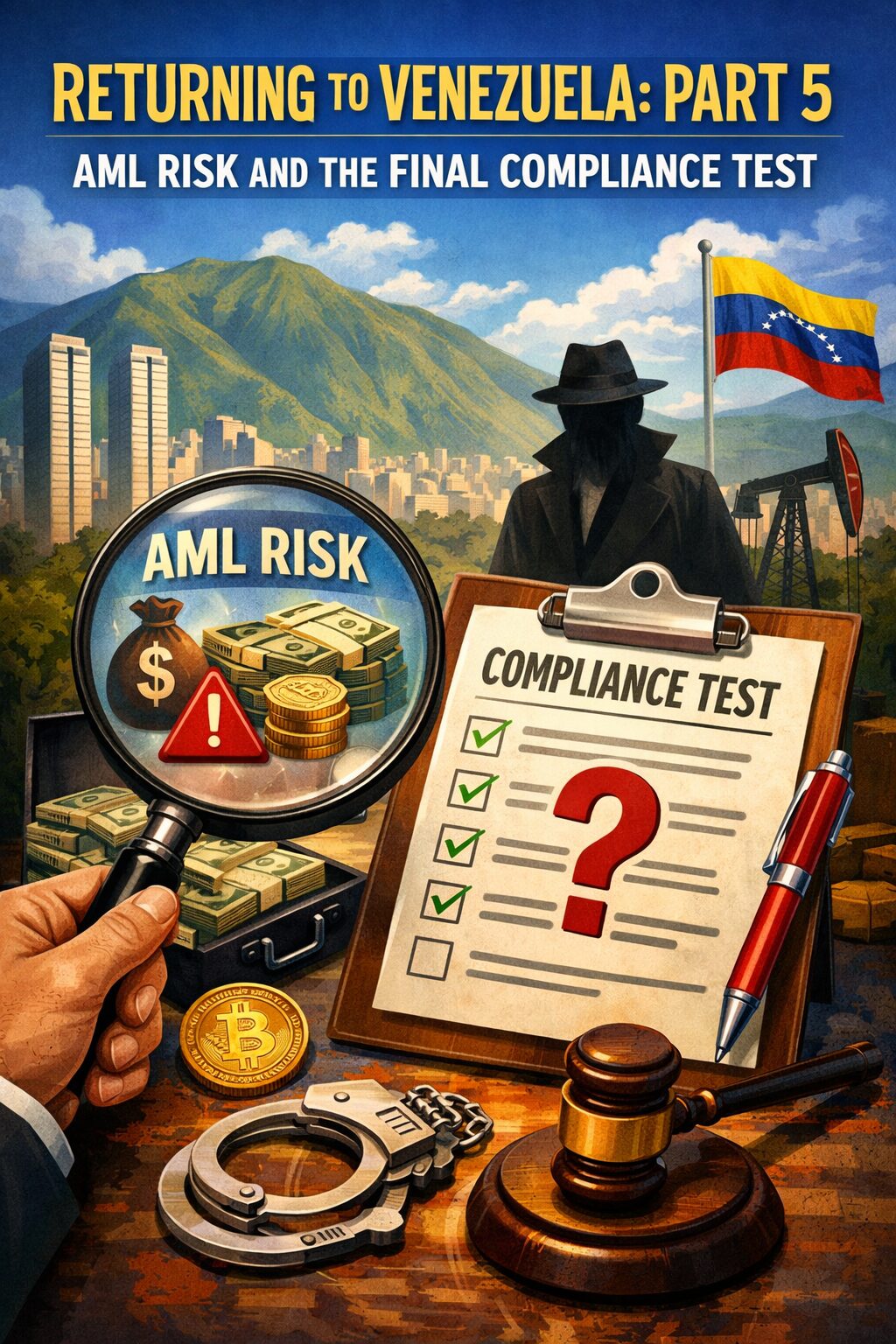
Returning to Venezuela: Part 5 – AML Risk and the Final Compliance Test

In this five-part series, I have walked through the core compliance risks US energy companies will face as they consider a return to Venezuela. We began with bribery and corruption and the long shadow of PdVSA (Parts 1 & 2). We moved through export controls (Part 3), security risks (Part 4), and the broader operational and strategic challenges of working in one of the most complex risk environments in the world. But this final post is different. Money laundering risk is not simply another risk category. It is the connective tissue that binds all the others together.

If bribery is how improper value enters the system, money laundering is how it is disguised, moved, and legitimized. If export control violations create pressure to reroute goods or payments, money laundering techniques make that rerouting possible. If security risks require local intermediaries, cash payments, or opaque vendors, those same decisions create AML exposure. For the compliance professional, money laundering risk in Venezuela is the capstone test of whether the program actually works.

The Regulatory Frame: FinCEN, ECCP, and Correspondent Banking Reality

Any AML discussion must start with expectations. US regulators have been explicit. The AML program pillars articulated by the Financial Crimes Enforcement Network (FinCEN) are not optional abstractions. They are operational requirements: risk-based controls, internal policies, independent testing, training, and designated responsibility.

Overlay that with the Department of Justice Evaluation of Corporate Compliance Programs (ECCP), which asks whether controls are designed, implemented, tested, and actually effective. Then add the reality of correspondent banking risk. Even if a US energy company does not directly move funds through US banks, its banking partners will apply US standards. Banks do not absorb Venezuela’s risk on behalf of their customers. They de-risk. Compliance failures upstream become frozen accounts downstream. This is why AML must be treated as an enterprise risk, not a compliance side project.

Operating Under Licenses Does Not Reduce AML Risk

This blog assumes that operations occur under general licenses, specific licenses, or wind-down authorizations issued by the Office of Foreign Assets Control. That matters for sanctions analysis, but it does not reduce AML exposure. Licenses permit activity. They do not cleanse counterparties, validate payment flows, or excuse weak controls. In fact, licensed activity often attracts heightened scrutiny because regulators know companies will push forward aggressively once permission is granted.

In Venezuela, licensed operations still involve high-risk state actors, politically exposed persons, weak financial institutions, and a long history of financial opacity. From an AML perspective, licenses are a starting gun, not a shield.

PdVSA as a Multi-Vector AML Risk

As we have previously noted, PdVSA must be treated not as a single counterparty risk but as multiple overlapping AML risk vectors. First, there is trade-based money laundering. Oil shipments are uniquely vulnerable to pricing manipulation, volume misstatements, phantom cargoes, and circular trading. In Venezuela, these risks are amplified by distressed infrastructure, a history of sanctions, and reliance on intermediaries.

Second, there is an intermediary risk. Shipping companies, charterers, port agents, and customs facilitators often operate through layered ownership structures. The farther one moves from the wellhead, the less transparency exists. Third, there is a risk to the payment structure. Delayed payments, in-kind arrangements, and third-country settlement accounts create fertile ground for laundering illicit proceeds. When oil becomes currency, AML controls must follow the barrel, not the invoice.

Venezuelan, Crypto, and Third-Country Banking Risk

Venezuelan banks operate under severe constraints. Many lack robust AML systems, and even well-intentioned institutions face talent shortages and technology gaps. As a result, payments often move through third-country banks. These arrangements create several red flags: unusual routing, non-USD transactions, inconsistent settlement timelines, and opaque beneficiary information. Each red flag increases the likelihood of SAR filings and banking friction. Compliance professionals must understand that correspondent banks apply their own risk lens. If they are uncomfortable, they will exit. That operational disruption becomes a compliance failure.

Crypto and alternative payment mechanisms are not edge cases in Venezuela. They are practical responses to currency instability, banking limitations, and sanctions pressure. From an AML standpoint, crypto introduces wallet anonymity, cross-border velocity, and limited recourse once funds move. Any use of crypto, whether by the company or its third parties, must be explicitly prohibited or tightly controlled. Silence is not neutrality. Silence is exposure.

Third Parties: Where AML, Bribery, and Security Collide

Local agents, logistics providers, customs brokers, and security vendors represent the highest combined risk in Venezuela. These third parties often operate in cash-intensive environments, maintain close ties to government actors, and perform functions critical to business continuity. Family-owned and politically connected vendors demand enhanced due diligence. That means beneficial ownership verification, source-of-funds analysis, ongoing monitoring, and contractual audit rights. Initial diligence alone is insufficient. Relationships evolve, and risk escalates quickly.

This is where the bribery blog, the security blog, and this AML blog converge. The same third party that creates bribery risk also creates money laundering risk. Controls must be integrated, not siloed.

The Operational Reality: This Is Manageable If You Manage It

Despite these risks, this is not a counsel of despair. US companies have operated in high-risk jurisdictions before. The key is realism. AML programs in Venezuela cannot rely on annual certifications, static risk assessments, or generic policies. They require transaction-level visibility, real-time escalation, and empowered compliance personnel. Friction with the business is inevitable and necessary.

Venezuela-Specific AML Operational Checklist

Below is a practical, compliance-focused checklist for operating in Venezuela:

Risk Assessment

  • Conduct a Venezuela-specific AML risk assessment tied to operations, not geography alone
  • Map payment flows end-to-end, including third-country routing
  • Identify trade-based money laundering scenarios tied to oil shipments

Policies and Controls

  • Prohibit unauthorized crypto usage explicitly
  • Require documented economic justification for all intermediaries
  • Establish clear escalation thresholds for delayed or rerouted payments

Third-Party Due Diligence

  • Perform enhanced due diligence on all local agents, logistics providers, customs brokers, and security vendors
  • Verify beneficial ownership and political exposure
  • Assess the source of funds and expected transaction behavior

Transaction Monitoring

  • Monitor oil pricing, volumes, and delivery discrepancies
  • Flag unusual settlement patterns or changes in banking instructions
  • Integrate AML alerts with sanctions and export control monitoring

Training and Culture

  • Provide targeted AML training for operations, finance, and procurement teams
  • Reinforce speak-up mechanisms tied to payment and logistics concerns

Testing and Auditing

  • Conduct targeted audits focused on high-risk transactions
  • Test controls against realistic laundering typologies
  • Document remediation and program enhancements

AML as the Series Capstone

This series has shown that returning to Venezuela is not a single compliance decision. It is a systems test. Money laundering risk sits at the center of that test because it exposes weaknesses everywhere else. If your AML program can function effectively in Venezuela, it can function anywhere. If it cannot, no license, policy, or assurance letter will save it. This is doable. But only if compliance is brought in early, appropriately resourced, and empowered to say yes, if.

Categories
Blog

Returning to Venezuela: Part 4 – From Physical Security to Enterprise Risk

In this five-part series, I have walked through the core compliance risks US energy companies will face as they consider a return to Venezuela. We began with bribery and corruption and the long shadow of PDVSA (Parts 1 & 2), then moved to export controls (Part 3).

Today, we consider the security risks and the broader operational and strategic challenges of working in one of the most complex risk environments in the world. For many compliance professionals, “security” still conjures images of guards, gates, and cameras. It is treated as an operational afterthought or a line item buried somewhere between facilities and travel. The conversation I recently had with Marc Duncan, COO at Salus Solutions, should permanently disabuse compliance officers, boards, and senior executives of that narrow view. As Duncan describes it, security is not a physical function. It is an enterprise risk discipline. It is continuous monitoring at its purest. And it is inseparable from culture, governance, and decision-making authority.

For compliance professionals, especially those operating globally or in volatile environments, this conversation offers a masterclass in how risk really works when theory collides with reality.

The First Compliance Failure: Thinking You Already Know the Risk

One of the most striking observations Duncan makes is also one compliance professionals hear far too often after a failure: “We did not see that coming.” As Duncan notes, that usually means the organization was not looking. They had a preconceived notion of their threats, locked onto a narrow risk model, and failed to challenge their assumptions. This is a classic compliance failure. Risk assessments that confirm management’s beliefs instead of testing them are not risk assessments. They are comfort exercises.

True threat assessment, whether physical, cyber, financial, or reputational, begins with abstraction. You step back, examine the environment holistically, and then break it down across functions. Duncan’s approach mirrors what the DOJ expects from a mature compliance program: financial risk, personnel risk, operational risk, cyber risk, structural risk, and external conditions assessed together, not in silos. Compliance professionals should take note. If your risk assessment is static, annual, and checklist-driven, you are already behind.

An additional framework compliance professionals should consider integrating into this approach is Threat and Hazard Identification and Risk Assessment (THIRA). While THIRA originated in the public sector and homeland security context, its core discipline translates directly to corporate compliance and enterprise risk management. THIRA forces organizations to first identify credible threats and hazards, assess their likelihood and impact, and only then evaluate existing capabilities and gaps. The discipline prevents the most common compliance failure: designing controls around assumed risks rather than actual ones.

A THIRA has three key steps:

  • Identify Threats and Hazards: Identify the threats and hazards that could impact them. These can include natural disasters such as hurricanes and earthquakes, technological hazards such as power outages, and human-caused events such as terrorism.
  • Assess Impacts: Once threats and hazards are identified, assess the potential impacts of these events. This involves understanding how these threats could affect people, property, and the environment.
  • Determine Capabilities: Based on the assessed impacts, determine the capabilities they need to address these threats and hazards. This includes identifying gaps in current capabilities and planning for resource allocation and training.

Used properly, THIRA complements a compliance risk assessment by grounding it in real-world scenarios, stress-testing assumptions, and aligning resources to consequence rather than convenience. In practice, compliance teams can use THIRA-style analysis to model disruptive events, validate whether policies and response plans would function under pressure, and ensure that authority, communications, and escalation protocols actually work in dynamic conditions. Like Duncan’s threat hub, THIRA is most effective when it is iterative, cross-functional, and embedded into daily decision-making rather than treated as a one-time exercise.

Continuous Monitoring Is Not a Buzzword in a Crisis Zone

In compliance circles, we often talk about continuous monitoring and continuous improvement. In high-risk environments, Duncan explains, these are not aspirational concepts. They are daily survival requirements. Threats change by the hour. Routes become unsafe. Infrastructure fails. Information degrades. Misinformation spreads intentionally. As Duncan makes clear, relying on sanitized reports or publicly available data alone is insufficient, particularly in places like Venezuela, where reliable information can be scarce and manipulated.

For compliance professionals, the parallel is obvious. If your organization relies solely on lagging indicators, static dashboards, or once-a-year training, you are operating on yesterday’s intelligence. A mature compliance program must be dynamic, responsive, and empowered to change course quickly.

Authority Matters More Than Policy

One of the most underappreciated insights in the discussion is the emphasis on delegated authority. Duncan is blunt: security teams must be empowered to make changes on the fly. Operations teams often resist this because they have a plan for the day. But rigid plans fail in dynamic environments. Compliance professionals should see themselves clearly in this description. How often does compliance identify a risk, only to be overruled by operational convenience? How often does policy exist without authority to enforce or adapt it?

This is not merely an execution issue. It is a governance failure. If compliance, security, or risk professionals lack real authority, then the program exists in name only.

Boards Are Often the Weakest Link

Perhaps the most candid portion of the conversation is Duncan’s discussion of boards of directors. Boards understand that risk exists, but they often do not understand their lane. Worse, they sometimes overstep based on assumptions rather than expertise, thereby influencing the organization’s security and risk culture to its detriment. This should resonate deeply with compliance professionals. Many compliance failures originate at the policy level. Boards check in periodically, hear a summary, and move on. They rarely engage with the complexity of the operating environment or the second- and third-order consequences of their decisions.

Duncan advocates for an ongoing relationship with boards or policy groups, not episodic briefings. Education is continuous. Risk is dynamic. Governance must keep pace. For compliance officers, this reinforces a critical point: board engagement is not about presentations. It is about sustained dialogue, shared understanding, and clearly articulated risk tolerance.

Culture Is Defined by Accepted Loss

One of the most insightful compliance lessons emerges from Duncan’s discussion of risk acceptance, particularly in the energy sector. Every organization accepts some level of loss. The problem arises when that acceptance is implicit, unexamined, or outdated. Compliance professionals should recognize this immediately. Risk tolerance that is not written down, debated, and revisited becomes invisible policy. It shapes behavior without accountability.

Duncan’s approach is instructive. He pushes organizations to explicitly articulate acceptable loss, document it, and use it as a guideline. When conditions change, that tolerance must be reassessed at the policy level. This is exactly how compliance culture should function. Silence is not neutrality. It is permission.

Security Is Not Just Physical: Insider Threats and Human Risk

If compliance professionals think security stops at the perimeter, Duncan quickly disabuses them of that notion. Insider threats loom large. Alcoholism, substance abuse, personal stressors, and poor life choices can all create vulnerabilities. So can espionage, coercion, and cultural dysfunction.

This is compliance territory. Training that treats employees like mushrooms kept in the dark will fail. Effective programs connect behavior to consequences: personal, professional, financial, and reputational. Duncan’s emphasis on “wholesome” training aligns with modern compliance expectations. Employees must understand not just what is prohibited, but why it matters, how it affects the organization, and how it exposes them personally.

Partnering with Locals: A Lesson in Third-Party Risk

One of the most counterintuitive lessons for many executives is the need to partner with local communities, vendors, and even security forces. Cutting locals out of economic participation breeds sabotage and resentment. Compliance professionals should immediately recognize the parallel to third-party risk management. Isolation does not reduce risk. Engagement does. Oversight, contracts, inspections, and partnerships create shared incentives and stability.

Whether it is food supply, logistics, or perimeter security, Duncan emphasizes layered controls and local investment. This is not unlike building a resilient third-party ecosystem rather than relying on transactional relationships.

The Threat Hub: A Compliance Blueprint

Perhaps the most transferable concept for compliance professionals is the “threat hub.” Duncan describes a cross-functional, daily forum where representatives from legal, finance, operations, security, and other functions review threats, vulnerabilities, and operational changes. This is what an effective compliance program should look like. Not a standalone department issuing policies, but an integrated function embedded across the organization, sharing intelligence, and adapting in real time.

Finally, Duncan issues a challenge that every compliance officer should take seriously: crisis exercises will break you. They expose gaps in policy, logistics, communications, authority, and preparedness that no binder ever reveals. Compliance professionals often assume crisis plans are adequate because they exist. Duncan’s experience says otherwise. Without realistic testing, organizations are unprepared when it matters most.

Final Thoughts

This conversation makes clear that security, compliance, and risk are not separate disciplines. They are different lenses on the same problem: how organizations survive and succeed in uncertain environments.

For compliance professionals, the takeaway is simple but uncomfortable. Static programs fail. Assumptions kill preparedness—authority matters. Culture is shaped by what leaders tolerate. And boards must be educated partners, not distant overseers. In high-threat environments, failure is immediate and unforgiving. In corporate compliance, it is slower, but no less certain.

The choice, as always, is whether to learn before the crisis or after it.

Join us tomorrow for Part 5 as we conclude our series by looking at AML risks associated with returning to Venezuela.


Categories
Blog

Returning to Venezuela: Part 3 – Export Controls and the Illusion of “Reopening”

We continue to explore what the ‘reopening’ of Venezuela to US energy companies means for the compliance professional. Over the last two days, we considered the corruption issues in Parts One and Two of this blog post series. Today in Part 3, we look at export control and trade sanction issues. I spoke with Brent Carlson, founder of Red Flags Rising Solutions LLC, for his insights.

When the White House announces that U.S. oil companies may be returning to Venezuela, the business press immediately begins talking about opportunities. Compliance professionals should be talking about risk. Not hypothetical risk. Not academic risk. Real, layered, enterprise-threatening risk that sits at the intersection of export controls, sanctions, geopolitics, corruption, security, and board oversight. The conversation I recently had with Carlson makes one thing abundantly clear: Venezuela is not “opening.” It is recalibrating. And compliance programs that treat this moment as a return to business as usual will fail.

Venezuela Remains a High-Risk Jurisdiction by Design

Let us start with first principles. Venezuela remains designated as a D:5 country under the Export Administration Regulations (EAR). That places it in the most restrictive category, alongside jurisdictions such as Iran and North Korea. Even the shipment of EAR99 items can be problematic under the current framework.

That legal reality did not change simply because the President met with U.S. energy executives. Carlson is clear on this point. Whatever policy adjustments may come will be sector-specific, narrowly tailored, and aligned with geopolitical priorities, particularly oil production. There will not be a wholesale rollback of export controls or sanctions. For compliance professionals, this means one thing: the law today is the law as it existed yesterday. Until the Bureau of Industry and Security (BIS) and OFAC issue formal guidance, licenses, or regulatory amendments, nothing has changed.

Regulatory Enforcement Follows Politics, but Law Follows Process

One of the most important compliance insights Carlson offers is that regulatory enforcement follows political drivers, which in turn follow geopolitical drivers. That is undoubtedly true. But it is also where companies get themselves into trouble. Political signaling is not legal authorization. Tweets, speeches, and press briefings do not override the Export Administration Regulations, OFAC sanctions, or anti-money laundering laws. Compliance programs must be built to withstand whiplash, not chase headlines.

This is especially critical in Venezuela, where any meaningful restart of oil production will require billions of dollars, long project timelines, complex infrastructure, and sustained government engagement. These are not quick deals. They are multi-year commitments that must be compliant from day one.

Start With the Business, but Do Not Stop There

Carlson emphasizes that compliance analysis must begin with the business opportunity itself. What is the company actually trying to do? What products or services will be provided? Who will operate them? Where will the equipment go? Who will maintain it? For compliance professionals, this requires operational fluency that goes far beyond policy review. You must understand the business process step by step. Not in the abstract. Literally, transaction by transaction.

This exercise does more than identify export control risks. It exposes corruption, diversion, money laundering, security, and reputational risks. Venezuela is not a jurisdiction where silos survive.

Dual-Use Risk Is Not Theoretical in Venezuela

Any company operating in the energy sector must assume heightened scrutiny around dual-use items. Control systems, industrial machinery, software, and communications technology can all be repurposed. Carlson makes an important point here. Companies that manufacture or deploy these items already know where the risks are. The issue is not ignorance. The problem is prioritization and escalation.

This is where proactive engagement with the BIS becomes essential. Unlike some areas of compliance, export controls encourage dialogue with regulators. Companies can and should engage BIS field offices early to discuss proposed transactions, licensing pathways, and regulatory obstacles. This is not lobbying. It is compliance.

One of the most powerful insights in our discussion is the call for compliance professionals to sit down with business operations and map every operational step. This is not busywork. It is risk triage. Too often, compliance reviews occur after a deal is already emotionally committed. At that point, compliance becomes the obstacle rather than the enabler. Carlson is explicit: sales and operations teams do not want to waste time on deals that will collapse under regulatory scrutiny. When compliance is embedded early, it improves deal quality. It filters out bad opportunities and strengthens good ones. That is value creation.

Siloed Compliance Will Fail in Venezuela

If there is one jurisdiction where compliance silos are fatal, it is Venezuela. Export controls intersect with sanctions. Sanctions intersect with AML. AML intersects with corruption. Corruption intersects with security. Security intersects with human rights and ESG. Carlson cites enforcement actions where companies failed because information did not flow across functions. Finance saw one risk. Operations saw another. Compliance saw a third. No one saw the whole picture.

For Venezuela, companies must adopt a non-siloed, enterprise-wide risk model. Export control specialists must talk to anti-corruption teams. Treasury must talk to security. Legal must talk to operations. This is not optional.

Board Oversight Must Evolve Beyond Periodic Updates

Boards of directors will play a decisive role in whether companies succeed or fail in Venezuela. Carlson is clear that boards must demand updated, transaction-specific risk assessments focused on central compliance risks, not generic program health. This is not about micromanagement. It is about governance. Boards must understand that Venezuela presents a dynamic risk environment where geopolitical shifts can occur overnight. The right board questions are not “Do we have a compliance program? ” They are:

  • What export control risks are central to this opportunity?
  • What sanctions exposure remains?
  • How are we monitoring changes in real time?
  • What is our exit strategy if conditions reverse?

The Case for a Standing Enterprise Risk Committee

Carlson raises a critical governance concept: the need for a standing, cross-functional risk committee empowered to act quickly. Not an ad hoc task force. Not an annual review. A permanent capability. We are no longer in a stable geopolitical environment. Long-trusted partners can become sanctioned entities within weeks. Supply chains built over decades can collapse overnight. For compliance professionals, this reinforces the need for real-time risk sensing, escalation protocols, and decision authority. Venezuela is simply the proving ground.

Enforcement Is Coming, Not Fading

The most sobering warning Carlson offers is about enforcement. The U.S. government has been signaling for some time that export control enforcement will increase. DOJ’s Trade Fraud Task Force, BIS outreach visits, and expanded definitions of “knowledge” under the EAR all point in the same direction. Compliance professionals should recognize the parallel to early FCPA enforcement. Policies alone are not enough. Programs must demonstrate that they identify high-probability risks, escalate them, and act. Testing matters. Documentation matters. Integration matters.

Final Thoughts

The prospect of renewed oil activity in Venezuela is not a green light for compliance. It is a stress test. Companies that approach this moment with discipline, humility, and integrated risk management can create value while protecting themselves. Companies that treat it as a political reopening will find themselves exposed on multiple fronts. For compliance professionals, this is a defining moment. The question is not whether Venezuela is open for business. The question is whether your compliance program is ready for the real world.