Categories
Blog

Will Trump Suspend FCPA Enforcement in Venezuela?

Now that I have your attention with this clickbait title, I want to explore today what the Venezuelan imbroglio may mean for compliance professionals and energy companies who are looking at either entering the Venezuelan market or, in many cases, re-entering it after the not invasion (since it was not a military action authorized by Congress); not a police action (that the Korean War takes the moniker); but the capture of President Maduro and his wife to purloin Venezuela’s oil. As noted by New York Times (NYT) columnist Thomas Friedman today, “It is now clear that Trump’s priority in capturing President Nicolás Maduro of Venezuela was not to make that country safe for the restoration of democracy but to make it safe for the restoration of American oil companies’ dominance over Venezuelan oil extraction.”

But there are multiple obstacles to the US getting to and removing Venezuelan oil. As the Wall Street Journal (WSJ) noted, “But getting foreign companies to flock back to Venezuela will be a massive challenge. Chevron is the only major U.S. oil company and the country’s largest foreign investor. Other oil executives will be forced to gauge the stability on the ground in a country where the industry has fallen into disarray after more than two decades of mismanagement and corruption.” Economically, it may make little to no sense.

Corruption and PDVSA

But from the compliance perspective, there is the issue of corruption. As I wrote back in 2017, “Of all the stench from corruption, not much is more odious than that from the Venezuelan state oil company Petróleos de Venezuela SA (PDVSA). Whether it is shaking down contractors for Rolex watches to schedule a meeting, requiring a bribe to get payments on outstanding invoices, or simply good old-fashioned cash to get on a bid list, PDVSA is perceived to be one of the most institutionally corrupt energy companies around.”

How President Trump plans to get the Venezuelan oil out of the country is not known at this point. But unless he orders US energy companies to put boots on the ground to rebuild PdVSA’s decrepit infrastructure, those same companies will have to deal with the same corrupt PdVSA officials.

In the context of Venezuela’s reopening to Western energy investment, President Trump’s decision to pause enforcement of the Foreign Corrupt Practices Act (FCPA) reflected a broader strategic pivot toward what his administration calls economic competitiveness and national security. His Executive Order issued in early 2025 directed the Department of Justice (DOJ) to halt new FCPA investigations for at least 180 days while it reviewed enforcement priorities on the premise that strict anti-bribery enforcement, as it has traditionally been applied, “impedes U.S. foreign policy objectives” and disadvantages American companies relative to global competitors. The policy rationale was that, in markets perceived as corrupt or opaque, rigorous FCPA enforcement has historically dissuaded US firms from competing effectively, particularly against foreign rivals who do not face the same legal constraints. This argument, which resonated with a strand of populist economic nationalism, frames FCPA enforcement as a barrier to energy companies securing strategic resources, such as Venezuelan oil, rather than as a purely ethical safeguard.

From a compliance professional’s lens, this recalibration had two implications. On one hand, it might reduce the immediacy of DOJ scrutiny for conduct in jurisdictions like Venezuela, where corruption risk is endemic. On the other hand, the suspension does not abolish the law; FCPA remains on the books, and enforcement priorities can flip with the political winds or through congressional action. Moreover, the suspension could embolden local partners or intermediaries to push for irregular payments under the assumption that US enforcement is weak, creating significant red-flag risks for energy companies seeking to operationalize robust controls aligned with the DOJ’s Evaluation of Corporate Compliance Programs (ECCP) standards. Even under a relaxed enforcement regime, a strong compliance program grounded in the ECCP’s emphasis on risk-based design, continuous monitoring, and senior-management accountability remains a critical commercial and legal hedge.

Compliance Going Forward

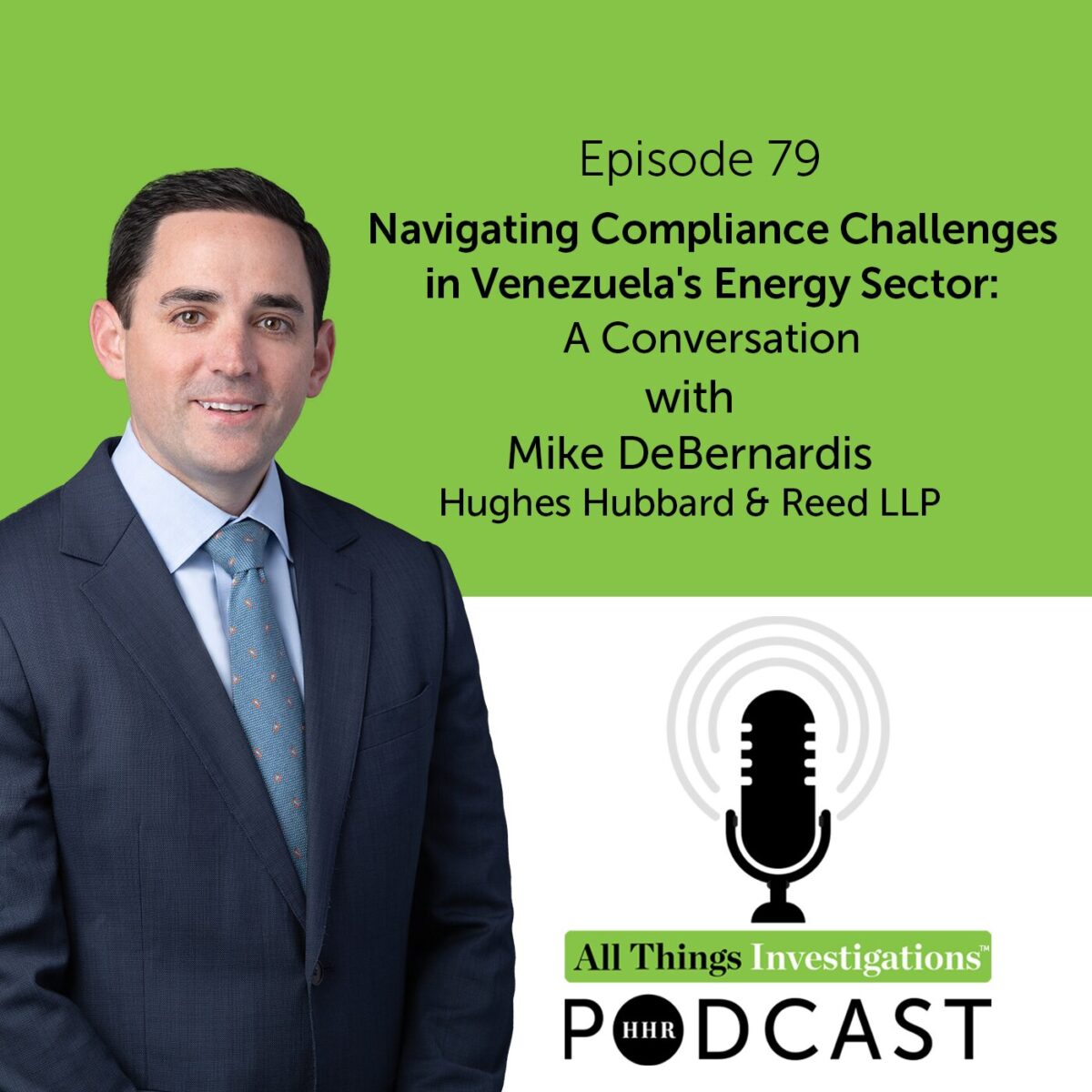
One of the most important takeaways for compliance professionals confronting Venezuela is the necessary shift from reflexive risk avoidance to disciplined risk management. Mike DeBernardis told me that the modern compliance mandate “is no longer to say ‘no’ when risk is high; it is to say ‘yes, if’ the risk can be identified, structured, and controlled.” This is not a philosophical shift. It is explicitly embedded in the ECCP, which does not reward companies for avoiding difficult markets but instead evaluates how effectively they manage risk in precisely those environments.

In the Venezuelan energy context, this means compliance must be deeply embedded in the business strategy from the outset. Compliance professionals must fully understand the proposed energy project, including its commercial objectives, operational footprint, and timelines. They must map every anticipated interaction with the Venezuelan state, particularly with state-owned enterprises, regulators, customs authorities, and security services.

From there, compliance professionals must identify where corruption pressure is most likely to arise, not in theory but in practice, based on how the business will actually operate. Only then can bespoke controls be designed to address those specific risks. The ECCP repeatedly emphasizes that effective compliance programs are well-designed, adequately resourced, and genuinely empowered. This is where compliance earns its seat at the strategy table. If compliance is engaged only after contracts are signed and capital committed, its ability to influence outcomes is sharply diminished, and the program is far more likely to fail under real-world pressure.

If initial program design is the foundation, continuous monitoring is the load-bearing structure. Energy operations in Venezuela will not tolerate static compliance approaches built around annual certifications or periodic check-the-box reviews. The ECCP explicitly asks whether companies test the effectiveness of their controls and whether they respond promptly and meaningfully to issues as they arise. In a high-risk jurisdiction like Venezuela, corruption risk will evolve rapidly as political conditions, counterparties, and regulatory expectations shift. Compliance programs must therefore be dynamic.

This requires live monitoring of payments, invoices, and reimbursements, particularly those involving third parties and state-linked entities. It requires regular compliance check-ins with project teams operating on the ground and under real-time pressure. It also requires targeted audits that focus narrowly on high-risk transactions rather than broad, generic reviews that miss the point. When red flags appear, swift remediation is essential, including the authority to pause transactions or relationships when necessary. Friction with the business is inevitable in this environment. Under the ECCP, however, that friction is not evidence of failure. It is evidence of independence, effectiveness, and seriousness of purpose.

For energy companies, Venezuela may well be worth the risk. The size of the opportunity, particularly in hydrocarbons, may make disengagement an increasingly unrealistic option. For compliance professionals, however, the mandate is clear and unforgiving. Programs must be designed with the assumption that pressure will occur, that shortcuts will be suggested, and that local counterparts may view compliance as negotiable.

Effective programs anticipate misconduct rather than react to it, and they are built to withstand scrutiny not only from local stakeholders but also from US enforcement authorities looking back months or years later. This requires compliance professionals to think and act as strategic risk managers, not policy custodians. They must insist on visibility into business decisions, demand resources commensurate with risk, and maintain the authority to intervene when necessary.

In the Venezuelan context, success will not be defined by the absence of issues but by how quickly and credibly the organization detects and addresses them. That approach is not merely about satisfying regulatory expectations. It is about protecting the company’s people, assets, and reputation in one of the most challenging operating environments in the world. That is not just compliance. That is strategic risk management at its purest and most demanding.

Categories
Daily Compliance News

Daily Compliance News: January 8, 2026, The Sneaker Fraud Edition

Welcome to the Daily Compliance News. Each day, Tom Fox, the Voice of Compliance, brings you compliance-related stories to start your day. Sit back, enjoy a cup of morning coffee, and listen in to the Daily Compliance News. All, from the Compliance Podcast Network. Each day, we consider four stories from the business world, compliance, ethics, risk management, leadership, or general interest for the compliance professional.

Top stories include:

  • Energy companies say Venezuela owes them billions. (NYT)
  • Sneaker fraud leads to a 70-month prison sentence. (DW)
  • More brand-creator partnerships. (Forbes)
  • Pilot of blown-door aircraft sues Boeing. (BI)
Categories
Daily Compliance News

Daily Compliance News: January 7, 2026, The 6 Years in Singapore Edition

Welcome to the Daily Compliance News. Each day, Tom Fox, the Voice of Compliance, brings you compliance-related stories to start your day. Sit back, enjoy a cup of morning coffee, and listen in to the Daily Compliance News. All, from the Compliance Podcast Network. Each day, we consider four stories from the business world, compliance, ethics, risk management, leadership, or general interest for the compliance professional.

Top stories include:

  • Energy companies are cautious about Venezuela. (NYT)
  • Malaysia to up the ABC ante. (DW)
  • British national sentenced to 6 years in jail over Wirecard fraud. (FT)
  • How corporate security has changed. (WSJ)
Categories
Daily Compliance News

Daily Compliance News: February 28, 2025, The Extradited to China Edition

Welcome to the Daily Compliance News. Each day, Tom Fox, the Voice of Compliance, brings you compliance-related stories to start your day. Sit back, enjoy a cup of morning coffee, and listen in to the Daily Compliance News—all from the Compliance Podcast Network. Each day, we consider four stories from the business world: compliance, ethics, risk management, leadership, or general interest for the compliance professional.

Top stories include:

  • Thailand Deports Uyghurs to China. (WSJ)
  • Trump revoked Chevron’s license to do business in Venezuela. (WSJ)
  • The cryptocurrency firm founder extradited to the US. (Reuters)
  • NJ men plead guilty to bribing at EWR. (InsiderNJ)

For more information on the Ethico Toolkit for Middle Managers, available at no charge, click here.

Check out the FCPA Survival Guide on Amazon.com.

Categories
Daily Compliance News

Daily Compliance News: September 18, 2024 – The Fireworks Coming Edition

Welcome to the Daily Compliance News. Each day, Tom Fox, the Voice of Compliance, brings you compliance-related stories to start your day. Sit back, enjoy a cup of morning coffee, and listen to the Daily Compliance News. All from the Compliance Podcast Network.

Each day, we consider four stories from the business world: compliance, ethics, risk management, leadership, or general interest for the compliance professional.

In today’s edition of Daily Compliance News:

  • Fireworks are coming in a bribery case against a retired Admiral. (WaPo)
  • Venezuela asks to delay CITGO sales. (Reuter)
  • First Flint, now Wolfsburg? (FT)
  • Astra-Zeneca employees arrested in China. (Bloomberg)


Categories
Daily Compliance News

Daily Compliance News: June 24, 2024 – The LinkedIn Lacks Humor Edition

Welcome to the Daily Compliance News. Each day, Tom Fox, the Voice of Compliance, brings you compliance-related stories to start your day. Sit back, enjoy a cup of morning coffee and listen to the Daily Compliance News. All from the Compliance Podcast Network.

Each day, we consider four stories from the business world: compliance, ethics, risk management, leadership, or general interest for the compliance professional.

In today’s edition of Daily Compliance News:

  • Does LinkedIn lack (or even need) humor? (FT)
  • Kaspersky leaders were sanctioned.  (WSJ)
  • The UK’s richest family was found guilty of worker abuse. (BBC)
  • Venezuela is set to join the FAFT Grey List. (Bloomberg)

For more information on the Ethico ROI Calculator and a free White Paper on the ROI of Compliance, click here.

Categories
Daily Compliance News

Daily Compliance News: January 30, 2024 – The Venezuelan Sanction Redux Edition

Welcome to the Daily Compliance News. Each day, Tom Fox, the Voice of Compliance, brings you compliance-related stories to start your day. Sit back, enjoy a cup of morning coffee, and listen to the Daily Compliance News. All from the Compliance Podcast Network. Each day, we consider four stories from the business world: compliance, ethics, risk management, leadership, or general interest for the compliance professional.

In today’s edition of Daily Compliance News:

  • WWE President resigns after allegations of assault and trafficking.  (NYT)
  • How Moro fell from grace. (FT)
  • Venezuelan sanctions are back on. (Bloomberg)
  • The first ADM shareholder suit for fraud was filed. (Reuters)

For more information on Ethico and a free White Paper on top compliance issues in 2024, click here.

Categories
Daily Compliance News

Daily Compliance News: August 25, 2023 – The FUD Edition

Welcome to the Daily Compliance News. Each day, Tom Fox, the Voice of Compliance brings to you compliance-related stories to start your day. Sit back, enjoy a cup of morning coffee, and listen in to the Daily Compliance News. All, from the Compliance Podcast Network. Each day we consider four stories from the business world, compliance, ethics, risk management, leadership, or general interest for the compliance professional.

  • Is crypto dead? (NYT)
  • End of the Spanish Kiss? (FT)
  • Venezuela makes last ditch appeal re: CITGO. (Reuters)
  • SFO drops ENRC investigation. (FT)
Categories
Daily Compliance News

Daily Compliance News: June 27, 2023 – The Wells Notices Edition

Welcome to the Daily Compliance News. Each day, Tom Fox, the Voice of Compliance brings to you compliance-related stories to start your day. Sit back, enjoy a cup of morning coffee, and listen in to the Daily Compliance News. All, from the Compliance Podcast Network. Each day we consider four stories from the business world, compliance, ethics, risk management, leadership, or general interest for the compliance professional.

  • Solar Winds execs receive Wells Notice. (Reuters)
  • Corruption hindering PdVSA. (InSight Crime)
  • Inhouse lawyers grapple with ESG demands. (FT)
  • SEC wants more information from small banks. (WSJ)
Categories
Daily Compliance News

April 4, 2023 – The Is FL Anti-Business Edition

Welcome to the Daily Compliance News. Each day, Tom Fox, the Voice of Compliance, brings you compliance-related stories to start your day. Sit back, enjoy a cup of morning coffee, and listen to the Daily Compliance News. All from the Compliance Podcast Network. Each day we consider four stories from the business world, compliance, ethics, risk management, leadership, or general interest for the compliance professional.

Stories we are following in today’s edition of Daily Compliance News:

·       Disney President says Florida under DeSantis is ‘anti-business.’ (WSJ)

·       Venezuela detains 44 more in a corruption probe. (Al Jazeera)

·       EY banned in Germany over Wirecard. (FT)

·       Italians wave good-bye to ChatGPT. (ComplianceWeek)