Categories
Podcasting for Business

Podcasting for Business – The Essential Role of Podcasting in Business Growth

Welcome to Podcasting for Business – The Book, where we dive into Megan Dougherty’s transformative book, Podcasting for Business – The Book. I’m your host, Tom Fox, and in this series, we will unpack the invaluable lessons and strategies from Megan’s book, which has quickly become the definitive guide for anyone looking to leverage podcasting as a powerful business tool. Whether you’re a seasoned podcaster or just considering how to get started, this podcast will walk you through Megan’s essential insights, from choosing the right podcast blueprint for your business to mastering the metrics that matter. Join me as we explore how to create, refine, and maximize the impact of your podcast, all through the lens of one of the most comprehensive resources available today.

In this concluding episode, Tom Fox and Megan Dougherty discuss the upcoming release of Megan’s book Podcasting for Business and why podcasting is vital for most businesses. They highlight the benefits of building relationships, trust, and authority and creating evergreen content. Tom passionately argues that every business should have a podcast, citing its cost-effectiveness and ability to reach a vast audience. Megan provides a balanced view, suggesting that while podcasting offers long-term benefits, its timing should be considered based on the business’s current stage. The episode concludes with a focus on the fun and strategic aspects of podcasting and a reminder that the book will be available on September 10th.

Key Highlights Include:

  • The Importance of Podcasting for Businesses
  • Cost-Effectiveness and Trust in Podcasting
  • When to Start a Podcast for Your Business
  • The Fun in Podcasting
  • Breaking the Rules and Best Practices

 Resources

Check out Podcasting for Business The Book

One Stone Creative

Connect with Megan on LinkedIn

 Tom Fox

Instagram

Facebook

YouTube

Twitter

LinkedIn


Categories
Compliance Tip of the Day

Compliance Tip of the Day: Compliance Training Governance Committee

Welcome to “Compliance Tip of the Day,” the podcast where we bring you daily insights and practical advice on navigating the ever-evolving landscape of compliance and regulatory requirements.

Whether you’re a seasoned compliance professional or just starting your journey, our aim is to provide you with bite-sized, actionable tips to help you stay on top of your compliance game.

Join us as we explore the latest industry trends, share best practices, and demystify complex compliance issues to keep your organization on the right side of the law.

Tune in daily for your dose of compliance wisdom, and let’s make compliance a little less daunting, one tip at a time.

In this episode, we consider how a Compliance Training Governance Committee can facilitate your overall compliance training regime.

For more information on the Ethico Toolkit for Middle Managers, available at no charge, click here.

Check out the full 3-book series, The Compliance Kids on Amazon.com.

Categories
The Ethics Experts

Episode 181 – Judy Spain

In this episode of The Ethics Experts, Nick welcomes Judy Spain.

Judith Winters Spain, J.D., CCEP, currently serves as the Compliance Program Consultant for the Georgia Independent College Association and serves on the Board, Society for Corporate Compliance and Ethics. She is a Professor Emeritus, an attorney licensed in Kentucky, Ohio, and Pennsylvania, and is a Certified Compliance and Ethics Professional.

LinkedIn
Higher Education Compliance: Blueprint for Success (Higher Education Compliance Series)
Higher Education Compliance: What Governing Boards Really Need to Know (Higher Education Compliance Series)

Categories
Corruption, Crime and Compliance

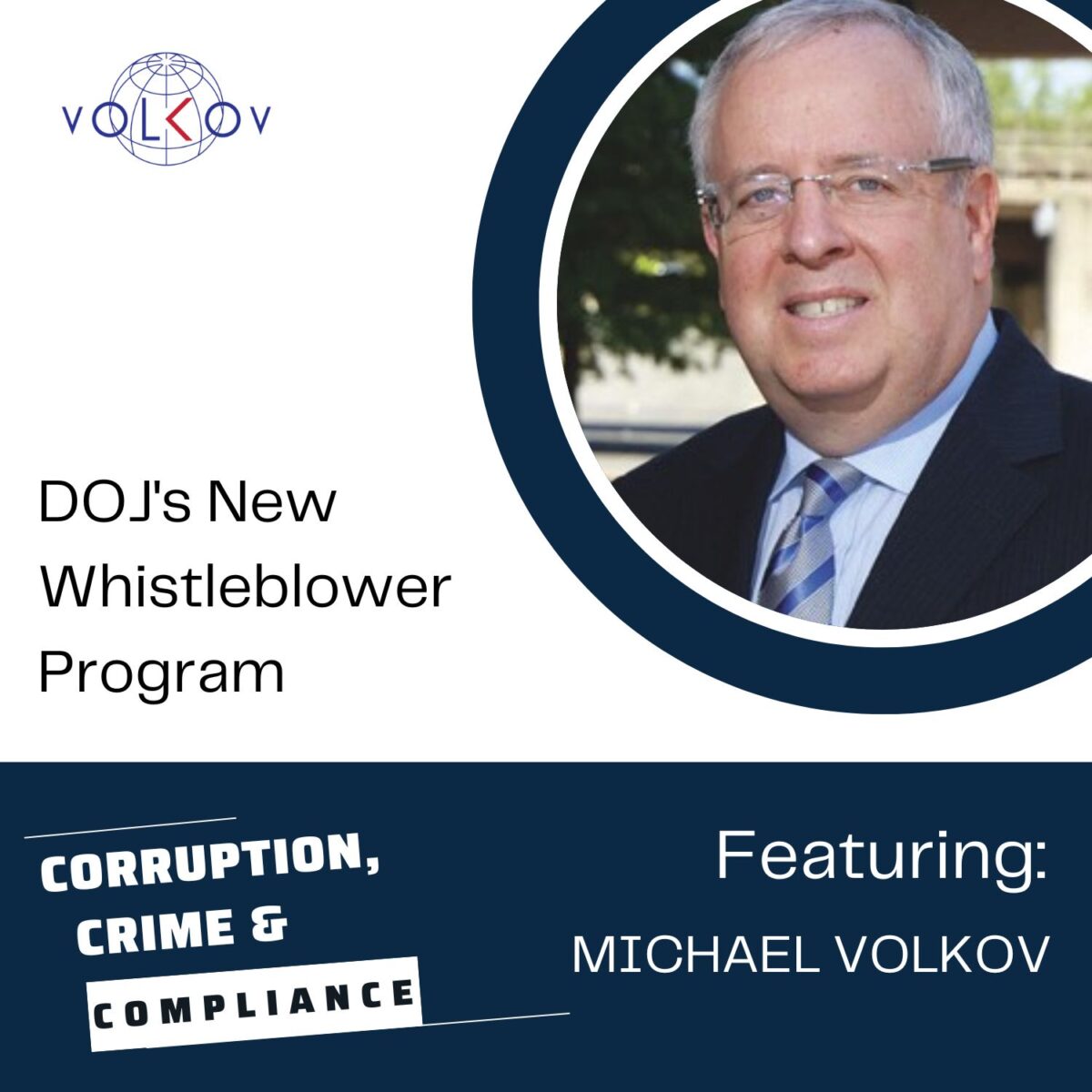
DOJ’s New Whistleblower Program

How will the DOJ’s new corporate whistleblower pilot program reshape the enforcement of corporate criminal conduct?

In this episode of Corruption, Crime, and Compliance, Michael Volkov explores the Department of Justice’s (DOJ) new corporate whistleblower pilot program, highlighting its potential impact on corporate criminal enforcement.

The program, which mirrors aspects of the SEC’s whistleblower program, is designed to incentivize individuals to report misconduct by offering financial rewards. The program is significant for privately held companies and financial institutions not covered by the SEC, marking a notable shift in DOJ’s approach to corporate compliance and enforcement.

You’ll hear him discuss:

  • DOJ’s Whistleblower Pilot Program: The DOJ introduced a three-year whistleblower pilot program that offers financial rewards to individuals who provide original information leading to significant criminal or civil forfeitures. This program, effective from August 1, 2024, mirrors aspects of the SEC’s program but is specifically tailored to corporate criminal enforcement.
  • Non-Appealable Rewards: Unlike the SEC’s program, decisions made under the DOJ’s whistleblower program are not appealable, minimizing litigation risks for the DOJ.
  • Focus on Privately Held Companies: The program significantly impacts privately held companies and non-public financial institutions, areas previously not covered by the SEC’s whistleblower program. This shift increases risks for these entities, particularly in cases involving foreign bribery, money laundering, and healthcare fraud related to private insurers.
  • Incentives for Internal Reporting: The program introduces a 120-day window for companies to act on internal reports of misconduct. If companies fail to take action within this period, whistleblowers can report directly to the DOJ, potentially earning financial rewards, while companies risk losing potential non-prosecution agreements.
  • Implications for Corporate Compliance: The new whistleblower program pressures companies to enhance their ethics and compliance programs. Companies must now navigate the risks associated with delayed reporting and the potential for whistleblowers to bypass internal controls in favor of DOJ reporting.
  • Impact on DOJ Enforcement: The program is expected to bolster DOJ’s corporate enforcement actions by encouraging more reports of misconduct, particularly in areas not previously covered by similar programs. However, the adequacy of the reward fund to incentivize significant whistleblower reporting remains uncertain.

Resources:

Michael Volkov on LinkedIn | Twitter

The Volkov Law Group

Whistleblower Awards Pilot Program

Categories
Riskology

Riskology by Infortal: Episode 32 – Seeing Red: Supply Chain Crisis

In the latest episode of Riskology by Infortal™, hosts Christopher Mason and Dr. Ian Oxnevad discuss the ongoing crisis impacting shipping through the Red Sea.

Geopolitical Risks in Global Shipping

Geopolitical risks have consistently shaped global commerce, significantly impacting the shipping industry.

Elections and ongoing conflicts have exacerbated an already volatile environment, impacting both national and international supply chain operations. This summer, multiple crises have underlined the magnitude of these risks, with a major focus shifting to the situation in the Middle East.

The Middle East Conflict: A Catalyst for Economic Disruption

One of the most recent supply chain disruptions stems from the conflict involving the Houthis in Yemen.

This Shiite group, backed by Iran, has increasingly targeted shipping routes through the Red Sea, causing substantial disruptions. Such attacks have not only heightened regional instability but have also resulted in skyrocketing insurance costs for vessels. For instance, war premiums on shipping vessels passing through the region have doubled, indicating the heightened risk and operational costs faced by shipping companies. Some carriers will no longer offer coverage.

These disruptions contribute to a broader economic impact beyond the shipping industry.

The Broader Implications of the Houthis’ Actions

The Houthis’ disruption of Red Sea shipping routes has led to a cascade of economic challenges.

Vital routes, such as the Suez Canal, have experienced a significant reduction in trade volume, which in turn has severely impacted regional revenue generated from the canal. Alternative shipping routes, like those around the Cape of Good Hope, have become necessary, leading to increased travel distances and fuel costs. These developments delay shipments and increase the environmental costs associated with the extended routes.

Such disruptions have led to systemic issues, such as the bankruptcy of ports close to affected regions. The Port of Eilat in Israel experienced such a fate in July, largely due to decreased shipping activities. These logistic challenges echo far beyond mere financial losses, influencing global shipping patterns and affecting international trade and economic stability.

The Domino Effect: Global Economic and Environmental Repercussions

The consequences of the disruptions in the Red Sea shipping routes are felt worldwide. European countries, for instance, are experiencing longer shipping times, which translates into increased costs and operational inefficiencies for businesses dependent on timely shipment deliveries. This has indirectly affected consumers through increased product prices, exacerbated by global inflation figures.

Moreover, the rerouting of ships around Africa has resurrected piracy off the Somali coast, spreading into the Indian Ocean and leading to further financial burdens in higher security expenditures.

This has also added to certain economic downturns in Africa, with about 57 million individuals now grappling with food insecurity, further illustrating the humanitarian dimensions of the geopolitical conflicts.

The Risk to Fishing Industries

Another significant impact of the conflicts in the Middle East, particularly around Yemen, is the risk posed to the regional fishing industries. The area is a crucial fishing zone, and ongoing attacks and the potential for significant oil spills present severe environmental risks to the health of the fisheries. These dangers threaten marine life and can disrupt the livelihoods of locals who depend on fishing as a primary source of income and food.

Increased Costs and Delays

For companies reliant on the timely arrival of shipments, these delays can disrupt production schedules and supply chain reliability, directly affecting their competitiveness and market positioning. The additional fuel costs associated with such extended travel routes are inevitably passed on to consumers, further straining the economic climate in regions such as Europe, where inflation pressures are already high.

Conclusion

Addressing the ongoing geopolitical situation in the Middle East, especially involving the Houthis, is crucial for stabilizing global shipping routes and mitigating the economic backlash. With the ripple effects already apparent in various sectors, a keen understanding and proactive approach towards these challenges could fortify global trade resilience, ultimately benefiting businesses and consumers alike.

Companies must assess their long-term strategies and consider alternative markets and shipping practices to navigate this volatile landscape. The ongoing vulnerability in traditional shipping routes requires agile and innovative solutions, particularly as the market faces new pressures ahead of winter months.

To avoid the impact of the crisis, you must closely examine your risk exposure and explore alternative supply chain options as needed.

Join hosts Christopher Mason and Dr. Ian Oxnevad for Episode 32 of Riskology by Infortal™ as they break down this strategically important geopolitical crisis.

Resources:

Infortal Worldwide

Email

Chris Mason on LinkedIn

Dr. Ian Oxnevad on LinkedIn

Categories
FCPA Compliance Report

FCPA Compliance Report: Spotlight on Executive at Risk: Latest Updates on The DOJ, OFAC, FCPA, and AML

Welcome to the award-winning FCPA Compliance Report, the longest running podcast in compliance.

In this edition of the FCPA Compliance Report, Tom welcomes back Miller & Chevalier attorneys Executives at Risk team, including Lauren Briggerman, Katherine Pappas, Ian Herbert, and their newest colleague Laura Deegan.

We dive into key compliance and enforcement topics such as the new DOJ whistleblower initiative, recent OFAC sanctions and export controls, key FCPA enforcement actions focusing on individual liability, and notable AML developments, particularly within the cryptocurrency sector. The discussion highlights the evolving landscape of corporate compliance and the increased need for robust internal reporting and proactive compliance measures.

Highlights in this Episode:

  • DOJ Whistleblower Initiative
  • OFAC Sanctions and Export Controls
  • FCPA Enforcement Actions and Developments
  • AML Developments and Binance Case


Resources:

Miller & Chevalier Chartered

Lauren Briggerman

Katherine Pappas

Ian Herbert

Laura Deegan

Executives at Risk, Summer 2024

Tom Fox

Instagram

Facebook

YouTube

Twitter

LinkedIn

For more information on the Ethico Toolkit for Middle Managers, available at no charge, click here.

Categories
Daily Compliance News

Daily Compliance News: September 9, 2024 – The Way Forward for ESG Edition

Welcome to the Daily Compliance News. Each day, Tom Fox, the Voice of Compliance, brings you compliance-related stories to start your day. Sit back, enjoy a cup of morning coffee, and listen to the Daily Compliance News. All from the Compliance Podcast Network.

Each day, we consider four stories from the business world: compliance, ethics, risk management, leadership, or general interest for the compliance professional.

In today’s edition of Daily Compliance News:

  • The way forward for ESG. (FT)
  • South Africa’s Justice Minister denies corruption allegations in a mutual bank scandal. (AP News)
  • Hong Kong now high-risk? (WSJ)
  • Covington crypto client sues firm. (Reuters)

For more information on the Ethico Toolkit for Middle Managers, available at no charge, click here.

Check out the full 3-book series, The Compliance Kids on Amazon.com.

Categories
Adventures in Compliance

Adventures in Compliance: The Last Bow – Compliance Lessons from Sherlock Holmes’ War Service

Welcome to a review of all the Sherlock Holmes stories which are collected in the work, “The Last Bow“. It is a collection of eight detective stories written by Sir Arthur Conan Doyle, from 1908 to 1917. The collection spans some of the most intriguing cases and mysteries that Holmes and his loyal friend Dr. John Watson tackle.

Today we take up The Story of Sherlock Holmes War Service, which appeared in Strand Magazine in December 1917, as we consider the compliance lessons from the story Sherlock Holmes War Service.

In this episode, Tom Fox delves into the final story from Arthur Conan Doyle’s 1917 collection ‘His Last Bow,’ focusing on Sherlock Holmes’ wartime espionage activities. The story transitions from detective work to spycraft, exemplifying key compliance lessons such as monitoring, risk management, collaboration, confidentiality, adaptability, leadership, and thorough investigations. Tom draws parallels between Holmes’ strategies and modern compliance practices.

Key Highlights:

  • Introduction to the Final Story: Sherlock Holmes War Service
  • Key Compliance Lessons from the Story
  • Upcoming new episodes 

Resources:

The New Annotated Sherlock Holmes

Sherlock Holmes FAQ

Connect with Tom Fox

Instagram

Facebook

YouTube

Twitter

LinkedIn

For more information on the Ethico Toolkit for Middle Managers, available at no charge, click here.

Categories
Blog

The Bre-X Mining Scandal: Part 5 – A Guide for the 2024 Compliance Professional (Part 1)

As we close out this series on the Bre-X mining scandal, the lessons from this notorious case continue to resonate, especially for today’s compliance professionals. The fraud that led to the downfall of Bre-X and the ensuing financial catastrophe for countless investors serves as a stark reminder of the pivotal role compliance plays in maintaining the integrity of any business. This two-part conclusion will explore the critical takeaways for compliance professionals in 2024. In Part 1, I focus on due diligence, transparency, corporate governance, conflict of interest, and regulatory compliance.

The Importance of Rigorous Due Diligence

If Bre-X taught us anything, it is the value of relentless due diligence. In today’s fast-paced business environment, where misinformation can spread like wildfire and trust is fragile, compliance professionals must maintain an unwavering commitment to fact-checking and independent verification.

Verification of Claims. Compliance officers are the gatekeepers of corporate integrity. The Bre-X scandal is a textbook case of what happens when claims are accepted at face value without proper scrutiny. In 2024, ensuring that all claims—whether they pertain to financial projections, resource estimates, or technological capabilities—are rigorously verified by qualified third parties is more crucial than ever. This due diligence must extend beyond simple paper trails; it requires thorough, boots-on-the-ground verification.

Third-Party Validation. One of the core failures in the Bre-X case was the reliance on internal data, which went unchecked. Today’s compliance landscape demands an external layer of assurance. Relying solely on the company’s self-reported information can be perilous. Independent third-party audits, validation, and assessments are no longer optional; they prevent corporate fraud. External experts often see red flags insiders miss due to oversight or willful blindness.

Transparency and Accurate Reporting

Transparency is the lifeblood of compliance, and the Bre-X scandal illustrates what happens when companies stray from this fundamental principle. The fine line between optimism and misleading information can be blurry, but compliance officers must ensure this line is never crossed.

Clear and Honest Disclosure. Today’s compliance professionals must act as the arbiter of clear and accurate corporate disclosure. More is needed to provide minimal information that technically complies with regulations; companies must fully disclose material facts related to their performance, risks, and operational realities. Bre-X misled investors with rosy projections based on fraudulent data. Modern compliance teams must guard against the temptation to oversell the company’s prospects or downplay significant risks.

Avoiding Misleading Information. The Bre-X debacle warns about the dangers of making exaggerated or false claims to investors and stakeholders. In 2024, compliance professionals must adopt a zero-tolerance stance toward misleading information. This requires close collaboration with all departments, ensuring financial reports, press releases, and investor communications are fact-checked, realistic, and grounded in verifiable data. The role of compliance in safeguarding against exaggeration or outright deception cannot be overstated.

Strengthening Corporate Governance

One of the critical failures in the Bre-X case was weak corporate governance. As companies grow in complexity, ensuring robust oversight from the boardroom down is essential.

Effective Oversight. Boards of directors must not only be present; they must be actively engaged in the business. The Bre-X scandal exposed how passive oversight can contribute to unchecked fraud. Compliance professionals should ensure that board members, especially independent ones, are empowered to ask tough questions and hold management accountable. In 2024, compliance officers should push for regular, thorough reviews of corporate governance practices, ensuring that the board remains active in safeguarding the company’s integrity.

Separation of Duties. Another key lesson from Bre-X is the need for a clear separation of duties. The concentration of power in a few individuals, especially in processes like reporting geological results, led to unchecked manipulation. Modern compliance frameworks must ensure no single person holds too much sway over critical processes. In areas such as financial reporting or resource assessments, compliance professionals must establish checks and balances that prevent conflicts of interest and reduce the risk of fraud.

Understanding and Mitigating Conflict of Interest

Bre-X was rife with conflicts of interest that, had they been addressed, might have mitigated the extent of the damage. In 2024, compliance professionals must be vigilant in identifying and managing potential conflicts at all levels of the organization.

Identifying Conflicts. Conflicts of interest can undermine the integrity of any organization through personal financial gain, favoritism, or unaddressed personal relationships. Compliance officers must develop robust mechanisms for identifying and addressing conflicts before they escalate. In the Bre-X case, certain individuals stood to personally gain from inflated stock prices directly conflicting with their fiduciary duties. Modern-day compliance professionals must establish clear conflict-of-interest policies and ensure these are consistently enforced.

Establishing Clear Policies. It is not enough to identify conflicts; companies must have clear policies and procedures to manage them. This includes mandatory disclosures, regular audits, and a strong ethical culture encouraging employees to report potential conflicts. Employees should be trained to recognize conflicts of interest and be empowered to raise concerns without fear of retaliation. The Bre-X scandal reminds us that an unaddressed conflict of interest can lead to catastrophic outcomes for all stakeholders.

Enhanced Focus on Regulatory Compliance

Finally, the Bre-X scandal illustrates the importance of adhering to industry standards and anticipating regulatory changes. In the wake of Bre-X, Canada introduced NI 43-101, a set of strict guidelines for reporting mineral resources. The lesson here is that compliance professionals must stay current with regulations and be proactive in their approach.

Adhering to Industry Standards. In 2024, industry standards are constantly evolving. Whether environmental regulations, data privacy laws, or sector-specific standards like NI 43-101, compliance professionals must ensure that their organizations are always fully compliant. This requires staying informed about changes in the regulatory landscape and ensuring that the company’s internal practices are aligned with the latest requirements.

Proactive Compliance. Compliance officers should take a proactive approach rather than waiting for regulations to change. This includes monitoring industry trends, participating in industry working groups, and maintaining open lines of communication with regulators. Proactive compliance can prevent costly legal battles and protect the company’s reputation.

The Bre-X mining scandal remains a cautionary tale for compliance professionals, and the lessons learned from this case are more relevant than ever in 2024. By emphasizing rigorous due diligence, transparency, corporate governance, conflict of interest management, and proactive regulatory compliance, compliance officers can help safeguard their organizations against fraud and mismanagement that led to Bre-X’s downfall.

In Part 2 of this series, we will conclude this blog post by diving deeper into the evolving role of technology and how it has transformed the compliance landscape, offering new tools and challenges for today’s compliance professionals. Join us tomorrow.