Categories
Upping Your Game

Upping Your Game – Harnessing AI to Revolutionize Third-Party Risk Management

In February, the Trump Administration suspended investigations under and enforcement of the FCPA. Many compliance professionals have since wondered what this will mean for corporate compliance programs going forward. Hui Chen challenged compliance professionals with the statement, “It’s time to up your game.”

This podcast series, sponsored by Ethico and co-hosted by Ethico co-CEO Nick Gallo, aims to meet Hui Chen’s challenge for compliance professionals. We will discuss how compliance professionals can ‘Up Their Game’ by utilizing currently existing Generative AI (GenAI) tools to significantly enhance their compliance programs. As compliance professionals, it is crucial to recognize that this moment is not merely about incremental improvements but about elevating our profession to an entirely new level of effectiveness, efficiency, and organizational value.

In this episode, Tom and Nick delve into the transformative potential of AI in mitigating third-party compliance risks. They discuss the inherent limitations of traditional compliance methods, which are often reactive and manual. The conversation highlights how AI can streamline processes, minimize false positives, and boost efficiency by offering real-time monitoring and data analysis. They also highlight the broader business value of AI, which can expedite onboarding, enhance risk identification, and ultimately drive greater return on investment (ROI). They conclude that the importance of investing in AI training for compliance teams lies in staying ahead of the curve and maximizing the benefits of these emerging technologies.

Key highlights:

  • Challenges in Third-Party Risk Management
  • AI as a Game Changer
  • Types of Third-Party Risks
  • Business Value of AI in Compliance
  • Innovations and Tools in AI
  • Practical Applications and Examples

Resources:

Upping Your Game-How Compliance and Risk Management Move to 2030 and Beyond on Amazon.com

Nick Gallo on LinkedIn

Ethico

Tom Fox

Instagram

Facebook

YouTube

Twitter

LinkedIn

Categories
Daily Compliance News

Daily Compliance News: June 3, 2025, The $500MM for Compliance Edition

Welcome to the Daily Compliance News. Each day, Tom Fox, the Voice of Compliance, brings you compliance-related stories to start your day. Sit back, enjoy a cup of morning coffee, and listen in to the Daily Compliance News. All from the Compliance Podcast Network. Each day, we consider four stories from the business world: compliance, ethics, risk management, leadership, and general interest, all of which are relevant to the compliance professional.

Top stories include:

  • Google to invest $ 500 million in compliance. (Reuters)
  • An alternative to the Compliment Sandwich. (BI)
  • Visa, Mastercard probe in EU widens. (Reuters)
  • Adani to face new scrutiny over Iranian shipments.  (Bloomberg)
Categories
Innovation in Compliance

Innovation in Compliance: Integrating AI in Compliance and Risk Management with Jana Brost

Innovation is present in many areas, and compliance professionals must not only be prepared for it but also actively embrace it. Join Tom Fox, the Voice of Compliance, as he visits with top innovative minds, thinkers, and creators in the award-winning Innovation in Compliance podcast. In this episode, host Tom Fox visits with Jana Brost, COO at myCOI, the sponsor of this podcast.

They chat about the intersection of compliance, risk management, and AI. Jana discusses her background in high-growth business process outsourcing and data analysis, as well as her journey to joining my company. She explains the concept of Certificates of Insurance (COIs) and their importance in managing risk for companies. The conversation examines how myCOI empowers vendors and owners to manage their insurance requirements more efficiently through the use of AI, highlighting key industry trends and the impact of AI on speed, accuracy, and user experience. Jana also discusses the future of AI in risk management and its potential to enhance employee engagement and foster a positive company culture.

Key highlights:

  • Understanding COIs in Construction
  • Risk Management and Insurance
  • Evolution of COI Management with AI
  • AI’s Impact on Vendors and Owners
  • Customer Expectations and AI
  • Future of AI and Company Culture

Resources:

Jana Brost on LinkedIn

myCOI

Tom Fox

Instagram

Facebook

YouTube

Twitter

LinkedIn

Innovation in Compliance was recently honored as the number 4 podcast in Risk Management by 1,000,000 Podcasts.

Categories
Compliance Tip of the Day

Compliance Tip of the Day – Risk Assessments and Internal Controls

Welcome to “Compliance Tip of the Day,” the podcast that brings you daily insights and practical advice on navigating the ever-evolving landscape of compliance and regulatory requirements. Whether you’re a seasoned compliance professional or just starting your journey, our goal is to provide you with bite-sized, actionable tips to help you stay ahead in your compliance efforts. Join us as we explore the latest industry trends, share best practices, and demystify complex compliance issues to keep your organization on the right side of the law. Tune in daily for your dose of compliance wisdom, and let’s make compliance a little less daunting, one tip at a time.

How to use a risk assessment to provide a structured approach to establishing effective internal controls.

For more information on this topic, refer to The Compliance Handbook: A Guide to Operationalizing Your Compliance Program, 6th edition, recently released by LexisNexis. It is available here.

Categories
Trekking Through Compliance

Trekking Through Compliance – Episode 2 – Leadership and Training Lessons from Charlie X

In this episode of Trekking Through Compliance, we consider Charlie X, which aired on September 15, 1966, Star Date 1533.6.

Story

The USS Enterprise meets the merchant vessel Antares to take charge of Charlie Evans, the sole survivor of a transport ship that crashed on Thasus. For fourteen years, seventeen-year-old Charlie grew up alone, stranded in the wreckage, learning to communicate with the ship’s computer systems, which remained intact.

Despite his eagerness to please, Charlie becomes obnoxious since his lack of upbringing has left him with no knowledge of social norms or control of his emotions. He latches on to Captain Kirk as a father figure and develops an infatuation with Yeoman Janice Rand. He demonstrates extraordinary powers of telepathy and matter transmutation. When the Antares is nearly out of sensor range, it transmits a message to the Enterprise. The message is cut off before it can convey a warning. Scanners show that Antares has been reduced to debris.

Realizing Charlie’s powers are too great to be controlled, Kirk opts to divert from Alpha V to at least keep Charlie away from a civilized world where he would wreak havoc. Charlie discovers Kirk’s plans and takes control of the Enterprise.

A Thasian ship approaches and restores the Enterprise and its crew to their proper forms. The Thasian commander says that his race gave Charlie his powers so he could survive in their world, but these powers (which they can’t remove from him) make him too dangerous to live among humans. Charlie begs Kirk not to let the aliens have him since the Thasians lack any physical form or capacity for love. However, the Thasians reject Kirk’s argument that Charlie belongs with his kind, with a final echoing wail of “I wanna stay!

Commentary

The episode explores the story of Charlie Evans, a young man with dangerous telekinetic powers, and draws parallels to modern compliance and mental health issues. Tom discusses the responsibilities that come with power, the importance of training and supervision, handling unpredictable behavior, clear communication, crisis management, and addressing misconduct. He also reflects on recent real-world events, such as the Uvalde school shooting and the challenges of addressing mental health in compliance programs.

Key highlights:

1. The Responsibilities of Power—Strength Without Structure

🖖 Illustrated by: Charlie turning crew members into nothingness when they anger him.

Charlie is gifted with tremendous abilities but lacks any ethical framework or boundaries. This is a vivid metaphor for what happens when individuals inside an organization gain influence or access without training or accountability. Think of an unmonitored executive with access to financial controls or an engineer with override access but no compliance training—a ticking time bomb.

2. Training and Supervision—It’s Not Optional, It’s Essential

🖖 Illustrated by: Kirk’s attempt to guide Charlie and his later regret at not recognizing the full scope of the risk.

Charlie’s guardianship was left to chance. No proper onboarding, no safety protocols. Sound familiar? In corporate compliance, onboarding isn’t just about day one—it’s about culture shaping. Organizations must ensure that individuals with a higher risk potential receive both guidance and oversight from the outset.

3. Unpredictable Behavior and Ethical Culture—From Red Flag to Alarm Bell

🖖 Illustrated by: Charlie’s mood swings and escalating aggression, which are repeatedly ignored until it’s too late.

The crew notices early signs—jealousy, possessiveness, emotional outbursts—but tolerates them. This reflects the real-world danger of brushing off early signs of a toxic culture. A strong compliance function identifies behavioral red flags before they escalate into corporate crises.

4. Communication and Escalation Protocols—Say Something, Do Something

🖖 Illustrated by: Janice Rand’s discomfort and unease around Charlie, which she initially tries to manage on her own.

Rand’s growing fear underscores the difficulty of speaking up, especially when someone powerful appears to be protected. Her reluctance reminds us that a speak-up culture is not automatic. Companies must establish genuine channels for complaints, empower employees to utilize them, and respond promptly and transparently.

5. Crisis Management—Too Late is Still Too Late

🖖 Illustrated by: The crew’s loss of control over the Enterprise, forcing alien intervention to remove Charlie.

The crew fails to contain the situation internally. It takes external, godlike beings to restore order—a cautionary tale for compliance leaders. If a company waits until the crisis has gone public or regulatory bodies step in, internal credibility is lost. Crisis planning and early intervention are crucial in protecting the organization before outside authorities are required to intervene.

Resources:

Excruciatingly Detailed Plot Summary by Eric W. Weisstein

MissionLogPodcast.com

Memory Alpha

Categories
Blog

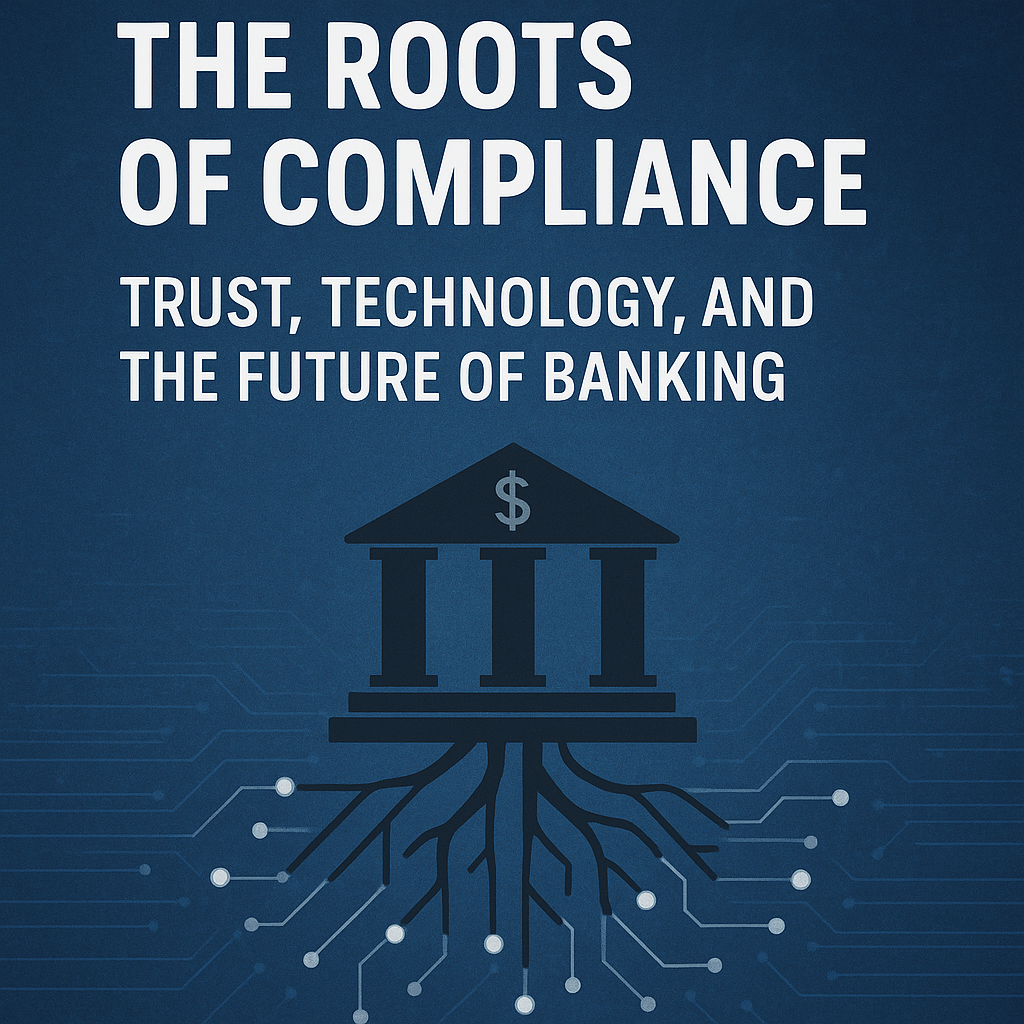
The Roots of Compliance: Trust, Technology, and the Future of Banking

Recently, I had the opportunity to visit with John Byrne, the CEO at Corlytics. You can listen to the podcast here. One of the more interesting topics we discussed is that compliance professionals find themselves at the intriguing crossroads between groundbreaking technological innovation and the timeless, foundational principles of compliance, notably trust and integrity. Nowhere is this more evident than in the banking sector, where the stakes around trust are extraordinarily high. Now, with the Trump Administration actively promoting cryptocurrency to both the US banking industry and the American public, that foundational principle is even more critical.

Historically, banking, with over two and a half centuries of operational legacy, has always relied fundamentally on customer trust. Indeed, long before modern regulatory structures emerged, banks implemented internal policies and compliance-like practices designed explicitly to instill and maintain confidence. Yet despite advancements in regulation and technology, the principle remains unchanged: trust is the lifeblood of banking, and when it falters, the consequences can be catastrophic.

Nothing illustrates this more starkly than the old-fashioned bank run, perhaps the ultimate demonstration of breached trust. In a bank run, customers simultaneously lose faith in the institution’s ability to safeguard their assets, rushing en masse to withdraw funds. This panic-driven action rapidly transforms initial doubt into widespread fear, creating an accelerating cascade effect that can swiftly collapse even seemingly robust institutions.

The recent 2023 examples of Silicon Valley Bank, Signature Bank, and First Republic Bank, all headquartered in California, underscore this timeless truth. Despite occurring in a digitally connected world with instantaneous communication, the root cause was identical to that of traditional bank runs, famously depicted in classic movies like Mary Poppins and It’s a Wonderful Life: a fundamental failure of trust. For today’s compliance professionals, the lesson remains clear and resonant. Even as they harness modern tools like artificial intelligence to enhance compliance processes, they must remain ever-vigilant custodians of trust, recognizing that without it, all technological advances and regulatory structures are ultimately insufficient to protect a bank, and indeed any business, from the devastating impact of lost confidence.

Lesson 1: Trust is the Foundation of Compliance

The essence of compliance has always been rooted in trust. Banking, as a sector with over 250 years of history, exemplifies this principle vividly. Long before the regulatory frameworks we recognize today, banks operated with internal policies designed to cultivate and maintain trust with their customers. Compliance, in its earliest incarnation, was about establishing clear standards and rules internally, ensuring customer confidence and institutional stability.

Today, despite the extensive web of external regulations, trust remains a central concern. The collapse of trust can trigger catastrophic outcomes, vividly illustrated by historical bank runs such as those portrayed in classic films like Mary Poppins and It’s a Wonderful Life. Even as recently as 2023, the failure of Silicon Valley Bank in California, a modern-day bank run accelerated by technology, reminds us starkly how fragile trust can be and how critical it remains for compliance professionals to safeguard it diligently.

Lesson 2: Compliance is Good Business

The notion of compliance as a hindrance to business, often unfairly labeled as the “business prevention unit,” is shifting dramatically. A sound compliance program aligns closely with strong business outcomes —a principle that has been repeatedly emphasized in recent years. Banks and businesses are increasingly recognizing compliance not as an obstacle but as an integral part of strategic business operations.

Good compliance facilitates a trustworthy reputation, ensures customer satisfaction, and establishes long-term business stability. Firms that embody compliance as a core business strategy consistently demonstrate resilience and sustainability. Compliance isn’t merely a regulatory necessity; it is fundamentally good business.

Lesson 3: Regulation Should Complement, Not Replace, Internal Standards

Historically, banks created their internal compliance measures to protect their institutions long before external regulation mandated such frameworks. Over time, regulatory developments have supplemented and formalized these practices, creating a structured external governance model. However, prudent banks continue to adhere to high internal standards irrespective of regulatory mandates.

Effective compliance frameworks seamlessly integrate internal ethical guidelines and external regulatory requirements, ensuring a unified approach to governance. Organizations shouldn’t solely rely on external regulations to dictate their ethical and operational standards. Instead, compliance professionals should encourage internal benchmarks of ethical behavior and trustworthiness, aligning company culture closely with compliance objectives to achieve sustainable business excellence.

Lesson 4: Technology as an Enabler of Efficient Compliance

One common complaint about compliance is its perceived inefficiency, which businesses argue slows down operations. Here, advanced technology, especially AI, presents transformative possibilities. AI-driven tools can significantly streamline compliance processes, enhancing speed, efficiency, and accuracy.

AI technologies allow compliance teams to swiftly identify risks, maintain comprehensive documentation, provide clear audit trails, and escalate issues rapidly and accurately. Rather than viewing technology as complicating compliance, companies should embrace it as an essential tool enabling compliance professionals to focus on strategic, high-value tasks rather than routine manual processes. This technological enablement does not replace skilled compliance professionals. It enhances their capabilities, ensuring more effective outcomes for the business as a whole.

Lesson 5: Compliance Should Be Proactive, Not Reactive

Compliance practices should always be forward-looking and proactive, anticipating potential issues and acting accordingly. Banks and businesses that are successful in managing risk and maintaining trust have learned not to wait for regulators to dictate ethical standards. They proactively implement robust compliance and governance frameworks because they recognize that doing the right thing is inherently good for business.

Proactive compliance fosters customer trust, internal coherence, and institutional resilience. It positions companies to avoid reputational and financial harm, reducing the likelihood of regulatory actions or scandals. Compliance professionals must champion a proactive approach, integrating ethics and integrity at every organizational level, ensuring firms remain compliant and trustworthy, irrespective of whether regulatory bodies explicitly require it.

Conclusion: A Sustainable Business Model Through Good Compliance

The future of compliance in banking, and indeed all industries, rests at the intersection of timeless principles and modern technology. Trust, always the cornerstone of compliance, remains a foundational element. Technology, particularly artificial intelligence (AI), offers powerful new tools to reinforce and streamline compliance functions, enabling more efficient, accurate, and effective oversight.

Compliance professionals stand at the threshold of an exciting era where they can leverage advanced technologies to reinforce and extend the timeless principle of trust. By returning to the roots of compliance, embedding trust deeply into corporate culture, and embracing technology as a powerful enabler, businesses will not only fulfill regulatory requirements but also establish a resilient, customer-centric, and sustainably profitable business model. Compliance, done right, transcends its role as merely regulatory adherence. It becomes a fundamental pillar of sound business practice.


Categories
Red Flags Rising

Red Flags Rising: S01 E13 – Dana W. White on U.S. National Security & Export Controls

Mike and Brent welcome Dana W. White, Managing Partner at the Juno Collective, to share her thoughts and analysis on China and U.S. export controls, drawing on her extensive career in public service, including various national security-related roles. Mike, Brent, and Dana discuss Dana’s national security background (00:49), what happens “behind the scenes” that leads to U.S. agencies determining national security threats exists (02:28), how knowledge-sharing is both the strength and the Achilles’ heel of free societies (06:11), how U.S. businesses and business leaders play an important part in our national security (07:26), the challenge of finding reliable data points from which to infer export controls compliance risks (09:37), what business leaders should understand about how the relationship between the U.S. and China is different today than when China joined the World Trade Organization (11:21), how Dana and the Juno Collective help clients to understand and mitigate risks (13:46), and the common pitfalls companies face when responding to inquiries by the U.S. Congress (18:45). They conclude with yet another segment of Brent Carlson’s “Managing Up” (20:23).

Resources:

More about Dana W. White and the Juno Collective: https://www.juno-collective.com/about

Contact Dana W. White: dana@juno-collective.com

Brent LinkedIn

Mike LinkedIn

Mike & Brent’s “Fresh Looks” Series

Categories
Blog

Charlie X: Power Without Boundaries – A Compliance Nightmare

Today, we explore the explosive volatility of Charlie X—a story about unchecked power, emotional instability, and the dire consequences of failing to enforce rules and structure. Charlie Evans, a teenage orphan raised by aliens, is taken aboard the Enterprise, possessing extraordinary telekinetic abilities but lacking social training, emotional discipline, and accountability. That combination proves disastrous. We consider how Charlie’s descent into violence mirrors risks faced by compliance professionals when misconduct is ignored, misbehavior is tolerated, and power is given without oversight. In today’s corporate world, “Charlie X” is less about space and more about leadership responsibility, psychological safety, and early intervention.

Key Highlights and Star Trek Case Studies:

1. The Responsibilities of Power—Strength Without Structure

This is illustrated by Charlie turning crew members into nothingness when they anger him.

Charlie is gifted with tremendous abilities but lacks any ethical framework or boundaries. This is a vivid metaphor for what happens when individuals inside an organization gain influence or access without training or accountability. Think of an unmonitored executive with access to financial controls or an engineer with override access but no compliance training—a ticking time bomb.

2. Training and Supervision—It’s Not Optional, It’s Essential

This is illustrated by Kirk’s attempt to guide Charlie and his later regret at not recognizing the full scope of the risk.

Charlie’s guardianship was left to chance, with no proper onboarding and no safety protocols in place. Sound familiar? In corporate compliance, onboarding isn’t just about day one—it’s about culture shaping. Organizations must ensure that individuals with a higher risk potential receive both guidance and oversight from the outset.

3. Unpredictable Behavior and Ethical Culture—From Red Flag to Alarm Bell

This is illustrated by Charlie’s mood swings and escalating aggression, which are repeatedly ignored until it’s too late.

The crew notices early signs, such as jealousy and possessiveness, but tolerates them. This reflects the real-world danger of brushing off early signs of a toxic culture. A strong compliance function identifies behavioral red flags before they escalate into corporate crises.

4. Communication and Escalation Protocols—Say Something, Do Something

This is illustrated by Janice Rand’s discomfort and unease around Charlie, which she initially tries to manage on her own.

Rand’s growing fear underscores the difficulty of speaking up, especially when someone powerful appears to be protected. Her reluctance reminds us that a speak-up culture is not automatic. Companies must establish genuine channels for complaints, empower employees to utilize them, and respond promptly and transparently.

5. Crisis Management—Too Late is Still Too Late

This is illustrated by the crew’s loss of control over the Enterprise, forcing alien intervention to remove Charlie.

The crew fails to contain the situation internally. It takes external, godlike beings to restore order—a cautionary tale for compliance leaders. If a company waits until the crisis has gone public or regulatory bodies step in, internal credibility is lost. Crisis planning and early intervention are crucial in protecting the organization before outside authorities are required to intervene.

Final ComplianceLog Reflections

Charlie X reminds us that power without oversight is perilous, that emotional and psychological health must be part of our compliance focus, and that red flags must not be ignored simply because they come wrapped in charm or vulnerability. Compliance is not simply about policies, procedures, or even rules but rather readiness, responsiveness, and respect for the human element.

Resources:

Excruciatingly Detailed Plot Summary by Eric W. Weisstein

MissionLogPodcast.com

Memory Alpha