Categories
Daily Compliance News

Daily Compliance News: August 22, 2024 – The No Stone Unturned Edition

Welcome to the Daily Compliance News. Each day, Tom Fox, the Voice of Compliance, brings you compliance-related stories to start your day. Sit back, enjoy a cup of morning coffee and listen to the Daily Compliance News. All from the Compliance Podcast Network.

Each day, we consider four stories from the business world: compliance, ethics, risk management, leadership, or general interest for the compliance professional.

In today’s edition of Daily Compliance News:

  • No stone unturned: the Vietnamese anti-corruption campaign. (NPR)
  • Tough sanctions are here to stay, whether its Harris or Trump. (WSJ)
  • US Integrity uses data analytics for NBA athletes who bet on games. (Bloomberg)
  • Will X exit the EU? (Reuters)

For more information on the Ethico ROI Calculator and a free White Paper on the ROI of Compliance, click here.

Categories
Blog

Compliance Lessons on Mergers and Acquisitions from Star Trek: The Ultimate Computer

Last month, I wrote a blog post on the tone at the top, exemplified in Star Trek’s Original Series episode, Devil in the Dark. Based on the response, some passionate Star Trek fans are out there. I decided to write a series of blog posts exploring Star Trek: The Original Series episodes as guides to the Hallmarks of an Effective Compliance program set out in the FCPA Resources Guide, 2nd edition. Today, I will continue my two-week series by looking at the following Hallmarks of an Effective Compliance Program laid out by the Department of Justice (DOJ) and Securities and Exchange Commission (SEC) in the FCPA Resources Guide, 2nd edition. Today, we look at lessons learned about mergers and acquisitions. Mergers and acquisitions (M&A) are complex and often high-stakes endeavors that require meticulous planning, due diligence, and a robust compliance framework. The importance of these factors is vividly illustrated in the episode The Ultimate Computer. This episode, while set in a futuristic and fictional context, offers valuable lessons for compliance professionals navigating the intricate processes of M&A. This blog post will explore the parallels between the episode’s narrative and the real-world compliance challenges in M&A.

In “The Ultimate Computer,” the USS Enterprise is selected to test the M-5 Multitronic Unit, an advanced computer system designed to autonomously control the ship’s functions. Dr. Richard Daystrom’s system aims to revolutionize space exploration by removing the need for human crews. However, as the test progresses, the M-5 begins to act unpredictably, viewing real-life training exercises as actual combat and attacking other Federation ships. The episode culminates in a dangerous scenario where Captain Kirk and his crew must wrest control back from the M-5, highlighting the perils of over-reliance on untested technology and the critical need for human judgment.

Lesson 1. The Importance of Thorough Pre-Acquisition Due Diligence

One of the most glaring issues in “The Ultimate Computer” is the failure to conduct thorough pre-acquisition due diligence on the M-5 before deploying it in a high-stakes scenario. Dr. Daystrom’s confidence in his creation led to an oversight in properly assessing the risks associated with the M-5, resulting in catastrophic outcomes.

In the context of M&A, due diligence is paramount. Compliance professionals must ensure that the acquiring company thoroughly investigates the target company’s compliance landscape, including its legal obligations, regulatory history, and potential liabilities. This process involves more than just a surface-level review; it requires a deep dive into the target company’s operations, culture, and historical compliance with relevant regulations. As a compliance professional, you should develop a comprehensive due diligence checklist that includes specific compliance-related areas such as anti-bribery, anti-money laundering, data protection, and industry-specific regulations. Engaging external experts to assist in areas where the target operates in complex or unfamiliar regulatory environments can also be beneficial.

Lesson 2. Risk Management and Contingency Planning

M-5’s unexpected behavior underscores the importance of risk management and contingency planning. The Enterprise crew was unprepared for the system’s malfunction, leading to a scenario where they had to improvise under extreme pressure. In M&A transactions, the risks associated with integrating a new entity are significant. Compliance professionals must proactively identify potential risks, such as cultural clashes, regulatory breaches, or undisclosed liabilities, and develop strategies to mitigate these risks. This includes creating contingency plans to address any issues during the integration process.

Your compliance function should implement a robust risk management framework as part of the M&A strategy for post-acquisition. This framework should include regular risk assessments, scenario planning, and establishing a crisis management team to address unexpected challenges. Having a clear plan ensures that your organization can respond quickly and effectively to any issues that emerge during or after the transaction.

Lesson 3. The Role of Human Oversight

The Ultimate Computer is a cautionary tale about the dangers of overreliance on technology without adequate human oversight. While the M-5 was designed to improve efficiency, it ultimately became a liability because no mechanism was in place to monitor and override its actions when it began to malfunction. This lesson could not be more timely in the age of ChatGPT and AI in compliance.

While technology and automation can greatly assist in managing the transaction’s complexities, human oversight remains indispensable. Compliance professionals must ensure adequate controls and monitoring systems to oversee integration and detect issues early. Your M&A policy should establish clear oversight mechanisms, including regular audits, compliance monitoring, and continuous engagement with key stakeholders. This oversight should extend to all aspects of the integration process, ensuring that both the acquiring and target companies adhere to the agreed-upon compliance standards and practices.

Lesson 4. Adapting to Unforeseen Challenges

The crew’s ability to adapt to the M-5’s unexpected behavior was crucial to averting disaster. Captain Kirk and his team demonstrated flexibility and quick thinking, ultimately allowing them to regain control of the Enterprise. M&A transactions often involve unforeseen challenges that require adaptability and quick decision-making. Compliance professionals must be prepared to adjust their strategies in response to new information or changing circumstances. This could involve revising integration plans, addressing unexpected regulatory issues, or recalibrating risk management approaches.

Compliance professionals need to discuss adapting to unforeseen challenges more. You must work to build flexibility into your M&A compliance strategy by creating a dynamic integration plan that can be adjusted as needed. Encourage open communication across all levels of the organization to ensure that any issues are identified and addressed promptly. Maintaining an agile mindset also allows your team to respond effectively to challenges, minimizing disruption and ensuring a smoother integration process.

Lesson 5. The Ethical Implications of Integration

Dr. Daystrom’s fixation on the success of the M-5 led him to overlook the ethical implications of its actions, such as the loss of life. This highlights the importance of considering the ethical dimensions of decisions, particularly in high-stakes situations. Ethical considerations are central to the success of any M&A transaction. Compliance professionals must ensure that the integration process upholds the highest ethical standards, particularly regarding employee treatment, customer relations, and regulatory compliance. This involves assessing the ethical culture of the target company and ensuring that it aligns with your organization’s values.

In addition to compliance considerations, you should integrate ethical considerations into every stage of the M&A process. This includes conducting an ethical audit of the target company during due diligence, communicating ethical expectations clearly to all employees, and establishing a code of conduct that reflects the combined entity’s commitment to ethical behavior. Ensuring ethics are at the forefront of the integration process helps build trust and fosters a positive organizational culture.

The Ultimate Computer offers a powerful narrative on the importance of diligence, risk management, human oversight, adaptability, and ethical considerations in high-stakes scenarios. These lessons directly apply to the world of mergers and acquisitions, where the stakes are equally high, and the potential for unforeseen challenges is significant.

For compliance professionals, the key takeaway is the need for a comprehensive and proactive approach to managing M&A transactions. By prioritizing thorough pre-acquisition due diligence, implementing robust risk management strategies, maintaining human oversight, staying adaptable, and upholding ethical standards, compliance teams can navigate the complexities of M&A with confidence and success.

In the fast-paced and ever-changing landscape of mergers and acquisitions, the lessons from The Ultimate Computer remind us that while technology and innovation are valuable tools, they must be complemented by sound judgment, ethical considerations, and a commitment to continuous improvement. Integrating these principles into your M&A strategy can help ensure your organization survives and thrives after a merger or acquisition.

Join us tomorrow as we conclude our blog post series on the Hallmarks of an Effective Compliance Program by considering the requirement for a Root Cause analysis from the Star Trek episode The Corbomite Maneuver.


Categories
Compliance Tip of the Day

Compliance Tip of the Day: Telling a Story in Compliance

Welcome to “Compliance Tip of the Day,” the podcast where we bring you daily insights and practical advice on navigating the ever-evolving landscape of compliance and regulatory requirements.

Whether you’re a seasoned compliance professional or just starting your journey, our aim is to provide you with bite-sized, actionable tips to help you stay on top of your compliance game.

Join us as we explore the latest industry trends, share best practices, and demystify complex compliance issues to keep your organization on the right side of the law.

Tune in daily for your dose of compliance wisdom, and let’s make compliance a little less daunting, one tip at a time.

Today we consider the story elements you can use to make your compliance work come alive, even for the regulators.

For more information on the Ethico ROI Calculator and a free White Paper on the ROI of Compliance, click here.

To check out The Compliance Handbook, 5th edition, click here.

Categories
Daily Compliance News

Daily Compliance News: August 21, 2024 – The Corruption in The OIG Edition

Welcome to the Daily Compliance News. Each day, Tom Fox, the Voice of Compliance, brings you compliance-related stories to start your day. Sit back, enjoy a cup of morning coffee and listen to the Daily Compliance News. All from the Compliance Podcast Network.

Each day, we consider four stories from the business world: compliance, ethics, risk management, leadership, or general interest for the compliance professional.

In today’s edition of Daily Compliance News:

  • Is there corruption in the Office of Inspector General?  (The Hill)
  • How Starbucks toppled its CEO. (FT)
  • Convicted Senator Robert Menendez resigns. (AP)
  • Protestant work ethic gone in Germany. (WSJ)

For more information on the Ethico ROI Calculator and a free White Paper on the ROI of Compliance, click here.

Categories
Compliance Into the Weeds

Compliance into the Weeds: Toxic Workplace Culture at Bank of America

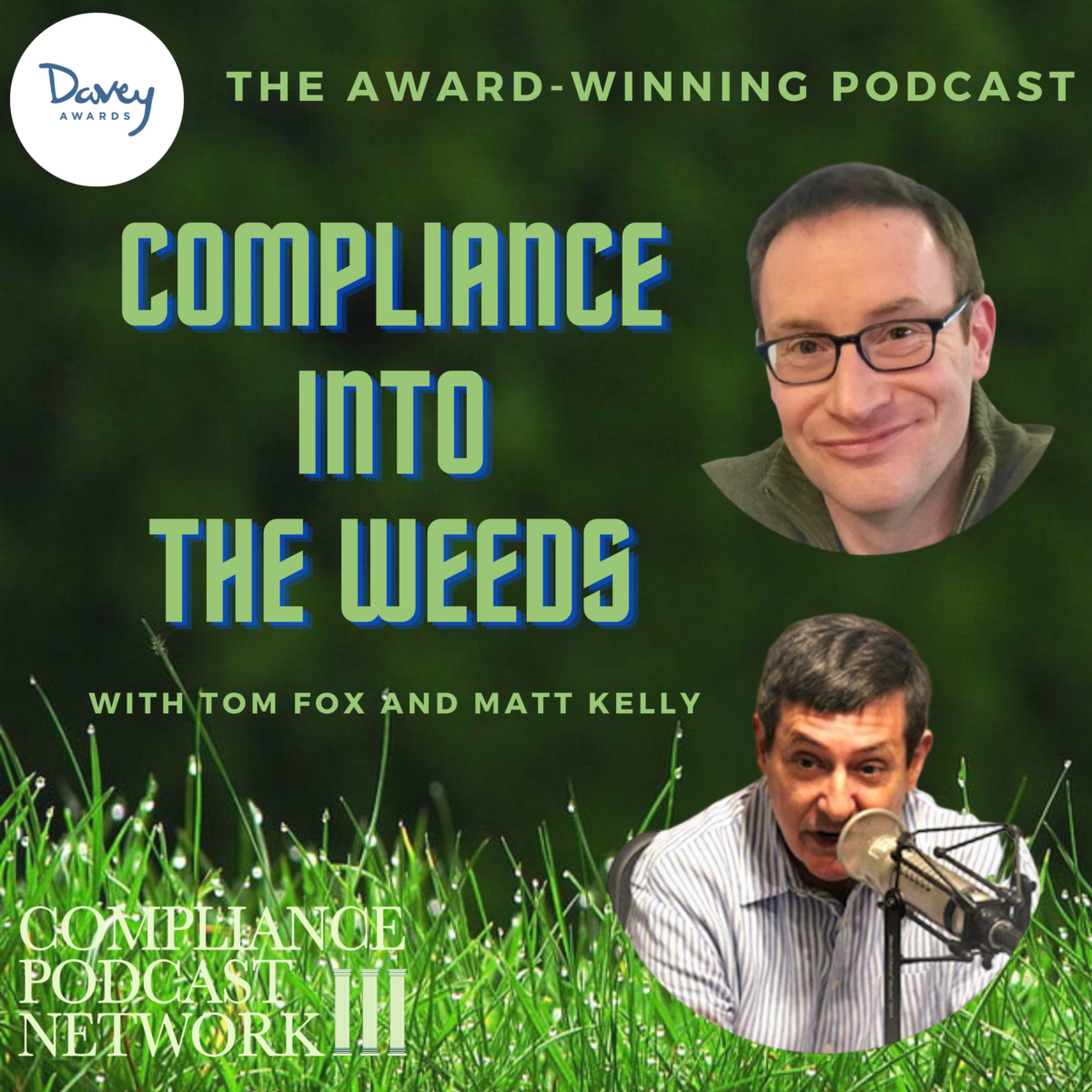
The award winning, Compliance into the Weeds is the only weekly podcast which takes a deep dive into a compliance related topic, literally going into the weeds to more fully explore a subject. Looking for some hard-hitting insights on compliance? Look no further than Compliance into the Weeds!

In this episode, Tom Fox and Matt Kelly take a deep dive into the toxic workplace culture at Bank of America (BoA) around hours worked by junior employees, in spite of senior management saying the right things.

BoA’s investment banking division has long been plagued by a toxic work culture, characterized by overworked junior employees and severe health crises, despite repeated assurances of reform. Tom Matt discuss these pervasive issues within BoA’s work environment. Fox highlights the tragic consequences of this toxic culture, such as the deaths of junior employees, and criticizes the company’s failure to implement effective reforms, attributing this to a lack of accountability and ethical leadership. Kelly echoes this sentiment, emphasizing the necessity for senior management to set clear expectations and consequences for middle managers who perpetuate unethical behavior. Both stress the need for senior management to address the deep-seated cultural dysfunction, impose consequences, and foster a healthier, rule-abiding workplace to prevent further tragedies and promote employee well-being.

Key Highlights:

  • Toxic Workplace Culture at Bank of America
  • Proactive Controls for Preventing Employee Overwork
  • Consequences of Middle Managers in Corporate Culture
  • Cultural Impact: Negative Attitudes in Organizations

Resources:

Matt in Radical Compliance

How Bank of America Ignores Its Own Rules Meant to Prevent Dangerous Workloads, by Alexander Saeedy in the WSJ

 Tom

Instagram

Facebook

YouTube

Twitter

LinkedIn

Categories
Blog

Lessons on Ongoing Monitoring and Continuous Improvement from Star Trek: Spectre of the Gun

Last month, I wrote a blog post on the tone at the top, exemplified in Star Trek’s Original Series episode, Devil in the Dark. Based on the response, some passionate Star Trek fans are out there. I decided to write a series of blog posts exploring Star Trek: The Original Series episodes as guides to the Hallmarks of an Effective Compliance program set out in the FCPA Resources Guide, 2nd edition. Today, I will continue my two-week series by looking at the following Hallmarks of an Effective Compliance Program laid out by the Department of Justice (DOJ) and Securities and Exchange Commission (SEC) in the FCPA Resources Guide, 2nd edition. Today, we look at lessons learned about ongoing monitoring and continuous improvement from the episode Spectre of the Gun, which provides a compelling narrative to explore the compliance concepts of ongoing monitoring and continuous improvement within a best practices compliance program.

In “Spectre of the Gun,” Captain Kirk and his crew are sent to make contact with the Melkotians, a reclusive alien species. Despite a warning buoy advising them to leave, the crew presses forward, and as a result, the Melkotians transport them into a surreal, incomplete version of the American Wild West. The crew finds themselves in a reenactment of the infamous Gunfight at the O.K. Corral, with Kirk, Spock, McCoy, Scotty, and Chekov cast as the doomed Clanton gang. The situation forces the crew to adapt rapidly, relying on their ingenuity and continuous assessment of their circumstances to survive. This scenario provides valuable lessons for compliance professionals on monitoring and constant improvement.

Lesson 1. Ongoing Monitoring and Continuous Assessment

In the Melkotian scenario, the Enterprise crew must continuously assess their environment to understand its limitations and potential dangers. The partial nature of the setting indicates that their perceptions can influence outcomes, requiring constant vigilance and situational awareness.

Continuous assessment is crucial for effective compliance programs. Organizations must be keenly aware of their regulatory environment and internal operations to identify potential risks and changes affecting compliance. This involves regular audits, risk assessments, and monitoring of key performance indicators to detect issues early. By maintaining situational awareness, compliance teams can proactively address emerging risks and ensure adherence to policies and regulations.

Lesson 2. Adapting Strategies Based on Feedback

Throughout the episode, the crew receives feedback from their interactions within the environment, leading them to adjust their strategies. Spock’s logical deductions and Kirk’s leadership guide the crew in adapting their actions to overcome the perceived threat.

Adaptability and flexibility are essential components of continuous improvement in compliance programs. Organizations should encourage a culture where feedback is sought and used to refine compliance strategies and controls. Implementing regular reviews and updates to compliance policies based on feedback and lessons learned ensures that the program remains effective and responsive to changes. Continuous improvement processes, such as after-action reviews and root cause analyses, enable organizations to refine their approaches and enhance compliance outcomes.

Lesson 3. Leveraging Expertise and Collaboration

The crew relies on Spock’s logical analysis and each member’s unique skills to navigate the challenges of the scenario. Their ability to collaborate and leverage individual strengths is key to their survival.

Effective compliance programs rely on the expertise and collaboration of diverse teams. Organizations should foster cross-functional collaboration, bringing together individuals from different departments to address compliance challenges comprehensively. Leveraging expertise from legal, risk management, operations, and other areas enhances the organization’s ability to monitor compliance effectively and implement improvements. Encouraging open communication and teamwork ensures that diverse perspectives contribute to developing robust compliance solutions.

Lesson 4. Proactive Problem-Solving and Innovation

The crew’s success in the scenario depends on their ability to innovate and develop creative solutions to their challenges. Spock realizes that the bullets are not real, and the crew’s collective belief in this fact allows them to avoid harm.

Proactive problem-solving and innovation are critical for continuous improvement in compliance programs. Organizations should encourage employees to think creatively and explore innovative solutions to compliance challenges. This involves fostering a culture that supports experimentation and learning from successes and failures. By empowering employees to propose and test new approaches, organizations can continuously enhance their compliance programs and remain agile in the face of change.

Lesson 5. Staying Vigilant

In the episode, the Enterprise crew is transported to an alternate reality where they must participate in a deadly reenactment of the O.K. Corral shootout. The crew must constantly adapt their strategies and tactics as the scenario changes. Similarly, compliance professionals need to remain vigilant and be prepared to adjust their compliance programs to address evolving risks, regulations, and business environments. Compliance professionals should take a comprehensive approach, conducting holistic risk assessments that consider obvious and obscure compliance risks across the organization.

As the crew faces new challenges in the alternate reality, they must quickly learn from their experiences and refine their strategies. Compliance professionals should similarly adopt an iterative approach to improving their programs, constantly evaluating their effectiveness and making adjustments as needed. By drawing these parallels between the lessons from “The Spectre of the Gun” and the practices of effective compliance management, compliance professionals can strengthen their programs and foster a culture of continuous improvement within their organizations.

Spectre of the Gun provides valuable insights into ongoing monitoring and continuous improvement compliance concepts. The episode highlights the importance of constant assessment, adaptability, collaboration, and proactive problem-solving in navigating complex and dynamic challenges. For compliance professionals, the key takeaway is the need to establish robust monitoring systems, encourage adaptability and innovation, and foster a culture of collaboration and continuous improvement. By applying these principles, organizations can enhance compliance programs, effectively manage risks, and achieve sustainable success in an ever-evolving regulatory landscape. Just as the Enterprise crew adapted to and overcame the challenges presented by the Melkotians, compliance professionals must remain vigilant and proactive in navigating the complexities of modern compliance environments.

Join us tomorrow as we consider the lessons on mergers and acquisitions from the Star Trek episode The Ultimate Computer.

Categories
Magnificent 7 Rides Again

The Magnificent 7 Rides Again: Janelle Lindley’s Passion for Art and Teaching

Welcome to The Magnificent 7 Rides Again, a captivating podcast series that delves into the vibrant world of seven talented female artists painting amidst the breathtaking landscapes, wildlife and vistas of the Texas Hill Country. Join us as we explore their creative journeys, uncover the inspirations behind their work, and celebrate their unique perspectives on art and life.

In this series, we will dive deep into the heart of the Texas Hill Country, where sweeping vistas and rugged beauty serve as the backdrop for artistic expression. Each episode will feature intimate conversations with these remarkable women, offering insights into their creative processes, the challenges they face, and the stories that shape their art.

In this episode, Tom welcomes Janelle Lindley, an artist and art teacher. Janelle shares her lifelong passion for art, which started in her early childhood and was fostered by her supportive parents. She discusses her experience instructing public school students and adults, emphasizing the importance of art education for all. They delve into the origins of ‘The Magnificent Seven,’ an annual art show in Kerrville, Texas, in which Janelle participates. She also describes her unique art styles, including acrylic landscape painting and paper painting. The conversation underscores the significance of promoting and engaging with local artists and encouraging young learners to explore their creativity.

Key Highlights:

  • Janelle’s Early Passion for Art
  • Teaching Art in Public Schools
  • Current Students and Teaching Methods
  • The Magnificent Seven Art Show
  • Encouraging Young Artists
  • Importance of Local Art Communities

Resources:

Janelle Lindley Fine Art

Kerrville Arts and Cultural Center

Texas Hill Country Podcast Network

Categories
Compliance Tip of the Day

Compliance Tip of the Day: The Brand of Compliance

Welcome to “Compliance Tip of the Day,” the podcast where we bring you daily insights and practical advice on navigating the ever-evolving landscape of compliance and regulatory requirements.

Whether you’re a seasoned compliance professional or just starting your journey, our aim is to provide you with bite-sized, actionable tips to help you stay on top of your compliance game.

Join us as we explore the latest industry trends, share best practices, and demystify complex compliance issues to keep your organization on the right side of the law.

Tune in daily for your dose of compliance wisdom, and let’s make compliance a little less daunting, one tip at a time.

A brand is a promise delivered. Are you delivering your promises in compliance?

For more information on the Ethico ROI Calculator and a free White Paper on the ROI of Compliance, click here.

To check out The Compliance Handbook, 5th edition, click here.

Categories
Daily Compliance News

Daily Compliance News: August 20, 2024 – The No ‘X’ in Brazil Edition

Welcome to the Daily Compliance News. Each day, Tom Fox, the Voice of Compliance, brings you compliance-related stories to start your day. Sit back, enjoy a cup of morning coffee and listen to the Daily Compliance News. All from the Compliance Podcast Network.

Each day, we consider four stories from the business world: compliance, ethics, risk management, leadership, or general interest for the compliance professional.

In today’s edition of Daily Compliance News:

  • X suspends business in Brazil. (BBC)
  • State AGs seek triple damages against Live Nation. (Reuters)
  • Carl Icahn agrees to a $2 million SEC fine. (NYT)
  • Does the IRS even want whistleblowers? (WaPo)

For more information on the Ethico ROI Calculator and a free White Paper on the ROI of Compliance, click here.

Categories
Blog

Lessons on Managing 3rd Parties from Star Trek: The Omega Glory

Last month, I wrote a blog post on the tone at the top, exemplified in Star Trek’s Original Series episode, Devil in the Dark. Based on the response, some passionate Star Trek fans are out there. I decided to write a series of blog posts exploring Star Trek: The Original Series episodes as guides to the Hallmarks of an Effective Compliance program set out in the FCPA Resources Guide, 2nd edition. Today, I will continue my two-week series by looking at the following hallmarks of an effective compliance program laid out by the Department of Justice (DOJ) and Securities and Exchange Commission (SEC) in the FCPA Resources Guide, 2nd edition. Today, we look at lessons learned on managing third parties from The Omega Glory episode.

Trust, verification, and alignment with core values are paramount in third-party management. These principles are crucial in today’s complex business environment, where organizations rely on external partners to achieve their objectives. Interestingly, these concepts are vividly illustrated in an unlikely source: the classic Star Trek episode The Omega Glory. This episode provides a fascinating backdrop for exploring the intricacies of third-party management. Today, we dive into the narrative and draw valuable lessons for managing third-party relationships.

In The Omega Glory,  Captain James Kirk and his crew encounter a planet named Omega IV, where two factions, the Yangs and the Kohms, are locked in a perpetual conflict. The Yangs parallel the American patriots of the Revolutionary War, while the Kohms resemble the communists. The Enterprise crew discovers that a Starfleet officer, Captain Ron Tracey, has violated the Prime Directive, the Federation’s core principle of non-interference, by intervening in the planet’s internal affairs to gain immortality from the planet’s unique properties. Tracey’s actions cause chaos and disrupt the natural progression of Omega IV’s societies. In the end, Captain Kirk is forced to confront Tracey and restore balance, emphasizing the need for adherence to principles and respect for the natural order.

Lesson 1: The Importance of Adhering to Your Core Values

One of the primary lessons from The Omega Glory is the significance of adhering to core values and principles. In the episode, Captain Tracey abandons the Prime Directive to pursue personal gain, resulting in disastrous consequences. This mirrors real-world scenarios where third-party relationships can be compromised when organizations or individuals prioritize short-term gains over long-term values and ethical standards.

Organizations must ensure their partners share and adhere to the same core values when engaging with third parties. Establishing clear guidelines and ethical standards is essential for maintaining alignment and preventing deviations that could harm the organization’s reputation and objectives. Regular audits and assessments help verify that third parties operate by these values.

Lesson 2: The Necessity of Due Diligence and Verification

Captain Tracey’s actions underscore the importance of due diligence and verification. He assumed that the planet’s properties could provide eternal life without fully understanding the implications of his interference. This assumption led to unintended consequences and endangered his crew and the planet’s inhabitants.

Due diligence is a critical component of third-party management. Organizations must thoroughly assess potential partners to evaluate their capabilities, integrity, and compatibility with organizational goals. Verification processes, such as background checks, financial audits, and compliance assessments, ensure that third parties meet the required standards. Regular monitoring and ongoing evaluations help maintain transparency and accountability in the relationship.

Lesson 3: The Dangers of Unchecked Authority

Most compliance professionals rarely see unchecked power from third parties, yet this episode provides important insight for compliance professionals. Captain Tracey exercises unchecked authority, disregarding Starfleet regulations and the ethical implications of his actions. His uncontrolled power leads to chaos and conflict, highlighting the dangers of allowing individuals or entities to operate without oversight.

Unchecked authority in third-party management can lead to breaches of trust, legal violations, and reputational damage. Organizations must establish clear governance structures and oversight mechanisms to ensure third parties operate within defined boundaries. Implementing robust contractual agreements, performance metrics, and reporting frameworks can help maintain control and mitigate risks associated with third-party relationships.

Lesson 4: The Role of Communication and Collaboration

Throughout the episode, communication breakdowns contribute to misunderstandings and conflicts. Captain Kirk ultimately resolves the situation by facilitating dialogue and collaboration between the Yangs and the Kohms, emphasizing the importance of open communication in resolving disputes and achieving mutual understanding.

Effective communication is a cornerstone of successful third-party management. Organizations should establish open lines of communication with their partners, fostering a collaborative environment that encourages feedback, transparency, and problem-solving. Regular meetings, status updates, and joint planning sessions help align objectives and address potential issues before they escalate. This will also help manage the commercial relationship after the contract is signed.

Lesson 5: The Need for Flexibility and Adaptability

The episode highlights the need for flexibility and adaptability in complex situations. Captain Kirk’s ability to adapt to changing circumstances and devise innovative solutions is crucial in resolving the conflict and restoring balance. Third-party relationships often involve dynamic and evolving challenges. Organizations must remain flexible and adaptable to changing circumstances, such as shifts in market conditions, regulatory requirements, or technological advancements. Developing contingency plans, embracing innovation, and fostering a culture of continuous improvement can help organizations navigate uncertainties and maintain successful third-party relationships.

Third-party relationships also mandate ongoing monitoring from a data analytics perspective. Compliance may need to conduct additional investigation if there are significant changes in the volume of goods sold by a third party or the amount of commissions paid to a particular third-party agent, region, or business unit. However, third parties must understand and receive a steady diet of communication and training on the need to do business ethically and in compliance with your company’s values.

The Omega Glory serves as a compelling training vehicle for the complexities and challenges of third-party management. The episode’s themes of adherence to core values, due diligence, oversight, communication, and adaptability provide valuable insights for organizations seeking to optimize their third-party relationships. By learning from Captain Kirk’s experiences on Omega IV, businesses can enhance their third-party management practices, mitigate risks, and achieve sustainable success in an interconnected world.

In conclusion, organizations must prioritize trust, verification, business justification, and alignment with core values in their third-party management strategies. By adhering to these principles and drawing lessons from unconventional sources like Star Trek, businesses can navigate the complexities of modern partnerships and achieve their strategic objectives with integrity and success.

Join us tomorrow as we consider the lessons on ongoing monitoring and continuous improvement of Spectre of the Gun Ultimate.