Categories
Blog

AI Game-Changing Compliance: Part 3 – Decentralized Compliance with Blockchain Technology

Last week, I looked at five things a Chief Compliance Officer (CCO) or compliance professional could do at little or no cost to ‘Up Their (Compliance) Game.’ I want to continue this theme this week but want to tackle it differently. I will look at five innovations for compliance professionals around Artificial Intelligence (AI). AI has moved from an emerging trend to a fundamental component of modern corporate compliance programs. Today, I want to examine how blockchain can be a game-changer for compliance.

Today, organizations leverage blockchain to enhance transparency, ensure data integrity, and strengthen regulatory adherence. While compliance professionals have historically relied on centralized data repositories and traditional audit methods, blockchain offers a decentralized, tamper-proof alternative that reshapes compliance monitoring. This innovation is crucial in industries where data security, fraud prevention, and ethical sourcing are non-negotiable.

Regulators are increasingly scrutinizing how businesses manage their compliance data, with expectations rising for real-time reporting, immutable record keeping, and enhanced due diligence. Blockchain provides a solution by creating an unalterable digital ledger, enabling compliance teams to verify transactions, track supply chains, and show adherence to environmental, social, and governance (ESG) standards with unprecedented accuracy. Below, we explore how companies across industries utilize blockchain for decentralized compliance, lessons learned for compliance professionals, and important points for corporate leadership.

How Blockchain Enhances Compliance

One of blockchain’s most compelling benefits is its ability to create immutable audit trails. This immutability makes blockchain so revolutionary for compliance. It is not a technological novelty; it has profound implications for all manner of financial reporting, regulatory compliance, and corporate governance. Corporate leaders and compliance professionals must recognize that the traditional data management methods and audit trails are no longer sufficient in an era where every error, manipulation, or fraudulent activity can have dramatic financial and reputational consequences.

The immutable nature of blockchain means that every transaction or piece of data recorded on the chain is permanently etched into the ledger. Unlike traditional databases, which can be subject to human error or deliberate tampering, blockchain uses cryptographic principles to ensure that records remain unchanged once verified. This creates an audit trail that is transparent and verifiable in real-time. For compliance officers, this is a game changer. It fundamentally changes from periodic, retrospective audits to continuous, real-time oversight—a fundamental transformation in how businesses manage risk and adhere to regulatory standards.

The implications are enormous for industries subject to stringent compliance requirements, such as finance, healthcare, and manufacturing. Regulations like the Sarbanes-Oxley Act (SOX), the General Data Protection Regulation (GDPR), and various anti-money laundering (AML) directives demand precise, accurate record-keeping and transparent reporting. Blockchain tamper-proof ledger directly addresses these demands. By integrating blockchain into their compliance frameworks, companies can automatically enforce rules and ensure that all required records are accurate, complete, and accessible to auditors and regulators. This level of reliability reduces the risk of non-compliance and streamlines the entire audit process, saving time and reducing costs.

The decentralization inherent in blockchain technology provides additional layers of security and transparency. A central database may be vulnerable to cyber-attacks or internal manipulation in traditional systems. Blockchain distributes data across a network of nodes. Each node holds a copy of the ledger, meaning tampering with one record would require altering the entire network—a near-impossible feat with current technology. This distributed nature reinforces trust among stakeholders, ensuring that every participant—from internal auditors to external regulatory bodies—can rely on the integrity of the data. For compliance professionals, this translates to a robust, reliable system that minimizes human error and operational risk.

Another significant advantage of blockchain is its capacity to support continuous compliance monitoring. Instead of waiting for end-of-quarter reviews or annual audits, companies can now access real-time data. Regulators, for example, could be granted access to a live, immutable ledger that provides instantaneous insights into financial transactions, supply chain movements, or any other regulated activity. This proactive approach means potential issues can be identified and addressed before they escalate into full-blown compliance breaches. The result is a more agile, responsive compliance system that can adapt to changes in the regulatory landscape almost as soon as they occur.

Blockchain also facilitates automated compliance through smart contracts and self-executing digital agreements where the contract terms are written into code. These contracts can be programmed to enforce compliance rules automatically. For example, a smart contract might automatically trigger a compliance review if a transaction exceeds a predetermined threshold, or it could enforce that certain conditions are met before a transaction is finalized. This automation reduces the administrative burden on compliance teams and ensures that rules are applied consistently without the variability introduced by manual processes. For corporate leaders, this means fewer errors, faster processing times, and a more secure regulatory environment.

The Future is Now in AI-Blockchain as a Compliance Imperative

A prime example of blockchain’s efficacy in this arena is illustrated by the World Bank’s Blockchain-Based Financial Transparency Initiative. This initiative leverages blockchain to fortify transparency in government contracts and aid disbursements. Utilizing blockchain’s inherent qualities, the World Bank can ensure that funds are allocated and tracked in real-time, significantly reducing the risk of mismanagement. Every disbursement, every contractual change, and every transaction is logged on the blockchain, creating a tamper-proof audit trail that meets stringent anti-corruption and financial accountability standards. For organizations engaged in high-stakes financial operations, mainly those subject to intense regulatory scrutiny, such an initiative serves as both a preventive measure against corruption and a robust tool for regulatory compliance.

Using blockchain in anti-corruption strategies extends far beyond the realm of government aid. In regions where corruption is endemic, companies can employ blockchain to monitor financial flows and contractual obligations with unprecedented precision. The technology is a powerful deterrent against illicit behavior because it leaves no room for the discreet manipulation of records. The decentralized ledger enhances internal controls and fosters a culture of transparency that is difficult to subvert. With blockchain, every stakeholder—from auditors and compliance officers to regulators and investors—can access a clear, real-time snapshot of all transactions. This visibility is crucial for building trust and ensuring that every participant in the financial ecosystem adheres to ethical and legal standards.

For compliance teams, blockchain’s real-time monitoring capability is a game changer. Instead of relying on periodic audits that may only uncover discrepancies after the fact, organizations can continuously track financial activities as they occur. This proactive monitoring helps identify suspicious activities almost instantly, enabling swift remedial action before potential violations escalate. By automating routine compliance processes through smart contracts, blockchain minimizes human intervention, reducing the risks associated with manual errors or intentional tampering.

In summary, blockchain’s ability to improve anti-corruption and fraud prevention significantly advances corporate compliance. Its decentralized nature ensures that every transaction is transparent, verifiable, and resistant to tampering—a feature especially valuable in high-risk environments. The World Bank’s initiative is a compelling example of how blockchain can be harnessed to enforce rigorous financial transparency and accountability standards. For companies worldwide, embracing blockchain technology is not merely an option but an essential step toward fostering a secure, compliant, and ethical operational framework in an increasingly complex regulatory environment.

The benefits of blockchain also extend to fostering greater trust between companies and their regulators. By providing a transparent, real-time audit trail, blockchain diminishes the adversarial nature of regulatory inspections. Instead of a scenario where regulators must rely on a company’s internal reports, they have direct access to an independent, tamper-proof ledger. This shared transparency builds confidence in the integrity of the data and encourages a more collaborative relationship between businesses and regulatory authorities. In today’s highly scrutinized regulatory environment, such trust is invaluable.

Blockchain technology is revolutionizing corporate compliance by providing a secure, immutable record-keeping system that directly addresses many of the challenges associated with traditional audit and reporting practices. Its decentralized, tamper-proof ledger ensures data integrity and supports continuous, real-time monitoring and automated compliance through smart contracts. These capabilities help reduce fraud, human error, and the overall cost of compliance while enhancing transparency and trust among stakeholders.

The message for compliance professionals and corporate leaders is clear: embracing blockchain is no longer optional but a strategic imperative. As regulatory frameworks become more demanding and the risks associated with non-compliance increase, blockchain offers a powerful tool to meet and exceed these challenges. It empowers organizations to move away from outdated manual processes and toward a more efficient, proactive compliance model. In doing so, companies safeguard their operations and build a foundation of trust and reliability that can drive long-term success in an increasingly complex regulatory landscape.

Categories
Compliance Tip of the Day

Compliance Tip of the Day – Next-Generation Predictive Analytics for Risk Management

Welcome to “Compliance Tip of the Day,” the podcast where we bring you daily insights and practical advice on navigating the ever-evolving landscape of compliance and regulatory requirements. Whether you’re a seasoned compliance professional or just starting your journey, we aim to provide bite-sized, actionable tips to help you stay on top of your compliance game. Join us as we explore the latest industry trends, share best practices, and demystify complex compliance issues to keep your organization on the right side of the law. Tune in daily for your dose of compliance wisdom, and let’s make compliance a little less daunting, one tip at a time.

We begin a week of exploring how AI can impact your compliance program in 2025. Today, we examine how compliance can use next-generation predictive analytics for its overall risk management process.

For more information on the Ethico Toolkit for Middle Managers, available at no charge, click here.

Categories
Daily Compliance News

Daily Compliance News: February 25, 2025, The HR Reckoning Edition

Welcome to the Daily Compliance News. Each day, Tom Fox, the Voice of Compliance, brings you compliance-related stories to start your day. Sit back, enjoy a cup of morning coffee, and listen in to the Daily Compliance News—all from the Compliance Podcast Network. Each day, we consider four stories from the business world: compliance, ethics, risk management, leadership, or general interest for the compliance professional.

Top stories include:

  • A reckoning is coming in HR. (FT)
  • 9th Circuit upholds Holmes’s conviction. (Reuters)
  • South Africa’s corruption efforts lag. (Bloomberg)
  • LLMs pose security risks. (WSJ)

For more information on the Ethico Toolkit for Middle Managers, available at no charge, click here.

Check out the FCPA Survival Guide on Amazon.com.

Categories
Innovation in Compliance

Innovation in Compliance – From Military Service to Corporate Success: Insights on Leadership, Resilience, and Compliance with Sean Douglas

Innovation comes in many forms, and compliance professionals need to be ready for it and embrace it. Join Tom Fox, the Voice of Compliance, as he visits with top innovative minds, thinkers, and creators in the award-winning Innovation in Compliance podcast. In this episode, host Tom Fox is joined by Sean Douglas, a dynamic speaker and author with a rich background spanning 20 years in the Air Force.

Sean discusses his professional journey, emphasizing lessons from his military service, such as the importance of recognizing bad leadership, discipline, patience, and service. He further delves into his podcasts and books, focusing on resilience, leadership, and business positioning. Highlighting key concepts like gratitude, transformational leadership, and overcoming self-defeating behaviors, Sean provides actionable insights for corporate compliance officers and executives. This episode is packed with practical advice on building a supportive workplace culture, creating positive work environments, and achieving long-term success through values-based goals.

Key highlights:

  • Resiliency and Leadership Insights
  • Military Service Lessons
  • Resilience and Mental Health
  • Transformational Leadership
  • Business Positioning and Category Design
  • Values-Based Goals and Compliance

Resources:

Sean Douglas on LinkedIn

The Success Corps

Tom Fox

Instagram

Facebook

YouTube

Twitter

LinkedIn

Categories
Hill Country Authors

Hill Country Authors Podcast – The Barber, The Astronaut, and The Golf Ball: Untold NASA Stories with Barbara Radnofsky and Ed Supkis

Welcome to a new season of the award-winning Hill Country Authors Podcast, sponsored by Stoney Creek Publishing. In this podcast, Hill Country resident Tom Fox visits with authors who live in and write up the Texas Hill Country. In this episode, Tom visits with Barbara Radnofsky and her co-author husband, Ed Supkis, on their book, The Barber, The Astronaut, and The Golf Ball: An Exploration of Untold NASA Stories.

Barbara, a former lawyer and mediator turned author, and Ed, a cardiovascular anesthesiologist turned aviation medicine expert, share their journey from documentary filmmakers to authors. The book delves into the intriguing relationships between Carlos Villagomez, a barber with a Navy history, and the iconic astronaut Alan Shepard, focusing on the mysterious golf ball hit on the moon. Ed and Barbara grew up as ‘NASA Brats’ as their fathers worked in the space program. They provide an insider’s perspective on NASA’s behind-the-scenes heroes, emphasizing the collaborative spirit that fueled the space program. The episode closes with reflections on the importance of preserving legacies and storytelling for future generations and how listeners can access their books and documentaries.

Key highlights:

  • Carlos Villagomez: The Barber
  • Carlos’s Relationship with Alan Shepard
  • Alan Shepard: The Astronaut and the Man
  • NASA’s Support System
  • Growing Up as NASA Brats
  • The Importance of Preserving Legacies

Resources:

Barbara Radnofsky on LinkedIn

The Barber, the Astronaut and the Golf Ball on Amazon.com

The Barber, the Astronaut and the Golf Ball on Bibliotica.com

Stoney Creek Publishing

Nancy Huffman Fine Art

Tom Fox

Instagram

Facebook

YouTube

Twitter

LinkedIn

Categories
Blog

AI Game-Changing Compliance: Part 2 – Next-Generation Predictive Analytics for Risk Management

Last week, I looked at five things a Chief Compliance Officer (CCO) or compliance professional could do at little or no cost to ‘Up Their (Compliance) Game.’ I want to continue this theme this week but want to tackle it differently. I will look at five innovations for compliance professionals around Artificial Intelligence (AI). AI has moved from an emerging trend to a fundamental component of modern corporate compliance programs. Today, I want to examine how compliance can use next-generation predictive analytics for your overall risk management process.

Predictive analytics tools have become more sophisticated, allowing compliance teams to move from reactive enforcement to proactive risk mitigation. By leveraging machine learning models, companies can expect compliance risks based on historical data, employee behavior, and external factors like geopolitical instability or regulatory changes. This approach enables organizations to allocate compliance resources more effectively and address emerging risks before they escalate.

The ability to predict and prevent compliance failures before they occur is a fundamental change. AI-driven predictive analytics help organizations identify patterns of misconduct, assess third-party risks, and enhance fraud detection. Regulators are also increasingly emphasizing the importance of data-driven compliance programs, with the DOJ’s latest guidance on corporate compliance highlighting the need for real-time monitoring and risk assessments.

Predictive Compliance Enhances Proactive Risk Mitigation

Predictive analytics transforms traditional AI methods to analyze vast data sets, identify patterns, and forecast potential risk areas before they escalate into full-blown violations. This proactive stance empowers companies to take decisive action ahead of time, mitigating risks, reducing the frequency of compliance breaches, and ultimately safeguarding the organization from financial penalties and reputational damage. When discussing predictive compliance analytics, we are talking about a paradigm shift. No longer are compliance teams simply reacting to incidents as they occur; instead, they are actively scanning the horizon for early warning signals. This foresight allows companies to allocate resources more efficiently, tailor their monitoring efforts to emerging trends, and address compliance issues at the root before they evolve into systemic problems.

Embracing this technology streamlines internal processes and solidifies an organization’s commitment to regulatory adherence, building stakeholder trust and reinforcing its reputation as an industry leader. It calls all corporate compliance professionals to invest in robust AI tools and predictive analytics to stay one step ahead. In an era where non-compliance costs are high, predictive compliance is not just an operational upgrade; it is a strategic imperative that enables organizations to preempt violations, strengthen their internal controls, and create an agile, forward-thinking compliance culture built to last.

The Future is Now in AI-Driven Predictive Analytics in Risk Management-Mastercard

The challenge was that Mastercard needed a proactive approach to detect fraudulent transactions and mitigate compliance risks in its vast payment network. The solution it came up with was to implement an AI-driven predictive analytics model that detects suspicious activity in real time by analyzing billions of transactions and identifying anomalies. The outcome was that fraud detection rates improved by 40%, reducing regulatory risk while enhancing customer trust and compliance with financial crime regulations. For compliance professionals striving to navigate the complex landscape of modern regulatory environments, the Mastercard case offers several critical lessons for compliance professionals.

1. Predictive Compliance is the Future

Mastercard’s success illustrates that predictive analytics is not simply a technological upgrade—it’s a strategic imperative. Compliance departments must invest in systems that monitor and predict. When you can anticipate a fraudulent transaction before it occurs, you gain invaluable time to implement remedial measures.

2. Regulators Expect Real-Time, Data-Driven Oversight

The landscape of regulatory oversight is evolving rapidly. Agencies like the DOJ, SEC, and FCA increasingly demand that companies move beyond periodic reviews and adopt real-time monitoring systems. In this context, AI-driven predictive analytics is not a luxury; it’s a necessity. Organizations that fail to implement such technologies risk regulatory penalties and a loss of market credibility. The Mastercard example serves as a clarion call: regulatory bodies are watching and expect data-driven compliance that leaves no stone unturned.

3. Integration of AI and Human Judgment is Critical

While AI can process vast amounts of data at lightning speed, it is not infallible. The human element remains essential in interpreting AI-generated insights. Corporate compliance professionals must ensure a seamless integration between sophisticated algorithms and experienced human judgment. Technology is a powerful tool, but it must be wielded by hands that understand the nuances of ethics, fairness, and regulatory intent. This means that a balanced approach, where AI identifies patterns and humans validate them, can lead to more robust compliance outcomes.

4. Enhancing Third-Party Risk Management

A significant part of any company’s risk profile comes from its network of third-party partners. Mastercard’s deployment of AI-driven predictive models also included monitoring third-party activities and enhancing its risk assessment capabilities. Compliance professionals should note that predictive analytics can extend beyond internal processes to encompass suppliers, vendors, and other external entities. By applying the same rigorous standards across the board, organizations can mitigate risks associated with external compliance breaches and ensure a holistic approach to risk management.

5. Early Adoption Creates Competitive and Ethical Advantages

Mastercard’s early adoption of AI-driven fraud detection positioned it as a leader in risk management and an ethical champion in the fight against financial crime. Early adopters of predictive compliance systems gain a dual advantage: they reduce immediate risks and build a reputation for being proactive and responsible. This attracts customers, investors, and regulators alike. For corporate compliance professionals, the lesson is clear: waiting to embrace innovation is a luxury that few can afford in today’s fast-paced regulatory environment.

The Broader Implications for the Compliance Landscape

Beyond Mastercard’s specific successes, this case study reflects a broader trend in compliance management. Integrating AI into compliance operations is transforming the field, offering unprecedented opportunities to preempt and neutralize risks before they escalate into full-blown crises. As more organizations recognize the value of predictive analytics, we can expect a shift toward a more dynamic and responsive compliance culture.

The Mastercard example also underscores the importance of continuous innovation. Fraudsters are constantly evolving, and so must the systems designed to thwart them. Compliance professionals must foster an environment of perpetual improvement, where technology and processes are continually refined to meet emerging challenges. This proactive mindset is good for business and essential to upholding the ethical standards that form the backbone of any reputable organization.

Next-generation predictive analytics is revolutionizing corporate compliance by transforming the traditional, reactive approach into a proactive, forward-looking discipline. By leveraging advanced machine learning models, companies can expect compliance risks before they escalate, drawing on historical data, employee behavior, and external factors, such as geopolitical shifts and regulatory changes. This paradigm shift enables organizations to allocate resources more efficiently, address emerging risks at their root, and ultimately strengthen regulatory adherence while avoiding costly enforcement actions.

At the core of this transformation is predictive analytics’ ability to identify subtle patterns of misconduct and potential vulnerabilities in real-time. Instead of waiting for a compliance failure to occur, compliance teams are now empowered to detect warning signals early, implement timely interventions, and continuously refine their risk management strategies. The article emphasizes that such proactive measures safeguard an organization’s reputation and financial stability and build greater trust with regulators, investors, and stakeholders by demonstrating a commitment to ethical governance.

Ultimately, this forward-thinking approach to compliance is an operational improvement and a strategic imperative for staying ahead in a rapidly changing regulatory landscape. By embracing predictive analytics, organizations position themselves as industry leaders in risk management, fostering a culture of continuous improvement essential for ethical and sustainable business practices. This article serves as a rallying cry for corporate compliance professionals to harness these innovations, turning compliance challenges into competitive advantages.

Categories
Compliance Tip of the Day

Compliance Tip of the Day – AI Driven Compliance Monitoring

Welcome to “Compliance Tip of the Day,” the podcast where we bring you daily insights and practical advice on navigating the ever-evolving landscape of compliance and regulatory requirements. Whether you’re a seasoned compliance professional or just starting your journey, we aim to provide bite-sized, actionable tips to help you stay on top of your compliance game. Join us as we explore the latest industry trends, share best practices, and demystify complex compliance issues to keep your organization on the right side of the law. Tune in daily for your dose of compliance wisdom, and let’s make compliance a little less daunting, one tip at a time.

We begin a week of looking at how AI can impact your compliance program in 2025. Today, we consider how AI can improve your compliance monitoring.

For more information on the Ethico Toolkit for Middle Managers, available at no charge, click here.

Categories
Riskology

Riskology by Infortal™: Episode 42 – Navigating New Diplomacy Trade Winds with Tom Hanson

Join Riskology by Infortal™ Host, Chris Mason, and Tom Hanson, the CEO and Founder of Channel Architect LLC, as they discuss the challenges companies are dealing with in the face of shifting global diplomacy and trade relations.

Special Guest: Tom Hanson, the CEO and Founder of Channel Architect

Tom Hanson has more than 30 years of experience guiding companies and governments to trade and investment success in complex international markets. His California-based global trade advisory firm, Channel Architect LLC, builds scalable channel strategies for export-ready providers and prepares its local and national government clients on how to win and retain foreign investors in their jurisdictions.

Tom completed his tenure in 2023 as a commercial officer with the U.S. Foreign Commercial Service, with postings in Bucharest, New Orleans, Calgary, and São Paulo. Throughout, he strengthened the international competitiveness of American businesses and communities by promoting exports and attracting foreign direct investment while ensuring access to free and fair trade.

Infortal Worldwide:

Infortal™ Worldwide provides the full suite of due diligence investigation services to support your company’s risk management program and investment due diligence process. This includes investigation capabilities in over 160+ countries worldwide.

For over 35 years, Infortal™ has enabled clients across all industries to mitigate their business risks and protect employees and assets globally.

Infortal™ Worldwide is also at the forefront of examining how geopolitical risk can impact strategic decision-making, the long-term sustainability of your business, and the potential downstream impact on key partners and suppliers.

Infortal™ Worldwide focuses on solving risk before it starts.

Understanding the Changing Dynamics of International Commerce

In a rapidly evolving global economic landscape, international trade and diplomacy are key factors shaping business strategies, and this episode delves into these complexities. With decades of experience in both diplomatic and commercial sectors, Tom provides invaluable insights into strategic market entry and the current challenges and opportunities in international business. He emphasizes the strength of North America as a united trading bloc, underlining the geopolitical leverage it can wield on the global stage.

Navigating North American Trade: USMCA and Beyond

The importance of the United States-Mexico-Canada Agreement (USMCA) and its implications for companies operating within North America should not be understated. Strategic partnerships and robust distribution channels that can adapt to shifting policies and maintain market resilience are critical to dealing with shifting politics. The ability to leverage close geographic and economic ties with neighboring countries is vital for tapping into undiscovered revenue streams. This requires relationship building and understanding who you are doing business with across borders.

The European Equation: Economic and Geopolitical Challenges

Across the Atlantic in Europe, economic headwinds and geopolitical tensions present significant challenges for companies.

Tom shares his perspective on the European Union’s efforts to maintain solidarity amid external pressures and internal uncertainties. It will be important to monitor the developing strategy for rebuilding Ukraine post-conflict and the EU’s role in this endeavor.

There will be future areas for engagement and investment.

Strategic Resilience: The Key to Future-Proofing Business

Throughout the podcast, a recurring theme emerges: business resilience.

Host Chris Mason emphasizes how companies that build strong partnerships and adaptive strategies are better positioned to weather international uncertainty and capitalize on opportunities. As geopolitical landscapes shift, resiliency becomes invaluable in maintaining competitiveness and ensuring sustained growth.

This episode provides a comprehensive understanding of the dynamic interplay between international diplomacy, commerce, and strategic business planning, offering guidance for businesses looking to thrive in an increasingly complex international environment.

Check out Episode 42 of Riskology by Infortal™ to learn more!

Resources:

Infortal Worldwide

Email

Tom Hanson on LinkedIn

Chris Mason on LinkedIn

Categories
Corruption, Crime and Compliance

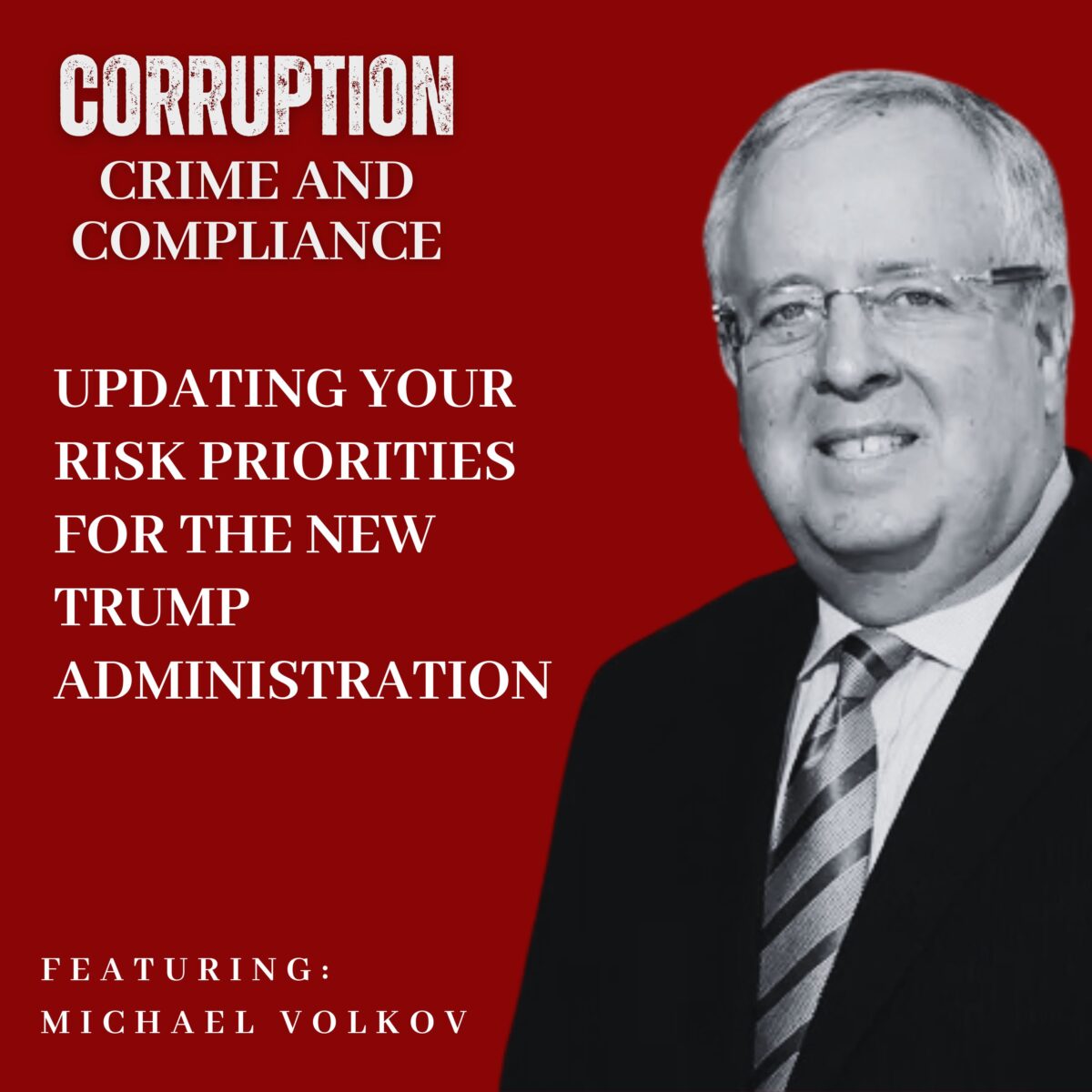
Updating Your Risk Priorities for the New Trump Administration

Are You Ready for the Next Wave of Corporate Risk? Corporate risks are shifting, and every board, C-suite, and compliance team must take a fresh look at their risk landscape. While some risks like cybersecurity, data privacy, and artificial intelligence remain high priorities, others—such as anti-corruption and antitrust enforcement—are evolving unexpectedly. With regulatory changes and new enforcement priorities emerging, businesses must stay ahead of the curve to avoid costly missteps. In this Corruption, Crime & Compliance episode, Michael Volkov unpacks the latest updates in FCPA enforcement, antitrust scrutiny, and trade compliance. With the DOJ shifting its focus, companies must prepare for the new compliance reality.

You’ll hear him discuss:

  • Why companies must reassess their risk priorities in today’s unpredictable business environment as corporate risks continue to shift in response to new regulatory and enforcement trends.
  • The impact of the FCPA enforcement pause, what it means for global businesses, and why companies cannot afford to dismantle their anti-corruption programs despite the temporary halt in enforcement.
  • How is the DOJ shifting its focus toward prosecuting criminal cartels and transnational organizations, and what does that mean for businesses operating in high-risk regions or industries?
  • The evolving landscape of antitrust enforcement, including key takeaways from Gail Slater’s confirmation hearing and how the administration’s new approach may impact high-tech competition cases.
  • Businesses should prepare for heightened tariffs, trade compliance risks, and increased customs enforcement, particularly as the U.S. targets imports from China, Southeast Asia, Mexico, and Canada.
  • Why is workplace immigration enforcement becoming a bigger concern, with the government ramping up workplace raids, audits, and compliance checks for companies employing immigrant workers?
  • There is growing scrutiny around government grants, the potential for fraud investigations, and the need for businesses receiving federal funds to ensure strict compliance with evolving regulatory requirements.

Resources:

Michael Volkov on LinkedIn | Twitter

The Volkov Law Group

Categories
Daily Compliance News

Daily Compliance News: February 24, 2025, The Regulatory Vacuum Edition

Welcome to the Daily Compliance News. Each day, Tom Fox, the Voice of Compliance, brings you compliance-related stories to start your day. Sit back, enjoy a cup of morning coffee, and listen in to the Daily Compliance News—all from the Compliance Podcast Network. Each day, we consider four stories from the business world: compliance, ethics, risk management, leadership, or general interest for the compliance professional.

Top stories include:

  • FTI takes a hit from a new competitor. (FT)
  • AI in 10-Ks. (Reuters)
  • Who wants to go back to Russia? (NYT)
  • With no CFPB, who will regulate banks? (WSJ)

For more information on the Ethico Toolkit for Middle Managers, available at no charge, click here.

Check out the FCPA Survival Guide on Amazon.com.