Categories
Compliance Tip of the Day

Compliance Tip of the Day – CCM is Essential for 2025 Risk Management

Welcome to “Compliance Tip of the Day,” the podcast where we bring you daily insights and practical advice on navigating the ever-evolving landscape of compliance and regulatory requirements. Whether you’re a seasoned compliance professional or just starting your journey, we aim to provide bite-sized, actionable tips to help you stay on top of your compliance game. Join us as we explore the latest industry trends, share best practices, and demystify complex compliance issues to keep your organization on the right side of the law. Tune in daily for your dose of compliance wisdom, and let’s make compliance a little less daunting, one tip at a time.

Today, we review Continuous Controls Monitoring (CCM), a requirement for the 2025 risk management professional.

For more information on the Ethico Toolkit for Middle Managers, available at no charge, click here.

Categories
Career Can D0

Future-Proof Your Career with Clare Brown

What if landing your dream job wasn’t just about earning a degree, but about mastering the modern job search from day one? On this episode of Career Can Do, host, Mary Ann Faremouth, speaks with Clare Brown, a passionate career and job placement services professional at Houston Community College (HCC), about how students can gain a competitive edge in today’s ever-evolving workforce.

Clare shares how HCC’s Career Services team meets students where they are, offering personalized guidance through in-person advising, digital tools like Career Hub, classroom visits, and peer-driven outreach. She stresses that career success isn’t just about academic achievement—it’s about translating education into opportunity. Too often, graduates emerge with theoretical knowledge but struggle with the real-world application of landing a job.

Clare explains that the hiring landscape has changed post-COVID, shifting from self-promotion to proving value—what can you do for an employer? By preparing students early, HCC gives them a critical advantage over those who wait until graduation to figure it all out. Clare passionately describes career services as the ultimate report card of a college. Students may love their classes and professors, but if they walk away without career prospects, they haven’t truly gained what they need. Helping students secure meaningful employment isn’t just a service—it’s a responsibility.

The impact goes beyond recent graduates, as HCC also supports professionals over 55 looking to re-enter the workforce and offers new bachelor’s degree programs to keep up with Houston’s job market demands. Clare’s biggest piece of advice for 2025? Don’t wait. The moment you step onto campus—or even before—engage with career services. The earlier you start, the stronger your chances of success.

Resources:

Clare Brown on Houston Community College | LinkedIn

Mary Ann Faremouth on the Web I X (Twitter)

Categories
12 O’Clock High-a podcast on business leadership

12 O’Clock High, a podcast on business leadership – Leadership Insights from ‘All Quiet on the Western Front’

12 O’Clock High, an award-winning podcast on business leadership, brings together stories from history, the arts, sports and movies, research, and current events to consider leadership lessons. Tom and Richard Lummis return with their fan-favorite series on leadership lessons from Oscar-winning Best Picture movies. Today, we look at leadership lessons from ‘All Quiet on the Western Front.’

Their discussion centers on the graphic depictions of war and how they provide insights into extreme leadership, adaptability, and the disconnect between officers and soldiers. They explore the themes of teamwork and human resilience demonstrated by the characters, especially in challenging situations. A poignant exploration of emotional intelligence and empathy in high-stress environments is also examined, relating these themes to the business world and modern leadership challenges. Join Richard and Tom as they reflect on how these lessons from a nearly century-old text are still relevant today in navigating uncertainty and building resilient frameworks in corporate compliance.

Key highlights:

  • Overview of ‘All Quiet on the Western Front’
  • Themes of War and Leadership
  • Modern Reflections on Military Lessons
  • Emotional Intelligence and Empathy in War
  • Resilience and Decision Making
  • The Role of Data in Leadership

Resources:

All Quiet on the Western Front and Everyday Leadership

Employer Branding Lessons from All Quiet on the Western Front

All Quiet on the Western Front

 Tom Fox

Instagram

Facebook

YouTube

Twitter

LinkedIn

Categories
Because That's What Heroes Do

Deep Space 9 – Episode 22: Exploring the Mirror Universe

Get ready for an exciting new season of Because That’s What Heroes Do. This season, they take a deep dive into their favorite episodes of Deep Space 9. In this exploration, Tom and Megan are joined by Star Trek maven Alex Murphy (Murphy) from Montreal, a local historian, cinema, and TV fan who loves weird foreign films, all things horror, and obscure media. He has been watching Trek since he was a tiny punk, and it’s been a lifelong love. In this episode, the team takes a break from the introduction of Ezri Dax to go to the Mirror Universe in The Emperor’s New Cloak.

In this episode, Murphy discusses a season seven highlight from Star Trek: Deep Space Nine focused on the Mirror Universe. The team delves into the alternate universe where familiar characters undergo striking reversals, creating a totalitarian landscape dominated by the Klingon-Cardassian Alliance. They discuss the nuances of characters like Quark, Rom, and Kira in this alternative setting and how this narrative arc adds to the complexity of the DS9 series. The episode also explores how this’ series within a series’ serves as a fun, albeit dark, side story that contrasts the overall heavier themes of the main storyline.

Key highlights:

  • Exploring the Mirror Universe in DS9
  • Character Dynamics in the Mirror Universe
  • Quark’s Morals and Loyalty
  • The Series Finale of the Alternate Universe

Resources:

Megan Dougherty

LinkedIn

One Stone Creative

Twitter

Tom

Instagram

Facebook

YouTube

Twitter

LinkedIn

Categories
Daily Compliance News

Daily Compliance News: February 14, 2025, The Valentine’s Day Edition

Welcome to the Daily Compliance News. Each day, Tom Fox, the Voice of Compliance, brings you compliance-related stories to start your day. Sit back, enjoy a cup of morning coffee, and listen in to the Daily Compliance News—all from the Compliance Podcast Network. Each day, we consider four stories from the business world: compliance, ethics, risk management, leadership, or general interest for the compliance professional.

Top stories include:

  • SEC looks to muzzle shareholders. (WSJ)
  • Was Shell scammed on oil cleanup? (BBC)
  • Acting US Attorney for SDNY quits over Trump interference. (NYT)
  • CFIUS enforcement is likely to continue under Trump. (Reuters)

For more information on the Ethico Toolkit for Middle Managers, available at no charge, click here.

Check out the FCPA Survival Guide on Amazon.com.

Categories
Blog

Caremark as a Strategic Framework: Compliance Strategy for Business Executives

In a surprise to no one who has been watching, a group of institutional investors has filed suit against Boeing for another set of Caremark violations. I wrote about this eventuality back last summer around the court case the (then) Department of Justice (DOJ) brought against Boeing for violating its DPA around the 737Max crashes. I was therefore intrigued to see a new article looking at the Caremark Doctrine, entitled Caremark’s Fractured State by Itai Fiegenbaum.

The Caremark Doctrine has long been the bedrock of board-level oversight in corporate compliance, yet its application remains a subject of intense debate. Originally framed as a duty of care, Caremark obligations have since developed into a duty of loyalty, placing an increased burden on directors to monitor corporate compliance proactively. Through the 2018 ruling in Marchand v. Barnhill, the Delaware courts have reinforced that directors can be liable for failures in “mission-critical” areas. However, as this Fiegenbaum explores, the Caremark standard is far from universally applied across U.S. jurisdictions, leaving compliance officers and business executives with an uneven playing field.

Understanding the Caremark framework and its implications for corporate oversight is critical for compliance professionals. This article unpacked the evolution of Caremark, its inconsistent application outside Delaware, and how compliance strategies must adapt to varying levels of director accountability.

I. The Strategic Compliance Takeaways from Caremark’s Evolution

1. Compliance as a Board-Level Obligation

At its core, Caremark establishes that directors must ensure robust compliance systems are in place and actively monitored. This proactive duty means that corporate compliance is not just a legal safeguard but a strategic necessity. Boards that fail to implement adequate monitoring systems—or ignore known compliance risks—face potential liability. In today’s regulatory climate, companies cannot afford a passive approach to compliance oversight.

2. The Expanding Definition of Oversight Risk

Delaware courts have broadened their view of what constitutes a director’s duty under Caremark. The March decision, for example, held that directors overseeing “mission-critical” aspects of a business (such as food safety for an ice cream manufacturer) are presumed to have higher oversight obligations. This shift suggests that compliance programs must be tailored to each company’s core risks. Compliance officers should prioritize risk assessments that align with the company’s industry and regulatory landscape, ensuring that high-risk areas receive enhanced scrutiny.

3. Lessons from the Jurisdictional Divide

While Delaware leads in developing oversight liability, nearly half of U.S. jurisdictions provide directors with broader legal protection, making Caremark-based claims difficult to sustain. In many states, exculpation provisions shield directors from oversight liability unless they act intentionally. This discrepancy underscores the need for compliance teams to be well-versed in jurisdiction-specific director liability standards. Companies incorporated outside of Delaware should not assume they are insulated from oversight risk—regulators and investors are increasingly scrutinizing board-level compliance failures, regardless of legal precedent.

II. Strengthening Compliance Programs in Light of Caremark

1. Building a Proactive Compliance Framework.

Given the heightened expectations of board oversight, companies must establish rigorous compliance frameworks that extend beyond minimum regulatory requirements. A robust compliance strategy should include:

Board-Level Training. Directors must be educated on their Caremark duties and understand their personal liability risks. Compliance officers should facilitate ongoing training on emerging regulatory risks and enforcement trends.

Risk-Based Monitoring. Compliance should not be a one-size-fits-all approach. Companies must identify mission-critical areas and allocate resources accordingly.

Whistleblower and Incident Reporting Systems. Companies must ensure that directors receive timely, credible information on compliance failures. This means strengthening internal reporting mechanisms and providing whistleblower protections are in place.

2. Data-Driven Compliance Monitoring.

The Caremark Doctrine has also emphasized the importance of data-driven oversight. Boards cannot exercise proper oversight without access to meaningful compliance data. Companies must:

  • Leverage analytics to detect anomalies in high-risk areas, such as supply chain transactions, financial reporting, and regulatory disclosures.
  • Implement dashboards that provide directors with real-time compliance insights.
  • Internal audits should be conducted to assess compliance program effectiveness and identify gaps before they escalate into enforcement actions.

III. The Compliance-Board Partnership: Closing the Oversight Gap 

1. Integrating Compliance into Corporate Strategy

One of the most significant lessons from Caremark is that compliance must be embedded into overall business strategy. Boards and executives should move beyond viewing compliance as a reactive function and instead treat it as a key driver of business sustainability. Compliance teams should work closely with legal and operational leadership to ensure that:

  • Compliance is integrated into strategic decision-making, particularly in areas with heightened regulatory risk.
  • Board members actively engage in compliance discussions rather than relying solely on quarterly reports.
  • Directors have direct access to compliance officers and internal audit teams to stay informed about emerging risks.

IV. Mitigating Personal and Corporate Risk

For boards, compliance failures are not just a corporate risk but a personal liability risk. Directors and executives should take steps to protect both the company and themselves by:

  • Ensuring robust documentation of compliance efforts. Regulators and courts expect clear evidence of proactive compliance oversight.
  • Regularly reviewing and updating governance policies. Compliance obligations evolve with regulatory shifts, and boards must stay ahead of these changes.
  • Engaging external compliance experts when necessary. Outside counsel or compliance specialists can provide critical insights, particularly in highly regulated industries.

V. The Future of Caremark: Compliance in an Evolving Legal Landscape 

The Caremark standard will continue to evolve as courts and regulators refine expectations for board oversight. Companies should prepare for:

Stronger enforcement actions against directors for compliance failures in mission-critical areas. This trend is relevant to the healthcare, finance, and technology industries, where regulatory expectations are intensifying.

More aggressive shareholder litigation. Investors increasingly use Caremark claims to hold directors accountable for compliance missteps, particularly in ESG-related areas.

Greater emphasis on cybersecurity and data governance. As regulators focus on data privacy and cybersecurity breaches, boards must ensure they are actively monitoring these risks.

VI. Turning Compliance into a Strategic Asset

For business executives, Caremark should not be viewed solely as a legal doctrine but as a strategic framework for strengthening corporate oversight and resilience. Companies that proactively embrace compliance as a board-level priority will reduce regulatory risk and enhance investor confidence, corporate reputation, and long-term business sustainability.

The key takeaway? Compliance is no longer optional. It is a fundamental component of responsible corporate governance, and boards that fail to adapt face increasing legal, financial, and reputational consequences. Compliance professionals must take the lead in bridging the oversight gap, ensuring that directors are equipped to meet their evolving fiduciary responsibilities in a complex regulatory landscape.


Categories
Blog

The Critical Role of Internal Audit in Export Controls Compliance

Export control compliance is a high-stakes area that many companies overlook until it is too late. With regulatory frameworks such as the Export Administration Regulations (EAR), the International Traffic in Arms Regulations (ITAR), and the Office of Foreign Assets Control (OFAC) sanctions programs, businesses must be vigilant. Internal audits have a key role in ensuring compliance and mitigating the significant risks of violations, ranging from hefty fines and reputational damage to potential debarment from government contracts.

Understanding Export Controls Compliance

Export controls govern the export, re-export, and transfer of goods, technology, and services across borders. They aim to protect national security, enforce foreign policy objectives, and prevent sensitive materials from reaching unauthorized parties.

Key U.S. Export Control Regulations

Several major regulatory frameworks govern export controls in the U.S.:

  • Export Administration Regulations (EAR) – Overseen by the Bureau of Industry and Security (BIS), the EAR covers dual-use goods items with both civilian and military applications.
  • International Traffic in Arms Regulations (ITAR) – Managed by the State Department, ITAR regulates defense-related exports.
  • Office of Foreign Assets Control (OFAC) – OFAC administers sanctions programs that restrict trade with specific countries, entities, and individuals.

Violating these regulations can cause severe legal, financial, and reputational consequences, including multi-billion-dollar penalties and exclusion from government contracting.

The Risks of Noncompliance

Export control noncompliance carries significant risks:

  • Legal and Financial Risks – Companies can face substantial fines, criminal charges, and debarment from government contracts. For some organizations, debarment can be a financial death sentence.
  • Reputational Risk – Failing to comply can lead to reputational damage, including negative press, loss of customer trust, and shareholder worries.
  • Operational Disruptions – Supply chain disruptions and market access restrictions can cripple a business, especially in industries such as aerospace, defense, and technology.
  • National Security Risks – The inadvertent transfer of technology with military applications to unauthorized parties can have serious geopolitical ramifications.
  • Cybersecurity Threats – Controlled data can be exploited to compromise national security if exposed to foreign adversaries.

Internal Audit’s Role in Export Controls Compliance

Given these risks, internal audits must proactively ensure robust compliance frameworks are in place. This includes:

1. Evaluating Compliance Frameworks

A strong compliance framework begins with clearly defined policies and procedures that align with export control regulations. Internal audits should assess whether these guidelines are well-documented, communicated, and consistently enforced across the organization. A key component of compliance is designated ownership, and organizations must assign clear responsibilities for managing export controls and ensuring accountability at every level. Without clear ownership, compliance efforts can become fragmented and ineffective. Additionally, internal audits should evaluate the effectiveness of training programs designed for employees who handle controlled items and data. Training should be comprehensive, regularly updated, and tailored to different roles within the company. Employees must understand their responsibilities, potential red flags, and the legal implications of noncompliance. An ongoing training program strengthens the organization’s culture of compliance and minimizes the risk of accidental violations.

2. Conducting Risk Assessments and Monitoring

Internal audit plays a critical role in identifying and mitigating risks associated with export controls. Auditors should conduct risk assessments to pinpoint high-risk transactions, products, and business units susceptible to violations. These assessments help organizations allocate resources effectively and focus on areas of greatest concern. Compliance gaps can expose organizations to significant risks, making it essential for auditors to assess whether existing controls are sufficient or improvements are needed. In addition, internal audits should monitor red flags that may show potential compliance breaches. Common red flags include shipments to embargoed countries, unusual customer requests related to product specifications or destinations, and sudden changes in routing or documentation. Proactive monitoring allows organizations to detect and address potential violations before they escalate into larger compliance issues.

3. Auditing and Testing Export Controls

Regular audits and testing of export controls are necessary to ensure regulatory compliance. Transaction testing is a fundamental internal audit practice verifying whether export licensing and classification rules are correctly followed. This process helps identify inconsistencies or errors that could lead to compliance failures. Another essential tool is data analytics, which can uncover anomalies in export transactions. Analyzing patterns, trends, and deviations allows auditors to flag suspicious activity and investigate further. However, data analytics is only effective if the organization understands the key risk indicators and integrates them into monitoring systems. Third-party due diligence is crucial in assessing compliance risks within supplier and distributor relationships. Auditors should evaluate whether third-party partners adhere to export regulations and implement adequate controls to prevent illicit activities. Failure to conduct due diligence can expose companies to liability for the actions of their business partners.

4. Strengthening Incident Response and Investigations

A strong incident response mechanism is a cornerstone of an effective export controls compliance program. Internal audits should evaluate whether the company has robust reporting mechanisms encouraging employees to report potential violations. A well-structured reporting system, such as an anonymous hotline, can help organizations detect issues early and address them promptly. Investigations must be handled efficiently, with a structured approach for triaging allegations and determining their severity. Internal audits should assess whether the organization follows best practices in conducting investigations and whether findings are documented appropriately. Corrective actions are another critical component—compliance gaps identified during investigations must be addressed promptly to prevent recurrence. Internal audits should ensure that corrective actions are implemented effectively and lead to lasting improvements in compliance practices.

5. Collaborating with Legal, Compliance, and Supply Chain Teams

Export compliance is a cross-functional responsibility, requiring collaboration between internal audit, legal, compliance, and supply chain teams. Internal audit should work closely with these departments to develop an integrated approach to managing export risks. Strong partnerships improve transparency and facilitate open communication, essential for identifying and addressing compliance challenges. Legal and compliance teams provide expertise on regulatory requirements, while supply chain teams play a crucial role in tracking the movement of controlled goods. Internal audits should ensure that all stakeholders are aligned in their efforts and that compliance initiatives are well-coordinated. Internal audits can enhance monitoring mechanisms by ensuring that information-sharing processes are efficient and potential compliance risks are escalated appropriately. A collaborative approach strengthens the organization’s overall compliance posture and minimizes regulatory exposure.

Red Flags That Demand Further Scrutiny

Export control violations often result from either negligence or intentional circumvention of regulations. Key warning signs include last-minute changes to product specifications, especially if such modifications appear designed to bypass regulatory restrictions. Altered shipment destinations should also raise concerns, particularly those involving high-risk or embargoed countries. Requests to route shipments through third countries may signal attempts to evade sanctions, while unusual payment methods or routing through non-traditional banks can indicate illicit activities. These red flags necessitate heightened due diligence and should be promptly escalated for further investigation. A proactive compliance approach that integrates continuous monitoring, effective auditing, and cross-department collaboration is essential in mitigating these risks and ensuring adherence to export control regulations.

Export control compliance is not just a regulatory obligation but a fundamental aspect of risk management and corporate integrity. Organizations that prioritize compliance through robust frameworks, continuous risk assessments, and proactive internal audit functions can avoid costly penalties and reputational damage. By fostering collaboration across departments and maintaining vigilance against red flags, companies can strengthen their compliance posture and build trust with regulators, partners, and customers. A proactive and integrated approach to export control compliance ensures business continuity and long-term success in an increasingly complex global trade environment.

Categories
Reel Creators of the Texas Hill Country

Reel Creators of the Texas Hill Country – Ending the Journey – A Concluding Interview with CJ Goodwyn

Into the Darkness: CJ Goodwyn’s Vision of Sherlock Holmes: Mare of the Night is a deep dive into the creative journey behind an ambitious reimagining of the Sherlock Holmes legacy. This 10-part podcast series will unravel the entire movie production process, offering listeners an insider’s look into the making of Sherlock Holmes Mare of the Night, a film that blends the mystique of classic Sherlock Holmes with a dark, supernatural twist. In episode 10 and the concluding episode of Season 1, host Tom Fox welcomes back filmmaker CJ Goodwyn.

We discuss the post-production process, including work with the composer on the score and challenges faced with completing the project under tight deadlines. CJ discusses the marketing strategies, including successful ticket sales and navigating the complexities of getting the film distributed in theaters. He shares his insights on the Digital Cinema Package (DCP) and offers advice for aspiring filmmakers. He emphasizes the importance of patience, discipline, and solid pre-production planning. The episode concludes with details on the film’s premiere and CJ’s plans.

Highlights include:

  • Post-Production Journey
  • Understanding Digital Cinema Package (DCP)
  • Publicizing the Film
  • Mentorship and Team Building
  • Premiere Night Excitement
  • Advice for Aspiring Filmmakers

Resources:

Sherlock Holmes-Mare of the Night

On Facebook

TriGoodwyn Productions

Categories
Everything Compliance

Everything Compliance: Episode 150, The Musk On Edition

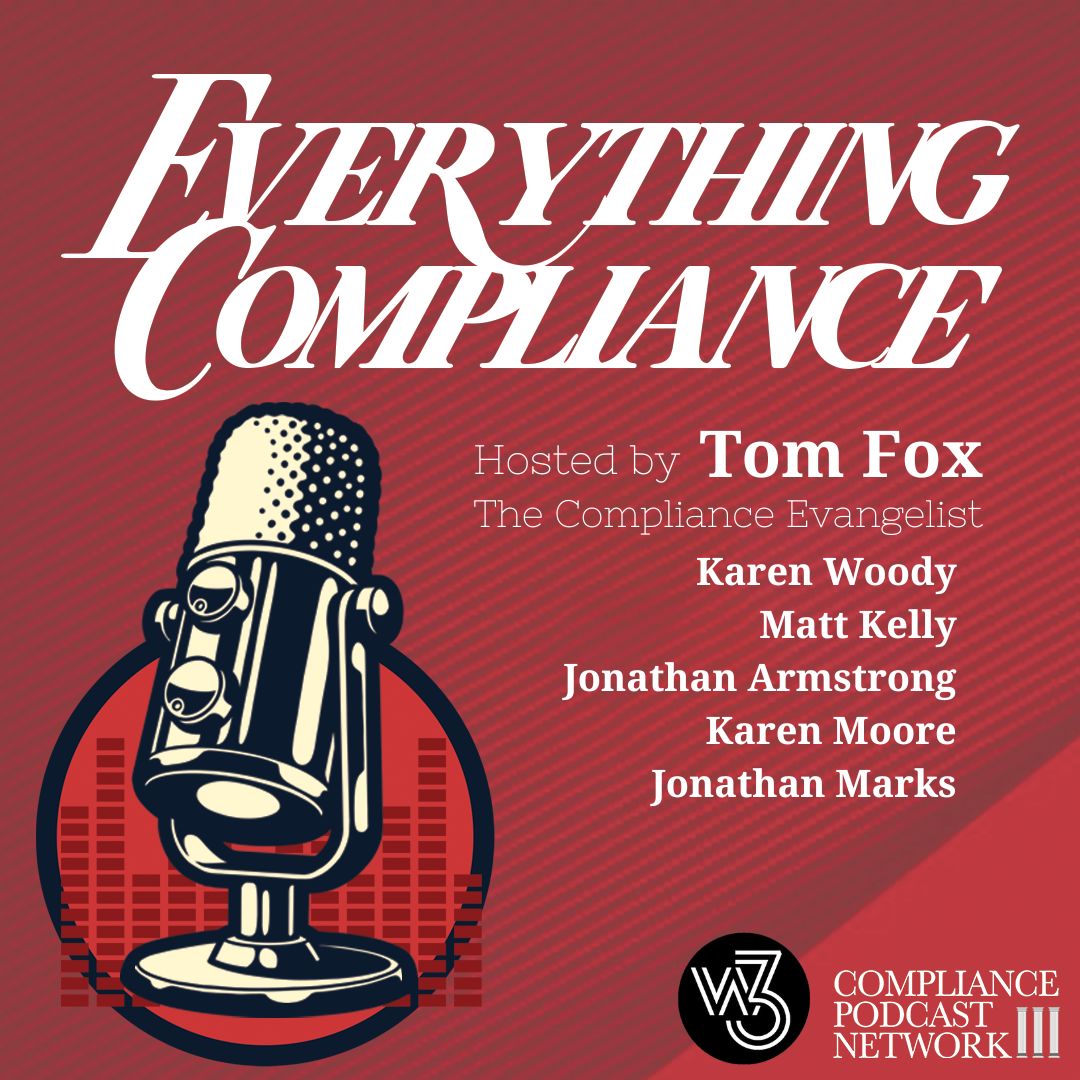
Welcome to this edition of the award-winning Everything Compliance. In this episode, Matt Kelly, Jonathan Armstrong, Jonathan Marks, Karen Woody, and Karen Moore join the full gang to examine various issues for compliance professionals under the incoming administration.

  1. Jonathan Armstrong looks at the car crash coming for DeepSeek in the EU. He shouts out to Peter Mandelson, the new UK Ambassador to the United States.
  2. Karen Moore looks at the reframing of DEI. She shouts out about the film on September 5.
  3. Matt Kelly considers the Bondi Memo on changes in DOJ enforcement focus and mentions Alexei Navalny’s memoir.
  4. Karen Woody examines the new SEC Crypto Taskforce and mentions the award-winning play Hadestown.
  5. Jonathan Marks provides a tutorial on the role of internal audit on export controls. He also shouts out to his hometown team, the Philadelphia Eagles (now the Super Bowl-winning Philadelphia Eagles).
  6. Tom Fox shouts out to (conspiracy) Bill Simmons for opining that the Dallas Maverick’s trade of Luka Doncic was a ploy to force the state of Texas to allow gambling in this state.

The members of Everything Compliance are:

The host and producer, rantor (and sometime panelist) of Everything Compliance is Tom Fox, the Voice of Compliance. He can be reached at tfox@tfoxlaw.com. Everything Compliance is a part of the award-winning Compliance Podcast Network.

For more information on the Ethico Toolkit for Middle Managers, available at no charge, by clicking here.

Categories
Compliance Tip of the Day

Compliance Tip of the Day – Using AI to Build ‘Tone at the Top’

Welcome to “Compliance Tip of the Day,” the podcast where we bring you daily insights and practical advice on navigating the ever-evolving landscape of compliance and regulatory requirements. Whether you’re a seasoned compliance professional or just starting your journey, we aim to provide bite-sized, actionable tips to help you stay on top of your compliance game. Join us as we explore the latest industry trends, share best practices, and demystify complex compliance issues to keep your organization on the right side of the law. Tune in daily for your dose of compliance wisdom, and let’s make compliance a little less daunting, one tip at a time.

Today, we review how AI can help to establish and maintain an appropriate tone at the top for a best practices compliance program.

For more information on the Ethico Toolkit for Middle Managers, available at no charge, click here.