Categories
All Things Investigations

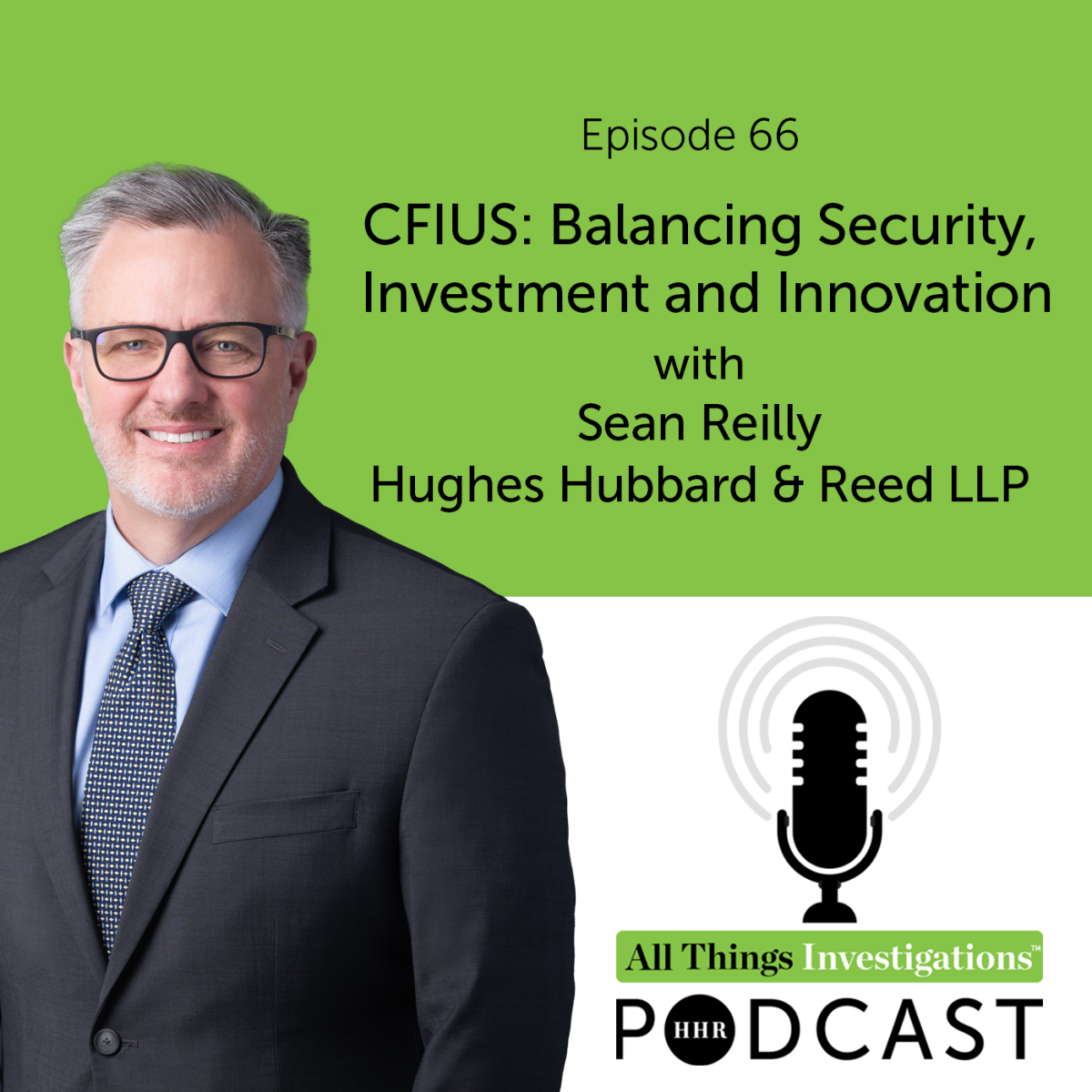
All Things Investigations – CFIUS: Balancing Security, Investment and Innovation with Sean Reilly

Welcome to the Hughes Hubbard Anti-Corruption & Internal Investigations Practice Group’s podcast, All Things Investigation. In this podcast, host Tom Fox is joined by Sean Reilly to explore the Nippon Steel/US Steel transaction.

We begin with an in-depth explanation of the Committee on Foreign Investment in the United States (CFIUS) and its role in scrutinizing foreign transactions for national security risks. The conversation highlights the complex and detailed CFIUS filing process, stressing the importance of early compliance counsel involvement to avoid potential roadblocks. The discussion extensively covers the Nippon Steel and US Steel transactions, pointing out key developments and underlying political influences and analyzing how President Biden eventually barred the potential acquisition.

In an addendum, the conversation also touches on recent changes under the Trump administration, emphasizing the need for companies and compliance officers to adapt dynamically amidst rapidly evolving regulations. Sean advises on practical steps for businesses considering transactions that might trigger CFIUS involvement, underscoring the importance of engaging with the committee early and thoroughly. The episode is an essential guide for corporate compliance professionals navigating the complexities of cross-border transactions and national security considerations.

Key highlights:

  • Understanding CFIUS
  • Nippon Steel and U.S. Steel Acquisition
  • CFIUS Concerns and Political Implications
  • Advice for CFIUS Compliance
  • Developments under Trump and Future Outlook

Resources:

Hughes Hubbard & Reed website

Sean Reilly

Categories
Blog

Building Trust in AI with Blockchain: A Compliance Perspective

Artificial Intelligence (AI) has rapidly become a key driver of business decision-making across industries, from financial services to healthcare. Yet, despite its enormous potential, AI remains a “black box” that raises serious concerns about transparency, accountability, and fairness. According to Pew Research, 52% of Americans are more concerned than excited about AI, while only 10% express enthusiasm. This trust deficit presents a critical challenge for compliance professionals: how can organizations demonstrate responsible AI use and ensure compliance with evolving regulatory expectations?

I was therefore intrigued to read a recent article in the Harvard Business Review by Scott Zoldi and Jordan T. Levine entitled, Using Blockchain to Build Customer Trust in AI. Their response to this quandary was to look at FICO, a leader in financial analysis and ratings, which developed a private blockchain that automated documentation and standards in model development. FICO’s approach leaned directly into a series of strategies used by compliance professionals.

The Compliance Challenge of AI

AI’s ability to analyze vast amounts of data and generate predictions is its greatest strength and its most significant liability. Machine learning models can reinforce biases, lack interpretability, and operate without clear accountability. Compliance professionals must address these challenges head-on by ensuring that AI models are:

  • Interpretable: Customers and regulators need to understand how AI models make decisions.
  • Auditable: Organizations must maintain detailed records of AI development and deployment.
  • Enforceable: Compliance teams need mechanisms to ensure adherence to ethical AI standards.

Without these three pillars, AI risks becoming a compliance nightmare that could lead to regulatory penalties, reputational damage, and loss of customer trust.

Blockchain ensures that AI models are developed following internal guidelines and regulatory requirements. Every modification to the model, from data selection to algorithmic tuning, is permanently recorded, making it easier for compliance officers to track decisions and pinpoint the cause of any discrepancies. This immutable nature benefits industries with strict regulations, such as finance and healthcare, where audits and regulatory reviews are routine.

Additionally, blockchain helps prevent unauthorized alterations by requiring cryptographic verification before changes are accepted into the system. Any attempt to introduce bias, manipulate datasets, or adjust algorithms must be documented and approved transparently. This enhances accountability and strengthens organizational trust in AI.

Blockchain’s integration into AI governance fosters cross-functional collaboration between compliance, legal, and data science teams. Using a single, tamper-proof source of truth, organizations can streamline communication and ensure that AI-related decisions align with corporate policies and industry standards. This collaborative approach mitigates risks and reduces inefficiencies, allowing businesses to innovate responsibly while maintaining regulatory compliance.

For compliance professionals, blockchain provides an operational framework supporting continuous AI model monitoring and improvement. It facilitates real-time oversight, allowing organizations to identify potential compliance risks before they escalate into regulatory violations or reputational damage. As AI technology evolves, blockchain’s role in governance will likely expand, offering even greater opportunities for secure, transparent, and ethical AI development.

Blockchain: A Path to AI Accountability

Blockchain technology offers a potential solution by providing an immutable, transparent record of AI model development and decision-making. The authors reviewed FICO’s adoption of blockchain. They learned, “Making this system work was less a tech challenge than a people one. They learned it was important to start with standards, then develop the tech; that making the system user-friendly was non-negotiable; that it was essential to iterate on quick wins; that they had to build repositories to hold large AI assets in alternate storage; and that they needed capable IT teams to handle the maintenance demands of this system.”

By moving from traditional documentation methods (such as Word documents) to a private blockchain, FICO:

  • Reduced model support issues and recalls by over 90%.
  • Created a single source of truth for AI model development.
  • Ensured absolute adherence to AI governance standards.

Blockchain’s ability to create an auditable trail of every change, test, and decision made during AI model development provides a powerful compliance tool. Unlike conventional documentation, blockchain prevents unauthorized changes and ensures compliance teams can verify AI decisions long after they are made.

Beyond compliance, blockchain enhances the efficiency of AI governance by automating tracking mechanisms that reduce administrative burdens. Traditionally, managing AI development required extensive oversight, documentation, and verification processes, often prone to human error or oversight. By leveraging blockchain, organizations can automate this oversight, ensuring that model updates, training datasets, and algorithmic adjustments are securely recorded in a tamper-proof ledger. This improves compliance and accelerates AI innovation by reducing bottlenecks in model validation.

Additionally, blockchain’s transparency enables better cross-functional collaboration between compliance officers, data scientists, and IT security teams. Instead of relying on disparate documentation and periodic audits, stakeholders can access a real-time, immutable ledger of AI development activities. This fosters greater accountability and ensures that AI models align with ethical guidelines, regulatory requirements, and corporate governance policies from inception to deployment.

Blockchain can mitigate risks associated with AI bias and ethical concerns by providing a structured framework for tracking model modifications and testing processes. Any deviation from approved methodologies is recorded, allowing organizations to detect and address potential issues before they impact decision-making. This proactive approach strengthens AI reliability and fosters trust among regulators, customers, and stakeholders who demand greater transparency in automated decision-making processes.

By integrating blockchain into AI governance, organizations gain a robust compliance tool that ensures models are developed responsibly, deployed ethically, and maintained transparently. As regulatory scrutiny around AI continues to grow, adopting blockchain-based governance is not just an operational advantage; it can provide both a strategy and mechanism for maintaining trust and regulatory compliance in the evolving AI landscape.

Key Compliance Lessons from FICO’s Blockchain Approach

1. Standards Must Come First

Before implementing blockchain, organizations must establish clear AI development standards. This includes defining acceptable algorithms, ethical testing methodologies, and regulatory compliance requirements. Without these guardrails, blockchain is just another technology without purpose.

2. User Adoption Requires a Seamless Experience

One of the biggest hurdles in AI governance is ensuring that data scientists comply with established processes. At FICO, blockchain-based AI governance became non-negotiable—developers could not release models without following the blockchain-tracked workflow. Making compliance seamless rather than burdensome is key to adoption.

3. AI Governance Must Be Iterative

FICO’s blockchain approach evolved, starting with small proofs of concept before scaling across its AI development teams. Compliance professionals should take a similar approach, testing blockchain governance in high-risk areas before expanding its use across the organization.

4. Immutable Records Are Key for Regulatory Defense

Regulators are increasingly scrutinizing AI-driven decisions, especially in highly regulated industries such as finance and healthcare. An immutable AI development, testing, and deployment record provides a powerful defense against regulatory inquiries. It also enables organizations to demonstrate compliance rather than scrambling to justify decisions afterward proactively.

5. Blockchain Is a Tool, Not a Silver Bullet

While blockchain enhances AI governance, it is not a substitute for a strong compliance program. Organizations must still conduct rigorous ethical testing, monitor AI performance, and engage with regulators to ensure ongoing compliance. Blockchain should be viewed as an enabler of trust, not a cure-all.

Final Thoughts: The Future of Compliance in AI Governance

As AI becomes more embedded in business operations, compliance professionals must evolve their oversight strategies to keep pace. Blockchain offers a compelling approach to ensuring AI accountability, but it requires careful implementation, clear governance standards, and buy-in from business leaders.

FICO’s success demonstrates that trust follows when AI governance is built on transparency, auditability, and enforceability. Compliance professionals who embrace blockchain’s potential can help bridge the trust gap in AI, ensuring that these powerful technologies are used responsibly, ethically, and in full compliance with regulatory expectations.

For compliance teams, the question is no longer whether AI governance needs to evolve but how quickly organizations can implement solutions that keep AI accountable. Blockchain is one step in the right direction.


Categories
Daily Compliance News

Daily Compliance News: February 10, 2025, The For Immediate Compliance Edition

Welcome to the Daily Compliance News. Each day, Tom Fox, the Voice of Compliance, brings you compliance-related stories to start your day. Sit back, enjoy a cup of morning coffee, and listen in to the Daily Compliance News—all from the Compliance Podcast Network. Each day, we consider four stories from the business world: compliance, ethics, risk management, leadership, or general interest for the compliance professional.

Top stories include:

  • FEMA must call immigrants ‘illegal aliens.’ (404media).
  • CFPB ordered all work to be stopped ‘immediately.’ (NYT)
  • Musk is now making referrals to the US Attorney. (Reuters)
  • McKinsey asks, if China is too risky. (Bloomberg)

For more information on the Ethico Toolkit for Middle Managers, available at no charge, click here.

Check out The FCPA Survival Guide on Amazon.com.

Categories
Sunday Book Review

Sunday Book Review: February 9, 2025, The Business Fairness at Work Edition

In the Sunday Book Review, Tom Fox considers books that would interest the compliance professional, the business executive, or anyone who might be curious. These could be books about business, compliance, history, leadership, current events, or anything else that might interest Tom. Today, we look at books on fairness in business.

  1. Make Work Fair, by Iris Bohnet and Siri Chilazi
  2. 99% Perspiration, by Adam Chandler
  3. Judgement at Work, by Andrew Likierman
  4. Inspire, by Adam Galinsky

Resources:

Business Books: what to read this month. In the FT

For more information on the Ethico Toolkit for Middle Managers, available at no charge, click here.

Categories
Kerrville Weekly News Roundup

Kerrville Weekly News Roundup: February 8, 2025

Welcome to the Kerrville Weekly News Roundup. Each week, veteran podcaster Tom Fox and his colleagues Andrew Gay and Gilbert Paiz get together to go over a couple of their favorite stories from the past week from Kerrville and the greater Hill Country. Sit back, enjoy a cup of morning coffee, and listen in to get a wrap-up of the Kerrville Weekly News. We each consider two of our favorite stories and talk about the upcoming weekend’s events, which we will enjoy or participate in this weekend.

In this episode, Andrew returns to examine some of the things that caught his attention over the past week.

Stories include:

  • Tivy football head coach David Jones to retire
  • City Council candidate files continue
  • Elaine Capers show to open at KACC
  • Louise Hays Park celebrates its 75th anniversary

Resources:

Tom Fox on LinkedIn

Gilbert Paiz on LinkedIn

Andrew Gay on LinkedIn

Texas Hill Country Podcast Network

The Lead

Kerrville Daily Times

Categories
Because That's What Heroes Do

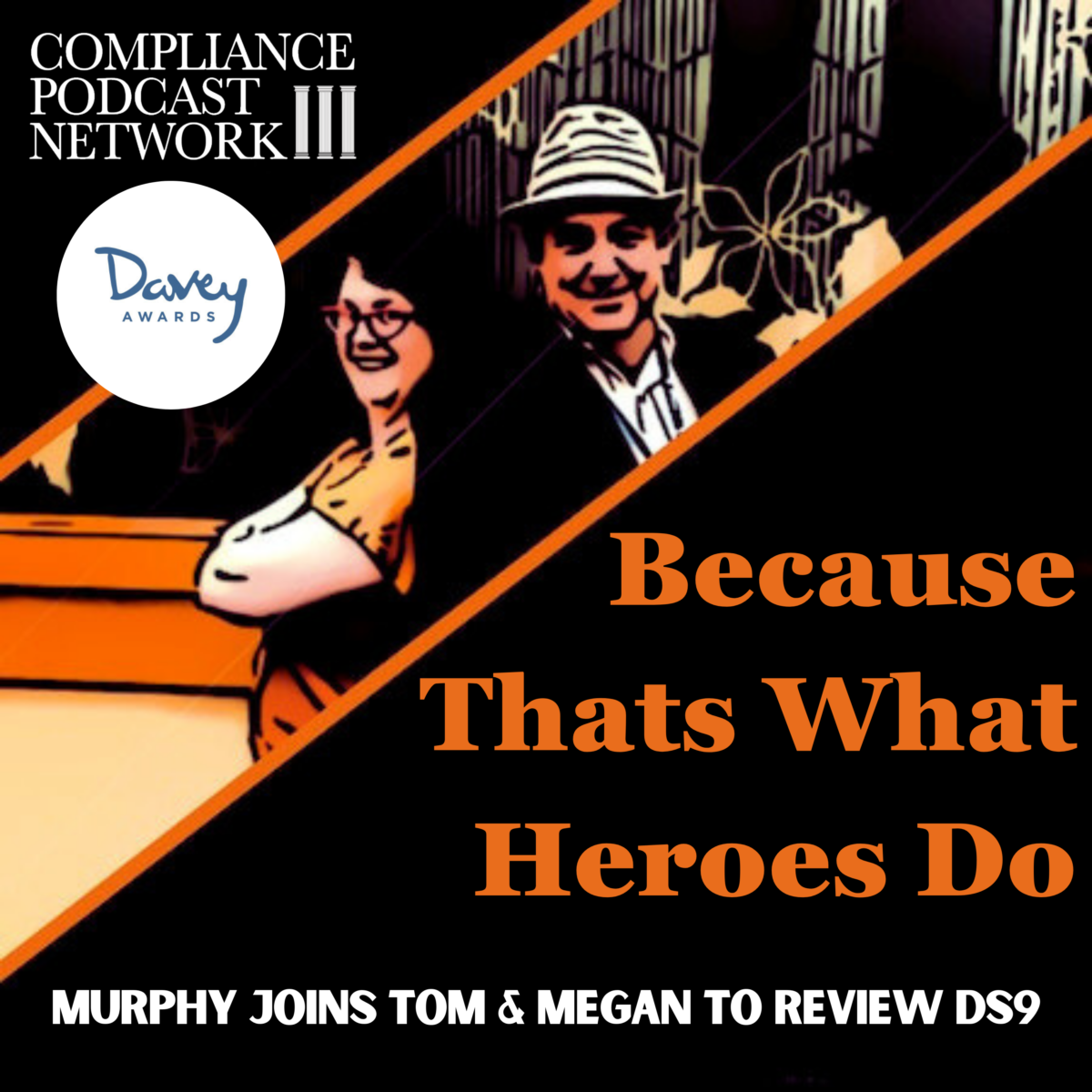
Deep Space 9: Ezri Dax, Part 1 – Mental Health and Symbolism in ‘Shadows and Symbols’

Get ready for an exciting new season of Because That’s What Heroes Do. This season, they take a deep dive into their favorite episodes of Deep Space 9. In this exploration, Tom and Megan are joined by Star Trek maven Alex Murphy (Murphy) from Montreal, a local historian,  cinema, and TV fan who loves weird foreign films, all things horror, and obscure media. He has been watching Trek since he was a tiny punk, and it’s been a lifelong love. In this episode, the team begins a 3 part exploration of the introduction to a new character for DS9’s final season. Today, they review the episode Shadows and Symbols.

The episode begins with Ezri Dax, a character Tom loves, and her struggle with multiple voices in her head. This leads to a broader conversation about the themes of mental health and symbolism tied to the character Benny Russell and his writings on the padded walls of his cell. Another important storyline explored is the Klingon tradition of ensuring Jadzia Dax’s entry to Stov-Vo-Kor, led by Worf, with help from Quark, O’Brien, and Bashir. The final segment examines Captain Sisko’s mysterious trip to his father’s restaurant in New Orleans and his continuing visions connected to his baseball. Murphy ponders whether this episode functions best as a standalone or part of a three-story arc, ultimately appreciating its deep connections to the overall series.

Key highlights:

  • Exploring Ezri Dax’s Character
  • Symbols and Shadows: Three Storylines: Benny Russell’s Breakdown; Jadzia Dax to Sto-Vo-Kor and Sisko’s Journey to the Prophets
  • Romulans on DS9 and Bajoran Politics
  • Standalone Episode or Trilogy?

Resources:

Megan Dougherty

LinkedIn

One Stone Creative

Twitter

Tom

Instagram

Facebook

YouTube

Twitter

LinkedIn

Categories
10 For 10

10 For 10: Top Compliance Stories For the Week Ending February 8, 2025

Welcome to 10 For 10, the podcast that brings you the week’s Top 10 compliance stories in one podcast each week. Tom Fox, the Voice of Compliance, brings you the compliance professional and the compliance stories you need to know to end your busy week. Sit back, and in 10 minutes, hear the stories every compliance professional should know from the prior week. Every Saturday, 10 For 10 highlights the most important news, insights, and analysis for the compliance professional, all curated by the Voice of Compliance, Tom Fox. Get your weekly filling of compliance stories with 10 for 10, a podcast produced by the Compliance Podcast Network.

  • Fay Vincent warned MLB of the corruption from gambling. (NYT)
  • Do we need eyes on compliance gatekeepers? (The Regulatory Review)
  • MLB fires ump for shared betting accounts. (ESPN)
  • WVU replaces DEI with “Dept. of Engagement and Compliance”. (12WBOY)
  • Will Trump DOJ drop corruption charges against NYC Mayor? (Reuters)
  • Shien IPO runs into Uyghur issues. (Reuters)
  • Top SEC crypto lawyer reassigned to IT. (WSJ)
  • Pam Bondi confirmed as new AG. (Bloomberg)
  • Bondi cuts back on FCPA enforcement. (Radical Compliance)
  • Is the Rooney Rule still legal? (Bloomberg)

For more information on the Ethico Toolkit for Middle Managers, available at no charge, click here.

You can check out the Daily Compliance News, which features four curated compliance and ethics stories each day here.

Connect with Tom 

Instagram

Facebook

YouTube

Twitter

LinkedIn

Categories
Regulatory Ramblings

Regulatory Ramblings: Episode 62 – The Green Belt and Road Initiative/Open-Source Intelligence & Non-English Language Online Research with Dr. Oriol Caudevilla and Skip Schiphorst

In the first part of this episode in our Regulatory Ramblings Spotlight section, we’ll speak with legal scholar Dr. Oriol Caudevilla on the green aspects of China’s Belt and Road Initiative, or BRI, as it is more colloquially known. We’ll follow that up with a chat with Skip Schiphorst, a former Dutch Marine, Iraq War veteran, and master linguist, about his penchant for languages and doing online, open-source research in languages other than English—especially Russian, Arabic, and Mandarin Chinese—and how English isn’t necessarily the easiest language to search in.

Dr. Oriol Caudevilla is a highly regarded voice on all things fintech. He is an Honorary Fellow at HKU’s Asian Institute of International Financial Law (AIIFL) and a Board Director and Secretary General at the Global Impact FinTech Forum (GIFT).

Oriol has published articles and has been cited by international media outlets such as Reuters, Forbes Middle East, the SCMP, Outlook India, China Daily, Asian Investor, Forkast News, and Cointelegraph. He has also hosted The Digital Tomorrow podcast for the past three years.

He shares his views on the potential environmental benefits of Beijing’s BRI with Regulatory Ramblings host Ajay Shamdasani.

Much has been said about the BRI, known in China as the One Belt, One Road—and sometimes labeled the New Silk Road. A global infrastructure development strategy adopted by the Chinese government in 2013 to invest in more than 150 countries and international organizations, the scheme is composed of six urban development land corridors linked by road, rail, energy, and digital infrastructure and the Maritime Silk Road connected by the development of ports.

The idea was simple: transport raw materials to China while carrying its manufactured wares to participating nations.

Oriol fleshes out what he means by the “Green BRI” because, on the surface, the concept seems counterintuitive, as vast amounts of carbon/energy are expended to carry resources toward China and goods from it. As he points out, there are green efficiencies and other benefits to be had from the BRI that will meaningfully impact the planet’s climate.

Skip Schiphorst is the course coordinator and instructor for the Swiss-based firm I-Intelligence’s Arabic, Russian, and Chinese open-source intelligence (OSINT) courses. He served 17 years in the Dutch Marine Corps, the elite corps of the Royal Netherlands Navy, one of the four Armed Forces of the Kingdom of the Netherlands.

While serving, he was deployed to several regions, including the Second Iraq War, as a Reconnaissance Marine. Having operated in multiple theaters, his language and cultural skills were extensively used. Skip holds a university degree in Chinese Studies and is keenly interested in incorporating languages within the OSINT/online spectrum.

He shares with Ajay the importance of being able to search for OSINT in languages other than English and how it has a direct application to lawyers, compliance officers, and investigators in regional hubs like Hong Kong and Singapore—and the banking and financial institutions and multinational corporations they serve. As he emphasizes, it is often easier to navigate the internet in Chinese than in English due to the simplicity of the structure of the former language.

Skip describes what it was like to grow up in Switzerland as a young man of Dutch ancestry, his decision to join the Marines in 1997, and how his views on the world and the degree to which outside powers can use military force to change cultures and nations changed over the course of his service. He believes this to be the Asian century, as many Western nations pursue more nativist and isolationist policies.

He also discusses the value of OSINT and multilingual research for due diligence in mergers and acquisitions and know-your-customer searches in anti-money laundering, terrorist financing, and sanctions compliance for banks.

Regulatory Ramblings podcasts is brought to you by The University of Hong Kong – Reg/Tech Lab, HKU-SCF Fintech Academy, Asia Global Institute, and HKU-edX Professional Certificate in Fintech, with support from the HKU Faculty of Law.

Useful links in this episode:

You might also be interested in:

Categories
2 Gurus Talk Compliance

2 Gurus Talk Compliance – The Snow in Florida Edition

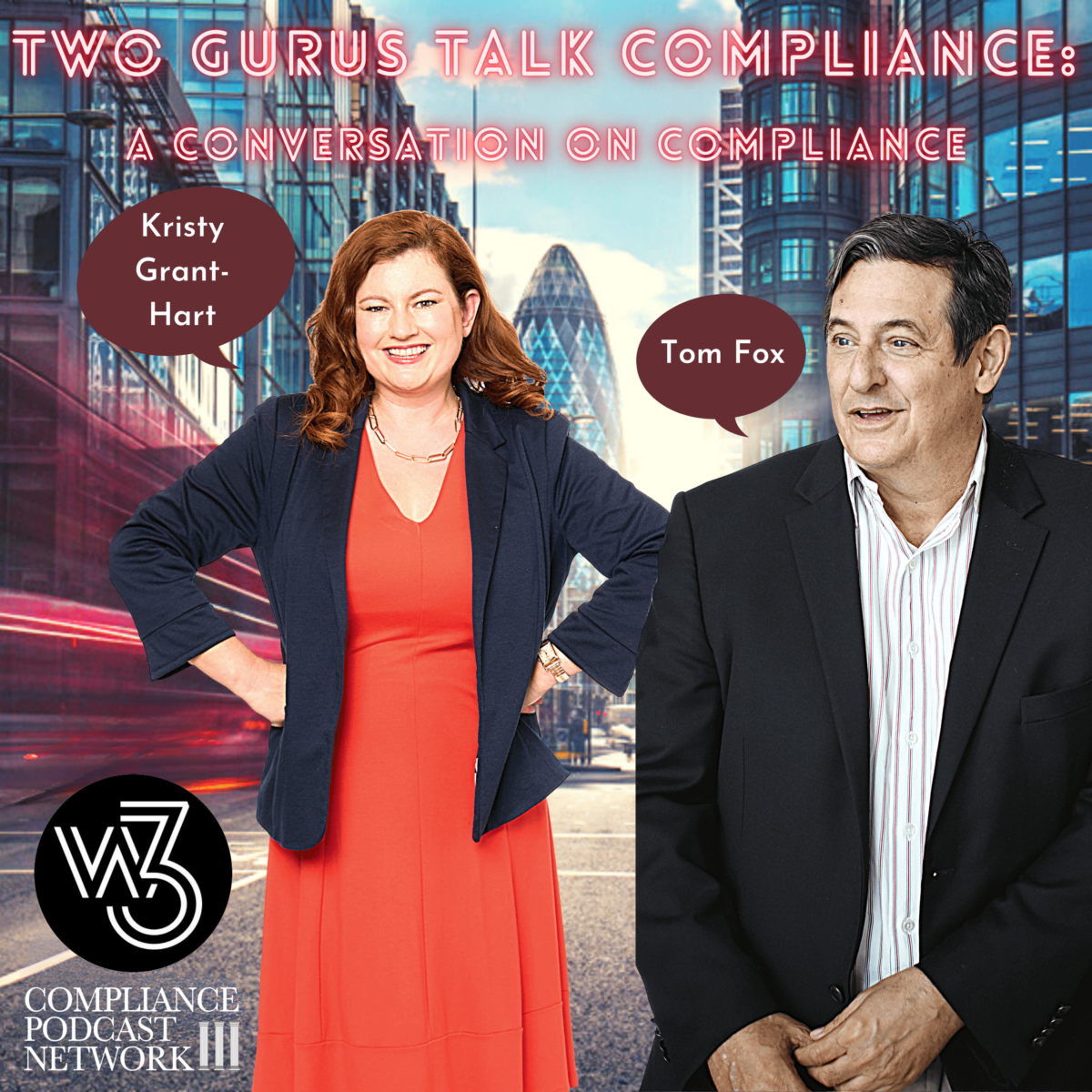
What happens when two top compliance commentators get together? They talk compliance, of course. Join Tom Fox and Kristy Grant-Hart in 2 Gurus Talk Compliance as they discuss the latest compliance issues in this week’s episode!

Stories This Week Include:

  • DEI-reframing, not retreating.  (FT) and WVA replaces DEI with “Dept. of Engagement and Compliance”.  (12WBOY)
  • Trafigura and ex-COO were convicted of bribery.  (Bloomberg)
  • How Binance is ensuring compliance. (CoinPedia)
  • The CCO Departure Bonus.  (Cosmos)
  • Serbians are done with corruption.  (The Guardian)
  • Wells Fargo banks on (Not) risky business. (PYMNTS)
  • Crackdown on Tariff Exemption Snares U.S. E-Commerce Retailers (WSJ)
  • An investing revolution is coming. The U.S. isn’t ready for it. (The Washington Post)
  • The Sanctions Year in Review: DOJ Takes First Steps to Enforce “The New FCPA” While OFAC’s Enforcement Actions Decline (Volkov)
  • Fewer Americans Are Quitting Their Jobs (WSJ)
  • 1 arrested after snowballs thrown at Florida police officers, officials say (Fox 35 Orlando)

Resources:

Kristy Grant-Hart on LinkedIn

Spark Consulting

Prove Your Worth

Tom

Instagram

Facebook

YouTube

Twitter

LinkedIn

Categories
Compliance Tip of the Day

Compliance Tip of the Day – AI, Process Management and Compliance

Welcome to “Compliance Tip of the Day,” the podcast where we bring you daily insights and practical advice on navigating the ever-evolving landscape of compliance and regulatory requirements. Whether you’re a seasoned compliance professional or just starting your journey, we aim to provide bite-sized, actionable tips to help you stay on top of your compliance game. Join us as we explore the latest industry trends, share best practices, and demystify complex compliance issues to keep your organization on the right side of the law. Tune in daily for your dose of compliance wisdom, and let’s make compliance a little less daunting, one tip at a time.

Today, we review aligning technology, data, and governance to enhance compliance frameworks and drive value across organizations.

For more information on the Ethico Toolkit for Middle Managers, available at no charge, click here.