Categories
Trekking Through Compliance

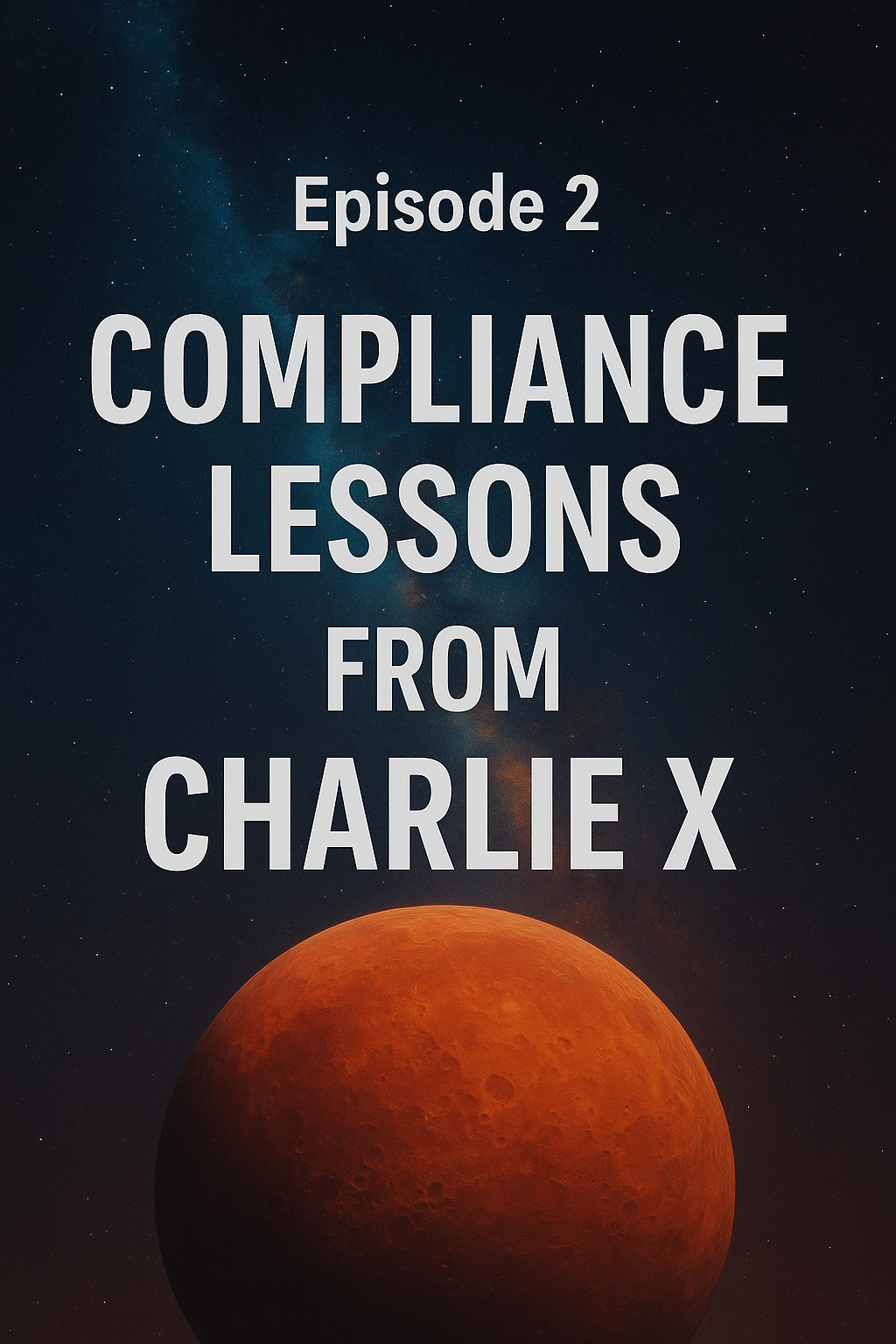
Trekking Through Compliance – Episode 2 – Leadership and Training Lessons from Charlie X

In this episode of Trekking Through Compliance, we consider Charlie X, which aired on September 15, 1966, Star Date 1533.6.

Story

The USS Enterprise meets the merchant vessel Antares to take charge of Charlie Evans, the sole survivor of a transport ship that crashed on Thasus. For fourteen years, seventeen-year-old Charlie grew up alone, stranded in the wreckage, learning to communicate with the ship’s computer systems, which remained intact.

Despite his eagerness to please, Charlie becomes obnoxious since his lack of upbringing has left him with no knowledge of social norms or control of his emotions. He latches on to Captain Kirk as a father figure and develops an infatuation with Yeoman Janice Rand. He demonstrates extraordinary powers of telepathy and matter transmutation. When the Antares is nearly out of sensor range, it transmits a message to the Enterprise. The message is cut off before it can convey a warning. Scanners show that Antares has been reduced to debris.

Realizing Charlie’s powers are too great to be controlled, Kirk opts to divert from Alpha V to at least keep Charlie away from a civilized world where he would wreak havoc. Charlie discovers Kirk’s plans and takes control of the Enterprise.

A Thasian ship approaches and restores the Enterprise and its crew to their proper forms. The Thasian commander says that his race gave Charlie his powers so he could survive in their world, but these powers (which they can’t remove from him) make him too dangerous to live among humans. Charlie begs Kirk not to let the aliens have him since the Thasians lack any physical form or capacity for love. However, the Thasians reject Kirk’s argument that Charlie belongs with his kind, with a final echoing wail of “I wanna stay!

Commentary

The episode explores the story of Charlie Evans, a young man with dangerous telekinetic powers, and draws parallels to modern compliance and mental health issues. Tom discusses the responsibilities that come with power, the importance of training and supervision, handling unpredictable behavior, clear communication, crisis management, and addressing misconduct. He also reflects on recent real-world events, such as the Uvalde school shooting and the challenges of addressing mental health in compliance programs.

Key highlights:

1. The Responsibilities of Power—Strength Without Structure

🖖 Illustrated by: Charlie turning crew members into nothingness when they anger him.

Charlie is gifted with tremendous abilities but lacks any ethical framework or boundaries. This is a vivid metaphor for what happens when individuals inside an organization gain influence or access without training or accountability. Think of an unmonitored executive with access to financial controls or an engineer with override access but no compliance training—a ticking time bomb.

2. Training and Supervision—It’s Not Optional, It’s Essential

🖖 Illustrated by: Kirk’s attempt to guide Charlie and his later regret at not recognizing the full scope of the risk.

Charlie’s guardianship was left to chance. No proper onboarding, no safety protocols. Sound familiar? In corporate compliance, onboarding isn’t just about day one—it’s about culture shaping. Organizations must ensure that individuals with a higher risk potential receive both guidance and oversight from the outset.

3. Unpredictable Behavior and Ethical Culture—From Red Flag to Alarm Bell

🖖 Illustrated by: Charlie’s mood swings and escalating aggression, which are repeatedly ignored until it’s too late.

The crew notices early signs—jealousy, possessiveness, emotional outbursts—but tolerates them. This reflects the real-world danger of brushing off early signs of a toxic culture. A strong compliance function identifies behavioral red flags before they escalate into corporate crises.

4. Communication and Escalation Protocols—Say Something, Do Something

🖖 Illustrated by: Janice Rand’s discomfort and unease around Charlie, which she initially tries to manage on her own.

Rand’s growing fear underscores the difficulty of speaking up, especially when someone powerful appears to be protected. Her reluctance reminds us that a speak-up culture is not automatic. Companies must establish genuine channels for complaints, empower employees to utilize them, and respond promptly and transparently.

5. Crisis Management—Too Late is Still Too Late

🖖 Illustrated by: The crew’s loss of control over the Enterprise, forcing alien intervention to remove Charlie.

The crew fails to contain the situation internally. It takes external, godlike beings to restore order—a cautionary tale for compliance leaders. If a company waits until the crisis has gone public or regulatory bodies step in, internal credibility is lost. Crisis planning and early intervention are crucial in protecting the organization before outside authorities are required to intervene.

Resources:
Excruciatingly Detailed Plot Summary by Eric W. Weisstein

MissionLogPodcast.com

Memory Alpha

Categories
Blog

The Roots of Compliance: Trust, Technology, and the Future of Banking

Recently, I had the opportunity to visit with John Byrne, the CEO at Corlytics. You can listen to the podcast here. One of the more interesting topics we discussed is that compliance professionals find themselves at the intriguing crossroads between groundbreaking technological innovation and the timeless, foundational principles of compliance, notably trust and integrity. Nowhere is this more evident than in the banking sector, where the stakes around trust are extraordinarily high. Now, with the Trump Administration actively promoting cryptocurrency to both the US banking industry and the American public, that foundational principle is even more critical.

Historically, banking, with over two and a half centuries of operational legacy, has always relied fundamentally on customer trust. Indeed, long before modern regulatory structures emerged, banks implemented internal policies and compliance-like practices designed explicitly to instill and maintain confidence. Yet despite advancements in regulation and technology, the principle remains unchanged: trust is the lifeblood of banking, and when it falters, the consequences can be catastrophic.

Nothing illustrates this more starkly than the old-fashioned bank run, perhaps the ultimate demonstration of breached trust. In a bank run, customers simultaneously lose faith in the institution’s ability to safeguard their assets, rushing en masse to withdraw funds. This panic-driven action rapidly transforms initial doubt into widespread fear, creating an accelerating cascade effect that can swiftly collapse even seemingly robust institutions.

The recent 2023 examples of Silicon Valley Bank, Signature Bank, and First Republic Bank, all headquartered in California, underscore this timeless truth. Despite occurring in a digitally connected world with instantaneous communication, the root cause was identical to that of traditional bank runs, famously depicted in classic movies like Mary Poppins and It’s a Wonderful Life: a fundamental failure of trust. For today’s compliance professionals, the lesson remains clear and resonant. Even as they harness modern tools like artificial intelligence to enhance compliance processes, they must remain ever-vigilant custodians of trust, recognizing that without it, all technological advances and regulatory structures are ultimately insufficient to protect a bank, and indeed any business, from the devastating impact of lost confidence.

Lesson 1: Trust is the Foundation of Compliance

The essence of compliance has always been rooted in trust. Banking, as a sector with over 250 years of history, exemplifies this principle vividly. Long before the regulatory frameworks we recognize today, banks operated with internal policies designed to cultivate and maintain trust with their customers. Compliance, in its earliest incarnation, was about establishing clear standards and rules internally, ensuring customer confidence and institutional stability.

Today, despite the extensive web of external regulations, trust remains a central concern. The collapse of trust can trigger catastrophic outcomes, vividly illustrated by historical bank runs such as those portrayed in classic films like Mary Poppins and It’s a Wonderful Life. Even as recently as 2023, the failure of Silicon Valley Bank in California, a modern-day bank run accelerated by technology, reminds us starkly how fragile trust can be and how critical it remains for compliance professionals to safeguard it diligently.

Lesson 2: Compliance is Good Business

The notion of compliance as a hindrance to business, often unfairly labeled as the “business prevention unit,” is shifting dramatically. A sound compliance program aligns closely with strong business outcomes —a principle that has been repeatedly emphasized in recent years. Banks and businesses are increasingly recognizing compliance not as an obstacle but as an integral part of strategic business operations.

Good compliance facilitates a trustworthy reputation, ensures customer satisfaction, and establishes long-term business stability. Firms that embody compliance as a core business strategy consistently demonstrate resilience and sustainability. Compliance isn’t merely a regulatory necessity; it is fundamentally good business.

Lesson 3: Regulation Should Complement, Not Replace, Internal Standards

Historically, banks created their internal compliance measures to protect their institutions long before external regulation mandated such frameworks. Over time, regulatory developments have supplemented and formalized these practices, creating a structured external governance model. However, prudent banks continue to adhere to high internal standards irrespective of regulatory mandates.

Effective compliance frameworks seamlessly integrate internal ethical guidelines and external regulatory requirements, ensuring a unified approach to governance. Organizations shouldn’t solely rely on external regulations to dictate their ethical and operational standards. Instead, compliance professionals should encourage internal benchmarks of ethical behavior and trustworthiness, aligning company culture closely with compliance objectives to achieve sustainable business excellence.

Lesson 4: Technology as an Enabler of Efficient Compliance

One common complaint about compliance is its perceived inefficiency, which businesses argue slows down operations. Here, advanced technology, especially AI, presents transformative possibilities. AI-driven tools can significantly streamline compliance processes, enhancing speed, efficiency, and accuracy.

AI technologies allow compliance teams to swiftly identify risks, maintain comprehensive documentation, provide clear audit trails, and escalate issues rapidly and accurately. Rather than viewing technology as complicating compliance, companies should embrace it as an essential tool enabling compliance professionals to focus on strategic, high-value tasks rather than routine manual processes. This technological enablement does not replace skilled compliance professionals. It enhances their capabilities, ensuring more effective outcomes for the business as a whole.

Lesson 5: Compliance Should Be Proactive, Not Reactive

Compliance practices should always be forward-looking and proactive, anticipating potential issues and acting accordingly. Banks and businesses that are successful in managing risk and maintaining trust have learned not to wait for regulators to dictate ethical standards. They proactively implement robust compliance and governance frameworks because they recognize that doing the right thing is inherently good for business.

Proactive compliance fosters customer trust, internal coherence, and institutional resilience. It positions companies to avoid reputational and financial harm, reducing the likelihood of regulatory actions or scandals. Compliance professionals must champion a proactive approach, integrating ethics and integrity at every organizational level, ensuring firms remain compliant and trustworthy, irrespective of whether regulatory bodies explicitly require it.

Conclusion: A Sustainable Business Model Through Good Compliance

The future of compliance in banking, and indeed all industries, rests at the intersection of timeless principles and modern technology. Trust, always the cornerstone of compliance, remains a foundational element. Technology, particularly artificial intelligence (AI), offers powerful new tools to reinforce and streamline compliance functions, enabling more efficient, accurate, and effective oversight.

Compliance professionals stand at the threshold of an exciting era where they can leverage advanced technologies to reinforce and extend the timeless principle of trust. By returning to the roots of compliance, embedding trust deeply into corporate culture, and embracing technology as a powerful enabler, businesses will not only fulfill regulatory requirements but also establish a resilient, customer-centric, and sustainably profitable business model. Compliance, done right, transcends its role as merely regulatory adherence. It becomes a fundamental pillar of sound business practice.

Categories
Red Flags Rising

Red Flags Rising: S01 E13 – Dana W. White on U.S. National Security & Export Controls

Mike and Brent welcome Dana W. White, Managing Partner at the Juno Collective, to share her thoughts and analysis on China and U.S. export controls, drawing on her extensive career in public service, including various national security-related roles. Mike, Brent, and Dana discuss Dana’s national security background (00:49), what happens “behind the scenes” that leads to U.S. agencies determining national security threats exists (02:28), how knowledge-sharing is both the strength and the Achilles’ heel of free societies (06:11), how U.S. businesses and business leaders play an important part in our national security (07:26), the challenge of finding reliable data points from which to infer export controls compliance risks (09:37), what business leaders should understand about how the relationship between the U.S. and China is different today than when China joined the World Trade Organization (11:21), how Dana and the Juno Collective help clients to understand and mitigate risks (13:46), and the common pitfalls companies face when responding to inquiries by the U.S. Congress (18:45). They conclude with yet another segment of Brent Carlson’s “Managing Up” (20:23).

Resources:

More about Dana W. White and the Juno Collective: https://www.juno-collective.com/about

Contact Dana W. White: dana@juno-collective.com

Brent LinkedIn

Mike LinkedIn

Mike & Brent’s “Fresh Looks” Series

Categories
Blog

Charlie X: Power Without Boundaries – A Compliance Nightmare

Today, we explore the explosive volatility of Charlie X—a story about unchecked power, emotional instability, and the dire consequences of failing to enforce rules and structure. Charlie Evans, a teenage orphan raised by aliens, is taken aboard the Enterprise, possessing extraordinary telekinetic abilities but lacking social training, emotional discipline, and accountability. That combination proves disastrous. We consider how Charlie’s descent into violence mirrors risks faced by compliance professionals when misconduct is ignored, misbehavior is tolerated, and power is given without oversight. In today’s corporate world, “Charlie X” is less about space and more about leadership responsibility, psychological safety, and early intervention.

Key Highlights and Star Trek Case Studies:

1. The Responsibilities of Power—Strength Without Structure

This is illustrated by Charlie turning crew members into nothingness when they anger him.

Charlie is gifted with tremendous abilities but lacks any ethical framework or boundaries. This is a vivid metaphor for what happens when individuals inside an organization gain influence or access without training or accountability. Think of an unmonitored executive with access to financial controls or an engineer with override access but no compliance training—a ticking time bomb.

2. Training and Supervision—It’s Not Optional, It’s Essential

This is illustrated by Kirk’s attempt to guide Charlie and his later regret at not recognizing the full scope of the risk.

Charlie’s guardianship was left to chance, with no proper onboarding and no safety protocols in place. Sound familiar? In corporate compliance, onboarding isn’t just about day one—it’s about culture shaping. Organizations must ensure that individuals with a higher risk potential receive both guidance and oversight from the outset.

3. Unpredictable Behavior and Ethical Culture—From Red Flag to Alarm Bell

This is illustrated by Charlie’s mood swings and escalating aggression, which are repeatedly ignored until it’s too late.

The crew notices early signs, such as jealousy and possessiveness, but tolerates them. This reflects the real-world danger of brushing off early signs of a toxic culture. A strong compliance function identifies behavioral red flags before they escalate into corporate crises.

4. Communication and Escalation Protocols—Say Something, Do Something

This is illustrated by Janice Rand’s discomfort and unease around Charlie, which she initially tries to manage on her own.

Rand’s growing fear underscores the difficulty of speaking up, especially when someone powerful appears to be protected. Her reluctance reminds us that a speak-up culture is not automatic. Companies must establish genuine channels for complaints, empower employees to utilize them, and respond promptly and transparently.

5. Crisis Management—Too Late is Still Too Late

This is illustrated by the crew’s loss of control over the Enterprise, forcing alien intervention to remove Charlie.

The crew fails to contain the situation internally. It takes external, godlike beings to restore order—a cautionary tale for compliance leaders. If a company waits until the crisis has gone public or regulatory bodies step in, internal credibility is lost. Crisis planning and early intervention are crucial in protecting the organization before outside authorities are required to intervene.

Final ComplianceLog Reflections

Charlie X reminds us that power without oversight is perilous, that emotional and psychological health must be part of our compliance focus, and that red flags must not be ignored simply because they come wrapped in charm or vulnerability. Compliance is not simply about policies, procedures, or even rules but rather readiness, responsiveness, and respect for the human element.

Resources:

Excruciatingly Detailed Plot Summary by Eric W. Weisstein

MissionLogPodcast.com

Memory Alpha

Categories
Blog

The Man Trap: Salt Vampires, Soft Controls, and the Price of Inaction

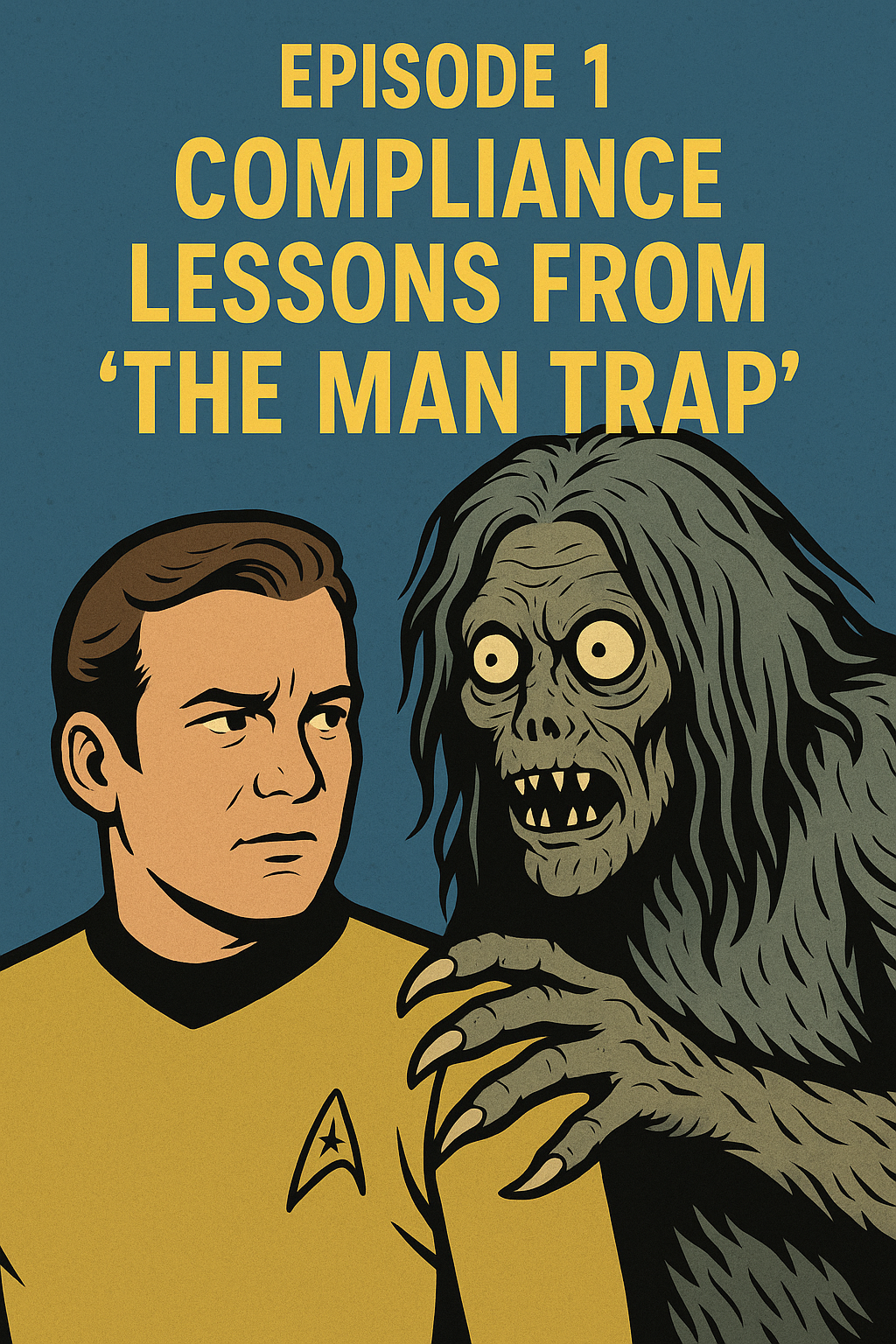
Today we consider the episode The Man Trap which aired on June 3, 1969, Star Date 5298.5. We begin by beaming down to Planet M113 with Captain Kirk and crew to uncover the compliance and leadership lessons buried in the salt-thirsty narrative of The Man Trap. This first aired Star Trek episode is not simply science fiction, rather it is a parable for today’s compliance professional. When a creature with the ability to shape-shift into anyone it wants hides among the crew, deception, emotional blind spots, and ethical hesitation threaten the integrity of the mission and the lives aboard the Enterprise.

Story

In this episode, a landing party from the Enterprise beams down to perform an annual checkup of scientist Bob Crater and his wife Nancy, who have lived on the planet M113 for 5 years. Dr. Crater and Nancy appear to be in good health, but Dr. Crater goes out of his way to request an additional salt supply from the Enterprise’s stores. A crewman wanders off and dies under mysterious circumstances. Further tests show that his body is completely devoid of salt.

Scanning the planet’s surface reveals only a single life form, so Spock and Kirk realize that Nancy must have beamed aboard the Enterprise and started searching for her. They question Dr. Crater and learn that Nancy is dead and that her form has been taken over by the planet’s last remaining indigenous creature, which can assume any form and requires salt to live.

Kirk and Spock then beam Dr. Crater aboard the Enterprise, who prevents Kirk from killing the creature (which he still sees as Nancy Crater), and then stands idly by as she begins to drain the salt from Kirk’s body. At this juncture, Spock rushes in and demonstrates to McCoy that the woman attacking Kirk could not be Nancy by striking her repeatedly and forcefully. Nancy does not flinch, sending Spock flying across the room with a single counterblow. When the creature attacks Kirk again, its proper alien form is revealed, and Bones kills it with a phaser, even after it reverts to Nancy’s form.

Key Highlights:

1. Compliance and Leadership Lessons – The Cost of Denial
Key Scene- Dr. Crater’s refusal to acknowledge the danger posed by the creature impersonating his wife Nancy.
Leadership is about difficult truths, not convenient fantasies. Dr. Crater’s emotional attachment blinds him to reality, echoing the risks faced when leaders ignore clear signs of compliance breakdowns. Just as he stalls Kirk and enables the creature’s deception, real-world executives who refuse to confront corruption or misconduct endanger the entire ship.

2. Character Dynamics – Trust, Bias, and Team Decision-Making
Key Scene- The landing party’s conflicting views of Nancy—each member sees her differently.
This episode reminds us how biases cloud judgment. The creature manipulates the crew’s perceptions, much like a charismatic fraudster might mislead auditors or compliance officers. Effective compliance teams must cultivate objectivity and challenge assumptions, especially when red flags appear under familiar disguises.

3. Ethical Decision-Making and Vigilance – When Loyalty Becomes Liability
Key Scene- McCoy’s inability to act until it’s almost too late.
McCoy’s emotional paralysis shows the danger of misplaced loyalty in corporate settings. Compliance professionals must prioritize facts over feelings. Only when Spock physically assaults the creature and reveals its true nature does McCoy accept the need for lethal action. It’s a painful but powerful lesson in balancing empathy with professional duty.

4. Storytelling and Visual Branding – Make the Message Memorable
Key Scene- The unforgettable reveal of the creature’s true alien form.
The creature’s transformation is a visual metaphor for uncovering the truth beneath appearances. For compliance programs, this underscores the importance of storytelling, compelling visuals, and emotional engagement. Dry policies don’t stick—memorable messages do. Think of the salt vampire’s final scene as a compliance training module with bite.

5. Balancing Security and Compassion – Don’t Let the Monster in the Room Stay Hidden
Key Scene- The crew’s initial desire to give Nancy space, contrasted with the need for containment.
Compassion is vital, but so is security. The crew’s hesitation to confront “Nancy” creates a vulnerability that costs lives. In corporate compliance, this translates to having the courage to investigate suspicions swiftly and without prejudice. The longer you let a problem impersonate a solution, the greater the risk to your organization

Final ComplianceLog Reflections

As we wrap up this episode, we are reminded that illusions, whether born of nostalgia, bias, or fear; can be deadly in space and in the boardroom. “The Man Trap” teaches us that truth must be pursued with vigilance, that leaders must act decisively in the face of risk, and that compliance is not simply about rules, it is also about readiness.

Resources

Excruciatingly Detailed Plot Summary by Eric W. Weisstein

MissionLogPodcast.com

Memory Alpha

Categories
Corruption, Crime and Compliance

DOJ’s New Corporate Enforcement Program

Is your company ready to bet its future on whether it can outpace a whistleblower to the DOJ’s door? In this episode, Michael Volkov takes a deep dive into the Department of Justice’s newly announced strategy to reshape corporate enforcement. With promises of greater clarity, reduced penalties, and fewer monitors, the DOJ wants companies to see voluntary disclosure as a smart and safe move – not a leap of faith. But behind the incentives lies a sharper edge: whistleblowers, shortened timelines, and a more assertive DOJ ready to move fast. Whether you’re in-house counsel, a compliance officer, or just trying to stay ahead of enforcement trends, this is a must-listen breakdown of what’s changed, why it matters, and what companies need to do now to avoid being caught off guard.

You’ll hear him discuss:

  • How companies that voluntarily disclose, cooperate, and remediate can now qualify for a declination, even with aggravating circumstances
  • Why the DOJ is promising greater transparency and fairness in enforcement to reduce fear and uncertainty around self-reporting
  • What changes have been made to limit when corporate monitors are imposed, and how DOJ will control their cost and scope
  • How the whistleblower program has been significantly expanded to include sanctions, tariffs, trade violations, and federal program fraud
  • What benefits may still be available for companies that report after DOJ has begun an investigation, including reduced fines and no monitorship
  • Why DOJ is pushing prosecutors to shorten the length of corporate investigations and avoid drawn-out resolutions
  • What’s at stake if a whistleblower reports first, and how companies could lose access to key benefits by waiting too long

Resources

Michael Volkov on LinkedIn |Twitter

The Volkov Law Group

Categories
Career Can D0

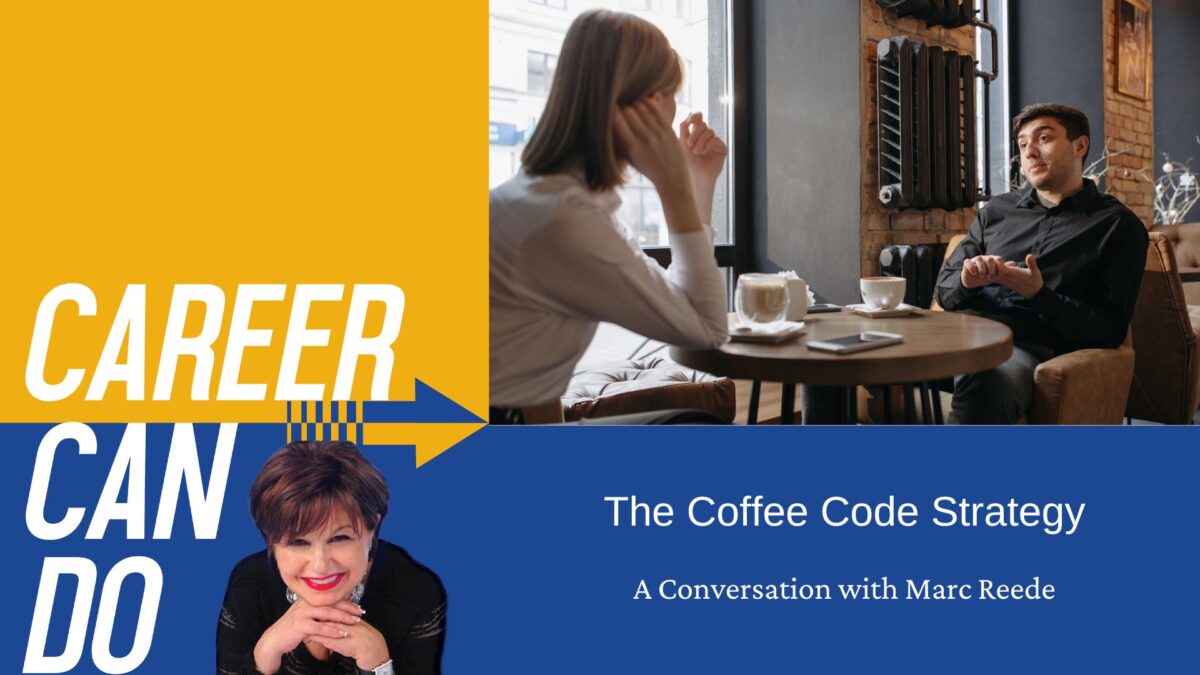
The Coffee Code Strategy with Marc Reede

What if your big career break isn’t hiding in a job board or behind a perfect résumé—but sitting across from you at a coffee shop? In this special episode of Career Can Do, we switch things up as Chris Sandland steps in for Mary Ann Faremouth to host a lively and insightful conversation with Marc Reede—lecture agent to the stars and author of The Coffee Code. Marc’s mission is clear: help college seniors and recent grads stop spinning their wheels and start making real connections that lead to opportunities.

Forget stuffy interviews and formal networking events. Marc breaks down how a simple coffee chat—yes, really—can open doors you didn’t even know existed. He shares how reaching out for advice, not a job, often leads to something far more powerful: relationships. And when it comes to building your career, relationships are everything.

Chris and Marc also unpack the idea of personal branding—not in a buzzwordy kind of way, but in a “what’s your story and how do you tell it?” kind of way. Marc brings it home with a moving story about his daughter, a towel from Venus Williams, and a lesson that turns into the heartbeat of The Coffee Code: touch one person, share your gift, and watch what happens.

This episode is packed with the kind of advice you wish someone had told you years ago, whether you’re 22 or 42. Marc reminds us that professors are more connected than we think, that LinkedIn isn’t just for job seekers, and that the power of “being nice” never goes out of style.

If you’ve ever felt stuck, overlooked, or unsure of your next step, this one’s for you. It’s not about being the loudest person in the room—it’s about being the most memorable. And sometimes, all it takes is a coffee.

Resources

Marc Reede on Web | The Coffee Code Book | LinkedIn | Email:marcreede@yahoo.com

Mary Ann Faremouth on the Web | X (Twitter)

Categories
Adventures in Compliance

Adventures in Compliance: The Novels – The Sign of Four, Introduction and Compliance Lessons Learned

In this new season of Adventures in Compliance, host Tom Fox takes a deep dive into the Sherlock Holmes novels. Throughout this season, Tom will explore each novel in a four-part series. The four novels we will consider from the ethics and compliance perspective are A Study in Scarlet, The Sign of Four, The Hound of the Baskervilles, and The Valley of Fear. 

For our second offering this season, we begin with The Sign of Four. In this Part 1 of our four-part exploration, we dive into the synopsis of the story and extract five key compliance lessons: (1) Methodical investigation and attention to detail, (2) The importance of clear and open communication, (3) Understanding human behavior, (4) Vigilance against complacency, and (5) Integrity and ethical fortitude. These lessons underline the timeless relevance of Sherlock Holmes’ methods for modern compliance professionals. Tune in for an engaging blend of classic literature and practical compliance insights. 

Highlights include:

  • Deep Dive into ‘The Sign of Four’
  • Key Compliance Lessons from ‘The Sign of Four’
  • Methodical Investigation and Attention to Detail
  • Clear and Open Communication
  • Understanding Human Behavior
  • Vigilance Against Complacency
  • Integrity and Ethical Fortitude

Resources:

The New Annotated Sherlock Holmes

Sherlock Holmes FAQ by Dave Thompson

Connect with Tom Fox

Instagram

Facebook

YouTube

Twitter

LinkedIn

Categories
FCPA Compliance Report

FCPA Compliance Report – The Role of Culture and Data in Fraud Risk Management: A Conversation with Vincent Walden

Welcome to the award-winning FCPA Compliance Report, the longest-running podcast in compliance. This is a very special episode. Today, Tom Fox cross-posts an episode from the BCG Podcast. In it, host Hanjo Siebert visits with konaAI CEO Vince Walden. They discuss the critical role of data and culture in achieving effective compliance, exploring the importance of interdepartmental collaboration, the evolving compliance landscape, and real-world examples of fraud detection. Walden emphasizes that while strategy is important, a strong organizational culture is essential for successful execution. He explains how data serves as a transparency agent and outlines the need for a collective approach to managing fraud risk. Listen in to gain insights into the challenges and best practices in modern compliance.

Key highlights:

  • The Importance of Transaction Monitoring
  • Challenges in Fraud Risk Management
  • Collaborative Approaches to Compliance
  • konaAI Role in Modern Compliance
  • Real-World Fraud Cases and Lessons Learned
  • The Impact of Business Culture on Fraud Prevention
  • Fostering a Culture of Transparency

Resources:

Vince Walden on LinkedIn

konaAI

Original Podcast Recording

Tom Fox

Instagram

Facebook

YouTube

Twitter

LinkedIn

For more information on the use of AI in Compliance programs, see my new book, Upping Your Game. You can purchase a copy of the book on Amazon.com.

Categories
Daily Compliance News

Daily Compliance News: June 2, 2025, The Unintended Consequence Edition

Welcome to the Daily Compliance News. Each day, Tom Fox, the Voice of Compliance, brings you compliance-related stories to start your day. Sit back, enjoy a cup of morning coffee, and listen in to the Daily Compliance News. All from the Compliance Podcast Network. Each day, we consider four stories from the business world: compliance, ethics, risk management, leadership, and general interest, all of which are relevant to the compliance professional.

Top stories include:

  • The judge may limit Google’s use of AI in antitrust cases. (WSJ)
  • Rise of claims against AI washing. (Reuters)
  • Boeing is worried about the impact of tariffs. (FT)
  • Goldman’s letter sways Leissner’s sentencing judge. (Bloomberg)