Categories
AI Today in 5

AI Today in 5: January 26, 2026, The Overly Affectionate Chatbots Edition

Welcome to AI Today in 5, the newest addition to the Compliance Podcast Network. Each day, Tom Fox will bring you 5 stories about AI to start your day. Sit back, enjoy a cup of morning coffee, and listen in to the AI Today In 5. All, from the Compliance Podcast Network. Each day, we consider five stories from the business world, compliance, ethics, risk management, leadership, or general interest about AI.

Top AI stories include:

  1. The crash of Intel. (WSJ)
  2. How Americans are using AI at work. (AP)
  3. Small business use cases for AI. (Forbes)
  4. Pope Leo warns of ‘overly affectionate’ chatbots. (CNN)
  5. AI can help in KYC compliance. (FinTech Global)

For more information on the use of AI in Compliance programs, my new book, Upping Your Game, is available. You can purchase a copy of the book on Amazon.com.

Categories
Blog

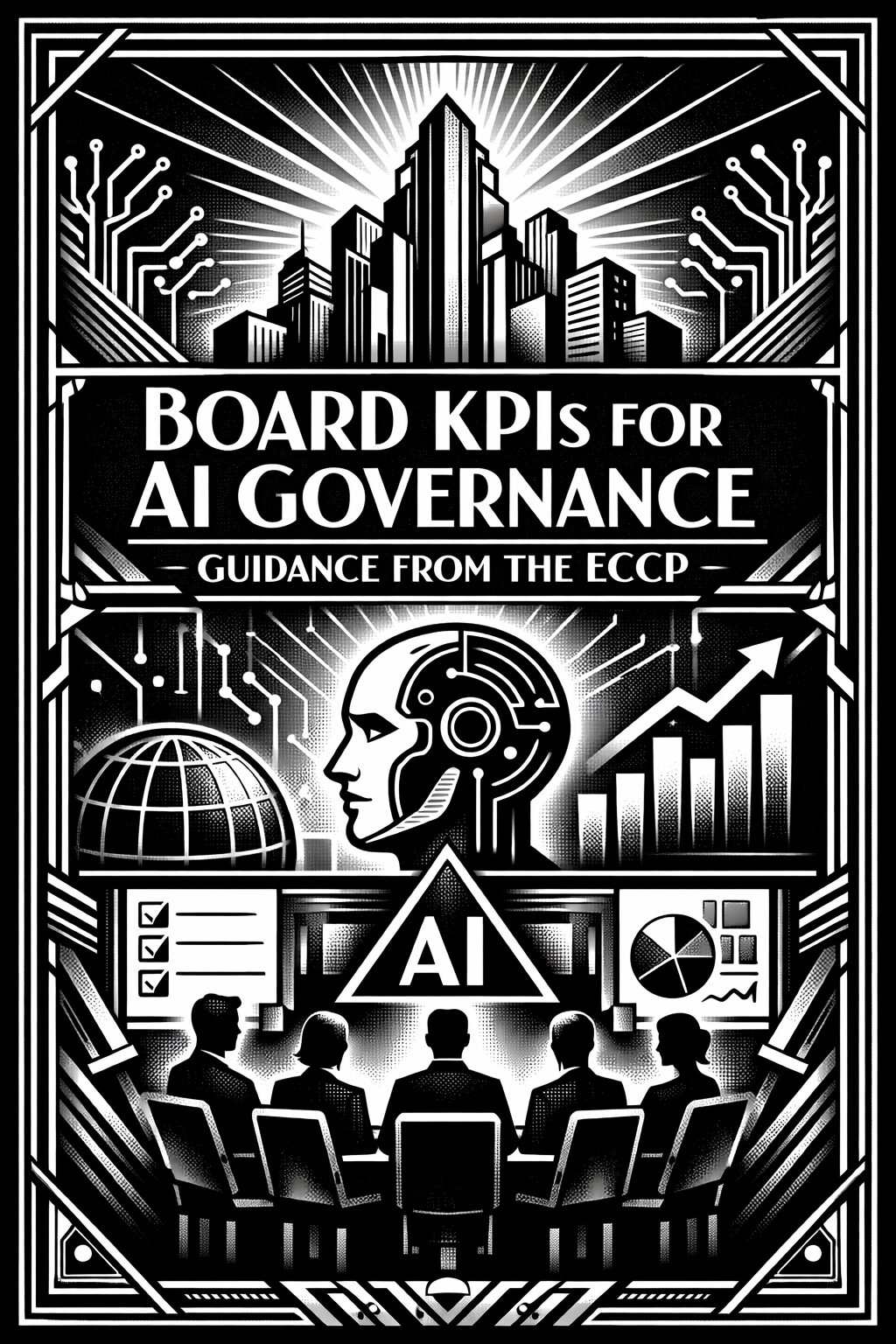
Board KPIs for AI Governance: Guidance from the ECCP

Corporate Boards are no longer asking whether their organizations will use artificial intelligence. The business has already answered that question. The only question that matters now is whether AI is being governed well enough to support growth without creating unmanaged risk.

For the corporate compliance officer, this reality creates both pressure and opportunity. Pressure, because Boards with minimal AI literacy still carry full fiduciary responsibility. Opportunity, because compliance is uniquely positioned to translate complex AI activity into oversight-ready information. The bridge between those two worlds is the right set of Board-level  Key Performance Indicators (KPIs) for AI governance. Moreover, I believe the DOJ’s Evaluation of Corporate Compliance Programs (ECCP) can serve as a framework for developing appropriate KPIs for your Board.

In this blog post, we detail a set of Board-level KPIs for compliance professionals tasked with educating growth-oriented Boards on AI governance using a blended, ECCP-centric framework. It assumes that AI is already deployed across the enterprise, including generative AI, and that governance must enable innovation while enforcing guardrails.

Why Boards Need AI KPIs Now

The ECCP makes one point repeatedly and without ambiguity: regulators care less about written policies and far more about whether controls work in practice. Boards are expected to exercise oversight over risk, including emerging and technology-driven risks. AI is now firmly in that category.

AI governance KPIs are not about teaching directors how models work. They are about answering three questions every Board must be able to answer:

  1. Do we know where AI is being used?
  2. Do we control how AI changes over time?
  3. Can we detect, respond to, and remediate AI-related harm quickly?

If a Board cannot answer those questions with evidence, not narrative reassurance, the organization is exposed. The role of compliance is to ensure those answers are delivered in a form that directors can understand and act upon.

The KPI Philosophy: Enablement With Guardrails

Because this is a growth-oriented Board, the goal is not to slow AI adoption. The goal is to make AI scalable, defensible, and sustainable. KPIs must therefore do three things simultaneously:

  • Demonstrate coverage and control without micromanagement
  • Surface risk early, before incidents become enforcement events
  • Support informed decision-making, not technical debate

This means Boards should receive KPIs, escalation triggers, and narrative context. Numbers alone are insufficient. Context without metrics is worse.

Six Board-Level KPIs for AI Governance

The following six KPIs apply to all AI systems, including generative AI, within a unified governance framework. They are evidence-based, auditable, and aligned with the ECCP expectations for testing, monitoring, and continuous improvement.

1. Risk Inventory Coverage

This KPI measures the percentage of in-scope AI systems with a current, signed risk record documenting use case, data sources, impacts, potential harms, and safeguards. If AI is operating outside the risk inventory, it is operating outside governance. This KPI answers the most basic oversight question: do we know what we have? Any material AI system without a documented risk assessment or with an expired review date should be escalated for review.

The ECCP begins with risk assessment for a reason. Under the ECCP, they are directed to consider whether a company has identified and prioritized its risks, including emerging risks. AI, particularly GenAI, now squarely fits within that expectation. Risk Inventory Coverage directly answers the ECCP question: “What methodology has the company used to identify, analyze, and address the particular risks it faces? ” If AI systems are operating without a documented risk record, the program fails at step one. From an ECCP perspective, undocumented AI use is indistinguishable from unmanaged risk.

2. Model Change Control Adherence

This measures the percentage of AI model changes, including code, data, prompts, parameters, or vendors, that followed the approved change management process. Uncontrolled change is the fastest way for compliant AI to become noncompliant. This KPI assures directors that innovation is disciplined, not chaotic. Any production AI change implemented without pre-deployment testing, approval, or rollback capability should be escalated for review.

ECCP Alignment:

The ECCP explicitly evaluates whether policies are followed in practice, not merely written. Adherence to change control shows whether AI governance has real authority over business and technology decisions. Unapproved model changes undermine every safeguard the company believes it has in place. From the DOJ’s perspective, a control that can be bypassed without consequence is not a control. For your Board, this KPI demonstrates that AI innovation is disciplined and governed, not uncontrolled experimentation that creates hidden compliance exposure.

3. Model Lineage and Provenance Completeness

This KPI measures the percentage of AI systems with end-to-end traceability, enabling the reconstruction of how outputs were generated and decisions were approved. When something goes wrong, regulators and plaintiffs will ask how the AI reached its decision. This KPI determines whether the company can answer. Any high-impact AI system lacking sufficient documentation to support root cause analysis should be escalated for review.

This KPI is derived from the ECCP sections on Continuous Improvement, Periodic Testing, and Review, as well as Investigation, Analysis, and Remediation of Misconduct. The ECCP asks whether a company can understand why something went wrong and conduct effective root cause analysis. Without lineage and provenance, AI decisions cannot be reconstructed, tested, or explained. This KPI directly supports DOJ’s expectation that companies can investigate incidents, identify systemic weaknesses, and remediate effectively. For your Board, this KPI determines whether the organization can defend its AI decisions after the fact or whether it will be forced into speculation and guesswork.

4. Third-Party Model Assurance Coverage

This KPI measures the percentage of third-party AI tools and services that have completed due diligence, contractual controls, and periodic reassessment. Most AI risk now enters organizations through vendors. Boards must know whether those risks are being actively managed. Any use of third-party AI without completion of onboarding or with unresolved high-risk findings should be escalated for review.

This ties to the ECCP section around Third-Party Management. The ECCP is unambiguous on third parties. Companies are expected to conduct risk-based due diligence, impose contractual controls, and monitor third-party performance over time. Most AI risk now enters through vendors, platforms, APIs, and embedded models. Treating third-party AI differently from other third-party risks would be inconsistent with DOJ guidance. For your Board, this KPI shows that AI vendor risk is governed with the same rigor as bribery, sanctions, or data security risks.

5. AI Incident Mean Time to Resolution (MTTR)

This KPI measures the median time from detection of an AI incident to containment and recovery. Incidents are inevitable. What matters is how fast the organization responds. This KPI demonstrates operational resilience. Repeated incidents with increasing resolution times or incomplete remediation should be escalated.

This ties to the ECCP sections on Investigation, Analysis, and Remediation of Misconduct. The ECCP focuses heavily on how quickly and effectively companies respond to detected issues. Speed matters. Delayed containment signals weak controls and inadequate monitoring. AI Incident MTTR translates this expectation into a measurable operational outcome. It demonstrates whether the company can detect, contain, and remediate AI-related harm before it escalates into regulatory or reputational damage. For your Board, the key takeaway is that this KPI demonstrates operational resilience and governance maturity, not merely technical incident response.

6. Fairness and Robustness Pass Rate

This KPI measures the percentage of AI systems passing predefined fairness, bias, and robustness tests across relevant segments and use cases. It connects AI governance to ethical outcomes and reputational risk. Any material AI system deployed with known fairness or robustness failures should be escalated for review.

This ties to the ECCP sections on Continuous Improvement, Periodic Testing, and Review. The ECCP repeatedly asks whether companies test their controls and whether those controls work in practice. Fairness and robustness testing is the AI equivalent of transaction testing in anti-corruption or sanctions compliance. This KPI shows that AI systems are not only reviewed at launch but are continuously validated against defined risk thresholds. For your Board, the key takeaway is that this KPI demonstrates that ethical and legal AI commitments are enforced through testing, not slogans.

Board Oversight Questions Tied to AI KPIs

To close, here are Board-level questions compliance officers should encourage directors to ask:

  1. Which AI systems fall outside our current risk inventory, and why?
  2. Where have we accepted AI risk, and what safeguards justify that decision?
  3. Are AI changes happening faster than our governance can keep up with?
  4. How quickly can we detect and contain AI-related harm?
  5. Which third-party AI risks would cause us to pause or exit a deployment?
  6. How do these KPIs support growth rather than restrict it?

AI governance KPIs are not about slowing innovation. They are about making growth durable. For compliance professionals, delivering these metrics in a clear, disciplined, and Board-ready way is how AI governance becomes a strategic asset rather than a regulatory afterthought.

If you would like specific KPIs based on this blog, go over and subscribe to my Substack. At this point, it is free. Check it out here.


Categories
31 Days to More Effective Compliance Programs

31 Days to a More Effective Compliance Program: Day 25 – Investigative Findings

Welcome to 31 Days to a More Effective Compliance Program. Over this 31-day series in January 2026, Tom Fox will post a key component of a best-practice compliance program each day. By the end of January, you will have enough information to create, design, or enhance a compliance program. Each podcast will be short, at 6-8 minutes, with three key takeaways that you can implement at little or no cost to help update your compliance program. I hope you will join each day in January for this exploration of best practices in compliance. In today’s Day 25 episode, we consider the critical importance of addressing investigative findings within a corporate compliance framework.

Key highlights:

  • The Impact of Investigations on Compliance
  • Communicating Costs and Risks
  • Ensuring Effective Communication

Resources:

Listeners to this podcast can receive a 20% discount on The Compliance Handbook, 6th edition, by clicking here.

Categories
Sunday Book Review

Sunday Book Review: January 25, 2026, The Book on Leadership for ‘26 Edition

In the Sunday Book Review, Tom Fox considers books that would interest compliance professionals, business executives, or anyone curious. It could be books about business, compliance, history, leadership, current events, or anything else that might interest Tom. In this episode, we look at 4 recent books on leadership you should read in 2026.

  1. The AI Centered Enterprise by Ram Bala, Natarajan Balasubramanian, and Amit Joshi
  2. Twin Transformation by Michael Wade and Konstantinos Trantopoulos
  3. Gain by Michael Wade and Amit Joshi
  4. Leading a Sustained Business Transformation by Julia Binder and Knut Haanaes

Resources:

12 leadership books you should read in 2026 by the IMD Blog

Categories
FCPA Compliance Report

FCPA Compliance Report-Episode 794 – Perspectives from OpenAI and Steptoe: Preview of The Leading Edge with Matt Galvin

Today we have a special edition of the FCPA Compliance and Ethics Report as we begin a preview of speakers and presentations at the upcoming Compliance Week event The Leading Edge: Applying AI and Data Analytics in E&C, which will be held in Fort Lauderdale, January 28 and 29. In this episode, I am joined by Matt Galvin, partner at Steptoe & Johnson, to discuss his presentation with Nicole Diaz, Associate General Counsel, Compliance at OpenAI at the upcoming Compliance Week event, The Leading Edge.

They discuss Galvin’s role at Steptoe, his upcoming presentation with Nicole Diaz titled ‘Perspectives from Open AI and Steptoe’, and the evolving landscape of compliance with AI integration. Galvin shares insights on how AI is reshaping risk management, emphasizing the need for more dynamic and transparent approaches in compliance. The conversation highlights the importance of staying current with rapid technological advancements and regulatory changes.

Key Highlights

  • Preview of the Leading Edge Presentation
  • AI and Compliance: A New Era
  • Risk Management in the AI Era
  • Expectations from the Leading Edge Conference

Resources

Compliance Week

The Leading Edge: Applying AI and Data Analytics in E&C conference, click here. Compliance Week is offering a 20% discount to the event for listeners of this podcast. Use the discount code TFOX at registration.


Guests 

Matt Gaslvin on LinkedIn

Steptoe & Johnson

Host

Tom Fox

Instagram

Facebook

YouTube

Twitter

LinkedIn

Categories
31 Days to More Effective Compliance Programs

31 Days to a More Effective Compliance Program: Day 24 – Internal Reporting and Triage

Welcome to 31 Days to a More Effective Compliance Program. Over this 31-day series in January 2026, Tom Fox will post a key component of a best-practice compliance program each day. By the end of January, you will have enough information to create, design, or enhance a compliance program. Each podcast will be short, at 6-8 minutes, with three key takeaways that you can implement at little or no cost to help update your compliance program. I hope you will join each day in January for this exploration of best practices in compliance. In today’s Day 24 episode, we look into the critical process of internal reporting and triaging of FCPA claims.

Key highlights:

  • Guidelines for Effective Compliance Programs
  • Jonathan Marks’ Five-Step Process for Early Assessment
  • Key Takeaways

Resources:

Listeners to this podcast can receive a 20% discount on The Compliance Handbook, 6th edition, by clicking here.

Categories
31 Days to More Effective Compliance Programs

31 Days to a More Effective Compliance Program: Day 23 – Investigative Protocols

Welcome to 31 Days to a More Effective Compliance Program. Over this 31-day series in January 2026, Tom Fox will post a key component of a best-practice compliance program each day. By the end of January, you will have enough information to create, design, or enhance a compliance program. Each podcast will be short, at 6-8 minutes, with three key takeaways that you can implement at little or no cost to help update your compliance program. I hope you will join each day in January for this exploration of best practices in compliance. In today’s Day 23 episode, we delve into the essential steps for conducting a thorough and effective internal investigation following an internal report.

Key highlights:

  • Key Questions for Internal Investigations
  • Detailed Procedures for Handling Complaints
  • Steps in the Investigative Process
  • Importance of Consistency in Investigations

Resources:

Listeners to this podcast can receive a 20% discount on The Compliance Handbook, 6th edition, by clicking here.

Categories
Fox on Podcasting

Fox on Podcasting – The Journey of Professor Anika Jackson: From Club Promoter to Podcasting Professor

Join Tom Fox as he explores the world of podcasting, and get ready to be inspired to start your own podcast. In this episode, Tom is joined by Professor Anika Jackson, a dynamic figure in the podcasting world and an educator at the University of Southern California.

Anika shares her journey from club promoter in Kansas City to esteemed podcast consultant and educator. She discusses her extensive background in event hosting, her transition into radio and podcasting, and the foundation of her consulting firm, Your Brand Amplified. Anika elaborates on her teaching roles at USC, where she instructs students on the business and craft of podcasting, emphasizing the importance of personal branding and building a sustainable podcasting career. She also touches on her philanthropic efforts in education, her holistic approach to life, and her collaboration with a former Zen monk on their podcast, Zen Power Hour. Join the conversation to explore the multifaceted career of Anika Jackson and gain insights into the impactful world of podcasting.

Key highlights:

  • Professor Jackson’s Journey into Podcasting
  • From Radio to Podcasting
  • Building a Podcasting Business
  • Academia and Podcasting
  • Holistic and Purpose-Driven Leadership

Resources:

 Anika Jackson on LinkedIn

Your Brand Amplified website

Your Brand Amplified podcast

Artwork

Elaine Capers

Art by Elaine

Tom

Instagram

Facebook

YouTube

Twitter

LinkedIn

Categories
AI Today in 5

AI Today in 5: January 23, 2026, The Greatest AI Challenge Edition

Welcome to AI Today in 5, the newest addition to the Compliance Podcast Network. Each day, Tom Fox will bring you 5 stories about AI to start your day. Sit back, enjoy a cup of morning coffee, and listen in to the AI Today In 5. All, from the Compliance Podcast Network. Each day, we consider five stories from the business world, compliance, ethics, risk management, leadership, or general interest about AI.

Top AI stories include:

  • South Korea adds new AI regulations. (Reuters)
  • Vietnam updates IP & AI law. (Rouse)
  • AI’s greatest challenge is managerial, not technical. (Bloomberg)
  • With AI, compliance data is more valuable than ever. (FinTechGlobal)
  • AI assists retailers in stopping return fraud. (CBS News)

For more information on the use of AI in Compliance programs, my new book, Upping Your Game, is available. You can purchase a copy of the book on Amazon.com.

Categories
Daily Compliance News

Daily Compliance News: January 23, 2026, The Lying Liars Who Lie Edition

Welcome to the Daily Compliance News. Each day, Tom Fox, the Voice of Compliance, brings you compliance-related stories to start your day. Sit back, enjoy a cup of morning coffee, and listen in to the Daily Compliance News. All, from the Compliance Podcast Network. Each day, we consider four stories from the business world, compliance, ethics, risk management, leadership, or general interest for the compliance professional.

Top stories include:

  • FirstEnergy’s reputation for telling the truth is still trashed. (Cleveland.com)
  • The black box of AI hiring decisions. (NYT)
  • Supreme Court balks at Trump’s attempt to control the Fed. (WSJ)
  • What happens when the dog bites (or even eats) its tail? (FT)