Categories
Blog

Michigan Man, Part 3 – When Compliance Is Overruled: Institutional Failure at the University of Michigan

In Part 3, I examined Sherrone Moore’s individual compliance and ethics violations. That analysis was necessary, but it is not sufficient. No serious compliance professional believes that repeated misconduct by senior leaders occurs in a vacuum. Individual failure almost always reflects institutional weakness.

The University of Michigan did not cause Sherrone Moore’s behavior. But the university, and specifically its athletic department, bears responsibility for the systems, decisions, and omissions that allowed risk to accumulate unchecked. This is where the story becomes most relevant to corporate compliance professionals, because it illustrates how even sophisticated institutions can fail when compliance is subordinated to performance, loyalty, or brand protection.

The First Failure: Allowing Athletics to Override Compliance

The most fundamental breakdown at Michigan is structural. Over multiple years, the athletic department functioned as a semi-autonomous power center, capable of managing crises internally while insulating leadership from meaningful accountability.

This dynamic is visible in how the university handled the Connor Stalions sign-stealing scandal. Despite significant NCAA exposure, the program’s response emphasized competitive harm rather than integrity. Moore’s deletion of text messages and subsequent explanations resulted in suspensions, but not in disqualification from advancement. The compliance function did not appear to have veto power over promotion decisions, even when integrity concerns were documented. For compliance professionals, this is a familiar and dangerous pattern. When business units, or in this case, athletics, are allowed to treat compliance as advisory rather than authoritative, the message is clear: results matter more than rules.

The Second Failure: Deference to Legacy and Power

Michigan Athletics operates under a powerful legacy culture. As multiple commentators have noted, the program has long wrapped itself in mythology around the “Michigan Man,” a tradition that stretches back through Bo Schembechler and is reinforced under Jim Harbaugh. That culture prizes loyalty, continuity, and internal succession.

Sherrone Moore was the embodiment of that narrative. He was Harbaugh’s lieutenant, publicly emotional, and deeply embraced by fans and players. That status created what compliance professionals recognize as halo risk. Decision-makers become reluctant to ask hard questions of leaders who symbolize institutional identity.

This deference matters. When leaders are treated as extensions of the institution itself, compliance red flags are reframed as nuisances rather than warnings. That cultural bias undermines independent oversight and discourages escalation.

The Third Failure: A Flawed Internal Investigation Process

The university did commission an outside law firm, Jenner & Block, to investigate the alleged inappropriate relationship between Moore and a staffer. On paper, that decision reflects best practice. In execution, however, significant weaknesses are evident. According to reporting, the investigation initially stalled because both Moore and the staffer denied the relationship, and investigators lacked corroborating evidence. At that point, the inquiry has paused rather than intensifying scrutiny or implementing interim risk controls.

This is a classic compliance failure. When allegations involve senior leadership and power imbalances, the absence of evidence should prompt heightened diligence, not closure. Effective investigations recognize that fear, loyalty, or dependency may suppress disclosure. Failing to account for those dynamics is not neutrality. It is naïveté.

The Fourth Failure: Continued Reliance on False Statements

Perhaps the most troubling institutional failure is the university’s repeated reliance on Moore’s representations, despite a documented history of dishonesty during investigations. Moore had already deleted records and provided questionable explanations in the NCAA matter. That history should have triggered enhanced skepticism. Instead, the institution accepted his denials at face value until external corroboration forced action. Compliance professionals know that credibility is cumulative. Once an individual has compromised their credibility, future statements must be independently verified.

By failing to apply that standard, Michigan allowed risk to persist until it exploded into a crisis involving law enforcement.

The Fifth Failure: Inadequate Background and Risk Due Diligence

Moore’s elevation to head coach in 2024 represents a textbook failure of due diligence in risk-based promotion. Promotion decisions, especially into roles of extraordinary authority, must include a holistic review of ethics, compliance history, and behavioral risk.

Moore’s record at the time of promotion included:

  • NCAA violations tied to record deletion;
  • Active involvement in a major compliance scandal; and
  • Prior suspensions that were not yet fully served.

Any one of these is enough to disqualify him from coaching at a major university. Taken together, they should have triggered a serious debate in both the UM Athletic Department and the university as a whole about tone at the top and reputational risk.

In the corporate world, promoting an executive with unresolved compliance issues into a CEO role would be viewed as reckless. Michigan did precisely that, likely prioritizing continuity and optics over risk management.

The Sixth Failure: Crisis Management Without Safeguards

One of the most alarming details reported is that Moore was terminated alone, reportedly without HR representation or security present, despite prior knowledge that he was experiencing mental health distress. From a compliance and HR standpoint, this is indefensible. Terminations involving senior leaders, allegations of misconduct, and emotional instability require structured protocols. These protocols exist to protect all parties, including the organization.

The fact that Moore was later taken into custody following an alleged incident underscores how poor crisis execution can escalate harm rather than contain it.

The Seventh Failure: A Pattern Ignored

The Moore matter does not stand alone. As ESPN and Slate documented, Michigan athletics has faced multiple scandals in recent years, including federal indictments of staff, repeated NCAA violations, and internal HR complaints across sports.

Compliance professionals recognize this as a pattern risk. When misconduct appears across functions and time, the issue is no longer individual actors. It is governance. The university’s decision to launch a broad inquiry into the athletic department acknowledges this reality. However, recognition after the fact does not mitigate prior harm.

Compliance Takeaways

For compliance professionals, the Michigan Man case offers sobering lessons about institutional vulnerability:

  • Compliance functions must have authority, not just access
  • Legacy culture can blind organizations to risk
  • Investigations involving power imbalance require heightened rigor
  • Prior dishonesty must permanently alter credibility assessments
  • Promotion decisions are compliance decisions
  • Crisis response must be governed by protocol, not expediency

Most importantly, organizations must resist the temptation to treat success as a substitute for integrity. Winning programs, like high-performing business units, often receive the least scrutiny and pose the greatest risk.

I hope you will join me for my concluding Part 4, where I will translate these posts into concrete lessons for compliance professionals across industries. These lessons are not abstract. They are operational, structural, and urgent.

Resources:

The Terrible Mess at Michigan Football, by Jason Gay, writing in the Wall Street Journal.

Ex-Michigan coach Sherrone Moore charged with home invasion, stalking, breaking—Austin Meek and Sam Jane writing in The Athletic.

Fire Everybody—Alex Kirshner, writing in Slate.

Source: Michigan begins a review of the athletic department, by Dan Wetzel and Pete Thamel, writing for ESPN.
Categories
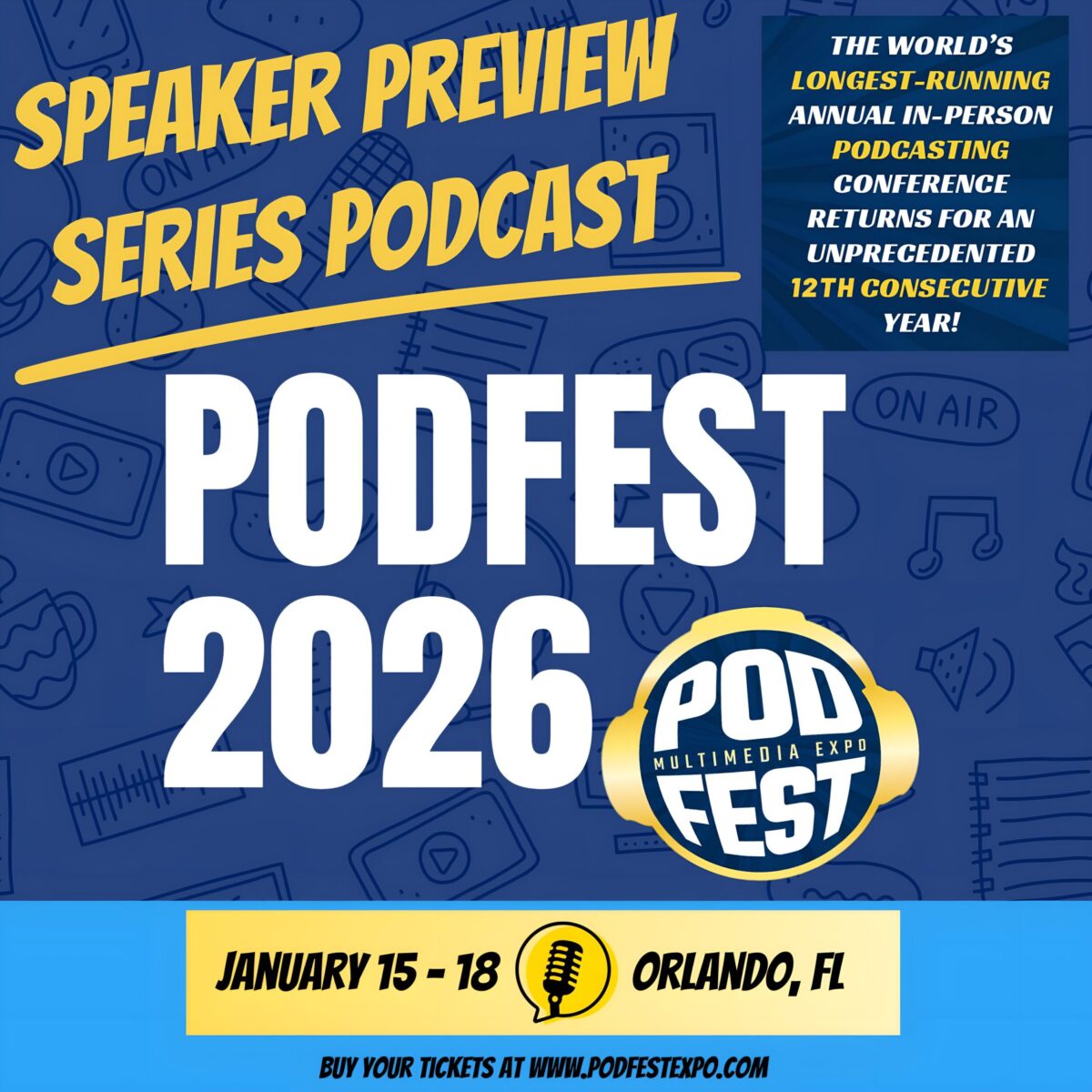
PodFest Expo 2026 Speaker Series Preview

Podfest Expo 2026 Speaker Preview Series: Scott Smith on How to Add Radio to Your Podcast Distribution

In this episode of the PodfestExpo 2026 Speaker Preview Podcasts series, Tom Fox visits with Scott Smith, host of The Waco Experience podcast, and discusses his presentation at PodfestExpo 2026. Some of the highlights in this podcast are:

  • Scott’s role in the world of podcasting.
  • His presentation on ‘How to add radio to your podcast distribution.’
  • What Scott hopes to get out of PodFest Expo 2026 and why you should attend.

I hope you can join us at Podfest Expo 2026, hosted by Podfest Global. This year’s event will be the 12th anniversary and will be held January 15-18, at the RENAISSANCE ORLANDO AT SEAWORLD® in Orlando, Florida. The lineup of this year’s event is simply first-rate, with some of the top names in podcasting.

Podfest Expo is a community of people interested in and passionate about sharing their voices and messages with the world through powerful audio and video mediums. We’re proud to unite as many people as possible to learn, get inspired, and grow better together.

Podfest Expo is so much more than just a conference. While we pride ourselves on featuring the most engaging speakers, exciting topics, and in-depth content, what sets the Podfest Expo event apart from all others is the tight-knit community we’ve been building since 2013. You don’t just attend a Podfest event—you become part of the Podfest family.

Whether you’re new to podcasting or a veteran podcaster looking to innovate and improve your podcast, our easy-to-understand Conference Topics allow you to customize a daily agenda based on what you’re most interested in learning. No matter your skill level or experience, Podfest Expo 2026 has plenty to offer!

Please join us at the event. For information on the event, click here. As an extra benefit for listeners of this podcast, Podfest Expo is offering 10% off any ticket level. Enter the discount code Fox2026 or visit this link.

Podfest Expo 2026 is a production of Podfest Global, which is the sponsor of this podcast series.

Categories
Compliance Tip of the Day

Compliance Tip of the Day – Preparing for an Investigation

Welcome to “Compliance Tip of the Day,” the podcast that brings you daily insights and practical advice for navigating the ever-evolving landscape of compliance and regulatory requirements. Whether you’re a seasoned compliance professional or just starting your journey, we aim to provide you with bite-sized, actionable tips to help you stay on top of your compliance game. Join us as we explore the latest industry trends, share best practices, and demystify complex compliance issues to keep your organization on the right side of the law. Tune in daily for your dose of compliance wisdom, and let’s make compliance a little less daunting, one tip at a time.

We continue our consideration of issues relating to your internal investigations. Today, we will discuss how to prepare for an investigation.

For more on this topic, check out The Compliance Handbook: A Guide to Operationalizing your Compliance Program, 6th edition, which LexisNexis recently released. It is available here.

Categories
Daily Compliance News

Daily Compliance News: December 16, 2025, The Don’t Feed the Pig Edition

Welcome to the Daily Compliance News. Each day, Tom Fox, the Voice of Compliance, brings you compliance-related stories to start your day. Sit back, enjoy a cup of morning coffee, and listen in to the Daily Compliance News. All, from the Compliance Podcast Network. Each day, we consider four stories from the business world, compliance, ethics, risk management, leadership, or general interest for the compliance professional.

Top stories include:

  • The slogan that brought down the Bulgarian government. (NYT)
  • Compliance concerns with AI glasses. (NationalLawReview)
  • Trafigura appeals. (Bloomberg)
  • Is there a right way for a CEO to quit? (FT)

The Daily Compliance News has been honored as the No. 2 in Best Regulatory Compliance Podcasts category.

Categories
Innovation in Compliance

Innovation in Compliance – Exploring Fractional and Adjunct Risk Professionals with Gerry Zack

Innovation occurs across many areas, and compliance professionals need not only to be ready for it but also to embrace it. Join Tom Fox, the Voice of Compliance, as he visits with top innovative minds, thinkers, and creators in the award-winning Innovation in Compliance podcast. In this episode, host Tom Fox welcomes back Gerry Zack to discuss a novel service offering in the compliance and risk management community: fractional and adjunct risk professionals.

Zack explains how these roles can supplement companies that lack certain expertise or can’t afford full-time positions, particularly highlighting the benefits of long-term relationships. The discussion also covers the distinctions between compliance and broader risk management, the flexibility of fractional contracts, and the importance of alignment in risk management practices across different organizational departments.

Key highlights:

  • Exploring the Concept of Fractional CCO
  • Long-term Benefits of Fractional Roles
  • Risk Professional Services vs. Compliance
  • Applications and Benefits of Fractional Roles
  • Challenges and Considerations

Resources:

Gerry Zack on LinkedIn

RiskTrek website

Innovation in Compliance was recently ranked 4th among Risk Management podcasts by 1,000,000 Podcasts.

Categories
AI Today in 5

AI Today in 5: December 16, 2025, The Things to Never Tell a Chatbot Edition

Welcome to AI Today in 5, the newest edition of the Compliance Podcast Network. Each day, Tom Fox will bring you 5 stories about AI to start your day. Sit back, enjoy a cup of morning coffee, and listen in to AI Today In 5. All, from the Compliance Podcast Network. Each day, we consider four stories from the business world, compliance, ethics, risk management, leadership, or general interest about AI.

Top AI stories include:

  1. 4 things to never tell a chatbot. (Business Insider)
  2. Moving towards NASDAQ compliance. (Yahoo!Finance)
  3. Four new jobs in our AI future. (WSJ)
  4. Replacing customer service with AI. (Forbes)
  5. Current state of AI risk in insurance and finance. (FinTechGlobal)

For more information on the use of AI in Compliance programs, my new book, Upping Your Game, is available. You can purchase a copy of the book on Amazon.com.

Categories
Blog

Michigan Man, Part 2 – Individual Accountability: Compliance and Ethics Violations at the Center of the Crisis

Part 1 of this series established that the Sherrone Moore story is both a human tragedy and an institutional crisis. In Part 2, we turn to a more difficult but necessary task. Compliance professionals must ask a direct question: What did Moore do that violated compliance and ethics expectations, and why do those actions matter beyond college football?

The answer is uncomfortable because it involves more than a single lapse in judgment. The facts as currently known describe a pattern of conduct that strikes at the heart of any credible compliance program: dishonesty during investigations, misuse of power, disregard for institutional policy, and an apparent belief that personal status insulated him from consequences.

Compliance Is About Truth-Telling

At the core of every compliance program is a simple, non-negotiable principle: tell the truth when the organization asks questions. That principle applies whether the inquiry involves financial controls, harassment allegations, or NCAA violations. Once an individual lies during an investigation, the issue ceases to be a narrow policy breach and becomes an integrity failure. As a friend of mine told me once, “As one of my partners said when a managing partner was having an affair, ‘if he’ll do that to his wife, imagine what he’ll do to his partners.’” Sherrone Moore crossed this line well before his dismissal as head coach.

During the Connor Stalions sign-stealing investigation, Moore deleted text messages exchanged with Stalions and later provided what the NCAA described as an implausible explanation for doing so. That conduct resulted in NCAA suspensions and remains part of the formal record of compliance violations tied to Moore personally. ESPN

From a compliance perspective, this matters far more than sign stealing itself. Deleting records during an investigation undermines document retention obligations, impedes fact-finding, and signals a willingness to prioritize personal or programmatic interests over institutional integrity. In the corporate world, the parallel would be deleting emails during a regulatory inquiry. No compliance officer would treat that as a minor infraction.

Repeated Dishonesty During Investigations

The more recent investigation into Moore’s relationship with a female staffer raises even more serious concerns. According to reporting, the University of Michigan launched an inquiry after receiving an anonymous tip alleging an inappropriate relationship. Both Moore and the staffer denied any ties, and the investigation initially stalled for lack of corroborating evidence. ESPN

That denial later proved false when the staffer disclosed corroborating evidence confirming a multi-year intimate relationship. At that moment, the issue shifted decisively from a policy violation to an ethics failure.

From a compliance standpoint, the problem is not merely the relationship itself. It is the active misrepresentation to investigators, i.e., intent. Lying to internal or external investigators destroys trust in the investigative process and forces organizations to rely on incomplete or inaccurate information when making risk decisions. It also exposes the institution to claims that it ignored or mishandled misconduct, even when the real issue was a senior leader’s deception.

Abuse of Power and Conflicts of Interest

Most university and corporate codes of conduct prohibit intimate relationships between supervisors and subordinates or require disclosure and mitigation when they do. These rules are not moral judgments. They are risk controls designed to prevent coercion, favoritism, retaliation, and exploitation.

Moore’s alleged multi-year relationship with a staffer squarely implicates these risks. As head coach and, previously, as an assistant coach, Moore held a position of significant authority within the athletic department. Even if the relationship was initially consensual, the power imbalance is unavoidable. Compliance professionals recognize that consent in such circumstances is inherently complicated and that organizations bear responsibility for preventing these situations from arising.

Failure to disclose the relationship deprived the university of the opportunity to implement safeguards, reassign reporting lines, or otherwise manage the conflict. That omission constitutes a clear ethics violation independent of any later criminal allegations.

Escalation Beyond Policy Violations

The most disturbing allegations arise from events following Moore’s termination. Prosecutors allege that after the relationship ended and Moore was fired, he went to the staffer’s residence without permission, engaged in repeated unwanted communications, and threatened self-harm while inside her home. NYT

While the criminal justice system will determine legal responsibility, compliance professionals must recognize how quickly misconduct can escalate when earlier controls fail. What began as an undisclosed relationship allegedly progressed into stalking behavior and an incident that law enforcement deemed serious enough to warrant felony charges.

This escalation underscores a core compliance truth: that early intervention matters. When organizations fail to address misconduct promptly and transparently, risks compound. Personal crises become workplace crises. Workplace crises become institutional crises.

Retaliation and Intimidation Risks

Another compliance dimension cannot be ignored. Prosecutors allege that Moore made statements to the staffer suggesting that she had “ruined his life” and that his blood would be “on her hands. From a compliance lens, such statements raise red flags around intimidation and retaliation. NYT

Whistleblower and reporting systems depend on employees feeling safe to come forward. Any conduct that could reasonably be perceived as threatening or coercive undermines that system. Whether intentional or not, such behavior chills reporting and exposes organizations to significant liability.

The Myth of the Star Performer Exception

One of the most consistent themes in compliance failures across industries is the star performer exception. High performers convince themselves, and sometimes their organizations, that rules are flexible when success is at stake. Moore’s trajectory fits this pattern uncomfortably well.

Despite prior compliance issues, including NCAA suspensions, Moore was elevated to head coach of one of college football’s most prominent programs. Each unresolved issue reinforced the perception that consequences were manageable and survivable. That perception is toxic to any ethical culture. Compliance professionals know that prior misconduct is one of the strongest predictors of future misconduct. Moore’s history should have triggered heightened scrutiny, not diminished concern.

Why Individual Accountability Matters

It is tempting to view Moore as a tragic figure overtaken by personal failure. That view is human and compassionate, but it cannot obscure the reality of compliance. Moore made choices. He chose to delete records. He decided to misrepresent facts to investigators. He chose not to disclose a prohibited relationship. He allegedly took actions that led to criminal charges.

Individual accountability is essential because without it, compliance programs lose credibility. Employees notice when leaders are treated differently. Regulators notice when organizations minimize misconduct by senior figures. Over time, the erosion of accountability becomes cultural.

Compliance Takeaways

For compliance professionals, the Moore case reinforces several hard truths:

  • Dishonesty during investigations is a red-line violation.
  • Conflicts of interest must be disclosed and managed, not hidden.
  • Power imbalances amplify ethical risk.
  • Past misconduct predicts future risk.
  • Star performers do not deserve special rules.

In Part 3 of this series, I will turn from individual accountability to institutional failure. The University of Michigan did not create Moore’s choices, but it did create the environment in which those choices were insufficiently challenged. Understanding that failure is essential for any organization that believes its compliance program is robust.

Resources:

The Terrible Mess at Michigan Football, by Jason Gay, writing in the Wall Street Journal.

Ex-Michigan coach Sherrone Moore charged with home invasion, stalking, breaking—Austin Meek and Sam Jane writing in The Athletic.

Fire Everybody—Alex Kirshner, writing in Slate.

Source: Michigan begins a review of the athletic department, by Dan Wetzel and Pete Thamel, writing for ESPN.

Categories
ACI FCPA Conference 2025

ACI Post Conference Reflections: Mike Huneke Insights on DOJ’s Trade Fraud Task Force and Tariff Enforcement

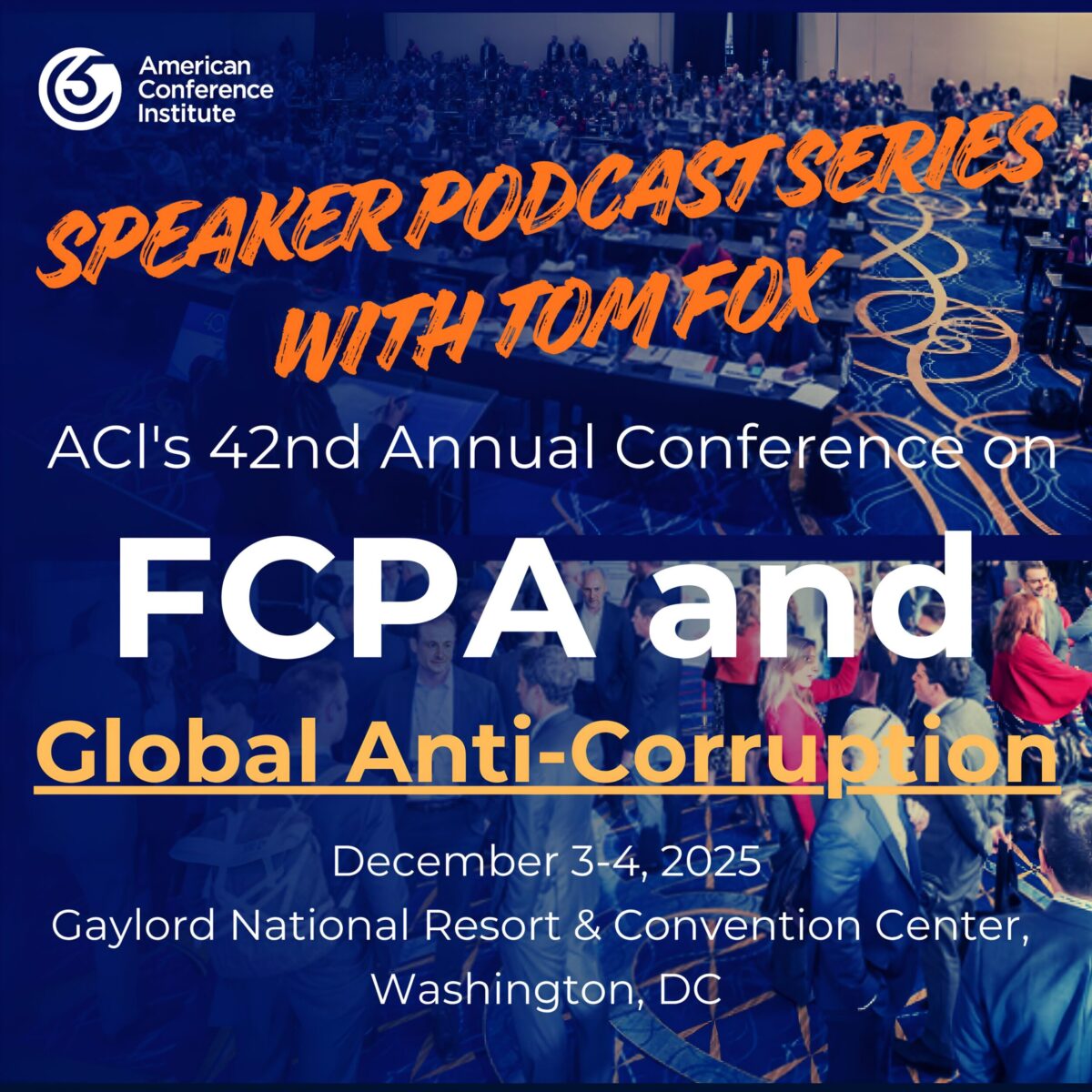
By special arrangement with ACI, I was able to record several participants, speakers, panelists, and moderators from the recently concluded ACI-FCPA and Global Anti-Corruption Conference held at the Gaylord near Washington, DC. This podcast details the guest’s experience at the event. In the second of our series, I visit with Mike Huneke from Morgan Lewis about the recent ACI FCPA and Global Anti-Corruption Conference.

We delve into the DOJ’s presence and announcements, particularly regarding the new Trade Fraud Task Force. Discussions include the robust focus on tariff enforcement, the implications for corporate compliance, and the need for companies to prepare for intensified scrutiny. The conversation also highlights changes from past FCPA frameworks to current practices. The episode offers valuable insights for those in the corporate compliance field, stressing the importance of being proactive and ensuring frontline staff are well informed about new enforcement priorities.

Key highlights:

  • Morning Panel Insights
  • DOJ’s Renewed Presence
  • Task Force and Enforcement Strategies
  • Compliance and Corporate Challenges
  • Conference Reflections and Community
Categories
PodFest Expo 2026 Speaker Series Preview

Podfest Expo 2026 Speaker Preview Series: Dan R Morris on How to Market and Grow a Solo Narrated Podcast

In this episode of the PodfestExpo 2026 Speaker Preview Podcasts series, Tom Fox visits with Dan R Morris, host of the Tracing The Path podcast, and discusses his presentation at PodfestExpo 2026. Some of the highlights in this podcast are:

  • Dan’s role in the world of podcasting.
  • His presentation on ‘How to Market a Solo Narrated Podcast.’
  • What Dan hopes to get out of PodFest Expo 2026 and why you should attend.

I hope you can join us at Podfest Expo 2026, hosted by Podfest Global. This year’s event will be the 12th anniversary and will be held January 15-18, at the RENAISSANCE ORLANDO AT SEAWORLD® in Orlando, Florida. The lineup of this year’s event is simply first-rate, with some of the top names in podcasting.

Podfest Expo is a community of people interested in and passionate about sharing their voices and messages with the world through powerful audio and video mediums. We’re proud to unite as many people as possible to learn, get inspired, and grow better together.

Podfest Expo is so much more than just a conference. While we pride ourselves on featuring the most engaging speakers, exciting topics, and in-depth content, what sets the Podfest Expo event apart from all others is the tight-knit community we’ve been building since 2013. You don’t just attend a Podfest event—you become part of the Podfest family.

Whether you’re new to podcasting or a veteran podcaster looking to innovate and improve your podcast, our easy-to-understand Conference Topics allow you to customize a daily agenda based on what you’re most interested in learning. No matter your skill level or experience, Podfest Expo 2026 has plenty to offer!

Please join us at the event. For information on the event, click here. As an extra benefit for listeners of this podcast, Podfest Expo is offering 10% off any ticket level. Enter the discount code Fox2026 or visit this link.

Podfest Expo 2026 is a production of Podfest Global, which is the sponsor of this podcast series.

Categories
Compliance Tip of the Day

Compliance Tip of the Day – Your Investigative Protocol

Welcome to “Compliance Tip of the Day,” the podcast that brings you daily insights and practical advice for navigating the ever-evolving landscape of compliance and regulatory requirements. Whether you’re a seasoned compliance professional or just starting your journey, we aim to provide you with bite-sized, actionable tips to help you stay on top of your compliance game. Join us as we explore the latest industry trends, share best practices, and demystify complex compliance issues to keep your organization on the right side of the law. Tune in daily for your dose of compliance wisdom, and let’s make compliance a little less daunting, one tip at a time.

This week, we will consider issues relating to your internal investigations. Today, we begin by considering your investigative protocol.

For more on this topic, check out The Compliance Handbook: A Guide to Operationalizing your Compliance Program, 6th edition, which LexisNexis recently released. It is available here.