Categories
Blog

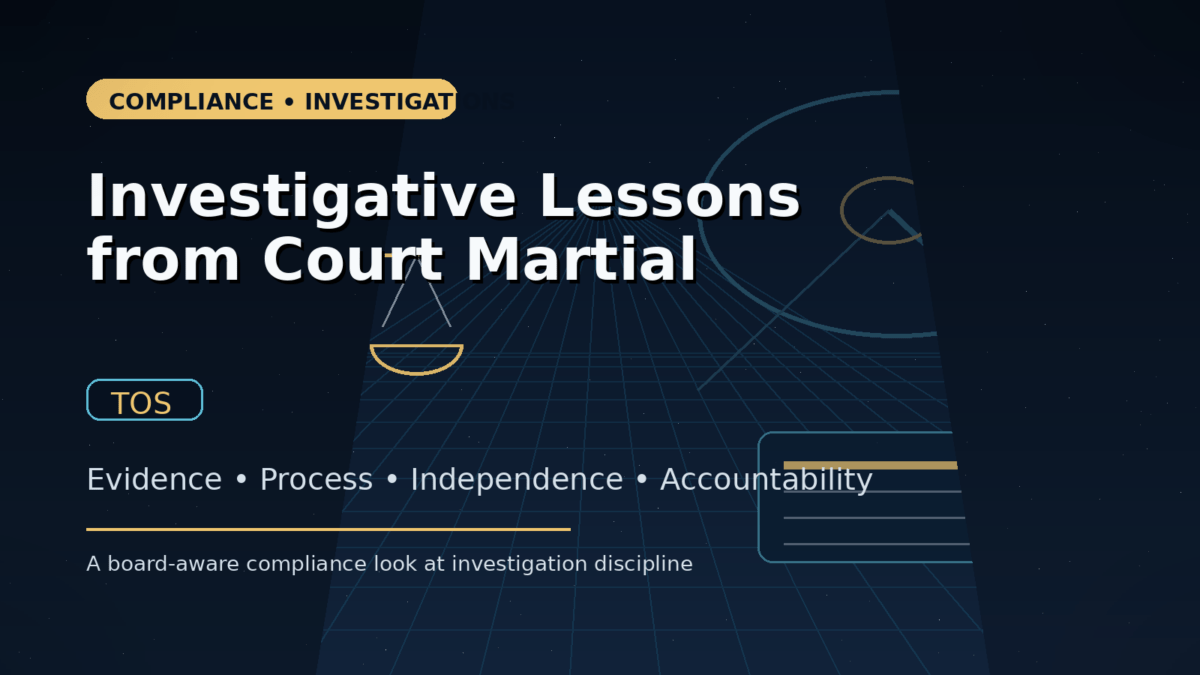
Investigative Lessons from Court Martial

Star Trek: The Original Series often illustrates complex ethical and procedural dilemmas that resonate deeply within the realm of corporate compliance. The episode “Court Martial,” in particular, offers compelling insights into effective investigative techniques and the challenges they present. In this narrative, Captain James T. Kirk faces accusations of negligent homicide, leading to a rigorous and revealing investigation. The drama unfolding aboard the USS Enterprise offers significant lessons for compliance professionals conducting internal investigations.

Today, we explore several critical investigative lessons from “Court Martial,” starting with a vivid scene from the episode, followed by the practical compliance takeaway.

1. Maintain Objectivity to Ensure Credibility

Illustrated By: Captain Kirk is accused of prematurely ejecting a research pod containing crewman Ben Finney during an ion storm. Initial computer records indicate Kirk’s guilt, prompting immediate suspicion.

Compliance investigations must always maintain objectivity. When allegations surface, compliance officers must approach each situation without preconceived notions or bias. Kirk’s investigators initially rely solely on computer data, presuming its infallibility. In corporate compliance, relying exclusively on initial reports or unverified data similarly risks compromising investigations. Objectivity requires considering all available evidence impartially, interviewing multiple witnesses, and rigorously verifying the accuracy of data before concluding. Objectivity protects the credibility of the compliance function and ensures fair treatment for all involved.

2. Validate Data Integrity and Authenticity

Illustrated by: Lieutenant Commander Spock meticulously tests the Enterprise’s computer system, uncovering evidence of intentional data tampering. He discovers discrepancies indicating that the records used against Kirk were falsified.

Spock’s rigorous testing of the Enterprise’s data integrity underscores a fundamental investigative principle: always verify the authenticity of data. Compliance professionals cannot rely solely on digital records or untested evidence. Ensuring the integrity of investigative data involves thorough audits, cybersecurity verifications, and analytical validations. Investigations should routinely include data integrity checks and forensic audits to confirm that no manipulation or corruption has occurred. Integrity validations protect the accuracy of the investigation and reinforce trust in compliance processes.

3: Thoroughly Interview Witnesses and Stakeholders

Illustrated by: During Kirk’s trial, multiple crew members testify about Kirk’s character and actions. The varying perspectives initially add complexity but ultimately provide clarity about the underlying truth.

Effective compliance investigations require comprehensive witness interviews to build a complete understanding. Witnesses provide invaluable context, nuance, and insights beyond what documentary evidence alone can provide. Interviewing diverse stakeholders allows compliance professionals to develop a multidimensional perspective of events. Interviews should be carefully planned, meticulously documented, and designed to uncover not just factual information but also cultural dynamics, underlying motivations, and potential inconsistencies. Robust witness interviews help paint a complete investigative picture, greatly enhancing accuracy and reliability.

4. Beware of Confirmation Bias

Illustrated By: Initially, Starfleet Command investigators quickly embrace apparent computer evidence against Kirk, displaying confirmation bias driven by the expectation that the computer system’s reliability is absolute.

Compliance officers must guard against confirmation bias, the human tendency to seek or interpret evidence in ways that confirm preexisting beliefs or assumptions. Confirmation bias compromises investigative accuracy, potentially leading to unjust outcomes. To mitigate this, compliance investigators must consciously seek information that challenges initial assumptions, consider alternative explanations, and remain vigilant for indicators that contradict their preliminary conclusions. Compliance programs should incorporate systematic safeguards—such as peer reviews or independent validation—to reduce bias, thereby fostering robust and impartial investigations.

5. Documentation and Transparency Enhance Investigation Integrity

Illustrated By: Throughout Kirk’s trial, Starfleet meticulously documents each proceeding, transparently demonstrating adherence to investigative protocols and ensuring accountability.

Thorough documentation and transparency are critical in corporate investigations. Complete, accurate, and contemporaneous documentation enhances the credibility of investigations, protects against allegations of unfairness or misconduct, and strengthens the defensibility of compliance. Investigative processes should be transparently documented, recording every significant step, the rationale behind decisions, and the evidence gathered. Such meticulous transparency ensures that compliance teams can confidently explain their methods and conclusions, reinforcing trust among employees, regulators, and other stakeholders.

6. Ethical Leadership Reinforces Compliance Integrity

Illustrated By: Despite significant personal and professional risk, Captain Kirk consistently demonstrates ethical integrity, willingly submitting to the investigative and judicial processes without interference or evasion.

Ethical leadership profoundly influences compliance investigations. Leaders who openly embrace investigative processes, even when personally inconvenient or challenging, set powerful examples that foster organizational trust and ethical standards. Compliance officers must similarly lead investigations transparently and ethically, demonstrating an unwavering commitment to integrity. When leadership visibly upholds investigative processes without attempting to undermine or influence outcomes, organizations cultivate a deeper culture of compliance, emphasizing that ethical adherence takes precedence over personal convenience or hierarchical influence.

7. Accountability Builds Trust and Organizational Integrity

Illustrated By: The resolution of the investigation leads to accountability, restoring Kirk’s reputation and revealing the true culprit, Ben Finney, who had staged his apparent death and manipulated evidence out of personal grievance.

Compliance investigations must result in clear accountability to maintain organizational trust and integrity. Investigations lacking follow-through on identified misconduct undermine the credibility of compliance efforts. Conversely, holding responsible parties genuinely accountable, regardless of their position or seniority, significantly enhances an organization’s commitment to ethical standards. Compliance teams must ensure the consistent and impartial enforcement of corrective actions, sanctions, or procedural adjustments arising from investigations. Genuine accountability reinforces compliance programs, fortifies organizational trust, and deters future misconduct.

Final ComplianceLog Reflections

“Court Martial” compellingly illustrates key principles of critical compliance investigations: maintaining objectivity, validating data integrity, conducting thorough witness interviews, avoiding confirmation bias, ensuring transparent documentation, exemplifying ethical leadership, and reinforcing accountability. Each investigative lesson from Captain Kirk’s dramatic ordeal directly translates into best practices for compliance professionals navigating complex corporate scenarios.

Ultimately, effective compliance investigations hinge upon fairness, rigor, and transparency. Compliance professionals can profoundly strengthen investigative integrity by applying these timeless Star Trek lessons to create robust frameworks that earn stakeholder confidence, protect the organization’s reputation, and affirm a commitment to uncompromising ethical standards.

Let us boldly integrate these investigative lessons into our compliance programs, ensuring we consistently uphold and exemplify the highest investigative standards. By doing so, compliance professionals truly become organizational champions and guardians of integrity, transparency, and trust.

Resources:

Excruciatingly Detailed Plot Summary by Eric W. Weisstein

MissionLogPodcast.com

Memory Alpha

Categories
Trekking Through Compliance

Trekking Through Compliance: Episode 20 – Investigative Lessons from Court Martial

Show Summary

The episode “Court Martial,” in particular, offers compelling insights into effective investigative techniques and the challenges they present. In this narrative, Captain James T. Kirk faces accusations of negligent homicide, leading to a rigorous and revealing investigation. Today, we explore several critical investigative lessons from “Court Martial,” starting with a vivid scene from the episode, followed by the practical compliance takeaway.

Lessons Learned 

Lesson 1: Maintain Objectivity to Ensure Credibility

Illustrated By: Captain Kirk is accused of prematurely ejecting a research pod containing crewman Ben Finney during an ion storm. Initial computer records indicate Kirk’s guilt, prompting immediate suspicion.

Compliance investigations must always maintain objectivity, which requires considering all available evidence impartially, interviewing multiple witnesses, and rigorously verifying data accuracy before concluding.

Lesson 2: Validate Data Integrity and Authenticity

Illustrated by: Lieutenant Commander Spock meticulously tests the Enterprise’s computer system, uncovering evidence of intentional data tampering. He discovers discrepancies indicating that the records used against Kirk were falsified.

Spock’s rigorous testing of the Enterprise’s data integrity underscores a fundamental investigative principle: always verify data authenticity.

Lesson 3: Thoroughly Interview Witnesses and Stakeholders

Illustrated by: During Kirk’s trial, multiple crew members testify about Kirk’s character and actions.

Effective compliance investigations require comprehensive witness interviews to build a complete understanding.

Lesson 4: Beware of Confirmation Bias

Illustrated By: Initially, Starfleet Command investigators quickly embrace apparent computer evidence against Kirk, displaying confirmation bias driven by the expectation that the computer system’s reliability is absolute.

Compliance officers must guard against confirmation bias, the human tendency to seek or interpret evidence in ways that confirm preexisting beliefs or assumptions.

Lesson 5: Documentation and Transparency Enhance Investigation Integrity

Illustrated By: Throughout Kirk’s trial, Starfleet meticulously documents each proceeding, transparently demonstrating adherence to investigative protocols and ensuring accountability.

Meticulous transparency ensures compliance teams can confidently explain their methods and conclusions, reinforcing trust among employees, regulators, and other stakeholders.

Lesson 6: Ethical Leadership Reinforces Compliance Integrity

Illustrated By: Despite significant personal and professional risk, Captain Kirk consistently demonstrates ethical integrity, willingly submitting to the investigative and judicial processes without interference or evasion.

Compliance officers must lead investigations transparently and ethically, demonstrating an unwavering commitment to integrity.

Lesson 7: Accountability Builds Trust and Organizational Integrity

Illustrated By: The resolution of the investigation leads to accountability, restoring Kirk’s reputation and revealing the true culprit, Ben Finney, who had staged his apparent death and manipulated evidence out of personal grievance.

Compliance teams must ensure the consistent and impartial enforcement of corrective actions, sanctions, or procedural adjustments arising from investigations.

Final ComplianceLog Reflections

Ultimately, effective compliance investigations hinge upon fairness, rigor, and transparency. Compliance professionals can profoundly strengthen investigative integrity by applying these timeless Star Trek lessons to create robust frameworks that earn stakeholder confidence, protect the organization’s reputation, and affirm a commitment to uncompromising ethical standards.

Let us boldly integrate these investigative lessons into our compliance programs, ensuring we consistently uphold and exemplify the highest investigative standards. By doing so, compliance professionals truly become organizational champions and guardians of integrity, transparency, and trust.

Resources:

Excruciatingly Detailed Plot Summary by Eric W. Weisstein

MissionLogPodcast.com

Memory Alpha

Timothy and Fiona are AI-generated voices

Categories
Compliance Into the Weeds

Compliance into the Weeds: Ohio State and Improper Requests by a President

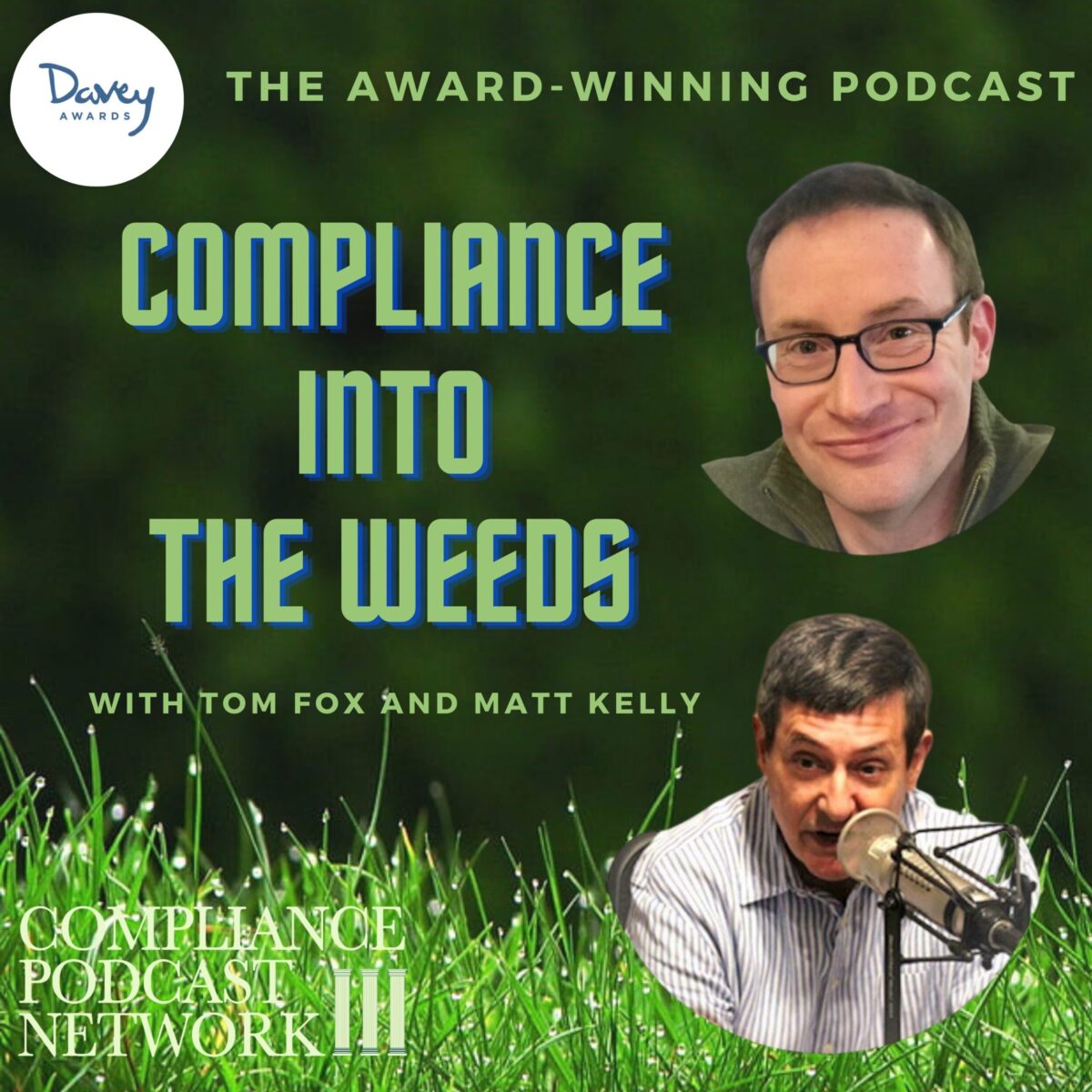
The award-winning Compliance into the Weeds is the only weekly podcast that takes a deep dive into a compliance-related topic, literally going into the weeds to explore the subject more fully. Looking for some hard-hitting insights on compliance? Look no further than Compliance into the Weeds! In this episode of Compliance into the Weeds, Tom Fox and Matt Kelly discuss the recent departure of the President of the Ohio State University.

Matt and Tom raise a compliance-focused question: how should an employee respond after receiving a request that may implicate an improper relationship between a company president and his girlfriend? They highlight whether an employee should question or report a potentially inappropriate relationship based solely on the request or whether doing so would go too far without more substantive evidence. Their discussion emphasizes that addressing such concerns can be a delicate conversation for employees to navigate.

Resources:

Matt on Radical Compliance

Tom

Instagram

Facebook

YouTube

Twitter

LinkedIn

A multi-award-winning podcast, Compliance into the Weeds was most recently honored as one of the Top 25 Regulatory Compliance Podcasts, a Top 10 Business Law Podcast, and a Top 12 Risk Management Podcast. Compliance into the Weeds has been conferred a Davey, a Communicator Award, and a W3 Award, all for podcast excellence.

Categories
All Things Investigations

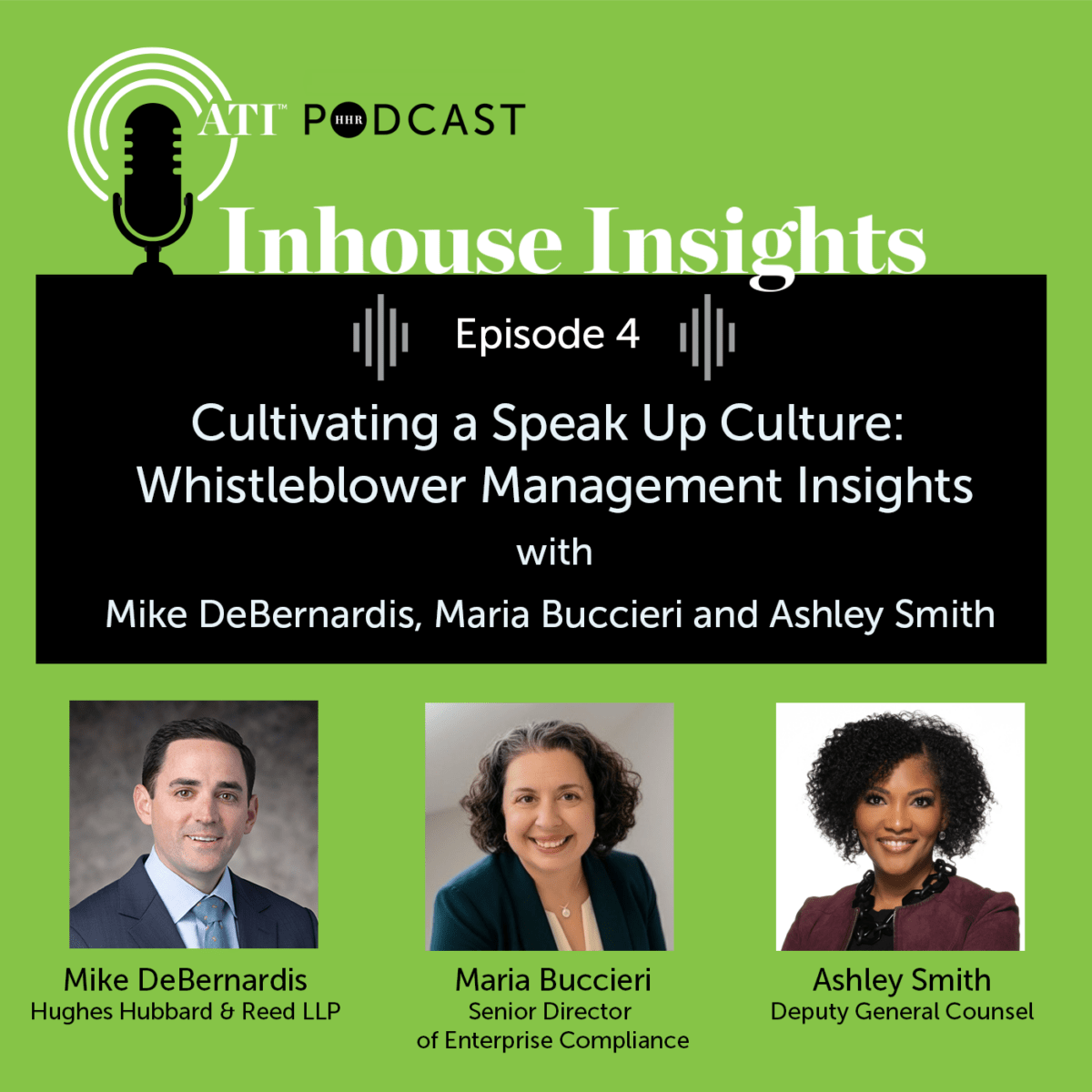
ATI In-House Insights: Cultivating a Speak Up Culture: Whistleblower Management Insights with Maria Buccieri and Ashley Smith

Welcome to the Hughes Hubbard Anti-Corruption & Internal Investigations Practice Group’s podcast, All Things Investigation. This is a special series featuring sights from in-house practitioners, hosted by Mike DeBernardis. In this podcast, Mike visits with Maria Buccieri and Ashley Smith, Deputy General Counsel at Amtrak, about Encouraging and Managing Whistleblowers.

Ashley and Maria, both compliance and legal leaders from Amtrak, discuss how to encourage and manage whistleblowers as a core element of an effective compliance program, emphasizing that a lack of reports does not indicate a healthy organization. They describe a “speak-up” culture as one where employees feel heard, senior leaders model speaking up, and reporting is accessible across a diverse workforce through multiple channels (phone, email, QR codes, mobile tools, in-person availability) and languages. Key barriers include fear of retaliation (often through subtle workplace ostracism), disappointment when nothing happens, and loss of anonymity. They outline best practices for handling reports consistently with other serious complaints, preserving confidentiality “as much as possible,” training mid-level managers and investigators, and maintaining communication with reporters during lengthy investigations. They also caution against dismissing “serial reporters,” recommending contextual analysis and internal process checks.

Key highlights:

  • Healthy Speak Up Culture
  • Why Employees Stay Silent
  • Handling Reports Fairly
  • Protecting Confidentiality
  • Keeping Reporters Updated
  • Serial Reporters and Sparse Tips

Resources:

Hughes Hubbard & Reed Website

Mike DeBernardis

Maria Buccieri on LinkedIn

Ashley Smith on LinkedIn

Categories
All Things Investigations

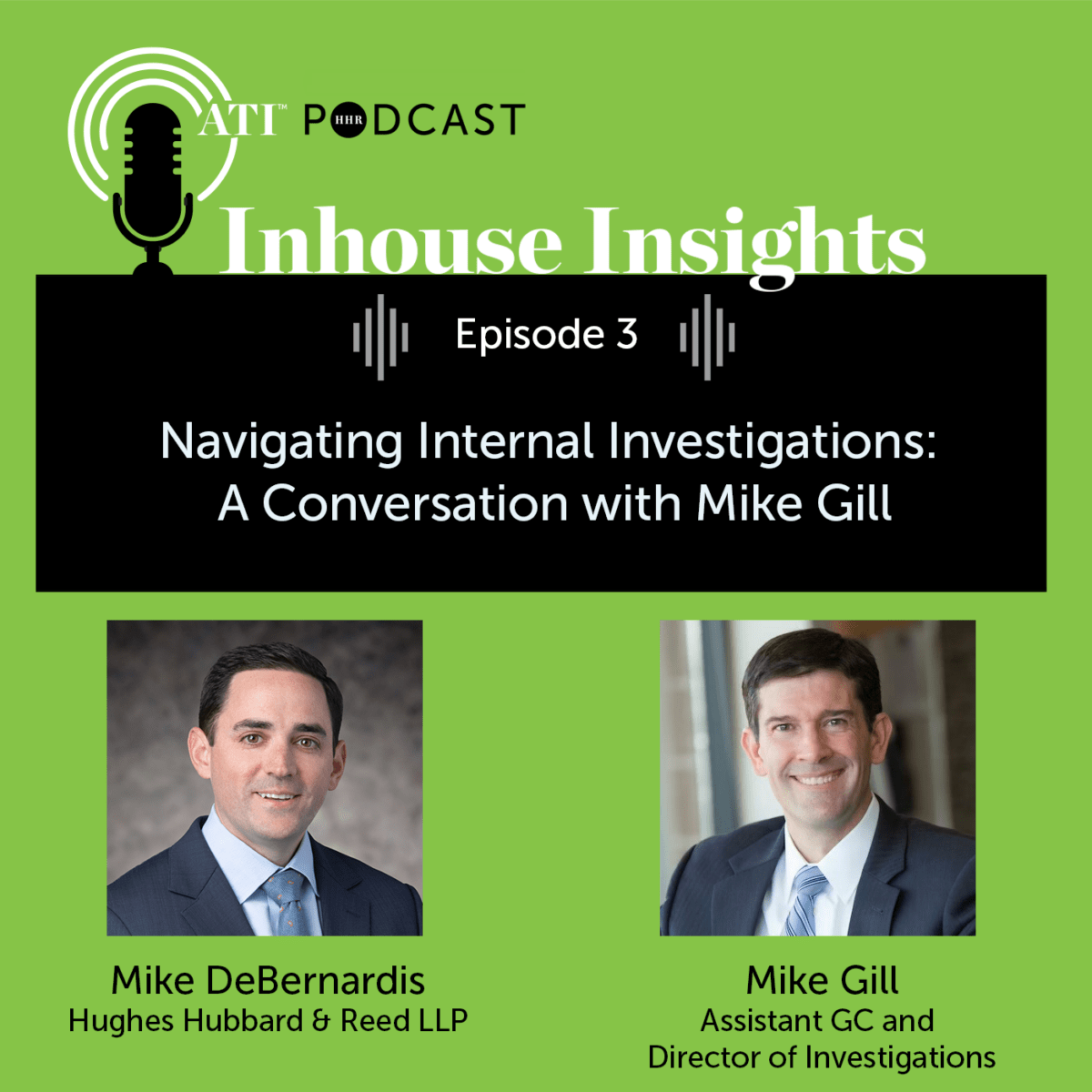
ATI In-House Insights: Navigating Internal Investigations: A Conversation with Mike Gill

Welcome to the Hughes Hubbard Anti-Corruption & Internal Investigations Practice Group’s podcast, All Things Investigation. This is a special series featuring sights from in-house practitioners, hosted by Mike DeBernardis. In this podcast, Mike D visits with Mike Gill, Assistant GC and Director of Investigations at HII, on conducting internal investigations from an in-house perspective in a defense shipbuilding environment.

Gill says the first concern when allegations arise is immediate safety risk to employees and the integrity of work affecting Navy and other military customers, followed by designing an investigation that will be viewed as timely, accurate, and credible. He emphasizes scoping, planning, selecting the right team (including technical experts and, sometimes, outside counsel), and establishing disciplined communication and reporting lines to management and customers while protecting privilege. Gill highlights building employee trust through fair processes, enforcement of anti-retaliation policies, and appropriate follow-up, and notes common mistakes: jumping to conclusions, failing to bound scope, and inadequate planning.

Key highlights:

  • Safety First Priorities
  • Architecting the Investigation
  • Scope Planning and Team
  • Protecting Privilege
  • Culture and Fairness
  • Anti-Retaliation Trust
  • Top Mistakes to Avoid

Resources:

Hughes Hubbard & Reed website

Mike DeBernardis

Mike Gill on LinkedIn

Categories
Great Women in Compliance

Great Women in Compliance: Don’t Freak Out: Compliance from a Prosecutor-Defense Lens

Dive into the world of compliance and high-stakes investigations!

In this episode of #GWIC, Hemma Lomax talks with Jamie Hoxie Solano, Partner at Dynamis LLP and former federal prosecutor, about how compliance and legal teams can lead with precision when incidents become investigations—especially where cyber risk and digital assets raise the stakes and the speed.

We cover:

  • What prosecutors look for when assessing credibility and cooperation
  • The “first 72 hours” of an internal investigation: triage, scope, evidence, and governance
  • Why cyber and digital assets matter in changing the evidence trail and the decision timeline
  • How to protect privilege while still moving fast
  • Practical guidance for cross-functional leadership under pressure

Jamie’s Bio

Jamie Hoxie Solano is a Partner at Dynamis LLP and a former federal prosecutor. She represents individuals and companies in high-stakes matters spanning government and internal investigationswhite-collar and regulatory defense, and cybercrime and digital asset disputes.

Before returning to private practice, Jamie served as an Assistant U.S. Attorney in both the Northern District of Texas and the District of New Jersey, working in units including cybercrime and national security, and serving (among other leadership roles) as the Digital Asset Coordinator for the District of New Jersey

She is also an adjunct professor at Seton Hall Law School, where she teaches Persuasion and Advocacy.

Categories
Compliance Tip of the Day

Compliance Tip of the Day –Investigative Challenges

Welcome to “Compliance Tip of the Day,” the podcast where we bring you daily insights and practical advice on navigating the ever-evolving landscape of compliance and regulatory requirements. Whether you’re a seasoned compliance professional or just starting your journey, our aim is to provide you with bite-sized, actionable tips to help you stay on top of your compliance game. Join us as we explore the latest industry trends, share best practices, and demystify complex compliance issues to keep your organization on the right side of the law. Tune in daily for your dose of compliance wisdom, and let’s make compliance a little less daunting, one tip at a time.

This week we have considered issues relating to your internal investigations. Today we conclude with a review of some investigative challenges you may face.

For more on this topic, check out The Compliance Handbook, a Guide to Operationalizing your Compliance Program, 6th edition which was recently released by LexisNexis. It is available here.

Categories
Compliance Tip of the Day

Compliance Tip of the Day – Your Investigative Team

Welcome to “Compliance Tip of the Day,” the podcast where we bring you daily insights and practical advice on navigating the ever-evolving landscape of compliance and regulatory requirements. Whether you’re a seasoned compliance professional or just starting your journey, our aim is to provide you with bite-sized, actionable tips to help you stay on top of your compliance game. Join us as we explore the latest industry trends, share best practices, and demystify complex compliance issues to keep your organization on the right side of the law. Tune in daily for your dose of compliance wisdom, and let’s make compliance a little less daunting, one tip at a time.

This week we continue our consideration of issues relating to your internal investigations. Today we consider who should be on your investigative team.

For more on this topic, check out The Compliance Handbook, a Guide to Operationalizing your Compliance Program, 6th edition which was recently released by LexisNexis. It is available here.

Categories
Compliance Tip of the Day

Compliance Tip of the Day – Selection of Investigative Counsel

Welcome to “Compliance Tip of the Day,” the podcast where we bring you daily insights and practical advice on navigating the ever-evolving landscape of compliance and regulatory requirements. Whether you’re a seasoned compliance professional or just starting your journey, our aim is to provide you with bite-sized, actionable tips to help you stay on top of your compliance game. Join us as we explore the latest industry trends, share best practices, and demystify complex compliance issues to keep your organization on the right side of the law. Tune in daily for your dose of compliance wisdom, and let’s make compliance a little less daunting, one tip at a time.

This week are considering issues relating to your internal investigations. Today we review your decision of selection of your investigative counsel.

For more on this topic, check out The Compliance Handbook, a Guide to Operationalizing your Compliance Program, 6th edition which was recently released by LexisNexis. It is available here.

Categories
Compliance Tip of the Day

Compliance Tip of the Day – Preparing for an Investigation

Welcome to “Compliance Tip of the Day,” the podcast that brings you daily insights and practical advice for navigating the ever-evolving landscape of compliance and regulatory requirements. Whether you’re a seasoned compliance professional or just starting your journey, we aim to provide you with bite-sized, actionable tips to help you stay on top of your compliance game. Join us as we explore the latest industry trends, share best practices, and demystify complex compliance issues to keep your organization on the right side of the law. Tune in daily for your dose of compliance wisdom, and let’s make compliance a little less daunting, one tip at a time.

We continue our consideration of issues relating to your internal investigations. Today, we will discuss how to prepare for an investigation.

For more on this topic, check out The Compliance Handbook: A Guide to Operationalizing your Compliance Program, 6th edition, which LexisNexis recently released. It is available here.