Categories
Betting the Game

Betting the Game: From Taboo to Business Model: How Gambling Entered the Sports Mainstream

Betting the Game is a 10-part podcast series exploring how sports gambling reshaped the business, culture, and integrity of athletics across professional and amateur sports. Hosted by Tom Fox and Mike DeBernardis, the series examines the real-world collisions between betting markets, athlete conduct, institutional oversight, and public trust. Each episode looks at a different pressure point, from player betting and college sports to prop bets, insider information, and the governance failures that can put the credibility of competition at risk. At its core, the series asks a simple but urgent question: as gambling became mainstream in sports, did ethics, compliance, and oversight keep pace? In this opening episode, 1, Mike and Tom set the stage by exploring how sports gambling moved from the margins to the center of the sports business over the past six years.

What was once treated as a reputational threat is now embedded in broadcasts, sponsorships, stadium signage, league partnerships, and fan engagement strategies. This episode examines how legal changes, technology, and market demand helped normalize betting across professional and amateur sports. But normalization has come with consequences. As gambling became a revenue stream, the risks to competitive integrity, athlete welfare, and public trust grew. This episode introduces the series’ central question: when sports fully embraced betting, did governance, oversight, and ethics keep pace? It is the foundation episode that provides listeners with the historical, commercial, and cultural context they need for the nine episodes that follow.

Key highlights:

  • From Taboo to Mainstream
  • PASPA Explained
  • Nevada the Outlier
  • Leagues Chase Revenue – Partnerships and Normalization
  • Fantasy Sports to Betting
  • Governance Guardrails Needed

Resources:

Mike DeBernardis on LinkedIn

Tom Fox

Instagram

Facebook

YouTube

Twitter

LinkedIn

References

Murphy v. NCAA

Categories
Blog

Betting the Game: Gambling, Integrity and the New Risk in Sports – A New Podcast from CPN

The Compliance Podcast Network is proud to announce the launch of a new 10-part podcast series, Betting the Game: Gambling, Integrity and the New Risk in Sports, co-hosted by Tom Fox and Mike DeBernardis. This new series comes at a moment when sports gambling has moved from the margins of the sports world to the center of the modern sports business. What was once viewed as taboo is now embedded in broadcasts, sponsorships, fan engagement, media strategy, and even the daily vocabulary of sports culture.

That transformation has created a new generation of questions about governance, compliance, and integrity. For compliance professionals, sports business leaders, and anyone concerned with institutional trust, the issue is no longer whether gambling is part of the sports landscape. It clearly is. The real question is whether the institutions that welcomed gambling into the mainstream have built governance systems strong enough to protect athletes, safeguard competition, and preserve public confidence.

That is the animating idea behind Betting the Game. This is more than a podcast about sports wagering. It is a series about governance under pressure. It is about what happens when powerful new revenue streams collide with the most important asset any sports institution possesses: credibility.

Why This Series Matters

At the Compliance Podcast Network, we have long believed that compliance lessons do not live only in deferred prosecution agreements, enforcement actions, and boardrooms. They also live where culture, incentives, and institutional accountability come together in real time. Few places illustrate that collision more clearly today than sports gambling.

Over the past several years, legalized sports betting has transformed the economics of sports. Leagues have entered into sportsbook partnerships. Media companies have integrated odds and betting analysis into coverage. College athletics has been drawn into the orbit of wagering markets. Athletes, coaches, officials, and support staff now operate in an environment where betting is not merely present; it is pervasive. It is everywhere.

That raises classic compliance questions. How do institutions manage conflicts of interest? How do they protect against insider risk? How do they design systems that move from punishment after the fact to prevention before the line is crossed? How do they align commercial strategy with ethics and integrity? These are not only sports questions. They are governance questions. That is why this series belongs on the Compliance Podcast Network.

A New Podcast for a New Risk Environment

Betting the Game brings together the worlds of compliance, governance, and sports business to examine how gambling has reshaped the sports ecosystem. The series examines both professional and amateur sports and asks what happens when betting markets, athlete conduct, media incentives, and institutional oversight collide.

Each episode explores a different integrity pressure point. Some of the stories are obvious: athletes placing bets, prop betting, and suspicious wagering activity. Others are more structural: media normalization, inside information, third-party access, college athlete harassment, and the tension between monetizing gambling and policing its risks. Taken together, the 10 episodes form a wide-ranging examination of how sports gambling became a compliance issue hiding in plain sight.

The 10-Episode Lineup

Episode 1: From Taboo to Business Model: How Gambling Entered the Sports Mainstream

This opening episode traces the arc from stigma to sponsorship and explains how sports betting became embedded in modern sports’ business model. It sets the stage for the series by asking whether governance, oversight, and ethics kept pace with commercialization.

Episode 2: The Athlete as Bettor: When Players Cross the Line

This episode examines one of the clearest integrity flashpoints in sports: the player who becomes the bettor. It explores why leagues draw hard lines around athlete gambling and whether education and prevention have kept up with enforcement.

Episode 3: Inside Information: The New Edge in the Betting Economy

Information now moves markets in real time, and sports are no exception. This episode looks at injury reports, lineup disclosures, and the people closest to teams who may have access to valuable non-public information.

Episode 4: Entourages, Interpreters, and the People Around the Star

Not every gambling risk begins with the athlete himself. This episode explores how trusted insiders, aides, interpreters, friends, and members of an athlete’s inner circle can become points of access, vulnerability, and control failure.

Episode 5: Fixing the Margins: Match-Fixing, Spot-Fixing, and Vulnerable Competitions

This episode moves beyond the Hollywood image of a fixed game and into the modern world of spot-fixing and manipulated moments. It examines how lower-profile competitions and narrow in-game events can create outsized integrity risks.

Episode 6: Campus Under Pressure: Gambling and the New Risks in College Sports

College athletics has become one of the most exposed fronts in the sports gambling era. This episode looks at student-athlete betting, bettor harassment, and the governance challenge of protecting young athletes in a betting-saturated environment.

Episode 7: Judgment on the Field: Officials, Suspicion, and the Gambling Lens

Officials now work under a new type of scrutiny, where every call can trigger both outrage and financial consequences. This episode examines how gambling has changed perceptions of officiating, trust, and legitimacy.

Episode 8: Prop Bets and Micro-Bets: Small Moments, Big Integrity Risks

Modern betting markets increasingly focus on narrow, highly specific events that can be easier to influence than a final score. This episode explores whether some betting products are creating integrity risks that sports governance was never designed to manage.

Episode 9: Can Sports Police What They Profit From? Data, Deals, and Integrity Monitoring

As leagues and media companies benefit financially from gambling growth, the oversight challenge becomes more complicated. This episode asks whether sports can be both a commercial partner in betting and a credible guardian of integrity.

Episode 10: What Comes Next: Building a Better Integrity Framework for Sports Gambling

The final episode turns from diagnosis to solutions. It outlines what stronger governance could look like, from education and monitoring to product limits, athlete protections, and a more mature integrity framework.

Compliance Lessons in a Sports Context

For the compliance professional, the value of this series is straightforward. Sports may be the setting, but the underlying issues will feel very familiar. Culture matters. Incentives matter. Tone at the top matters. Training matters. Monitoring matters. And perhaps most importantly, prevention matters more than reaction.

In the corporate world, we know that a policy on paper is not enough. The same is true in sports. If gambling is promoted as a normal part of fan engagement while integrity rules for insiders are poorly communicated or weakly reinforced, that is not a player problem alone. That is a governance problem. Betting the Game is designed to unpack exactly those issues in a way that speaks to both compliance professionals and sports business leaders.

Join Us for the Launch

The launch of Betting the Game: Gambling, Integrity and the New Risk in Sports marks an exciting expansion of the Compliance Podcast Network into one of the most timely and consequential issues in modern sports and governance. Tom Fox and Mike DeBernardis will guide listeners through the legal, ethical, cultural, and business implications of sports gambling with the practical, analytical lens that Compliance Podcast Network listeners expect.

The series launches on Friday, April 24, and will post every other Friday throughout our season. It is available on the Compliance Podcast Network and wherever you listen to great podcasts.

Categories
All Things Investigations

ATI In-House Insights: Cultivating a Speak Up Culture: Whistleblower Management Insights with Maria Buccieri and Ashley Smith

Welcome to the Hughes Hubbard Anti-Corruption & Internal Investigations Practice Group’s podcast, All Things Investigation. This is a special series featuring sights from in-house practitioners, hosted by Mike DeBernardis. In this podcast, Mike visits with Maria Buccieri and Ashley Smith, Deputy General Counsel at Amtrak, about Encouraging and Managing Whistleblowers.

Ashley and Maria, both compliance and legal leaders from Amtrak, discuss how to encourage and manage whistleblowers as a core element of an effective compliance program, emphasizing that a lack of reports does not indicate a healthy organization. They describe a “speak-up” culture as one where employees feel heard, senior leaders model speaking up, and reporting is accessible across a diverse workforce through multiple channels (phone, email, QR codes, mobile tools, in-person availability) and languages. Key barriers include fear of retaliation (often through subtle workplace ostracism), disappointment when nothing happens, and loss of anonymity. They outline best practices for handling reports consistently with other serious complaints, preserving confidentiality “as much as possible,” training mid-level managers and investigators, and maintaining communication with reporters during lengthy investigations. They also caution against dismissing “serial reporters,” recommending contextual analysis and internal process checks.

Key highlights:

  • Healthy Speak Up Culture
  • Why Employees Stay Silent
  • Handling Reports Fairly
  • Protecting Confidentiality
  • Keeping Reporters Updated
  • Serial Reporters and Sparse Tips

Resources:

Hughes Hubbard & Reed Website

Mike DeBernardis

Maria Buccieri on LinkedIn

Ashley Smith on LinkedIn

Categories
All Things Investigations

ATI In-House Insights: Navigating Internal Investigations: A Conversation with Mike Gill

Welcome to the Hughes Hubbard Anti-Corruption & Internal Investigations Practice Group’s podcast, All Things Investigation. This is a special series featuring sights from in-house practitioners, hosted by Mike DeBernardis. In this podcast, Mike D visits with Mike Gill, Assistant GC and Director of Investigations at HII, on conducting internal investigations from an in-house perspective in a defense shipbuilding environment.

Gill says the first concern when allegations arise is immediate safety risk to employees and the integrity of work affecting Navy and other military customers, followed by designing an investigation that will be viewed as timely, accurate, and credible. He emphasizes scoping, planning, selecting the right team (including technical experts and, sometimes, outside counsel), and establishing disciplined communication and reporting lines to management and customers while protecting privilege. Gill highlights building employee trust through fair processes, enforcement of anti-retaliation policies, and appropriate follow-up, and notes common mistakes: jumping to conclusions, failing to bound scope, and inadequate planning.

Key highlights:

  • Safety First Priorities
  • Architecting the Investigation
  • Scope Planning and Team
  • Protecting Privilege
  • Culture and Fairness
  • Anti-Retaliation Trust
  • Top Mistakes to Avoid

Resources:

Hughes Hubbard & Reed website

Mike DeBernardis

Mike Gill on LinkedIn

Categories
All Things Investigations

ATI Podcast: Inhouse Insights – Building and Benefiting from a Culture of Compliance

Welcome to the inaugural episode of the newly rebranded ATI Podcast: Inhouse Insights—formerly known as All Things Investigations.

Presented by the Hughes Hubbard & Reed LLP Anti-Corruption & Internal Investigations Practice Group, this premiere episode sets the tone for a bold new chapter—bringing practical, in-house perspectives to today’s most pressing compliance challenges.

Host Michael DeBernardis welcomes Darryl Cyphers Jr., Senior Director of Legal Compliance at Klaviyo, for a candid and forward-looking conversation on how organizations can build—and sustain—a culture of compliance that actually works.

Together, they explore how compliance leaders can move beyond policies on paper to create real organizational impact—through measurable culture metrics, smarter use of AI to drive policy engagement, authentic tone at the top, and meaningful collaboration with HR and business partners. Darryl also shares practical guidance for navigating compliance gray areas and strengthening trust through continuous employee engagement and feedback.

Highlights include:

  • Defining a modern culture of compliance
  • Metrics and tools for measuring cultural effectiveness
  • Employee engagement and feedback that drive results
  • Building partnerships across HR and business teams
  • Innovative and engaging compliance training approaches
  • Navigating gray areas with confidence and credibility

Resources:

Hughes Hubbard & Reed Website

Klaviyo

Darryl Cyphers Jr. on LinkedIn

Categories
Blog

Returning to Venezuela: Why “Yes, If” Is the Only Defensible Compliance Answer

Most of you readers know that sometimes when I get going on a project, it (the project, not me) just keeps on growing. What started as a podcast with Matt Ellis on the risks of going back into Venezuela expanded out into a series of podcasts on the FCPA Compliance Report and with Mike DeBernardis on All Things Investigations. The podcasts led to a five-part blog post series on the same topic in the FCPA Compliance and Ethics Blog. I then needed to expand the blogs into a book and provide forms, checklists, frameworks, and deployment packs for compliance professionals to help them think through the issues presented in Venezuela and in other similarly high-risk jurisdictions.

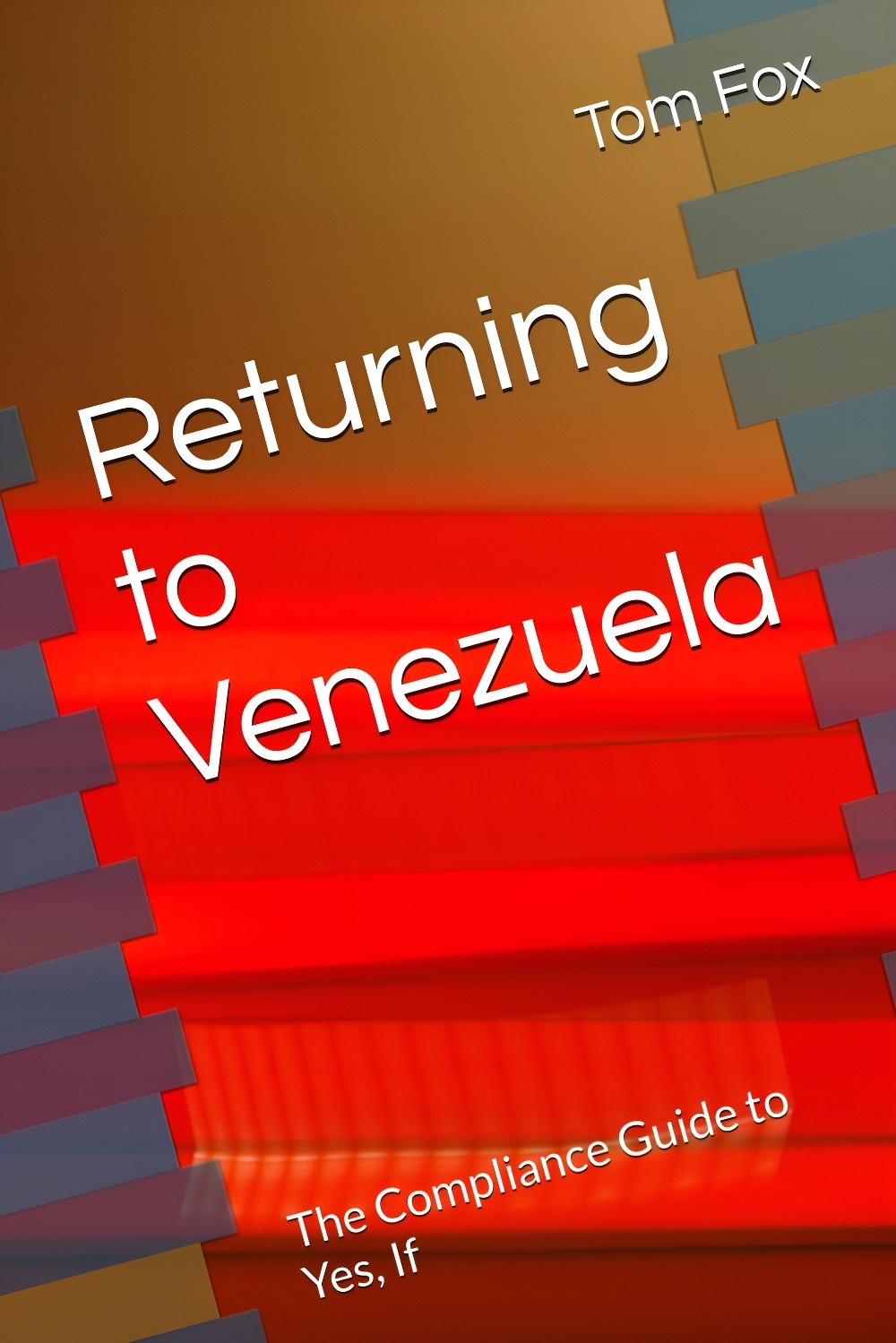
All of that has led to the only book on how to return to Venezuela, Returning to Venezuela: The Compliance Guide to Yes, If (Title inspired by Mike DeBernardis). It is available in both print and eBook versions on Amazon.com.

When companies talk about returning to Venezuela, the conversation almost always begins with opportunity. Oil reserves. Market access. First-mover advantage. What the book Returning to Venezuela does is effectively reset that conversation where it belongs for compliance professionals: with reality. It is a disciplined, compliance-first analysis of what it actually means to operate in one of the world’s highest-risk jurisdictions.

The core message is uncompromising but straightforward: Venezuela is not a place for optimism, informal controls, or siloed compliance. It is a stress test. If your compliance program can function there, it can function anywhere. If it cannot, no license, policy, or assurance letter will save you. The book is not a warning label about Venezuela. It is a working manual for how a compliance function should assess risk, design controls, and govern decision-making before commercial momentum takes over.

Step One: Reframing the Risk Assessment

The first way a compliance professional should use Returning to Venezuela is to recalibrate how risk assessments are performed. Traditional country risk assessments often ask abstract questions: corruption perception scores, sanctions status, and enforcement history. Those inputs are necessary, but insufficient. Returning to Venezuela pushes compliance professionals to replace abstract scoring with operational mapping.

Instead of asking whether Venezuela is high risk, the framework asks:

  • Where will government discretion arise?
  • Where can delay be monetized?
  • Where does the business depend on intermediaries?
  • Where does value move, pause, or change form?

This is a critical shift. Risk is no longer treated as a country attribute. It becomes a process attribute. Compliance professionals can use Returning to Venezuela’s structure to redesign their risk assessment around real business steps: procurement, logistics, payment, security, licensing, and dispute resolution.

Step Two: Identifying Pressure Points Before They Become Incidents

Returning to Venezuela is especially useful in helping compliance professionals identify pressure points, not just risk categories. Pressure points are moments where the business is most likely to face demands for improper value, shortcuts, or exceptions. Procurement is one. Customs clearance is another. Security access, utilities, labor approvals, and payment routing are others.

Using Returning to Venezuela, compliance professionals can document:

  • Where pressure is expected;
  • Who owns the decision at that point?
  • What escalation looks like; and
  • When refusal or exit becomes mandatory.

This transforms compliance from a reactive role into a proactive role in designing decision architecture.

Step Three: Using the Checklists as Control Gates, Not Paper Artifacts

A common compliance failure is treating red flags as documentation exercises rather than control mechanisms. One of the strengths of Returning to Venezuela is that its red flags are designed as gates, not records. Each checklist answers a single question: Is this activity governable under our current assumptions?

Compliance professionals can deploy these checklists at defined moments:

  • Market entry discussions
  • Vendor and JV selection
  • Transaction structuring
  • Payment and banking design
  • Security and logistics planning

If a red flag cannot be cleared, the activity cannot proceed. That discipline is what makes the framework defensible. It also protects compliance officers personally, because decisions are anchored in documented governance rather than informal judgment.

Step Four: Integrating Risk Domains Instead of Managing Them in Silos

Another way compliance professionals should use Returning to Venezuela is as a blueprint for breaking down internal silos. The book makes clear that in Venezuela, corruption, export controls, AML, sanctions, security, and extortion are not separate risks. They are interconnected expressions of the same operating pressure. Treating them separately guarantees blind spots.

Practically, this means compliance can use the book to justify:

  • Integrated risk reviews instead of sequential sign-offs;
  • Shared escalation forums across functions;
  • Unified monitoring rather than separate dashboards; and
  • Common exit triggers across risk domains.

This is particularly important for AML. Returning to Venezuela positions money laundering risk not as a standalone compliance obligation, but as the capstone test of whether the entire framework works.

Step Five: Structuring Board Oversight Around Decisions, Not Updates

Too often, boards receive high-level compliance updates that provide comfort but not clarity. Returning to Venezuela gives compliance professionals a way to reframe board oversight around decisions, not reports. Using the board materials and decision templates, compliance can:

  • Force explicit risk acceptance;
  • Document assumptions that underpin approvals;
  • Secure delegated authority to pause or exit operations; and
  • Establish clear revisit and escalation triggers.

This protects both the organization and the compliance function. When conditions change, the discussion is no longer “Why did this happen? ” but “Which assumption failed, and what decision does that trigger? ” That is governance functioning as intended.

Step Six: Building a Repeatable Risk Management Framework

The final and most important way to use Returning to Venezuela is as a template, not a one-off Venezuela playbook. While the facts are Venezuela-specific, the framework is portable. Compliance professionals can lift this framework and apply it to:

  • Other high-risk markets;
  • Post-merger integration;
  • Sanctions-heavy environments; and
  • Complex third-party ecosystems.

The Appendices: The Operational Backbone of Returning to Venezuela: Yes, If

One of the defining features of Returning to Venezuela: The Compliance Guide to Yes, If is that it does not stop at analysis. The appendices convert risk identification into governance, decision-making, and operational control. They are not academic supplements. They are the machinery that makes a “yes, if” decision possible in practice.

Taken together, the appendices form an integrated compliance control stack designed for one purpose: to govern decision-making in an environment where corruption, coercion, sanctions, AML exposure, and weak rule of law are not edge cases but daily conditions.

Appendix A: One-Page Operational Checklists

Appendix A contains a series of one-page checklists, each focused on a distinct but interconnected risk domain. These are not policy summaries. They are operational gating tools meant to be used before decisions are made, not after problems occur.

Appendix B: The CCO Deployment Pack

Appendix B is written from the perspective of the Chief Compliance Officer and is explicitly operational. It is designed to be deployed internally to executive leadership, business sponsors, and control functions.

Appendix C: Board of Directors Materials

Appendix C is aimed squarely at directors and audit or compliance committees. Its function is not to educate boards on Venezuela generally but to structure how boards make, record, and revisit risk acceptance decisions.

Appendix D: Decision-Making Frameworks

Appendix D pulls together the logic underlying the entire book. It provides decision-making frameworks that force organizations to confront uncomfortable realities before committing resources.

How the Appendices Work Together

Individually, each appendix addresses a specific audience or function. Collectively, they form an integrated control system that aligns:

  • Operational decision-making.
  • Compliance authority.
  • Board oversight.
  • Exit discipline.

The appendices are designed to prevent the most common failure pattern in high-risk jurisdictions: waiting until conditions deteriorate before asking hard questions. By then, leverage is gone.

Final Thought

The most important contribution of Returning to Venezuela is that it does not accurately describe risk. It shows compliance professionals how to operate in the real world without surrendering control.

Used correctly, the book becomes a working tool:

  • To assess risk honestly;
  • To design controls that hold under pressure;
  • To align management and the board, and finally
  • To decide when “yes” becomes “no.”

For compliance professionals, that is not just risk management. It is about meeting the business in an operational setting with a risk management strategy for literally the highest risk on earth.

You can purchase Returning to Venezuela: The Compliance Guide to Yes, if on Amazon.com.

Categories
All Things Investigations

All Things Investigations – DOJ’s Evolving Guidelines: Implications from Liberty Mutual’s FCPA Case

Welcome to the Hughes Hubbard Anti-Corruption & Internal Investigations Practice Group’s podcast, All Things Investigation. In this podcast, host Tom Fox welcomes back Mike DeBernardis to discuss the recently released first Foreign Corrupt Practices Act (FCPA) enforcement action, a Declination involving Liberty Mutual Insurance Company.

Mike DeBernardis, partner at Hughes Hubbard & Reed, and Tom delve into the first FCPA enforcement action of 2025 involving Liberty Mutual. They discuss the nuances of self-disclosure during ongoing investigations, the challenges facing defense attorneys, and the expectations set by the new corporate enforcement policy. Key topics include proactive cooperation, dealing with deconfliction, and the importance of root cause analysis. The conversation provides valuable insights into how the Department of Justice communicates its expectations through enforcement actions and the evolving landscape of corporate compliance.

Key highlights:

  • Exploring the Liberty Mutual Case
  • Challenges of Early Self-Disclosure
  • Corporate Enforcement Policy Changes
  • Full and Proactive Cooperation
  • De-confliction in DOJ Investigations
  • Root Cause Analysis Importance
  • Social Media and Ephemeral Messaging

 Resources:

Hughes Hubbard & Reed website

Mike DeBernardis

Categories
Data Driven Compliance

Data Driven Compliance – The Failure to Prevent Fraud Offense: Insights for US General Counsels with Mike DeBernardis

Welcome to Season 2 of the award-winning Data Driven Compliance. In this new season, we will look at the new Failure to Prevent Fraud offense. Join host Tom Fox as we explore this new law and how to comply with it through the lens of data-driven compliance. konaAI sponsors this podcast. In this episode of Season 2, Tom Fox is joined by Mike DeBernardis, Partner at Hughes Hubbard & Reed.

In this episode, Tom and Mike look at the specific offenses listed in the Failure to Prevent Fraud Offense and translate them into US-legalese. They discuss common misunderstandings among US lawyers, the broad jurisdictional scope, and specific fraud types under UK law, such as fraud by false representation, failure to disclose information, and abuse of position. They also emphasize the importance of risk assessments for US companies with UK operations to ensure compliance and avoid legal repercussions, and also touch on the potential geopolitical implications and the necessity of having robust policies and procedures to prevent fraud. 

Key highlights:

  • Fraud by False Representation
  • Fraud by Failing to Disclose Information
  • Fraud by Abuse of Position and Obtaining Services Dishonestly
  • Corporate Fraud: Participation, Accounting, and Trading
  • Risk Mapping and Compliance Strategies

Resources:

⁠Hughes, Hubbard & Reed⁠

Mike DeBernardis on ⁠LinkedIn⁠

⁠New Considerations for Companies with U.K. Ties: Home Office Issues Guidance to Organisations on the Offence of Failure to Prevent Fraud⁠

⁠konaAI⁠, a Covasant company

Click here for konaAI White Paper Rethinking Compliance: Practical Steps for Adapting to the UK’s New Fraud Legislation

Connect with Tom Fox on ⁠LinkedIn

Categories
All Things Investigations

All Things Investigations – Task Force Strategies: Addressing New Government Priorities

Welcome to the Hughes Hubbard Anti-Corruption & Internal Investigations Practice Group’s podcast, All Things Investigation. In this podcast, host Tom Fox is joined by HHR lawyers Mike DeBernardis and Sean Reilly to discuss the new HHR Task Force.

In this award-winning All Things Investigations podcast episode, host Tom Fox converses with Hughes Hubbard and Reed partners Mike De Bernardis and Sean Reilly about the firm’s strategic reorganization. Responding to the U.S. administration’s fresh focus on cartels and foreign terrorist organizations, Hughes Hubbard has built a cross-disciplinary task force. This team combines expertise from compliance, sanctions, and dispute resolution practices to address companies’ heightened risks and compliance obligations, particularly in Mexico and Latin America. The discussion also covers implications for multinational corporations, the importance of reassessing risk, how the administration’s prioritization of certain enforcement actions can influence corporate strategies, and the emerging dangers surrounding tariffs and the False Claims Act.

Key highlights:

  • Hughes Hubbard’s New Task Force
  • Implications of Cartel Designations
  • National Security and Voluntary Disclosure
  • Cross-Functional Task Force Benefits
  • Tariff Evasion and False Claims Act

Resources:

Mike DeBernardis

Hughes Hubbard & Reed website

Sean Reilly

Categories
Fox on Podcasting

Fox on Podcasting – Celebrating Excellence in Podcasting in the Domestic Arena

Join Tom Fox as he explores the world of podcasting, and get ready to be inspired to start your podcast. Today, we begin a three-part series on honoring excellence in podcasting and the Agora Awards. In this second episode celebrating the Compliance Podcast Network Agora Awards, host Nick Gallo introduces four guests and hosts of their own podcasts: Mike Volkov, Matt Kelly, Mike DeBernardis, and Karen Woody.

In this episode, we stress the importance of being listenable and engaging rather than rigidly adhering to a set script when discussing compliance issues. Reflecting on experiences from 14 to 15 years ago, it’s clear that a heavily scripted approach can fall short. All our guests agree that a more conversational format resonates better with audiences. We focus on meaningful dialogues, keep episodes concise, typically around 20 minutes, and highlight the value of slowing down and prioritizing listener engagement over extensive, pre-planned talking points.

Key highlights:

  • Engaging Podcasting
  • Evolution with Compliance Into the Weeds
  • Building a Good Conversation
  • Podcast Length and Ambitions

Resources:

Matt Kelly

Compliance into the Weeds

Everything Compliance

Karen Woody

The Woody Report

Classroom Insiders

Succession-the Final Season

Everything Compliance

Mike DeBernardis

All Things Investigation

Mike Volkov

Corruption, Crime and Compliance