Categories
Blog

House of Atreus Week: Part 2 – Pelops and Myrtilus – Corruption in the Bidding Process

The curse of the House of Atreus did not begin and end with Tantalus. Like many toxic corporate cultures, it passed from one generation to the next a legacy of moral shortcuts disguised as clever strategy.

We continue our look at lessons from the House of Atreus for the 21st-century compliance profession, focusing on the key stories and mining them for valuable insights. In today’s Part 2, we consider the myth of Pelops and Myrtilus, an ancient fable about corruption, betrayal, and the fatal cost of winning the wrong way. In this story, we look at Pelops, who was Tantalus’s son. Having been literally restored to life by the gods, he had the chance to rebuild his house on a foundation of integrity. Instead, he reached for the easy win, and in doing so, repeated his father’s error: he traded ethics for expedience.

For modern compliance professionals, it is a reminder that bribery and ethical compromise never end where you think they will. They will always come back to haunt you.

The Chariot Race for a Kingdom

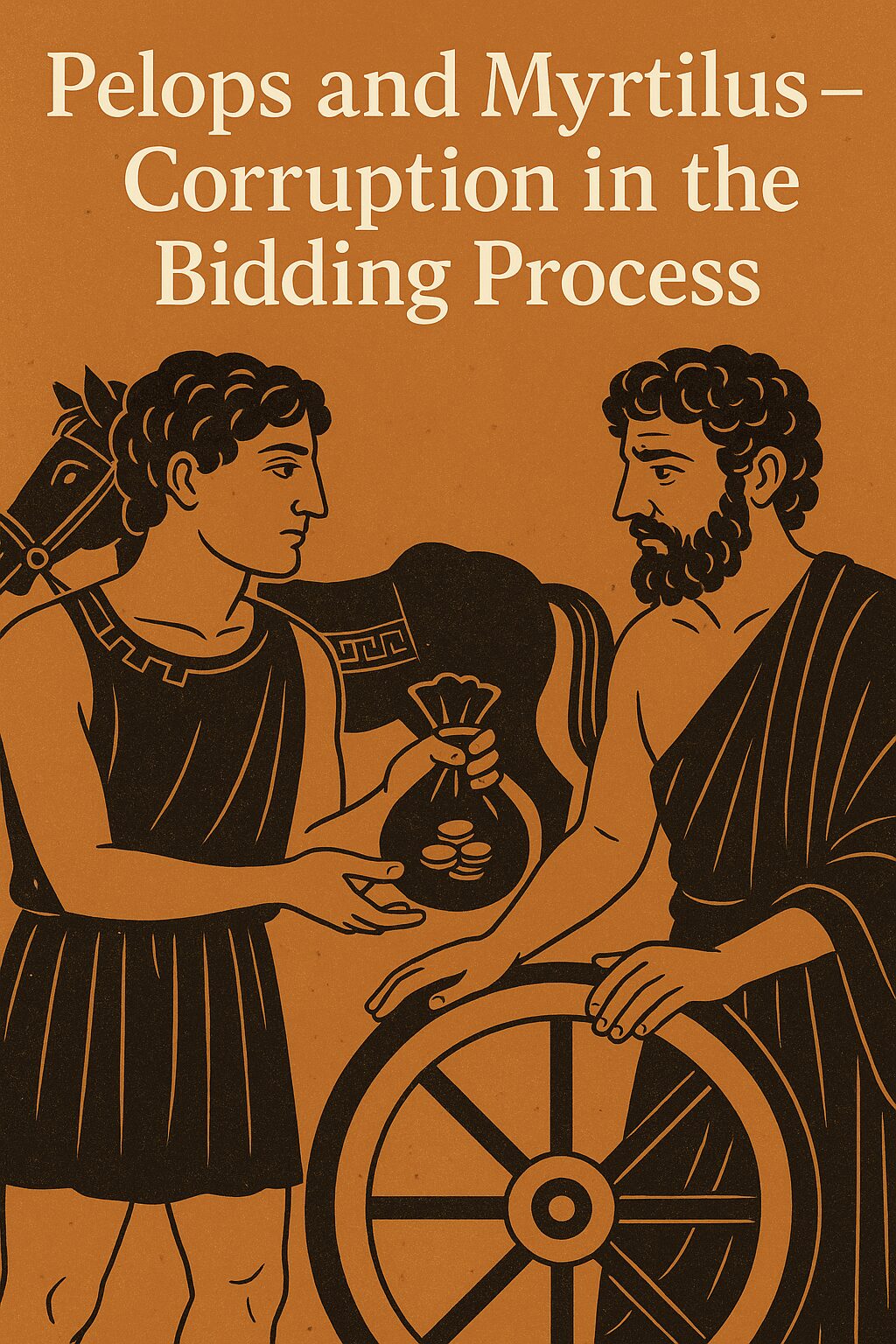
According to Greek legend, King Oenomaus of Pisa received a prophecy that he would die at the hands of his son-in-law. To prevent this, he devised a deadly test for any man seeking to marry his daughter, Hippodamia, a chariot race from Pisa to Corinth. If the suitor won, he gained Hippodamia’s hand. If he lost, he died. Pelops, ambitious and determined, entered the race. But he knew Oenomaus’ horses were divine and unbeatable. So he sought an advantage, not through skill or preparation, but through corruption.

He approached the king’s charioteer, Myrtilus, and offered a bribe: riches, favor, and a promise of reward. Myrtilus agreed to sabotage Oenomaus’ chariot by replacing the bronze linchpins with wax. During the race, the wax melted, the chariot crashed, and the king was killed.

But when Myrtilus came to claim his reward, Pelops betrayed him, either pushing him off a cliff or ordering his death. As he fell, Myrtilus cursed Pelops and his descendants, ensuring the family’s cycle of corruption and vengeance would continue.

The First Procurement Fraud

Strip away the mythic trappings, and Pelops’ race looks remarkably modern.

This was a procurement process, a competition for something of value (in this case, marriage and a kingdom), corrupted by bribery and fraud. Pelops did not win on merit; he won by manipulating a key insider in the process.

That’s the same dynamic at play in so many real-world scandals:

  • A contractor bribing a government official for an unfair advantage.
  • A vendor is rigging bids through inside information.
  • A company turning a blind eye to its agents’ actions abroad, so long as they deliver results.

In each case, the underlying temptation is the same as Pelops’: the belief that “winning is what matters.”

The Illusion of a “Victimless” Bribe

Pelops might have rationalized his actions. He could have told himself that everyone cheats in such races or that Oenomaus’ divine horses made the contest unfair to begin with, that the ends justified the means.

Modern compliance officers hear versions of this rationalization every day:

  • “It’s just a facilitation payment.”
  • “That’s how business is done in this region.”
  • “We’re not bribing; we’re just showing appreciation.”

But as Pelops learned, there is no such thing as a victimless bribe. His corruption did not end with a single race; unfortunately, it defined generations. Myrtilus’ curse became symbolic of the reputational and ethical taint that lingers long after the bribe is paid.

Third-Party Risk: Myrtilus as the First “Agent”

In compliance terms, Myrtilus represents the classic third-party intermediary, the local fixer, the consultant, the distributor. He was not a direct employee, but his actions became Pelops’ liability. When Pelops bribed Myrtilus, he created not just moral exposure, but third-party risk. Once you involve a third party in your scheme, you lose control over the outcome. Myrtilus could expose him, blackmail him, or turn witness.

Modern compliance programs have learned this lesson the hard way. Nearly every major FCPA enforcement action, from Siemens to Petrobras to Deere, involves third-party intermediaries. These individuals promise results, grease local wheels, and leave the company holding the bag when the investigation begins. Pelops thought he could control Myrtilus. He could not. No one ever can.

The Cost of Betrayal: When Corruption Destroys Trust

After the race, Pelops killed Myrtilus to eliminate a liability. But in doing so, he destroyed something even more valuable: trust.

Once an organization uses deception as a tool, it cannot sustain authentic relationships with employees, partners, regulators, or the public. Each act of concealment breeds another, until deception becomes standard operating procedure.

We’ve seen this pattern again and again:

  • A company that falsifies quality reports must falsify safety audits next.
  • A firm that manipulates bid data must suppress whistleblowers who question it.
  • A leader who lies externally must eventually lie internally.

In the end, Pelops did not just kill a man; he killed his organization’s capacity for integrity. That’s the same fate that awaits companies that treat compliance as expendable.

Culture Eats Compliance for Breakfast

The myth of Pelops is not about one race or one bribe; it is about the cultural rot that follows. Once Pelops normalized deceit, his descendants followed suit.

In corporate life, this manifests as a culture of winning at any cost, the most dangerous culture there is. It’s what drives salespeople to falsify data, procurement officers to overlook red flags, and executives to manipulate books.

Culture eats compliance for breakfast because if the unspoken rule of your organization is “get the deal,” no policy manual will save you. Pelops’ court would have had a Code of Ethics printed in gold, and it still wouldn’t have mattered. The only antidote is integrity built into incentives, recognition, and leadership behavior.

Lessons for Modern Compliance Professionals

What can we learn from Pelops’ fall? Quite a lot. His story offers five timeless lessons for those charged with safeguarding ethics and integrity in complex organizations.

1. Corruption Always Starts Small

The first step down the wrong path rarely looks like a scandal. It seems like a shortcut. A “favor.” A small gift. Pelops’ race was just one event, yet it came to define an entire dynasty. The concept of broken windows has demonstrated that you should treat every minor ethical compromise as a potential precedent. Small acts of misconduct become cultural habits faster than anyone realizes.

2. Third-Party Due Diligence Is Non-Negotiable

Myrtilus’ betrayal highlights why vetting, monitoring, and auditing third parties is critical. Companies must know who they’re partnering with and what incentives drive their actions. This means that compliance must have a robust third-party risk management process in place. You should require a business justification, a questionnaire, documented due diligence, risk-based screening, compliance terms and conditions in your contract, and ongoing monitoring for all third parties after the contract is signed.  Finally, transparency is not optional; it is mandatory.

3. Ethical Procurement Builds Long-Term Value

In the rush to “win” contracts, companies often forget that ethical procurement protects more than reputation; it protects relationships. A tainted bid can lead to debarment, litigation, and loss of trust from clients and governments alike. For the compliance professional, you must embed integrity in procurement policy. Make ethics a competitive advantage, not a compliance burden.

4. Retaliation Destroys Cultures

Pelops’ murder of Myrtilus was the ancient equivalent of whistleblower retaliation. Myrtilus knew too much, and instead of managing the risk ethically, Pelops eliminated the witness. The result? A curse or, in modern terms, a scandal that never dies. Every compliance professional must work diligently to protect those who speak up. Encourage reporting. Make it clear that retaliation is a firing offense, not a survival tactic.

5. Integrity Outlasts Every Shortcut

Pelops won his race but lost his legacy. The true measure of success for individuals and organizations alike is sustainability. Ethical wins last; corrupt ones collapse. This requires corporate cultures where ethical behavior and business success are aligned. When values drive results, not the other way around, compliance becomes self-sustaining.

The Curse of the Easy Win

Every compliance professional has faced their “Pelops moment”; that pressure to deliver results faster, cheaper, or more impressively than the rules allow. The temptation is powerful because it is wrapped in the language of success. But as Pelops shows, every unethical win carries a hidden invoice. The ancient Greeks would call it nemesis, the inescapable reckoning that follows hubris. We call it enforcement. Whether through regulators, prosecutors, or public outrage, the bill always comes due.

The challenge for modern compliance leaders is to help their organizations see beyond the race. Winning today is not worth cursing tomorrow.

Join us tomorrow for Part 3 — Atreus and Thyestes: Internal Rivalry and the Dangers of Retaliation. We will explore how infighting, revenge, and the weaponization of leadership destroyed the next generation and how modern organizations can prevent internal culture wars from becoming compliance catastrophes.
 

Categories
Blog

House of Atreus Week: Part 1 – Tantalus’ Transgression – The Birth of a Toxic Culture

I have long been fascinated by the Greek myths around the House of Atreus. It is the most cursed House in all Greek myth. I have also long wanted to blog post series on the compliance lessons for the modern-day compliance professional. This week, I am going to take a deep dive into the most doomed House and explore some of the key stories to mine them for lessons learned for the 21st-century compliance professional. We begin our series with the founder of the House of Atreus, Tantalus, and how one leader’s moral failure can poison the entire culture of an organization. His story is a cautionary tale about hubris, accountability, and the long shadow of tone from the top.

Every great compliance failure begins somewhere. Sometimes it is a single decision, a moment of arrogance, or the quiet belief that the rules apply to everyone else but not to you. In the myths of ancient Greece, that moment came with Tantalus, patriarch of the cursed House of Atreus. His name lives on in infamy, not because of power lost, but because of ethics abandoned.

The Feast of Deception

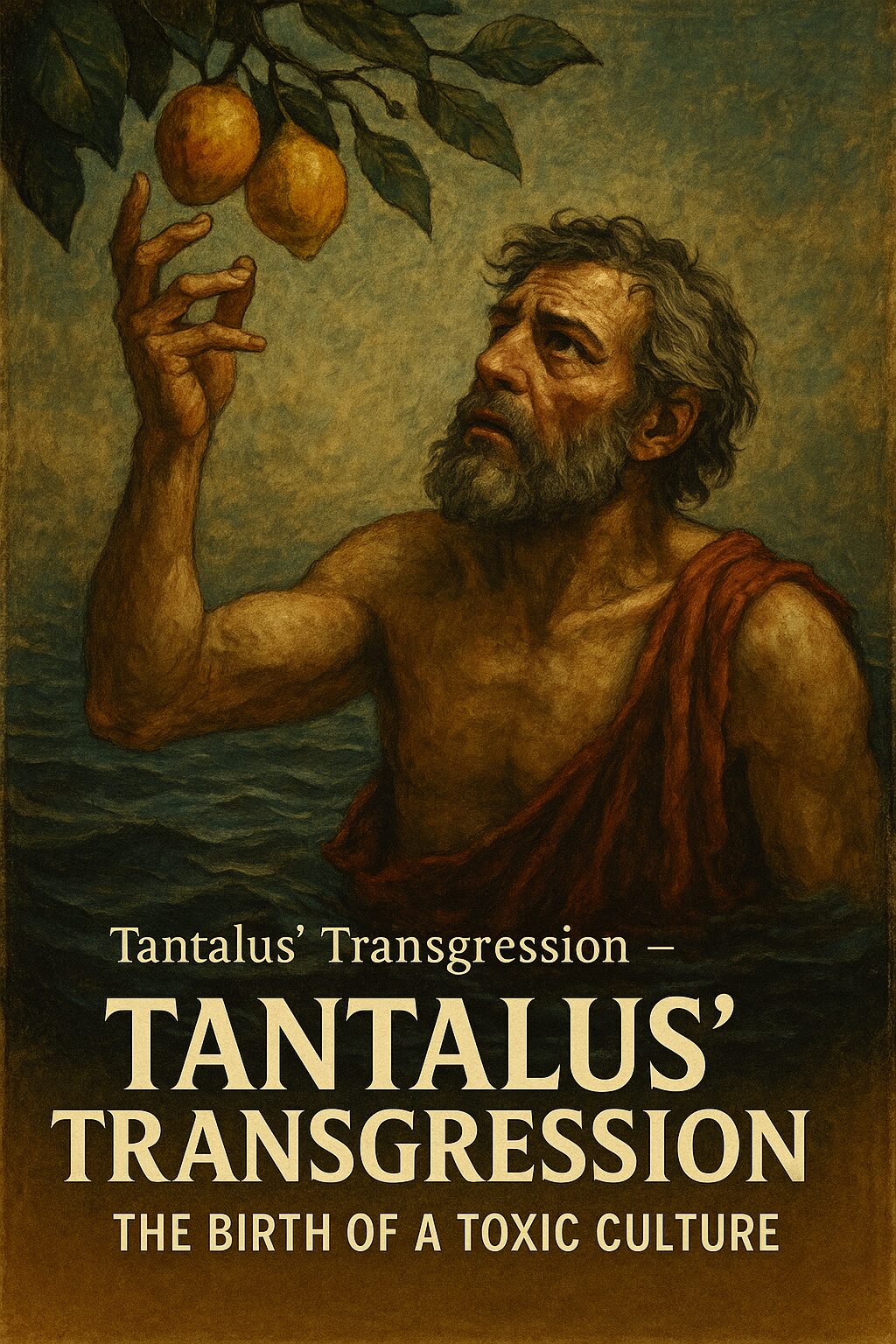
Tantalus was a favorite of the gods. He dined with them on Mount Olympus, enjoying privileges no mortal ever had. But instead of gratitude, he showed contempt. To test their omniscience, Tantalus served the gods a horrific meal, the cooked flesh of his own son, Pelops. The gods recoiled in horror, restored Pelops to life, and condemned Tantalus to eternal punishment: forever hungry and thirsty, standing in a pool of water beneath fruit-laden branches that receded whenever he reached for them.

This is where we get the word tantalize to tempt with what is always just out of reach. But for compliance professionals, the story isn’t about temptation; it’s about transgression.

Tantalus’ sin was not merely moral or criminal. It was cultural. It revealed a belief that he was above consequence, that his proximity to power made him immune to accountability. Sound familiar? It’s the same psychology that drives corporate misconduct today: the executive who hides risk, manipulates reporting lines, or treats compliance as a box to check rather than a value to live.

Hubris at the Top: When Leaders Believe They Are Untouchable

The core of Tantalus’ failure is hubris, excessive pride that blinds leaders to ethical limits. He thought himself equal to the gods, just as modern executives sometimes see themselves as beyond internal controls, policies, or oversight.

We have seen it in corporate scandals from Enron to Theranos: charismatic leaders who create cultures where questioning authority is punished, transparency is discouraged, and the pursuit of results justifies every means. These leaders often start with good intentions —innovation, performance, growth — but end in disaster because no one dares to tell them “no.” When a CEO, department head, or even a team manager sends the message that rules are flexible for those who produce, that’s the modern equivalent of dining at Olympus. It’s the moment when culture begins to rot from the inside.

Tone from the Top: What Tantalus Forgot

In compliance, we often say “tone from the top” sets the ethical compass of the organization. Tantalus was the top, and his tone was deceitful. Instead of modeling integrity, he modeled arrogance and disrespect. His actions communicated that power excused anything.

Modern organizations are no different. Employees don’t take their ethical cues from the code of conduct on the intranet. They take them from leadership behavior, from what’s rewarded, ignored, or punished.

If Tantalus had shown humility or accountability, his descendants might have inherited a culture of honor. Instead, they inherited corruption, vengeance, and betrayal. It’s no coincidence that every generation of the House of Atreus, including Pelops, Atreus, Thyestes, Agamemnon, Clytemnestra, Orestes, repeats the cycle of wrongdoing and retaliation. The family’s downfall wasn’t fate; it was culture. A toxic tone from the top doesn’t just corrupt a moment; it defines a legacy.

Culture of Consequences: What Happens When Misconduct Goes Unpunished

One of the most striking aspects of the Tantalus myth is how long the effects last. His descendants commit crimes generations later, yet all trace back to his original transgression.

That’s what happens in modern corporations when ethical breaches are not addressed. Once misconduct is tolerated, it becomes precedent. Once precedent hardens, it becomes culture. Think of organizations where sexual harassment was covered up “to protect the company,” or where accounting irregularities were ignored “to meet quarterly targets.” Each decision not to act creates a silent permission structure. And before long, you have what we see in so many enforcement cases: a pattern of misconduct spanning years, sometimes decades.

Tantalus’ punishment, forever reaching but never attaining satisfaction, mirrors what happens in these companies. They chase success endlessly, but integrity is always out of reach because they’ve traded ethics for expedience. A culture of consequences, by contrast, does the opposite. It makes accountability tangible. It shows employees that integrity is the expectation, not the exception.

The Modern Mirror: When Hubris Meets Compliance Failure

The story of Tantalus echoes across modern boardrooms and compliance case studies. Consider:

  • The FCPA case against Siemens (2008): A culture of “business at any cost” led to systematic bribery across divisions, because leadership prioritized results over integrity.
  • The Wells Fargo scandal: Unrealistic sales goals, driven by executives insulated from consequence, encouraged widespread fraud at the branch level.
  • Theranos: A founder’s belief in her infallibility silenced dissent, distorted reporting, and destroyed trust both internally and externally.

Each of these stories began like Tantalus’ dinner with one decision to deceive, rationalized as necessary, even brilliant. Each became a legend of ethical collapse.

The compliance lesson is simple: arrogance without accountability creates catastrophe.

Rebuilding What is Broken: Lessons from Tantalus’ Fall

So how do we avoid the curse of Tantalus in modern organizations? Three principles stand out:

1. Make Ethics the Core of Leadership Identity

Ethical leadership isn’t a function of compliance checklists. It’s the lived demonstration of integrity. Leaders must see compliance not as a constraint but as an enabler of trust and sustainability. When executives model ethical decision-making, it cascades downward.

Compliance Lesson: Integrate ethical leadership into performance reviews and succession planning. Reward transparency as much as performance.

2. Institutionalize Accountability

Accountability must be structured, not situational. That means ensuring robust internal investigations, consistent discipline, and a compliance function with real independence. The moment compliance must “ask permission” to act, the organization has lost its compass.

Compliance Lesson: Empower compliance officers with direct access to the board and audit committee. Build transparency into reporting lines.

3. Preserve Psychological Safety

Tantalus’ court, like many modern workplaces, thrived on fear. When employees can’t question leaders or raise concerns, misconduct flourishes. Psychological safety is the soil in which ethical cultures grow.

Compliance Lesson: Implement anonymous reporting, protect whistleblowers, and make public examples of non-retaliation.

Breaking the Curse: The Compliance Evangelist’s View

The curse of Tantalus was not divine punishment; instead, it was a predictable outcome of leadership failure. Every compliance professional knows that culture is destiny. If leaders are deceitful, employees will be cynical. If leaders are accountable, employees will be engaged.

Tantalus’ name survives as a warning to those who confuse privilege with power, and authority with exemption. His eternal hunger reflects what happens when organizations try to feed success on a diet of deception; they are never satisfied because trust, once lost, cannot nourish growth.

The modern compliance officer stands at the intersection of myth and management, tasked with ensuring that our organizations don’t repeat Tantalus’ mistake. We cannot test the gods of regulation or ethics without consequence. Instead, we must build cultures where doing right isn’t exceptional; it is expected.

Because in the end, every compliance program has a mythic choice: become Olympus or become Tantalus.

Join us tomorrow for Part 2 — Pelops and Myrtilus: Corruption in the Bidding Process. We will explore how bribery, betrayal, and broken promises tainted Pelops’ victory and what it teaches us about third-party risk and ethical procurement.

Categories
Sunday Book Review

Sunday Book Review: October 19, 2025, The House of Atreus Edition

In the Sunday Book Review, Tom Fox considers books that would interest compliance professionals, business executives, or anyone curious about the subject. It could be books about business, compliance, history, leadership, current events, or any other topic that might interest Tom. Today, we review four top books on the most cursed house in all of ancient Greece, the House of Atreus..


  • The Judgment of Helen by Thomas Cobb
  • Clytemnestra’s Bind by Susan Wilson
  • The Curse of Atreus by Dey Brownlee
  • The Oresteia of Aeschylus by Aeschylus

Resources:

The Sunday Book Review was recently honored as one of the world’s Top 100 Book Podcasts.

Categories
10 For 10

10 For 10: Top Compliance Stories For the Week Ending October 18, 2025

Welcome to 10 For 10, the podcast that brings you the week’s Top 10 compliance stories in one podcast each week. Tom Fox, the Voice of Compliance, presents the compliance stories you need to know to end your busy week. Sit back, and in 10 minutes, hear about the stories every compliance professional should be aware of from the prior week. Every Saturday, 10 For 10 highlights the most important news, insights, and analysis for the compliance professional, all curated by the Voice of Compliance, Tom Fox. Get your weekly filling of compliance stories with 10 for 10, a podcast produced by the Compliance Podcast Network.

Top stories include:

  • SEC wants to reduce the salaries of PCAOB Board members. (WSJ)
  • San Mateo County Sheriff removed for corruption. (San Francisco Chronicle)
  • Why Danielle Sasson resigned.
  • UK gov says if hacked, go to paper. (BBC)
  • BOA sued over alleged ties to Epstein. (Reuters)
  • Trump lobbies the Knesset. (Bloomberg)
  • The US forced the Dutch to fire the Chinese CEO of a chip company. (WSJ)
  • Why do you need glue employees? (WSJ)
  • Corruption puts Moroccan hospitals at breaking point. (France24)
  • CZ and Trump are now working together (in a family way). (Bloomberg)

You can check out the Daily Compliance News for four curated compliance and ethics-related stories each day, here.

Connect with Tom 

Instagram

Facebook

YouTube

Twitter

LinkedIn

You can purchase a copy of my new book, Upping Your Game, on Amazon.com

Categories
Daily Compliance News

Daily Compliance News: October 17, 2025, The Decoupling Edition

Welcome to the Daily Compliance News. Each day, Tom Fox, the Voice of Compliance, brings you compliance-related stories to start your day. Sit back, enjoy a cup of morning coffee, and listen in to the Daily Compliance News. All, from the Compliance Podcast Network. Each day, we consider four stories from the business world, compliance, ethics, risk management, leadership, or general interest for the compliance professional.

Top stories include:

  • SEC wants to reduce the salaries of PCAOB Board members. (WSJ)
  • San Mateo County Sheriff removed for corruption. (Police1)
  • The US threatens to decouple from China. (FT)
  • Capita fined £14mm for data breach. (BBC)

The Daily Compliance News has been honored as the No. 2 in the Best Regulatory Compliance Podcast category.

Categories
The Hill Country Podcast

Student Voices of the Hill Country: A Schreiner Student Pod Series – Episode 1: The Role of Music in Enhancing Film Experiences

Welcome to a special production of the Hill Country Podcast, which is a 12-part series collaboration with the communicators of tomorrow from right here in the Texas Hill Country. The Hill Country Podcast and the Texas Hill Country Podcast Network have partnered with the talented students from Dr. Adolfo Mora’s Communications class at Schreiner University to turn the microphone over to them. Join us each episode as these fresh voices explore critical topics, challenge modern ideas, and provide their unique perspectives on the world of communication.

In this first episode, Carter, Connor, and Nathan discuss how music intensifies the viewer’s experience of different film genres such as drama, romance, and comedy. They explore various aspects such as the psychological effects of instruments, the use of light motifs, and the role music plays in animated and CGI films. The conversation delves into how music enhances storytelling, connects the audience emotionally, and influences cultural perceptions. The hosts provide examples from iconic movies like Star Wars, Toy Story, and the Fast and Furious series, examining how different musical themes contribute to the films’ popularity and impact.

Key highlights:

  • Psychological Impact of Music
  • Mass Media and Music
  • Disney’s Influence on Animation and Music
  • Netflix and Modern Music Integration
  • Exploring the Soundtrack of K-Pop Demon Hunters
  • The Evolution of Happy and Moody Music
  • The Power of Light Motifs in Movies
  • Iconic Themes in Superhero and Action Movies
  • The Emotional Impact of Movie Soundtracks

Other Hill Country Focused Podcasts

Hill Country Authors Podcast

Hill Country Artists Podcast

Texas Hill Country Podcast Network

Cover Art

Nancy Huffman

Categories
Compliance Tip of the Day

Compliance Tip of the Day – AI Powered Internal Controls

Welcome to “Compliance Tip of the Day,” the podcast where we bring you daily insights and practical advice on navigating the ever-evolving landscape of compliance and regulatory requirements. Whether you’re a seasoned compliance professional or just starting your journey, we aim to provide you with bite-sized, actionable tips to help you stay on top of your compliance game. Join us as we explore the latest industry trends, share best practices, and demystify complex compliance issues to keep your organization on the right side of the law. Tune in daily for your dose of compliance wisdom, and let’s make compliance a little less daunting, one tip at a time.

This week, we consider issues around internal controls in a best practices compliance program. Today, we consider how you can leverage AI to enhance your AI control framework.

For more on this topic, check out The Compliance Handbook: A Guide to Operationalizing Your Compliance Program, 6th edition, which LexisNexis recently released. It is available here.

Categories
Popcorn and Compliance

Popcorn and Compliance: Episode 3 – Compliance in the Full Moonlight: Lessons from The Wolf Man

Welcome to a special series of Popcorn and Compliance. In this series, we will be looking at the Classic Universal Monster Movies from the 30s and 40s and mining them for compliance lessons. (Yes, it really is an excuse to rewatch them all.) In this series, we will look at Frankenstein, Dracula, The Wolf Man, The Mummy, and end with The Invisible Man. In this episode, Tom explores critical compliance insights drawn from Lon Chaney Jr.’s portrayal of The Wolf Man.

In this episode, we take a deep dive into my favorite Classic Universal Monster, The Wolf Man, to unpack five critical lessons, including the danger of ignoring warnings, the importance of timely intervention, and the challenges of recognizing risks in ordinary people under extraordinary circumstances. Listeners are encouraged to consider how these timeless themes apply to modern corporate compliance, emphasizing proactive measures to prevent potential catastrophes. Join Tom, along with AI hosts Fiona and Timothy, for a surprisingly relevant exploration of compliance through the eerie lens of Hollywood’s iconic monster movies.

Key highlights:

The Relevance of the Wolf Man to Modern Compliance

  • Lesson 1: Ordinary People Can Become Compliance Risks
  • Lesson 2: Warnings Ignored Become Disasters Realized
  • Lesson 3: The Curse of Silence and Stigma
  • Lesson 4: Risk is Cyclical and Predictable
  • Lesson 5: Tragedy Comes from a Lack of Intervention

Resources:

Compliance Lessons from Lon Chaney Jr.’s The Wolf Man on the FCPA Compliance and Ethics Blog

Tom Fox

Instagram

Facebook

YouTube

Twitter

LinkedIn

Categories
AI Today in 5

AI Today in 5: October 17, 2025, The All WSJ Edition

Welcome to AI Today in 5, the newest edition to the Compliance Podcast Network. Each day, Tom Fox will bring you 5 stories about AI, so start your day, sit back, enjoy a cup of morning coffee, and listen in to the AI Today In 5, all from the Compliance Podcast Network. Each day, we consider four stories from the business world, compliance, ethics, risk management, leadership, or general interest related to AI.

Top AI stories include:

  1. AI data centers are building their own power grids. (WSJ)
  2. What is data debt? (WSJ)
  3. Selling penthouses with AI help. (WSJ)
  4. Using AI to tackle tariffs. (WSJ)
  5. The context gap in AI. (WSJ)

For more information on the use of AI in Compliance programs, my new book, Upping Your Game, is available. You can purchase a copy of the book on Amazon.com

Categories
Regulatory Ramblings

Regulatory Ramblings: Episode 80 – Extraterritorial Frictions on Cross-Border Payments Laws // Spotlight on: Does Swift’s Recent Decision to Embrace the Blockchain Mean There’s No Barrier Between Traditional Finance and Decentralized Finance (DeFi)?

Today’s podcast commences with a brief discussion with Syed Musheer Ahmed of FinStep Asia and Monica Jasuja of the Emerging Payments Association on a recent LinkedIn post1 of Musheer’s stating that the lines between traditional finance and decentralized finance, or DeFi, have not just blurred but have merged thanks to SWIFT’s announcement at its annual conference in late-September that it will add a Blockchain based ledger to its infrastructure stack to hasten and scale the benefits of across over 200 countries and territories worldwide.

Following that, we chat with finance and technology lawyer M. Konrad Borowicz, an assistant professor at Tilburg Institute for Law, Technology and Society in the Netherlands, about a paper he recently presented entitled “Extraterritorial Frictions in the Law of Cross-Border Payments”2 at the European Central Bank’s Legal Research Program seminar in Frankfurt.

Please see the links in the footnotes.

Biography:

Syed Musheer Ahmed has over 18 years of extensive experience as an ecosystem builder in the realms of capital markets, fintech, and virtual assets. This includes a decade as a global markets trader before he came to Hong Kong to attain his MBA from the University of Hong Kong and London Business School’s joint program.

Since 2016, Musheer has contributed extensively to building the region’s fintech and virtual assets ecosystem, particularly as the co-founder, concurrent board member, and inaugural general manager of the Fintech Association of Hong Kong.

For almost five years, he has been the managing director of FinStep Asia, a firm that he founded. In the interim, from October 2022 until January 2024, he served as a financial markets risk assurance lead with the Virtual Assets Regulatory Authority in Dubai.

Monica Jasuja is the chief expansion & innovation officer of the Emerging Payments Association Asia, and is the advisory board chair of the India-based Fintech Fusion. She is a veteran digital business executive with over two decades of global experience in strategizing, defining, leading, building, and deploying commercially viable innovative software products and solutions, primarily in financial services.

She has a passion for solving consumer problems in the areas of digital payments and consumer products. She says that continuously learning to help businesses grow and disrupt is “both my strength and a key driver.”

Monica is also an accomplished product leader, having managed multi-year strategic initiatives across the fields of design, development, deployment, and go-to-market (primarily for the financial services sector). She has ample international exposure in markets such as the US, Singapore, Taiwan, and India.

Since 2017, she has spearheaded a new vertical for large digital players and emerging fintech initiatives across sales, business development, product, and other cross-functional areas (legal, marketing, and policy) to create new revenue and expansion opportunities for payment rails across India.

M. Konrad Borowicz is a finance and technology lawyer whose research focuses on the regulation of credit, payments, and open data. Currently, he is an assistant professor at Tilburg Institute for Law, Technology and Society in the Netherlands, and a research coordinator at the Tilburg Law and Economics Center.

He has held visiting research and teaching positions at HKU, FGV São Paulo in Brazil, and Nova University in Lisbon, Portugal. Konrad’s work has appeared in the Journal of Financial Regulation, Capital Markets Law Journal, and the New York University Journal of Law and Business, among other publications. He is currently developing a book on EU Payments Law and Regulation, together with Emanuel van Praag, for Oxford University Press. Before coming to academia, Konrad was a finance lawyer at Ropes & Gray in London.

Discussion:

Why does the Swift organization’s action matter? The Swift network is used by over 11,500 financial institutions in more than 220 countries, making it the backbone of international finance. Essentially, every corner of the world: “It facilitates the transfer of value between banks globally underpinned by its messaging service, and roughly every three days, the world’s GDP passes over their network.”

Suppose a bank or financial institution already has SWIFT rails. In that case, they are likely to continue to leverage this TradFi institution – usually owned and run by the banks as a collective – to underpin their tokenized finance initiatives.”

Swift and a group of more than 30 financial institutions globally will develop a shared digital ledger, with the initial focus on real-time 24/7 cross-border payments. Specifically, Swift will work with Consensys (founded by the Cofounder of Ethereum) on a conceptual prototype of the ledger, which will leverage Swift’s unmatched resiliency, security, and scalability to facilitate transactions using any form of regulated tokenized value.

The initiative will see Swift partner up with Bank of America, Citigroup, NatWest, and others to develop a shared digital ledger for tokenized assets, including stablecoins.

It will combine straight-through processing and value+messaging capabilities on a single platform that every major bank uses.

The conversation starts with Musheer and Monica explaining why they believe the lines between TradFi and DeFi no longer hold the same significance. They also talk about the stablecoin implications of Swift building its own blockchain to enable transactions between banks worldwide, with HKU’s Regulatory Ramblings host Ajay Shamdasani.

Critics have dismissed correspondent banking as slow and outdated while praising stablecoins as faster and superior. But that narrative shifts the moment Swift brings blockchain into its rails, leading to improvement.

Separately, building on earlier pilots, Swift will also add the capability to support interoperability across existing and emerging systems for various use cases. “Developments are part of Swift’s strategy to power a best-in-class experience through innovation on parallel tracks – upgrading existing rails while creating future digital rails to maximize infrastructure choice for the industry.”

Monica and Musheer then share their thoughts on whether this can unlock interoperable tokenized bank deposits alongside other tokenized assets on SWIFT’s ledger. It is an open question as to whether the impact on global payments will be transformational or just a modification.

We then turn to Konrad to discuss his recently written paper. It is currently under review at Law and Geoeconomics and is closely related to the work done by HKU Law’s very own—and Regulatory Ramblings’ team leader—Prof. Douglas Arner—on the regionalization of payment systems.

Konrad’s paper discusses the extraterritorial frictions arising when policymakers seek to reconcile the payment systems of different countries. The main areas of friction are settlement finality, data protection, AML, and governance. In the paper, he proposes several institutional reforms aimed at reducing those frictions, namely – a model law on cross-border payment finality, narrowly tailored safe harbors for data sharing and an international payments forum under the auspices of august global bodies such as the Bank of International Settlements or the Financial Stability Board, though, as Ajay asks him: “Given that the BIS and FSB are legacy organizations that are slow to change, is that likely or prudent?”

The abstract to Konrad’s paper reads: “In 2020, the G20 placed cross-border payments at the top of the global financial agenda, spurring experiments to make transfers faster, cheaper, and more inclusive. Many build on instant or fast payment systems (FPS), yet linking infrastructures is as much a legal and geopolitical challenge as a technological one. When systems interconnect, they project domestic law across borders, generating extraterritorial frictions and giving rise to sovereignty concerns. This article compares three models of FPS interlinking—bilateral links, multilateral hubs, and direct access arrangements—showing how each produces frictions around settlement finality, AML/CFT and sanctions compliance, data protection, and governance. It then considers various policy proposals aimed at reducing these frictions, such as prefunding of accounts and the use of privacy-enhancing technologies. The analysis shows that technical fixes cannot resolve the structural frictions of cross-border payments, supporting the view that payment infrastructures embody sovereignty and that integration will likely proceed through regional blocs rather than a single global framework.”

He shares with Ajay why he chose to write his article now and what he thinks it adds to the existing literature on payments. Konrad elaborates on the three interlinking models of FPS — bilateral links, multilateral hubs, and direct access arrangements — delineated in his piece. He discusses how each produces frictions around settlement finality, AML/CFT and sanctions compliance, data protection, and governance.

Konrad acknowledges there are drawbacks to the multilateral model. That harmonization of law is often impeded because everyone must agree to the rules, which sometimes come up against rigid notions of sovereignty and regulatory ‘turf wars’ for some countries.

He concludes by saying that regional payment blocks will likely define the future, and how these different blocks interact will be key as regional payment infrastructures continue to improve.

“Regional payment blocks seem to be a way to circumvent sanctions, which are geopolitical weapons,” Konrad says. “That is why regional blocks will emerge, [because] people will disagree on what will be sanctioned. Ultimately, it is a political question, not a technical fix.”

Regulatory Ramblings podcasts is brought to you by The University of Hong Kong – Reg/Tech Lab, HKU-SCF Fintech Academy, Asia Global Institute, and HKU-edX Professional Certificate in Fintech, with support from the HKU Faculty of Law.

Useful links in this episode:

You might also be interested in:

Connect with RR Podcast at:

LinkedIn: https://hk.linkedin.com/company/hkufintech 
Facebook: https://www.facebook.com/hkufintech.fb/
Instagram: https://www.instagram.com/hkufintech/ 
Twitter: https://twitter.com/HKUFinTech 
Threads: https://www.threads.net/@hkufintech
Website: https://www.hkufintech.com/regulatoryramblings 

Connect with the Compliance Podcast Network at:

LinkedIn: https://www.linkedin.com/company/compliance-podcast-network/
Facebook: https://www.facebook.com/compliancepodcastnetwork/
YouTube: https://www.youtube.com/@CompliancePodcastNetwork
Twitter: https://twitter.com/tfoxlaw
Instagram: https://www.instagram.com/voiceofcompliance/
Website: https://compliancepodcastnetwork.net