Categories
AI Today in 5

AI Today in 5: February 13, 2026, They Try to Hack Gemini Edition

Welcome to AI Today in 5, the newest addition to the Compliance Podcast Network. Each day, Tom Fox will bring you 5 stories about AI to start your day. Sit back, enjoy a cup of morning coffee, and listen in to the AI Today In 5. All, from the Compliance Podcast Network. Each day, we consider five stories from the business world, compliance, ethics, risk management, leadership, or general interest about AI.

Top AI stories include:

For more information on the use of AI in Compliance programs, my new book, Upping Your Game, is available. You can purchase a copy of the book on Amazon.com.

Categories
Daily Compliance News

Daily Compliance News: February 13, 2026, The Social Law and Corruption Edition

Welcome to the Daily Compliance News. Each day, Tom Fox, the Voice of Compliance, brings you compliance-related stories to start your day. Sit back, enjoy a cup of morning coffee, and listen in to the Daily Compliance News. All, from the Compliance Podcast Network. Each day, we consider four stories from the business world, compliance, ethics, risk management, leadership, or general interest for the compliance professional.

Top stories include:

  • Germany greenlights EU AI law. (ComputerWorld)
  • Does Egyptian social law allow bribery? (Law360)
  • The National Security whistleblower complaint is named Jared Kushner. (WSJ)
  • AAG for Anti-trust wouldn’t play with payors, so she’s gone. (WSJ)
Categories
2 Gurus Talk Compliance

2 Gurus Talk Compliance – Episode 70 – The Ethics Edition

What happens when two top compliance commentators get together? They talk compliance, of course. Join Tom Fox and Kristy Grant-Hart in 2 Gurus Talk Compliance as they discuss the latest compliance issues in this week’s episode!

Stories this week include:

Resources:

Kristy Grant-Hart on LinkedIn

Prove Your Worth

Tom

Instagram

Facebook

YouTube

Twitter

LinkedIn

Categories
Blog

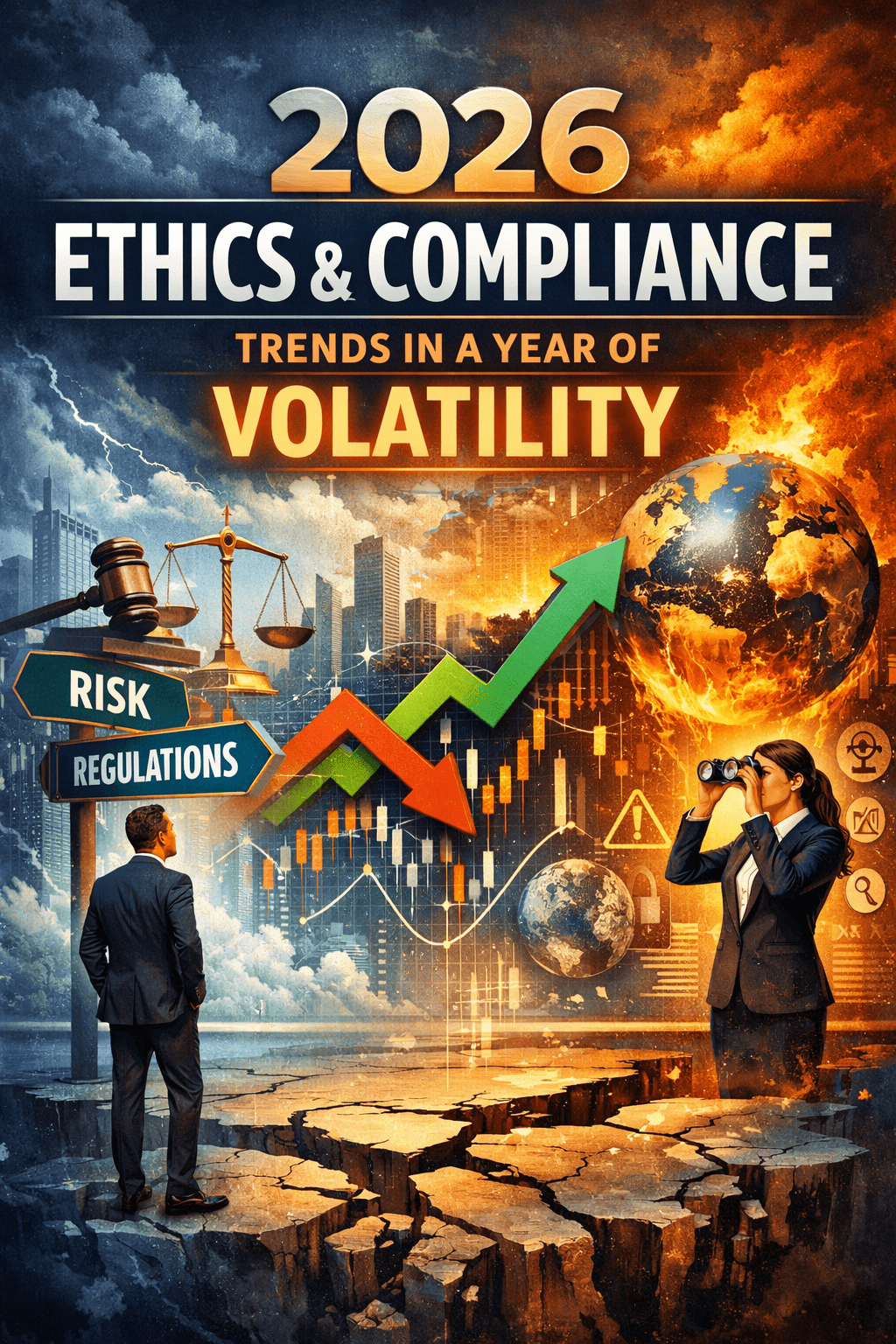
2026 Ethics & Compliance Trends in a Year of Volatility

Ethics and Compliance programs are entering 2026 under pressure from every direction at once. Enforcement signals are uneven and often contradictory. Regulatory expectations are evolving without clear glide paths. Boards are demanding proof of effectiveness, not just activity. Meanwhile, inside organizations, trust is fragile, employee engagement is strained, and ethical risk is increasingly driven by stress, uncertainty, and disengagement rather than overt malice.

I recently participated in the EQS-sponsored webinar, 2026 Ethics and Compliance Trends for Ethics and Compliance Programs: From Insights to Action. This webinar clearly framed the moment: the challenge is no longer simply identifying risk categories. The challenge is operating a compliance program that remains credible, defensible, and effective amid volatility. For compliance leaders, this is not a year for hype, shortcuts, or silver bullets. It is a year for disciplined execution.

This article distills the core themes emerging for 2026 that we explored in the webinar and explains why they demand a shift in how compliance programs are designed, governed, and measured. My co-panelists were Mary Shirley and Matt Kelly. Steph Holmes hosted us.

AI in Compliance: From Experimentation to Operational Reality

By 2026, artificial intelligence in compliance is no longer optional or novel. Most large organizations have already deployed AI in some form, such as intake triage, classification, translation, summarization, or search. What has changed is the expectation. Boards and executives now want results. This is where many programs will struggle.

AI works best today in structured, repeatable tasks. It can accelerate intake, reduce manual review, and surface patterns that humans might miss. But AI does not eliminate work; it rearranges it. Review, exception handling, governance, and oversight do not disappear. In many cases, they expand.

The real risk in 2026 is not AI itself. It is scaling too quickly without ownership, governance, or boundaries. Compliance teams that attempt to automate judgment-intensive decisions, such as investigations, escalations, or remediations, invite defensibility problems they cannot explain to regulators or boards. Successful programs will treat AI as an operational tool, not a strategic shortcut, and will clearly define where human judgment remains non-negotiable.

Regulatory Volatility, Not Regulatory Retreat

One of the most dangerous misreads in compliance today is the belief that shifting enforcement signals equals reduced risk. The reality is closer to the opposite. As the webinar materials emphasize, enforcement risk in 2026 is not disappearing; it is fragmenting. Political cycles, regional differences, and sector-specific priorities create uneven pressure, but exposure remains real. Whistleblower incentives continue to drive cases regardless of rhetoric. Cross-border cooperation persists even when domestic messaging softens.

The compliance mistake in volatile periods is overcorrection. Programs that scale back controls, staffing, or oversight in response to perceived deregulation weaken their defensibility. When enforcement inevitably resurfaces, documentation gaps and inconsistent standards become liabilities. The strongest programs in 2026 will not chase enforcement headlines. They will document risk assessments, decision rationales, and consistency of approach, building programs designed to withstand cycles, not react to them.

Employee Dynamics and the Rise of Ethical Drift

The most underappreciated risk heading into 2026 is internal. Employer–employee dynamics are shifting in ways that directly affect ethics and compliance. AI deployment, cost pressure, and political uncertainty are changing how employees perceive fairness, security, and leverage. According to research highlighted in the webinar, 40% of employees admit they would intentionally miss a compliance requirement to cause harm to their organization. That is not a culture problem waiting to happen. It is a present-tense compliance risk.

Ethical drift rarely announces itself through clear violations. It shows up as disengagement, silence, delayed reporting, rationalization, and erosion of trust. In this environment, compliance programs that rely solely on policies, training completion rates, or hotline volume are flying blind. In 2026, employee sentiment must be treated as a leading risk indicator, not a soft signal. Compliance teams must work more closely with HR and leadership to monitor stress points, manager behavior, and organizational pressure that create conditions for misconduct before it materializes.

Third-Party Risk as a Systemic Exposure

Third-party risk has outgrown its traditional boundaries. Vendors, distributors, technology partners, and AI service providers are now embedded across critical operations. When they fail, the failure rarely stays isolated. The webinar makes this point clearly: most third-party incidents expose internal governance gaps, not just vendor misconduct. Weak onboarding, poor segmentation, outdated contracts, and checklist-based monitoring all surface when something goes wrong.

In 2026, the compliance challenge is not perfect visibility. It is defensible prioritization. Not every third party requires the same level of scrutiny. Continuous monitoring and signal-based oversight are more effective than periodic reviews, which can provide a false sense of security. Compliance leaders should focus on materiality, lifecycle management, and resilience. The question regulators will ask is not whether every risk was identified, but whether the organization made reasonable, documented decisions based on the information available at the time.

Whistleblowing Surges Are Predictable And Test Credibility

Whistleblowing activity reliably increases during periods of economic stress, social disruption, and organizational change. 2026 will be no exception.

What matters is not volume alone. High reporting can reflect trust or fear. Employees use speak-up channels to test fairness, responsiveness, and safety. Programs designed only for steady-state conditions often buckle under surge conditions. The webinar emphasizes that timeliness, communication, and consistency matter more than outcomes in building trust. Mishandled cases during high-scrutiny periods carry amplified reputational and cultural risk. Retaliation concerns rise, and credibility erodes quickly if employees feel ignored or dismissed.

Compliance teams should plan for reporting spikes the same way they plan for crisis response. Capacity, triage protocols, communication standards, and leadership alignment must be stress-tested before volume hits.

Measuring What Matters: From Activity to Effectiveness

By 2026, boards and regulators are asking a harder question: Does the compliance program actually work? Activity-based reporting; training delivered, policies updated, and cases closed, is no longer sufficient. The expectation is outcomes. Are risks changing? Why? Where should resources move next? Data and analytics are essential, but only if they inform decisions. Overly complex dashboards and vanity metrics dilute clarity. The most effective programs use data to prioritize interventions, allocate resources, and identify emerging risk, not just to justify headcount.

Importantly, credible programs are willing to admit when initiatives fail. A compliance function that can point to lessons learned and course corrections demonstrates maturity. One that reports only success is unlikely to be testing itself hard enough.

Conclusion: 2026 Is a Year for Disciplined Compliance Leadership

The defining feature of 2026 will not be a single regulation, technology, or enforcement action. It will be volatility, both external and internal. In that environment, compliance programs cannot rely on legacy assumptions. AI must be governed, not glamorized. Enforcement signals must be contextualized, not chased. Employee disengagement must be monitored as a risk. Third-party exposure must be prioritized defensibly. Speak-up systems must be resilient. Metrics must drive action.

The compliance leaders who succeed in 2026 will be those who move from insight to action, building programs that are steady when everything else is not.

Categories
AI Today in 5

AI Today in 5: February 12, 2026, The AI to the Moon Edition

Welcome to AI Today in 5, the newest addition to the Compliance Podcast Network. Each day, Tom Fox will bring you 5 stories about AI to start your day. Sit back, enjoy a cup of morning coffee, and listen in to the AI Today In 5. All, from the Compliance Podcast Network. Each day, we consider five stories from the business world, compliance, ethics, risk management, leadership, or general interest about AI.

Top AI stories include:

  1. Putting AI into your compliance workflow. (Valley Courier)
  2. GenAI and compliance. (FinTechGlobal)
  3. Musk wants to put an AI factory on the Moon. (NYT)
  4. OpenAI disbands safety teams. (TechCrunch)
  5. Is the US ready for what AI will do for jobs? (The Atlantic)

For more information on the use of AI in Compliance programs, my new book, Upping Your Game, is available. You can purchase a copy of the book on Amazon.com.

Categories
Daily Compliance News

Daily Compliance News: February 12, 2026, The Social Media Addiction Edition

Welcome to the Daily Compliance News. Each day, Tom Fox, the Voice of Compliance, brings you compliance-related stories to start your day. Sit back, enjoy a cup of morning coffee, and listen in to the Daily Compliance News. All, from the Compliance Podcast Network. Each day, we consider four stories from the business world, compliance, ethics, risk management, leadership, or general interest for the compliance professional.

Top stories include:

  • Is the Trump DOJ about to go after judges? (Reuters)
  • OpenAI exec who opposed erotic AI fired for sexual harassment. (WSJ)
  • BlackRock alleges it was duped into a $400 Million investment through fraud. (WSJ)
  • Social media is on trial in the US for being addictive. (BBC)
Categories
Rotary Voices of Kerrville

Rotary Voices of Kerrville – Celebrating 100 Years of Rotary in Kerrville

Welcome to Rotary Voices of Kerrville, the podcast series that shines a spotlight on the Rotary Club of Kerrville, Texas—a club with a rich history of community service, leadership, and dedication. For nearly 100 years, the Rotary Club of Kerrville has been at the heart of initiatives that make a real difference, both locally and globally. Through this podcast, we’ll explore the club’s incredible projects, hear from its inspiring members, and learn about the values that drive their commitment to “Service Above Self.” In this episode, host Tom Fox speaks with Greg Faldyn, a seasoned insurance industry professional and a long-time Rotarian.

Greg discusses his journey in the Rotary Club, from his 2002 introduction through his involvement over nearly 25 years. Now a member of the Kerrville Rotary Club, Greg highlights the club’s impactful community service, especially their response to local disasters and longstanding support of first responders. The conversation also delves into the upcoming 100th anniversary of Rotary in Kerrville, where Greg details his role as the foundation chair and the numerous projects they have undertaken. Key initiatives include the Heritage Center and flagpoles at the new first responder building. The episode underscores Rotary’s dedication to community service and provides a compelling case for why younger professionals should join this storied organization.

Highlights include:

  • Celebrating 100 Years of Rotary in Kerrville
  • Community Response to the July 4th Flood
  • The Centennial Celebration and Future Plans
  • The Role of the Rotary Foundation
  • Upcoming 100th Anniversary Luncheon
  • Why Join Rotary?

Resources:

Rotary Club of Kerrville

Rotary District 5840

Rotary International

Categories
Blog

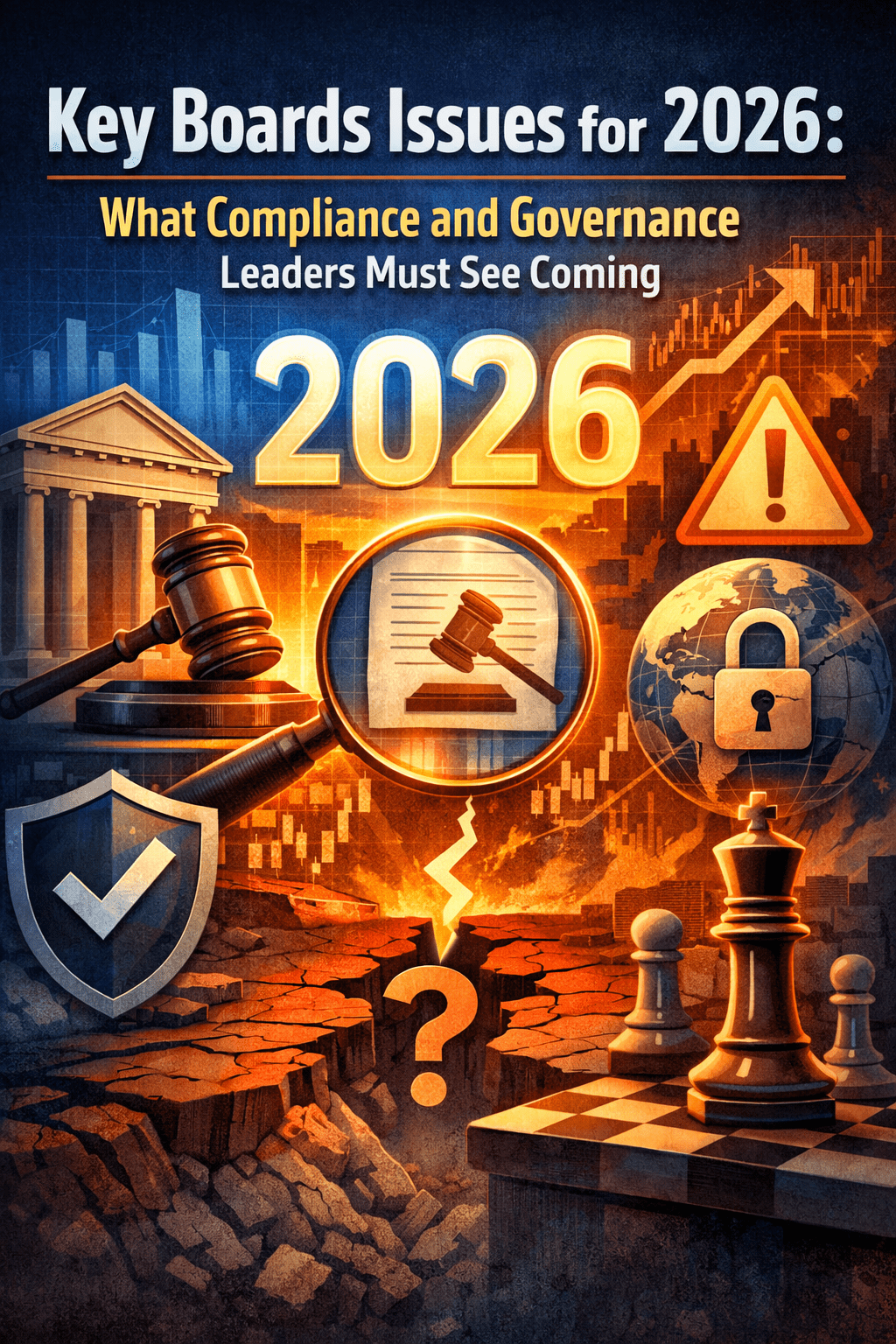
Key Boards Issues for 2026: What Compliance and Governance Leaders Must See Coming

Boards entering 2026 are doing so in an environment defined not by stability, but by volatility. Regulatory priorities are shifting rapidly, geopolitical risk is reshaping markets, technology is accelerating faster than governance frameworks can keep pace, and long-standing assumptions about shareholder engagement and corporate oversight are being tested. In this environment, the role of compliance is no longer reactive or advisory at the margins. It is structural.

The Thoughts for Boards: Key Issues for 2026 memorandum from the law firm of Wachtell, Lipton, Rosen & Katz, which appeared in the Harvard Law School Forum on Corporate Governance, provides a valuable roadmap for boards navigating this uncertainty. For compliance professionals, however, the document does something more important: it reveals where governance risk is quietly migrating. The challenge for compliance leaders is not simply to track these developments, but to translate them into oversight, controls, and strategic guidance that boards can use going forward.

A More Permissive SEC Does Not Mean Less Risk

One of the most striking developments outlined in the memorandum is the SEC’s recalibration of its role. From easing reporting burdens to stepping back from adjudication of shareholder proposals under Rule 14a-8, the Commission is signaling greater deference to companies in deciding how and when to engage with shareholders. At first glance, this appears to reduce regulatory pressure. In reality, it shifts risk inward.

When regulators retreat, discretion moves to boards and management. Predictable SEC processes no longer mediate decisions about disclosure cadence, shareholder engagement, and proposal exclusion. They are governance judgments that will be evaluated ex post by investors, courts, activists, and the media. For compliance professionals, this means fewer bright lines and more gray zones.

The potential move toward semi-annual reporting is a prime example. While it may reduce short-termism, it also alters internal disclosure controls, forecasting discipline, and market expectations. Compliance must ensure that reduced frequency does not translate into reduced rigor. Less reporting does not mean less accountability.

DEI and ESG: From Public Messaging to Quiet Risk Management

The memorandum describes sustained political and regulatory pushback against DEI and ESG initiatives, including executive orders, revised SEC guidance, and heightened scrutiny of shareholder proposals. Yet it also notes an important countervailing force: institutional investors have not abandoned interest in these areas. They have become quieter. This creates a compliance paradox.

On one hand, public signaling around DEI and ESG may expose companies to political and regulatory risk. On the other hand, abandoning these initiatives entirely risks alienating long-term shareholders, employees, and business partners. The compliance function sits at the center of this tension. In 2026, DEI and ESG will increasingly be treated less as branding exercises and more as internal governance risks. Compliance leaders should focus on process integrity, consistency, and documentation rather than rhetoric. The question is no longer whether a company “supports” DEI or ESG, but whether its practices align with its stated values and risk disclosures.

Tone at the top matters here more than ever. Boards must understand that silence does not equal neutrality. How a company governs these issues internally will determine its exposure externally.

Government as Shareholder: A New Governance Reality

Perhaps the most underappreciated development highlighted in the memorandum is the Trump Administration’s growing role as an equity holder in public companies deemed critical to national security. These investments vary widely in form, from passive economic stakes to golden shares with veto rights over strategic decisions. For compliance and governance professionals, this raises novel questions.

Government ownership blurs traditional distinctions between regulator and shareholder. It introduces new stakeholders with potentially divergent objectives, including national security, industrial policy, and geopolitical strategy. Even when governance rights are limited, the mere presence of the government on the cap table can alter decision-making dynamics and investor perceptions.

Compliance must be prepared to advise boards on conflicts of interest, disclosure obligations, and fiduciary duties in this new context. The risk is not simply regulatory; it is structural. Companies operating in sensitive sectors must assume that government involvement is no longer exceptional but potentially recurring.

AI Oversight Moves from Optional to Mandatory

Artificial intelligence dominated board agendas in 2025, and there is no indication that attention will diminish in 2026. The memorandum correctly emphasizes that AI is no longer confined to technology companies. It is embedded in products, operations, compliance monitoring, and decision-making across industries. For boards, the oversight challenge is acute. AI introduces opacity, speed, and scale that traditional governance frameworks were not designed to manage. For compliance officers, this creates both opportunity and risk.

AI is increasingly used within compliance itself, from transaction monitoring to proxy voting analytics. But the use of AI does not eliminate accountability. Boards will still be expected to understand how AI systems function, what risks they create, and how those risks are mitigated.

This is why board-level AI literacy is becoming a governance imperative. Compliance leaders should be proactive in helping boards understand AI not as a technical novelty, but as a risk multiplier. Data governance, model bias, explainability, and third-party reliance must all be incorporated into enterprise risk management frameworks.

Crypto and Digital Assets: Strategy First, Compliance Always

The memorandum highlights a friendlier regulatory environment for crypto-assets, alongside growing corporate interest in crypto treasury strategies and asset tokenization. This combination is dangerous if misunderstood. Regulatory friendliness is not regulatory clarity. Crypto engagement introduces risks related to custody, valuation, sanctions, AML, cybersecurity, and financial reporting. Boards that view crypto as a strategic opportunity without fully appreciating these risks are exposing the company to significant downside.

Compliance must insist on strategic discipline. Why is the company engaging with crypto? What problem is it solving? How does it align with the business model? Without clear answers, crypto becomes speculation rather than strategy. In 2026, compliance officers should expect to spend more time explaining why not to move quickly than how to move fast.

Shareholder Engagement Is Becoming More Fragmented, Not Less Important

The memorandum’s discussion of shareholder engagement reflects a fundamental shift. Institutional investors are splintering their stewardship approaches. Retail investors are more organized and more volatile. Proxy advisors are under regulatory and political attack. The result is unpredictability.

Boards can no longer rely on a small set of proxy advisor recommendations or institutional voting norms. Engagement must become more targeted, more frequent, and more informed. Compliance plays a critical role here by ensuring that engagement practices remain consistent with disclosure rules, insider trading controls, and governance policies.

The rise of retail activism and meme-stock dynamics also creates reputational risk that traditional governance tools were not designed to address. Social media is now a governance arena. Compliance must help boards understand that investor relations, communications, and risk management are increasingly inseparable.

Delaware Still Matters, Even as Alternatives Emerge

Finally, the memorandum addresses trends toward reincorporation in Texas and Nevada, as well as Delaware’s legislative response. While high-profile moves grab headlines, the underlying message is continuity rather than disruption. For most public companies, Delaware remains the default for a reason: predictability. Reincorporation carries costs, risks, and uncertainty that often outweigh perceived benefits. Compliance professionals should ensure that boards approach these decisions with discipline rather than reaction to political or cultural trends. Governance arbitrage is rarely a substitute for governance quality.

Conclusion: Compliance as Governance Infrastructure

The overarching lesson from the Key Issues for 2026 memorandum is that governance risk is becoming more diffuse, not less. Regulatory pullbacks, technological acceleration, geopolitical intervention, and fragmented shareholder bases all point to one conclusion: boards will be expected to exercise more judgment with fewer guardrails. As with all things under this Trump Administration, another key concept is volatility. That places compliance at the center of corporate governance.

In 2026, effective compliance will not be measured solely by the absence of enforcement actions. It will be measured by whether boards can navigate volatility and ambiguity without losing coherence, integrity, or trust. Compliance professionals who understand this shift will be indispensable partners in long-term value creation.


Categories
Daily Compliance News

Daily Compliance News: February 11, 2026, The US Plummets on the TI-CPI Edition

Welcome to the Daily Compliance News. Each day, Tom Fox, the Voice of Compliance, brings you compliance-related stories to start your day. Sit back, enjoy a cup of morning coffee, and listen in to the Daily Compliance News. All, from the Compliance Podcast Network. Each day, we consider four stories from the business world, compliance, ethics, risk management, leadership, or general interest for the compliance professional.

Top stories include:

  • US plummets on 2026 TI-CPI. (TI)
  • A bitcoin blunder gives away $40bn. (WSJ)
  • Corporate jargon goes mainstream. (FT)
  • Texas attack with anti-ESG law thrown out of court. (Reuters)
Categories
Compliance Into the Weeds

Compliance into the Weeds: NPAs, Escalation and Ethics in Competing

The award-winning Compliance into the Weeds is the only weekly podcast that takes a deep dive into a compliance-related topic, literally going into the weeds to explore it more fully. Looking for some hard-hitting insights on compliance? Look no further than Compliance into the Weeds! In this episode of Compliance into the Weeds, Tom Fox and Matt Kelly look at three recent stories to draw compliance lessons for the future.

They discuss significant developments in compliance, focusing on Jay Clayton’s recent speech regarding FCPA enforcement and the implications for companies. They also analyze a case involving the termination of compliance officers at Scotiabank for failing to escalate concerns about insider trading. The conversation concludes with a reflection on athlete decision-making in the context of injuries and the lessons for corporate compliance practices.

Key highlights:

  • Jay Clayton’s Speech and White Collar Crime Prosecution
  • Compliance Officers and Escalation Failures at Scotiabank
  • Ethics in Sports: Decision-Making and Compliance Lessons

Resources:

Matt in Radical Compliance

Tom

Instagram

Facebook

YouTube

Twitter

LinkedIn

A multi-award-winning podcast, Compliance into the Weeds was most recently honored as one of the Top 25 Regulatory Compliance Podcasts, a Top 10 Business Law Podcast, and a Top 12 Risk Management Podcast. Compliance into the Weeds has been conferred a Davey, a Communicator Award, and a W3 Award, all for podcast excellence.