Categories
Daily Compliance News

Daily Compliance News: August 28, 2025, The Occupied Edition

Welcome to the Daily Compliance News. Each day, Tom Fox, the Voice of Compliance, brings you compliance-related stories to start your day. Sit back, enjoy a cup of morning coffee, and listen in to the Daily Compliance News. All, from the Compliance Podcast Network. Each day, we consider four stories from the business world, including compliance, ethics, risk management, leadership, or general interest, relevant to the compliance professional.

Top stories include:

  • The Argentine Central Bank raises reserves in response to allegations of presidential corruption. (Reuters)
  • Teen suicide and ChatGPT. (NYT)
  • South Africans confront a 54% increase in fraud. (Bloomberg)
  • Microsoft employees occupy the CEO’s office in protest over the situation in Gaza. (WSJ)

You can donate to flood relief for victims of the Kerr County flooding by going to the Hill Country Flood Relief here.

Categories
Culture Crafters

Culture Crafters – Strategies for Crisis Preparedness and Response

In this next episode in a 3-part series of podcasts, Tom Fox and Sam Silverstein discuss the critical role of accountability in navigating and mitigating business disasters.  Tom and Sam engage in a detailed discussion on the importance of accountability in managing business disasters. The conversation explores the importance of pre-crisis preparedness, effective crisis response, and fostering relationships built on trust and accountability. They emphasize practical steps for businesses to mitigate risks, maintain transparency, and support employees during tough times. They emphasize the crucial importance of accurate risk assessment, ethical decision-making, and fostering robust relationships with both internal and external stakeholders.

Key highlights:

  • Pre-Crisis Preparedness: Practical Steps
  • Crisis Response: Accountability in Action
  • Stabilization Phase: The Importance of Truth
  • Accountability with External Stakeholders
  • Recovery and Rebuild: Lessons Learned

Resources:

Sam Silverstein

Sam Silverstein on LinkedIn

Sam Silverstein

The Culture Audit™

Categories
AI Today in 5

AI Today in 5: August 28, 2025, The Afterthought Episode

Welcome to AI Today in 5, the newest addition to the Compliance Podcast Network. Each day, Tom Fox will bring you 5 stories about AI to start your day. Sit back, enjoy a cup of morning coffee, and listen in to the AI Today In 5. All, from the Compliance Podcast Network. Each day, we consider four stories from the business world, compliance, ethics, risk management, leadership, or general interest related to AI.

Top AI stories:

For more information on the use of AI in Compliance programs, my new book, Upping Your Game. You can purchase a copy of the book on Amazon.com.

Categories
Blog

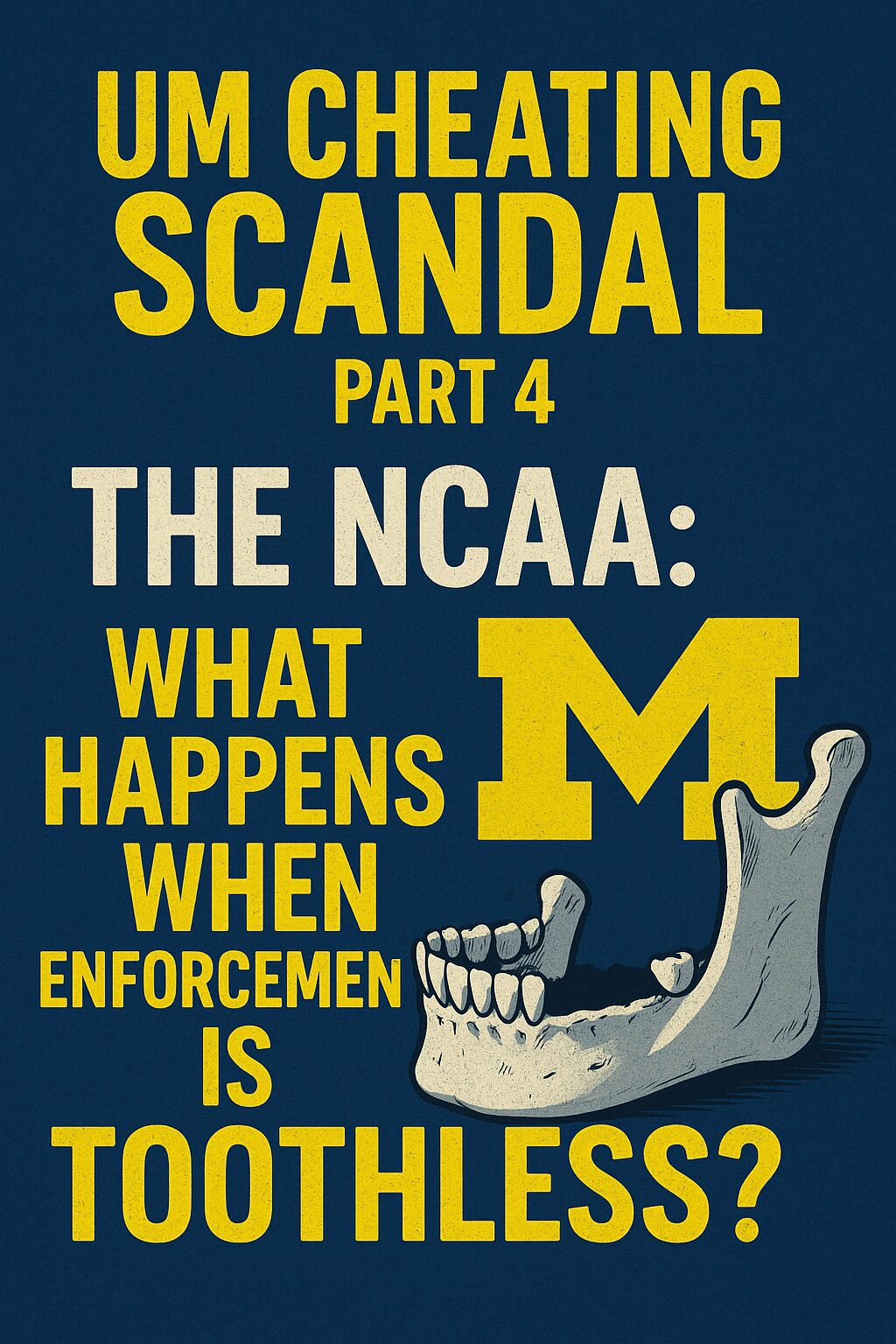
UM Cheating Scandal: The NCAA – What Happens When Enforcement Is Toothless?

In August 2025, the NCAA released its long-awaited Report on infractions committed by and for the University of Michigan football program. For compliance professionals, this case should be viewed not merely as a college sports story but as a case study in organizational misconduct, leadership failure, and cultural breakdown. Just as an FCPA enforcement action lays bare how companies slip into non-compliance, this NCAA decision reveals how one of the country’s premier football programs allowed systemic misconduct to flourish.

In Part 1 of this series, we examined the factual record of the University of Michigan football infractions case, including the impermissible scouting scheme, recruiting inducements, and failures to cooperate. In Part 2, we examined the culture that enabled these violations —a football program that viewed compliance as an enemy and leadership that turned a blind eye. In Part 3, we examined enforcement, or the lack thereof.

Today, when considering the penalties and the enforcement agency, the NCAA. When the dust settled, Michigan walked away without the kind of penalties most observers expected. No games were vacated. No national championship trophies were stripped. No postseason ban was imposed. Instead, Michigan received financial penalties, recruiting restrictions, and an additional four years of probation, in addition to its existing sanctions.

For many, the outcome raises an uncomfortable question: has the NCAA become a toothless enforcement agency? For compliance professionals in the corporate world, this is more than a sports story. It presents an opportunity to reflect on the broader role of enforcement bodies. What happens when regulators fail to enforce meaningfully? How does weak enforcement shape culture? And what can companies learn about their own compliance posture from the NCAA’s example?

The NCAA’s Enforcement Challenge

The NCAA has long touted its role as the guardian of fair play in college sports. Yet over the last decade, its enforcement credibility has eroded. From the Penn State scandal, where authority was challenged in court, to the University of North Carolina’s academic fraud case, where the NCAA claimed it lacked jurisdiction, the association has repeatedly faced criticism that its sanctions are inconsistent, politically influenced, or ineffective.

The Michigan case is the latest data point. Despite describing the scouting scheme as “one of one” in scope and seriousness, the Committee on Infractions declined to impose the stiffest penalties available:

  • No vacating of wins from the 2021–2023 seasons.
  • No forfeiture of the 2023 National Championship, which Michigan won while the scheme was ongoing.
  • No postseason ban, even though the guidelines make such bans mandatory in Level I–Aggravated cases without exemplary cooperation.

Instead, the NCAA substituted financial penalties, citing fairness to current student-athletes who were not involved in the allegations. While this rationale has merit, it leaves the impression that Michigan “got away with it” and that the NCAA is unwilling to enforce its own rules when high-profile programs are involved.

What Weak Enforcement Signals

For compliance officers, this is familiar territory. Regulators who talk tough but avoid meaningful enforcement send a dangerous signal. They tell organizations:

• The risk of being caught is survivable. If the worst that can happen is a fine or probation, misconduct can be rationalized as a business risk.

• The rules are negotiable. If guidelines call for certain penalties but regulators bend them for expedience, the rules lose their deterrent effect.

• Culture follows enforcement. If leaders see that regulators will not impose significant penalties, they are less likely to instill a culture of compliance.

The DOJ has been explicit on this point in its 2023 and 2024 guidance updates: enforcement must be consistent, transparent, and meaningful. Otherwise, companies see compliance as optional.

Parallels to Corporate Enforcement

Consider the parallels between the NCAA’s enforcement dilemma and corporate regulation:

  • Financial Institutions and Money Laundering: If a bank is repeatedly fined for AML violations but never loses its charter or key licenses, the cost of compliance failure becomes just another line item on the balance sheet.
  • FCPA Cases Without Monitors: When companies resolve foreign bribery matters with fines but no independent monitor, questions arise about whether compliance programs will really change.
  • Tech Sector Antitrust: When major technology firms pay record fines but retain their market dominance, critics argue that regulators are unwilling to disrupt the status quo.

The NCAA’s approach in the Michigan case echoes these patterns: big headlines, some financial pain, but no penalties that fundamentally change behavior.

Why the NCAA Chose This Path

The NCAA faced a difficult choice. Punishing current athletes for past staff misconduct raises questions of fairness. Vacating championships is largely symbolic; fans remember who won on the field. And the legal and political environment has shifted: with NIL, the transfer portal, and litigation like House v. NCAA, the NCAA’s authority is weaker than ever.

However, from an enforcement perspective, these explanations do not eliminate the central issue. When rules are broken at the highest level and the sanctions do not match the severity of the violations, the credibility of the regulator erodes.

Lessons for Compliance Professionals

What should compliance officers take away from the NCAA’s Michigan decision?

1. Enforcement Must Be Meaningful

If sanctions do not create real pain, misconduct will be rationalized as a cost of doing business. Compliance programs must be backed by meaningful consequences, whether in sports, banking, or healthcare.

2. Consistency Matters

Regulators that treat marquee institutions differently from smaller ones risk undermining the integrity of the system. In the corporate world, DOJ has emphasized consistency across industries. Selective enforcement creates cynicism.

3. Symbolic Sanctions Still Matter

Yes, vacating wins may be symbolic, but symbols shape culture. Stripping a national championship would have sent a message: no program is above the rules. In the corporate world, this is akin to requiring public admissions of wrongdoing, symbols that reinforce accountability.

4. Enforcement Without Teeth Undermines Compliance Officers

Michigan’s Chief Compliance Officer fought to enforce the rules but was rebuffed by the football staff. The NCAA’s weak enforcement now validates that resistance. Similarly, in corporations, when regulators fail to take action, compliance officers lose internal leverage.

5. The Importance of Independent Oversight

The NCAA is fundamentally a membership organization, as the member schools police themselves. This structural conflict mirrors corporate boards that allow management too much sway over investigations. Independence matters. Without it, enforcement credibility is always in doubt. Even worse is the clear implication that the NCAA is now entirely irrelevant for enforcement.

The Broader Question: Can the NCAA Still Govern

The Michigan case may be remembered less for the violations than for what it revealed about the NCAA’s limits. With the rise of NIL collectives, super conferences, and legal challenges, the NCAA’s role as enforcer is shrinking.

Some argue that conferences, such as the SEC and Big Ten, or even external regulators, such as Congress or state legislatures, may need to step into the breach. Others believe that the market itself, including fans, media, and sponsors, will impose reputational sanctions when the NCAA fails to do so.

For compliance officers, this debate is instructive. When a regulator loses credibility, industry participants look elsewhere for governance. The same could happen in corporate sectors if regulators falter: private monitors, investor activism, or even international bodies may step in to enforce standards.

The Cost of Toothless Enforcement

The NCAA’s decision in the Michigan case underscores a hard truth: rules without meaningful enforcement are not rules at all but merely suggestions.

For compliance professionals, this case should prompt reflection. What happens when your regulator is unwilling to enforce? What happens when penalties are softened to avoid controversy? And how do you, as a compliance officer, maintain credibility in a culture that sees enforcement as toothless?

The answers are sobering. Regulators must be consistent, meaningful, and unafraid to impose real consequences. Otherwise, they risk becoming like the NCAA: long on rules, short on enforcement, and increasingly irrelevant.


Categories
Red Flags Rising

Red Flags Rising: S01 E27 – Open One Eye, Close One Eye

Mike & Brent break down the investigative report by the Editor-in-Chief of Gamers Nexus, Steve Burke, and his colleagues into GPU smuggling into China, which was recently featured on the ChinaTalk podcast with Jordan Schneider.

Mike & Brent discuss the context for the report (00:51), its key takeaways (03:14), what it means and what it doesn’t mean for U.S. design companies and anyone subject to U.S. export laws (05:47), and why the “high probability” standard provides a path forward for companies facing reports such as this (12:30).

They conclude with another installment of Brent Carlson’s ever-popular “Managing Up” (16:03).

Resources:

Steve Burke & Gamers Nexus’ Report

More about Gamers Nexus

Jordan Schneider’s ChinaTalk Episode

Brent LinkedIn

Mike LinkedIn

Mike & Brent’s “Fresh Looks” Series

Categories
Blog

UM Cheating Scandal Part 3: Violations, Penalties, and Compliance Lessons

In August 2025, the NCAA released its long-awaited Report on infractions committed by and for the University of Michigan football program. For compliance professionals, this case should be viewed not merely as a college sports story but as a case study in organizational misconduct, leadership failure, and cultural breakdown. Just as an FCPA enforcement action lays bare how companies slip into non-compliance, this NCAA decision reveals how one of the country’s premier football programs allowed systemic misconduct to flourish.

In Part 1 of this series, we examined the factual record of the University of Michigan football infractions case, including the impermissible scouting scheme, recruiting inducements, and failures to cooperate. In Part 2, we examined the culture that enabled these violations —a football program that viewed compliance as an enemy and leadership that turned a blind eye. Today in Part 3, we turn to the enforcement phase. What violations did the NCAA find? What penalties did the rules call for? And most importantly, what lessons can compliance professionals take from the outcome?

The Violations

The NCAA catalogued a long list of violations. They fell into five main categories, each with parallels to corporate enforcement.

1. Impermissible Off-Campus Scouting (Level I)

    • Connor Stalions directed a network of interns, staff, and acquaintances to attend opponents’ games, film sidelines, and provide footage to Michigan coaches.
    • In all, there were 56 instances across 52 contests over three seasons.
    • This was deemed a Level I violation, the most serious category, as it undermined integrity and provided an unfair advantage.

2. Recruiting Inducements and Communications (Level II)

      • Staff provided meals, gear, and even attempted to secure Instagram “blue check” verification for recruits.
      • Nearly 100 impermissible text messages were exchanged with a prospect before the allowable contact date.
      • These were classified as Level II violations, significant breaches, but less than systemic corruption.

3. Head Coach Responsibility (Level I)

    • Jim Harbaugh was charged with failure to promote an atmosphere of compliance and monitor his staff.
    • After January 2023, under new rules, head coaches are automatically responsible for staff violations.

4. Failure to Cooperate (Level I and II)

    • Stalions destroyed his phone and hard drives, instructed others to delete evidence, and misled investigators.
    • Harbaugh refused to provide records or sit for interviews after leaving the University of Michigan.
    • Denard Robinson provided false information.
    • Sherrone Moore deleted text messages but ultimately cooperated; his failure was deemed Level II.

5. Failure to Monitor (Level II)

    • Michigan, as an institution, failed to monitor its football program, was unable to educate interns, and allowed a culture hostile to compliance to persist.

Possible Penalties

NCAA bylaws, much like DOJ sentencing guidelines, provide ranges of penalties depending on the level of violation and the presence of aggravating or mitigating factors.

For Level I–Aggravated cases (the category Michigan, Harbaugh, Stalions, and Robinson were placed in), possible penalties include:

  • Multi-year postseason bans.
  • Scholarship reductions or equivalent financial penalties.
  • Multi-year probation.
  • Show-cause orders for individuals (restricting employment opportunities).
  • Suspensions.
  • Financial fines, including forfeiture of postseason revenue.

For Level II cases, penalties typically include:

  • Probation.
  • Recruiting restrictions.
  • Shorter show-cause orders.
  • Limited suspensions.

Given Michigan’s status as a repeat violator, from its 2024 infractions case, the panel could have imposed harsher penalties, including a multi-year postseason ban.

The Actual Penalties

The Committee on Infractions ultimately issued a wide-ranging set of penalties but also made notable adjustments.

For the Institution

  • Probation: Four years, consecutive to the 2024 probation. Michigan is now under probation through 2031.
  • Financial Penalties:
    • $50,000 plus 10% of the football budget.
    • Forfeiture of postseason revenue sharing for the 2025–26 and 2026–27 seasons.
    • An additional fine equal to 10% of football scholarships (converted to a financial penalty rather than scholarship reductions).
  • Recruiting Restrictions:
    • 25% reduction in official visits.
    • 14 weeks of no recruiting communications during probation (three self-imposed, 11 added by the panel).
  • Public Censure: Posting of infractions decision on the athletic department’s website and disclosure to all recruits.

Notably, no postseason ban and no scholarship reductions were imposed—instead, financial penalties substituted for those traditional sanctions. The panel explained that banning postseason play would unfairly punish current athletes who were not involved in the misconduct.

For Individuals

  • Connor Stalions: 8-year show-cause order, 100% suspension of first season if employed.
  • Jim Harbaugh: 10-year show-cause order, 100% suspension if employed. This runs consecutively to his 4-year show-cause from the 2024 case, extending sanctions through 2038.
  • Denard Robinson: 3-year show-cause order, 100% suspension if employed.
  • Sherrone Moore: 2-year show-cause order, additional one-game suspension on top of Michigan’s self-imposed two-game suspension.
  • Jesse Minter (via negotiated resolution): One-year show-cause order.
  • Steve Clinkscale (via negotiated resolution): Two-year show-cause order plus 50% suspension of first season if employed.

Analyzing the Penalties

How should compliance professionals view the gap between possible and actual penalties?

1. Postseason Ban Avoided

    • The NCAA rules require a postseason ban in Level I — Aggravated cases, absent exemplary cooperation. Michigan, as a repeat violator, did not meet that standard.
    • Yet the panel deviated, imposing financial penalties instead. The rationale: punishing current student-athletes for past staff misconduct would be inequitable.
    • In corporate terms, this is akin to regulators substituting financial penalties for draconian sanctions that would harm innocent employees or shareholders. For example, instead of barring a company from government contracting (a “corporate death penalty”), DOJ sometimes imposes fines or monitorships.

2. Scholarship Reductions Replaced with Fines

    • Traditionally, scholarship cuts penalize future competitiveness. However, with the NCAA shifting to roster limits, the panel converted this to a financial penalty equivalent to 10% of the scholarships.
    • This reflects a broader compliance trend: sanctions are evolving to fit new realities. Just as regulators now focus on clawbacks, certifications, or ESG commitments, the NCAA tailored penalties to the modern college sports landscape.

3. Severe Individual Penalties

    • The most striking sanctions were against individuals: 8 years for Stalions, 10 years for Harbaugh.
    • These are career-altering penalties. They mirror corporate enforcement where executives are increasingly held personally liable, facing debarment, fines, or even prison.
    • Regulators have made clear: individuals cannot hide behind institutions. The NCAA sent the same message here.

4. Repeat Violator Consequences

    • Michigan’s repeat violator status magnified penalties. The institution argued that violations occurred before the prior case closed. The panel rejected this, emphasizing that timing games cannot avoid repeat status.
    • Corporate regulators apply the same principle. A company that resolves one FCPA case and then stumbles again will face far harsher sanctions, regardless of technical timing arguments.

5. Failure to Cooperate as a Penalty for Drivers

    • The panel noted that Stalions’ obstruction was “one of the more significant and serious failures the COI has seen.” Harbaugh’s refusal to cooperate also elevated his penalties.
    • For corporations, this is a reminder: obstruction is worse than the underlying violation. The DOJ has repeatedly stated that cooperation credit can substantially reduce penalties. Michigan shows the reverse, that obstruction inflates them.

Compliance Lessons

What does all this mean for compliance officers outside of college athletics? Several clear lessons emerge.

1. Culture Drives Outcomes

The penalties Michigan received were not just about violations; they were about culture. The NCAA emphasized how the football program treated compliance with disdain. Regulators in the corporate world do the same; they look beyond technical violations to ask whether the company fostered a culture of compliance.

2. Repeat Offenders Lose Credibility

Michigan’s back-to-back cases destroyed any claim of mitigation. Similarly, corporations with repeat offenses face escalating sanctions. Building credibility with regulators requires not only remediating violations but sustaining reform over time.

3. Individual Accountability is Here to Stay

The lengthy show-cause orders against Harbaugh and Stalions reveal a trend of targeting individuals. In corporate enforcement, the DOJ’s Yates Memo and subsequent policies have prioritized individual accountability. Compliance officers must ensure that executives understand they are personally accountable for their actions.

4. Cooperation Matters More Than Ever

The panel’s harshest language was reserved for those who failed to cooperate. In the private business world, DOJ guidance is clear: full cooperation, timely disclosure, and preservation of evidence are prerequisites for leniency. Michigan’s case proves the inverse: obstruct, and you will pay dearly.

5. Penalties Are Evolving

Just as the NCAA substituted fines for postseason bans, regulators are adapting penalties to modern realities. Companies must be prepared not only for fines but also for innovative sanctions, such as monitorships, clawbacks, mandated compliance certifications, or public disclosure requirements.

A Cautionary Tale

The University of Michigan football case is more than a sports scandal. It is a compliance parable. A program that treated compliance as an enemy, ignored red flags, and repeatedly committed violations ultimately faced some of the harshest individual penalties ever handed down in NCAA history.

For compliance professionals, the lessons are timeless. Culture matters more than policy. Repeat violations destroy credibility. Individuals are accountable. Cooperation is non-negotiable. And penalties evolve with the times.

As the DOJ, SEC, and other regulators continue to refine enforcement expectations, companies would do well to heed Michigan’s example. When compliance is marginalized, when leadership fails to set the tone, and when violations become patterns, the penalties—financial, reputational, and personal—will follow.

Categories
The Hill Country Podcast

The Hill Country Podcast – Red Cross and Rotary Club’s Response to July 4th Floods with Kristy Vandenberg

Welcome to the award-winning The Hill Country Podcast. The Texas Hill Country is one of the most beautiful places on earth. In this podcast, Hill Country resident Tom Fox visits with the people and organizations that make this one of the most unique areas of Texas. This week, Tom welcomes back Kristy Vandenberg to discuss the aftermath of the July 4th floods.

Kristy shares her experience and involvement with the Red Cross and Rotary Club, highlighting their immediate response, shelter operations, volunteer efforts, and community support. She details the role of the Red Cross in providing lodging, feeding first responders, and assessing damage, as well as the Rotary Club’s resource mobilization and donation initiatives. Looking ahead, Kristy emphasizes the importance of strategic rebuilding and the community’s collaborative effort to support flood victims. Listeners are provided with information on how to donate and volunteer.

Key highlights:

  • Discussing the Aftermath of July 4th Floods
  • Role of the Red Cross in Disaster Relief
  • Shelters and Volunteer Efforts
  • Rotary Club’s Involvement and Support
  • Future Recovery and Rebuilding Plans

Resources:

Rotary Club of Kerrville

Hill Country Red Cross

Other Hill Country Network Podcasts

Hill Country Authors Podcast

Hill Country Artists Podcast

Texas Hill Country Podcast Network

Artwork

Nancy Huffman Fine Art

Categories
Daily Compliance News

Daily Compliance News: August 27, 2025, The Anti-DEI Compliance Edition

Welcome to the Daily Compliance News. Each day, Tom Fox, the Voice of Compliance, brings you compliance-related stories to start your day. Sit back, enjoy a cup of morning coffee, and listen in to the Daily Compliance News. All, from the Compliance Podcast Network. Each day, we consider four stories from the business world, including compliance, ethics, risk management, leadership, or general interest, relevant to the compliance professional.

Top stories include:

You can donate to flood relief for victims of the Kerr County flooding by going to the Hill Country Flood Relief here.

Categories
Great Women in Compliance

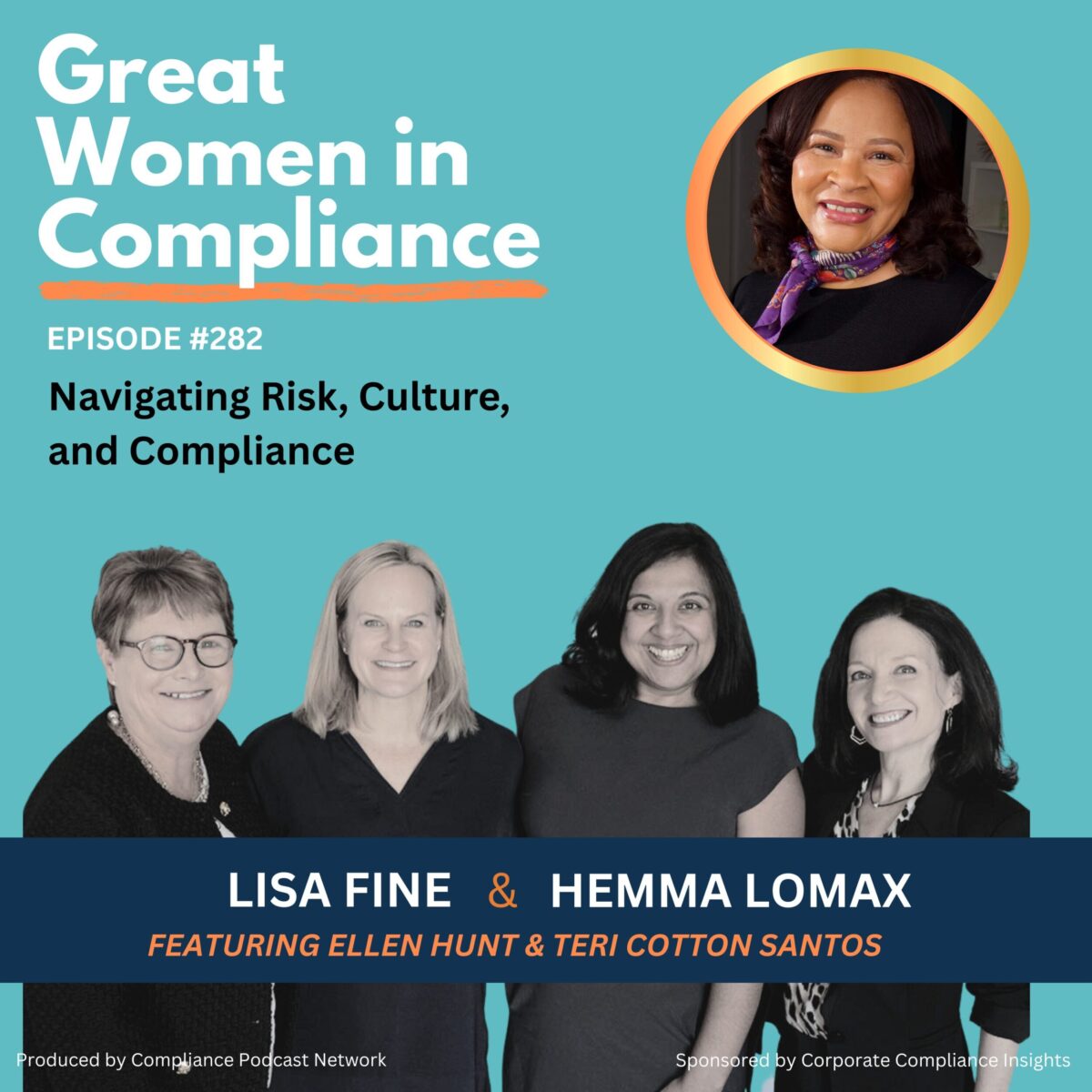
Great Women in Compliance – Navigating Risk, Culture, and Compliance with Teri Cotton Santos

✨ New Episode Alert! ✨

On this special episode of #GWIC, guest host Ellen Hunt talks with the incredible Teri Cotton Santos, Chief Compliance Officer at Phillips 66.

Teri shares her inspiring journey—from serving as General Counsel in Asia at Eli Lilly to leading compliance at HF Sinclair, and now shaping the culture of ethics and compliance at Phillips 66.

🔑 Key takeaways from this conversation:

  • Why trust is the foundation of every effective compliance program
  • How to integrate risk, ethics, and strategy to create impact
  • Lessons in resilience and resourcefulness when leading with limited resources
  • Building compliance programs that are truly fit-for-purpose and built to scale
  • The growing importance of data, technology, and behavioral science in compliance work

Teri also reflects on #leadership, #mentorship, and the power of community in the compliance profession.

🎧 Tune in for an honest, thoughtful, and inspiring discussion about leading with purpose and integrity in today’s evolving regulatory environment.

🔗 Sponsored by Corporate Compliance Insights

#Compliance #Leadership #WomenInCompliance #GreatWomenInCompliance #Ethics #Trust

Categories
Compliance Into the Weeds

Compliance into the Weeds: Unpacking the University of Michigan Football Scandal: Compliance and Consequences

The award-winning Compliance into the Weeds is the only weekly podcast that takes a deep dive into a compliance-related topic, literally going into the weeds to explore a subject more fully. Seeking insightful perspectives on compliance? Look no further than Compliance into the Weeds! In this episode, Tom Fox and Matt Kelly discuss the recent University of Michigan football scandal.

They draw parallels to the infamous 2017 Houston Astros sign-stealing incident and examine the numerous compliance failures within Michigan’s football program. Highlighted issues include impermissible scouting, leadership failures by Jim Harbaugh, marginalization of the compliance function, and the NCAA’s ineffective enforcement. The conversation highlights crucial lessons for corporate compliance, emphasizing the importance of documentation, intern training, cooperation in investigations, and maintaining robust enforcement actions.

Key highlights:

  • Michigan Football Scandal Overview
  • Impermissible Scouting and Violations
  • Leadership Failures and Compliance Issues
  • NCAA’s Toothless Enforcement
  • Comparisons to Corporate Compliance
  • Lessons for Compliance Officers

Ed. Note: Tom Fox has written a 5-part blog post series on the UM Cheating Scandal. It will be posted each day this week. You can view the full series on his blog, the FCPA Compliance and Ethics Blog.

Resources :

Tom

Instagram

Facebook

YouTube

Twitter

LinkedIn

A multi-award-winning podcast, Compliance into the Weeds was most recently honored as one of the Top 25 Regulatory Compliance Podcasts, a Top 10 Business Law Podcast, and a Top 12 Risk Management Podcast.