Categories
Blog

Top 10 Prompts for Improving Tone at the Top

Today, we continue our series on the top 10 prompts for compliance professionals to use to improve their compliance program. Today, we focus on the Top 10 Prompts for Compliance Professionals on “Tone at the Top,” each followed by a detailed explanation highlighting its critical importance. Each prompt should begin with a description of who the author is, who the audience is, and information on your organization. Something like “You are a Chief Compliance Officer for a company in the energy industry. You want a list of things your senior executives can do to help improve your compliance program, based on their list and one or more of the specific prompts below.

1. “What strategies can senior leadership use to effectively set and communicate a strong ethical tone? ”

Explanation:

The “Tone at the Top” is foundational to an effective compliance program, reflecting the ethical values and integrity promoted by an organization’s leadership. This prompt helps compliance professionals outline actionable strategies for senior leaders, including clear messaging, personal accountability, regular ethical communication, and visible actions demonstrating integrity. Such methods ensure employees clearly understand and trust leadership’s ethical commitments. Regulators, especially the DOJ, frequently assess the authenticity of the leadership’s tone as a key indicator of an effective compliance program. Robust leadership strategies help embed compliance deeply into organizational culture, ensuring long-term adherence to ethical standards.

2. “Draft a communication from the CEO emphasizing the organization’s commitment to compliance and ethics.”

Explanation:

Direct and clear communication from the CEO significantly impacts employees’ perception of compliance as a core corporate value. This prompt allows compliance professionals to draft powerful, meaningful messages that reflect a genuine commitment from leadership. Such communications affirm the organization’s ethical stance, reinforce expectations, and provide reassurance that ethical concerns will be addressed seriously. Regulators often view direct communications from top executives as strong evidence of organizational commitment, making this prompt critical for maintaining credibility with employees and regulatory bodies alike.

3. “Explain best practices for integrating the tone at the top into compliance training programs.”

Explanation:

Effective compliance training programs must align closely with the ethical tone set by senior management. This prompt guides compliance professionals in developing training content that incorporates clear messages from leadership, examples of ethical decision-making by executives, and practical scenarios reflecting top-level expectations. Integrating the “Tone at the Top” into training underscores the authenticity and seriousness of compliance messages, significantly increasing employee awareness and internalization of ethical standards. Regulators assess the integration of leadership’s ethical messaging in training as evidence of a genuine commitment to compliance, rendering this practice essential.

4. “Identify metrics or indicators to measure the effectiveness of the tone set by senior leadership.”

Explanation:

Establishing measurable metrics to evaluate leadership’s ethical influence is critical for compliance accountability. This prompt helps compliance professionals determine practical indicators such as employee survey responses, whistleblower report frequency, internal reporting trends, and leadership communications frequency and clarity. Measuring effectiveness validates leadership’s ethical influence and provides essential data for regulatory reviews and internal audits. Organizations using these metrics demonstrate proactive compliance management and continuous improvement. Moreover, metrics provide leaders with clear feedback, helping them reinforce, adjust, or amplify their ethical messaging and behaviors, thus enhancing overall compliance.

5. “Provide examples of effective and ineffective leadership behaviors influencing compliance culture.”

Explanation:

Compliance professionals require concrete examples to illustrate how leadership behaviors shape organizational compliance culture. This prompt supports clear distinctions between positive behaviors—such as transparency, accountability, and active ethical advocacy—and negative behaviors—such as inconsistent messaging, tolerance of unethical actions, or retaliation against whistleblowers. Effective examples educate senior leadership about desirable behaviors while highlighting the compliance risks of ineffective conduct. Identifying behavioral examples helps senior executives avoid unintentional undermining of compliance initiatives and significantly strengthens the credibility and authenticity of the “Tone at the Top.”

6. “Develop an action plan for senior management to demonstrate their commitment to compliance and ethics visibly.”

Explanation:

A tangible, actionable plan ensures that senior executives visibly demonstrate their commitment to ethical practices. This prompt enables compliance professionals to suggest specific actions such as regular town hall meetings, ethical roundtables, personal involvement in compliance events, and transparent communication on ethical issues. Visible commitment reassures employees that compliance is genuinely valued, thereby fostering greater organizational trust and cooperation. Regulators strongly emphasize tangible evidence of top-level commitment, and documented action plans provide essential records for demonstrating sustained ethical leadership, regulatory compliance, and internal alignment with compliance objectives.

7. “Suggest methods for senior leadership to encourage ethical reporting and protect whistleblowers actively.”

Explanation:

Leadership’s role in whistleblower protection significantly impacts an organization’s compliance culture. This prompt guides compliance professionals in outlining best practices for senior leadership, including public support for whistleblower programs, transparent whistleblower policy communications, visible zero-tolerance policies against retaliation, and proactive engagement with ethical reporting mechanisms. Encouraging ethical reporting at the highest levels demonstrates a commitment to transparency, accountability, and continuous improvement. Regulators such as the DOJ explicitly assess leadership’s commitment to whistleblower protection as crucial evidence of an effective compliance program, making this prompt critical.

8. “Explain how senior management can reinforce the tone at the top during crises or significant compliance incidents.”

Explanation:

Leadership’s response during crises significantly shapes organizational perceptions of ethical integrity. This prompt allows compliance professionals to prepare senior leaders to handle compliance incidents transparently, responsibly, and decisively, maintaining consistency with the stated “Tone at the Top.” Effective crisis management involves clear communication, timely acknowledgment, thorough root cause analyses, and visible accountability measures. Reinforcing ethical commitments during difficult times strengthens internal trust, enhances external credibility, and fulfills regulatory expectations for transparent crisis responses. Compliance programs that maintain consistent ethical messaging during crises demonstrate resilience, integrity, and maturity in the compliance framework.

9. “Outline techniques senior management can use to evaluate and refresh the organization’s ethical tone regularly.”

Explanation:

The ethical tone from leadership should remain dynamic, reflective of evolving organizational needs, risks, and regulatory expectations. This prompt equips compliance professionals with techniques such as annual reviews, employee focus groups, ethical climate surveys, and executive ethics workshops. Regular evaluation and periodic refreshment of ethical messaging ensure ongoing alignment between leadership’s stated values and actual organizational culture. Demonstrating regular evaluations and responsive adjustments shows regulators an active commitment to maintaining a relevant, meaningful “Tone at the Top,” enhancing compliance credibility, operational effectiveness, and overall organizational resilience in ethics and compliance matters.

10. “Draft board of director communications emphasizing oversight responsibilities related to the tone at the top and compliance culture.”

Explanation:

Boards play a vital role in overseeing senior management’s ethical leadership. This prompt enables compliance professionals to communicate board-level responsibilities, regulatory expectations, and specific oversight tasks such as ethical audits, regular interactions with compliance leaders, and scrutiny of senior management’s ethical performance. Effective board oversight reinforces the accountability of senior leaders, provides critical external validation of ethical messaging, and ensures alignment with regulatory guidelines from bodies such as the SEC and DOJ. Clear board communications underscore a top-down commitment to compliance, further embedding ethics throughout organizational culture.

Effectively establishing, reinforcing, and communicating the “Tone at the Top” remains a cornerstone of compliance excellence. Leveraging these prompts enables compliance professionals to proactively equip senior leaders, executives, and boards with actionable tools, clear communication strategies, and visible demonstration opportunities. Successfully executing these prompts not only strengthens an organization’s compliance culture but also significantly mitigates compliance risks, reinforces internal trust, and provides compelling evidence of ethical rigor and commitment to external regulators.

If you have some favorite prompts you utilize in the area of Tone at the Top, please send them to me, and I will start a Prompt List to share with all compliance professionals.

Categories
Hill Country Hustlers

Hill Country Hustlers: Crafting Leather Masterpieces with Stacy Hill Sander: A Journey from Medical Lab to Leatherworks

In this episode of the Hill Country Hustlers podcast, Stacy Hill Sander from Harper, Texas, shares her fascinating journey from being a medical laboratory scientist to a talented leatherworker. Stacy discusses how her passion for creating artistic items led her to the world of leather crafting, detailing her experiences, learning process, and the supportive leatherworking community. She reveals how her skills evolved over nine years, leading to the foundation of her business, Rustically Redeemed Custom Leather and Laser. Stacy also talks about managing her time between her day job, family, and leatherwork, and sheds light on her new ventures, including lasering and offering wedding packages. Tune in to hear about her unique handmade leather goods and the story behind each creation.

Key highlights:

  • Meet Stacy Hill Sander: Medical Scientist and Leather Artisan
  • Discovering Leather Crafting at 4-H Camp
  • Starting Rustically Redeemed Custom Leather and Laser
  • The Importance of Skill Growth and Community
  • Balancing Work, Family, and Leather Crafting
  • Showcasing Unique Leather Creations
  • Where to Find Rustically Redeemed Custom Leather and Laser Products

Resources:

Zach Green on LinkedIn

Follow Stacy Hill Sander on:

Facebook

YouTube

Mom, Maker, MedTech Podcast on Spotify

Follow Rustically Redeemed Custom Leather and Laser on:

Website

Facebook

Instagram

Categories
Red Flags Rising

Red Flags Rising: S01 E25 – Deals, More Deals, and Protective Backstops

Mike & Brent dive into the latest geopolitical developments surrounding technology exports and the interplay between leading tech companies and the U.S. Administration.

Specifically, they discuss the latest news regarding U.S. conditions for licensing the export of Nvidia’s H20 chip to China (00:38), the impact of the deal on trade negotiations between the U.S. and the People’s Republic of China (and vice-versa) (04:59), the difficult position companies generally are in regarding export controls due diligence and the multiple potential meanings and consequences regarding public officials’ statements around export controls (16:01), the latest news regarding Intel’s CEO’s interactions with the U.S. Administration and how they illustrate vividly the “whipsaw” effect companies and executives face as geopolitical winds swirl (20:09), the relevance of the “pretend mistake” tactic in dealmaking—or, as Mike referred to it in the context of U.S. export controls, the “revoked forgiveness” tactic (22:40), and, practically speaking, how companies can best anchor themselves amidst the geopolitical storm by designing and implementing a “high probability protocol” to best anticipate core trends in U.S. export controls enforcement and serve as an important compliance backstop (25:36).

They then conclude with another installment of Brent Carlson’s “Managing Up” (26:59).

Resources:

Brent LinkedIn

Mike LinkedIn

Mike & Brent’s “Fresh Looks” Series

Categories
Trekking Through Compliance

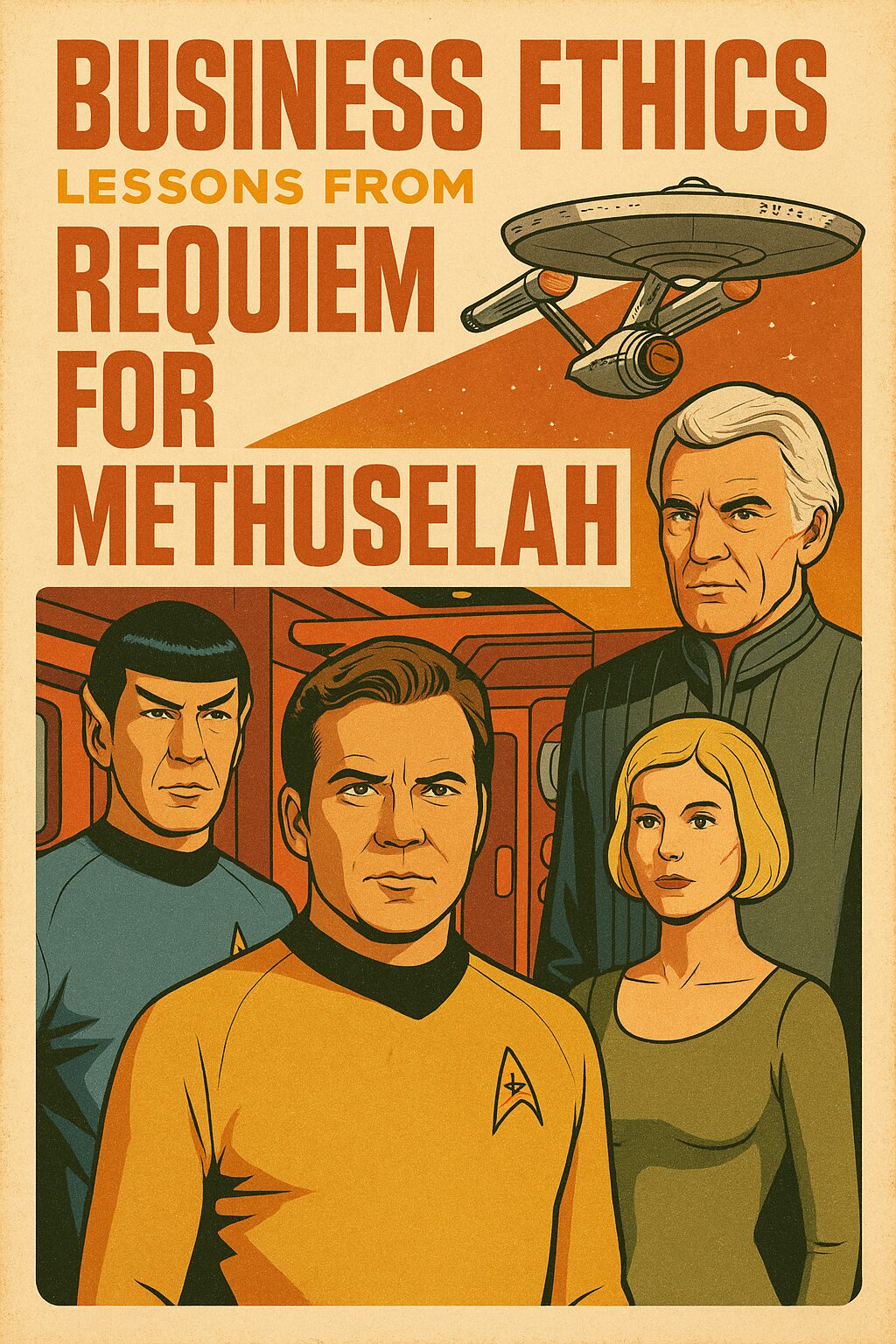
Trekking Through Compliance: Episode 73 – Power, Secrecy, and Responsibility: Business Ethics Lessons from Requiem for Methuselah

In corporate life, ethical decision-making is not only a question of right and wrong. It is also a test of leadership, trust, and long-term vision. Missteps in ethics erode corporate culture, destroy reputations, and invite regulatory and shareholder scrutiny.

Few Star Trek episodes present an ethical crucible as layered as Requiem for Methuselah. The story unfolds into a complex web of secrecy, autonomy, manipulation, and unintended consequences, a rich territory for ethical reflection. From this episode, we can draw five business ethics lessons directly applicable to today’s corporate compliance environment.

Lesson 1: Transparency Is Essential to Trust

Illustrated by: Flint initially hides critical facts from Kirk, Spock, and McCoy about his true identity. His secrecy stems from a desire to control the situation, but it breeds mistrust and escalating tension.

Ethics Lesson. Stakeholders, whether employees, customers, or regulators, expect honesty. Concealing facts creates suspicion, damages credibility, and can lead to decisions made on false assumptions.

Lesson 2: Autonomy Must Be Respected, Even with Good Intentions

Illustrated by Flint, Rayna was designed to be his companion, controlling her environment and limiting her exposure to the outside world.

Ethics Lesson. Corporations sometimes restrict employee autonomy under the guise of protection, micromanaging, withholding career opportunities, or blocking external engagement. Ethical leadership means equipping people to act responsibly, not controlling every move they make.

Lesson 3: Ends Do Not Justify the Means

Illustrated by: To achieve his goal, Flint manipulates the Enterprise crew, withholds the cure they need until his conditions are met, and engineers circumstances to force emotional outcomes for Rayna.

Ethics Lesson. Compromising ethics for results can cause long-term damage far outweighing the immediate gain.

Lesson 4: Emotional Intelligence Is Critical in Ethical Decision-Making

Illustrated by: Kirk fails to foresee that forcing Rayna to choose between him and Kirk will overwhelm her, leading to her breakdown.

Ethics Lesson. Leaders may overlook red flags, delay action, or make decisions based on personal feelings rather than principles. Ethical clarity often requires stepping back and separating personal attachment from professional responsibility.

Lesson 5: Ethical Leadership Includes Considering Long-Term Impact

Illustrated by: Flint’s immortality has given him a unique long view of history, but in this episode, he fails to account for the long-term consequences of his actions toward Rayna and the Enterprise crew.

Ethics Lesson. Businesses that focus solely on short-term gains, without assessing long-term impacts, risk harming their reputation, eroding stakeholder trust, and creating systemic problems. Ethical leaders anticipate not just the next quarter, but the next decade.

Final ComplianceLog Reflections

Requiem for Methuselah is ultimately a cautionary tale about the cost of ethical missteps, even for someone with the wisdom of centuries. Flint’s intellect and resources could not compensate for a failure to act with transparency, respect, and foresight.

For today’s corporate leaders, the lesson is simple: ethical decision-making is not a luxury—it is the foundation of sustainable success. The compliance function’s role is to embed these values so deeply into the corporate DNA that they guide every choice, from the boardroom to the front line.

Resources:

⁠⁠Excruciatingly Detailed Plot Summary by Eric W. Weisstein⁠⁠

⁠⁠MissionLogPodcast.com⁠⁠

⁠⁠Memory Alpha

Categories
Daily Compliance News

Daily Compliance News: August 13, 2025, The Bad App Store Ratings Edition

Welcome to the Daily Compliance News. Each day, Tom Fox, the Voice of Compliance, brings you compliance-related stories to start your day. Sit back, enjoy a cup of morning coffee, and listen in to the Daily Compliance News. All, from the Compliance Podcast Network. Each day, we consider four stories from the business world, compliance, ethics, risk management, leadership, or general interest for the compliance professional.

Top stories include:

You can donate to flood relief for victims of the Kerr County flooding by going to the Hill Country Flood Relief here.

Categories
Compliance Into the Weeds

Compliance into the Weeds – Two Cyber Security Cases for the Compliance Professional

The award-winning Compliance into the Weeds is the only weekly podcast that takes a deep dive into a compliance-related topic, literally going into the weeds to explore a subject more fully. Looking for some hard-hitting insights on compliance? Look no further than Compliance into the Weeds! In this episode of Compliance into the Weeds, Tom Fox and Matt Kelly discuss recent enforcement actions under the False Claims Act (FCA) related to cybersecurity failures by government contractors.

They analyze two significant cases: Illumina, a medical device maker, and Aero Turbine, a contractor for the US Air Force. The conversation highlights the importance of ‘security by design’ in product development and the growing scrutiny on compliance practices, especially for smaller companies. The discussion emphasizes the need for robust cybersecurity measures and the challenges faced by organizations in meeting regulatory requirements.

Key highlights:

  • False Claims Act Cases Overview
  • Illumina Case Analysis
  • Aero Turbine Case Insights
  • Compliance Challenges for Smaller Companies

Resources:

Matt Kelly in Radical Compliance

Tom

Instagram

Facebook

YouTube

Twitter

LinkedIn

A multi-award-winning podcast, Compliance into the Weeds was most recently honored as one of the Top 25 Regulatory Compliance Podcasts, a Top 10 Business Law Podcast, and a Top 12 Risk Management Podcast. Compliance into the Weeds has been conferred a Davey, Communicator, and W3 Awards for podcast excellence.

Categories
Compliance Tip of the Day

Compliance Tip of the Day – Finance Models for Compliance

Welcome to “Compliance Tip of the Day,” the podcast where we bring you daily insights and practical advice on navigating the ever-evolving landscape of compliance and regulatory requirements. Whether you’re a seasoned compliance professional or just starting your journey, we aim to provide you with bite-sized, actionable tips to help you stay on top of your compliance game. Join us as we explore the latest industry trends, share best practices, and demystify complex compliance issues to keep your organization on the right side of the law. Tune in daily for your dose of compliance wisdom, and let’s make compliance a little less daunting, one tip at a time.

Today, we consider how the risk analysis for compliance is different for a CFO and why you need to take this into account in your budgeting process.

For more on this topic, check out The Compliance Handbook, a Guide to Operationalizing Your Compliance Program, 6th edition, which LexisNexis recently released. It is available here.

Categories
AI Today in 5

AI Today in 5: August 13, 2025, The Beware the EU AI Act Episode

Welcome to AI Today in 5, the newest addition to the Compliance Podcast Network. Each day, Tom Fox will bring you 5 stories about AI to start your day. Sit back, enjoy a cup of morning coffee, and listen in to the AI Today In 5. All, from the Compliance Podcast Network. Each day, we consider four stories from the business world, compliance, ethics, risk management, leadership, or general interest about AI.

For more information on the use of AI in compliance programs, see Tom Fox’s new book, Upping Your Game. You can purchase a copy of the book on Amazon.com.

Categories
Blog

Business Ethics Lessons from Star Trek’s Requiem for Methuselah

In corporate life, ethical decision-making is not only a question of right and wrong. It is also a test of leadership, trust, and long-term vision. Missteps in ethics erode corporate culture, destroy reputations, and invite regulatory and shareholder scrutiny.

Few Star Trek episodes present an ethical crucible as layered as Requiem for Methuselah. In this episode, the Enterprise crew, seeking an urgently needed medical cure for a deadly illness sweeping the ship, beams down to a remote, seemingly uninhabited planet. There, they meet the enigmatic Flint, a man who turns out to be immortal, having lived for over 6,000 years under various identities, from Methuselah to Da Vinci. Flint lives with Rayna, a beautiful, brilliant young woman who, as the crew later learns, is not human but an android he has created.

The story unfolds into a complex web of secrecy, autonomy, manipulation, and unintended consequences, a rich territory for ethical reflection. From this episode, we can draw five business ethics lessons directly applicable to today’s corporate compliance environment.

Lesson 1: Transparency Is Essential to Trust

Illustrated By: Flint initially hides critical facts from Kirk, Spock, and McCoy: his true identity, the fact that Rayna is an android, and the location of the life-saving mineral ryetalyn they came to obtain. His secrecy stems from a desire to control the situation, but it breeds mistrust and escalating tension.

Ethics Lesson. In business, withholding material information, even with ostensibly good intentions, undermines trust—stakeholders, whether employees, customers, or regulators, expect honesty. Concealing facts creates suspicion, damages credibility, and can lead to decisions made on false assumptions. A compliance culture grounded in transparency prevents misunderstandings and reinforces stakeholder confidence.

What should you do?

  • Communicate openly about relevant facts, especially those impacting health, safety, or financial stability.
  • Establish disclosure protocols for potential conflicts of interest.
  • Recognize that partial truths can be as damaging as outright falsehoods.

Lesson 2: Autonomy Must Be Respected, Even with Good Intentions

Illustrated by Flint, Rayna was designed to be his companion, controlling her environment and limiting her exposure to the outside world. He claims to be protecting her, but in doing so, denies her agency. When she begins to form independent thoughts and feelings, particularly toward Kirk, Flint’s inability to let go leads to tragedy.

Ethics Lesson. Corporations sometimes restrict employee autonomy under the guise of protection, micromanaging, withholding career opportunities, or blocking external engagement. Even if the motive is to “protect” the employee or company, the result can stifle growth and foster resentment. Ethical leadership means equipping people to act responsibly, not controlling every move they make.

What should you do?

  • Empower individuals to make informed choices within ethical boundaries.
  • Provide access to opportunities and resources without paternalistic gatekeeping.
  • Respect the right of employees to voice concerns and explore options.

Lesson 3: Ends Do Not Justify the Means

Illustrated By: Flint’s primary objective, immortality, has allowed him to amass vast knowledge and wealth. Yet to achieve his goals in this episode, he manipulates the Enterprise crew, withholds the cure they need until his conditions are met, and engineers circumstances to force emotional outcomes for Rayna.

Ethics Lesson. In business, leaders may justify cutting corners or bending rules to achieve short-term results, winning a contract, securing market share, or hitting quarterly targets. But compromising ethics for results can cause long-term damage far outweighing the immediate gain. A sustainable corporate culture is built on the principle that ethical processes matter as much as business goals.

What should you do?

  • Evaluate not just what you achieve, but how you achieve it.
  • Build decision-making frameworks that weigh both outcomes and methods.
  • Reinforce that compliance and ethics are integral to success, not obstacles to it.

Lesson 4: Emotional Intelligence Is Critical in Ethical Decision-Making

Illustrated By: Kirk’s growing attachment to Rayna closes his eyes to the urgency of his mission. McCoy warns him about becoming too emotionally involved, but Kirk underestimates the impact on his judgment. Flint, likewise, fails to foresee that forcing Rayna to choose between him and Kirk will overwhelm her, leading to her breakdown.

Ethics Lesson. In corporate environments, emotions, whether loyalty, rivalry, or fear, can cloud ethical judgment. Leaders may overlook red flags, delay action, or make decisions based on personal feelings rather than principles. Ethical clarity often requires stepping back and separating personal attachment from professional responsibility.

What should you do?

  • Train leaders to recognize when emotions may be influencing decisions.
  • Encourage second opinions and peer review in high-stakes decisions.
  • Create safe spaces for voicing concerns about potential bias.

Lesson 5: Ethical Leadership Includes Considering Long-Term Impact

Illustrated By: Flint’s immortality has given him a unique long view of history, but in this episode, he fails to account for the long-term consequences of his actions toward Rayna and the Enterprise crew. His choices have immediate, tragic outcomes and lasting emotional scars.

Ethics Lesson. Businesses that focus solely on short-term gains, without assessing long-term impacts, risk harming their reputation, eroding stakeholder trust, and creating systemic problems. Ethical leaders anticipate not just the next quarter, but the next decade. Considering long-term consequences ensures ethical decisions hold up under the scrutiny of time.

What should you do?

  • Incorporate long-term risk and ethical impact into strategic planning.
  • Assess how today’s decisions will be perceived by future employees, customers, and regulators.
  • Prioritize sustainability, both in environmental and cultural terms.

Why “Requiem for Methuselah” Matters for Business Ethics

The drama in Requiem for Methuselah is driven not by alien threats or galactic battles, but by human (and android) ethical dilemmas: secrecy, autonomy, manipulation, emotional entanglement, and shortsightedness. These are the same challenges corporate leaders face when navigating business ethics in the modern era.

An ethical corporate culture:

  • Practices transparency to build trust.
  • Respects the autonomy of individuals.
  • Rejects “ends justify the means” thinking.
  • Recognizes and manages the role of emotions in decision-making.
  • Considers the long-term legacy of choices made today.

The compliance department is not just a rules enforcer. According to the DOJ, it is the ethics steward of the organization, ensuring that decisions at every level meet both legal and moral standards.

Final ComplianceLog Reflections

Requiem for Methuselah is ultimately a cautionary tale about the cost of ethical missteps, even for someone with the wisdom of centuries. Flint’s intellect and resources could not compensate for a failure to act with transparency, respect, and foresight.

For today’s corporate leaders, the lesson is simple: ethical decision-making is not a luxury—it is the foundation of sustainable success. The compliance function’s role is to embed these values so deeply into the corporate DNA that they guide every choice, from the boardroom to the front line.

Resources:

⁠⁠Excruciatingly Detailed Plot Summary by Eric W. Weisstein⁠⁠

⁠⁠MissionLogPodcast.com⁠⁠

⁠⁠Memory Alpha

Categories
Blog

Governing Reputation Risk: Five Essential Lessons for Compliance Professionals

Yesterday, we began a look at The DCRO Institute’s Guiding Principles for Reputation Risk Governance  (Guiding Principles). These Guiding Principles reframe reputation as a governance imperative, one that demands board-level oversight, operational alignment, and proactive intelligence gathering. A company’s credibility and trustworthiness influence every facet of performance, from market access and investor confidence to employee engagement and regulatory standing.

These principles offer a blueprint for embedding reputation risk into the core of enterprise governance, making it a shared responsibility across leadership, compliance, and operational functions. By integrating culture monitoring, third-party oversight, digital risk detection, and leadership readiness into compliance frameworks, organizations can shift from reacting to reputational crises to building resilience against them. This approach not only satisfies growing stakeholder and regulatory expectations but also positions the compliance function as a strategic driver of trust, value creation, and long-term enterprise sustainability.

For compliance professionals, these principles are more than theory. They connect directly to culture, ethics, disclosure integrity, and third-party risk. Today, we consider the five key takeaways, each with practical implications for how we integrate reputation risk into a compliance program.

1. Treat Reputation as a Strategic Asset—and a Material Risk

The Guiding Principles begin with a foundational point: reputation is both a value creator and a risk multiplier. Like intellectual property or brand equity, it can differentiate your company in the market, but it can also magnify the damage from other operational, legal, or ethical failures.

For compliance leaders, this means ensuring that reputation risk is built into your risk assessment framework. If your compliance program only measures transactional risks (e.g., FCPA, data privacy breaches, antitrust) without considering how stakeholder trust shapes enforcement, market access, or capital cost, you are missing the bigger picture.

You also need to ask: Does your board define its “reputation risk appetite”? Are there escalation triggers when specific trust-related indicators change? This kind of clarity turns reputation from an abstract concept into a measurable, governable asset. When you treat reputation like any other material risk, you also create defensibility, showing regulators, investors, and courts that your oversight is systematic, not ad hoc.

2. Recognize That Culture and Operations Are the Roots of Reputation

The report is blunt: Reputation is not built through messaging alone. It grows from the reality of how your business operates every day. Culture, incentives, operational integrity, and leadership behavior are the soil in which reputation thrives or dies.

For compliance professionals, this reinforces the critical link between culture assessments, operational audits, and reputation outcomes. You can’t “spin” your way out of a culture that tolerates ethical shortcuts, unsafe practices, or opaque decision-making.

The compliance function can play a leading role here by:

  • Measuring and reporting on speak-up culture.
  • Auditing incentive structures to ensure they don’t encourage risky shortcuts.
  • Testing operational resilience in high-pressure situations.

If culture is aligned with stated values, stakeholders will see it in consistent behavior. If it’s not, misalignment will eventually surface, often in a way that’s costly, public, and difficult to control. Compliance leaders should therefore embed reputation health checks into regular program reviews, linking operational integrity directly to trust metrics.

3. Build Reputation Risk Governance into the Enterprise Ecosystem

One of the strongest points in the Guiding Principles is that reputation risk can emerge from anywhere inside operations, from third parties, or in your digital footprint. That means it must be embedded into every part of enterprise risk management, from strategic planning to vendor onboarding.

For compliance, this is a direct call to expand due diligence and monitoring. Third parties can be the fastest way for reputation damage to bypass your internal controls. Are you evaluating vendors, distributors, and joint venture partners for cultural fit and ethical behavior, not just financial health or legal compliance?

Embedding reputation considerations also means partnering with other functions: IT on cybersecurity and AI governance; procurement on supply chain transparency; marketing on public claims; and HR on leadership tone and diversity commitments. When the risk is shared, the oversight must be shared with clear RACI charts defining who does what when early warning signals appear.

This integration moves reputation from being a “side conversation” to a standing agenda item in governance, risk, and compliance forums.

4. Leverage Early, Integrated Intelligence—Especially for Digital and Geopolitical Threats

The Guiding Principles highlight a reality every compliance officer knows: by the time a reputational crisis makes the news, you are already behind. Boards need early, integrated intelligence connecting stakeholder sentiment, digital chatter, geopolitical risk signals, and market behavior into actionable insights.

For compliance programs, this means moving beyond lagging indicators like hotline data or after-the-fact audit findings. You need to invest in:

  • Continuous media and social media monitoring for risk-relevant narratives.
  • Stakeholder sentiment analysis in key markets.
  • Digital threat intelligence to detect data leaks, impersonations, or coordinated disinformation campaigns.

This is particularly urgent given the convergence of cyber risk, AI-generated misinformation, and political polarization. The report warns that these forces can erode trust within minutes, long before facts are verified. Compliance leaders should therefore collaborate with security, communications, and legal teams to create protocols for rapid internal escalation and response. Early awareness gives you a chance to mitigate before perceptions harden.

5. Prepare the Board and Leadership to Act with Agility and Emotional Intelligence

Reputation risk governance is not just technical; it is human. In high-stakes moments, emotions run high, and decision-makers may default to instinct over principle. The Guiding Principles stress that directors and executives must be prepared, agile, and emotionally aware when trust is on the line.

For compliance, this has two implications:

  1. Scenario Planning and Training—Tabletop exercises should not just simulate legal breaches; they should simulate reputation-shaping events, from whistleblower allegations to viral misinformation. Test not only your processes but also your leaders’ ability to communicate with clarity and empathy under pressure.
  2. Decision Frameworks—When speed is critical, boards and executives need a shared set of non-negotiables: facts required before acting, stakeholder impacts considered, and values that guide trade-offs. Compliance can help codify these principles into playbooks that balance legal, ethical, and reputational priorities.

This preparation is also part of the directors’ fiduciary duties. As the report notes, legal standards like Caremark are expanding to include oversight of culture, conduct, and stakeholder trust. Compliance professionals are well-placed to ensure that leadership readiness meets not only business needs but also evolving legal expectations.

The DCRO Institute’s Guiding Principles for Reputation Risk Governance make one thing clear. In the modern business environment, reputation is not a communications afterthought, but rather it is a governance core.

For compliance professionals, this means expanding our scope. We must integrate reputation into risk assessments, culture programs, third-party oversight, early warning systems, and leadership training. In doing so, we help our organizations not just survive reputational shocks but build trust as a competitive advantage.