Categories
Blog

AI in Compliance Week: Part 2 – A Comprehensive Governance Approach

We continue our weeklong exploration of issues related to using Generative AI in compliance by examining some AI governance issues. In the rapidly evolving landscape of AI, the importance of robust governance frameworks cannot be overstated. The need for comprehensive governance structures to ensure compliance, ethical alignment, and trustworthiness has become paramount as AI systems become increasingly integrated into compliance. Today, we will consider the critical areas of compliance governance and ethics governance and present a holistic approach to mitigating the risks associated with these issues.

MIA AI Governance: The Problems

Missing compliance governance can have far-reaching consequences, undermining the integrity of an entire AI-driven initiative. Businesses must ensure alignment with enterprise-wide governance, compliance, and control (GRC) frameworks. This includes aligning with model risk management practices and embedding robust compliance checks throughout the AI model lifecycle. By promoting awareness of how the AI model works at your organization, you can minimize information asymmetries between development teams, users, and target audiences, fostering a culture of transparency and accountability.

The lack of ethical governance can lead to misalignment with an organization’s values, brand identity, or social responsibility. The answer is that companies should develop comprehensive AI ethics governance methods, including defining ethical principles, establishing an AI ethics review board, and creating a compliance program that addresses ethical concerns. Adopting frameworks like Ethically Aligned AI Design (EAAID) can help integrate ethical considerations into the design process while incorporating AI governance benchmarks beyond traditional measurements to encompass social and moral accountability.

Another outcome of the lack of trustworthy or responsible AI governance can result in unintentional and significant damage. To address this, compliance professionals should help develop accountable and trustworthy AI governance methods that augment enterprise-wide GRC structures. This can include establishing a committee such as an AI Advancement Council or similar structure in your company to oversee mission priorities and strategic AI advancement planning, collaborating with service line leaders and program offices to align with ethical AI guidelines and practices, and developing compliance programs to guide conformance with ethical AI principles and relevant legislation. Finally, implementing AI-independent verification and validation processes can help identify and manage unintentional outcomes.

The Solution

By addressing the critical areas of compliance governance and ethics governance through a more holistic approach, businesses can create a comprehensive framework that mitigates the risks associated with the absence of these crucial elements. This approach ensures that AI systems comply with relevant regulations and standards and align with your company’s values, ethical principles, and the pursuit of trustworthy and responsible AI. As the AI landscape evolves, this comprehensive governance framework will be essential in navigating the complexities and safeguarding the integrity of AI-driven initiatives.

Here are some key steps compliance professionals and businesses can think through to facilitate AI governance in your company:

  1. Establish a Centralized AI Governance Body:
    • Create an AI Governance Council that oversees your organization’s AI strategy, policies, and practices.
    • Ensure the council includes representatives from various stakeholder groups, such as legal, compliance, ethics, risk management, IT, and other subject matter experts.
    • Empower the council to develop and enforce AI governance frameworks, guidelines, and processes.
  2. Conduct AI Risk Assessments:
    • Identify and assess the risks associated with the organization’s AI initiatives, including compliance, ethical, and other compliance-related risks.
    • Prioritize the risks based on their potential impact and likelihood of occurrence.
    • Develop mitigation strategies and action plans to address the identified risks.
  3. Align AI Governance with Enterprise-wide Frameworks:
    • Ensure the AI governance framework is integrated with the organization’s existing GRC and Risk Management processes.
    • Establish clear lines of accountability and responsibility for AI-related activities across the organization.
    • Integrate AI governance into the organization’s broader risk management and compliance programs.
  4. Implement Compliance Governance Processes:
    • Develop and enforce AI-specific compliance controls, policies, and procedures.
    • Embed compliance checks throughout the AI model lifecycle, from development to deployment and monitoring.
    • Provide training and awareness programs to educate employees on AI compliance requirements.
  5. Establish Ethics Governance Mechanisms:
    • Define the organization’s AI ethics principles, values, and code of conduct.
    • Create an AI Ethics Review Board to assess and monitor the ethical implications of AI initiatives.
    • Implement processes for ethical AI design, such as the Ethically Aligned AI Design methodology.
    • Incorporate ethical AI benchmarks and accountability measures into the organization’s performance management and reporting processes.
  6. Implement Reliance-Related Governance:
    • Develop responsible and trustworthy AI governance practices that align with the organization’s enterprise-wide GRC frameworks.
    • Establish an AI Advancement Council to oversee strategic AI planning and alignment with ethical guidelines.
    • Implement AI-independent verification and validation processes to identify and manage unintended outcomes.
    • Provide comprehensive training and awareness programs on AI risk management for employees, contractors, and other stakeholders.
  7. Foster a Culture of AI Governance:
    • Promote a culture of accountability, transparency, and continuous improvement around AI governance.
    • Encourage cross-functional collaboration and communication to address AI-related challenges and opportunities.
    • Review and update the AI governance framework regularly to adapt to evolving regulatory requirements, technological advancements, and organizational needs.

By following these steps, organizations can implement a comprehensive governance framework that addresses compliance, ethics, and reliance-related governance. This framework enables organizations to harness the power of AI while mitigating the associated risks. 

AI Governance Resources

There are several notable resources the compliance professional can tap into around this issue of AI governance practices. The Partnership on AI Partnership on AI is a multi-stakeholder coalition of leading technology companies, academic institutions, and nonprofit organizations. It has been at the forefront of developing best practices and guidelines for the responsible development and deployment of AI systems. It has published influential reports and frameworks, such as the Tenets of Responsible AI and the Model Cards for Model Reporting, which have been widely adopted across the industry.

The Algorithmic Justice League (ALJ) is a nonprofit organization dedicated to raising awareness about AI’s social implications and advocating algorithmic justice. It has developed initiatives such as the Algorithmic Bias Bounty Program, encouraging researchers and developers to identify and report biases in AI systems. The AJL has highlighted the importance of addressing algorithmic bias and discrimination in AI.

IEEE Global Initiative on Ethics of Autonomous and Intelligent Systems is a multidisciplinary effort to develop standards, guidelines, and best practices for the ethical design, development, and deployment of autonomous and intelligent systems. It has produced key documents and reports, such as the Ethically Aligned Design framework, which guides the incorporation of ethical considerations into AI development.

The AI Ethics & Governance Roundtable is an initiative led by the University of Cambridge’s Leverhulme Centre for the Future of Intelligence. It brings together industry, academia, and policymaking experts to discuss emerging issues, share best practices, and develop collaborative solutions for AI governance. The roundtable’s insights and recommendations have influenced AI governance frameworks and policies at the organizational and regulatory levels.

These examples demonstrate the power of industry collaboration in advancing AI governance practices. By pooling resources, expertise, and diverse perspectives, these initiatives have developed comprehensive frameworks, guidelines, and standards being adopted across the AI ecosystem. Compliance professionals should avail themselves of these resources to prepare your company to take the next brave steps in the intersection of compliance, governance, and AI.

Categories
Compliance Tip of the Day

Compliance Tip of the Day: How AI is Transforming Risk Management

Welcome to “Compliance Tip of the Day,” the podcast where we bring you daily insights and practical advice on navigating the ever-evolving landscape of compliance and regulatory requirements.

Whether you’re a seasoned compliance professional or just starting your journey, our aim is to provide you with bite-sized, actionable tips to help you stay on top of your compliance game.

Join us as we explore the latest industry trends, share best practices, and demystify complex compliance issues to keep your organization on the right side of the law.

Tune in daily for your dose of compliance wisdom, and let’s make compliance a little less daunting, one tip at a time.

In today’s episode, we begin a week-long look at some of the ways Generative AI is changing compliance and Risk Management.

For more information on the Ethico ROI Calculator and a free White Paper on the ROI of Compliance, click here.

Categories
Blog

AI in Compliance Week: Part 1 – Transforming Risk Management

Compliance professionals face increasing pressures to adapt and innovate in today’s rapidly evolving landscape. On a recent episode of Innovation in Compliance, I visited with Matt Lowe, the Chief Strategy Officer at MasterControl. We discussed how AI is revolutionizing quality management in the life sciences industry. With a background in engineering and extensive experience at MasterControl, Matt offered a unique perspective on integrating AI into compliance processes. We deeply explored how AI is poised to transform the compliance field.

Generative AI is being utilized to create comprehension-based testing automatically. This innovation significantly reduces the time required for compliance-focused training, transforming a process that once took hours into a task completed in minutes. This approach resonates with the broader compliance community, where efficiency and accuracy are paramount. By automating the generation of training materials, AI can help ensure that employees are adequately trained on your internal policies and procedures, helping your organization maintain compliance with regulatory standards.

Perhaps one of AI’s most exciting promises is the shift from reactive to predictive and preventative compliance. Traditionally, risk management has focused on identifying and correcting issues after they occur. However, AI offers the potential to predict and prevent problems before they arise. By analyzing vast amounts of data, AI can identify patterns and anomalies, allowing organizations to address potential issues proactively.

This predictive capability is precious in the life sciences industry, where the stakes are high. Ensuring the highest quality products can directly impact patient safety and regulatory compliance. Leveraging AI to predict and prevent quality issues represents a transformative shift in managing compliance.

When implementing AI in compliance, you should take a risk-based approach. This involves starting with low-risk AI applications to gain confidence in the technology before moving on to more critical areas. For instance, generating training exams is a low-risk application that can still deliver significant benefits. As organizations become more comfortable with AI, they can explore its use in more complex and higher-risk areas.

This cautious approach aligns with the principles of compliance, where assessing and managing risk is a fundamental aspect of the profession. By gradually incorporating AI, organizations can mitigate potential risks while harnessing the technology’s power to enhance compliance processes.

While AI offers tremendous potential, we both stressed the importance of the “Human in the Loop” approach. AI can provide valuable insights and automate processes, but human oversight remains crucial. This is particularly important in life sciences, where the consequences of errors can be severe. Ensuring that humans review and validate AI-generated outputs helps maintain the accuracy and reliability of compliance efforts. This “Human in the Loop” reflects a balanced approach to AI integration. By combining the strengths of AI with human expertise, organizations can achieve a more robust and effective compliance framework.

Lowe shared his vision for the future of AI in compliance. He envisions a world where AI becomes integral to software applications, transforming how professionals interact with technology. Instead of navigating complex interfaces, users will engage with AI-driven chatbots that provide instant answers and guidance. This shift will enable compliance professionals to access the information they need more efficiently and effectively. AI has the potential to identify gaps in compliance frameworks and suggest appropriate controls. This capability can significantly enhance the effectiveness of compliance programs by ensuring that organizations are always prepared for audits and regulatory scrutiny.

As AI continues to evolve, collaboration within the industry will be essential. Lowe mentioned initiatives like the Convention for Healthcare AI, where industry players and regulators discuss the ethical implications and best practices for AI use. Such collaborations are vital to ensure that AI is leveraged responsibly and ethically, particularly in industries like life sciences, where the impact on human health is significant.

AI has transformative potential for compliance. By automating routine tasks, shifting from reactive to predictive compliance, and adopting a risk-based approach, AI can significantly enhance the efficiency and effectiveness of compliance programs. However, the human element remains crucial to ensure accuracy and reliability. As the industry continues to explore and embrace AI, collaboration and ethical considerations will play a vital role in shaping the future of compliance. By harnessing the power of AI, organizations can stay ahead of regulatory requirements, improve product quality, and ultimately protect patient safety. The journey towards AI-driven compliance is just beginning, and the possibilities are exciting and profound.

Categories
2 Gurus Talk Compliance

2 Gurus Talk Compliance: Episode 30 — Make a Plan

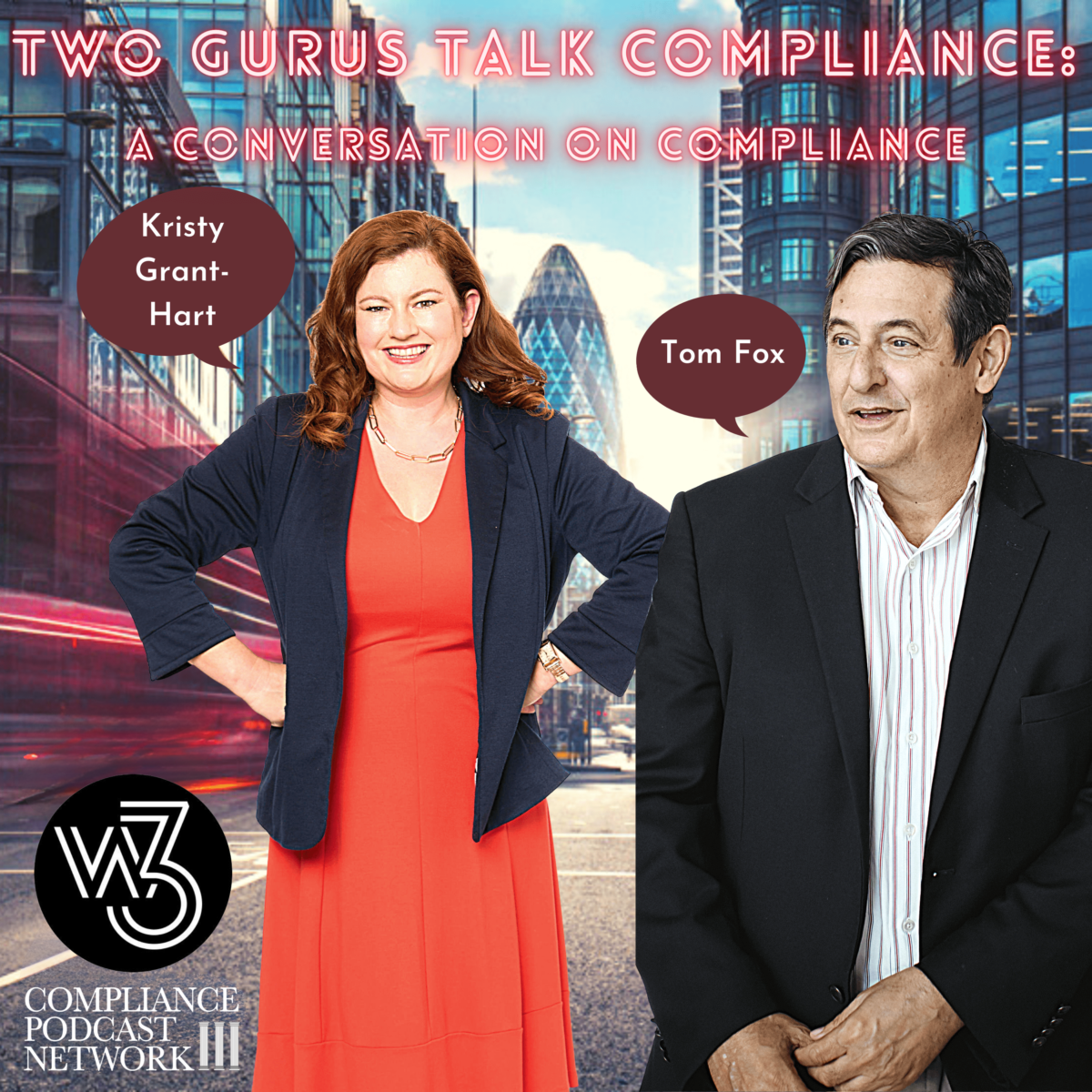
What happens when two top compliance commentators get together? They talk about compliance, of course. Join Tom Fox and Kristy Grant-Hart in 2 Gurus Talk Compliance as they discuss the latest compliance issues in this week’s episode!

In this episode, Kristy and Tom discuss various pressing issues and developments in compliance. Topics include the introduction of a new regulator in Europe, concerns of AI employees about retaliation for raising alarms on potential threats, California’s new workplace violence compliance requirements, and unusual attempts to use live animals as payment in Florida.

The episode also highlights the significance of the Women in Compliance conference, the importance of crisis communication strategies, and the recent extension of the sanctions statute of limitations by the U.S. government. The conversation also covers networking for job seekers and the implications of the newly formed European Financial Crime Agency. The episode concludes with a bizarre payment method by our good friend, Florida Man.

Highlights Include:

 Resources:

Kristy Grant-Hart on LinkedIn

Spark Consulting

Tom

Instagram

Facebook

YouTube

Twitter

LinkedIn

Categories
Innovation in Compliance

Innovation in Compliance: Harnessing AI in Life Sciences with Matt Lowe from MasterControl

Innovation comes in many forms, and compliance professionals need to not only be ready for it but also embrace it.

Curious about Compliance as a Service and AI integration? If so, this episode is for you as Tom Fox interviews Matt Lowe, Chief Strategy Officer at MasterControl.

Matt shares his professional background, details MasterControl’s role in the quality management and life sciences markets, and discusses the company’s incorporation of AI in their software solutions.

The conversation delves into how AI is transforming compliance and quality assurance in the life sciences, the benefits and challenges of implementing AI, and the future outlook of AI in the industry.

Matt also touches on risk-based approaches to AI deployment and the evolving discussions around AI in industry consortia.

Key Highlights:

  • Incorporating AI in Compliance Training
  • Generative AI in Quality Management
  • Quality Assurance and Compliance
  • AI’s Role in Compliance and Risk Management
  • Implementing AI in Life Sciences
  • Future of AI in Life Sciences

Resources:

Matt Lowe on LinkedIn 

MasterControl

Tom Fox

Instagram

Facebook

YouTube

Twitter

LinkedIn

Categories
Compliance and AI

Compliance and AI: Jay Rosen on Emerging AI Threats in Corporate Compliance and Cybersecurity

What is the role of Artificial Intelligence in compliance? What about Machine Learning? Are you using ChatGPT?

These questions are but three of the many questions we will explore in this exciting new podcast series, Compliance and AI. Hosted by Tom Fox, the award-winning Voice of Compliance, in this podcast Jay Rosen joins me to discuss AI and fraud risk management.

Jay Rosen delves into the escalating influence of AI in corporate fraud, with historical and modern examples. A recent case from Hong Kong highlights how deepfake technology can be used to deceive employees. The speaker outlines three main AI threats: real-time deepfakes, AI-enabled evasion tactics, and manipulation of AI models.

It outlines strategies for corporations to mitigate these risks, including training on deepfake detection, ensuring secure data access, and implementing dual authorization processes. The goal is to prepare compliance departments for the AI-driven era of corporate crime.

Key Highlights:

  • Introduction to AI and Corporate Fraud
  • The Rise of AI in Cybersecurity and Fraud
  • Emerging AI Risks and Compliance Challenges
  • Key Areas of AI-Enabled Fraud
  • Deep Fake Technology and Corporate Impersonation
  • Mitigating AI Risks in Corporate Environments
  • Strategies for Handling Deepfakes and Model Manipulation

Resources:

Jay Rosen on LinkedIn

Tom Fox

Instagram

Facebook

YouTube

Twitter

LinkedIn

Categories
Uncovering Hidden Risks

Ep 15 – Secure Access in the Era of AI

Jef Kazimer, Microsoft’s Principal Product Manager, and Bailey Bercik, Senior Product Manager, join Erica Toelle and guest host Lisa Huang-North on this week’s episode of Uncovering Hidden Risks. Today’s episode will focus on security in the era of cloud and AI, with insights from Microsoft Security’s product team. It will encompass AI-driven security measures, data protection, identity management, and compliance in the cloud while providing valuable insights for professionals navigating the evolving landscape of cloud security and AI’s influence on it. Together, they discuss the importance of basic security hygiene, the implications of sophisticated AI-based attacks, and the necessity of adopting a defense-in-depth strategy to protect against emerging threats.

In This Episode You Will Learn:

  • The use of generative AI in attack vectors like phishing and social engineering
  • Principles of zero trust and how they apply to AI systems
  • Challenges and opportunities for securing identity and access in 2024

Some Questions We Ask:

  • How can organizations leverage Microsoft’s Zero Trust framework to protect their data?
  • What are the best practices when implementing passwordless authentication?
  • Are the principles of Zero Trust still relevant to this new wave of threats?

Resources:

View Lisa Huang-North on LinkedIn

View Jef Kazimer on LinkedIn

View Bailey Bercik on LinkedIn 

View Erica Toelle on LinkedIn     

Connect with the Compliance Podcast Network at:

LinkedIn: https://www.linkedin.com/company/compliance-podcast-network/
Facebook: https://www.facebook.com/compliancepodcastnetwork/
YouTube: https://www.youtube.com/@CompliancePodcastNetwork
Twitter: https://twitter.com/tfoxlaw
Instagram: https://www.instagram.com/voiceofcompliance/
Website: https://compliancepodcastnetwork.net/

Categories
TechLaw10

TechLaw10: Eric Sinrod & Jonathan Armstrong on the Technology Law aspects of AI

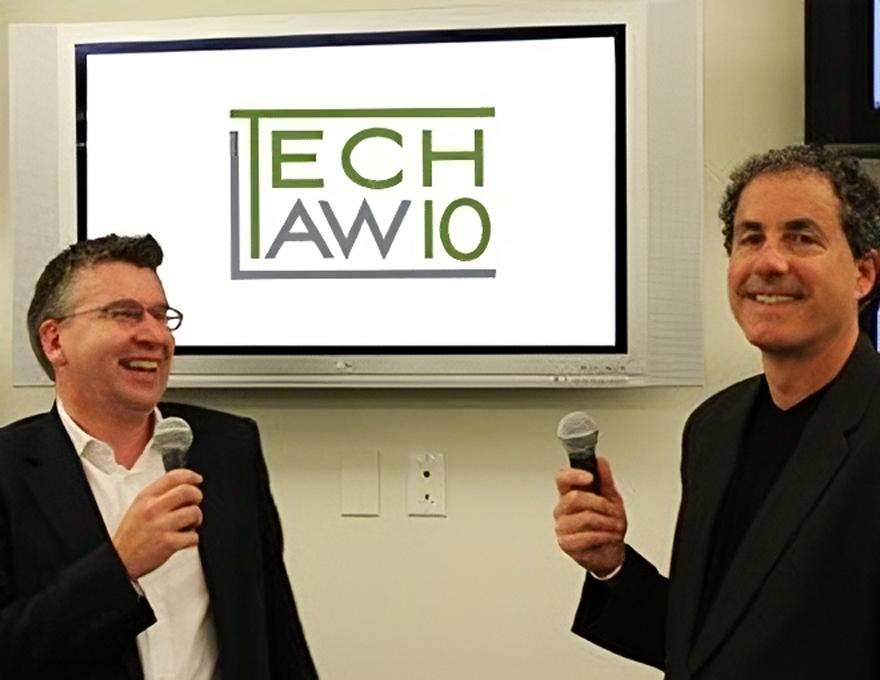
In this edition of TechLaw10, Jonathan Armstrong, Director—L-EV8, talks to Professor/Attorney Eric Sinrod from his home in California. They look at the technology law aspects of AI.

Jonathan talks about:

  • The conflicts between AI and GDPR.
  • The investigation and regulatory action against Clearview AI.
  • Italian DPA’s activity against the use of AI with food delivery apps.

Eric looks at:

  • The impact of US privacy law.
  • Issues presented by AI with
    – contracts
    – torts – who should bear liability when something goes wrong?
    – discrimination & bias

Discover L-EV8 as a new training business with Jonathan Armstrong

You can listen to earlier TechLaw10 audio podcasts with Eric and Jonathan at www.techlaw10.com.

You can find out more about Eric here at  Duane Morris LLP and more about Jonathan here at L-EV8 

Connect with the Compliance Podcast Network at:

LinkedIn: https://www.linkedin.com/company/compliance-podcast-network/

Facebook: https://www.facebook.com/compliancepodcastnetwork/

YouTube: https://www.youtube.com/@CompliancePodcastNetwork

Twitter: https://twitter.com/tfoxlaw

Instagram: https://www.instagram.com/voiceofcompliance/

Website: https://compliancepodcastnetwork.net/

Categories
Compliance and AI

Compliance and AI: Karen Moore on The American Privacy Rights Act and AI

What is the role of Artificial Intelligence in compliance? What about Machine Learning? Are you using ChatGPT? These are but three of the many questions we will explore in this exciting new podcast series, Compliance and AI. Hosted by Tom Fox, the award-winning Voice of Compliance, this podcast, Karen Moore joins me to discuss the proposed American Privacy Rights Act (APRA) and its intersection with artificial intelligence.

Moore has expressed cautious optimism towards the act, paying particular attention to how the Act impacts artificial intelligence and automated decision-making processes. Drawing on the act’s provisions, Moore emphasizes the importance of the preemption clause, which indicates a shift towards federal regulations superseding state laws. She also underscores the potential challenges and complexities that lie ahead for companies, especially large data holders or high-impact social media companies, in adhering to the APRA’s requirements, such as conducting design evaluations, transparency obligations, and data minimization. This perspective is shaped by her extensive background in the field and her intricate understanding of the Act’s impact on data processing and AI algorithms.

Key Highlights:

  • Introduction to the American Privacy Rights Act Discussion
  • Exploring the Preemption Clause and AI Implications
  • Automated Decision-Making and Its Complexities
  • The Impact on High-Impact Social Media and Large Data Holders
  • Data Minimization Requirements and AI Challenges

Resources:

Karen Moore on LinkedIn

Tom Fox

Instagram

Facebook

YouTube

Twitter

LinkedIn

Categories
Compliance Tip of the Day

Compliance Tip of the Day: Data – Driven Solutions for Fraud Risk

Welcome to “Compliance Tip of the Day,” the podcast where we bring you daily insights and practical advice on navigating the ever-evolving landscape of compliance and regulatory requirements.

Whether you’re a seasoned compliance professional or just starting your journey, our aim is to provide you with bite-sized, actionable tips to help you stay on top of your compliance game.

Join us as we explore the latest industry trends, share best practices, and demystify complex compliance issues to keep your organization on the right side of the law.

Tune in daily for your dose of compliance wisdom, and let’s make compliance a little less daunting, one tip at a time.

In today’s episode, we discuss how the use of AI and machine learning has revolutionized data analysis and investigation in fraud risk prevention.

Ethico ROI Calculator and a free White Paper on the ROI of Compliance, click here.