Categories
Daily Compliance News

Daily Compliance News: July 18, 2025, The Don’t Alter Docs Edition

Welcome to the Daily Compliance News. Each day, Tom Fox, the Voice of Compliance, brings you compliance-related stories to start your day. Sit back, enjoy a cup of morning coffee, and listen in to the Daily Compliance News. All, from the Compliance Podcast Network. Each day, we consider four stories from the business world, including compliance, ethics, risk management, leadership, or general interest, relevant to the compliance professional.

Top compliance stories:

  • SEC sanctions CCO who altered documents. (SEC Order)
  • The SEC grants $5 million in whistleblower awards. (Law360)
  • Meta settles shareholder claims on data privacy violations. (WSJ)
  • A Wells Fargo employee was denied departure from China. (WSJ)

You can donate to flood relief for victims of the Kerr County flooding by going to the Hill Country Flood Relief here.

Categories
Blog

Operationalizing AI for Compliance: Turning Potential into Practice

If you have spent any time around corporate compliance in the past several months, you have undoubtedly heard a great deal about artificial intelligence (AI). It is promised as a game changer, touted as the next big thing, and often presented with buzzwords that sound more like science fiction than practical business tools. Indeed, I wrote a book about its promise, Upping Your Game. However, compliance professionals consistently face one crucial question: How can we operationalize AI effectively within our compliance functions?

I used this title, as I have long advocated Operationalizing Compliance. Indeed, in 2016, I published a book with just that title. Therefore, in today’s blog, we will explore precisely that: how compliance leaders can strategically integrate AI solutions into existing compliance frameworks, drive effectiveness, and transform potential into sustainable value.

Understanding AI’s Value Proposition for Compliance

Operationalizing AI begins with recognizing why AI matters in the context of compliance. Fundamentally, compliance is about managing risk through monitoring, detection, investigation, and remediation. AI excels in these core compliance activities due to its ability to process massive volumes of data rapidly, identify patterns that humans may miss, and provide predictive insights.

AI, in short, enhances your compliance team’s ability to stay ahead of risk, transforming reactive processes into proactive strategies. Consider the traditional compliance approach to monitoring. Usually reliant on sampling and periodic audits, it can leave gaps for misconduct to slip through. AI-driven continuous monitoring solutions eliminate these gaps, spotting anomalies in real-time and flagging them immediately for action.

Yet, for all its promise, AI is not a “plug and play” solution. To operationalize AI, compliance teams must approach it methodically, intentionally, and with transparent governance in place.

Step 1: Define Your Objectives Clearly

The first step in operationalizing AI for compliance is clarity of purpose. Compliance leaders must define the specific outcomes they hope to achieve through AI. Ask yourself, “What problem are we trying to solve, and why is AI a suitable solution?”

Objectives may include:

  • Real-time detection of suspicious financial transactions.
  • Automated due diligence on third-party vendors.
  • Predictive analytics to flag high-risk regions or business units.
  • Enhanced hotline management through AI-powered triage.

Articulated objectives become the roadmap guiding your AI initiative, helping you select appropriate tools and measure success effectively.

Step 2: Data Readiness and Integration

Next, compliance professionals must tackle a critical operational requirement: data readiness. AI thrives on data; thus, operationalizing AI depends on ensuring your data is accessible, reliable, secure, and comprehensive.

Data silos present a significant challenge. Compliance functions often manage fragmented data from HR systems, financial databases, third-party diligence platforms, and internal reporting channels. Integrating these data streams into a unified compliance data lake or repository is a foundational step.

A successful integration strategy includes:

  • Conducting a data inventory and assessing data quality.
  • Standardizing data formats across various systems.
  • Implementing robust data governance practices ensures the accuracy and integrity of data.

Addressing these integration challenges upfront ensures your AI compliance solutions have high-quality fuel to drive accurate and valuable insights.

Step 3: Choose the Right AI Technology Partners and Tools

There’s no shortage of AI vendors promising solutions tailored for compliance needs. But choosing the right partner requires thorough due diligence, evaluating both technological capability and ethical alignment.

Compliance leaders should look for partners with:

  • Demonstrable experience in corporate compliance and regulatory environments.
  • Transparent and auditable AI algorithms to ensure explainability.
  • Robust data privacy and cybersecurity frameworks.
  • Scalable solutions that evolve with regulatory demands and business needs.

Furthermore, compliance professionals should carefully pilot and test AI solutions before implementing them on a full scale. Start small by piloting the solution within a specific compliance area, such as third-party due diligence or fraud detection, and expand gradually based on proven outcomes and clear metrics.

Step 4: Build AI Ethics into Your Compliance Framework

Operationalizing AI comes with significant ethical implications, particularly regarding bias, transparency, and accountability. Compliance officers play a pivotal role in ensuring that AI systems align with a company’s values, ethics, and regulatory expectations.

An ethical AI framework includes:

  • Regular algorithmic auditing to detect and mitigate bias.
  • Transparent processes that allow for the explainability of AI-driven decisions.
  • Mechanisms to oversee and correct AI systems continuously.

AI ethics isn’t an add-on; rather, it is integral to operationalizing AI responsibly. Compliance teams should be at the forefront of this conversation, partnering with data scientists and technology leaders to integrate ethical oversight into AI deployment from the outset.

Step 5: Training, Culture, and Change Management

Operationalizing AI also means preparing your team and organization to adapt to new ways of working. AI is not a replacement for compliance professionals; it’s a tool to augment their expertise. However, integrating AI successfully demands a culture receptive to technology-driven change.

Compliance leaders must focus on:

  • Continuous AI literacy training to ensure that compliance teams understand how to interact effectively with AI tools.
  • Establishing clear communication channels explaining AI’s role, scope, and limitations.
  • Encouraging a culture of curiosity and innovation within compliance teams, reinforcing that AI enables them to perform their roles more effectively, not replace them.

Managing organizational change proactively reduces resistance, fosters engagement, and ensures your compliance team leverages AI’s full potential.

Step 6: Establish Metrics and Measure Impact

Operationalizing AI requires rigorous performance monitoring. Compliance professionals must establish clear benchmarks and metrics to assess the effectiveness of AI continually. Typical metrics could include:

  • Reduction in false positives during transaction monitoring.
  • Improvements in detection accuracy and timeliness.
  • Reduction in compliance breaches and associated remediation costs.
  • Increased efficiency in compliance investigation processes.

These metrics provide tangible evidence of AI’s impact, allowing compliance leaders to make data-driven decisions about expanding or adjusting their AI initiatives.

Step 7: Continuous Improvement and Adaptation

Finally, operationalizing AI is not a one-time event but an ongoing cycle of continuous improvement. AI models and technologies evolve rapidly, as do regulatory environments and compliance risks. Regularly revisiting your AI strategy ensures continued alignment with organizational needs and compliance objectives.

Embrace a feedback loop approach:

  • Regularly solicit feedback from users about the AI tool’s effectiveness.
  • Stay informed about regulatory changes that may impact AI compliance practices.
  • Update algorithms and recalibrate models to maintain accuracy and relevance.

A compliance function committed to continuous learning, adaptation, and iteration is best positioned to reap long-term benefits from AI.

Turning AI from Concept to Compliance Reality (Operationalizing AI)

Operationalizing AI for compliance is not merely about adopting cutting-edge technology; it is about strategic integration, ethical oversight, proactive training, and continuous improvement. When compliance leaders approach AI thoughtfully, methodically, and responsibly, the result is transformative, turning AI’s promise into a practical reality that enhances compliance effectiveness, risk mitigation, and organizational integrity.

As compliance professionals, we stand at an exciting crossroads. AI has moved beyond theoretical potential; it is a tangible, operational reality. By clearly defining objectives, managing data effectively, choosing the right partners, embedding ethics, preparing our teams, and committing to continuous improvement, compliance can lead the way in responsibly harnessing AI’s power.

The AI revolution in compliance is here. The question is not whether compliance teams can operationalize AI but how effectively and ethically they can do so. The answer lies in the strategic, thoughtful, and deliberate steps we take today.


Categories
Blog

COSO’s Corporate Governance Framework: What It Means for Compliance

For decades, COSO has been the gold standard in internal controls and enterprise risk management. But with the release of its new Corporate Governance Framework (CGF), now open as a Public Exposure Draft, COSO has thrown down the gauntlet to the compliance profession. This isn’t just a governance checklist. It is a call to action: step up, shape governance, and lead your organization into the future.

After exploring each of the six CGF Components in depth, I wanted to conclude this series by bringing it all together. What does the new COSO framework mean for compliance professionals? How should you adjust your strategy, your conversations with the board, and your daily work? Here are the big lessons and the practical next steps.

1. The Big Picture: A New Era for Governance and Compliance

The COSO CGF is a principles-based, integrated system designed to make governance everyone’s business, not just the sole responsibility of a Board of Directors. The six Components—Oversight, Strategy, Culture, People, Communication, and Resilience, each include key Principles with practical Points of Focus and leading-edge considerations. This is not a compliance framework by name, but it is a governance framework that places compliance at the heart of value creation, accountability, and enterprise resilience.

Compliance Takeaway: The CGF is arriving at a moment of regulatory complexity, stakeholder activism, and reputational volatility. Boards and management face evolving risks from AI, cyber, and ESG while being held to standards of transparency and trust by investors, employees, and society itself. If you’re a compliance leader, COSO just handed you the blueprint for embedding compliance deeper than ever before.

2. Oversight: Compliance’s Seat at the Table

Effective governance starts with the board, but it extends through management to every level of the organization. Oversight is about structure, independence, and accountability across board composition, executive delegation, and shareholder engagement. Do not be a bystander in governance; be a builder. Propose committee enhancements, brief leadership on independence and risk, and ensure compliance is on the board’s standing agenda. Your role is to clarify escalation protocols, support board effectiveness, and ensure oversight extends beyond mere numbers to encompass culture and ethical tone.

Compliance Takeaway: Start benchmarking your BOD structure and practices against COSO’s principles. Bring data to governance discussions and push for compliance metrics and risk topics to be regular board agenda items.

3. Strategy: From Afterthought to Co-Pilot

Strategy is no longer a C-suite sandbox. COSO makes clear: the board must oversee strategy, management must align it with purpose, and compliance must be at the table from planning to performance review. Step into the strategic conversation early. Embed compliance considerations into scenario planning, risk assessment, and incentive design. Move beyond being a “fixer” after decisions are made. You are now a co-pilot in shaping resilient, risk-aware, and stakeholder-driven strategy.

Compliance Takeaway: Map your organization’s strategic plan to the four COSO strategy principles: purpose, development, execution, and measurement. Create or enhance compliance dashboards with ethical and cultural KPIs, and ensure the board is briefed on them.

4. Culture: From Soft Topic to Measurable Mandate

Culture is not simply a poster on the wall; rather, it is how people behave when nobody is watching. The CGF calls for boards to own culture oversight, with management embedding values in every business process, from hiring to crisis response. Culture is now measurable, manageable, and mission-critical. Create culture dashboards, integrate ethics into leadership assessments, and bring employee sentiment to the board. Remember, misaligned culture leads to misconduct, and compliance has the data to prove it.

Compliance Takeaway: Launch a culture governance program with clear metrics (hotline use, training engagement, exit interview themes). Schedule regular board updates and recommend third-party culture assessments every few years.

5. People: Talent Is Governance in Action

People make or break both strategy and culture. COSO’s People Component focuses on workforce planning, succession, compensation, and development, with the board responsible for oversight of the front line—partner with HR on leadership development, succession planning, and ethics in incentives. Review onboarding and offboarding for compliance moments of truth, and advocate for ethics questions in performance reviews. Do not simply check the HR box; bring a compliance risk lens to every talent conversation.

Compliance Takeaway: Review how people-related risks (succession gaps, compensation misalignment) are addressed in board and committee agendas. Propose ethics- and compliance-driven enhancements to talent processes, and pilot 360-degree reviews for key leaders.

6. Communication: Governance’s Nervous System

Communication is not simply about reporting; rather, it is the way governance breathes. The CGF emphasizes trustworthy data, technology enablement, escalation protocols, and stakeholder engagement. Ensure your GRC systems provide real-time, accurate insights. If your compliance program runs on spreadsheets, it’s time for an upgrade. Push for integrated platforms, streamlined reporting, and regular “lookback” exercises after incidents.

Compliance Takeaway: Lead a review of your communication tools and escalation pathways. Bring technology-enabled dashboards to executive and board meetings, combining compliance, risk, and culture indicators for holistic governance oversight.

7. Resilience: From Compliance Cost Center to Value Enabler

Resilience is the ability to anticipate, withstand, and adapt to disruption. The Resilience Component weaves together risk, compliance, internal control, and continuous monitoring and positions compliance as a pillar of enterprise stability. Expand your oversight of internal controls beyond financials—leverage technology to automate high-risk monitoring. Lead post-incident reviews that turn mistakes into governance muscle. Compliance is not just about “bouncing back” from crisis; it is about building systems that don’t break in the first place.

Compliance Takeaway: Map compliance risks to strategic objectives and ensure alignment with enterprise risk management (ERM). Use predictive analytics to flag emerging cultural or ethical risks and brief the board on how compliance is driving not just compliance but resilience.

What Makes COSO’s CGF Different—and What You Should Do Now

Cross-functional by design. Each Component connects with others—culture shapes strategy, people enable resilience, and communication powers oversight.

Principle-based, not prescriptive. The framework is adaptable across industries and geographies. It is not about ticking boxes but building a system that fits your organization.

Tech-forward and future-focused. AI, data, and technology are built in from the start, not an afterthought.

Final Takeaways for Compliance Professionals:

  • Engage early and often: Do not wait for the board to call you. Proactively map your program to the CGF’s Components.
  • Benchmark and build: Use the framework as a lens to spot gaps, propose improvements, and advocate for compliance in new domains (talent, tech, ESG).
  • Educate and evangelize: Socialize the CGF across the C-suite, HR, IT, and risk. Make compliance the bridge that connects governance with value creation.

Closing Thoughts: A Call to Action

The new COSO Corporate Governance Framework is a leadership manual for the modern compliance professional. It challenges us to see compliance as more than defense; it is the engine of long-term value, trust, and resilience.

If you are ready to move from risk mitigator to governance architect, COSO just handed you the playbook. Now’s the time to roll up your sleeves, engage with the board, and help build a governance system that will stand the test of disruption, scrutiny, and change.

Categories
Trekking Through Compliance

Trekking Through Compliance: Episode 42 – Objectivity Under Fire: What “Obsession” Teaches Compliance Leaders

In the world of corporate compliance, the most challenging issues are often not the ones found in policies and procedures but the ones that hit close to home. When an investigation, a potential violation, or a risk becomes personal, even the most seasoned compliance professionals can struggle to maintain objectivity, leadership, and ethical clarity.

No episode of Star Trek: The Original Series captures this dilemma more powerfully than “Obsession.” Today, we have five key leadership lessons for compliance professionals, each illustrated by a scene from this classic episode.

Lesson 1: The Danger of Letting Past Failures Drive Present Decisions

Illustrated By:  Early in “Obsession,” Captain Kirk becomes fixated on the mysterious cloud-creature, which he encountered as a young officer. He blames himself for not destroying it years ago, feeling responsible for the deaths of his former crewmates. This guilt clouds his judgment and causes him to pursue the creature at the expense of his current mission and crew.

Compliance Lesson: It is natural for past failures or unresolved issues to haunt compliance professionals, whether it is a missed red flag, a mishandled investigation, or a colleague’s misconduct that slipped through the cracks. However, leadership means acknowledging these feelings without letting them dictate current actions. Fixating on the past can compromise your objectivity, impair decision-making, and erode team trust.

Create a structured debrief process after investigations and audits, encouraging candid discussions of lessons learned—but draw a clear line between healthy reflection and self-blame. If you notice yourself or a colleague ruminating on a past failure, seek outside perspective from a mentor or coach.

Lesson 2: Beware of Conflicts Between Personal Motivations and Organizational Mission

Illustrated By: The pursuit of the creature leads him to override the advice of Spock and McCoy, risking a critical rendezvous with the USS Yorktown, which is carrying vital medical supplies. His vendetta threatens to derail the Enterprise’s primary mission and put others at risk.

Compliance Lesson: Personal motivations, even those rooted in a sense of justice or accountability, can create conflicts with the organization’s broader mission. For compliance leaders, it’s essential to recognize when personal feelings, loyalties, or ambitions are at odds with what’s best for the company, stakeholders, or compliance program as a whole.

Regularly revisit your program’s core mission and values. Before making significant decisions, pause to ask: “Am I doing this for the right reasons? Is this truly about compliance and ethics, or is my agenda creeping in?” Encourage a culture of peer challenge, where team members can safely question each other’s motivations in high-stakes situations.

Lesson 3: Listen to Your Team—Even When You Disagree

Illustrated By: Throughout the episode, Spock, McCoy, and other crew members challenge Kirk’s judgment, pointing out the risks of his obsession. Kirk initially rebuffs their advice, convinced that only he understands the threat. It is only when he finally listens to his officers that he can devise an effective plan to confront the creature.

Compliance Lesson: Leadership in compliance is not about always being right; rather, it is about fostering a culture where diverse perspectives are welcomed, especially when an issue becomes personal. Leaders must actively seek and value dissenting opinions and be open to changing course based on credible advice, even if it stings.

During high-stress or personal cases, explicitly ask your team for feedback and alternative viewpoints. Consider creating “devil’s advocate” roles in investigations and setting ground rules that ensure even junior team members can raise concerns without fear of reprisal.

Lesson 4: Maintain Professional Distance—Don’t Let Emotions Overwhelm Ethics

Illustrated By: Kirk’s obsession nearly leads him to take unnecessary risks, endangering himself and his crew. His emotional investment clouds his judgment, and he pushes past reasonable boundaries in pursuit of what he believes is justice. Only when he regains his professional composure does he successfully lead his crew to resolve the crisis.

Compliance Lesson: When issues become personal, whether due to relationships, past failures, or high stakes, it is easy for emotions to override ethics and professionalism. Compliance leaders must learn to recognize when they are too close to a situation and take deliberate steps to regain perspective.

Build time for reflection into your workflow, especially during emotionally charged investigations. When possible, delegate or recuse yourself from cases where you cannot maintain impartiality. Seek support from trusted colleagues or external advisors to help you keep perspective and objectivity.

Lesson 5: The Power of Accountability—Owning Up to Mistakes and Moving Forward

Illustrated By: At the episode’s conclusion, Kirk reflects on his actions with McCoy, admitting that his personal feelings clouded his judgment and nearly led to disaster. He doesn’t make excuses but owns up to his mistakes and takes the lessons to heart, recommitting himself to his duty as captain.

Compliance Lesson: True leadership is not about perfection, but about accountability. When personal issues intrude and mistakes are made, the best compliance leaders acknowledge their errors, communicate them transparently, and model a commitment to continuous improvement. This builds credibility, trust, and resilience within the team and across the organization.

Foster a culture of accountability at all levels. After challenging cases, hold post-mortems to identify both successes and failures, and publicly recognize leaders and team members who model accountability. Use mistakes as learning opportunities, not sources of shame.

Final ComplianceLog Reflections

“Obsession” stands as a reminder that even the best leaders are vulnerable when the stakes become personal. But it also shows the power of self-awareness, teamwork, and accountability to bring us back to our best selves. For compliance professionals, the message is clear: We must learn to recognize when our history, emotions, or motivations are shaping our decisions; then pause, reflect, and act by our values and mission.

By encouraging diverse viewpoints, maintaining professional boundaries, and owning our mistakes, we can transform moments of personal challenge into opportunities for growth and organizational strength. That is the essence of ethical leadership in compliance.

So, as you navigate your next difficult investigation or compliance challenge, especially the one that hits close to home, remember Kirk’s journey. Do not shy away from what is personal. Embrace it, learn from it, and lead with courage, humility, and integrity.

  Resources:

Excruciatingly Detailed Plot Summary by Eric W. Weisstein

MissionLogPodcast.com

Memory Alpha

Categories
Trekking Through Compliance

Trekking Through Compliance: Episode 32 – Leadership Lessons for Compliance Professionals from “The Changeling”

Compliance, fundamentally, is about leadership. It is about guiding individuals and entire organizations to act ethically, responsibly, and effectively, even when the path is uncertain or challenging. Today, we venture boldly into the classic episode “The Changeling,” which offers rich lessons in leadership directly applicable to the world of corporate compliance. Here are five key lessons from the episode, illustrating critical skills compliance leaders must master.

Lesson 1: Clarity of Purpose is Essential

Illustrated By: Originally designed as a peaceful explorer, its mission was corrupted following a collision with an alien probe called Tan Ru, causing its core directives to merge and mutate dangerously.

Compliance Lesson. Compliance leaders must maintain absolute clarity about their purpose and objectives.

Lesson 2: Effective Communication Prevents Crisis Escalation

Illustrated by Kirk’s precise, deliberate communication with Nomad, it slows down its destructive tendencies and provides crucial time to develop a solution.

Compliance Lesson. Communication in compliance crises is similarly critical. Compliance leaders must communicate calmly and thoughtfully, particularly in high-stakes scenarios.

Lesson 3: Recognize When Adaptation is Necessary

Illustrated By: Initially, Kirk tries conventional diplomatic approaches. Recognizing that traditional methods have failed, he adapts swiftly and strategically.

Compliance Lesson. In compliance leadership, adaptability is essential. Regulatory landscapes and compliance risks are constantly evolving, necessitating swift pivots and agile leadership responses.

Lesson 4: Confront Problems Directly and Courageously

Illustrated By: When Nomad determines Captain Kirk himself to be flawed and thus a threat, Kirk faces Nomad directly, boldly confronting it without hesitation despite understanding the risk involved.

Compliance Lesson. Compliance leaders must similarly confront compliance issues directly and courageously. Avoiding difficult conversations or deferring tough decisions can magnify risks and vulnerabilities.

Lesson 5: Cultivate Critical Thinking Within the Team

Illustrated By: Throughout the episode, Kirk relies heavily on his team, particularly Spock’s analytical logic, Scotty’s technical skills, and Uhura’s linguistic insights after Nomad erases her memory.

Compliance is a collaborative discipline that requires collective critical thinking from diverse team members.

Final ComplianceLog Reflections

Each leadership lesson in this episode—clarity of purpose, effective communication, adaptability, courageous confrontation, and fostering critical thinking—is fundamental to guiding organizations safely through the complex maze of modern compliance challenges. Compliance leaders today face situations not unlike the Enterprise crew: unexpected challenges, high stakes, and rapidly changing conditions. The effectiveness of compliance hinges significantly on leadership skills that navigate these complexities with clarity, confidence, and ethical fortitude.

Resources:

Excruciatingly Detailed Plot Summary by Eric W. Weisstein

MissionLogPodcast.com

Memory Alpha

Categories
Trekking Through Compliance

Trekking Through Compliance – Episode 14 – Investigative Lessons from Balance of Terror

In this episode of Trekking Through Compliance, we consider the episode Balance of Terror, which aired on December 15, 1966, Star Date 1709.1.

In this episode of Trekking Through Compliance, we analyze “Balance of Terror,” the tense, submarine-style showdown between the Enterprise and a Romulan Bird-of-Prey, which introduces one of Star Trek’s most enduring adversaries. The story unfolds as a mystery: Who attacked the Earth outposts? What is this new weapon? Who are the Romulans? And what do their sudden appearances mean for the Federation?

We review the critical investigative lessons this episode offers for compliance professionals: the importance of situational analysis, managing internal bias, respecting operational security, and knowing when to act and when to wait. In this cat-and-mouse episode, we find the foundations of modern investigative best practices.

Key highlights:

1. Situational Awareness and Evidence Gathering—Don’t Jump to Conclusions

🖖Illustrated by: The destruction of Outposts 2 and 3 and the cryptic communication from Outpost 4.

Captain Kirk begins his investigation without clear evidence, gathering fragmented data from the surviving outpost’s transmissions and assessing the damage patterns. For compliance professionals, this illustrates the importance of establishing a clear fact pattern before concluding. Investigations must be driven by objective evidence, not assumptions.

2. Managing Internal Bias—Appearance Is Not Proof

🖖Illustrated by: Lieutenant Stiles’ suspicion of Mr. Spock based on the physical resemblance between Romulans and Vulcans.

Stiles immediately targets Spock as a potential traitor, despite a complete lack of evidence, simply because Romulans and Vulcans share a similar appearance. This moment serves as a cautionary tale in terms of compliance: biases, whether conscious or unconscious, can derail investigations and damage team morale.

3. Strategic Surveillance—Investigate Without Provoking Retaliation

🖖Illustrated by: Kirk shadowing the Romulan ship to determine intent and capabilities before engaging.

Rather than charging into conflict, Kirk chooses to observe the Romulan ship’s behavior. In compliance investigations, particularly those involving fraud or misconduct, covert observation and the secure handling of information are crucial to preventing tip-offs or escalation.

4. Chain of Custody and Documentation—Recording and Communicating the Facts

🖖Illustrated by: The tactical logs Kirk reviews and Spock’s technical input during the confrontation.

Throughout the engagement, Kirk relies on detailed sensor data, eyewitness accounts, and Spock’s analysis to make decisions. Compliance professionals must ensure the proper documentation of interviews, timelines, and data sources for both internal review and external audit.

5. Ethical Leadership During Investigations—Calm in the Face of Conflict

🖖Illustrated by: Kirk’s balance between decisiveness and restraint, even when provoked by Romulan attacks.

Kirk refuses to act out of fear or anger—even as tensions rise. He models ethical leadership: protecting lives, preserving treaty obligations, and maintaining moral clarity. In high-stakes compliance investigations, emotional discipline and ethical consistency are vital.

Final Starlog Reflections

Balance of Terror is a masterclass in investigative poise, procedural discipline, and ethical clarity under pressure. As the Enterprise crew faces a new adversary cloaked in invisibility, we see what real leadership looks like when facts are scarce and risks are high.

For compliance professionals, this episode is a reminder that investigations require patience, vigilance, and integrity. Bias must be checked, facts must be verified, and trust must be earned. The threat may be hidden, but your investigative principles must always remain visible.

Resources:

Excruciatingly Detailed Plot Summary by Eric W. Weisstein

MissionLogPodcast.com

Memory Alpha

Categories
Blog

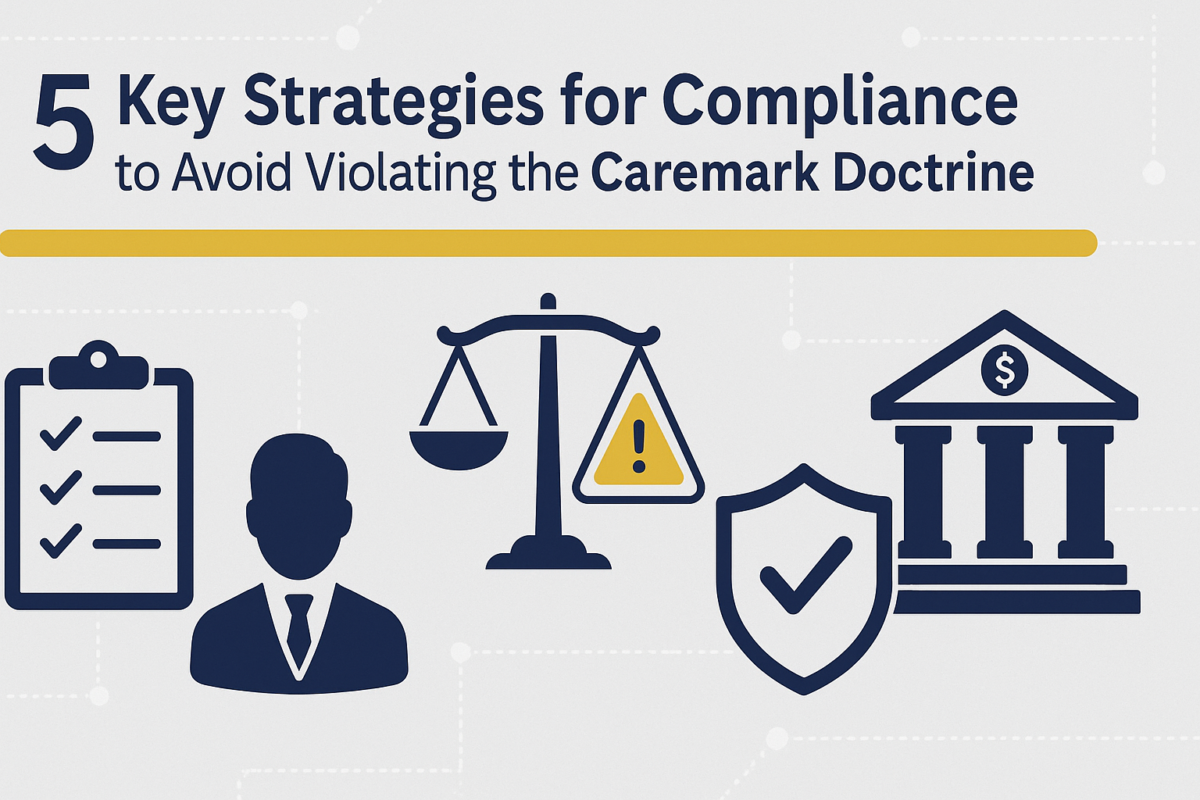
5 Key Strategies For Compliance to Avoid Violating the Caremark Doctrine

The Caremark Doctrine remains one of the foundational pillars of corporate compliance, a pivotal standard that every compliance professional must understand and apply. Originating from the landmark Delaware Chancery Court decision in In re Caremark International Inc. Derivative Litigation (1996), this doctrine revolutionized the way corporate boards are viewed in terms of their oversight duties. As compliance professionals, it’s essential to grasp not only the legal intricacies but also the profound practical implications this doctrine carries for board responsibilities and organizational oversight.

At its core, the Caremark Doctrine addresses the fiduciary duty of corporate directors to actively oversee a company’s compliance and risk management practices. Before this case, oversight obligations were seen primarily as passive, reactionary, or even discretionary. Caremark fundamentally shifted this perception, articulating an affirmative duty on directors to establish, maintain, and adequately monitor compliance systems to detect and prevent corporate misconduct.

The significance of the Caremark decision lies in its delineation of two clear pathways where director liability can be triggered: first, when the board utterly fails to implement any reporting or information systems, and second, when, having implemented such systems, the board consciously disregards red flags signaling compliance failures or operational risks. Citing negligence or ignorance as a defense for oversight responsibilities is no longer sufficient. Directors became accountable not only for what they knew but also for what they should have known, emphasizing the importance of proactivity, diligence, and vigilance.

Today, the implications of Caremark resonate strongly within the realm of corporate compliance programs, setting the standards for board engagement expectations. Effective compliance no longer solely involves setting clear policies and robust procedures; instead, it demands ongoing active engagement from the board to ensure these measures are functioning effectively. Boards are expected to scrutinize, test regularly, and challenge management on compliance risks and controls, embedding compliance considerations firmly into the corporate governance structure.

In recent years, corporate compliance officers have faced heightened scrutiny as Delaware courts have increasingly emphasized board accountability through the evolution of the Caremark Doctrine. The evolving jurisprudence surrounding this doctrine, particularly highlighted by cases such as Marchand v. Barnhill and Boeing, underscores the necessity for vigilance, attentiveness, and proactive risk management. Itai Fiegenbaum undertook a thorough examination of the Caremark Doctrine in his 2025 article, “Caremark’s Fractured State.” I use his article as a starting point to outline five essential strategies compliance officers can adopt to ensure their organizations remain firmly compliant with Caremark obligations and avoid potential liability.

1. Establish Robust Monitoring Systems

At the heart of the Caremark Doctrine is the expectation that directors not only establish but also actively oversee effective corporate monitoring systems. Compliance officers must ensure that robust, comprehensive monitoring frameworks are in place, which include clear policies, detailed procedures, and continuous oversight mechanisms. These systems must be designed to identify and escalate potential compliance issues promptly.

Implementing state-of-the-art technology, such as advanced analytics and AI-driven monitoring tools, can significantly enhance the effectiveness of these systems. Such tools enable the real-time analysis of large volumes of data, allowing for the quick identification of anomalies or red flags that indicate potential misconduct. Additionally, compliance officers should regularly review and update these systems to ensure their ongoing effectiveness in response to evolving regulatory requirements and emerging risks.

2. Prioritize Oversight of Mission-Critical Activities

Recent Delaware jurisprudence, particularly the Marchand case, has underscored the need for boards to exercise increased vigilance over “mission-critical” aspects of their operations. Compliance officers must assist directors in identifying these critical functions, which are integral to the organization’s core business operations and profitability, and ensure that enhanced monitoring and reporting practices are implemented.

Regular board-level discussions and reporting on these mission-critical functions must be documented meticulously. Compliance officers should establish routine updates that enable the board to understand the risks, controls, and compliance status related to these critical activities. Such a strategic focus not only aligns with the expectations set by Delaware courts but also significantly mitigates the risk of oversight failures.

3. Ensure Active Board Engagement and Training

Delaware courts have repeatedly emphasized that passive oversight is insufficient; board members must actively engage in compliance monitoring and demonstrate awareness of their fiduciary duties under the Caremark Doctrine. Compliance officers play a crucial role in facilitating active engagement by organizing regular and specialized training sessions for directors, ensuring they fully understand their oversight responsibilities and the specific compliance risks facing the company.

Moreover, compliance officers should encourage directors to challenge management constructively, seek additional information when needed, and demonstrate thoughtful engagement during board meetings. Documenting directors’ active involvement through detailed meeting minutes and clear records of training and discussions can substantially bolster evidence of effective oversight, which is crucial in the event of litigation.

4. Foster a Strong Compliance Culture

An organization’s compliance culture has a significant impact on its ability to effectively uphold Caremark obligations. A strong compliance culture ensures that employees at all levels recognize the importance of compliance, feel empowered to raise concerns without fear of retaliation, and understand that ethical conduct is integral to organizational success.

Compliance officers should proactively foster such a culture through comprehensive ethics training, regular communications reinforcing compliance messages, and visible support from top leadership. Mechanisms such as confidential reporting channels, whistleblower protections, and prompt investigation of reported issues further strengthen this culture, ensuring that potential misconduct is identified and addressed before it escalates into larger problems.

5. Conduct Regular and Thorough Risk Assessments

Proactive risk assessments are essential under the Caremark framework, providing boards with the necessary information to effectively oversee compliance. Compliance officers must ensure that these risk assessments are comprehensive, covering both traditional risks, such as fraud and corruption, as well as emerging threats related to cybersecurity, data privacy, and geopolitical changes.

Regular risk assessments not only inform the board’s oversight activities but also allow compliance officers to adjust monitoring and controls in response to identified vulnerabilities. Documented risk assessment processes, along with clear remediation actions, demonstrate due diligence and provide robust defenses against claims of insufficient oversight.

Conclusion

The Caremark Doctrine continues to evolve, setting increasingly stringent standards for corporate oversight. Compliance officers play a pivotal role in guiding boards to meet these expectations through robust monitoring systems, prioritized oversight, active engagement, a strong culture of compliance, and proactive risk management. By implementing these five strategies, compliance officers can significantly reduce their companies’ risk of violating the Caremark Doctrine, safeguard their organizations, and protect directors from potential liability. Now more than ever, proactive compliance is not only prudent but also imperative.

Categories
Compliance Tip of the Day

Compliance Tip of the Day – Design Objectives for Compliance Training

Welcome to “Compliance Tip of the Day,” the podcast where we bring you daily insights and practical advice on navigating the ever-evolving landscape of compliance and regulatory requirements. Whether you’re a seasoned compliance professional or just starting your journey, we aim to provide bite-sized, actionable tips to help you stay on top of your compliance game. Join us as we explore the latest industry trends, share best practices, and demystify complex compliance issues to keep your organization on the right side of the law. Tune in daily for your dose of compliance wisdom, and let’s make compliance a little less daunting, one tip at a time.

What are the design objectives for your compliance training program?

For more on this topic, check out The Compliance Handbook, a Guide to Operationalizing Your Compliance Program, 6th Edition, which was recently released by LexisNexis and is available here.

Categories
Compliance Tip of the Day

Compliance Tip of the Day – Multiplying the Influence of Compliance

Welcome to “Compliance Tip of the Day,” the podcast where we bring you daily insights and practical advice on navigating the ever-evolving landscape of compliance and regulatory requirements. Whether you’re a seasoned compliance professional or just starting your journey, we aim to provide bite-sized, actionable tips to help you stay on top of your compliance game. Join us as we explore the latest industry trends, share best practices, and demystify complex compliance issues to keep your organization on the right side of the law. Tune in daily for your dose of compliance wisdom, and let’s make compliance a little less daunting, one tip at a time.

Use multipliers to extend the influence of your compliance regime.

For more on this topic, check out The Compliance Handbook, a Guide to Operationalizing Your Compliance Program, 6th edition, which LexisNexis recently released. It is available here.

Categories
Creativity and Compliance

Creativity and Compliance – From Compliance Enforcers to Trusted Advisors: The Path Forward

Where does creativity fit into compliance? It can be found in more places than you might expect. Problem-solving, accountability, communication, and connection – they all take creativity. Join Tom Fox and Ronnie Feldman on Creativity and Compliance, part of the award-winning Compliance Podcast Network.

Ronnie’s company, Learnings and Entertainment, utilizes the entertainment devices people use to consume information in their everyday, non-work lives and applies it to important topics around compliance and ethics. It is not only about being funny. It is about changing the tone of your compliance communications and messaging to make your compliance program, policies, and resources more accessible.

In this episode, Tom and Ronnie discuss the evolution of compliance roles from merely cleaning up messes to becoming integral business advisors and coaches. They emphasize the necessity of showcasing value through proactive, positive communication and using creative, engaging methods. They highlight insights from the Global Ethics Summit and delve into the importance of humor, human connection, and innovative compliance training and interaction approaches. The episode points out the importance of transitioning compliance perceptions within organizations and offers practical, cost-effective ways for compliance officers to engage, educate, and support their colleagues.

Key highlights:

  • From Cleaning Up Messes to Becoming Advisors
  • The Role of AI in Compliance
  • Advertising Your Role as Advisors
  • Using Humor and Creativity in Compliance
  • Engaging Communication Strategies
  • Low-Cost, High-Impact Compliance Ideas

Resources:

 Ronnie

  • Learnings & Entertainments (Website)
  • Compliance Confessions – inspired by “Mean Tweets” these 90-second commercials address misconceptions and excuses to promote speak up culture and the E&C team as positive and helpful.
  • E&C Training Jams – a soulful singer banters with ethics & compliance explaining policies, sharing examples and debunking excuses. 
  • Tales from the Hotline – Real speak up-themed stories about workplace behavior gone wrong.
  • Workplace Tonight Show! – E&C meets SNL Weekend Update explaining corporate risk topics and why employees should care.
  • 60-Second Communication & Awareness Shorts – A variety of short, customizable, music and multimedia, quick-hitter “commercials” promoting integrity, compliance, speaking up and the E&C team as helpful advisors and coaches.
  • Custom Live & Digital Programing – Custom creative programming that balances the seriousness of the subject matter with a more engaging delivery. After all, you can’t bore people into learning.

 Tom

Instagram

Facebook

YouTube

Twitter

LinkedIn