Categories
Sunday Book Review

Sunday Book Review: May 21, 2023 – The Employee Engagement Edition

In the Sunday Book Review, I consider books that interest the compliance professional, the business executive, or anyone curious. It could be books about business, compliance, history, leadership, current events, or anything else that might interest me. In today’s edition of the Sunday Book Review, we look at books on employee engagement:

  • The Truth About Employee Engagement: A Fable About Addressing the Three Root Causes of Job Misery by Patrick M. Lencioni
  • The Coaching Habit: Say Less, Ask More & Change the Way You Lead Forever by Michael Bungay Stanier
  • Carrots and Sticks Don’t Work: Build a Culture of Employee Engagement with the Principles of RESPECT by Paul L. Marciano
  • The Employee Experience Advantage: How to Win the War for Talent by Giving Employees the Workspaces they Want, the Tools they Need, and a Culture They Can Celebrate by Jacob Morgan
Categories
31 Days to More Effective Compliance Programs

One Month to a More Effective Compliance Program in Training and Communications – Envisioning Your Compliance Training Program

How can you begin to think through a best practices compliance training program? I asked Shawn Rogers, training guru, expert, and maven. Rogers advised that you ‘envision’ what your training would like as a first step. He stated, “A common mistake is jumping right to the question is which courses you want and how to deploy them. However, you must consider several things before building the program.”

You should develop some principles on what your compliance training will look like. A key way to start is by reference to the Training and Communications section of the 2023 ECCP, which states, “Prosecutors should assess the steps taken by the company to ensure that policies and procedures have been integrated into the organization, including through periodic training and certification for all directors, officers, relevant employees, and, where appropriate, agents and business partners. Prosecutors should also assess whether the company has relayed information in a manner tailored to the audience’s size, sophistication, or subject matter expertise.

Some companies, for instance, give employees practical advice or case studies to address real-life scenarios, and/or guidance on obtaining ethics advice on a case-by-case basis as needs arise.” Some of these principles include the following, What are the Guiding Principles of your compliance training? What are you trying to communicate? Is it a broad set of values you want to speak to every employee about what your organization stands for? As noted in the 2023 ECCP, a company should “examine whether the compliance program is being disseminated to, and understood by, employees in practice to decide whether the compliance program is “truly effective.”

Three key takeaways:

  1. The 2023 ECCP has a strong emphasis on compliance training.
  2. Create a set of Principles for your compliance training programs.
  3. You should always use the Guiding Principles of your compliance training program to make decisions.
Categories
31 Days to More Effective Compliance Programs

One Month to a More Effective Compliance Program in Training and Communications – Twitter and 360-degrees of Communication

Even with the Elon Musk defenestration of Twitter, one of the ways that CCOs and compliance practitioners can better use 360 degrees of communication is through this tool. In an MIT Sloan Management Review article entitled “How Twitter Users Can Generate Better Ideas,” authors Salvatore Parise, Eoin Whelan, and Steve Todd found that “employees with a diverse Twitter network – one that exposes them to people and ideas they don’t already know – tend to generate better ideas.” Their research led them to three interesting findings: 1) Employees who used Twitter had better ideas than those who did not do so; 2) There was a link between the amount of diversity in employees’ Twitter networks and the quality of their ideas; and 3) Twitter users who combined idea scouting and idea connecting were the most innovative. Their research certainly confirms the experience of Louis Sapirman during his time as CCO at Dun & Bradstreet.

The key concept for the compliance profession is the roles of Idea Scout and Idea Connector. An “idea scout is an employee who looks outside the organization to bring in new ideas. An idea connector is someone who can assimilate external ideas and find opportunities within the organization to implement these new concepts.” It is the ability to identify, assimilate and exploit new compliance ideas, which makes this concept so powerful. However, to improve your compliance innovation, “you need to maintain a diverse network while also developing your assimilation and exploitation skills.”
Twitter can be a powerful tool for the compliance practitioner. It is one of the only tools that can work both inbounds for you to obtain information and insight and in an outbound manner, where you can communicate with your compliance customer base and your employees. It would be best if you worked to incorporate one or more of the techniques to help you burn compliance into the DNA fabric of your organization.

Three key takeaways:

  1. Twitter can be a powerful tool for the compliance practitioner.
  2. Data mine Twitter for best practices and see what the regulators may be saying.
  3. Curiosity may have killed the cat, but it makes for a far better and more effective compliance practitioner.
Categories
31 Days to More Effective Compliance Programs

One Month to a More Effective Compliance Program in Training and Communications – Asking Questions

Other than the skill of listening, asking questions is about as important to the compliance practitioner as any other that can be employed. Yet, equally critical is to ask the right question, which is an issue explored by Brian Grazer and Charles Fishman in their book entitled “A Curious Mind: The Secret to a Bigger Life.”
Grazer is a well-known and successful Hollywood director who has directed such movies as Splash, A Beautiful Mind, and Cinderella Man. He believes that much of his success is because he asks many questions, and “Questions are a great management tool.” This is because “Asking questions elicits information” also “creates the space for people to raise issues they are worried about that a boss, or colleagues, may not know about.” By asking questions, you allow “people to tell a different story than the one you expect.” Finally, and perhaps most significantly, “asking questions means people have to make their case for the way they want a decision to go.”

You, too, can use this simple and straightforward technique to improve your leadership qualities in the compliance function. The reason that asking questions is so much better than simply giving orders is that you have a vast talented workforce to tap into to help you do business in compliance. But the how of doing a business process that is, or should be, burned into your company can be facilitated by possibilities that are out there in your employees’ minds.  360 degrees of communication allows you to create an atmosphere where nobody is afraid to ask questions. Perhaps equally importantly, no one is afraid to answer a question.

Three key takeaways:

  1. Asking questions is a great technique to elicit information.
  2. Asking questions creates the authority in people to come up with ideas, coupled with the responsibility for moving things forward.
  3. Create an atmosphere where employees are confident to ask or answer a question.
Categories
Great Women in Compliance

Great Women in Compliance – Elaine Pretorius – The Sage Leader

Welcome to the Great Women in Compliance Podcast, hosted by Mary Shirley and Lisa Fine.

Elaine Pretorius is even more of an international citizen than Mary.  She shares her fascinating journey to today where she is a leader at McKinsey & Company’s Compliance function to the #GWIC audience.  Elaine gives some sage advice to listeners about implementing transformational change, being an extremely well-respected leader and diplomacy in the workplace.  Mary and Elaine shout out one of Elaine’s former team members, Melissa Lempa because they are huge fans of Melissa’s for being a true Great Woman in Compliance and legendary at her job.  Elaine shares some great personal anecdotes in this episode, join us to benefit from her wise advice.

You can find the Great Women in Compliance Podcast on the Compliance Podcast Network where you can find several other resources and podcasts to keep you up to date in the Ethics and Compliance world. You can also find the GWIC podcast on Corporate Compliance Insights where you can learn more about the podcast, stream prior episodes and catch up on Mary’s monthly column “Living Your Best Compliance Life.”

Corporate Compliance Insights is a much-appreciated sponsor and supporter of GWIC, including affiliate organization CCI Press publishing the related book; “Sending the Elevator Back Down, What We’ve Learned from Great Women in Compliance” (CCI Press, 2020). If you enjoyed the book, the GWIC team would be very grateful if you would consider rating it on Goodreads and Amazon and leaving a short review.  Don’t forget to send the elevator back down by passing on your copy to someone who you think might enjoy reading it when you’re done, or if you can’t bear parting with your copy, consider it as a holiday or appreciation gift for someone in Compliance who deserves a treat.

If you enjoyed the book, the GWIC team would be very grateful if you would consider rating it on Goodreads and Amazon and leaving a short review.  Don’t forget to send the elevator back down by passing on your copy to someone who you think might enjoy reading it when you’re done, or if you can’t bear parting with your copy, consider it as a holiday or appreciation gift for someone in Compliance who deserves a treat.

You can subscribe to the Great Women in Compliance podcast on any podcast player by searching for it and we welcome new subscribers to our podcast.

Join the Great Women in Compliance community on LinkedIn here.

Categories
31 Days to More Effective Compliance Programs

One Month to a More Effective Compliance Program in Training and Communications – Communication Across Cultures

A 360-degree approach to communications entails looking at all interactions as a way to interconnect. This means both verbal and non-verbal clues and hints. This concept can be beneficial in relating to and with cultures outside the U.S., as one of the most critical issues to a compliance function is breaking through a company’s internal cultural boundaries. In a  Harvard Business Review article entitled “Getting to Si, Ja, Oui, Hai, and Da,” Erin Meyer explained that “managers often discover that perfectly rational deals fall apart when their [business] counterparts make what seem to be unreasonable demands or don’t respect their commitments.” She laid out a five-point solution I have adapted for the CCO or compliance practitioner in communicating a compliance program across a multi-national organization. In its 2020 Update, the DOJ specified that when it comes to compliance training, a company must offer compliance training in the form and language appropriate for the audience.

Initially, look for as many cultural bridges as you can find, as it will help you understand what your international audience is communicating to you, in both verbal and non-verbal formats, during a wide variety of activities familiar to any compliance professional such as training, investigations or simple meetings where the compliance perspective must be articulated in any business setting. If you fail to have an understanding or even a person who can navigate these signs for you, here are five steps to help you out: 1) Adapt the way you express disagreement; 2) Know when to bottle it up and let it all pour out; 3) Learn how the other culture builds trust; 4) Avoid yes or no questions; and 5) Be careful about putting it in writing.

Three key takeaways:

  1. Communications in compliance must be largely drawn around trust.
  2. Look for as many cultural bridges as possible; it will help you understand what your international audience is communicating.
  3. One of the most critical issues to a compliance function is breaking through a company’s internal cultural boundaries.
Categories
Daily Compliance News

Daily Compliance News: May 16, 2023-the AI and Compliance Edition

Welcome to the Daily Compliance News. Each day, Tom Fox, the Voice of Compliance brings to you compliance related stories to start your day. Sit back, enjoy a cup of morning coffee and listen in to the Daily Compliance News. All, from the Compliance Podcast Network. Each day we consider four stories from the business world, compliance, ethics, risk management, leadership or general interest for the compliance professional.

Stories Include

  • Using AI to manage risk. (InsideBigData)
  • How will AI change the workplace. (WSJ)
  • Using AI to manage regulatory risk frameworks. (PYMNTS)
  • Will AI help compliance? (Forbes)
Categories
31 Days to More Effective Compliance Programs

One Month to a More Effective Compliance Program in Training and Communications – Multiplying the Influence of Compliance

What if you could multiply the impact and effectiveness of your compliance program throughout your company? That would be a great boon to any compliance practitioner and compliance program. It is also possible by considering a 360-degree view of communications in compliance using multipliers.

Liz Wiseman is the co-author with Greg McKeown of “Multipliers: How the Best Leaders Make Everyone Smarter,” a book about the various types of leaders. They focus on two different types of leaders, Diminishers and Multipliers. Multipliers are leaders who encourage their workers’ growth and creativity, while Diminishers hinder and otherwise keep their employees’ productivity at a minimum.

Now imagine applying this leadership technique as you are trying to operationalize your compliance program fully. If you take this approach of leading by asking questions, you not only guide the functional unit but you get greater buy-in to the entire concept and process as it becomes their process. The non-compliance team may design it and have ownership over it.
Wiseman concluded by challenging each of us to multiply our influence to make those we work with work even better. You can use these skills to operationalize your compliance program more fully. If you do so, you will not only fulfill the requirements of the DOJ, as laid out in the Evaluation, but you will integrate compliance into the DNA of your company by making it a part of how you conduct your business.

Three key takeaways:

  1. Multipliers are leaders who encourage growth and creativity from their workers.
  2. Diminishers hinder and otherwise keep their employees’ productivity at a minimum.
  3. Multiply the influence of the compliance function inside and outside the company in this manner.
Categories
31 Days to More Effective Compliance Programs

One Month to a More Effective Compliance Program in Training and Communications – Communication Through Persuasion

Such small gestures can make a difference. I recently read a biography of Dale Carnegie by Steven Watts, entitled  “Self-Help Messiah: Dale Carnegie and Success in Modern America”, penned by Ian Frazier. Carnegie is of course well known for his seminal work “How to Win Friends and Influence People” first published in 1936. I was somewhat surprised to learn that the text was largely drawn up as transcripts to lectures Carnegie was giving in New York City in the mid-1903s. Carnegie’s main thesis was to provide concrete steps on how ordinary people could help master the art of persuasion. While it has been some time since I read this book, what I recall is that to influence people, one has to listen to them. For me, the book was about how to become a better listener.

I cannot say enough about this skill for a CCO. If you hear any long-term CCO speak about their job, they will tell you it is largely about listening to people; whether those people are employees, senior management or the Chief Executive Officer (CEO) and Board members. By listening to others you not only hear, and hopefully will come to understand their concerns, but you allow them to come to decisions themselves and you are not in the position of telling them what to do. It is a skill that has served many CCOs very well for many years.
Three key takeaways:

  1. A little can mean a lot.
  2. One of the primary keys to influencing people is to listen to them.
  3. A CCO can enhance their communications by using the six principals of persuasion.
Categories
Blog

Denny Crum, a Strategy for Integrating Stakeholders and Compliance

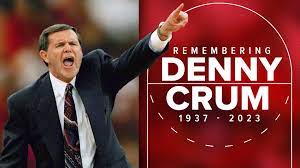
We lost Denny Crum this week. For any fan of Louisville or college basketball, Crum was one of the greatest coaches in the past 50 years. He twice won NCAA national championships and went to the Final Four six times. According to his New York Times obituary, “Crum retired in March 2001 after 30 seasons at Louisville with a record of 675-295 and championships in 1980 and 1986.” For reasons still unclear to me, I became a became a big Louisville fan in the early 1970s. Crum won his first championship with Darrel Griffin in 1980. But my favorite teams were the ones which went to three consecutive Final Fours from 1981-1983 which were led by the McCray Brothers, Scooter and Rodney. My favorite game was the 1983 semi-final featuring Louisville against the high-flying Phi Slamma Jamma of the University of Houston. The game was completely played about the rim. So farewell to the high-flying Cardinals and their coach, Denny Crum. 

We are in the midst of a blog post series on how to implement a stakeholder strategy for a corporation based upon an article in the Harvard Business Review article, entitled “How to Create a Stakeholder Strategy” which proposes a data-driven approach to design, measurement, and implementation by authors Darrell Rigby, Zach First, and Dunigan O’Keeffe. In Part 1, we considered the Statement on the Purpose of a Corporation and the stakeholder groups identified in this approach. In Part II, we considered the interconnected relationship between all stakeholders and how these stakeholders could be integrated. Today we will conclude with a review of a strategy to implement this approach.

The 2019 Business Roundtable Statement on the Purpose of the Corporation, business executives pledged their companies to be businesses for  the benefit of all stakeholders, specifically including customers, employees, suppliers, communities, and shareholders. However, the authors believe that businesses firms can use data, to craft and implement effective growth strategies that recognize the complex interdependencies among stakeholders, create mutual benefits for them, and increase the net value generated collectively for their constituents.”  The authors suggest a three-step approach.

Step 1: Make sense of outside perspectives. Interestingly the authors suggested an approach that every compliance professional will be familiar with, as it begins with an assessment. But rather than a risk assessment, the assessment is to determine the end objective, such as social justice, management effectiveness, or brand value. Then developing criteria to measure the results by assigning different weights to each and ranking them. The authors note that by using this approach it will “help you overcome confirmation bias and perhaps uncover valuable data sources. But you don’t need to accept them as gospel. Instead you should ask, Does this assessment fairly depict our current performance relative to other companies? If not, what’s wrong with it? What questions does it raise about our strategy, its future success, and required adjustments?”

Step 2: Create your own stakeholder strategy. From this starting assessment, you will next need to supplement this initial “analyze the interdependencies among your particular stakeholders. Once you’ve done that, you can begin crafting your stakeholder strategy, which should provide a clear description of your company’s purpose, establish criteria for evaluating progress toward it, determine priorities among stakeholders, and measure value creation for each stakeholder group.”

Use this data to understand the connections among the five sets of stakeholders. The authors posed some of the following questions which included “which management practices were causing employee frustration? How did that, in turn, affect value creation for customers, and what impact did that have on financial results? They had never attempted to understand the links among stakeholders or to prioritize and weight the importance of various stakeholders when trying to resolve conflicting interests.”

The next step is to rank this data. One company in the article was reported to have “identified four to six criteria for developing a performance score for each stakeholder (again, on a scale from minus 100 to plus 100). By multiplying the stakeholder’s weight by its performance score, the team could easily calculate the units of value created for each stakeholder and for the entire company.”

Step 3: Create systems to sustain your stakeholder strategy. Here the authors believe that to succeed a strategy must be able to outlast the enthusiasm and tenure of any individual executive. This means you need to (1) ensure that the entire company understands it, everyone’s role in it, and how individuals’ goals affect all stakeholder goals, and (2) institute disciplined routines for decision-making and execution.” This sounds precisely like the steps a compliance professional must take around the communication of a compliance program. The authors suggest five steps:

  1. Building a culture that embraced the stakeholder strategy.
  2. Designing organizational structures that increased cross-stakeholder collaboration.
  3. Establishing new processes that helped grow stakeholder value.
  4. Redesigning business processes to support stakeholder strategies.
  5. Communicating honestly to attract the right stakeholder segments.

The authors conclude by noting “A July 2019 survey of 1,026 adults commissioned by Fortune found that two-thirds of U.S. adults now think a company’s primary objective should be making the world a better place. According to the 2022 Edelman Trust Barometer, adults around the world believe businesses can be unifying forces in society and so should step up to shape more-balanced policies on jobs, technology, wage inequality, climate change, discrimination, immigration, education, and health care. They want businesses to grow value for all stakeholders.”

But the business reality is that “this is not simply a worthy aspiration. Companies that create strategies to benefit all stakeholders and establish systems for implementing them build businesses that are more successful and resilient. They reduce the risks of customer defections, employee turnover, loss of shareholder confidence, community protests, harsh regulations, and competitive disruptions—any of which can be crippling. Moreover, as executives at companies that have adopted stakeholder strategies, such as Costco, Microsoft, and P&G, can attest, a stakeholder-based approach to running a business can make leadership roles more meaningful and rewarding.” All of this means moving to a stakeholder model is not simply a nice to have but moving towards standard operating practice.