Categories
Daily Compliance News

Daily Compliance News: January 26, 2026, The Pardon of Tim Leissner Edition

Welcome to the Daily Compliance News. Each day, Tom Fox, the Voice of Compliance, brings you compliance-related stories to start your day. Sit back, enjoy a cup of morning coffee, and listen in to the Daily Compliance News. All, from the Compliance Podcast Network. Each day, we consider four stories from the business world, compliance, ethics, risk management, leadership, or general interest for the compliance professional.

Top stories include:

  • 1MDB lynchpin Tim Leissner wants a pardon. (Bloomberg)
  • Marcos is under impeachment over Philippine corruption. (Bloomberg)
  • UK investigating Meta’s compliance with data requests. (Reuters)
  • China accuses top general of corruption. (WSJ)
Categories
Daily Compliance News

Daily Compliance News: January 20, 2026, The First We Kill All the Lawyers Edition

Welcome to the Daily Compliance News. Each day, Tom Fox, the Voice of Compliance, brings you compliance-related stories to start your day. Sit back, enjoy a cup of morning coffee, and listen in to the Daily Compliance News. All, from the Compliance Podcast Network. Each day, we consider four stories from the business world, compliance, ethics, risk management, leadership, or general interest for the compliance professional.

Top stories include:

  • Those fighting corruption are under attack. (NYT)
  • Lawyers are endangered in the US. (FT)
  • DOJ to eliminate lawyers’ recusals from conflicts. (MTN)
  • Trump attacks the legal profession in the 2025 review. (EFF)
Categories
Blog

Returning to Venezuela: Part 2 – Bribery, Corruption and the Risks You Must Confront Before You Enter

We continue our review of bribery and corruption issues (ABC) that you must address before you travel to Venezuela.  There is another set of problems that every compliance professional will face if their company decides to go into Venezuela. It is systemic corruption. Not episodic corruption. Not bad actors at the margins. Systemic, embedded, institutionalized corruption that touches government agencies, state-owned enterprises, procurement systems, and the judiciary. This is not a theoretical risk. It is the operating environment.

The Department of Justice (DOJ) has made clear in the Evaluation of Corporate Compliance Programs (ECCP) that high-risk jurisdictions require tailored, well-resourced, and empowered compliance programs. Venezuela is the textbook example of why. Over the next several blog posts, we will explore some of the key issues every company and every CCO will face when considering whether to enter (or re-enter) Venezuela. In Part 2, I will consider the second half of the 10 ABC risks a compliance professional will face. Later in this series, we will then consider AML risk, export control and trade sanctions, security risks, and end with operational risks.

In Part 1, we described the corruption environment. In Part 2, we consider what happens when companies actually try to operate inside it. This is where theory meets pressure. We begin our numbers with 6, picking up where we left off yesterday.

6. Extortion Is Not a Defense

In Venezuela, companies are often told, “You have no choice.” Payments are demanded to release cargo, protect personnel, or continue operations, sometimes thinly veiled as “fees” for expedited treatment. Venezuelan law itself recognizes extortion as a corruption offense, in which a public official abuses their position to demand an undue benefit. Under Venezuelan anti-corruption law, extortion (called concussion) carries criminal penalties and fines.

At the same time, U.S. enforcement views participation in extortion as a compliance red flag. While coercion can be a mitigating factor in narrow circumstances under the Foreign Corrupt Practices Act (FCPA) or the Foreign Extortion Prevention Act (FEPA), repeated payments, disguised invoices, or third-party routing create evidence of complicity. Deciding to pay from the field without escalation essentially decides for the company, and compliance will struggle to justify it under an ECCP review. Compliance professionals must define escalation paths, refusal protocols, and clear exit points before any signs of extortion arise. Waiting to decide “in the moment” is too late.

Compliance Response

1. Assessment Controls

  • Identify operational choke points where officials or intermediaries can halt operations, including ports, customs, checkpoints, utilities, and inspections.
  • Assess historical incidents involving detentions, delays, threats, or asset seizure tied to payment demands.
  • Map scenarios where employee safety or operational continuity could be leveraged for improper payments.

2. Management Controls

  • Establish a zero-tolerance policy for extortion payments, with narrowly defined emergency exceptions tied to imminent health or safety threats.
  • Implement pre-approved emergency response protocols for detentions, threats, or seizures.
  • Prohibit third-party routing, recharacterization, or retroactive approval of payments in the context of extortion scenarios.
  • Require contemporaneous documentation of all extortion-related incidents and decisions.

3. Monitoring

  • Track frequency, location, and duration of detentions or operational stoppages.
  • Review off-cycle, urgent, or cash payment requests for patterns.
  • Audit expense categories are commonly used to disguise extortion payments.

4. Board Oversight

  • Where are we most exposed to extortion pressure?
  • How often are emergency exceptions invoked, and are they increasing?
  • At what point do we pause or exit operations rather than continue under pressure?

7. Third Parties as the Primary Corruption Vector

In Venezuela, third parties are the everyday vectors through which corruption pressure crystallizes. Agents, customs brokers, logistics providers, security vendors, and even local fixers frequently serve as the conduit for improper value transfers. These intermediaries claim to navigate Venezuela’s opaque systems, but they also create liability if their actions result in bribery or improper advantage.

Pressure points are endemic and include:

  • Customs clearance: Goods may be held pending unofficial “service fees” or clearance bribes.
  • Port operations: Terminal operators or officials may demand payments for priority access.
  • Transportation: Toleration at checkpoints is often predicated on unofficial payments.
  • Security arrangements: Local guards or militia may demand fees for access or protection.
  • Licensing follow-up: Expediency “services” are offered at a premium.

Third parties promise solutions. They also create liability when their conduct crosses legal lines. Under the ECCP, regulators will ask whether the company understands and monitors how these third parties operate in practice, not just whether it has a diligence checklist. Paper diligence alone is insufficient where pressure is constant, and corruption vectors hide in plain sight.

Compliance Response

1. Assessment Controls

  • Classify third parties by function (customs, logistics, security, licensing), not by spend alone.
  • Identify third parties that interact directly with government officials.
  • Assess compensation structures for success fees, urgency premiums, or discretionary payments.

2. Management Controls

  • Apply enhanced due diligence to high-pressure third-party functions.
  • Require detailed, verifiable scopes of work tied to legitimate services.
  • Mandate compliance approval before onboarding or paying high-risk third parties.
  • Prohibit subcontracting or pass-through arrangements without prior written approval.

3. Monitoring

  • Conduct invoice analytics to identify duplications, rounding issues, urgency issues, or vague descriptions.
  • Monitor third-party performance against contractual scope and deliverables.
  • Review third parties involved in repeated government interactions or escalations.

4. Board Oversight

  • Which third-party functions create the greatest corruption pressure?
  • How do we verify what third parties do in practice?
  • When do we terminate a third-party relationship rather than attempt remediation?

8. Organized Crime and the Blurred Line of “Business”

In Venezuela, organized crime intersects with commerce, logistics, and even parts of the formal economy. Corruption and criminal networks often coalesce in sectors like mining, fuel distribution, and transport infrastructure, where armed groups and informal power structures exercise influence. Some of these networks are intertwined with state actors, and corruption and illicit activity can reinforce one another.

For compliance professionals, this means recognizing when business relationships drift into criminal entanglement. That drift is not always obvious at contract signing. Contracts negotiated under duress or through intermediaries with opaque ownership may conceal criminal activity. Continuous monitoring matters precisely because initial signals are subtle. The line between a vendor and a syndicate can be ecosystem-specific and may manifest in patterns of behavior, unexplained payments, or associations with known corrupt actors.

This is also where AML risk begins to dominate. When organized crime is part of the value network, it is present through smuggling rings, illicit fuel markets, or bribery conduits.  The controls for bribery, AML, sanctions, and export compliance must interlock to detect and escalate suspicious patterns.

1. Assessment Controls

  • Screen vendors and partners for criminal exposure, unusual affiliations, and opaque ownership.
  • Assess whether services operate in sectors known for illicit activity, including fuel distribution, logistics, or private security.
  • Review beneficial ownership structures and local power dynamics.

2. Management Controls

  • Integrate anti-bribery, AML, and sanctions screening for high-risk vendors.
  • Require certifications regarding lawful sourcing, operations, and subcontractors.
  • Prohibit informal arrangements, undocumented services, or side agreements.

3. Monitoring

  • Monitor for cash-intensive activity without commercial justification.
  • Track changes in ownership, management, or operational behavior.
  • Escalate associations with known illicit markets, actors, or criminal networks.

4. Board Oversight

  • How do we detect drift from legitimate commerce into criminal entanglement?
  • What triggers an immediate suspension or exit?
  • Are our controls sufficient to identify concealed criminal exposure?

9. Currency, Pricing, and Manipulation Pressure

Venezuela’s economic distortions, including exchange controls, multiple currency rates, and the scarcity of hard currency, create fertile ground for corruption. Access to U.S. dollars through official channels is tightly controlled, which historically has led companies and intermediaries to engage in schemes to secure foreign exchange at preferential rates. A notable U.S. enforcement action involved a major telecommunications subsidiary that allegedly bribed officials to gain access to a currency auction and disguised corrupt commissions through inflated equipment purchases.

These distortions become more than operational headaches. They create incentives for side payments and off-book arrangements on pricing and contracts. These practices are not just bribery issues. They implicate accounting integrity, financial reporting, AML vigilance, and sanctions exposure. Once money flows lose transparency, whether through inflated vendor invoices, opaque currency conversions, or third-party routing, compliance loses line-of-sight and control. This intersection reinforces why a compliance program must integrate transactional monitoring and financial controls alongside anti-bribery controls to detect anomalies that traditional gift/entertainment policies won’t reveal.

Compliance Response

1. Assessment Controls

  • Identify exposure to foreign exchange approvals, currency scarcity, and pricing discretion.
  • Review historical pricing anomalies or currency-related workarounds.
  • Map payment flows involving third-country or non-standard accounts.

2. Management Controls

  • Enforce strict controls over pricing adjustments and currency conversions.
  • Require joint Finance–Compliance approval for non-standard payment terms.
  • Prohibit side agreements, rebates, or off-book arrangements.

3. Monitoring

  • Monitor invoices for inconsistencies with market pricing.
  • Flag requests for alternative currencies or complex payment routing.
  • Conduct periodic reviews of foreign exchange transactions and pricing deviations.

4. Board Oversight

  • Where do currency controls create the strongest corruption incentives?
  • How do we maintain transparency in pricing and payments?
  • When does financial complexity cross into unacceptable risk?

10. Weak Rule of Law Raises the Stakes

Venezuela’s judiciary and law enforcement institutions are widely seen as politicized, under-resourced, and inconsistent in enforcing anti-corruption laws. Although the Venezuelan legal framework criminalizes extortion, passive and active bribery, and related offenses, enforcement is weak and selective. In practice, companies cannot rely on local remedies to resolve disputes or push back against corrupt demands.

This elevates the importance of internal compliance controls and pre-defined exit strategies. When there is no neutral referee, no reliable government adjudicator, and prevention becomes the only viable protection. It also means that compliance must internalize enforcement risk rather than outsource it to local authorities. A robust compliance program must include strict refusal protocols, incident documentation, real-time monitoring, and clear decision-making boundaries. Without these, companies are exposed to both local corruption risk and U.S. enforcement risk under the FCPA and allied statutes.

Compliance Response

1. Assessment Controls

  • Assume limited availability of neutral local legal remedies.
  • Identify areas where officials exercise unchecked discretion.
  • Assess reliance on informal dispute resolution mechanisms.

2. Management Controls

  • Strengthen internal documentation, approval, and escalation requirements.
  • Define clear walk-away criteria when disputes cannot be resolved lawfully.
  • Require Legal and Compliance review of all high-risk disputes and resolutions.

3. Monitoring

  • Track disputes resolved outside formal legal or contractual processes.
  • Review patterns of repeated “local solutions” or informal settlements.
  • Assess escalation timelines and resolution outcomes.

4. Board Oversight

  • Where are we relying on influence rather than process?
  • How quickly do disputes escalate to senior leadership?
  • When do we exit rather than attempt resolution?

Parts 1 and 2 of this series make clear that bribery and corruption are not peripheral risks in Venezuela. They are the entry conditions. From systemic corruption and PDVSA exposure to extortion, third-party involvement, currency manipulation, and a weak rule of law, each risk compounds the next. For compliance professionals, the lesson is not that Venezuela is impossible, but that it is unforgiving of informal controls, delayed escalation, and weak governance. Elevated risk can be managed only through disciplined assessment, operational controls, continuous monitoring, and engaged board oversight. When corruption becomes operational, however, another risk inevitably follows.

Next in Part 3 of this series, we turn to anti-money laundering, where improper value moves, hides, and metastasizes beyond corruption alone. Bribery is how improper value enters the system. Money laundering is how it moves and hides. Once corruption becomes operational, AML risk becomes unavoidable. Join us tomorrow for Part 3 in our series.


Categories
Blog

Returning to Venezuela: Part 1 – Bribery, Corruption and the Risks You Must Confront Before You Enter

When US energy companies talk about returning to Venezuela, the conversation almost always starts with opportunity. Yet the CEO of Exxon has said Venezuela is ‘uninvestible’. There is another set of problems that every corporate compliance team will face if their company decides to enter the Brazilian market. For the compliance professional, it must start with corruption. Not episodic corruption. Not bad actors at the margins. Systemic, embedded, institutionalized corruption that touches government agencies, state-owned enterprises, procurement systems, and the judiciary. This is not a theoretical risk. It is the operating environment.

The Department of Justice (DOJ) has made clear in the Evaluation of Corporate Compliance Programs (ECCP) that high-risk jurisdictions require tailored, well-resourced, and empowered compliance programs. Venezuela is the textbook example of why. Over the next several blog posts, we will explore key issues every company and CCO will face when considering whether to enter (or re-enter) Venezuela. In Parts 1 and 2, I will consider the top 10 anti-bribery/anti-corruption (ABC) risks a compliance professional will face. (Part 1, risks 1-5; Part 2, risks 6-10). We will then consider AML risk, export control and trade sanctions, security risks, and end with operational risks.

1. Systemic Corruption Is the Baseline Condition

Risk

Venezuela is not a market where corruption appears as an exception. It is the default condition against which all business activity must be measured. For compliance professionals, this means risk assessments cannot ask whether corruption exists. They must assume it does and ask where pressure will arise. Licensing, customs, inspections, labor issues, utilities, and currency all present opportunities for improper advantage. Boards must understand this upfront. Entering Venezuela without acknowledging systemic corruption is not optimism. It is a governance failure.

Compliance Framework Response

Before addressing individual risks, the compliance function must establish baseline principles governing how risk is assessed and managed in Venezuela.

  1. Assume corruption pressure exists. The risk assessment does not ask if corruption will arise, but where and how.
  2. Controls must be operational, not theoretical. Policies without authority, monitoring, and escalation are not controls.
  3. Risk ownership must be explicit. Every risk category has a business owner, a compliance owner, and a board oversight hook.
  4. Boards govern risk; they do not run operations. Oversight is mandatory. Tactical interference is prohibited.

2. PdVSA as a Prominent and Persistent Risk

Risk

Any discussion of bribery risk in Venezuela must begin with Petróleos de Venezuela S.A. (PdVSA), which has been at the center of some of the most significant corruption schemes in modern enforcement history, involving contracts, invoices, intermediaries, and payment routing. Indeed, 10 years ago, I wrote that it would cost a fortune to schedule and confirm a meeting. But companies make the mistake of treating PdVSA as a single risk node. In reality, it is a network risk. Joint ventures, service contracts, maintenance agreements, and procurement relationships all radiate outward, exposing the organization to corruption. If your counterparty touches PdVSA, you have inherited PdVSA risk.

Compliance Framework Response

The starting point is a Venezuela-specific bribery and corruption risk assessment, refreshed whenever business scope, counterparties, or operating conditions change.

This assessment must:

  • Map all government touchpoints.
  • Identify all third parties by function, not just by name;
  • Distinguish systemic risk from transactional risk; and
  • Flag PdVSA exposure explicitly.

Outputs are not static reports. They are control design inputs.

3. Joint Ventures and Service Contracts: Shared Risk, Shared Liability

Risk

Joint ventures are often framed as risk mitigation tools. In Venezuela, they frequently do the opposite. Local partners may be politically connected. Governance structures may be opaque. Control rights may be illusory. Compliance professionals must scrutinize who appoints management, who controls procurement, and who interacts with government officials. Under the ECCP, regulators ask whether compliance has authority commensurate with risk. In a Venezuelan JV, symbolic compliance oversight is not enough.

Compliance Framework Response

1. Assessment Controls

  • Government interaction mapping by function and frequency
  • Identification of pressure points where discretion exists
  • Historical analysis of delays, denials, or unexplained variability

2. Management Controls

  • Pre-approval requirements for all government-facing interactions
  • Clear prohibitions on facilitation payments
  • Mandatory escalation for any demand tied to speed, access, or discretion

Monitoring

  • Trend analysis of approvals and delays
  • Comparison of processing times across regions or projects

1. Board Oversight Questions

  • Where do we face the highest government discretion risk?
  • What interactions cannot proceed without a compliance sign-off?

4. Procurement as the First Corruption Flashpoint

Risk

Procurement is where corruption pressure materializes fastest. Vendors expect to be paid for access. Officials expect influence. Intermediaries promise to “make things happen.” This is even more true in Venezuela. This is where third parties begin to matter and where compliance must be in place before contracts are signed. Retrospective diligence does not cure a corrupted procurement process. Boards should demand visibility into how vendors are selected, not just who they are.

Compliance Framework Response

1. Assessment Controls

  • Explicit identification of direct and indirect PdVSA touchpoints
  • Mapping of PdVSA influence over pricing, approvals, and payments
  • Review of historical enforcement patterns tied to similar structures

2. Management Controls

  • Enhanced due diligence for any counterparty touching PdVSA
  • Compliance approval of all PdVSA-facing contract terms
  • Segregation of duties around invoicing and change orders

Monitoring

  • Continuous review of intermediaries interacting with PdVSA
  • Red flag monitoring for unusual invoice timing or routing
  1. Board Oversight Questions
  2. How are PdVSA’s risks different from those of other SOEs we engage with?
  3. What controls exist beyond standard third-party diligence?

5. The Illusion of “Routine” Government Interaction

Risk

Companies often underestimate corruption risk by labeling interactions as routine: inspections, permits, customs clearances, utilities, and labor approvals. And yes, the DOJ has said it will back off on enforcement of small payments, which may be traditionally made, but in Venezuela, routine functions are often monetized.  Compliance programs must draw hard lines early and firmly.

Compliance Framework Response

1. Assessment Controls

  • Governance and control-rights analysis
  • Identification of who appoints management and controls procurement
  • Mapping of partner government relationships

2. Management Controls

  • Contractual compliance rights with audit and termination authority
  • Compliance veto power over high-risk activities
  • Mandatory training for JV-appointed personnel

Monitoring

  • Periodic compliance audits of JV operations
  • Review of partner interactions with officials

1. Board Oversight Questions

  • Where do we lack real compliance leverage in our JVs?
  • Are control rights aligned with our risk exposure?

Join us tomorrow as we look at ABC risks 6-10, including third parties, extortion, organized crime, currency issues, and a weak rule of law.

Categories
2 Gurus Talk Compliance

2 Gurus Talk Compliance – The Corruption is Free Speech Edition

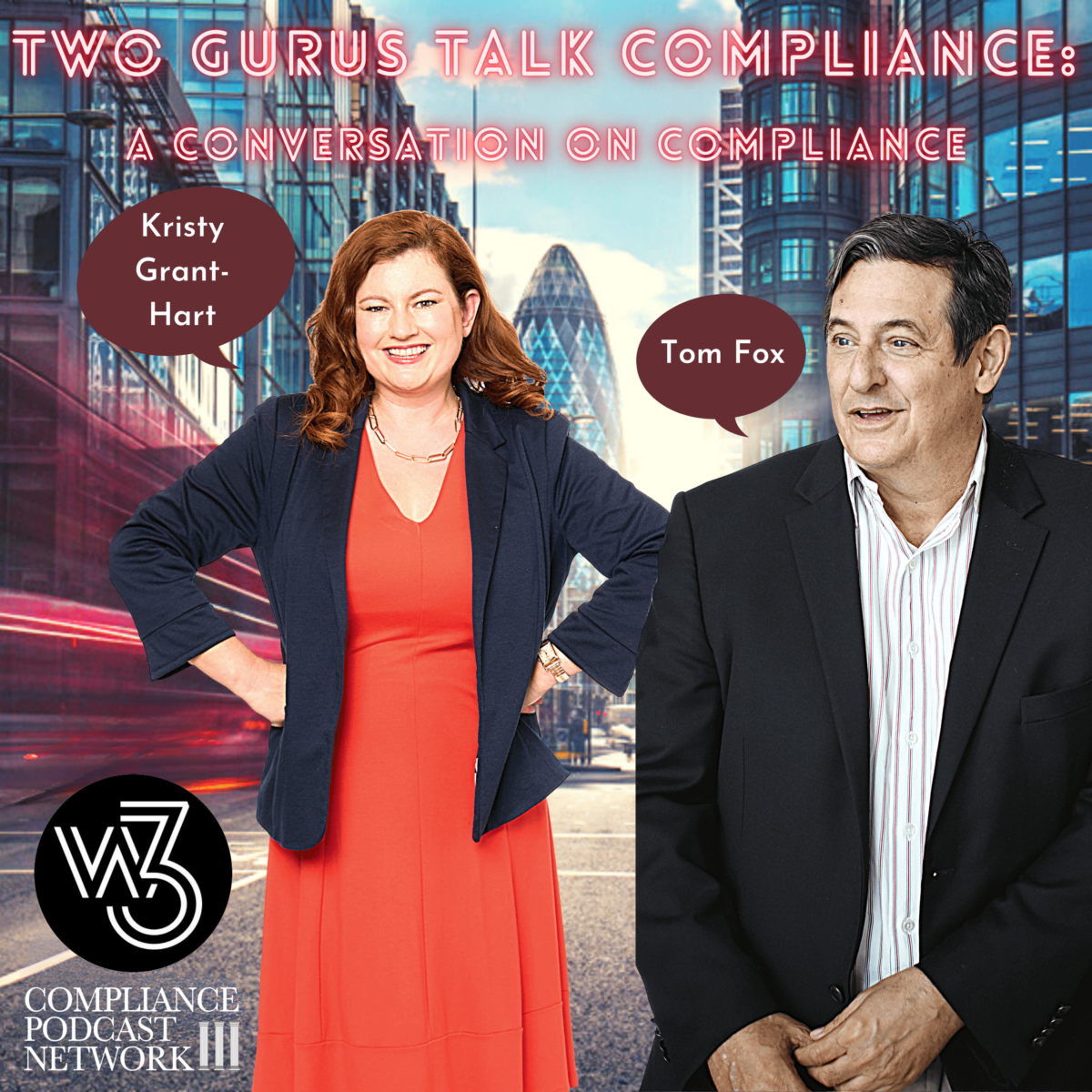
What happens when two top compliance commentators get together? They talk compliance, of course. Join Tom Fox and Kristy Grant-Hart in 2 Gurus Talk Compliance as they discuss the latest compliance issues in this week’s episode!

Stories This Week Include:

  • FirstEnergy defendants in Ohio say corruption is simply ‘free speech’. (Ohio Capitol Journal)
  • British national sentenced to 6 years in jail over Wirecard fraud. (FT)
  • Corruption led to the Hong Kong fire disaster. (Bloomberg)
  • Translations as a compliance issue. (BBN Times)
  • Will Trump suspend the FCPA in Venezuela? (FCPA Compliance and Ethics Report)
  • X Faces U.K. Probe Over Grok’s Sexualized Images (WSJ)
  • Six Compliance Events to Watch in 2026 (Radical Compliance)
  • Why Are Your Policies Yelling at Me? It’s Time to Rethink Tone in Rules (CCI)
  • 10 must-know workforce trends for 2026 (Dayforce)
  • Florida man arrested after trying to flee deputies on riding lawn mower (NBC News)

Connect with the Hosts:

Resources:

Prove Your Worth

Tom

Instagram

Facebook

YouTube

Twitter

LinkedIn

Categories
Daily Compliance News

Daily Compliance News: January 16, 2026, The Another Basketball Point Shaving Scandal Edition

Welcome to the Daily Compliance News. Each day, Tom Fox, the Voice of Compliance, brings you compliance-related stories to start your day. Sit back, enjoy a cup of morning coffee, and listen in to the Daily Compliance News. All, from the Compliance Podcast Network. Each day, we consider four stories from the business world, compliance, ethics, risk management, leadership, or general interest for the compliance professional.

Top stories include:

  • Corruption investigation into Italy’s privacy watchdog. (Reuters)
  • Former Ukraine PM charged with corruption. (EuroNews)
  • Another college point-shaving scandal. (ESPN)
  • Kaiser Permanente settles massive medicare fraud claims scandal. (NYT)
Categories
Daily Compliance News

Daily Compliance News: January 15, 2026, The Do You Need a Second CCO Edition

Welcome to the Daily Compliance News. Each day, Tom Fox, the Voice of Compliance, brings you compliance-related stories to start your day. Sit back, enjoy a cup of morning coffee, and listen in to the Daily Compliance News. All, from the Compliance Podcast Network. Each day, we consider four stories from the business world, compliance, ethics, risk management, leadership, or general interest for the compliance professional.

Top stories include:

  • Another Eric Adams associate was charged in another corruption scandal. (Politico)
  • Blocking and tackling in compliance. (Bloomberg)
  • Hightower goes with a dual CCO structure. (InvestmentNews)
  • Panama SCt to decide who can run the Panama Canal. (WSJ)
Categories
Daily Compliance News

Daily Compliance News: January 14, 2026, The Ghost of Odebrecht Edition

Welcome to the Daily Compliance News. Each day, Tom Fox, the Voice of Compliance, brings you compliance-related stories to start your day. Sit back, enjoy a cup of morning coffee, and listen in to the Daily Compliance News. All, from the Compliance Podcast Network. Each day, we consider four stories from the business world, compliance, ethics, risk management, leadership, or general interest for the compliance professional.

Top stories include:

  • Why didn’t Trump think of this? (Haaretz) sub req’d
  • Former Panamanian President goes on trial for corruption. (KTBS)
  • What is a COI (Part 359)? (FT)
  • SEC punts on yet another fraud case. (Reuters)
Categories
Daily Compliance News

Daily Compliance News: January 13, 2026, The Don’t Be a FED Chair Edition

Welcome to the Daily Compliance News. Each day, Tom Fox, the Voice of Compliance, brings you compliance-related stories to start your day. Sit back, enjoy a cup of morning coffee, and listen in to the Daily Compliance News. All, from the Compliance Podcast Network. Each day, we consider four stories from the business world, compliance, ethics, risk management, leadership, or general interest for the compliance professional.

Top stories include:

  • Xi says China cannot afford to lose the fight against corruption. (SCMP)
  • Paramount threatens Board proxy fight for Warner Bros. (NYT)
  • The Trump DOJ opens a criminal probe against the Fed Chair. (WSJ)
  • Suit cleared to go to trial alleging Citi fraud in Mexico. (Reuters)
Categories
All Things Investigations

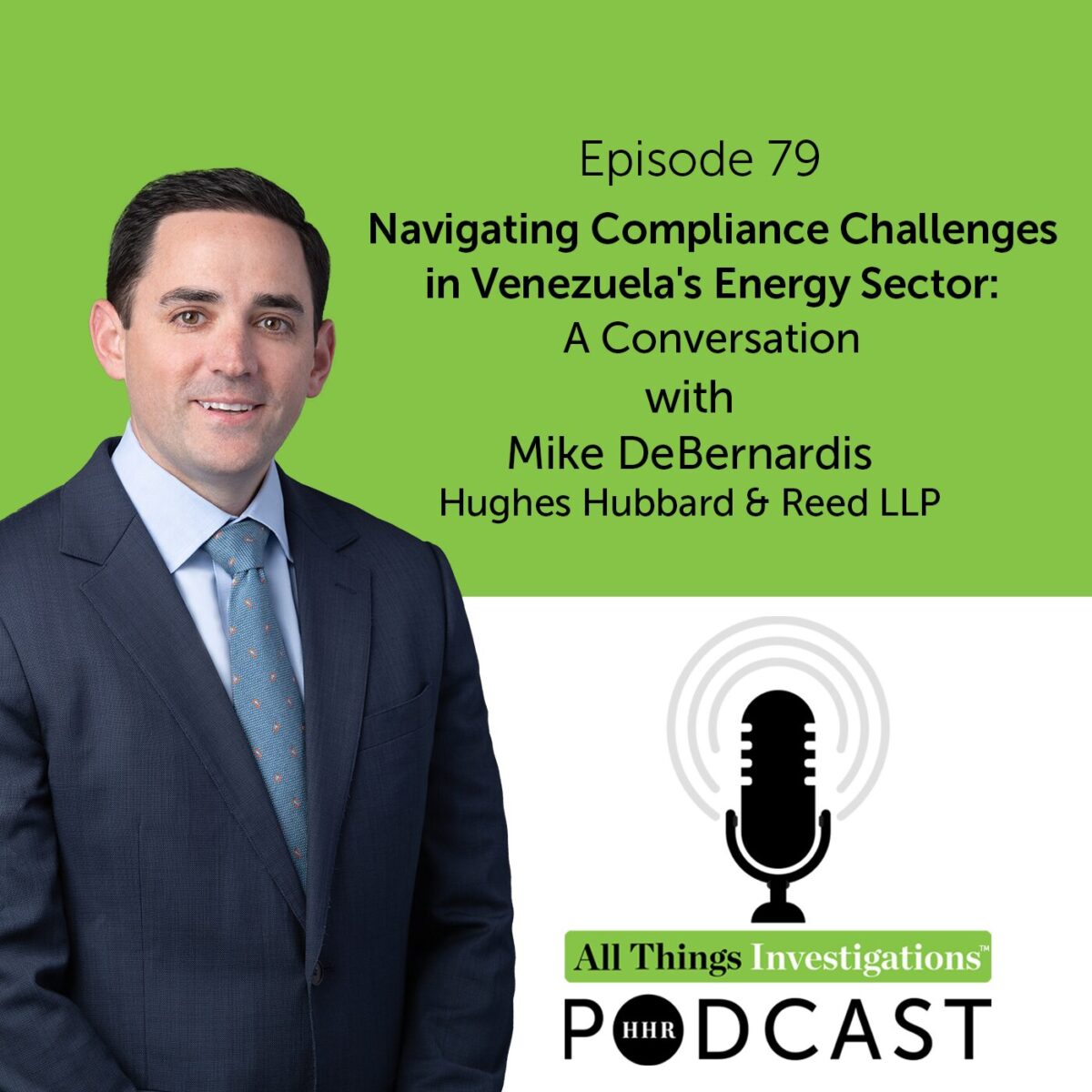
All Things Investigations – Navigating Compliance Challenges in Venezuela’s Energy Sector

Welcome to the Hughes Hubbard Anti-Corruption & Internal Investigations Practice Group’s podcast, All Things Investigation. In this podcast, host Tom Fox welcomes back Mike DeBernardis to discuss the implications of entering Venezuela for energy companies and the historical precedents.

They explore the return of US energy companies to the Venezuelan market and historical precedents, such as the Iraq Oil-for-Food Program, post-2003 Iraq, and the 1990s Russian market opening, to identify the risks and the necessary compliance measures. Key insights include the importance of stringent third-party controls, understanding the nuances of dealing with state-owned entities such as PdVSA, and having a robust risk management strategy. The conversation underscores the critical need for compliance professionals to thoroughly understand business operations to build effective compliance programs in high-risk environments.

Key highlights:

  • Challenges and Opportunities in Venezuela
  • Historical Parallels: Iraq Oil for Food Program
  • Lessons from Post-2003 Iraq
  • Comparing Venezuela to 1990s Russia
  • Counseling Clients on High-Risk Opportunities

Resources:

Hughes Hubbard & Reed website

Mike DeBernardis