Categories
Blog

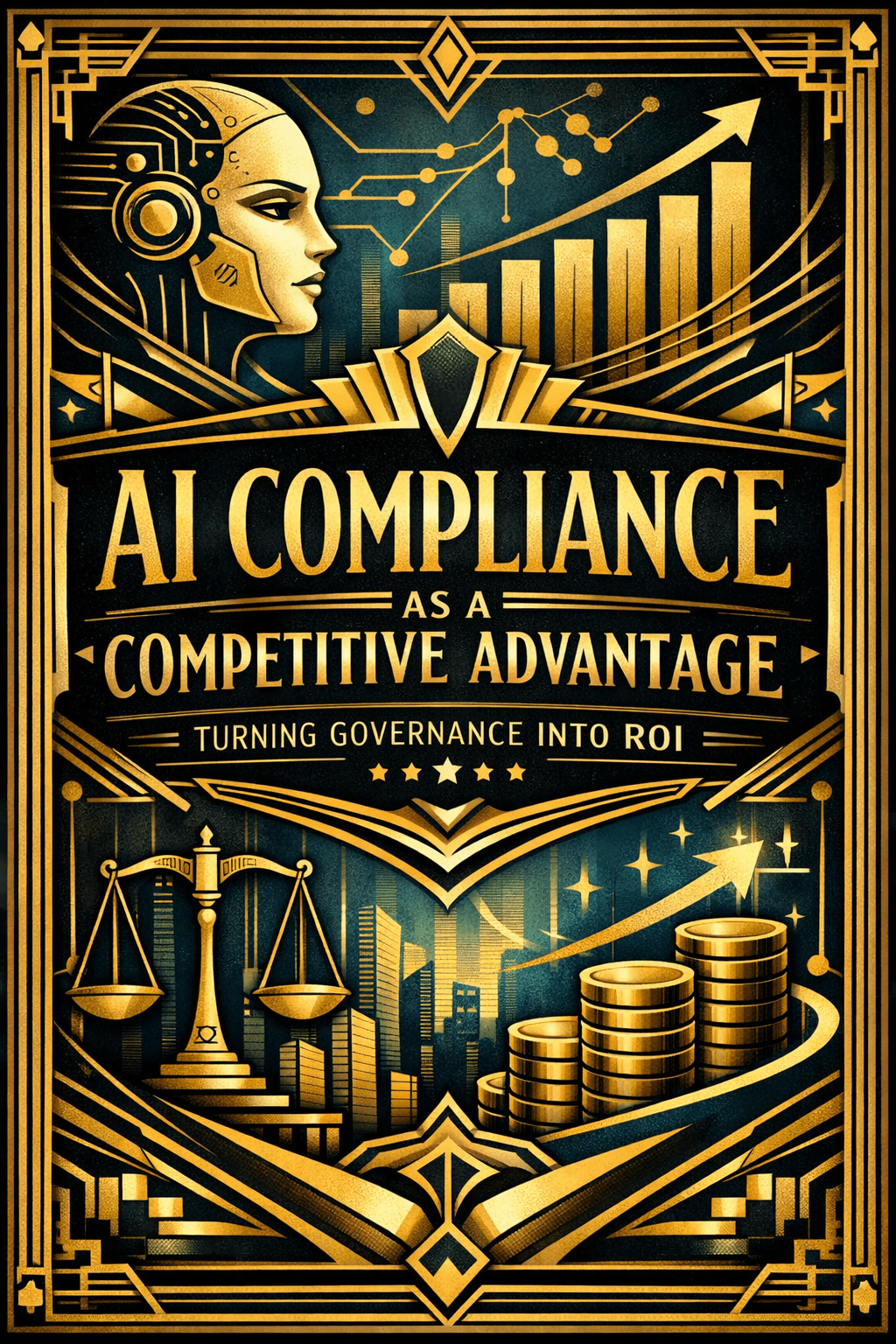
AI Compliance as a Competitive Advantage: Turning Governance Into ROI

In too many organizations, “AI compliance” is treated like a speed bump. Something to route around, manage after launch, or outsource to a vendor deck and a policy that nobody reads. That mindset is not only outdated but also expensive. In 2026, mature AI governance is becoming a commercial differentiator because customers, regulators, employees, and business partners increasingly ask the same question: Can you prove your system is trustworthy?

The most underappreciated truth is that AI risk is not “an AI team problem.” It is a business-process problem, expressed through data, decisions, third parties, and change control. The Department of Justice Evaluation of Corporate Compliance Programs (ECCP) has never been about perfect paperwork; it has been about whether a program is designed, implemented, resourced, tested, and improved. If you can translate that posture into AI, you can convert “compliance cost” into “credibility capital.”

A cautionary backdrop shows why. The EEOC’s 2023 settlement with iTutorGroup serves as a cautionary tale: automated hiring screening that disadvantages older workers can lead to legal exposure, remediation costs, and reputational damage. The details matter less than the pattern; when algorithmic decisions are not governed, the business eventually pays the bill. The compliance professional should see the pivot clearly; governance is the mechanism that lets you move fast without becoming reckless.

From a build-from-scratch, low-to-medium maturity posture, the win is not sophistication. The win is repeatability. If you build an AI governance framework aligned to NIST AI RMF (govern, map, measure, manage), structured through ISO/IEC 42001’s management-system discipline, and cognizant of EU AI Act risk tiering, you get something the business loves: a predictable path from idea to deployment. Today, I will explore five ways mature AI compliance can become a competitive advantage, each with a practical view of how a compliance-focused GenAI assistant can support business processes.

1) Sales and Customer Trust

Trust is a sales feature now, even when marketing refuses to call it that. Customers increasingly ask about data use, model behavior, security controls, and human oversight, and they are doing it in procurement questionnaires and contract negotiations. A mature governance framework lets you answer quickly, consistently, and with evidence, thereby shortening sales cycles and reducing late-stage deal friction. A compliance GenAI can support this by drafting standardized responses from approved trust artifacts such as policies, model cards, DPIAs, and audit summaries; flagging gaps, and routing exceptions to Legal and Compliance before the business overpromises.

For compliance professionals, this lesson is even more stark, as the ‘customers’ of a corporate compliance program are your employees. Some key KPIs you can track are average time to complete AI security and compliance questionnaires; percentage of deals requiring AI-related contractual concessions; number of customer-facing AI disclosures issued with approved templates; and percentage of AI systems with current model documentation and ownership attestations.

2) Regulatory Credibility

Regulators are not impressed by ambition; controls persuade them. NIST AI RMF provides a common language to demonstrate that you mapped use cases, measured risks, and managed them over time, while ISO/IEC 42001 imposes discipline on accountability, documentation, and continual improvement. The EU AI Act’s risk-based approach adds an organizing principle: classify systems, apply controls proportionate to risk, and prove that you did it. A compliance GenAI can help by maintaining a living inventory, prompting owners to complete quarterly attestations, drafting control narratives aligned with the frameworks, and assembling regulator-ready “evidence packs” that demonstrate governance in operation rather than on paper.

For compliance professionals, this lesson is about your gap analysis. You have not aligned your current internal controls with GenAI, governance, or other controls. You should do so. Some key KPIs you can track are percentage of AI systems risk-tiered and documented; time to produce an evidence pack for a high-impact system; number of material control exceptions and time-to-remediation; and frequency of risk reviews for high-impact systems.

3) Faster Product Approvals and Safer Deployment

Speed comes from clarity, not from cutting corners. When decision rights, review thresholds, and required artifacts are defined up front, product teams stop guessing what Compliance will require at the end. That is the management-system advantage: ISO/IEC 42001 treats AI governance like a repeatable operational process with gates, owners, and records, rather than a series of one-off debates. A compliance GenAI can support the workflow by pre-screening new use-case intake forms, recommending the correct risk tier under EU AI Act concepts, suggesting required testing (bias, privacy, safety), and generating the first draft of a launch checklist that the product team can execute.

For compliance professionals, this lesson is that you must run compliance at the speed of your business operations. Some key KPIs you can track are: cycle time from AI intake to approval; percent of launches that pass on first review; number of post-launch “surprise” issues tied to missing pre-launch controls; and percentage of models with human-in-the-loop controls when required.

4) Talent, Recruiting, and Internal Confidence

Top performers do not want to work in a company that treats AI like a toy and compliance like a nuisance. Mature governance creates psychological safety inside the organization: employees know what is permitted, what is prohibited, and how to raise concerns. It also improves recruiting because candidates, especially in technical roles, ask about responsible AI practices, data governance, and ethical guardrails. A compliance GenAI can support internal confidence by serving as the first-line “policy concierge,” answering questions with approved guidance, directing employees to the correct procedures, and logging common questions so Compliance can improve training and communications.

For compliance professionals, this fits squarely within the DOJ mandate for compliance to lead efforts in institutional justice and fairness. Some key KPIs you can track include training completion and comprehension metrics for AI use; the number of AI-related helpline inquiries and their resolution times; employee survey results on comfort raising AI concerns; and the percentage of AI use cases with documented business-owner accountability.

5) Lower Cost of Incidents and More Resilient Operations

AI incidents are rarely just “bad outputs.” They are process failures: poor data lineage, uncontrolled model changes, vendor opacity, missing logs, weak access controls, or no escalation path when harm appears. NIST AI RMF’s “measure” and “manage” functions emphasize monitoring, drift detection, incident response, and continuous improvement, which is precisely how you reduce the frequency and severity of failures. A compliance GenAI can support incident resilience by guiding teams through an AI incident response playbook, helping triage severity, ensuring evidence is preserved (audit logs, prompts, outputs, approvals), and generating lessons-learned reports that connect root cause to control enhancements.

For compliance professionals, this lesson is even more stark, as the ‘customers’ of a corporate compliance program are your employees. Some key KPIs you can track include the number of AI incidents by severity tier; mean time to detect and mean time to remediate; the percentage of high-impact models with drift-monitoring and alert thresholds; and the percentage of third-party AI providers subject to change-control notification requirements.

What “Mature Governance” Looks Like When You Are Building From Scratch

Do not start with a 60-page policy. Start with a few non-negotiables that scale:

  • Inventory and classification: Create a single inventory of GenAI assistants, ML models, and automated decision systems. Classify them by impact using EU AI Act concepts (high-impact versus low-impact) and your own business context.
  • Accountability and decision rights: Assign an owner for each system and require periodic attestations for the highest-risk categories.
  • Standard artifacts: Use lightweight model documentation, data lineage notes, and disclosure templates. If it is not documented, it does not exist for governance.
  • Human oversight and logging: Define when human-in-the-loop is mandatory and ensure logs capture who approved what, when, and why.
  • Third-party AI controls: Contract for transparency, audit support, change notification, and security requirements. Vendor opacity is not a strategy.

This is where ECCP thinking helps. The question is not whether you have a policy. The question is whether the policy is operationalized, tested, and improved. That is the bridge from compliance to competitive advantage.

If you want AI compliance to be a competitive advantage, treat it like a management system that produces evidence, not like a policy library that produces comfort. When governance becomes repeatable, the business can move faster, regulators become more confident, and customers see the difference. That is not a cost center. That is credibility you can take to the bank.

Categories
AI Today in 5

AI Today in 5: March 2, 2026, The Silent Failure at Scale Edition

Welcome to AI Today in 5, the newest addition to the Compliance Podcast Network. Each day, Tom Fox will bring you 5 stories about AI to start your day. Sit back, enjoy a cup of morning coffee, and listen in to the AI Today In 5. All, from the Compliance Podcast Network. Each day, we consider five stories from the business world, compliance, ethics, risk management, leadership, or general interest about AI.

Top AI stories include:

  1. AI rewriting compliance governance. (FinTechGlobal)
  2. Where AI, Security, and Compliance Meet. (CyberMagazine)
  3. Limits of voluntary AI Bill of Rights. (SLS)
  4. The biggest risk for businesses and AI. (CNBC)
  5. New Spanish DPA. (GlobalComplianceNews)

For more information on the use of AI in Compliance programs, my new book, Upping Your Game, is available. You can purchase a copy of the book on Amazon.com.

Categories
AI Today in 5

AI Today in 5: February 26, 2026, The Use AI or Lose Your Job Edition

Welcome to AI Today in 5, the newest addition to the Compliance Podcast Network. Each day, Tom Fox will bring you 5 stories about AI to start your day. Sit back, enjoy a cup of morning coffee, and listen in to the AI Today In 5. All, from the Compliance Podcast Network. Each day, we consider five stories from the business world, compliance, ethics, risk management, leadership, or general interest about AI.

Top AI stories include:

  1. Treasury issues AI risks and compliance tools for financial services. (WVNS)
  2. EU AI Act enforcement begins. (DigWatch)
  3. Human in the Loop is needed for AI in healthcare. (HealthcareITNews)
  4. What happens when companies demand that employees use AI? (WSJ)

For more information on the use of AI in Compliance programs, my new book, Upping Your Game, is available. You can purchase a copy of the book on Amazon.com.

Categories
Blog

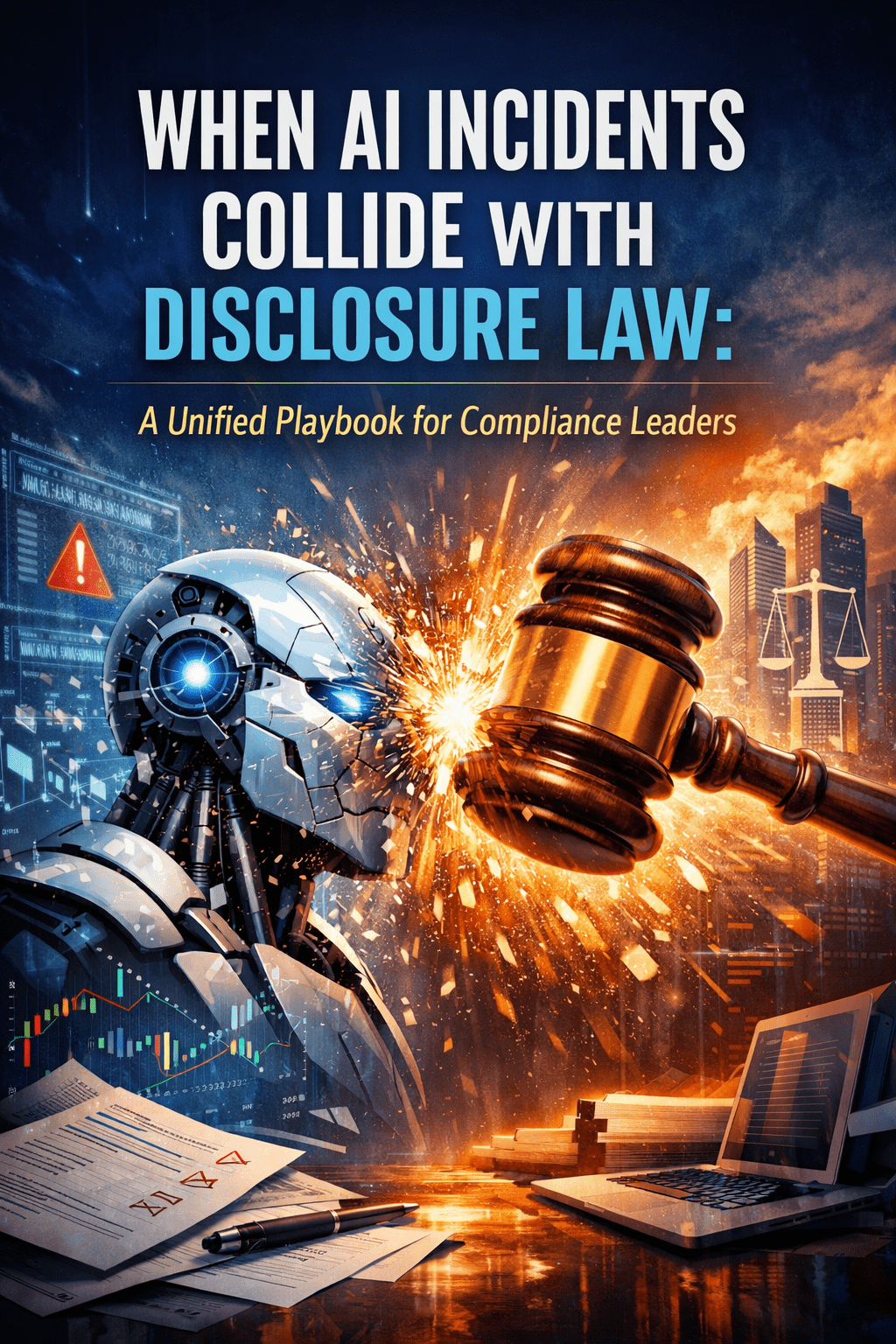
When AI Incidents Collide with Disclosure Law: A Unified Playbook for Compliance Leaders

There was a time when the risk of artificial intelligence could be discussed as a forward-looking innovation issue. That time has passed. AI governance now sits squarely at the intersection of operational risk, regulatory enforcement, and securities disclosure. For compliance professionals, the question is no longer whether AI risk will mature into a board-level issue. It already has.

If your organization deploys high-risk AI systems in the European Union, you face post-market monitoring and serious incident reporting obligations under the EU AI Act. If you are a U.S. issuer, you face potential Form 8-K disclosure obligations under Item 1.05 when a cybersecurity incident becomes material. Add the NIST AI Risk Management Framework for severity evaluation, ISO 42001 governance expectations for evidence and documentation, and the compliance function, which stands at the crossroads of law, technology, and investor transparency.

The challenge is not understanding each framework individually. The challenge is integrating them into one operational escalation model. Today, we consider what that means for the Chief Compliance Officer.

The EU AI Act: Post-Market Monitoring Is Not Optional

The EU AI Act requires providers of high-risk AI systems to implement post-market monitoring systems. This is not a paper exercise. It requires structured, ongoing collection and analysis of performance data, including risks to health, safety, and fundamental rights. Where a “serious incident” occurs, providers must notify the relevant national market surveillance authority without undue delay. A serious incident includes events that result in death, serious harm to health, or a significant infringement of fundamental rights. The obligation is proactive and regulator-facing. Silence is not an option.

This means that if your AI-enabled hiring tool systematically discriminates, or your AI-driven medical device produces dangerous outputs, you may face mandatory reporting obligations in Europe even before your legal team finishes debating causation. The compliance implication is straightforward: you need an operational definition of “serious incident” embedded inside your incident response process. Waiting to interpret the statute after the event is not governance. It is risk exposure.

SEC Item .05: The Four-Business-Day Clock

Across the Atlantic, the Securities and Exchange Commission (SEC) has made its expectations equally clear. Item 1.05 of Form 8-K requires disclosure of material cybersecurity incidents within four business days after the registrant determines the incident is material. Here is where compliance professionals must lean forward: AI incidents can trigger cybersecurity implications. Data exfiltration through model vulnerabilities, adversarial manipulation of training data, or unauthorized system access to AI infrastructure may constitute cybersecurity incidents.

The clock does not start when the breach occurs. It starts when the company determines materiality. That determination must be documented, defensible, and timestamped. If your AI governance framework does not feed into your materiality assessment process, you have a structural weakness. Compliance must ensure that AI incident severity assessments are directly connected to the legal determination of materiality. The board will ask one question: When did you know, and what did you do? You must have an answer supported by contemporaneous documentation.

NIST AI RF: Speaking the Language of Severity

The NIST AI Risk Management Framework provides the operational vocabulary compliance teams need. Govern, Map, Measure, and Manage are not theoretical constructs. They form the backbone of defensible severity assessment. When an AI incident arises, you must evaluate:

  • Scope of affected stakeholders
  • Magnitude of operational disruption
  • Likelihood of recurrence
  • Financial exposure
  • Reputational harm

This impact-likelihood matrix is what transforms noise into signal. It allows the organization to distinguish between model drift requiring retraining and systemic failure requiring regulatory notification. Importantly, severity classification must not be left solely to engineering teams. Compliance, legal, and risk must participate in the evaluation. A purely technical assessment may underestimate regulatory or investor impact.

If the NIST severity rating is high-impact and high-likelihood, escalation must be automatic. There should be no debate about whether the issue reaches executive leadership. Governance means predetermined thresholds, not ad hoc discussions.

ISO 42001: If It Is Not Logged, It Did Not Happen

ISO 42001, the emerging AI management system standard, adds another layer of discipline: documentation. It requires structured governance, defined roles, documented controls, and demonstrable evidence of monitoring and incident handling. For compliance professionals, this is where audit readiness becomes real. When regulators ask for logs, you must produce:

  • Model version identifiers
  • Training data provenance
  • Decision traces and outputs
  • Operator interventions
  • Access logs and export records
  • Timestamps and system configurations

In other words, you need a chain of custody for AI decision-making. Without logging discipline, you will not survive regulatory scrutiny. Worse, you will not survive shareholder litigation. ISO 42001 forces organizations to treat AI systems with the same governance rigor as financial controls under SOX. That alignment should not surprise anyone. Both concern trust in automated decision systems.

One Incident, Multiple Obligations

Consider a practical scenario. A vulnerability in a third-party model component has compromised your AI-driven customer analytics platform. Sensitive customer data is exposed. The compromised system also produced biased credit scores during the attack window. You now face:

  • Potential serious incident reporting under the EU AI Act
  • Cybersecurity disclosure analysis under SEC Item 1.05
  • Data protection obligations under GDPR
  • Internal audit review of governance controls
  • Reputational fallout

If your organization handles each of these as separate tracks, you will lose time and coherence. Instead, you need a unified incident command structure with embedded regulatory triggers. As soon as the issue is identified, you preserve logs. Within 24 hours, severity scoring occurs under NIST criteria. Within 48 hours, the legal team evaluates materiality. By 72 hours, the evidence packet is assembled for board review. The board should receive:

  • Incident timeline
  • Severity classification
  • Regulatory reporting analysis
  • Financial exposure estimate
  • Remediation plan

This is not overkill. This is operational discipline.

The Board’s Oversight Obligation

Boards are increasingly being asked about AI governance. Institutional investors want transparency. Regulators want accountability. Plaintiffs’ lawyers want leverage. Directors should demand:

  1. Clear definitions of serious AI incidents.
  2. Pre-established escalation thresholds.
  3. Integrated disclosure decision protocols.
  4. Evidence preservation policies aligned with ISO standards.
  5. Regular tabletop exercises involving AI scenarios.

If your board has not run an AI incident simulation that includes SEC disclosure timing and EU reporting triggers, it is time to schedule one. Calm leadership during a crisis does not happen spontaneously. It is built through preparation.

The CCO’s Moment

This convergence of AI regulation and securities disclosure creates an opportunity for compliance professionals. The CCO can position the compliance function as the integrator between engineering, legal, cybersecurity, and investor relations. That requires proactive steps:

  • Embed AI into enterprise risk assessments.
  • Update incident response playbooks to include AI-specific triggers.
  • Align AI logging architecture with evidentiary standards.
  • Train leadership on materiality determination for AI incidents.
  • Report AI governance metrics to the board quarterly.

The compliance function should not be reacting to AI innovation. It should be shaping its governance architecture.

Governance Is Strategy

Too many organizations treat AI governance as defensive compliance. That mindset is outdated. Effective governance builds trust. Trust drives adoption. Adoption drives competitive advantage.

A well-documented post-market monitoring system demonstrates operational maturity. A disciplined severity assessment process demonstrates strong internal control. Transparent disclosure builds investor confidence. Conversely, fragmented incident handling erodes credibility. The market will reward companies that demonstrate responsible AI oversight. Regulators will scrutinize those who do not.

Conclusion: Integration Is the Answer

The EU AI Act, SEC Item 1.05, NIST AI RMF, and ISO 42001 are not competing frameworks. They are complementary lenses on the same reality: AI systems create risk that must be monitored, measured, disclosed, and documented.

Compliance leaders who integrate these frameworks into a single escalation and reporting architecture will protect their organizations. Those who treat them as separate checklists will struggle. AI risk is no longer hypothetical. It is operational, regulatory, and financial. The compliance function must be ready before the next incident occurs. Because when it does, the clock will already be ticking.


Categories
AI Today in 5

AI Today in 5: February 13, 2026, They Try to Hack Gemini Edition

Welcome to AI Today in 5, the newest addition to the Compliance Podcast Network. Each day, Tom Fox will bring you 5 stories about AI to start your day. Sit back, enjoy a cup of morning coffee, and listen in to the AI Today In 5. All, from the Compliance Podcast Network. Each day, we consider five stories from the business world, compliance, ethics, risk management, leadership, or general interest about AI.

Top AI stories include:

For more information on the use of AI in Compliance programs, my new book, Upping Your Game, is available. You can purchase a copy of the book on Amazon.com.

Categories
Daily Compliance News

Daily Compliance News: February 13, 2026, The Social Law and Corruption Edition

Welcome to the Daily Compliance News. Each day, Tom Fox, the Voice of Compliance, brings you compliance-related stories to start your day. Sit back, enjoy a cup of morning coffee, and listen in to the Daily Compliance News. All, from the Compliance Podcast Network. Each day, we consider four stories from the business world, compliance, ethics, risk management, leadership, or general interest for the compliance professional.

Top stories include:

  • Germany greenlights EU AI law. (ComputerWorld)
  • Does Egyptian social law allow bribery? (Law360)
  • The National Security whistleblower complaint is named Jared Kushner. (WSJ)
  • AAG for Anti-trust wouldn’t play with payors, so she’s gone. (WSJ)
Categories
2 Gurus Talk Compliance

2 Gurus Talk Compliance – Episode 65 – The This Is Nuts Edition

What happens when two top compliance commentators get together? They talk compliance, of course. Join Tom Fox and Kristy Grant-Hart in 2 Gurus Talk Compliance as they discuss the latest compliance issues in this week’s episode! ABC protests topple the Bulgarian government, a French tennis player is suspended for 20 years over corruption, a UM coach is fired over an affair with a staffer, and Trump puts the DOJ in a no-win position over Warner Bros.

Stories this week include:

  • NY state could be a battleground for AI regulation. NYT
  • Massive fraud in aircraft parts uncovered in the UK. TheTimes
  • Switzerland charges Credit Suisse over Tuna Bond fraud. ACAMS
  • Former Labour PM convicted of corruption in Bangladesh. Independent
  • Lane Kiffin should be nowhere near Ole Miss football. WSJ
  • U.S. Supply Chains Deemed Vulnerable to Chinese Exploitation – WSJ
  • Europe Aimed to Set Standards for Tech Rules; Now It Wants to Roll Them Back – WSJ
  • Campbell Soup executive called its products food for “poor people,” lawsuit claims – CBS News
  • I Made an Offensive Joke. But So Did Everyone Else! Why Did I Get Fired? – NYT
  • Florida Man Stops Paying for Rental Car, Uses It to Give Uber Rides – FloridaMan.com

Connect with the Hosts:

Resources:

Kristy Grant-Hart on LinkedIn

Prove Your Worth

Tom

Instagram

Facebook

YouTube

Twitter

LinkedIn

Categories
AI Today in 5

AI Today in 5: December 11, 2025, The FINRA and AI Edition

Welcome to AI Today in 5, the newest edition of the Compliance Podcast Network. Each day, Tom Fox will bring you 5 stories about AI to start your day. Sit back, enjoy a cup of morning coffee, and listen in to AI Today In 5. All, from the Compliance Podcast Network. Each day, we consider four stories from the business world, compliance, ethics, risk management, leadership, or general interest about AI.

Top AI stories include:

For more information on the use of AI in Compliance programs, my new book, Upping Your Game, is available. You can purchase a copy of the book on Amazon.com.

Categories
AI Today in 5

AI Today in 5: August 14, 2025, The Putting the Human in AI Episode

Welcome to AI Today in 5, the newest addition to the Compliance Podcast Network. Each day, Tom Fox will bring you 5 stories about AI to start your day. Sit back, enjoy a cup of morning coffee, and listen in to the AI Today In 5. All, from the Compliance Podcast Network. Each day, we consider four stories from the business world, compliance, ethics, risk management, leadership, or general interest about AI.

  • Presight and Dow Jones Factiva Partner to Create AI-Native Risk and Compliance Solutions. (TechAfricaNews)
  • CITGO to enhance compliance through AI. (BusinessWire)
  • GenAI in government. (SAS)
  • EU general-purpose AI obligations. (Baker & McKenzie)
  • Grounding your AI in the human experience. (Nice)

For more information on the use of AI in Compliance programs, see Tom Fox’s new book, Upping Your Game. You can purchase a copy of the book on Amazon.com.

Categories
AI Today in 5

AI Today in 5: August 13, 2025, The Beware the EU AI Act Episode

Welcome to AI Today in 5, the newest addition to the Compliance Podcast Network. Each day, Tom Fox will bring you 5 stories about AI to start your day. Sit back, enjoy a cup of morning coffee, and listen in to the AI Today In 5. All, from the Compliance Podcast Network. Each day, we consider four stories from the business world, compliance, ethics, risk management, leadership, or general interest about AI.

For more information on the use of AI in compliance programs, see Tom Fox’s new book, Upping Your Game. You can purchase a copy of the book on Amazon.com.