Categories
Daily Compliance News

Daily Compliance News: September 12, 2025, The Epstein and JPMorgan Edition

Welcome to the Daily Compliance News. Each day, Tom Fox, the Voice of Compliance, brings you compliance-related stories to start your day. Sit back, enjoy a cup of morning coffee, and listen in to the Daily Compliance News. All, from the Compliance Podcast Network. Each day, we consider four stories from the business world, including compliance, ethics, risk management, leadership, or general interest, relevant to the compliance professional.

Top stories include:

  • British Ambassador sacked over Epstein relationship. (WSJ)
  • NYT Magazine on Epstein and JP Morgan. (NYT)
  • Was it fraud or something else? (FT)
  • AfD offices raided for Chinese payments. (FT)
Categories
Blog

Fighting Fraud, Waste, and Abuse: Ten Lessons for the Compliance Professional

Fraud, waste, and abuse are often bundled together in compliance conversations, but they are not interchangeable. Fraud is intentional deception, waste is the careless misuse of resources, and abuse is the opportunistic exploitation of gray areas. Each carries unique risks. Each erodes value. And each, if left unchecked, creates fertile ground for corruption and regulatory exposure.

Throughout this series, we have examined each element in depth. Fraud remains the most familiar, often linked directly to corruption. Waste, though usually unintentional, drains millions from corporate coffers each year. Abuse occupies the murky middle ground where rationalizations and loopholes open the door to larger misconduct. Finally, we examined how an integrated framework, spanning from controls to culture, can help compliance professionals address fraud, waste, and abuse in a holistic manner.

What emerges is clear: fighting fraud, waste, and abuse is not an optional add-on to anti-corruption programs. It is central to them. Fraud cannot thrive without weak controls. Waste creates the conditions that foster corruption. Abuse normalizes rule-bending until bribery becomes a natural extension of it.

For compliance professionals, the question is not whether to address fraud, waste, and abuse but how. Here are ten key lessons that stand out.

1. Know the Difference

The first lesson is definitional clarity. Fraud, waste, and abuse often overlap, but they are distinct categories of risk. Fraud is intentional and prosecutable. Waste is careless and costly. Abuse is opportunistic and corrosive. Treating them as one dulls your controls. Compliance programs must tailor messaging, policies, and monitoring to each risk. For example, fraud requires forensic controls, waste requires efficiency metrics, and abuse demands cultural reinforcement. Clarity sharpens strategy and ensures that prevention is precise, not blunt.

2. Fraud Prevention Requires Strong Controls

Fraud rarely occurs in isolation. Bribery schemes rely on falsified invoices, manipulated expenses, or deceptive contracts. Preventing fraud means embedding strong controls: segregation of duties, third-party due diligence, mandatory job rotations, and robust hotlines. Data analytics adds another critical layer, identifying anomalies in billing, procurement, or expenses before they metastasize. Fraud prevention is not just about legal risk; it is about stopping corruption before it takes root.

3. Waste Is More Than Inefficiency

Waste may lack intent, but its impact is devastating. It drains profits, frustrates shareholders, and weakens culture. Waste in corporate travel, maintenance, or software licenses often reflects poor oversight and sends the wrong cultural message: accountability is optional. Compliance cannot dismiss waste as “just operations.” Regulators and boards increasingly demand stewardship. Waste that goes unchecked creates cover for fraud and abuse, turning inefficiency into risk. Compliance leaders must treat waste as a core governance issue, not an afterthought.

4. Predictive Analytics Is a Compliance Tool

Our review of Shell’s predictive maintenance program offers a powerful analogy for compliance. By embedding sensors and utilizing predictive analytics, Shell reduced waste, minimized downtime, and enhanced safety. Compliance can achieve the same results. Predictive analytics enables compliance officers to move from reactive investigations to proactive risk detection. Expense anomalies, hotline spikes, or vendor irregularities can be flagged in real time, preventing issues before they escalate. Predictive analytics is no longer a “nice to have.” It is the future of compliance risk management.

5. Abuse Is the Gateway to Fraud

Abuse thrives in gray areas, exploiting loopholes, stretching policies, or rationalizing questionable conduct. It often starts small, such as recreating a lost taxi receipt, but escalates when unchecked. AI-generated fake receipts illustrate how easily abuse morphs into fraud. Abuse corrodes culture by teaching employees that rules can be bent without consequence. Compliance must treat abuse as seriously as fraud, because, in practice, abuse is often a precursor to fraud. Ignoring it is an invitation to systemic misconduct.

6. Technology Must Match the Threat

Employees are already using AI to generate fake receipts. Compliance must use AI to detect them. Modern expense-auditing platforms now flag anomalies in fonts, metadata, or behavior patterns. Similar tools analyze procurement, payroll, and travel data for red flags. The lesson is clear: compliance cannot fight tomorrow’s threats with yesterday’s tools. Technology must evolve as quickly as the risks do. Matching technology to the danger is no longer optional; it is essential for credibility and effectiveness.

7. Culture Is the Ultimate Control

Policies and tools matter, but culture determines outcomes. Fraud, waste, and abuse thrive where accountability is negotiable, where entitlement is tolerated, and where corner-cutting is excused. Conversely, a culture of transparency and stewardship closes the space in which misconduct thrives. Compliance officers must partner with leadership to model integrity, reinforce accountability, and celebrate stewardship. Culture sends the clearest message: fraud, waste, and abuse are not tolerated here. Without cultural reinforcement, even the strongest controls will eventually fail.

8. Empower Whistleblowers as Early Warning Systems

Whistleblowers are often the first to spot fraud, waste, or abuse. Yet too many organizations undercut their own defenses by failing to protect or empower employees who speak up. Robust reporting channels, anti-retaliation policies, and timely follow-up are essential. In the fight against fraud, waste, and abuse, whistleblowers are not just informants; they are strategic allies. Empowering them demonstrates that the company values integrity, deters misconduct, and surfaces risks before regulators do.

9. Build Cross-Functional Coalitions

Fraud, waste, and abuse cut across silos. Fraud may surface in finance, waste may occur in operations, and abuse may be present in HR. Compliance cannot fight these battles alone. Cross-functional coalitions with audit, procurement, IT, and HR ensure risks do not slip through the cracks. Coalitions also strengthen messaging: stewardship is everyone’s responsibility. When functions share data, align incentives, and coordinate responses, blind spots shrink and resilience grows. Compliance professionals must position themselves as connectors across the enterprise.

10. Continuous Improvement Is Non-Negotiable

Fraud, waste, and abuse risks are not static; they are dynamic. Predictive models require recalibration. Fraud schemes evolve. Waste emerges in new technologies and processes. Abuse shifts as policies and cultures change. Compliance programs must continually improve by reviewing data, updating controls, and reassessing cultural vulnerabilities to ensure ongoing effectiveness. Static programs become obsolete, leaving gaps for misconduct to exploit. Dynamic, evolving compliance programs, by contrast, remain credible, resilient, and aligned with regulatory expectations.

Conclusion

Fraud, waste, and abuse represent a continuum of risks that, if left unchecked, will erode profitability, corrode culture, and undermine trust. Fraud is the most visible, but waste and abuse are equally insidious. Together, they form the ecosystem in which corruption thrives.

For compliance professionals, the fight against fraud, waste, and abuse is both a mandate and an opportunity for growth. By understanding the differences, strengthening controls, leveraging predictive analytics, addressing abuse early, deploying technology, fostering a culture of compliance, empowering whistleblowers, forming coalitions, and committing to continuous improvement, compliance can lead the fight.

The message is simple: fraud, waste, and abuse are not just a financial issue; it is also a compliance issue. When compliance professionals treat it as such, they not only protect their organizations from regulatory exposure but also create cultures of stewardship, accountability, and integrity. That is the true mandate of modern compliance to ensure that fraud, waste, and abuse cannot take root and that corporate integrity remains strong.

Resources:

Untangling Fraud, Waste, and Abuse: A Primer for the Compliance Professional

From Controls to Culture: Building Anti-Corruption Programs that Address Fraud, Waste, and Abuse

Culture, Costs, and Compliance: Tackling Corporate Waste with Data-Driven Solutions

Culture, Controls, and Consequences: Why Compliance Should Address Abuse Before It Escalates

Categories
Blog

From Controls to Culture: Building Anti-Corruption Programs that Address Fraud, Waste, and Abuse

Fraud, waste, and abuse are not just buzzwords in the government sector. They represent a real continuum of risk that every private sector company must confront. In fact, when designing or refreshing an anti-corruption compliance program, these three categories should not be seen as separate from bribery and corruption risks; they are integral to them. Bribery schemes thrive in environments where fraud is unchecked, where waste is tolerated, and where abuse of authority is normalized.

A truly effective anti-corruption compliance program, therefore, must address fraud, waste, and abuse head-on. Each requires different tools, but all rest on the same foundation: clear expectations, adequate controls, data-driven monitoring, and a culture of accountability. Yesterday, we took a deep dive into the three concepts behind fraud, waste, and abuse. Today, we continue our primer on fraud, waste, and abuse for the compliance professional by exploring how compliance professionals can operationalize their ABC framework to help fight these corporate scourges.

1. Fraud Prevention: Strengthening the Control Environment

Fraud sits at the heart of most corruption schemes. Bribery rarely occurs without the use of falsified invoices, fraudulent expense reports, or deceptive third-party contracts. That’s why fraud prevention measures must be embedded directly into your anti-corruption compliance program.

Practical steps include:

  • Segregation of duties. No single employee should have the authority to control both vendor approval and invoice payment. Splitting responsibilities closes off avenues for concealment.
  • Mandatory rotations or vacations. Employees in high-risk positions, such as procurement or finance, should be required to take periodic breaks. This not only reduces burnout but also increases the chance of uncovering irregularities.
  • Third-party due diligence. Vendors, distributors, and consultants are often used as conduits for corrupt payments. Screening them for red flags of fraud and corruption is essential.
  • Hotlines and reporting mechanisms. Anonymous channels encourage employees to report fraudulent or corrupt activity before it escalates.

Finally, modern fraud prevention is inseparable from data analytics. Reviewing transactions for anomalies in billing, procurement, or travel can help compliance officers identify both fraudulent activity and corruption red flags early.

2. Waste Reduction: Linking Efficiency to Integrity

Waste may not sound like a corruption risk at first, but it often creates the environment in which corrupt practices thrive. When organizations tolerate careless spending or redundant processes, they signal that accountability is optional. Waste becomes the fertile soil in which corruption can take root.

Practical steps include:

  • Cross-functional accountability. Compliance should collaborate with finance, procurement, and operations to ensure efficient allocation of resources.
  • Tracking key waste indicators. Duplicate software licenses, unnecessary travel expenses, or high energy consumption may not be fraudulent, but they represent vulnerabilities that can be exploited. Left unchecked, they normalize sloppy practices that corrupt employees can exploit.
  • Integrating waste metrics into compliance dashboards. If a business unit consistently demonstrates waste, it may also be vulnerable to bribery risks, particularly in operations that are heavily reliant on procurement.

By spotlighting waste, compliance leaders not only save the company money but also reinforce a culture of stewardship and integrity, two qualities that reduce the likelihood of corruption.

3. Abuse Control: Guarding Against the Gray Areas

Abuse often serves as the gateway to corruption. It thrives in gray zones, where managers stretch policies, exploit loopholes, or turn a blind eye to questionable behavior. Abuse may not always cross a legal line, but it corrodes culture and opens the door to bribery and unethical decision-making.

Practical steps include:

  • Tone from the top and middle. Executives and line managers alike must model integrity. If leaders exploit perks or bend rules, employees will assume similar behavior is acceptable in dealing with third parties.
  • Policy clarity. Abusive practices often hide in vague policies. For example, a travel policy that allows “reasonable upgrades” without definition invites abuse. Aligning policies with anti-corruption standards closes these loopholes.
  • Incentive structures. Embedding transparency and fairness into performance reviews and rewards ensures managers do not cut ethical corners to hit financial targets.

By shrinking the space in which abuse can thrive, companies make it more difficult for corrupt practices to become normalized.

4. Leverage Data Analytics: Uncovering Patterns Across Risk Categories

Corruption schemes are rarely isolated. They often weave together fraud, waste, and abuse. That’s why analytics should not be siloed. A robust anti-corruption program integrates monitoring across multiple risk vectors.

Practical applications include:

  • Travel and entertainment analytics. Reviewing expense reports can uncover fraudulent receipts, wasteful spending, or abusive upgrades. These same reports may also reveal bribery risks if entertainment involves government officials or high-risk clients.
  • Procurement analytics. Comparing vendor pricing across regions may reveal fraudulent invoicing, excessive costs (resulting in wasteful spending), or favoritism (abuse of power). It can also reveal third parties that may be used as conduits for corruption.
  • Cross-data integration. Linking procurement, HR, and finance data highlights unusual patterns. For example, a sudden spike in overtime in a high-risk market may flag both payroll abuse and potential red flags for corruption.

Data analytics transforms compliance from a reactive to a proactive discipline, catching issues before they metastasize into a full-blown corruption scandal.

5. Whistleblower Empowerment: The Human Early Warning System

Even the most advanced controls and analytics cannot replace human intelligence. Employees are the first to notice when fraud, waste, or abuse is occurring. But unless they feel safe speaking up, those observations remain hidden.

Practical steps include:

  • Robust reporting channels. Multiple options, including hotlines, digital portals, or direct reporting to compliance, all make it easier for employees to raise concerns.
  • Protection against retaliation. Employees must trust that speaking up won’t cost them their careers. Policies must be clear, and enforcement consistent.
  • Timely follow-up. When employees report fraud, waste, or abuse, prompt investigation and feedback demonstrate that the company takes reports seriously.

In the context of anti-corruption compliance, whistleblowers are invaluable. They can flag bribery schemes before external regulators or auditors uncover them.

Building Resilience by Tackling All Three

An anti-corruption compliance program that focuses only on bribery risks but ignores fraud, waste, and abuse is incomplete. Fraud fuels corruption, waste fosters the conditions where it flourishes, and abuse normalizes the behavior that enables it.

By embedding fraud prevention, waste reduction, abuse control, data analytics, and whistleblower empowerment into your anti-corruption framework, you create a resilient program that goes beyond compliance checklists. You demonstrate stewardship to shareholders, accountability to employees, and integrity to regulators.

The fight against corruption is not won by policing bribery alone. It is won by creating a culture where fraud, waste, and abuse cannot survive and where transparency, efficiency, and fairness are the norm. That is the true mandate for today’s compliance professional.

Categories
Blog

Culture, Controls, and Consequences: Why Compliance Should Address Abuse Before It Escalates

When we discuss “fraud, waste, and abuse” in the corporate compliance world, fraud often takes center stage. Fraud is the deliberate deception of knowingly submitting false information for personal or corporate gain. Waste is easier to define: the careless or inefficient use of resources. But abuse? Abuse sits in that murky middle ground. It may not rise to the level of criminal fraud. Still, it represents conduct that undermines the ethical framework of the organization and erodes trust in systems designed to manage risk.

In many ways, abuse is the most insidious of the three. It thrives in the shadows, often justified by employees as “harmless” or “making up for what the company owes me.” Yet left unchecked, abuse not only costs organizations real money but also paves the way for outright fraud. One of the clearest examples of abuse today lies in employee expense reimbursement, a process now under siege by the rise of AI-generated fake receipts.

Today, we continue our week-long exploration of the role of a Chief Compliance Officer (CC) and corporate compliance function in fighting fraud, waste, and abuse. Today, we explore what abuse means, how expense reimbursement schemes illustrate the problem, why weak controls allow abuse to metastasize into fraud, and what compliance professionals can do to address it. We use a real-world example of AI creating fraudulent expense reimbursements to demonstrate how the task has become more difficult and why a corporate compliance function must be even more vigilant.

Defining Abuse in the Compliance Framework

Abuse is often defined as the use of authority, processes, or resources in a manner that is inconsistent with accepted business practices, resulting in unnecessary costs or unfair advantages. Unlike fraud, abuse does not always involve intent to deceive. Instead, it often reflects opportunistic behavior, such as stretching policies to personal advantage, exploiting loopholes, or rationalizing misconduct.

In the context of compliance, abuse is the “gateway drug” to fraud. An employee who casually exploits the expense system, rounding up mileage, submitting duplicate claims, or fabricating receipts for lost expenses, may start with small infractions. But over time, the lack of consequences emboldens greater misconduct.

One only needs to look back at the sordid story of GSK in China to recall that employee expense reimbursement can lead to catastrophic consequences for an organization.

Expense Reimbursement Abuse: The AI-Receipt Problem

As the New York Times (NYT) recently reported, employees are increasingly turning to generative AI tools to create realistic fake receipts. This is abuse in action. It often begins innocently enough: an employee loses a legitimate receipt and turns to an AI chatbot to recreate it. They may even rationalize the act as necessary to be reimbursed for actual money spent.

But the abuse does not stop there. Once the employee realizes the system can be gamed and that compliance or finance fails to detect the fraud, they repeat the behavior. In one case, an employee submitted AI-generated receipts for hotels and airfare in Bangkok, despite never traveling there.

The ACFE in its most recent Report to the Nations confirms the scale of the issue:

  • 13% of occupational fraud cases involve inflated or invented expenses.
  • Median loss per case: $50,000.
  • 30% of fraudulent receipts detected by one major auditing tool are now AI-generated.

What makes this a prime example of abuse is not just the false documentation. It is the culture of permissiveness that allows employees to cross the line between mistake, abuse, and eventually fraud.

How Lack of Controls Fuels Greater Fraud

The absence of strong internal controls around expense reimbursement is fertile ground for abuse. Companies that rely on manual review or outdated systems may not be equipped to detect sophisticated fakes. AI has supercharged this risk. Where once an employee might need Photoshop skills to doctor a receipt, now anyone with a chatbot can generate a convincing fake in seconds.

Weak controls create three distinct risks for compliance:

1. Normalization of Misconduct

Employees who “get away” with small abuses normalize this behavior, eroding ethical culture. “Everyone does it” becomes the rallying cry.

2. Escalation to Fraud

Abuse begets fraud. What begins as recreating a lost taxi receipt morphs into fabricating entire trips, complete with hotels, meals, and airfare never taken.

3. Regulatory and Legal Exposure

Inflated or fabricated expense claims, especially involving government contracts or international operations, can trigger False Claims Act liability, FCPA scrutiny, or other regulatory action.

Ultimately, compliance officers should view expense reimbursement abuse as more than an administrative nuisance. It is a leading indicator of deeper cultural weakness and a flashing red light for greater fraud risk.

Building a Compliance Response

How should compliance professionals address abuse in expense reimbursement systems? Three principles stand out:

  • Leverage Data and Technology: Just as employees use AI to fabricate receipts, compliance teams must deploy AI to detect them. Expense auditing platforms now compare metadata, font spacing, and behavioral patterns to identify suspicious submissions.
  • Strengthen Policy and Training: Clear guidance is essential. Employees should know that even “recreating” a lost receipt is prohibited, and repeated violations will trigger disciplinary action. Training should emphasize that abuse is not a victimless act; it drains resources and undermines trust.
  • Promote a Speak-Up Culture: Abuse thrives in silence. Anonymous hotlines, visible accountability, and consistent follow-through on reports send the message that integrity matters.

Five Key Takeaways for Compliance Professionals

1. Abuse Is the Gateway to Fraud

Abuse often sits in the gray space between negligence and intentional misconduct. An employee may rationalize using a fake receipt as a harmless way to recover legitimate expenses, but once this behavior is accepted, it erodes the organization’s integrity. Abuse teaches employees that rules can be bent without consequence. Over time, this rationalization escalates, leading to outright fraud. Compliance professionals must recognize abuse not as minor misconduct but as the earliest sign of a deeper cultural problem. Treating abuse seriously, through policy, training, and accountability, prevents small acts of dishonesty from snowballing into systemic fraud that damages the enterprise.

2. Expense Reimbursement Abuse Is Rising

Expense abuse has always been a problem, but the introduction of generative AI has made it easier and more scalable. Employees no longer need technical expertise in Photoshop to fabricate documents. Today, they can generate convincing receipts in seconds, often indistinguishable to the human eye. Cases of employees submitting AI-generated receipts for trips never taken highlight just how quickly this abuse can escalate. For compliance teams, this shift means that traditional manual review is no longer enough. Organizations must anticipate that abuse in expense systems is increasing both in volume and sophistication, and they must respond accordingly.

3. Weak Controls Enable Misconduct

Compliance professionals recognize that robust internal controls are the foundation of effective fraud prevention. When expense systems lack proper oversight, they create opportunities for abuse to thrive. Employees quickly learn where controls are lax, whether through inconsistent auditing, inadequate documentation requirements, or poor segregation of duties. Without strong controls, small abuses go unchecked, and employees feel emboldened to escalate their misconduct. Worse still, regulators may interpret weak controls as evidence of willful blindness or negligence, thereby exposing companies to additional liability. Compliance officers must ensure expense reimbursement processes are fortified with modern controls that prevent, detect, and remediate abuse at every level.

4. Technology Must Match the Threat

The same tools employees use to commit expense abuse can be harnessed by compliance to stop it. AI-generated receipts may look convincing, but advanced auditing tools can detect subtle inconsistencies in formatting, metadata, and behavioral patterns. Expense management platforms now deploy machine learning to flag unusual submissions, such as repeating server names or meals in fabricated restaurant receipts. Compliance professionals must advocate for investment in these technologies to stay ahead of evolving threats. Without matching technology to the risk, organizations remain vulnerable. Ultimately, AI must be part of the compliance toolbox to counteract the AI-enabled abuse already occurring.

5. Culture Is the Ultimate Control

No amount of technology or policy will succeed without a culture that values accountability. Abuse thrives in environments where misconduct is ignored, rationalized, or dismissed as “just the cost of doing business.” By contrast, cultures where leadership models ethical behavior, encourages reporting, and rewards integrity create natural barriers to abuse. Compliance must work hand in hand with leadership to embed accountability into daily operations. When employees see that even small abuses are addressed, they understand the seriousness of compliance expectations. A healthy culture sends the clearest message: abuse will not be tolerated, and integrity is non-negotiable.

Abuse Is Fraud’s Precursor

Fraud, waste, and abuse are often discussed as a package, but compliance professionals must pay special attention to abuse. It is the gray zone where rationalizations take root, where misconduct begins small, and where organizational culture is tested. Expense reimbursement systems offer a cautionary tale: without proper controls and accountability, abuse can quickly evolve into systemic fraud.

Compliance officers who ignore abuse risk far more than inflated receipts. They risk cultivating an environment that fosters fraud. The lesson is clear: treat abuse as seriously as fraud, because in practice, one leads inexorably to the other.

Categories
Blog

Culture, Costs, and Compliance: Tackling Corporate Waste with Data-Driven Solutions

When compliance professionals hear the phrase “fraud, waste, and abuse,” their attention almost always gravitates toward the concept of fraud. Fraud makes headlines, triggers DOJ enforcement actions, and carries obvious reputational risk. But waste, the second component in that trio, costs corporations millions of dollars annually and often goes unnoticed. Waste is not always the result of intentional misconduct. Instead, it is the unnecessary, careless, or inefficient use of resources.

Left unchecked, waste can sap profits, drain morale, and erode organizational culture. Worse, it creates vulnerabilities that open the door to fraud and abuse. As compliance officers, we have a role to play in combating waste, not just as a financial drain, but also as a risk factor that undermines long-term business sustainability.

We continue our review of the role of compliance in combating fraud, waste, and abuse. Today, we consider the role of compliance in the fight against waste. One of the most promising tools in this fight is predictive analytics. We review how Shell used predictive analytics to transform its maintenance programs and discuss how compliance officers can harness these same principles to anticipate, identify, and prevent waste before it spirals into a major liability.

What Is Waste?

Waste is the misuse of corporate resources without necessarily crossing the line into fraud. It may include:

  1. Excessive travel or entertainment expenses.
  2. Over-maintenance of equipment that does not need servicing.
  3. Duplication of tasks due to poor communication.
  4. Paying for unused licenses, subscriptions, or services.
  5. Poorly designed processes that consume time and labor unnecessarily.

Unlike fraud, waste is not always intentional. An employee may not realize that expensing unnecessary upgrades or double-booking a supplier constitutes waste. Yet the cumulative impact is enormous. According to industry surveys, corporate waste can cost companies millions annually, and much of it is preventable through better monitoring and smarter resource allocation.

The Cost of Waste

Waste rarely grabs headlines, but its financial impact is staggering. Consider how often corporations schedule routine maintenance on equipment, even when it is not actually needed. The expense of replacing parts “on schedule” rather than based on actual performance data runs into the billions across industries. Similarly, compliance functions themselves can generate waste by deploying broad, unfocused training or redundant audits instead of targeting resources where they matter most.

Waste also undermines culture. Employees who see inefficiencies tolerated may conclude that the company does not take stewardship seriously. This normalization can spread: if no one cares about wasted money, why should they care about ethical gray zones? In this way, waste weakens the very cultural foundation compliance programs are designed to strengthen.

Lessons from Shell: Predictive Analytics and Maintenance

Shell provides a vivid example of how predictive analytics can transform waste into efficiency. Historically, Shell relied on calendar-based maintenance schedules, servicing equipment at predetermined intervals regardless of actual wear and tear. While effective in preventing breakdowns, this method was wasteful, resulting in unnecessary part replacements, downtime, and inefficient resource allocation.

By adopting predictive analytics, Shell embedded sensors across its global assets, collecting real-time data on vibration, temperature, and pressure. Machine learning models analyzed this data to detect anomalies, allowing Shell to service equipment only when necessary—the result: reduced downtime, lower costs, and improved reliability.

The compliance parallel is clear. Just as Shell transitioned from reactive repairs to predictive maintenance, compliance must also shift from reactive investigations to proactive monitoring. Waste in compliance, whether in resources, training, or oversight, can be dramatically reduced when programs are data-driven and predictive rather than static and calendar-based.

The Compliance Angle: Why Waste Matters

Waste is not just an operational issue. It is a compliance issue for three reasons:

  1. Regulatory scrutiny: Regulators are increasingly expecting companies to utilize data-driven tools to ensure efficiency and accountability. Wasteful practices, particularly in government contracting, can lead to legal exposure.
  2. Fraud adjacency: Waste creates gray areas that fraudsters exploit. If duplicate payments or unused services go unnoticed, bad actors can hide fraudulent charges within the noise.
  3. Cultural risk: Tolerating waste sends a signal to employees that accountability is negotiable. This undermines compliance culture and makes it harder to enforce policies consistently.

How Compliance Can Fight Waste

1. Leveraging Predictive Analytics

Compliance officers can use predictive analytics to spot wasteful spending patterns, such as duplicate vendor payments, recurring unused subscriptions, or expense anomalies. By analyzing large datasets in real-time, predictive analytics reveals inefficiencies that traditional audits often miss.

2. Targeting Resources

Much like Shell’s predictive maintenance conserved resources, compliance can use analytics to deploy training, audits, and investigations where they are most needed. This prevents the waste of blanket initiatives that consume time and budget without addressing real risk.

3. Building Proactivity into Culture

Predictive analytics fosters a culture of proactivity rather than reactivity. Employees learn to anticipate risks and inefficiencies before they escalate, creating a compliance culture that values stewardship of resources alongside ethical conduct.

4. Enhancing Decision-Making

Predictive models provide compliance leaders with actionable insights that sharpen their decision-making. Instead of guessing where to allocate limited resources, compliance officers can point to data-driven evidence, increasing credibility with leadership.

5. Continuous Improvement

Just as Shell recalibrates its predictive models with real-world data, compliance must treat waste reduction as a continuous improvement process. Predictive models should evolve in tandem with business practices, regulatory shifts, and emerging risks.

Five Key Takeaways for the Compliance Professional

1. Waste Is More Than Inefficiency

Waste is the misuse of resources, whether intentional or not, and it costs corporations millions annually. Beyond financial impact, tolerating waste erodes culture and creates openings for fraud.

2. Predictive Analytics Reduces Waste

Just as Shell cut costs and improved reliability through predictive maintenance, compliance programs can use predictive analytics to identify inefficiencies, anticipate risks, and allocate resources effectively.

3. Compliance Has a Role in Fighting Waste

Waste may appear to be an operational issue, but it is also a compliance issue. Regulators expect efficient use of resources, and unchecked waste can conceal fraud or abuse.

4. Proactivity Strengthens Culture

Predictive analytics fosters a proactive compliance culture that anticipates risks and addresses them before they escalate, reinforcing accountability and resource stewardship.

5. Continuous Improvement Is Key

Predictive analytics and waste reduction are not one-off projects. Compliance must continuously reassess data, refine models, and adapt to evolving risks to remain effective and credible.

Conclusion

Waste may not carry the same drama as fraud or abuse, but it represents a critical vulnerability for corporations. The financial cost is real, the cultural cost is corrosive, and the compliance implications are significant.

By taking a page from Shell’s predictive analytics playbook, compliance officers can transform their programs from passive monitors to proactive risk managers. Predictive analytics enables compliance to identify inefficiencies before they escalate, conserve resources, and enhance credibility with leadership. Most importantly, it positions compliance as a strategic partner in building a culture of accountability and efficiency.

In today’s environment, where regulators demand real-time monitoring and organizations face constant pressure to do more with less, fighting waste is not optional. It should be a compliance imperative.

Categories
Blog

Untangling Fraud, Waste, and Abuse: A Primer for the Compliance Professional

In the world of compliance, few phrases are tossed around with as much frequency and often as little precision as “fraud, waste, and abuse.” In the government sector, this triad is well-defined. Federal and state agencies spend billions each year tracking, auditing, and enforcing rules to combat it. But in the private sector, the phrase is no less relevant. Whether you are managing a global compliance program, overseeing internal controls, or leading an ethics initiative, fraud, Waste, and abuse can quietly erode corporate value, undermine trust, and invite unwanted scrutiny from regulators, auditors, and stakeholders.

Yet too many compliance professionals lump these terms together, failing to appreciate the important differences between them. Fraud, Waste, and abuse may sometimes overlap in practice, but they require distinct prevention strategies, tailored controls, and cultural messaging. Today, we begin a multipart blog post series to unpack what each of these terms means for the private sector and explore how your organization can fight against their scourge.

Fraud: The Deliberate Deception

Fraud is the most familiar of the three. It is intentional deception or misrepresentation made with the knowledge that it will result in an unauthorized benefit. In the corporate world, fraud is not limited to elaborate Ponzi schemes or headline-grabbing accounting scandals; it often hides in plain sight.

Examples from the private sector include:

  • Financial statement fraud. Inflating revenue or concealing liabilities to present a healthier picture of the business. Enron, WorldCom, and Wirecard are stark reminders.
  • Procurement fraud. Kickbacks from suppliers, false invoices, or bid-rigging. A procurement officer who colludes with a vendor to inflate prices is not just wasting company money; they are stealing it.
  • Expense reimbursement fraud. Employees are submitting falsified receipts or double-billing travel expenses. What starts as “a little padding” quickly snowballs into a systemic problem.

Fraud is deliberate, targeted, and harmful by design. It requires intent to deceive. For this reason, fraud often falls under the purview of regulators and prosecutors, resulting in criminal charges, civil penalties, and severe reputational damage.

Waste: The Silent Erosion of Value

Waste, by contrast, is rarely intentional. It refers to the careless or unnecessary use of resources, leading to inefficiency and loss of value. Waste does not always involve dishonesty; usually, it is more often a byproduct of poor management, weak oversight, or cultural indifference.

Examples from the private sector include:

  • Operational inefficiencies. A manufacturing line that continues to use outdated machinery, consuming more energy than modern alternatives. However, it can also encompass basic corporate functions, such as failing to timely service vehicles and other large pieces of equipment until they break down.
  • Bloated corporate travel. Business units booked last-minute flights in premium class when lower-cost options were available with better planning.
  • Technology sprawl. Companies are paying for redundant software licenses because IT and business units fail to coordinate their procurement.

Waste drains profitability. Unlike fraud, it may not land your employees in court, but over time, it corrodes competitiveness, frustrates shareholders, and damages morale. For the compliance professional, Waste is tricky. Because it often lacks intent, it falls into a gray zone between compliance, internal audit, and operations. But leaving Waste unchecked is an abdication of governance responsibility. And of course, it can be very costly.

Abuse: The Exploitation of Loopholes

Abuse sits somewhere between fraud and Waste. It involves the improper or excessive use of resources or authority, but without a clear intent to defraud. Abuse may not violate the letter of company policy, but it often violates its spirit.

Examples from the private sector include:

  • Excessive executive perks. A senior leader insists on flying private, despite company policy allowing business class.
  • Overtime gaming. Employees schedule themselves in ways that maximize overtime pay, even when workloads do not justify it.
  • Supplier favoritism. A manager repeatedly awards contracts to a personal acquaintance without competitive bidding, even if the price is technically “market.”

Abuse thrives in cultures of entitlement and weak oversight. It often signals to employees that procurement rules are flexible or merely suggestions, undermining trust in leadership. Regulators may not always prosecute abuse, but investors, boards, and employees will notice.

Five Key Takeaways for the Compliance Professional

1. Know the Difference

Fraud, Waste, and abuse are often lumped together, but they are distinct risks with different causes and remedies. Fraud is intentional deception designed to enrich the perpetrator at the company’s expense. Waste is careless or inefficient use of resources, often unintentional but just as costly. Abuse sits in the middle ground, exploiting loopholes, gray areas, or authority for personal gain. If you treat these three risks as interchangeable, your controls will be blunt instruments. The savvy compliance professional tailors training, monitoring, and cultural messaging to each risk, ensuring prevention efforts are both precise and effective.

2. Fraud Is Not the Only Threat

Compliance programs often emphasize fraud because it creates legal exposure, attracts regulatory scrutiny, and can lead to criminal liability. Yet fraud is not the only drain on corporate value. Waste can hollow out profitability year after year through inefficiency and mismanagement. Abuse corrodes employee trust, culture, and morale, even when it does not cross a legal line. Boards and shareholders increasingly look beyond compliance “check the box” fraud controls. They demand stewardship, efficiency, and accountability across the enterprise. Expanding your program’s scope to tackle Waste and abuse demonstrates leadership, adds measurable business value, and positions compliance as a strategic partner.

3. Culture Is the Battleground for Abuse

You can design airtight policies and sophisticated controls to prevent fraud or reduce Waste, but abuse is more insidious. It thrives in cultures of entitlement, favoritism, and “wink-and-nod” exceptions to the rules. Abuse may not always break laws or policies, but it violates fairness and damages trust. That is why culture is the key battleground. Compliance leaders must set clear expectations, train managers to model ethical behavior, and empower employees to speak up when necessary. When entitlement and corner-cutting are tolerated, abuse spreads. When accountability, transparency, and stewardship are celebrated, abuse withers. Culture, not checklists, is the ultimate safeguard.

4. Data Is Your Ally

The complexity of modern business means fraud, Waste, and abuse can hide in plain sight. Data analytics provides compliance professionals with the tools to detect risks early. Anomalies in travel expenses may uncover not only fraudulent reimbursement but also systemic Waste in last-minute bookings or abusive upgrades. Procurement analytics can expose inflated invoices, duplicate payments, or favoritism in the vendor selection process. The key is not just gathering data but integrating it across compliance, audit, and finance systems. With proper dashboards and regular reviews, data becomes a proactive ally, identifying red flags before they metastasize into scandals that damage reputation and value.

5. Build Cross-Functional Coalitions

Fraud, Waste, and abuse do not respect organizational silos. They intersect with compliance, audit, HR, procurement, finance, and operations. If each function fights its own battles in isolation, risks will inevitably slip through the cracks. The compliance professional is uniquely positioned to serve as the connector, building coalitions that share data, align incentives, and coordinate responses. For example, a fraud indicator spotted by finance may also highlight Waste tracked by operations. HR may uncover abusive practices that compliance can remediate with policy changes. When functions collaborate, blind spots shrink, accountability rises, and the entire organization becomes more resilient.

Stewardship as Compliance

Fraud, Waste, and abuse may manifest differently, but together they represent a continuum of risks that can erode profitability, corrode culture, and undermine trust in leadership. For the compliance professional, the way forward lies in anchoring your program on five core pillars.

First, you need to understand the difference. Fraud, Waste, and abuse require distinct approaches, and treating them as interchangeable dulls your controls. Second, remember that fraud is not the only threat. Waste and abuse, while less visible, can be just as damaging to shareholders and boards who care about stewardship as much as compliance. Third, recognize that culture is the battleground for abuse. Without accountability and transparency embedded in daily operations, policies and controls are powerless against entitlement and favoritism. Fourth, leverage the fact that data is your ally. Analytics reveal patterns across all three categories, allowing you to act before small issues metastasize. Finally, build cross-functional coalitions. Fraud, Waste, and abuse cut across silos, and only through collaboration can you close the gaps.

Taken together, these five strategies form more than a compliance toolkit; they create a holistic framework for corporate stewardship. By clearly distinguishing risks, broadening your scope, reinforcing your culture, embracing data, and building coalitions, you elevate compliance from a defensive shield to a proactive value driver.

The organizations that thrive in today’s demanding environment will be those that go beyond chasing fraud and instead build resilient, data-driven, and culture-anchored programs to fight fraud, Waste, and abuse in all their forms. That is the mandate for the modern compliance professional.

Join us tomorrow as we explore how your anti-corruption compliance program can help your company combat fraud, Waste, and abuse.


Categories
Daily Compliance News

Daily Compliance News: August 21, 2025, The Fabricated Evidence Edition

Welcome to the Daily Compliance News. Each day, Tom Fox, the Voice of Compliance, brings you compliance-related stories to start your day. Sit back, enjoy a cup of morning coffee, and listen in to the Daily Compliance News. All, from the Compliance Podcast Network. Each day, we consider four stories from the business world, compliance, ethics, risk management, leadership, or general interest for the compliance professional.

Top stories include:

  • Trump fabricates evidence against the Fed Governor, and they say he will fire her. (WSJ)
  • More NYC Mayor associates to face corruption charges. (NYT)
  • CVS ordered to pay $290MM in whistleblower suit. (Reuters)
  • Quantas hit with record fine. (BBC)

You can donate to flood relief for victims of the Kerr County flooding by going to the Hill Country Flood Relief here.

Categories
Data Driven Compliance

Data Driven Compliance – Understanding the ECCTA and Its Impact with Jonathan Armstrong

Welcome to Season 2 of the award-winning Data Driven Compliance. In this new season, we will look at the new Failure to Prevent Fraud offense. Join host Tom Fox as we explore this new law and how to comply with it through the lens of data-driven compliance. This podcast is sponsored by konaAI. In this episode of Season 2, Tom Fox is joined by Jonathan Armstrong.

Tom and Jonathan explore the historical context of fraud laws in the UK, the specifics and implications of the new legislation, the role of the Serious Fraud Office under the new rules, and its impact on corporations, especially those with international operations. Jonathan also outlines necessary steps corporations need to take to comply with the Act and prevent fraud within their organizations, including the importance of thorough risk assessments, top-level commitment, and effective communication and training programs.

Key highlights:

  • Key Legal Points of the New Law
  • Jurisdiction and Global Impact
  • Fraud Risk Assessment and Prevention
  • Technological and ESG Fraud

Resources:

Jonathan Armstrong on LinkedIn

konaAI, a Covasant company

Click here for konaAI White Paper Rethinking Compliance: Practical Steps for Adapting to the UK’s New Fraud Legislation

Connect with Tom Fox on LinkedIn

Categories
Blog

Cross-Atlantic Fraud & Corruption Enforcement: Intersections and Divergences

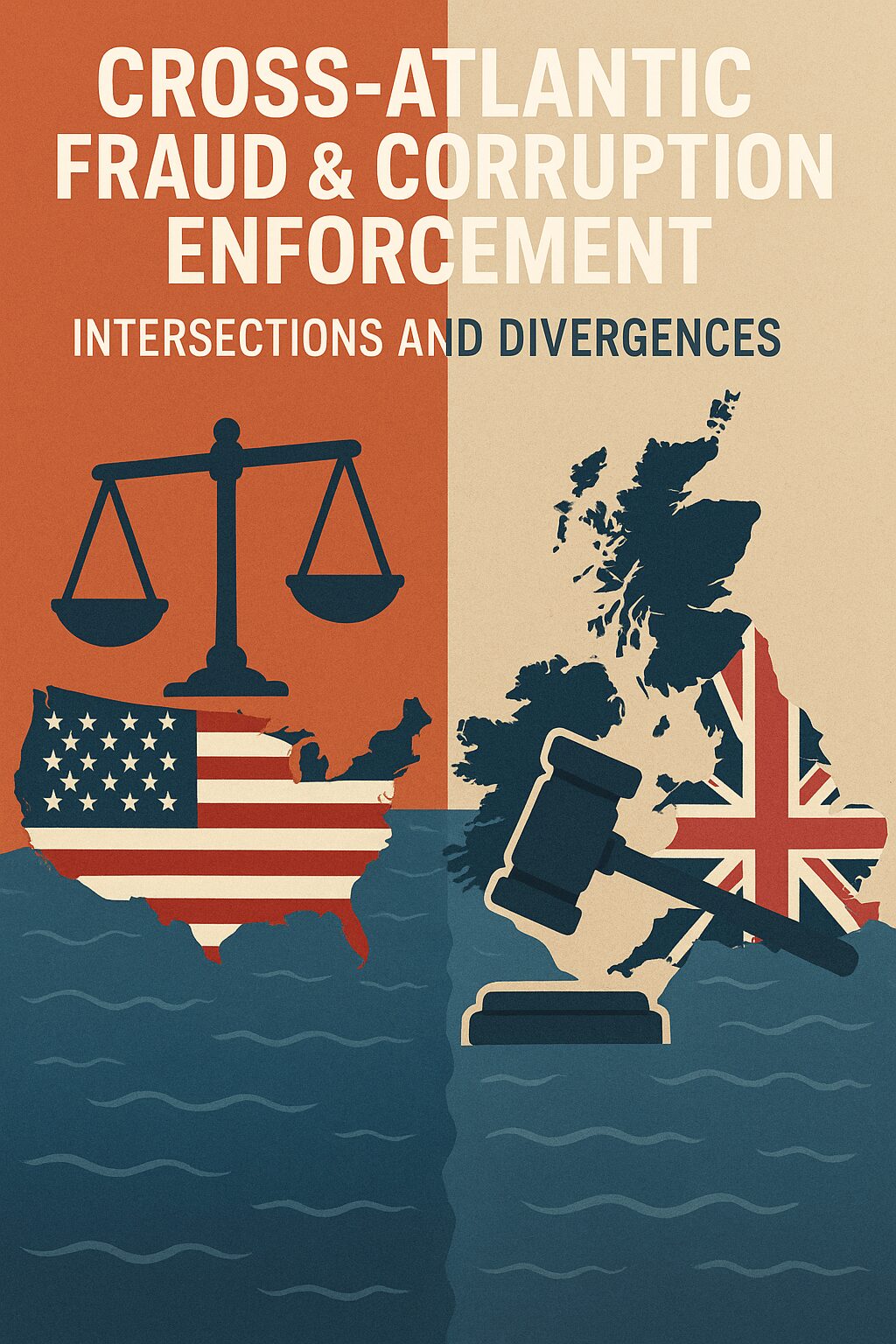
In today’s dynamic compliance landscape, navigating the complexities of international corporate wrongdoing requires vigilance, foresight, and strategic action, as highlighted in A recent article entitled “Cross-Atlantic Impact: DOJ and SFO Self-Reporting and Enforcement Priorities,” by lawyers from McDermott, Will & Schulte. The article is an excellent review of areas where the fight against fraud and corruption aligns between the two countries and areas where they diverge. Today, I will review the article and consider what it means for the US company doing business in the UK or with UK companies.

The Serious Fraud Office (SFO) in the United Kingdom has made clear its expectations regarding self-reporting corporate misconduct, mainly aligning in philosophy, if not always in exact details, with its U.S. counterpart, the Department of Justice (DOJ). American companies must understand these nuances and adapt their compliance programs accordingly. Here are five critical reasons why U.S. businesses must closely monitor and adhere to the UK’s evolving fraud and bribery enforcement regime.

Prompt Self-Reporting Weighs Heavily in Favor of DPAs

The SFO guidance unequivocally states that companies demonstrating prompt self-reporting of corporate wrongdoing significantly increase their chances of obtaining a Deferred Prosecution Agreement (DPA). Conversely, any delay in self-reporting suspected wrongdoing “within a reasonable time of it coming to light” adversely impacts the company’s standing with the SFO.

Much like the DOJ, the SFO does not insist on complete internal investigations before self-reporting. Indeed, in many ways, both sets of prosecutors want companies to step forward as soon as possible. The degree of the inquiry expected depends on the clarity and strength of evidence. Where evidence indicates wrongdoing, companies are expected to self-report swiftly. Ambiguities may permit a more extensive preliminary investigation, but American companies should note that delays can risk losing the advantages offered by early disclosure.

Jurisdictional Triggers Demand Simultaneous Reporting

For American companies dealing with potential misconduct spanning jurisdictions, awareness and agility become paramount. According to SFO guidance, companies reporting suspected misconduct to another agency, such as the DOJ, should also inform the SFO simultaneously or immediately thereafter. Failure to do so negates any potential credit for self-reporting.

Consider a scenario where a company seeks a declination from the DOJ through prompt self-disclosure. Identifying a UK jurisdictional nexus, such as conduct occurring partly in the UK or financial impact felt within the UK, is crucial. The UK’s “failure to prevent bribery” and new “failure to prevent fraud” offenses can impose liability based on international conduct linked to a business presence or financial repercussions in the UK. Understanding and navigating these jurisdictional nuances quickly is imperative to safeguard against regulatory pitfalls and secure favorable treatment.

Increasingly Aggressive Fraud Enforcement

Fraud has emerged as a prominent enforcement priority for both the DOJ and SFO. American companies should pay particular attention to the UK’s new “failure to prevent fraud” (FTPF) offense, effective from September 1, 2025. This robust enforcement tool targets UK and non-UK entities whose associates engage in fraudulent conduct impacting UK interests.

American companies operating internationally must proactively establish “reasonable fraud prevention procedures” to counteract potential liability under this legislation. The urgency conveyed by the SFO, highlighted by senior officials expressing eagerness to utilize these new powers aggressively, cannot be overstated. Companies that neglect preparation risk being among the first prosecuted examples of this powerful legislation.

Coordination Between DOJ and SFO Enhances Risk Exposure

With the DOJ emphasizing fraud in areas affecting U.S. interests, ranging from healthcare and procurement fraud to investment scams, there is considerable overlap with misconduct addressed by the UK’s FTP fraud offense. The authors note that the US Supreme Court held in Kousisis v. United States that a defendant may be convicted of wire fraud for inducing a victim to enter a contract under material pretenses, even if there was no economic loss to the victim. This ruling may allow US prosecutors to pursue a broader range of fraud cases.”

A cross-jurisdictional approach is therefore essential. American companies uncovering fraud that victimizes both U.S. and UK entities or markets must carefully assess reporting obligations to both jurisdictions. The simultaneous or nearly simultaneous reporting requirements heighten the stakes and complexity, demanding robust internal mechanisms for rapid assessment and disclosure.

Continuing Vigorous Anti-Bribery Efforts Globally

Despite temporary uncertainties in the DOJ’s stance toward anti-bribery enforcement, global initiatives indicate relentless international focus. The SFO has intensified anti-bribery efforts through initiatives like the International Anti-Corruption Prosecutorial Taskforce, collaborating closely with French and Swiss authorities. The SFO’s involvement in the International Anti-Corruption Coordination Centre (IACCC) further underscores its commitment. The authors report that “the IACCC aims to facilitate international cooperation on ‘grand corruption’ investigations, including concerning intelligence and evidence gathering.”

In addition to the IACCC, “In March 2025, the SFO established an ‘International Anti-Corruption Prosecutorial Taskforce’ with the French Parquet National Financier (PNF) and the Office of the Attorney General of Switzerland (OAG) (Taskforce). Through the Taskforce, the SFO, PNF, and OAG commit to strengthening their existing cooperation and collaborating to deploy their wide-reaching anti-bribery legislation to prosecute overseas conduct.”

The DOJ’s recent reaffirmation of anti-bribery efforts through its White-Collar Enforcement Plan, highlighting bribery and money laundering harming U.S. interests, may complement these international initiatives. American companies must remain vigilant regarding potential liabilities under both the FCPA and the UK Bribery Act, carefully calibrating their compliance programs to meet rigorous enforcement expectations across jurisdictions.

Practical Steps for American Companies

Given these compelling reasons to pay close attention to the SFO guidance and evolving UK legislation, American companies must take proactive steps to fortify their compliance efforts:

  • Enhance Internal Controls: Companies must quickly develop comprehensive “reasonable fraud prevention procedures,” supported by thorough risk assessments and regularly updated policies.
  • Cross-Jurisdictional Risk Assessments: Implement rigorous processes for promptly assessing jurisdictional ties when misconduct emerges, allowing immediate and coordinated reporting where necessary.
  • Integrated Compliance Training: Ensure global compliance teams, legal counsel, and executive management understand SFO and DOJ expectations clearly, fostering prompt, informed responses.
  • Monitoring International Developments: Maintain continuous awareness of evolving enforcement policies and initiatives, particularly regarding fraud and bribery, to swiftly adapt compliance programs accordingly.
  • Preparedness and Responsiveness: Establish clear protocols for internal investigations and self-reporting decisions, emphasizing speed and comprehensiveness to maximize potential cooperation credit.

Conclusion

Navigating the intricate and often intersecting expectations of the SFO and DOJ presents ongoing challenges for American companies. However, understanding the strategic implications of prompt self-reporting, jurisdictional coordination, aggressive fraud enforcement, international collaboration, and robust anti-bribery efforts is vital.

Proactive compliance management, aligned closely with evolving international regulatory landscapes, is not merely advisable but something that every multinational needs to put in place. American corporations should approach compliance with the understanding that today’s oversight environment demands swift and strategic decision-making to mitigate risks effectively and position themselves favorably in the face of potential regulatory scrutiny.

Categories
FCPA Compliance Report

FCPA Compliance Report – Fraud Risk Management: Insights and Experiences with Peter Schablik

Welcome to the award-winning FCPA Compliance Report, the longest-running podcast in compliance. Today, Tom Fox welcomes Peter Schablik, a seasoned professional in risk consulting and fraud detection. Peter shares his extensive background, including his transitions from consulting to audit and his experiences across various industries. The discussion explores the significance of fraud detection, critical thinking, and strategic fraud mitigation. Key topics include the role of management in fraud prevention, common misconceptions about fraud controls, technological and management overrides, and industry-specific fraud patterns. Peter also emphasizes the importance of basic controls, such as the segregation of duties, the need for a clear tone at the top, the effective use of hotlines, and thorough third-party risk assessments. Peter emphasizes the value of instinctual and behavioral analysis in fraud investigations, providing actionable advice for strengthening an organization’s fraud prevention program.

Key highlights:

  • The Importance of Fraud Detection and Mitigation
  • Common Misconceptions About Fraud
  • Patterns of Fraud Across Industries
  • Segregation of Duties and Basic Controls
  • Investigative Strategies and Behavioral Cues
  • Strengthening Fraud Prevention Programs

Resources:

Peter Schablik on LinkedIn

Want to Catch a Fraudster? Think Like a Cop

Tom Fox

Instagram

Facebook

YouTube

Twitter

LinkedIn

For more information on the use of AI in Compliance programs, see my new book, Upping Your Game. You can purchase a copy of the book on Amazon.com