Categories
Daily Compliance News

Daily Compliance News: November 10, 2025, The More Pardons for Corruption Edition

Welcome to the Daily Compliance News. Each day, Tom Fox, the Voice of Compliance brings to you compliance related stories to start your day. Sit back, enjoy a cup of morning coffee and listen in to the Daily Compliance News. All, from the Compliance Podcast Network. Each day we consider four stories from the business world, compliance, ethics, risk management, leadership or general interest for the compliance professional.

  • Trump pardons yet another corrupt GOP politician. (ABC)
  • Corruption saps growth in the Philippines. (Bloomberg)
  • More PwC cuts. (WSJ)
  • The Trump Administration blocks Gunvor’s takeover of Russia’s energy assets.(WSJ)

The Daily Compliance News has been honored as the No. 2 in Best Regulatory Compliance Podcastscategory.

Categories
Blog

From Good to Great Governance: How Aspiring Directors Can Master the Art of Board Leadership

Exceptional boards do not happen by accident. They are the result of disciplined, emotionally intelligent, and strategically minded leadership —the kind that transforms oversight from a duty into an engine of organizational performance.

For anyone seeking a seat at the board table, the message from PwC in their Harvard Law School Forum on Corporate Governance article Effective Board Leadership: The Art of Doing It Well and the Risks of Getting It Wrong could not be clearer: you are not applying for a title;  instead, you are accepting a stewardship. Board leadership is about building trust, balancing competing priorities, and guiding organizations through uncertainty with integrity and foresight.

Today, I want to explore what aspiring board leaders can learn from PwC’s insights and how you can start cultivating the mindset and behaviors that distinguish a “good” director from a transformative one.

The Leadership Mindset: From Governance to Guidance

A company’s long-term health depends as much on its board as on its CEO. In a world of activist investors, digital disruption, and ESG scrutiny, the boardroom is no longer a ceremonial space. It’s where strategy, risk, and purpose intersect, and that intersection demands leaders who are curious, decisive, and adaptable. Board leaders, whether they are chairs, lead directors, or committee heads, do not lead by authority. They lead by influence. They unite peers, challenge management constructively, and maintain independence while working together with executives to deliver sustainable value.

For those preparing to join a board, it is important to understand early that governance is not about “watching management.” It’s about partnering with management to ensure that the organization not only complies but thrives. The most successful board leaders approach oversight like coaches, not referees, creating the conditions where CEOs and directors alike can perform at their best.

Emotional Intelligence Is a Strategic Advantage

PwC’s research emphasizes a trait too often overlooked in governance: emotional intelligence (EQ). Great board leaders cultivate psychological safety, encourage diverse viewpoints, and model humility. They admit when they do not know something. Aspiring directors should take note. Technical expertise, such as in finance, law, or operations, may get you into the boardroom. But EQ keeps you there. The best chairs and lead directors are skilled listeners who can defuse conflict, mediate divergent views, and maintain composure under pressure.

In practice, that means building trust one conversation at a time. It’s asking the right questions without posturing, pushing back without condescension, and fostering a tone of curiosity over certainty. When you can balance empathy with accountability, you create what PwC calls a “high-functioning relationship” between the board and CEO, one where issues are addressed early, tensions are managed constructively, and decisions are made with confidence.

Strategic Foresight: Thinking Beyond the Quarter

Boards exist to safeguard long-term value creation. Yet too many still fall into the trap of quarterly thinking, consumed by immediate performance metrics rather than strategic trajectory. Exceptional board leadership requires foresight: setting agendas that focus on the future, integrating strategy into CEO evaluation and succession planning, and regularly revisiting assumptions about risk and opportunity.

For future board members, this means you should always be thinking beyond compliance. During your candidacy, articulate how your experience contributes to forward-looking oversight. Can you connect market trends to strategic implications? Can you help a board think differently about innovation, sustainability, or geopolitical risk? Directors who elevate the conversation from “what happened” to “what’s next” are the ones who stand out and make a difference.

The Discipline of Continuous Improvement

The PwC framework underscores a powerful truth: even great boards can stagnate. Effective leadership is not static; it must evolve with the organization, industry, and stakeholder landscape. That’s why outstanding boards embrace structured self-assessment and external evaluation. They seek feedback not as a formality but as a growth mechanism. PwC’s data reveals that while 59% of directors believe their leadership manages board assessments well, only 34% think their leaders effectively address underperforming directors. That gap is where complacency grows.

For those aspiring to join boards, this insight is gold. It means that the best directors are learners, not lecturers. They reflect on their own blind spots, solicit feedback, and model a growth mindset. As a future board leader, consider developing a personal feedback practice now, whether through executive coaching, peer mentorship, or 360° reviews. Self-awareness today is preparation for stewardship tomorrow.

Balancing Oversight and Partnership

Every new director eventually faces a defining moment when the line between governance and management blurs. Do you step in or step back? The authors remind us that great board leadership maintains clarity of role. Directors exist to guide, not to manage. The best board chairs coordinate with the CEO regularly but avoid micromanaging execution. They set thoughtful agendas, focus discussions on outcomes, and intervene only when governance or ethics are at stake.

For those aiming for the boardroom, influence comes from credibility and restraint. You’ll need to learn when to question, when to support, and when to challenge, all while preserving trust. The art of board leadership lies in that balance; firm yet fair, supportive yet independent.

Building and Refreshing the Board Itself

A strong board is not just a collection of impressive resumes. It is a living organism that must evolve with the company’s mission. Outstanding board leaders take ownership of composition and succession. They identify skills gaps, coach underperformers, and bring in fresh perspectives to maintain energy and relevance. They also plan their own exits. PwC suggests that leadership roles should peak within five years and refresh within eight to ten years. This timeframe should allow enough time to build mastery without stagnating new ideas. Aspiring directors should see this as an invitation, not a warning. Governance needs renewal, and you may be the fresh perspective a board needs. Bring both humility and courage to that opportunity.

Navigating Stakeholders and Reputation Risk

Today’s directors must be diplomats as much as strategists. Shareholders, employees, regulators, activists, and the public all expect transparency and accountability. PwC highlights that effective board leaders help define who matters most, coordinate messaging with management, and ensure the board’s voice aligns with corporate purpose. They understand that trust is not a given but rather is earned through credibility, communication, and consistency. If you are pursuing a board role, develop your own credibility now. Contribute thoughtfully in your industry, write, speak, and mentor. Build a reputation for substance over self-promotion. Boards increasingly seek directors who can represent them confidently in complex stakeholder environments.

When Leadership Fails — And How to Fix It

Even the best boards occasionally lose their rhythm. Groupthink sets in. The CEO relationship frays. Performance lags. PwC’s guidance here is pragmatic: act early. Use governance processes such as evaluations, nominating committees, and role clarifications to diagnose and correct the course before a crisis strikes. For future board members, this means understanding that courage is part of the job. You must be willing to speak uncomfortable truths, advocate for leadership transitions, and uphold the board’s fiduciary duty even when it is personally difficult. As one seasoned chair told PwC researchers, “An ounce of prevention is worth a pound of cure.” Effective directors prevent dysfunction through vigilance, not intervention after the fact.

The Final Lesson: Leadership as Legacy

At its core, Effective Board Leadership offers a simple but profound insight: governance is leadership at its highest level. It is about service over status, stewardship over self-interest, and purpose over politics. For those aspiring to board roles, the path forward is clear. Cultivate emotional intelligence, strategic foresight, and moral courage. Learn to listen as well as lead. And above all, remember that the board’s greatest power lies not in authority but in example.

Because great governance, like great leadership, is never accidental. It’s intentional, exacting, and indispensable.


Categories
Blog

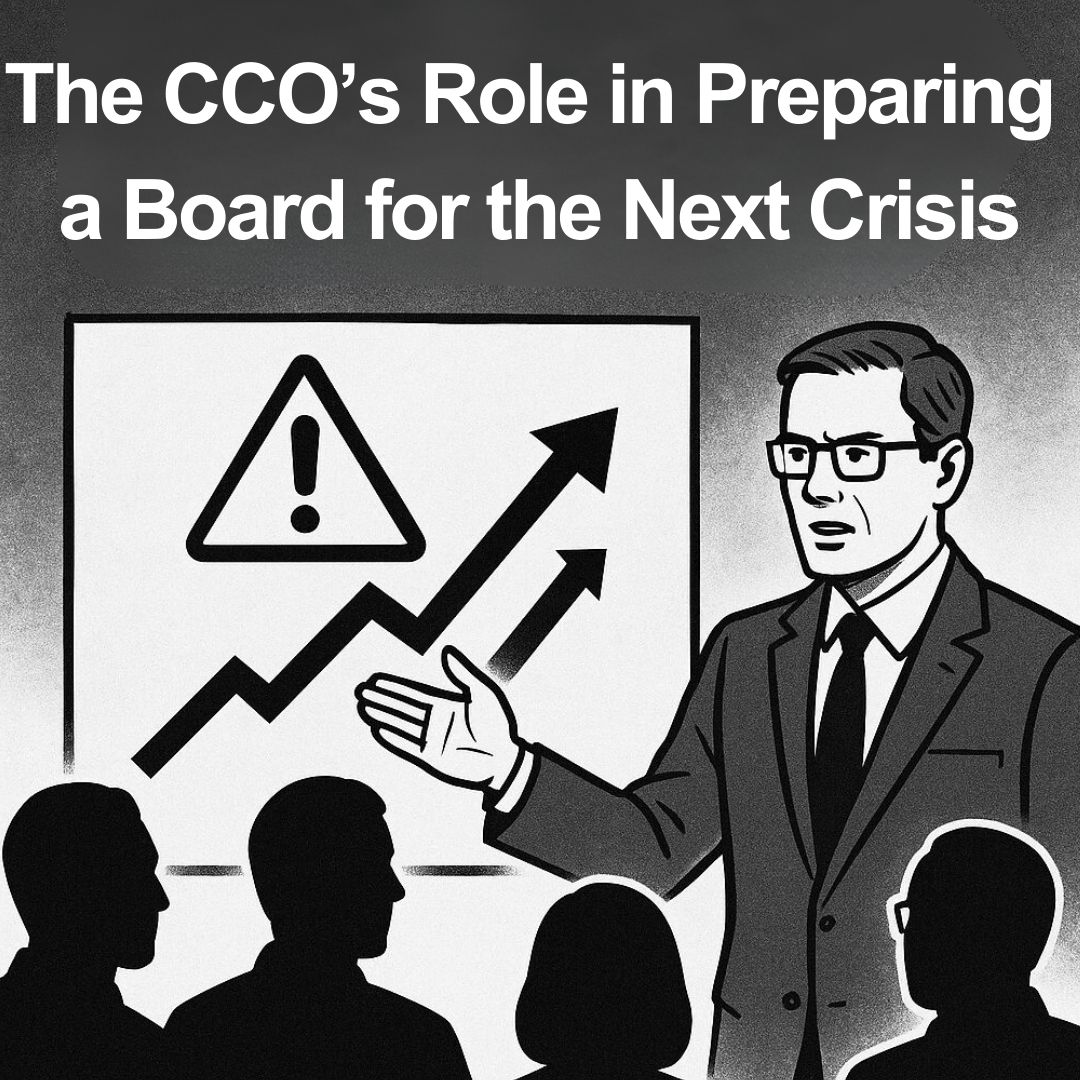
Board Week, Part 3: The CCO’s Role in Preparing a Board for the Next Crisis

Crisis is no longer a rare event. From ransomware attacks and regulatory shocks to activist investors and CEO departures, boards today operate in an environment defined by volatility and disruption. PwC’s recent memorandum, “Being Prepared for the Next Crisis,” highlights the importance of boards adopting a proactive approach to resilience and oversight. However, while directors bear the primary responsibility for governance, a Chief Compliance Officer (CCO) plays a distinct role: ensuring that the board is informed, equipped, and prepared to respond effectively.

The CCO is often the organization’s “early warning system,” translating risks from the operating level into insights for the board. In a crisis, this role becomes magnified. The CCO must help the board anticipate threats, stress-test plans, and avoid the common pitfalls that derail effective responses. Today, we will explore how CCOs can adapt the PwC framework into a playbook to guide the board through the crisis preparedness lifecycle.

1. Before the Crisis: Embedding Compliance into Resilience Planning

The best crisis plans are living documents that are constantly updated, tested, and integrated across all functions. For CCOs, the challenge is to ensure compliance and ethics considerations are built into those plans from the start.

The CCO’s Role:

  • Cross-functional integration. Ensure that the compliance function sits at the crisis planning table alongside risk, legal, and operations. Issues such as bribery, data privacy breaches, or third-party misconduct can escalate into crises if left unaddressed.
  • Scenario planning. Push for tabletop exercises that include compliance scenarios—not just cyber breaches. A dawn raid by regulators, whistleblower allegations, or sanctions violations should all be tested with the board. Most boards are fixated on cyber exercises (81%) while under-testing activist campaigns, fraud investigations, and geopolitical risks. The CCO can broaden that scope.
  • Defining escalation triggers. Collaborate with management and the board to define when compliance issues rise to the level of a board crisis. For example, a government subpoena, a major third-party red flag, or media exposure of misconduct should be predefined as triggers for immediate notification to the board.

By embedding compliance into resilience planning, the CCO ensures that ethical and regulatory risks are not afterthoughts but central to the crisis playbook.

2. During the Crisis: Supporting the Board’s Oversight and Communications

Once a crisis hits, speed and clarity are critical. Work to avoid pitfalls such as “leaping before looking,” minimizing the problem, or losing credibility with stakeholders. Here, the CCO becomes the board’s translator and truth-teller.

The CCO’s Role:

  • Facts over speculation. Ensure that communications to the board are grounded in verified information. If facts are incomplete, emphasize transparency about what is known and what remains to be investigated.
  • Maintaining authenticity. Compliance leaders are custodians of corporate values. During crisis communications, the CCO should challenge management if the messaging strays from the organization’s ethical commitments. As PwC notes, stakeholder trust depends on alignment with company values.
  • Stakeholder inclusivity. Understand the importance of addressing all stakeholders, not just the loudest. The CCO should ensure employees are included in the communication strategy. In many crises, employees are both victims and messengers. If left uninformed, they can become sources of rumor or disengagement.

The CCO also helps the board resist the temptation to downplay severity. Regulators and investors are unforgiving of minimization. Credibility, once lost, is difficult to recover.

3. After the Crisis: Driving Root Cause Analysis and Continuous Improvement

The PwC framework underscores the importance of post-event reviews, root cause analysis, and continuous improvement. For CCOs, this is where compliance expertise shines.

The CCO’s Role:

  • Independent assessment. If misconduct or governance failures triggered the crisis, the CCO should advocate for independent investigations to determine the cause. This not only ensures credibility but also demonstrates the board’s seriousness in remediating gaps.
  • Root cause focus. Compliance officers are trained to ask “how and why.” A surface-level review, examining what happened and the actions taken, overlooks the deeper cultural or control weaknesses that enabled the crisis to occur. Without addressing these, organizations remain vulnerable.
  • Policy and training updates. Post-crisis reviews should feed directly into compliance programs. If a whistleblower report was ignored, revise reporting protocols. If a sanctions violation occurred, strengthen third-party screening.
  • Board education. Provide directors with debriefs on regulatory trends that emerged during the crisis. For example, if a DOJ enforcement action shaped the company’s response, explain the broader implications for future oversight.

By institutionalizing lessons learned, the CCO helps the board convert a painful episode into a competitive advantage.

4. The CCO as the Board’s Crisis Sherpa

PwC notes that boards must balance guiding management while not being overwhelmed themselves. In practice, this requires a trusted advisor who can translate complexity, cut through the noise, and flag issues that rise to governance levels. That advisor is often the CCO.

The CCO’s Role:

  • Regular briefings. Establish quarterly “crisis readiness” updates for the board, led by compliance. These sessions review recent regulatory developments, whistleblower trends, and geopolitical risks.
  • Committee alignment. Work closely with the audit or risk committee to ensure that crisis oversight responsibilities are clearly defined and understood. In some cases, a compliance liaison may be designated to report directly to the board during a crisis.
  • Tone from the top. Model ethical courage in board communications. If executives resist disclosure or push spin, the CCO must be willing to articulate the risks of opacity. The board relies on the unvarnished truth, even when it is uncomfortable to hear.

The CCO, in essence, becomes the board’s crisis sherpa: guiding directors through treacherous terrain with foresight, facts, and fidelity to values.

5. A CCO’s Checklist for Board Crisis Preparedness

To translate this into action, here’s a compliance-focused checklist adapted from PwC’s recommendations:

  1. Ensure crisis plans are compliance-inclusive. Integrate regulatory, ethical, and third-party risks into enterprise crisis planning.
  2. Broaden board exercises. Advocate for tabletop simulations that extend beyond cyber—encompassing fraud, sanctions, whistleblower events, and activist campaigns.
  3. Define escalation triggers. Codify the process for escalating compliance issues to the board.
  4. Champion transparent communication. Push for fact-based, values-aligned messaging during crises.
  5. Include employees. Make internal communications as robust as external messaging.
  6. Drive post-crisis reviews. Lead root cause analysis and ensure findings inform compliance program updates.
  7. Educate directors. Keep the board informed about current regulatory expectations and cultural red flags.

Preparing the Board for the Crisis That Hasn’t Happened Yet

As PwC observes, a crisis is no longer hypothetical; it is cyclical. Boards that prepare systematically will emerge stronger. But preparation is not solely the task of directors or management. The Chief Compliance Officer must bridge the gap by embedding compliance into resilience plans, guiding directors during responses, and ensuring that lessons are institutionalized after the fact.

The next crisis will come. We don’t know whether it will be a cyber, regulatory, or reputational issue. But we do know this: the boards that succeed will have a compliance leader at their side, someone who combines regulatory expertise with cultural insight, and who can guide directors through the storm with clarity and integrity.

That is the CCO’s role. And it may be the most important contribution compliance makes to long-term corporate resilience.

Categories
Daily Compliance News

Daily Compliance News: October 30, 2024 – The Power of Podcasting Edition

Welcome to the Daily Compliance News. Each day, Tom Fox, the Voice of Compliance, brings you compliance-related stories to start your day. Sit back, enjoy a cup of morning coffee, and listen to the Daily Compliance News. All from the Compliance Podcast Network.

Each day, we consider four stories from the business world: compliance, ethics, risk management, leadership, or general interest for the compliance professional.

In today’s edition of Daily Compliance News:

  • How a BBC podcast led to the arrest of Mike Jeffries. (BBC)
  • PwC profits fall after APAC corruption scandals. (FT)
  • Texas block of new transmission lines is unconstitutional. (Reuters)
  • Are Boeing shareholders complicit in the company’s failures?  (Bloomberg)

Categories
Daily Compliance News

Daily Compliance News: December 11, 2023 – The Coach Class Travel Edition

Welcome to the Daily Compliance News. Each day, Tom Fox, the Voice of Compliance, brings you compliance-related stories to start your day. Sit back, enjoy a cup of morning coffee, and listen to the Daily Compliance News. all from the Compliance Podcast Network. Each day we consider four stories from the business world: compliance, ethics, risk management, leadership, or general interest for the compliance professional.

  • The 10th Conference on State Parties on Corruption. (Transparency International)
  • There is no business-class travel for PwC, as it’s not green enough. (FT)
  • Nasdaq settles Iran sanctions violations. (WSJ)
  • Why the GOP doesn’t want diverse law firms. (WaPo)
Categories
Daily Compliance News

Daily Compliance News: August 22, 2023 – The More Odebrecht Indictments Edition

Welcome to the Daily Compliance News. Each day, Tom Fox, the Voice of Compliance brings to you compliance-related stories to start your day. Sit back, enjoy a cup of morning coffee, and listen in to the Daily Compliance News. All, from the Compliance Podcast Network. Each day we consider four stories from the business world, compliance, ethics, risk management, leadership, or general interest for the compliance professional.

·       More Odebrecht indictments coming. (WSJ)

·       Guatemalan ABC President candidate wins in landslide.   (NPR)

·       Austrian PM arranged for internship for his son at PwC. (FT)

·       5th Circuit drops bar for workplace discrimination claims.  (Reuters)

Categories
Daily Compliance News

Daily Compliance News: May 15, 2023 – The Like a Cancer Edition

Welcome to the Daily Compliance News. Each day, Tom Fox, the Voice of Compliance, brings you compliance-related stories to start your day. Sit back, enjoy a cup of morning coffee, and listen to the Daily Compliance News. All from the Compliance Podcast Network. Each day we consider four stories from the business world, compliance, ethics, risk management, leadership, or general interest for the compliance professional.

Stories we are following in today’s edition:

  • PwC is facing potential criminal actions in Australia. (The Guardian)
  • Binance to UK-regulate us.  (FT)
  • FIFA corruption witness gets no jail time. (Reuters)
  • Who wants to be a CEO. (NYT)
Categories
This Week in FCPA

Episode 279 – the Happy Hanukkah Edition

Hanukkah comes early this year. As the Rosen household begins its annual celebration, Tom and Jay are back to look at some of the week’s top compliance and ethics stories this week in the Happy Hanukkah edition. 

Stories

1.     Preparing for dawn raid in the era of hybrid work? Andrew Reeves and Annie Birch in FCPA Blog.
2.     When you fight corruption, it fights back. Rick Messick in GAB.
3.     Why does Walmart want to keep an exec quiet about its compliance program? Dick Cassin explores in the FCPA Blog.
4.     Board effectiveness survey.  Paul DiNicola and Leah Malone in the Harvard Law School Forum on Corporate Governance.
5.     New OECD ABC suggestions. Nicola Bonucci and Nat Edmonds in the FCPA Blog.
6.     Graybeards and Youngbloods working together. Carrie Root in CCI.
7.     Trust in companies ‘shockingly’ low? Lawrence Heim in PracticalESG.
8.     Are senior level compliance positions becoming harder to find and fill? Matt Kelly explores in Radical Compliance.
9.     Role of PwC in Tesla/JPMorgan dispute. Francine McKenna explores in The Dig (sub req’d).
10.  How will tech change the work landscape in 2022? Check out this pod with Mrs. Monitor (AKA Rebecca Rosen) on Freshbrewed Tech. 

Podcasts and Events

11.  How can you show ROI from your internal investment in compliance? Nick and Gio Gallo join Tom Fox in the most unusual pod series, Mining the Gold in Compliance. Part 1 – ROI on Compliance. Purchase Decisions. Part 2 – Extending Compliance Value Across an Organization. Part 3 – Compliance and ESG Investments. Part 4 – Finance and Investing Models for Compliance. Part 5 – Investment Strategies for the Compliance Professional.
12.  Are you exasperated? Then check, F*ing Argentina. In this podcast series co-hosts Tom Fox and Gregg Greenberg, author of F*ing Argentina explore the current American psyche of being overworked, over leveraged, overtired and overwhelmed. Find out about modern America’s exasperation with well…exasperation. In Episode 11, a birthday party battle through text messages.
13.  In November on The Compliance Life, I visited with Wendy Badger, CCO at Tennant. In Part 1, she detailed her academic career and early professional life. In Part 2, changing ladders to advance your career. In Part 3, Wendy moved into the CCO Chair. In Part 4, Wendy talked about having courage in your career choices and compliance into the future. Next week, we begin the December series with Matt Silverman, Director of Trade Compliance at VIAVI.
14.  The Compliance Podcast Network welcomes Professor Karen Woody and her new podcast, Once Upon a Trading Law: The History of Insider Trading. In this most unique pod, Karen interviews some of her student to tell the history of insider trading. Check out Episode 1, which looks at the beginnings of insider trading.
15.  Join Tom, Mike Volkov, Carrie Penman, Dr. Pat Harned and Skip Lowney (an all-star panel if there ever was one) for the ECI webinar on the intersection of compliance and E&C programs. Wednesday, December 15, from 2-3:30 ET. Registration and information here.
Tom Fox is the Voice of Compliance and can be reached at tfox@tfoxlaw.com. Jay Rosen is Mr. Monitor and can be reached at jrosen@affiliatedmonitors.com.

Categories
Daily Compliance News

June 17, 2021 the Eat More Tacos edition


In today’s edition of Daily Compliance News:

  • Olympian blames failed drug test on burrito. (WSJ)
  • PwC to add 100K in headcount. (FT)
  • Italien prosecutors of ENI now under investigation. (Reuters)
  • End of cheap money? (NYT)
Categories
Daily Compliance News

January 22, 2020, the Heads Will Roll edition


In today’s edition of the Daily Compliance News:

  • PwC CEO warns ‘heads may roll’ over the firm’s work for Isabel Dos Santos. (The Guardian)
  • Dos Santos banned from her own back. (NYT)
  • Vale ex-CEO charged with homicide over dam collapses. (WSJ)
  • Warren wants DOJ task force to investigate Trump administration corruption. (com)