Categories
Trekking Through Compliance

Trekking Through Compliance: Episode 60 – Gunsmoke and Gaps: How ‘Spectre of the Gun’ Informs Modern Compliance Investigations

The compliance world may not often resemble the Wild West, but the best compliance investigators know that the strange and surreal are not always fiction. Misunderstandings, missing evidence, and “unwritten rules” can make the truth as elusive as any Melkotian illusion. “Spectre of the Gun” provides a powerful lens through which to examine the investigative process. Today, we saddle up and explore five essential investigative lessons for compliance professionals from Tombstone in the Arizona Territory, as featured in this classic episode.

1. Never Assume Reality Is What It Seems

Illustrated By: From the moment Kirk and his team arrive, things are… off.

Compliance Lesson. In a compliance investigation, assumptions are your enemy. Initial appearances can deceive, especially when dealing with incomplete data, manipulated records, or the subtle influence of organizational culture.

2. Stay Calm in the Face of Escalating Pressure

Illustrated By: As the clock ticks toward 5:00, the hour of the gunfight, the crew experiences mounting psychological stress, but Kirk repeatedly counsels his team to stay calm and focused, even as the “inevitable” doom approaches.

3. Leverage Diverse Perspectives and Skills

Illustrated By: Each member of the landing party brings a unique skill to the puzzle.

Compliance Lesson. No single investigator has all the answers. The best compliance investigations are team efforts, drawing on legal, HR, IT, and business expertise. This diversity helps spot blind spots and ensures that all avenues are explored.

4. Test Hypotheses—Don’t Just Accept Stories

Illustrated By: Spock theorizes that their minds are the only reality that matters. The crew realizes they must test each new hypothesis about their environment, ultimately concluding that belief itself will determine the outcome of the gunfight.

Compliance Lesson. Compliance investigators must go beyond the “story” provided by policy manuals or initial interviews. Every theory, whether about a missing document, a suspicious transaction, or a timeline inconsistency, should be tested.

5. Mindset Shapes Outcomes—Don’t Underestimate the Power of Belief

Illustrated By: As the showdown approaches, Spock deduces that their survival depends on their conviction that the Earps’ bullets cannot harm them. He leads the crew in a Vulcan mind meld, focusing their thoughts on total certainty in their safety.

Compliance Lesson. While compliance investigators don’t need Vulcan mind melds, the principle is clear: the mindset you bring to your investigation—open-mindedness, integrity, and thoroughness—shapes the outcome. Cynicism, bias, or defeatism can close your eyes to the real issues.

Final ComplianceLog Reflections

Spectre of the Gun” is more than a surreal Star Trek adventure; rather, it is a case study in the art and science of investigation. As compliance professionals, we may not face ghostly gunfights at sundown, but we do face situations where logic, courage, and creative teamwork are our only tools against the unknown.

So, as you saddle up for your next compliance investigation, remember the lessons of the Enterprise crew in Tombstone. The truth is out there sometimes behind the facade, sometimes hiding in plain sight.

Resources:

⁠⁠Excruciatingly Detailed Plot Summary by Eric W. Weisstein⁠⁠

⁠⁠MissionLogPodcast.com⁠⁠

⁠⁠Memory Alpha


Categories
Blog

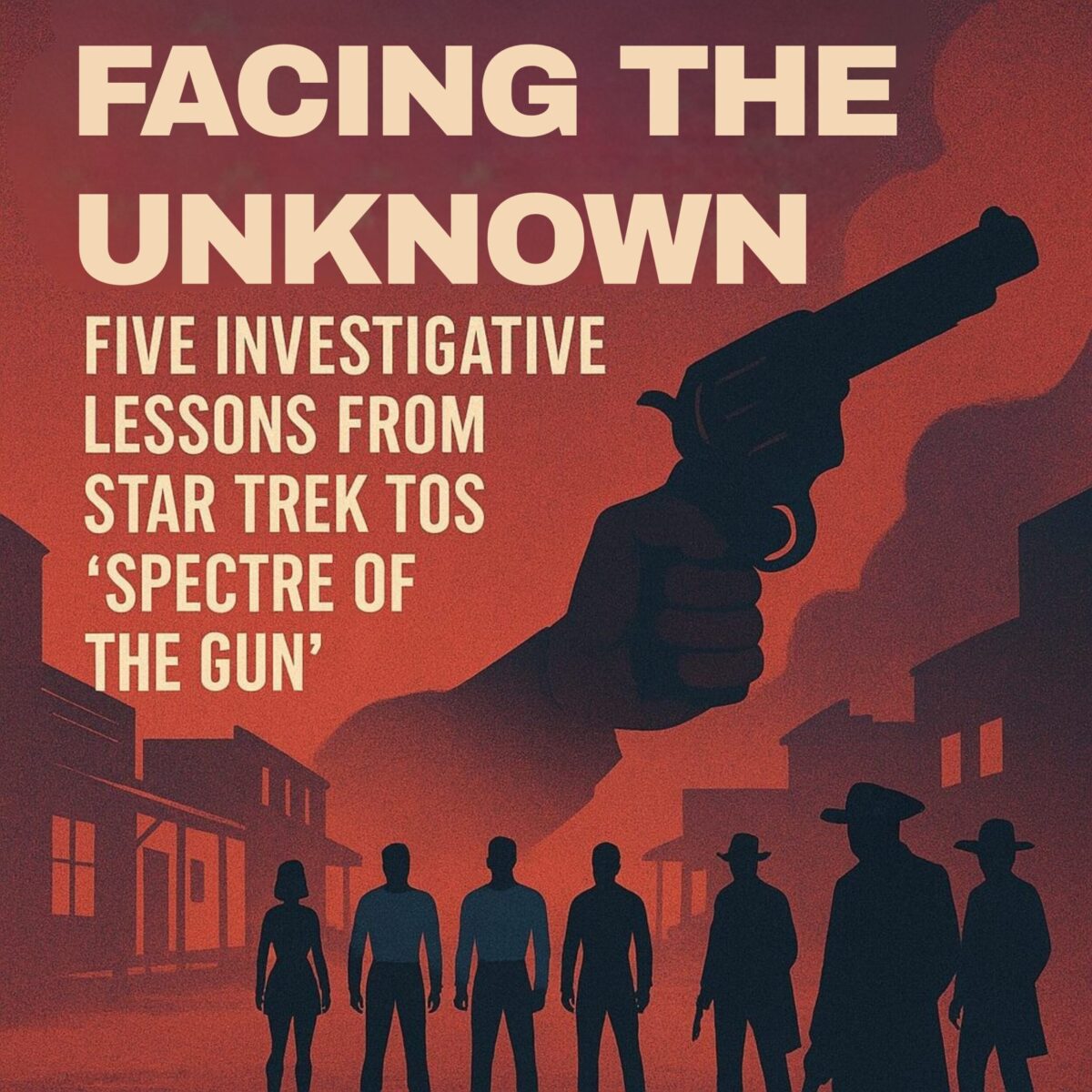
Facing the Unknown: Five Investigative Lessons from Star Trek’s “Spectre of the Gun”

One of the most fascinating aspects of compliance investigations is navigating the unknown—those ambiguous, often illogical circumstances where instinct and method must work together. Few television episodes dramatize this challenge as vividly as the Star Trek: The Original Series (TOS) episode, “Spectre of the Gun.”

In this third-season episode, Captain Kirk and his landing party beam down to a planet of the reclusive and telepathic Melkotians, only to be punished for trespassing. Their punishment? Being cast into a surreal, incomplete recreation of the 1881 Gunfight at the O.K. Corral, destined to play the losing side against the Earps and Doc Holliday. As the Enterprise crew quickly learns, logic, memory, and even physical law are unreliable. Their investigation into their predicament and their survival depends on teamwork, analysis, and the willingness to question what’s real.

The compliance world may not often resemble the Wild West, but the best compliance investigators know that the strange and surreal are not always fiction. Misunderstandings, missing evidence, and “unwritten rules” can make the truth as elusive as any Melkotian illusion. “Spectre of the Gun” provides a powerful lens through which to examine the investigative process.

Today, we saddle up and explore five essential investigative lessons for compliance professionals from Tombstone in the Arizona Territory, as featured in this classic episode.

1. Never Assume Reality Is What It Seems

Illustrated By: From the moment Kirk and his team arrive, things are… off. The town is half-finished, with buildings lacking walls and only a few facades standing. There are missing objects and inexplicable absences. Despite this, the crew initially tries to follow the “script” of Tombstone’s history, assuming their actions will play out as expected.

Compliance Lesson. In a compliance investigation, assumptions are your enemy. Initial appearances can deceive, especially when dealing with incomplete data, manipulated records, or the subtle influence of organizational culture. Like the Enterprise crew, investigators often find themselves in environments that “look” right but don’t quite add up.

A skilled investigator asks:

  • What’s missing from this picture?
  • Are there gaps or inconsistencies in the documentation?
  • Do witness accounts align, or are they conspicuously similar as if rehearsed?

Always challenge the first layer of evidence. Probe for context. Cross-check data sources and resist the urge to “solve” the case too quickly.

Takeaway:

If your compliance investigation feels too neat, step back and re-examine. The truth often lies in the gaps, not the obvious.

2. Stay Calm in the Face of Escalating Pressure

Illustrated By: As the clock ticks toward 5:00, the hour of the gunfight, the tension mounts. The Earps are aggressive, and the townsfolk are hostile or unhelpful. The crew experiences mounting psychological stress, but Kirk repeatedly counsels his team to stay calm and focused, even as the “inevitable” doom approaches.

Compliance Lesson. Investigations often bring high-pressure moments: interviewees who become confrontational, business leaders who want quick resolutions, or whistleblowers who fear retaliation. In these moments, emotions can cloud judgment and cause missteps.

Spectre of the Gun” shows that, when panic rises, clear-headed leadership and methodical process are essential. Kirk’s calm enables the team to think creatively and challenge assumptions, ultimately saving their lives.

In compliance investigations:

  • Set clear ground rules for interviews.
  • Create a calm environment, even when accusations are severe.
  • Support your team and witnesses, especially when the stakes are high.

What should you do now? Under pressure, composure and methodical thinking separate successful investigators from those who react.

3. Leverage Diverse Perspectives and Skills

Illustrated By: Each member of the landing party brings a unique skill to the puzzle. Spock applies logic to interpret the unreality of their situation. McCoy’s medical knowledge helps craft “anti-venom” to counter the gas used by Doc Holliday. Scotty and Chekov offer technical and tactical ideas, while Kirk analyzes motivations and strategy.

Compliance Lesson. No single investigator has all the answers. The best compliance investigations are team efforts, drawing on legal, HR, IT, and business expertise. This diversity helps spot blind spots and ensures that all avenues are explored.

In the episode, Spock recognizes that their environment is illusory, and the group’s willingness to trust his logic unlocks their escape. In your investigations:

  • Gather a multidisciplinary team.
  • Encourage open debate and the airing of alternate theories.
  • Leverage outside expertise when needed, such as forensic accountants or language specialists.

What should you do now? Diversity is not just about backgrounds; it is about thinking styles and problem-solving approaches. Use every tool at your disposal.

4. Test Hypotheses—Don’t Just Accept Stories

Illustrated By: When McCoy attempts to make “real” tranquilizer gas to stop the Earps, it fails, as the gas has no effect, because nothing in their environment is truly real. Spock theorizes that their minds are the only reality that matters. The crew realizes they must test each new hypothesis about their environment, ultimately concluding that belief itself will determine the outcome of the gunfight.

Compliance Lesson. Compliance investigators must go beyond the “story” provided by policy manuals or initial interviews. Every theory, whether about a missing document, a suspicious transaction, or a timeline inconsistency, should be tested.

This may mean:

  • Reconstructing timelines.
  • Running technical or forensic tests.
  • Seeking out independent corroboration for claims.

In the episode, only by testing (and failing) do Kirk and his team realize what’s going on. Similarly, failed hypotheses in your investigation are not a waste; they point you closer to the truth.

What should you do now? Test your investigative theories actively. Do not accept stories at face value; experiment, reconstruct, and challenge.

5. Mindset Shapes Outcomes—Don’t Underestimate the Power of Belief

Illustrated By: As the showdown approaches, Spock deduces that their survival depends on their conviction that the Earps’ bullets cannot harm them. He leads the crew in a Vulcan mind meld, focusing their thoughts on total certainty in their safety. When the bullets fly, they are unharmed—because they believe they cannot be hurt.

Compliance Lesson. While compliance investigators don’t need Vulcan mind melds, the principle is clear: the mindset you bring to your investigation—open-mindedness, integrity, and thoroughness—shapes the outcome. Cynicism, bias, or defeatism can close your eyes to the real issues.

Additionally, the mindset of the organization matters. If employees believe investigations are futile or predetermined, they won’t participate honestly. If they believe in the integrity of the process, you’ll get better results.

Set the tone by:

  • Demonstrating impartiality.
  • Communicating the importance of the investigative process.
  • Encouraging a “speak-up” culture where all feel heard.

What should you do now? The beliefs and values you bring to an investigation shape its success. Foster a culture of open-mindedness, curiosity, and fairness.

Final ComplianceLog Reflections

Spectre of the Gun” is more than a surreal Star Trek adventure; rather, it is a case study in the art and science of investigation. As compliance professionals, we may not face ghostly gunfights at sundown, but we do face situations where logic, courage, and creative teamwork are our only tools against the unknown.

So, as you saddle up for your next compliance investigation, remember the lessons of the Enterprise crew in Tombstone. The truth is out there, sometimes behind the facade, hiding in plain sight.

Resources:

⁠⁠Excruciatingly Detailed Plot Summary by Eric W. Weisstein⁠⁠

⁠⁠MissionLogPodcast.com⁠⁠

⁠⁠Memory Alpha

Categories
Blog

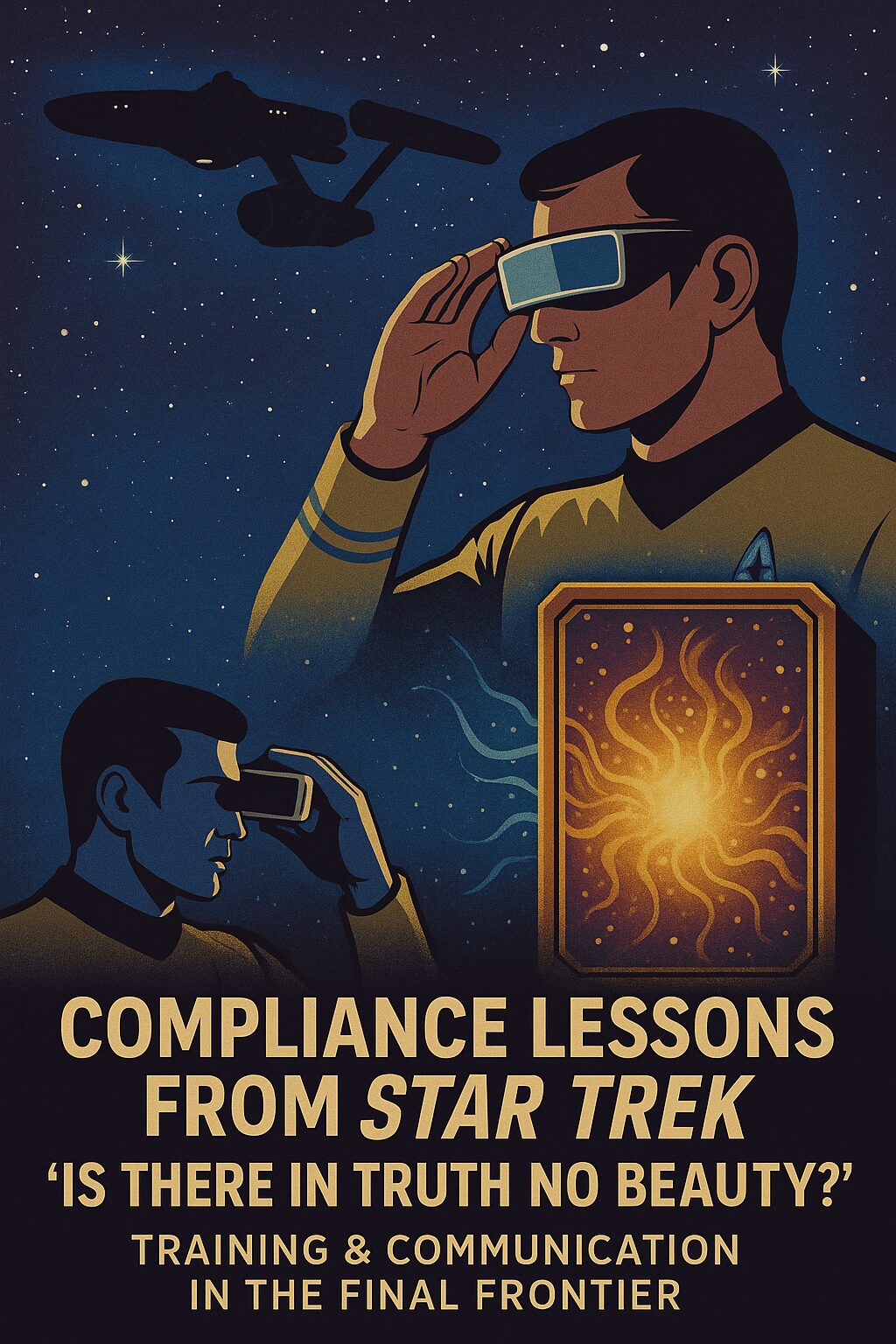
The Final Frontier of Compliance Training: Five Lessons from Star Trek’s “Is There in Truth No Beauty?”

Corporate compliance is not just about rules, regulations, and policy manuals. At its core, compliance is about people—their perceptions, blind spots, willingness to communicate, and, above all, their ability to learn from each other in the face of risk and ambiguity. No franchise has dramatized the struggles of understanding, ethics, and communication better than Star Trek: The Original Series (TOS). And no episode is more apt for compliance professionals seeking to elevate their training and communications program than the third season gem, “Is There in Truth No Beauty?”

Set aboard the USS Enterprise, the episode revolves around the arrival of Dr. Miranda Jones and the enigmatic Medusan ambassador, Kollos. The Medusans are a race of beings whose appearance is so alien that to gaze upon them causes madness. It’s a parable about the dangers and necessity of confronting the unknown, understanding difference, and building bridges across divides.

As compliance professionals, we can mine “Is There in Truth No Beauty?” for powerful lessons on how to build a culture of effective training and communications that prepares our teams for the uncharted territory of tomorrow’s risks. Today, we set our phasers to “inspire” and explore five key compliance training and communications lessons from this classic Trek tale.

1. Embrace the Limits of Human (and Organizational) Perception

Illustrated By: The crew’s first briefing about the Medusan ambassador is laden with warnings: “No one may look upon a Medusan with the naked eye.” To the Medusan, human forms are equally incomprehensible, but they have developed technology, a protective visor, that allows safe interaction. Dr. Miranda Jones, specially trained and equipped, serves as a living bridge between the two species.

Compliance Lesson. Every organization has its own “Medusans” risks, regulations, and even people whose perspectives are so different they can seem incomprehensible. Too often, compliance training assumes everyone shares the same baseline understanding and comfort level. That is a dangerous assumption.

Your training must recognize the limits of perception, both cognitive and cultural. Not everyone will see risk the same way; not everyone will feel empowered to ask questions or speak up. Just as Dr. Jones brings specialized knowledge and equipment to the table, your compliance communications should equip employees with tools to recognize their blind spots and to bridge those gaps. This can mean scenario-based learning, peer-led discussions, or visual tools that help explain complex risks from multiple perspectives.

What should you do now? Acknowledge and proactively address the limits of human perception. Empower your team with adaptive tools and diverse viewpoints to “see” risk.

2. Communicate Expectations—Don’t Assume Understanding

Illustrated By: Early in the episode, Captain Kirk assembles his crew for a detailed briefing. He explicitly warns, “You must not look upon the Medusan ambassador.” Spock and Dr. Jones reinforce the message, and the procedures for safe interaction are laid out.

Compliance Lesson. How many compliance failures begin with, “Well, I thought I understood what was required…”? In Star Trek, lives depend on explicit, repeated communication of expectations. In your organization, regulatory and reputational survival depends on it as well.

Effective compliance training requires more than a one-time email or a paragraph in the handbook. Clear, repeated, scenario-based communication is essential. Explain the “why” as well as the “what.” Don’t just say “do not do X,” but explain the risk, the rationale, and the real-world consequences. Use multiple formats, including live, digital, visual, and narrative, to reinforce the message.

What should you do now? Never assume understanding. Communicate expectations explicitly and often, and use stories, scenarios, and repetition to anchor key messages.

3. Build Trust and Psychological Safety Before the Crisis

Illustrated By: The relationship between Dr. Jones and the crew is initially fraught. She is a telepath, guarded and secretive. Her sense of isolation is palpable. Yet as the episode progresses, Kirk and Spock earn her trust by inviting her into their confidence and acknowledging her unique expertise. This trust proves critical when disaster strikes.

Compliance Lesson. Effective communication is built on trust and psychological safety. If employees feel isolated, mistrusted, or afraid to speak up, no amount of “mandatory training” will make your compliance program effective. The Medusan can only safely interact through a trusted intermediary—just as employees will only engage with compliance if they feel respected and included.

Foster a compliance culture where people feel safe to voice concerns, ask questions, and share mistakes without fear of retaliation. Encourage managers to model vulnerability and openness. Use anonymous Q&A, “ask me anything” sessions, and real stories to build an environment of trust.

What should you do now? Trust is the engine of communication. Build psychological safety into your compliance training so that employees feel empowered to participate, especially when the stakes are high.

4. Prepare for the Unexpected—And Practice the Protocols

Illustrated By: When Kollos’s container is accidentally opened, crew member Larry Marvick is exposed to the Medusan and descends into madness, nearly destroying the Enterprise. The emergency procedures are put to the test, and Spock’s preparation (and his use of the protective visor) is the difference between disaster and survival.

Compliance Lesson. Crises never unfold according to plan, but they reveal the effectiveness of your training and protocols. Star Trek demonstrates that it’s not enough to have a policy in the binder; you must train, rehearse, and test those protocols until they are second nature.

Use tabletop exercises, drills, and “what if” scenarios in your compliance training. Walk teams through incident response steps—Debrief after near-misses or actual compliance failures. Emphasize not just the letter of the protocol, but the spirit, why each step matters, and how it protects the organization and its people.

What should you do now? Prepare, practice, and stress-test your compliance protocols. When the unthinkable happens, your team must be ready to act, not just recite policy, but live it.

5. Embrace Diversity—and the Value of the Outsider’s View

Illustrated By: The Medusan, Kollos, is physically incomprehensible to humans, yet he is also a being of great intelligence and empathy. Spock, uniquely Vulcan and human, can serve as a bridge—merging with Kollos to save the ship. In the process, both gain insight from the other’s perspective.

Compliance Lesson:

Homogeneity is a hidden compliance risk. Diverse teams bring broader perspectives, challenge assumptions, and spot blind spots that a monoculture would miss. In Star Trek, survival depends on learning from the outsider; in compliance, innovation, and vigilance depend on the same principle.

Include voices from across your organization and beyond in your compliance training and communications. Seek out the “outsiders” who can question the status quo. Value the contributions of people from different backgrounds, departments, and experiences. Remember: your “Medusan” might hold the key to your next compliance breakthrough.

What should you do now? Diversity is your compliance superpower. Embrace the outsider’s perspective and make inclusion a pillar of your training and communications.

Final ComplianceLog Reflections

Is There in Truth No Beauty?” is a meditation on the limits of perception, the power of communication, and the necessity of embracing difference. For compliance professionals, it offers a road map for building training and communications programs that are clear, inclusive, practical, and resilient.

As you chart the course for your compliance initiatives, ask yourself:

  • Are we equipping our people to see risk from every angle?
  • Do we communicate expectations, repeatedly, and meaningfully?
  • Is trust the foundation of our compliance culture?
  • Are we truly ready for the unexpected?
  • Are we harnessing the power of diverse perspectives?

The universe of compliance is ever-expanding. Let’s train and communicate so our teams are ready to boldly go where no one has gone before.

Resources:

⁠⁠Excruciatingly Detailed Plot Summary by Eric W. Weisstein⁠⁠

⁠⁠MissionLogPodcast.com⁠⁠

⁠⁠Memory Alpha

Categories
Trekking Through Compliance

Trekking Through Compliance: Episode 59 – Unmasking Compliance Blind Spots: Training and Communication Lessons from ‘Is There in Truth No Beauty?’

No TOS episode is more apt for compliance professionals seeking to elevate their training and communications program than the third season gem, “Is There in Truth No Beauty?”

As compliance professionals, we can mine “Is There in Truth No Beauty?” for powerful lessons on how to build a culture of effective training and communications that prepares our teams for the uncharted territory of tomorrow’s risks. Today, we set our phasers to “inspire” and explore five key compliance training and communications lessons from this classic Trek tale.

1. Embrace the Limits of Human Perception

Illustrated By: The crew’s first briefing about the Medusan ambassador is laden with warnings: “No one may look upon a Medusan with the naked eye.”

Compliance Lesson. Every organization has its own “Medusans” risks, regulations, and even people whose perspectives are so different they can seem incomprehensible. Too often, compliance training assumes everyone shares the same baseline understanding and comfort level. That is a dangerous assumption.

2. Communicate Expectations—Don’t Assume Understanding

Illustrated By: Early in the episode, Captain Kirk assembles his crew for a detailed briefing. Spock and Dr. Jones reinforce the message, and the procedures for safe interaction are laid out.

Compliance Lesson. How many compliance failures begin with, “Well, I thought I understood what was required…”? In Star Trek, lives depend on explicit, repeated communication of expectations. In your organization, regulatory and reputational survival depends on it as well.

3. Build Trust and Psychological Safety Before the Crisis

Illustrated By: The relationship between Dr. Jones and the crew is initially fraught. She is a telepath, guarded and secretive. Her sense of isolation is palpable. Yet as the episode progresses, Kirk and Spock earn her trust by inviting her into their confidence and acknowledging her unique expertise. This trust proves critical when disaster strikes.

Compliance Lesson. Effective communication is built on trust and psychological safety. If employees feel isolated, mistrusted, or afraid to speak up, no amount of “mandatory training” will make your compliance program effective.

4. Prepare for the Unexpected—And Practice the Protocols

Illustrated By: When Kollos’s container is accidentally opened, crew member Larry Marvick is exposed to the Medusan and descends into madness, nearly destroying the Enterprise.

Compliance Lesson. Crises never unfold according to plan, but they reveal the effectiveness of your training and protocols. Star Trek demonstrates that it’s not enough to have a policy in the binder; you must train, rehearse, and test those protocols until they are second nature.

5. Embrace Diversity—and the Value of the Outsider’s View

Illustrated By: The Medusan, Kollos, is physically incomprehensible to humans, yet he is also a being of great intelligence and empathy.

Compliance Lesson:

Homogeneity is a hidden compliance risk. Diverse teams bring broader perspectives, challenge assumptions, and spot blind spots that a monoculture would miss. In Star Trek, survival depends on learning from the outsider; in compliance, innovation, and vigilance depend on the same principle.

Final ComplianceLog Reflections

Is There in Truth No Beauty?” is a meditation on the limits of perception, the power of communication, and the necessity of embracing difference. For compliance professionals, it offers a road map for building training and communications programs that are clear, inclusive, practical, and resilient.

The universe of compliance is ever-expanding. Let’s train and communicate so our teams are ready to boldly go where no one has gone before.

Resources:

⁠⁠Excruciatingly Detailed Plot Summary by Eric W. Weisstein⁠⁠

⁠⁠MissionLogPodcast.com⁠⁠

⁠⁠Memory Alpha

Categories
Blog

Guiding Integrity: Ethics Lessons from Star Trek’s ‘And The Children Shall Lead’

My winner for the worst of Star Trek: The Original Series is the episode, “And the Children Shall Lead”. Yet there are clear ethics lessons as the episode itself stands out for its disturbing exploration of power, manipulation, and ethical responsibility. Compliance professionals tasked with safeguarding their organizations from ethical lapses can draw powerful insights from this intriguing narrative. Today, we explore five key ethical lessons every compliance leader should internalize from this episode.

Lesson 1: Influence and Ethical Leadership

Illustrated By: The children aboard the Enterprise, manipulated by an alien entity known as Gorgan, exercise dangerous control over the crew, compelling them to abandon rational judgment.

Compliance Lesson: Leadership wields tremendous influence. Ethical leaders must recognize their power and consciously deploy it to uphold ethical standards, not undermine them. A misuse of influence can erode trust and corrupt organizational culture. Ethical leadership requires self-awareness and a steadfast commitment to organizational values. Leaders who misuse their influence often set negative precedents, creating an environment where unethical behavior becomes normalized. Conversely, leaders who consistently demonstrate ethical decision-making inspire similar behavior in their teams, fostering a culture of integrity.

What can you do now? Ensure your leaders understand the impact of their actions. Implement regular leadership training that focuses on ethical decision-making and raises awareness of how leaders’ actions impact company behavior and culture.

Lesson 2: Recognizing and Addressing Manipulation

Illustrated By: Kirk and Spock realize that the children’s unnatural behavior stems from external manipulation by Gorgan, who exploits their innocence and vulnerability for his gain.

Compliance Lesson: Organizations must be vigilant against manipulative practices. Ethical compliance involves recognizing manipulation, whether internal or external, and actively counteracting it to protect the organization’s integrity. Manipulation can manifest subtly through coercion, exploitation of vulnerabilities, or abuse of power dynamics. Compliance leaders must educate employees on the nuances of manipulation and how it undermines ethical practices, ultimately compromising organizational integrity. Early detection and proactive intervention are key to safeguarding the organization.

What can you do now? Develop training programs designed to empower employees to recognize and report manipulative behavior. Establish clear communication channels for raising ethical concerns safely and anonymously.

Lesson 3: Ethical Courage in Speaking Truth to Power

Illustrated By: Nurse Chapel and Captain Kirk courageously confront the children with the harsh truths about their manipulated behavior and its devastating consequences.

Compliance Lesson: Speaking truth to power, especially in ethical matters, requires considerable courage. Compliance leaders must foster environments where employees feel empowered to speak openly, even against popular opinion or powerful interests. It is crucial to establish a corporate culture that not only permits but actively encourages transparency and honesty. Compliance officers play a pivotal role in creating platforms where ethical concerns can be voiced without fear of retaliation. The ability to challenge unethical practices openly is essential for maintaining organizational integrity.

What can you do now? Create a robust whistleblower program, emphasizing protection and support for those who courageously voice ethical concerns. Celebrate instances where employees have demonstrated bravery in upholding ethical standards.

Lesson 4: Awareness of Ethical Blind Spots

Illustrated By: Initially, the Enterprise crew underestimates the threat posed by the children, blinded by assumptions of innocence and vulnerability.

Compliance Lesson: Ethical blind spots often emerge from assumptions and biases. Organizations must cultivate awareness and self-reflection, understanding that ethical risks can arise unexpectedly from overlooked or underestimated sources. Blind spots can be particularly dangerous because they often remain invisible until significant damage occurs. Compliance teams must foster an environment of continual vigilance, where assumptions are routinely challenged, and biases openly discussed and addressed. Training programs should incorporate scenario-based exercises to reveal hidden ethical vulnerabilities.

What can you do now? Conduct regular ethics risk assessments to uncover hidden vulnerabilities. Encourage ongoing discussions and training sessions about implicit biases, assumptions, and overlooked ethical threats within the organization.

Lesson 5: Responsibility and Accountability in Ethics

Illustrated By: After breaking Gorgan’s hold, Kirk ensures that the children confront and understand the severity of their actions, instilling a crucial sense of accountability.

Compliance Lesson: Ethical accountability must permeate all organizational levels. Leaders and employees alike should clearly understand their responsibilities and the consequences of unethical behavior. Accountability ensures that ethical standards are upheld consistently and that violations are addressed promptly and appropriately. Leaders must communicate clearly that ethical breaches will have real and proportionate consequences, reinforcing the importance of personal and organizational integrity. Accountability measures help maintain trust within and outside the organization.

What can you do now? Establish transparent accountability systems, reinforcing individual and collective responsibility for ethical behavior. Regularly communicate the importance of ethical accountability and the organizational commitment to enforce ethical standards uniformly.

You Must Lead With Ethics

And The Children Shall Lead” reminds compliance professionals that ethical vigilance and leadership are essential for organizational health. Through ethical influence, courageous confrontation of manipulation, awareness of blind spots, and unwavering accountability, organizations can protect their integrity and thrive.

Compliance professionals must continuously embody these lessons, creating robust ethical cultures resilient against manipulation, corruption, and ethical lapses. Let the lessons of the Enterprise crew guide us, fostering environments where integrity leads and compliance thrives.

Resources:

⁠⁠Excruciatingly Detailed Plot Summary by Eric W. Weisstein⁠⁠

⁠⁠MissionLogPodcast.com⁠⁠

⁠⁠Memory Alpha

Categories
Trekking Through Compliance

Trekking Through Compliance: Episode 58 – Child’s Play and Serious Ethics: Lessons from “And The Children Shall Lead”

Universally panned as perhaps the worst episode of Star Trek: The Original Series, “And the Children Shall Lead”; it nevertheless stands out for its disturbing exploration of power, manipulation, and ethical responsibility. Compliance professionals tasked with safeguarding their organizations from ethical lapses can draw powerful insights from this intriguing narrative. Today, we explore five key ethical lessons every compliance leader should internalize from this episode.

Lesson 1: Influence and Ethical Leadership

Illustrated By: The children aboard the Enterprise, manipulated by an alien entity known as Gorgan, exercise dangerous control over the crew, compelling them to abandon rational judgment.

Compliance Lesson: Leadership wields tremendous influence. Ethical leaders must recognize their power and consciously deploy it to uphold ethical standards, not undermine them. A misuse of influence can erode trust and corrupt organizational culture.

Lesson 2: Recognizing and Addressing Manipulation

Illustrated By: Kirk and Spock realize that the children’s unnatural behavior stems from external manipulation by Gorgan, who exploits their innocence and vulnerability for his gain.

Compliance Lesson: Organizations must be vigilant against manipulative practices. Ethical compliance involves recognizing manipulation, whether internal or external, and actively counteracting it to protect the organization’s integrity.

Lesson 3: Ethical Courage in Speaking Truth to Power

Illustrated By: Nurse Chapel and Captain Kirk courageously confront the children with the harsh truths about their manipulated behavior and its devastating consequences.

Compliance Lesson: Speaking truth to power, especially in ethical matters, requires considerable courage. Compliance leaders must foster environments where employees feel empowered to speak openly, even against popular opinion or powerful interests.

Lesson 4: Awareness of Ethical Blind Spots

Illustrated By: Initially, the Enterprise crew underestimates the threat posed by the children, blinded by assumptions of innocence and vulnerability.

Compliance Lesson: Ethical blind spots often emerge from assumptions and biases. Organizations must cultivate awareness and self-reflection, understanding that ethical risks can arise unexpectedly from overlooked or underestimated sources.

Lesson 5: Responsibility and Accountability in Ethics

Illustrated By: After breaking Gorgan’s hold, Kirk ensures that the children confront and understand the severity of their actions, instilling a crucial sense of accountability.

Compliance Lesson: Ethical accountability must permeate all organizational levels. Leaders and employees alike should clearly understand their responsibilities and the consequences of unethical behavior.

Final ComplianceLog Reflections

And The Children Shall Lead” reminds compliance professionals that ethical vigilance and leadership are essential for organizational health. Through ethical influence, courageous confrontation of manipulation, awareness of blind spots, and unwavering accountability, organizations can protect their integrity and thrive. Compliance professionals must continuously embody these lessons, creating robust ethical cultures resilient against manipulation, corruption, and ethical lapses. Let the lessons of the Enterprise crew guide us, fostering environments where integrity leads and compliance thrives.

Resources:

⁠⁠Excruciatingly Detailed Plot Summary by Eric W. Weisstein⁠⁠

⁠⁠MissionLogPodcast.com⁠⁠

⁠⁠Memory Alpha

Categories
Trekking Through Compliance

Trekking Through Compliance: Episode 57 – Leadership & Tone from the Top Lessons from “The Paradise Syndrome”

Few Star Trek episodes put Captain Kirk in as vulnerable or as revealing a position as “The Paradise Syndrome.” What begins as a routine mission to deflect an asteroid from a primitive planet spirals down into an exploration of leadership, identity, and the power of influence from the very top. For corporate compliance professionals, this story is a masterclass in how tone from the top and authentic leadership can either protect or imperil an entire organization.

Join me as we step through the wormhole and extract five vital leadership lessons for the modern compliance officer, each illustrated by scenes from this unforgettable episode.

1. Leadership Presence Is the First Line of Defense

Illustrated By:  As soon as Kirk disappears, Spock and McCoy sense something is amiss. The crew is uneasy, decision-making becomes muddled, and a lack of clear command amplifies the mission’s urgency.

Compliance Lesson: The tone set by leadership isn’t just about lofty statements or annual memos. It’s a daily, lived presence.

2. Values Must Be Internalized, Not Just Announced

Illustrated By: Despite not knowing who he is, Kirk’s instincts for fairness, curiosity, and protection shine through. He becomes a leader not by decree, but by action.

Compliance Lesson: True leadership is more than titles and speeches; it’s about internalized values that guide decisions, even under stress or uncertainty. Kirk’s ethical compass survives amnesia because it’s part of who he is.

3. Crisis Reveals the True Tone from the Top

Illustrated By: Spock makes tough, sometimes unpopular decisions, including pushing the engines to dangerous limits.

Compliance Lesson: In a crisis, all eyes turn to leadership. How leaders act or fail to act under stress defines the tone from the top far more than any code of conduct. Spock’s resolve and willingness to make hard choices keep the crew focused on their mission, even as doubt and tension rise.

4. Empathy and Communication Sustain Compliance

Illustrated By: While among the villagers, Kirk forms relationships based on empathy and service.

Compliance Lesson: Leadership is not just about command; it is about connection. In compliance, the ability to listen, understand, and respond to concerns is just as important as issuing directives. Empathy builds credibility and encourages a culture of speaking up, especially during times of change.

5. Sustainable Culture Requires Both Structure and Spirit

Illustrated By: When Kirk finally regains his memory and identity, he is torn between his love for Miramanee and his duty to the Enterprise.

Compliance Lesson: Tone from the top is sustained not just by systems and controls, but by the personal commitment of leaders to do what’s right, even when it’s difficult. The spirit of compliance must be aligned with the structure of compliance; one without the other is incomplete.

Final ComplianceLog Reflections

The Paradise Syndrome” is a cautionary tale and an inspiration. When leadership vanishes, even temporarily, an organization’s values, direction, and resilience are put to the test. Kirk’s journey reminds us that leadership is not just about the title on the door but about daily actions, internalized values, and the ability to connect authentically with those you lead.

Resources:

⁠⁠Excruciatingly Detailed Plot Summary by Eric W. Weisstein⁠⁠

⁠⁠MissionLogPodcast.com⁠⁠

⁠⁠Memory Alpha

Categories
Blog

Lost Among the Stars: Leadership & Tone from the Top Lessons from Star Trek’s “The Paradise Syndrome”

Few Star Trek episodes put Captain Kirk in as vulnerable or as revealing a position as “The Paradise Syndrome.” What begins as a routine mission to deflect an asteroid from a primitive planet spirals down into an exploration of leadership, identity, and the power of influence from the very top. For corporate compliance professionals, this story is a masterclass in how tone from the top and authentic leadership can either protect or imperil an entire organization.

In “The Paradise Syndrome,” the Enterprise crew is faced not only with a ticking clock but also with the absence of their leader. As Kirk loses his memory and is separated from his command, Spock, McCoy, and the rest must navigate the crisis without the guiding presence that usually sets the tone. What unfolds is a powerful lesson in why leadership and the values it projects matter more than any written policy or technology.

With Kirk’s leadership removed at the most critical moment, we see the cascading impact on the crew, on the planet, and on Kirk himself. This scenario, while fantastical, is a perfect metaphor for what happens in organizations when the tone from the top is unclear, inconsistent, or simply absent.

Join me as we step through the wormhole and extract five vital leadership lessons for the modern compliance officer, each illustrated by scenes from this unforgettable episode.

Leadership Presence Is the First Line of Defense

Illustrated By: As soon as Kirk disappears, Spock and McCoy sense something is amiss. The crew is uneasy, decision-making becomes muddled, and a lack of clear command amplifies the mission’s urgency.

Compliance Lesson: The tone set by leadership isn’t just about lofty statements or annual memos. It’s a daily, lived presence. When leadership is visible, engaged, and available, the organization operates with clarity and confidence. When it is absent, even for a short time, uncertainty fills the vacuum, and risk increases.

What should I do? For compliance professionals, this means that leadership must be front and center, not just when things go wrong, but in the rhythms of daily business. Leaders should participate in training, be present in investigations, and visibly support the compliance function. A leader’s consistent presence sends the strongest possible message: compliance matters here.

Values Must Be Internalized, Not Just Announced

Illustrated By: Stripped of his memory, Kirk (as “Kirok”) is taken in by the planet’s people. Despite not knowing who he is, his instincts for fairness, curiosity, and protection shine through. He becomes a leader not by decree, but by action.

Compliance Lesson: True leadership is more than titles and speeches; it’s about internalized values that guide decisions, even under stress or uncertainty. Kirk’s ethical compass survives amnesia because it’s part of who he is.

What should I do? Corporate values, particularly those related to ethics and compliance, must be deeply ingrained in the organization. Training and messaging must move beyond checklists to foster genuine understanding and belief. When faced with unexpected challenges or moral dilemmas, employees should be able to act based on these internalized values, even if the “playbook” is missing. Compliance professionals should focus on culture-building, rather than just disseminating policies.

Crisis Reveals the True Tone from the Top

Illustrated By: Spock, now in command, faces a daunting technical challenge with limited time and resources. He makes tough, sometimes unpopular decisions, including pushing the engines to dangerous limits. McCoy protests, but Spock remains steadfast, demonstrating calm under pressure.

Compliance Lesson: In a crisis, all eyes turn to leadership. How leaders act or fail to act under stress defines the tone from the top far more than any code of conduct. Spock’s resolve and willingness to make hard choices keep the crew focused on their mission, even as doubt and tension rise.

What should I do? Compliance leaders should prepare for the inevitable crisis by building trust, communicating transparently, and showing willingness to take responsibility. When employees see leadership confronting difficulties head-on, they are more likely to follow suit. Tabletop exercises and crisis simulations should always include a tone-from-the-top component. How will leadership communicate? How will they reinforce values under pressure?

Empathy and Communication Sustain Compliance

Illustrated By: While among the villagers, Kirk forms relationships based on empathy and service. He marries Miramanee, helps heal a sick child, and supports his new community. Even without his identity, he inspires trust because of the way he listens and responds to those around him.

Compliance Lesson: Leadership is not just about command; it is about connection. In compliance, the ability to listen, understand, and respond to concerns is just as important as issuing directives. Empathy fosters credibility and promotes a culture of speaking up, particularly during times of change.

What should I do? Compliance officers should foster open-door environments where employees feel comfortable sharing concerns and asking questions. Leaders should model humility and emotional intelligence, admitting when they don’t have all the answers. In the modern workplace, psychological safety is an essential component of tone from the top.

Sustainable Culture Requires Both Structure and Spirit

Illustrated By: When Kirk finally regains his memory and identity, he is torn between his love for Miramanee and his duty to the Enterprise. The heartbreak of leaving behind his new life underscores that authentic leadership often requires personal sacrifice for the greater good.

Compliance Lesson: Tone from the top is sustained not just by systems and controls, but by the personal commitment of leaders to do what’s right, even when it’s difficult. The spirit of compliance must be aligned with the structure of compliance; one without the other is incomplete.

What should I do? Senior leaders and compliance professionals must demonstrate their commitment through both words and deeds. This may involve making tough decisions, investing resources, or prioritizing compliance over short-term gains. By modeling this balance, leadership sets the foundation for a culture that endures, regardless of who is at the helm.

Final ComplianceLog Reflections

“The Paradise Syndrome” is a cautionary tale and an inspiration. When leadership vanishes, even temporarily, an organization’s values, direction, and resilience are put to the test. Kirk’s journey reminds us that leadership is not just about the title on the door but about daily actions, internalized values, and the ability to connect authentically with those you lead. By embracing these lessons, compliance officers and business leaders alike can build organizations that thrive not just in paradise but in any storm the universe throws their way.

Resources:

⁠⁠Excruciatingly Detailed Plot Summary by Eric W. Weisstein⁠⁠

⁠⁠MissionLogPodcast.com⁠⁠

⁠⁠Memory Alpha

Categories
Trekking Through Compliance

Trekking Through Compliance: Episode 56 – Rewiring the Enterprise: What Spock’s Brain Teaches Us About Compliance Training

Few episodes of Star Trek: The Original Series are as infamous or as misunderstood as “Spock’s Brain.” Dismissed by many as campy science fiction, the episode nevertheless offers a wealth of practical insights for today’s compliance professionals, especially those responsible for developing, maintaining, and delivering effective compliance training programs.

Let’s boldly go where few compliance trainers have gone before and extract five key compliance training lessons from the Enterprise’s wild quest to retrieve Spock’s missing brain. Along the way, we will see that even the quirkiest stories can teach us how to build smarter, more resilient compliance cultures.

1. When the Unimaginable Strikes, Training Must Enable Action, Not Panic

Illustrated By: The crew awakens to chaos. Spock is incapacitated. The bridge officers, stunned and confused, look to Kirk for leadership.

Compliance Lesson: The actual test of a compliance training program is not how well it’s received during routine times, but how effectively it empowers employees to act decisively under pressure.

2. You Can’t Train for Every Event, But You Can Teach Problem-Solving

Illustrated By: There is no manual for “what to do when someone steals your first officer’s brain.”

Compliance Lesson: No training program can anticipate every possible scenario. What you can train, however, is a culture of problem-solving, adaptability, and continuous learning.

3. Communication Bridges the Knowledge Gap

Illustrated By: The landing party discovers a society split in two: the technologically advanced women who control the planet’s systems, and the men, who live in primitive conditions below.

Compliance Lesson: The episode’s iconic “teaching helmet” is a comical take on knowledge transfer, but it highlights a real challenge: bridging the gap between compliance expertise and employee understanding.

4. Just-in-Time Training—When You Need It Most

Illustrated By: Faced with the daunting task of reattaching Spock’s brain, Dr. McCoy uses the teaching helmet to acquire the necessary surgical skills.

Compliance Lesson: The best compliance programs recognize this and provide “just-in-time” resources, such as quick-reference guides, FAQs, and on-demand training, for when employees need to act.

5. Teamwork and Psychological Safety Are the Real Secret Sauce

Illustrated By: With Spock’s brain reconnected, he awakens mid-surgery and begins to talk McCoy through the final steps.

Compliance Lesson: Effective compliance training fosters a similar sense of psychological safety.

Final ComplianceLog Reflections

Spock’s Brain” may not win any awards for scientific realism or dramatic subtlety, but its outlandish premise serves as a powerful allegory for the daily realities of corporate compliance training. Unexpected risks will arise. Knowledge will lapse. Sometimes, you will need to act with incomplete information and under enormous pressure.

The crew of the Enterprise prevails not because they followed a script, but because they were trained, through experience, teamwork, and relentless problem-solving, to adapt and respond to the unknown. The same should be true of your compliance training program.

A training program inspired by the lessons of “Spock’s Brain” will not only teach the rules but empower employees to act ethically and effectively when it matters most. And that, ultimately, is how we boldly go forward together.

Resources:

⁠⁠Excruciatingly Detailed Plot Summary by Eric W. Weisstein⁠⁠

⁠⁠MissionLogPodcast.com⁠⁠

⁠⁠Memory Alpha

Categories
Blog

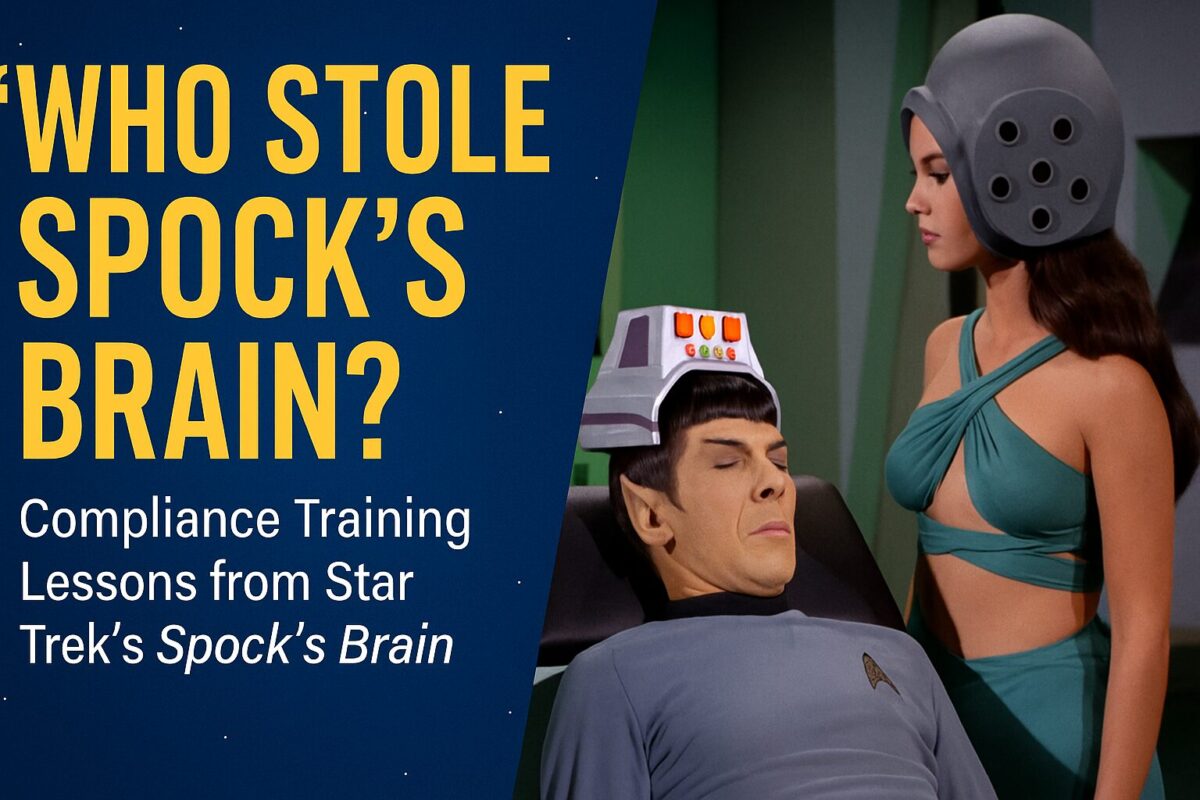
“Who Stole Spock’s Brain?” – Compliance Training Lessons from Star Trek’s Spock’s Brain

Few episodes of Star Trek: The Original Series are as infamous or as misunderstood as “Spock’s Brain.” Dismissed by many as campy science fiction, the episode nevertheless offers a wealth of practical insights for today’s compliance professionals, especially those responsible for developing, maintaining, and delivering effective compliance training programs.

Let’s boldly go where few compliance trainers have gone before and extract some valuable lessons from the Enterprise’s wild quest to retrieve Spock’s missing brain. Along the way, we will see that even the quirkiest stories can teach us how to build smarter, more resilient compliance cultures.

Setting the Stage: When the Unthinkable Happens

For those who have not watched or have not watched recently, “Spock’s Brain” begins with an incident straight out of the compliance professional’s nightmare file: an inexplicable event with catastrophic implications. An unknown intruder boards the Enterprise, incapacitates the crew, and removes Spock’s brain, leaving his body alive but inert.

Captain Kirk, Dr. McCoy, and the rest of the crew must race against time, using every available tool and resource to recover Spock’s brain before it’s too late. What unfolds is a bizarre odyssey that is part rescue mission, part leadership crucible, and, as we’ll see, a perfect metaphor for the compliance training journey.

Today, we consider five key compliance training lessons, each illustrated by a memorable scene from “Spock’s Brain.”

1. When the Unimaginable Strikes, Training Must Enable Action, Not Panic

Illustrated By: The crew awakens to chaos. Spock is incapacitated. The bridge officers, stunned and confused, look to Kirk for leadership.

Compliance Lesson: The unexpected will happen in business. Whether it’s a major regulatory change, a data breach, or a sudden ethics scandal, the initial reaction is often confusion and panic. The true test of a compliance training program is not how well it’s received during routine times, but how effectively it empowers employees to act decisively under pressure.

What should you do? Compliance training must move beyond rote memorization or check-the-box exercises. Instead, it should equip employees with the critical thinking, ethical reasoning, and procedural knowledge they need to respond effectively when the “unimaginable” occurs. Scenario-based training, simulations, and live drills can help build this kind of resilience. In short, training is about readiness, not just awareness.

2. You Can’t Train for Every Event, But You Can Teach Problem-Solving

Illustrated By: Lacking any clear leads, Kirk, McCoy, and Scotty piece together clues using technology, logic, and their collective expertise. There is no manual for “what to do when someone steals your first officer’s brain.”

Compliance Lesson: No training program can anticipate every possible scenario. Regulatory changes, market disruptions, and new types of misconduct are always around the corner. What you can train, however, is a culture of problem-solving, adaptability, and continuous learning.

What should you do? Modern compliance training should focus on building core competencies: How do we spot red flags? How do we escalate issues? Who do we call for help? By emphasizing principles over prescriptive checklists, you empower employees to adapt and innovate—even when they find themselves, metaphorically, searching for a missing piece of the puzzle.

3. Communication Bridges the Knowledge Gap

Illustrated By: The landing party discovers a society split in two: the technologically advanced women who control the planet’s systems, and the men, who live in primitive conditions below. The women possess “the knowledge,” delivered via a helmet-like teaching device, which bestows instant expertise but only temporarily.

Compliance Lesson: The episode’s iconic “teaching helmet” is a comical take on knowledge transfer, but it highlights a real challenge: bridging the gap between compliance expertise and employee understanding. Compliance training can’t simply “download” knowledge into employees’ minds; it requires communication, repetition, and reinforcement.

What should you do? Effective compliance programs use plain language, relatable stories, and multi-modal training (videos, workshops, microlearning) to make complex requirements understandable. And like the helmet, real-world learning is most powerful when it’s immediately relevant to employees’ jobs; just-in-time training, delivered at the point of need, can bridge gaps more effectively than annual courses.

4. Just-in-Time Training—When You Need It Most

Illustrated By: Faced with the daunting task of reattaching Spock’s brain, Dr. McCoy uses the teaching helmet to acquire the necessary surgical skills. He gains instant, but fleeting, expertise enough to attempt the operation, but not enough to complete it without help.

Compliance Lesson: Compliance knowledge, like McCoy’s surgical skills, is often perishable. Employees may learn something in training but forget it when months have passed or when stress levels are high. The best compliance programs recognize this and provide “just-in-time” resources, such as quick-reference guides, FAQs, and on-demand training, for when employees need to take action.

What should you do? Consider building a compliance “knowledge base” accessible to all employees, with short, targeted modules or “how-to” videos for high-risk tasks. Reinforce training with periodic reminders and prompts. And don’t be afraid to re-train in the moment; support employees when they’re “in the operating room,” not just once a year.

5. Teamwork and Psychological Safety Are the Real Secret Sauce

Illustrated By: With Spock’s brain reconnected, he awakens mid-surgery and begins to talk McCoy through the final steps. Kirk, McCoy, and Spock work together seamlessly, overcoming their limitations by relying on each other’s strengths.

Compliance Lesson: The ultimate success of the mission does not rest on the brilliance of any one individual. It is the product of a team that trusts each other, communicates openly, and isn’t afraid to admit when they’re out of their depth. Effective compliance training fosters a similar sense of psychological safety.

What should you do? Employees should feel safe asking questions, raising concerns, and admitting knowledge gaps. Training should encourage discussion and feedback, rather than relying solely on one-way lectures. When compliance becomes a shared journey, employees support each other, fill in knowledge gaps, and ultimately make better decisions, especially when the stakes are high.

Final ComplianceLog Reflections

Spock’s Brain” may not win any awards for scientific realism or dramatic subtlety, but its outlandish premise serves as a powerful allegory for the daily realities of corporate compliance training. Unexpected risks will arise. Knowledge will lapse. Sometimes, you will need to act with incomplete information and under enormous pressure.

The crew of the Enterprise prevails not because they followed a script, but because they were trained, through experience, teamwork, and relentless problem-solving, to adapt and respond to the unknown. The same should be true of your compliance training program.

The world of compliance, like the universe of Star Trek, is full of strange new worlds and unexpected dangers. As compliance professionals, we can learn much from Kirk, McCoy, and Spock, not just about courage and leadership, but about how to prepare our crews for whatever lies ahead.

A training program inspired by the lessons of “Spock’s Brain” will not only teach the rules but empower employees to act ethically and effectively when it matters most. And that, ultimately, is how we boldly go forward together.

Resources:

⁠⁠Excruciatingly Detailed Plot Summary by Eric W. Weisstein⁠⁠

⁠⁠MissionLogPodcast.com⁠⁠

⁠⁠Memory Alpha