Categories
Career Can D0

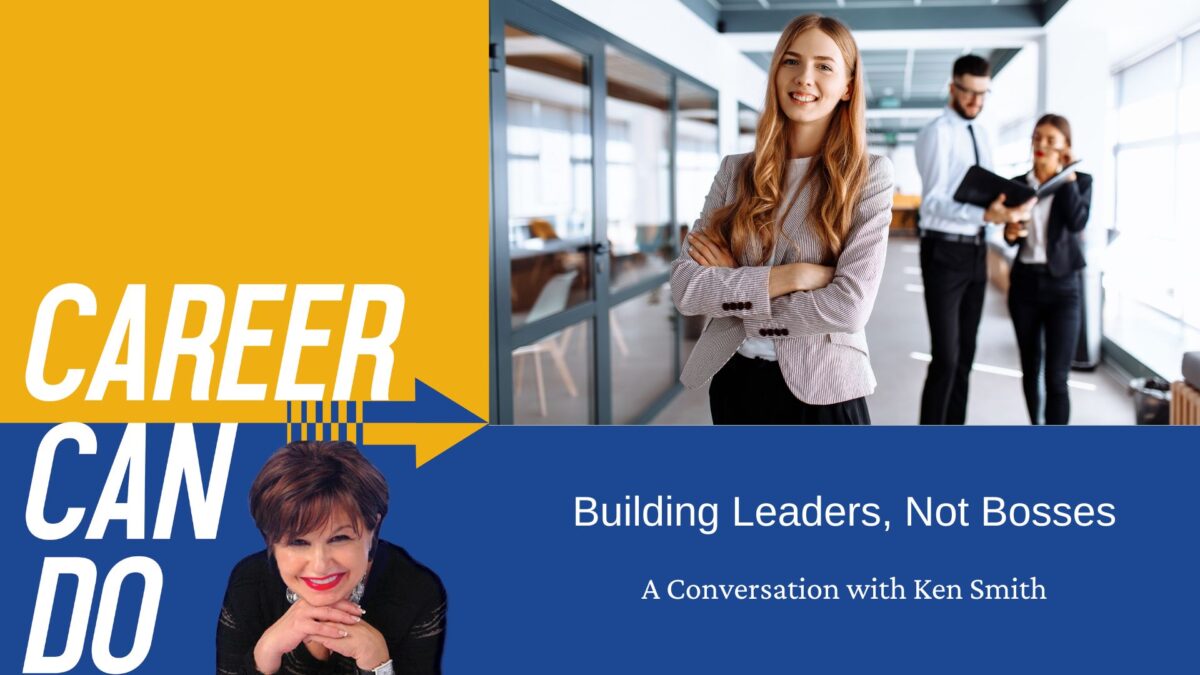
Building Leaders, Not Bosses with Ken Smith

What if the secret to great leadership wasn’t about having all the answers – but knowing the right questions to ask? In this episode of Career Can Do, host Chris Sandland sits down with Ken Smith, executive and leadership coach, founder of Bel Air Leadership, and a firm believer that leadership is less about telling and more about listening. Ken’s approach flips the old-school command-and-control style on its head, showing how “ask more, tell less” can transform not only the way you lead, but the way your team responds to you.

Ken makes the case that true leadership isn’t about being born with some mystical charisma, it’s about building a toolkit of skills, and then putting them into practice. Whether you’re guiding a seasoned team through challenges or stepping into your very first management role, the same core principles apply: earn trust by giving trust, create accountability by setting clear expectations, and lean on feedback as the gift it truly is. As Ken puts it, “trust is gained by the inch and lost by the mile,” and the little moments – your consistency, your follow-through, your empathy – add up to big leadership wins.

One of the most compelling parts of this conversation is Ken’s perspective on tough times. Anyone can lead when business is booming, but real leaders show up when the pressure’s on. He shares how staying deliberate, prioritizing people over busywork, and making space for meaningful one-on-one conversations can steady a team even in the middle of chaos. And for those who think they don’t need a coach? Ken draws a clear line between looking back to unpack the past and looking forward to sharpen your skills, making the case that even the best performers – from star athletes to seasoned executives – need someone in their corner.

If you’ve ever wondered how to stop micromanaging without losing control, how to turn feedback into fuel for growth, or how to step up from “doing the work” to truly leading, this episode is packed with insight you can put into practice right now.

Resources

Ken Smith on Belair Leadership | LinkedIn | Email: ken@belairleadership.com.

Chris Sandland on LinkedIn

Mary Ann Faremouth on the Web | X (Twitter)

Categories
2 Gurus Talk Compliance

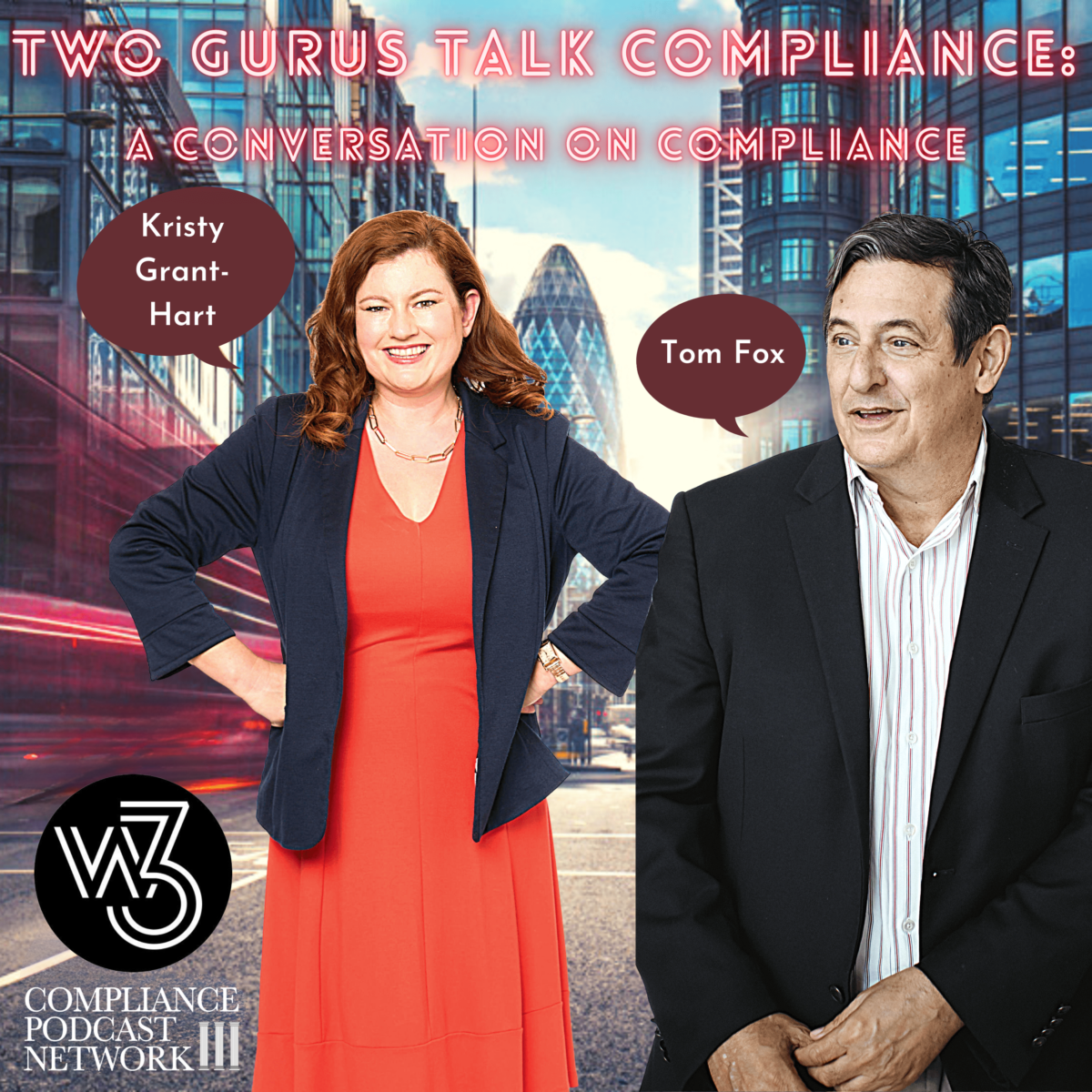
2 Gurus Talk Compliance – Episode 57 – The Tom on His Highhorse Edition

What happens when two top compliance commentators get together? They talk compliance, of course. Join Tom Fox and Kristy Grant-Hart in 2 Gurus Talk Compliance as they discuss the latest compliance issues in this week’s episode!

Stories this week include:

  • Thoughts on the Compliance Job Market (Radical Compliance)
  • A Shadow AI Crisis Is Brewing in the GC’s Office (Corporate Compliance Insights)
  • I built a company that broke people. Now I’m choosing capitalism with love (Fast Company)
  • European Union: Specific regulation of technological impact on the workforce
  • Trump is now the CEO of all US corps. (WSJ)
  • Trump tells Intel to fire CEO. Are you next? (WSJ)
  • Uber picked business over customer safety. (NYT)
  • 9th Circuit upholds SEC gag rule. (Reuters)
  • To Regulate or Not To Regulate. (Bloomberg)
  • Florida man posed as flight attendant to score dozens of free flights: officials – Fox 35 Orlando

Resources:

Kristy Grant-Hart on LinkedIn

Prove Your Worth

Tom

Instagram

Facebook

YouTube

Twitter

LinkedIn

Categories
Data Driven Compliance

Data Driven Compliance – James Tillen on the Importance of Cross-Functional Collaboration in Complying with the FTPF Offense

Welcome to Season 2 of the award-winning Data Driven Compliance. In this new season, we will look at the new Failure to Prevent Fraud offense. Join host Tom Fox as we explore this new law and how to comply with it through the lens of data driven compliance. This podcast is sponsored by konaAI. In this episode of Season 2, Tom Fox is joined by James Tillen, a member at Miller & Chevalier.

James emphasizes the critical need for cross-functional collaboration within organizations for compliance professionals. It explains that simply focusing on one’s compliance program is insufficient. Instead, engaging with various internal departments and possibly external experts is essential to effectively manage compliance risks, including those associated with the failure to prevent fraud.

Key highlights:

  • Why US multinationals need to pay attention
  • Cross-Functional Collaboration
  • Identifying Key Internal Collaborators
  • Engaging Internal and External Experts
  • Jurisdiction

Resources:

Miller & Chevalier

James Tillen on LinkedIn

New Considerations for Companies with U.K. Ties: Home Office Issues Guidance to Organisations on the Offence of Failure to Prevent Fraud

konaAI, a Covasant company

Click here for the konaAI White Paper Rethinking Compliance: Practical Steps for Adapting to the UK’s New Fraud Legislation.

Connect with Tom Fox on LinkedIn

Categories
Daily Compliance News

Daily Compliance News: August 15, 2025, The Privilege Protected Edition

Welcome to the Daily Compliance News. Each day, Tom Fox, the Voice of Compliance, brings you compliance-related stories to start your day. Sit back, enjoy a cup of morning coffee, and listen in to the Daily Compliance News. All, from the Compliance Podcast Network. Each day, we consider four stories from the business world, compliance, ethics, risk management, leadership, or general interest for the compliance professional.

Top stories include:

  • Attorney-client privilege is protected in the FirstEnergy litigation. (Reuters)
  • BCG’s Gaza project is so offensive that 4 staffers quit the company. (FT)
  • Albania (of all countries) turns to AI to fight corruption. (Politico)
  • 5th ex-Peruvian President jailed for corruption. (Al Jazeera)

You can donate to flood relief for victims of the Kerr County flooding by going to the Hill Country Flood Relief here.

Categories
Compliance Tip of the Day

Compliance Tip of the Day – How a CFO Views Compliance and Risk

Welcome to “Compliance Tip of the Day,” the podcast where we bring you daily insights and practical advice on navigating the ever-evolving landscape of compliance and regulatory requirements. Whether you’re a seasoned compliance professional or just starting your journey, we aim to provide you with bite-sized, actionable tips to help you stay on top of your compliance game. Join us as we explore the latest industry trends, share best practices, and demystify complex compliance issues to keep your organization on the right side of the law. Tune in daily for your dose of compliance wisdom, and let’s make compliance a little less daunting, one tip at a time.

Today, we conclude our multipart look at thinking through the ROI of your compliance program by considering how a CFO might well view compliance.

For more on this topic, check out The Compliance Handbook, a Guide to Operationalizing Your Compliance Program, 6th edition, which LexisNexis recently released. It is available here.

Categories
Trekking Through Compliance

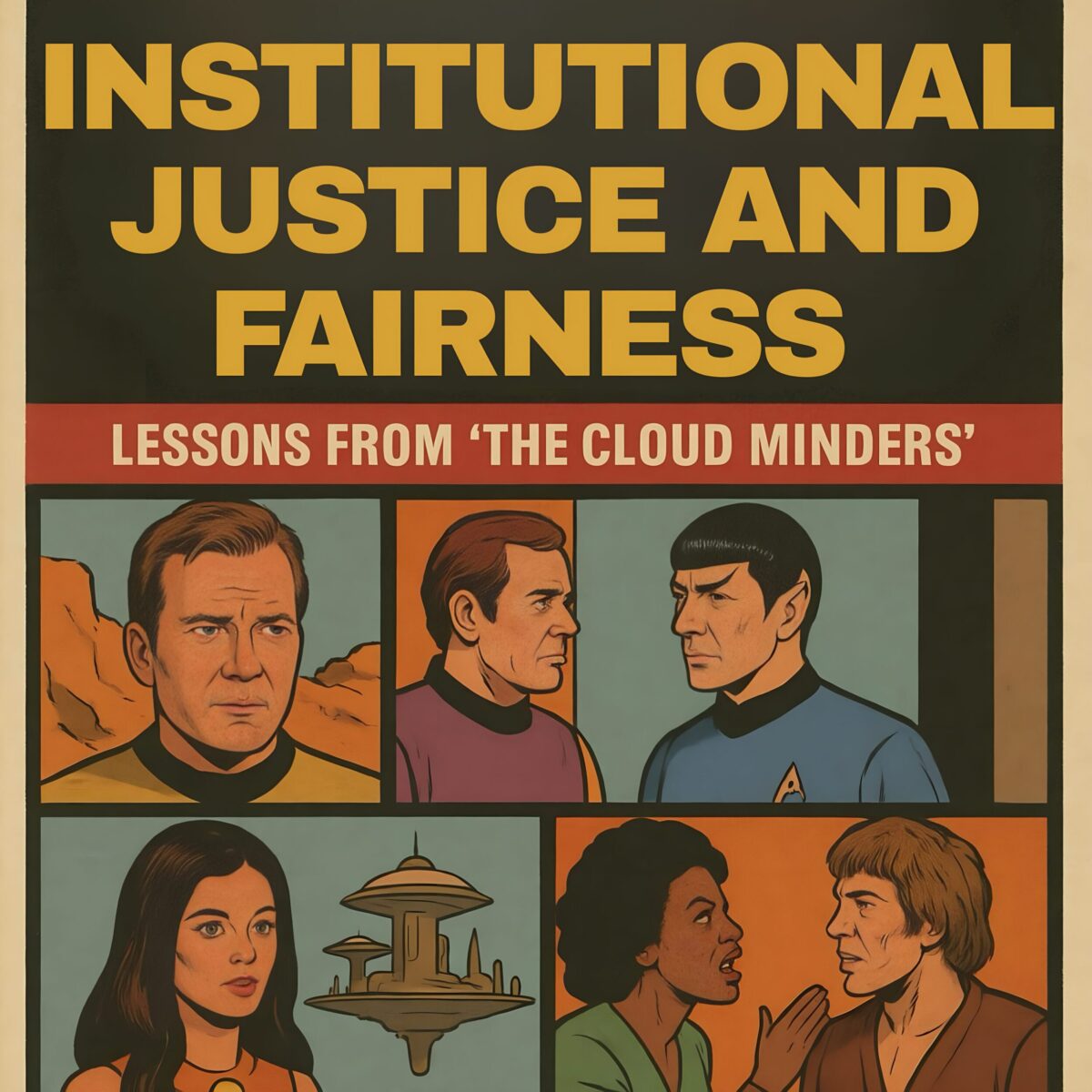
Trekking Through Compliance: Episode 75 – Bridging the Gap: Compliance Lessons on Justice and Fairness from “The Cloud Minders”

Institutional justice and institutional fairness are not abstract ideals. They are operational requirements in a corporate compliance program. They define how policies are enforced, how decisions are made, and how employees perceive the integrity of their workplace. One of the most vivid illustrations of the dangers of systemic injustice and perceived unfairness comes from Star Trek: The Original Series in “The Cloud Minders.”

From this story, we can extract five compliance lessons on institutional justice and institutional fairness.

Lesson 1: Consistency in Standards Is Non-Negotiable

Illustrated by:  The leaders of Stratos apply rules differently depending on social status.

Compliance Lesson. The DOJ has repeatedly emphasized that policies and disciplinary measures must be applied consistently.

Lesson 2: Address Root Causes, Not Just Symptoms

Illustrated by: The Troglytes’ performance and health are impaired because mining zenite exposes them to toxic vapors. The elites interpret this as proof of inferiority, ignoring the environmental cause.

Compliance Lesson. Organizations sometimes treat compliance failures as isolated misconduct rather than symptoms of deeper issues, such as inadequate training, unrealistic sales targets, or flawed incentive structures.

Lesson 3: Perceived Fairness Matters as Much as Actual Fairness

Illustrated by: Even when Kirk offers protective gear to the Troglytes, they are slow to trust his intentions. Years of mistreatment have convinced them that promises from the elites are empty.

Compliance Parallel: Employees judge compliance programs not only by their design but by how fair they feel in practice. If people believe investigations are biased or that whistleblowers will be punished, they will avoid reporting, even if the official policy says otherwise.

Lesson 4: Leadership Must Model Ethical Behavior

Illustrated by: Stratos’s leaders speak about justice and stability, but are unwilling to live under the same risks or hardships as the Troglytes. Their detachment from the reality of mining life fuels the unrest.

Compliance Lesson. Leaders who preach ethics but cut corners for themselves undermine institutional fairness. Employees take cues from the top; if executives are exempt from rules, the rest of the organization will follow suit.

Lesson 5: Dialogue and Inclusion Are Tools for Justice

Illustrated by: Spock approaches the Troglytes with genuine respect, listening to their grievances and acknowledging their intelligence. His willingness to engage earns him credibility that Stratos leaders lack.

Compliance Parallel: Institutional fairness is strengthened when employees feel heard and included in shaping solutions.

Final ComplianceLog Reflections

The Cloud Minders is more than a parable about class division; it is a warning for any institution that neglects fairness and justice. In Ardana, injustice created resentment, distrust, and rebellion. In a corporation, those same dynamics can lead to silent disengagement, hidden misconduct, and public scandal.

The DOJ’s message is clear: fairness and justice are not optional add-ons to compliance; they are the foundation of a program that works. As compliance leaders, our role is to be the “Spock” in the room, listening, respecting, and bridging divides while ensuring that the rules are fair, transparent, and consistently applied.

When we do that, we do not just comply with the DOJ’s expectations; we build organizations where people trust the system enough to make it work.

Resources:

⁠⁠Excruciatingly Detailed Plot Summary by Eric W. Weisstein⁠⁠

⁠⁠MissionLogPodcast.com⁠⁠

⁠⁠Memory Alpha

Categories
AI Today in 5

AI Today in 5: August 15, 2025, The AI as Boss Episode

Welcome to AI Today in 5, the newest addition to the Compliance Podcast Network. Each day, Tom Fox will bring you 5 stories about AI to start your day. Sit back, enjoy a cup of morning coffee, and listen in to the AI Today In 5. All, from the Compliance Podcast Network. Each day, we consider four stories from the business world, compliance, ethics, risk management, leadership, or general interest about AI.

For more information on the use of AI in Compliance programs, my new book, Upping Your Game. You can purchase a copy of the book on Amazon.com.

Categories
Blog

Institutional Justice and Fairness in Compliance: Lessons from Star Trek’s ‘The Cloud Minders’

Institutional justice and institutional fairness are not abstract ideals; they are operational requirements in a corporate compliance program. They define how policies are enforced, how decisions are made, and how employees perceive the integrity of their workplace. One of the most vivid illustrations of the dangers of systemic injustice and perceived unfairness comes from Star Trek: The Original Series in “The Cloud Minders.”

The DOJ’s 2024 Evaluation of Corporate Compliance Programs (ECCP) reinforces this point: for a compliance program to be effective, it must not only exist on paper but also operate fairly in practice. The DOJ expects companies to show that their compliance processes are applied consistently across the organization, regardless of seniority, revenue generation, or personal connections.

Why the DOJ Cares About Justice and Fairness in Compliance

In the ECCP, the DOJ focused on institutional justice and institutional fairness as key mandates for the compliance function. Why? It was rooted in practicality: a compliance program that is seen as biased or inconsistent will fail. Employees will not report misconduct, will hide mistakes, and will disengage from ethics initiatives.

Prosecutors know that when misconduct occurs in such an environment, it’s often a symptom of deeper cultural problems. That’s why, during investigations, they ask:

  • Are policies applied equally to all levels of the organization?
  • Is discipline consistent and documented?
  • Do employees believe the process is fair?
  • Has the company addressed the underlying causes of misconduct?

If the answers to these questions are unsatisfactory, the DOJ is more likely to view the compliance program as ineffective, regardless of its written policies.

The Tale 

The Enterprise is sent to the planet Ardana to collect zenite, a mineral needed to stop a plague on another world. Captain Kirk and Mr. Spock beam down to Stratos, a floating city inhabited by the planet’s elite, only to discover a deep societal divide. The surface of Ardana is worked by “Troglytes,” a laborer class forced to mine zenite under hazardous conditions, denied access to the comforts and education of Stratos.

The elites justify this arrangement as necessary for stability, while the Troglytes see it as systemic exploitation. The episode becomes a study in the consequences of entrenched inequality, distrust, and the refusal to address legitimate grievances, exactly the kinds of dynamics that can erode trust in a corporate compliance program if not addressed.

From this story, we can extract five compliance lessons on institutional justice and institutional fairness.

Lesson 1: Consistency in Standards Is Non-Negotiable

Illustrated by:  The leaders of Stratos apply rules differently depending on social status. The elite enjoy cultural and political freedoms, while Troglytes face restrictions and harsher punishments for similar conduct.

Compliance Lesson. The DOJ has repeatedly emphasized that policies and disciplinary measures must be applied consistently. If employees perceive that “rainmakers” or executives receive lighter sanctions, or none at all, for policy violations, trust in the compliance function evaporates. In The Cloud Minders, the double standard deepens resentment and drives conflict, precisely what can happen inside a company when justice is selective.

Why It Matters to DOJ: Prosecutors evaluate whether discipline is enforced “consistently across the organization, regardless of position or power.” Inconsistency is a red flag that the program is a paper exercise rather than a living system.

What should you do?

  • Establish clear, documented disciplinary protocols.
  • Apply them uniformly, with oversight from the compliance function.
  • Communicate to the workforce that no one is above the rules.

Lesson 2: Address Root Causes, Not Just Symptoms

Illustrated by: The Troglytes’ performance and health are impaired because mining zenite exposes them to toxic vapors. The elites interpret this as proof of inferiority, ignoring the environmental cause.

Compliance Lesson. Organizations sometimes treat compliance failures as isolated misconduct rather than symptoms of deeper issues, such as inadequate training, unrealistic sales targets, or flawed incentive structures. In Ardana, fixing the air quality in the mines would have solved much of the productivity gap, just as fixing systemic drivers of noncompliance prevents repeat issues.

Why It Matters to DOJ: The DOJ looks for root cause analysis after misconduct. They want to see whether the company took corrective action to address systemic issues, not just discipline the individuals involved.

What should you do?

  • Investigate not only “who” did something wrong, but “why” it happened.
  • Use findings to improve processes, incentives, and controls.
  • Share non-confidential lessons learned with the workforce to demonstrate fairness and transparency.

Lesson 3: Perceived Fairness Matters as Much as Actual Fairness

Illustrated by: Even when Kirk offers protective gear to the Troglytes, they are slow to trust his intentions. Years of mistreatment have convinced them that promises from the elites are empty.

Compliance Parallel: Employees judge compliance programs not only by their design but by how fair they feel in practice. If people believe investigations are biased or that whistleblowers will be punished, they will avoid reporting, even if the official policy says otherwise. On Ardana, the absence of trust kept both sides from engaging in good-faith solutions—something corporate leaders must avoid at all costs.

Why It Matters to DOJ: Prosecutors assess whether employees trust the compliance program enough to use it. A hotline no one calls is not evidence of a healthy culture—it may be proof of fear or cynicism.

What should you do?

  • Publicize examples where issues were raised and resolved fairly.
  • Protect whistleblowers from retaliation and make that protection visible.
  • Use employee surveys to measure trust in compliance processes.

Lesson 4: Leadership Must Model Ethical Behavior

Illustrated by: Stratos’s leaders speak about justice and stability, but are unwilling to live under the same risks or hardships as the Troglytes. Their detachment from the reality of mining life fuels the unrest.

Compliance Lesson. Leaders who preach ethics but cut corners for themselves undermine institutional fairness. Employees take cues from the top; if executives are exempt from rules, the rest of the organization will follow suit. In The Cloud Minders, the Stratos elite’s credibility collapses because they refuse to share the burdens of those they govern, a mistake no corporate leadership team should make.

Why It Matters to DOJ: The DOJ examines “tone at the top” and “conduct at the middle.” They want to see that leadership’s actions match their words and that managers reinforce the message through daily decisions.

What should you do?

  • Ensure executives participate in the same training and certifications as all employees.
  • Make leadership accountable for compliance metrics.
  • Publicly acknowledge when senior leaders are held to account for violations.

Lesson 5: Dialogue and Inclusion Are Tools for Justice

Illustrated by: Spock approaches the Troglytes with genuine respect, listening to their grievances and acknowledging their intelligence. His willingness to engage earns him credibility that Stratos leaders lack.

Compliance Parallel: Institutional fairness is strengthened when employees feel heard and included in shaping solutions. This doesn’t mean every request can be granted, but the act of listening and considering input builds trust. Just as Spock bridged the divide on Ardana, compliance leaders can bridge gaps in trust by treating all stakeholders with respect and dignity.

Why It Matters to DOJ: A compliance program is stronger when it incorporates feedback from the workforce. The DOJ favors companies that regularly assess the program’s effectiveness through interviews, surveys, and focus groups.

What should you do?

  • Include employee representatives in policy review committees.
  • Hold listening sessions for employees and other stakeholders after major incidents or policy changes.
  • Act on feasible suggestions and explain when ideas can’t be implemented.

Practical Compliance Takeaways from The Cloud Minders

  1. Apply Rules Equally: Avoid double standards by holding everyone—from the C-suite to front-line staff—to the exact requirements.
  2. Investigate Root Causes: Fix systemic issues, not just individual mistakes.
  3. Build Trust in the Process: Ensure employees perceive the program as fair and protective.
  4. Lead by Example: Leadership must model the ethical behavior expected of all.
  5. Listen and Include: Use dialogue to bridge divides and strengthen buy-in.

Final ComplianceLog Reflections

The Cloud Minders is more than a parable about class division; it is a warning for any institution that neglects fairness and justice. In Ardana, injustice created resentment, distrust, and rebellion. In a corporation, those same dynamics can lead to silent disengagement, hidden misconduct, and public scandal.

The DOJ’s message is clear: fairness and justice are not optional add-ons to compliance; they are the foundation of a program that works. As compliance leaders, our role is to be the “Spock” in the room, listening, respecting, and bridging divides while ensuring that the rules are fair, transparent, and consistently applied.

When we do that, we do not just comply with the DOJ’s expectations; we build organizations where people trust the system enough to make it work.

Resources:

⁠⁠Excruciatingly Detailed Plot Summary by Eric W. Weisstein⁠⁠

⁠⁠MissionLogPodcast.com⁠⁠

⁠⁠Memory Alpha

Categories
12 O’Clock High-a podcast on business leadership

12 O’Clock High, A Podcast on Business Leadership – Leadership in Cybersecurity and Privacy with Robert Meyers

12 O’Clock High, an award-winning podcast on business leadership, brings together stories from history, the arts, sports, movies, research, and current events to consider leadership lessons. In this episode, Tom Fox welcomes Robert Meyers, a veteran with over 30 years in cybersecurity, privacy, M&A security, and education.

The discussion spans Meyers’s vast professional journey from the early days of IT to the modern challenges and practices of data protection. They also explore the differences in cybersecurity and privacy perspectives between the US and Europe, the importance of cross-functional collaboration in organizations, and how new technologies like autonomous AI systems are reshaping security models. Meyers also shares his passion for Comic-Con and offers advice for students and new professionals considering a career in cybersecurity and privacy. The episode wraps up with insights into Meyers’s books and practical advice for integrating privacy principles and cybersecurity tools in today’s business environment.

Key highlights:

  • Robert Meyers’ Professional Background
  • Early Cybersecurity Challenges and Lessons
  • Evolution of Cybersecurity and Privacy
  • Privacy Perspectives: US vs Europe
  • Role of Executives in Cybersecurity and Privacy
  • Cross-Functional Collaboration in Privacy and Security
  • Innovative Cybersecurity Tools
  • Agentic AI and Its Implications
  • Comic-Con and Professional Insights
  • Career Advice for Aspiring Professionals

Resources:

Privacy Snippets for the Cybersecurity Professional on Amazon

Robert Meyers’ Profile on Amazon

Robert Meyers ‘on LinkedIn

Tom Fox

Instagram

Facebook

YouTube

Twitter

LinkedIn

Categories
Fox on Podcasting

Fox on Podcasting – Mastering Content Creation and Personal Branding with Dave Polykoff

Join Tom Fox as he explores the world of podcasting, and get ready to be inspired to start your podcast. In this episode, host Tom Fox welcomes Dave Polykoff, the founder of Zenpost and the Personal Brand Blueprint podcast.

Polykoff discusses the importance of content creation and personal branding for busy founders, sharing insights into how he streamlined his content creation process through Zenpost, a done-for-you content service. The conversation explores the benefits of podcasting as a business model and how to develop a distinctive hosting style. Polykoff also discusses the comprehensive use of Notion for managing content workflows and automations. The episode concludes with a discussion on the importance of having a clear mission and strategy for personal branding.

Key highlights:

  • Dave Polykoff’s Background and Zenpost
  • The Value of Podcasting for Businesses
  • Developing Your Hosting Style
  • Guest Preparation and Best Practices
  • Using Notion for Podcast Management
  • The Importance of Personal Branding

Resources:

Zenpost Website

Personal Brand Blueprint Podcast on YouTube

Zenpost on LinkedIn

Follow Dave Polykoff on:

LinkedIn

Instagram

PodMatch

Tom Fox

Instagram

Facebook

YouTube

Twitter

LinkedIn