Every compliance journey must eventually reach its reckoning —the point at which wrongdoing, however deeply embedded, must give way to accountability. In Greek tragedy, that moment comes with Orestes and Electra, the final heirs of the cursed House of Atreus.
Their story marks a transformation, from vengeance to justice, from chaos to order, from curse to compliance. It’s not just the end of a tragic dynasty; it’s the beginning of governance. And for the modern compliance professional, Orestes’ journey mirrors the evolution every organization must undergo, moving from reactive crisis management to mature, transparent, and accountable systems of justice.
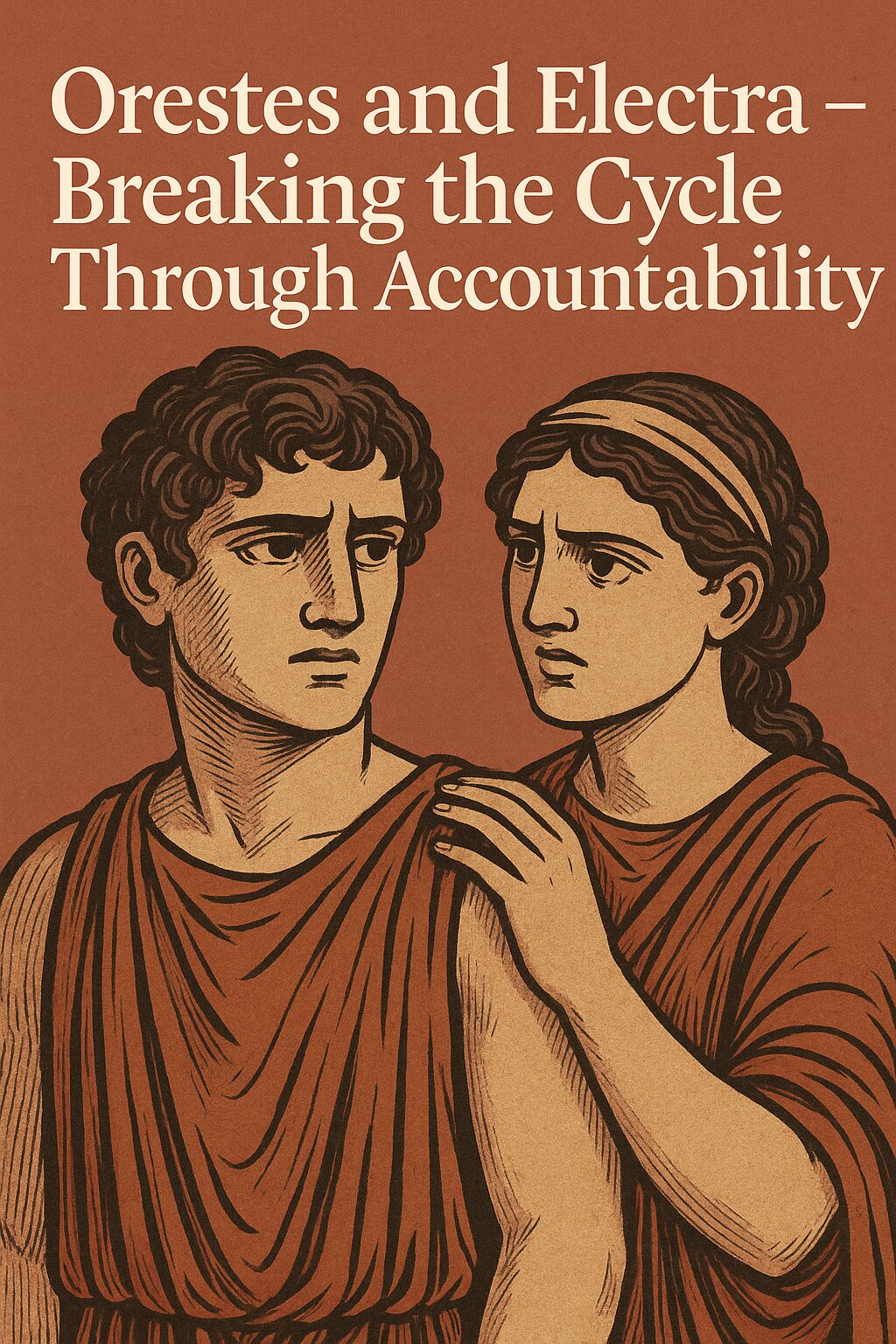
Today, we conclude our look at lessons from the House of Atreus for the 21st-century compliance profession through a review of my personal favorite, the tragedy of Orestes and Electra. Their tale was memorialized as the final play in Aeschylus’s trilogy The Oresteia, written in the 5th century BC. The Oresteia trilogy consists of three plays: Agamemnon, The Libation Bearers, and The Eumenides. They all discuss the murder of Agamemnon by Clytemnestra, the murder of Clytemnestra by Orestes, the trial of Orestes, the end of the curse on the House of Atreus, and the pacification of the Furies.
The tale of Orestes and Electra marks a transformation, from vengeance to justice, from chaos to order, from curse to compliance. It is not just the end of a tragic dynasty; it is the beginning of governance and compliance. And for the modern compliance professional, Orestes’ journey mirrors the evolution every organization must undergo —from reactive crisis management to mature, transparent, and accountable systems of justice.
In today’s Part 5, we discuss what every compliance practitioner and compliance regime must eventually face. Their journey reaches its reckoning, the point where wrongdoing, however deeply embedded, must give way to accountability.
The Last Act of the Curse
After Clytemnestra murders Agamemnon, she takes power alongside her lover, Aegisthus. Their rule, built on deceit and blood, becomes yet another chapter in the family’s curse. Orestes and his sister Electra, exiled and grieving, grow up in a world where justice has been replaced by fear and silence.
Years later, Orestes returns to Mycenae with Electra’s encouragement. Together, they plot vengeance, the killing of their mother and her consort, to avenge their father’s murder. The act fulfills the family’s grim legacy: the son kills the mother as the mother killed the father. But Orestes doesn’t find peace. Instead, he’s haunted by the Furies, ancient goddesses who punish those who shed family blood. Tormented and desperate, he seeks sanctuary in Athens, where the goddess Athena establishes the first trial by jury. The Furies prosecute, Apollo defends, and Athena casts the deciding vote. The verdict is acquittal, but not because Orestes was blameless, but because justice must evolve from vengeance to law. And just like that, the curse ends, not through violence, but through accountability.
From Retribution to Governance
What Athena did for Orestes is what modern compliance programs do for organizations: they replace personal retribution with institutional justice and institutional fairness. Before that trial, every wrong in the House of Atreus was met with revenge. Each generation avenged the last until there was no one left to save. Athena’s tribunal introduced a revolutionary idea: that justice must be impartial, procedural, and transparent.
That’s precisely the evolution every organization must undertake when it faces a scandal. At first, the instinct is vengeance: fire the bad actors, issue a statement, move on. But sustainable integrity requires something deeper: process, documentation, fairness, and continuous improvement. Orestes’ trial marks the shift from chaos to compliance.
Accountability: The End of the Curse
The word “accountability” is often misunderstood. It does not mean punishment. It means answerability, the willingness to stand before a system greater than oneself and be judged fairly. That is what Orestes did. He did not flee the Furies forever; he submitted to judgment. He participated in the process. And in doing so, he transformed justice from a personal to an institutional matter. For modern compliance officers, this is a powerful metaphor. Accountability is not about creating fear. It is about building trust. It ensures that wrongdoing is addressed through a fair, transparent process that restores, rather than destroys, culture.
The Furies as Internal Audit
The Furies are terrifying, but in the compliance world, they’re familiar. They represent the internal mechanisms of conscience and oversight, the investigations, audits, and regulators that chase wrongdoing wherever it hides. Like Orestes, many leaders try to outrun them, hoping the past won’t catch up. But true integrity doesn’t come from evasion; it comes from engagement. The companies that emerge strongest from scandal are those that face their Furies head-on, invite scrutiny, and cooperate transparently.
Think of how Siemens rebuilt its compliance function after its massive bribery scandal by embracing rigorous internal controls, external oversight, and a commitment to ethical reform. Indeed, we saw similar results based upon similar actions by both Wells Fargo and ABB. That was Orestes’ trial in corporate form, judgment accepted, redemption earned.
Electra: The Voice of Culture Renewal
Electra plays a quieter but equally vital role. She represents the voice of moral conscience, the employee who still believes in right and wrong even when everyone else has gone silent. She is the whistleblower who says, “This isn’t who we are.” The compliance champion who refuses to normalize misconduct. Without Electra’s courage, Orestes would never have acted.
Modern organizations need their Electras: employees empowered to speak, question, and persist. That’s why building a speak-up culture is the cornerstone of the 2024 DOJ Evaluation of Corporate Compliance Programs (ECCP). A company’s ability to surface issues early depends on whether it protects, informs, and celebrates those who come forward. If Orestes symbolizes accountability, Electra symbolizes cultural integrity, the belief that justice is worth pursuing even when it is dangerous.
The Birth of the Rule of Law
The trial of Orestes is one of the most significant moments in Western moral thought because it replaces vengeance with the rule of law. It is also the mythological birth of compliance, where emotion gives way to ethics, and chaos yields to process. Athena’s message is timeless: “No one person may decide justice alone. We must build systems that outlast individuals.”
That is the essence of compliance governance. Codes of conduct, reporting channels, disciplinary processes, and training all exist for one reason: to ensure that justice does not depend on personalities. Orestes’ acquittal didn’t erase his crime. It institutionalized accountability so the next generation wouldn’t repeat his curse. For corporate culture, that’s exactly what post-crisis reform does: it replaces vengeance with systems and outrage with order.
Compliance as Redemption
Orestes’ story ends not in punishment, but in purification. Athena orders the Furies to become the Eumenides, “the Kindly Ones.” Their role shifts from persecutors to protectors, guarding the moral order they once avenged. That transformation is the perfect metaphor for what a compliance function can become after a crisis. At first, compliance feels punitive, investigators, auditors, monitors. But over time, as systems mature and transparency grows, compliance evolves into something restorative: a protector of trust, reputation, and ethical resilience. The same forces that once punished now preserve. That is redemption for organizations and for people.
Lessons in Modern Compliance Transformation
What can compliance professionals learn from Orestes’ journey? The parallels are striking.
- Justice Must Be Systemic, Not Personal. Vengeance satisfies emotion but destroys culture. Justice through process restores legitimacy. For the compliance professional, the ECCP demands institutional fairness, which builds procedural fairness into investigations. Transparency and due process protect both the company and its people.
- Accountability Ends the Cycle. Denial perpetuates dysfunction. Facing wrongdoing directly, even publicly, is the first step to rebuilding credibility. You should conduct root cause analyses after every violation. Use findings to strengthen systems, not just assign blame.
- Protect the Electras. Ethical renewal begins with those who dare to speak truth.
- As a compliance professional, you must empower whistleblowers by providing visible protections, feedback loops, and cultural recognition.
- Embrace Your Furies. Auditors, regulators, and monitors are not enemies; instead, they should be seen as accountability partners. As counterintuitive as it may seem, you should treat oversight as an opportunity. Transparency with regulators builds long-term trust.
- Transform Enforcement into Ethics. The end goal of compliance is not punishment, it is not even detection; it is prevention. Every compliance professional should use disciplinary outcomes as learning opportunities. Celebrate integrity as publicly as you punish misconduct.
From Tragedy to Transformation
The House of Atreus began with arrogance, deception, and retaliation. It ended with something extraordinary, the birth of justice as a system. Each generation’s failure taught a lesson:
- Tantalus showed that leadership without humility corrupts.
- Pelops revealed the dangers of winning through corruption.
- Atreus and Thyestes exposed the poison of internal retaliation.
- Agamemnon and Clytemnestra warned of power without accountability.
- Orestes and Electra finally demonstrated how accountability, due process, and transparency can cleanse even the deepest cultural stain.
That arc is the same one every mature compliance program follows from reaction to reflection, from punishment to prevention, from crisis to culture.
From Curse to Compliance
The story of Orestes is not about vengeance; rather, it is about evolution. He did not end the curse by denying it. He ended it by confronting it, submitting to judgment, and accepting that systems, not individuals, define justice. That is the ultimate compliance insight. You can’t train your way out of a cultural problem. You can’t manage ethics through charisma. You must build structures that embed accountability into every decision, every leader, and every process.
Orestes reminds us that compliance is not just about preventing misconduct; it is about healing organizations. It is about helping companies move from the chaos of reaction to the clarity of governance, from fear to fairness, from silence to transparency, from vengeance to virtue. Because in the end, every organization has its own House of Atreus somewhere in its history. The question is not whether the curse exists. The question is whether we, like Orestes, will have the courage to face it and the wisdom to replace it with justice that lasts.