Categories
Blog

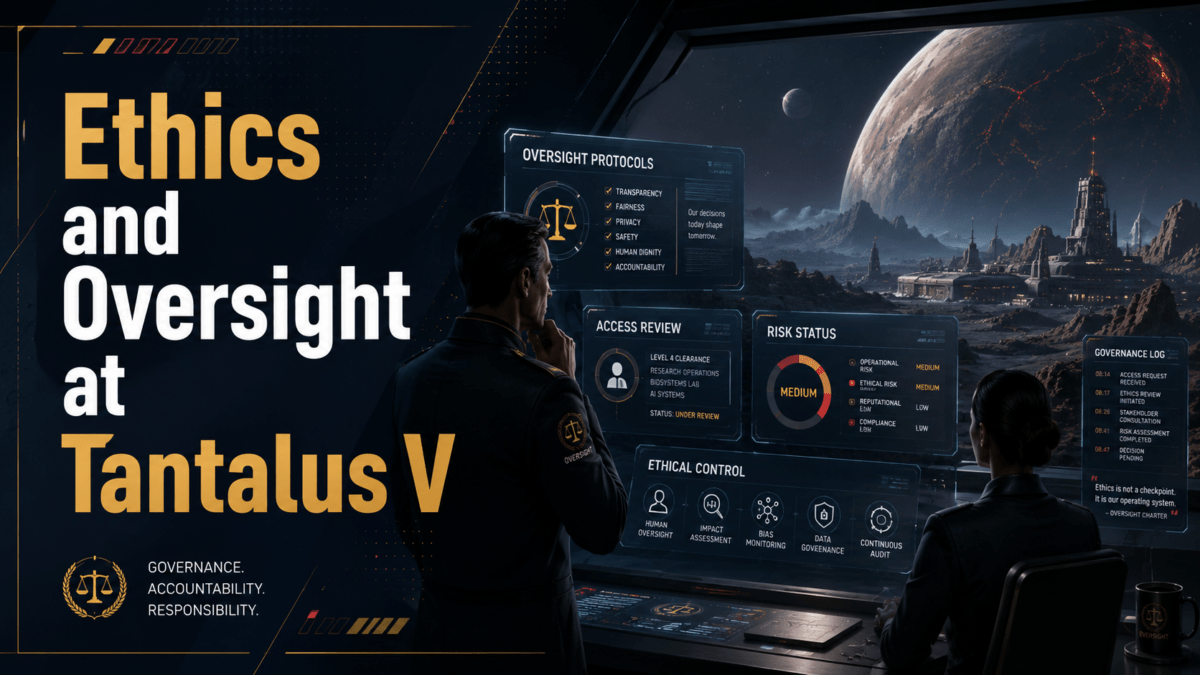
Dagger of the Mind: Ethics and Oversight at Tantalus V

Show Summary

Today, we journey to Tantalus V, home to a facility for the criminally insane, where a celebrated doctor, a controversial device, and a desperate escapee converge into a chilling tale of manipulation, unethical experimentation, and failed oversight. Dagger of the Mind is more than a story about a rogue psychiatrist. It serves as a cautionary tale for every compliance professional navigating the complexities of ethics, whistleblower protections, and corporate accountability.

We unpack six key lessons for today’s compliance landscape, using this Star Trek episode to explore the human rights implications of innovation, the importance of informed consent, and the non-negotiable need for robust oversight mechanisms.

Key Highlights and Compliance Case Illustrations

1. Whistleblower Protection—Listen When Someone Escapes the Box

Illustrated by: Simon van Gelder, smuggling himself aboard the Enterprise to escape the abuse at Tantalus V.

Van Gelder risks everything to report misconduct, yet he’s initially treated as a threat—not a truth-teller. His trauma and desperation illustrate what happens when whistleblowers are ignored or presumed unstable. Compliance officers must establish safe and credible pathways for internal reporting, and leaders must be trained to respond with empathy rather than disbelief.

2. Oversight and Accountability—Who Guards the Guardians?

Illustrated by: Dr. Tristan Adams using the neural neutralizer to control and silence dissent.

Adams is a textbook example of what happens when powerful individuals operate without meaningful oversight. His esteemed reputation masks his abuse of power. Every organization must implement regular audits, anonymous feedback loops, and third-party evaluations to ensure that even the “untouchables” remain accountable.

3. Human Rights and Ethical Treatment—Compliance Begins with Humanity

Illustrated by: The neural neutralizer erasing minds and reducing patients to emotional voids.

The weaponization of mental health treatment in this episode is a stark warning about the technology used without ethical restraint. Whether it’s surveillance, AI, or employee monitoring tools, companies must evaluate the human impact of every system. Dignity and consent are the foundation of all ethical compliance frameworks.

4. Informed Consent—Misuse of Technology Without Disclosure

Illustrated by: Kirk unknowingly subjected to memory manipulation through the neural neutralizer.

Kirk’s experience under the device demonstrates the risk of deploying tools without informed consent. In modern terms, this equates to unethical data collection, misleading contractual clauses, or hidden surveillance programs. Compliance programs must ensure transparency and fairness in every tech-enabled interaction.

5. Due Process and Fair Trials—Don’t Assume Guilt Without Review 

Illustrated by: Van Gelder’s deteriorated condition and absence of any formal grievance process.

Once van Gelder begins to unravel, no formal process is in place to evaluate his claims or provide medical advocacy. In today’s corporate environment, this underscores the importance of adhering to due process during internal investigations, including access to counsel, neutral adjudication, and accommodations for mental health when necessary.

6. Corporate Social Responsibility—Reputation is No Substitute for Integrity 

Illustrated by: Dr. Adams’ public image as a reformer, masking his private abuses.

Adams is held up as a pioneer, but beneath the surface lies a profound history of misconduct. This serves as a reminder that a shiny ESG report or CSR campaign cannot substitute for real operational integrity. Compliance officers must look beyond external branding and delve into actual practices and their impact.

Final ComplianceLog Reflections

Dagger of the Mind is not just a metaphor for the dangers of unethical control; it is a metaphor for the risks of unethical control. It is a manual for why compliance must protect the vulnerable, investigate the credible, and challenge authority when necessary. Dr. Adams built a system that silenced his critics. Compliance must create systems that amplify them.

Resources:

Excruciatingly Detailed Plot Summary by Eric W. Weisstein

MissionLogPodcast.com

Memory Alpha

Categories
Daily Compliance News

Daily Compliance News: June 9, 2026, The Big Bang Edition

Welcome to the Daily Compliance News. Each day, Tom Fox, the Voice of Compliance, brings you compliance-related stories to start your day. Sit back, enjoy a cup of morning coffee, and listen in to the Daily Compliance News. All, from the Compliance Podcast Network. Each day, we consider four stories from the business world, compliance, ethics, risk management, leadership, or general interest for the compliance professional.

Top stories include:

  • New charges against FirstEnergy execs. (Cleveland.com)
  • The court orders answers on why there are no tariff refunds. (NYT)
  • Hormuz Crisis and global compliance. (WSJ)
  • A Big Bang reversal of Brexit. (FT)

To learn about the intersection of Sherlock Holmes and the modern compliance professional, check out Tom’s latest book, The Game is Afoot-What Sherlock Holmes Teaches About Risk, Ethics and Investigations on Amazon.com.

Categories
Trekking Through Compliance

Trekking Through Compliance: Dagger of the Mind and Oversight

In this episode of Trekking Through Compliance, we consider the episode “Dagger of the Mind,” which aired on November 3, 1966, with a Star Date of 2715.1.

In this episode, we journey to Tantalus V, home to a facility for the criminally insane, where a celebrated doctor, a controversial device, and a desperate escapee converge into a chilling tale of manipulation, unethical experimentation, and failed oversight. Dagger of the Mind is more than a story about a rogue psychiatrist; it’s a cautionary tale for every compliance professional navigating the complexities of ethics, whistleblower protections, and corporate accountability. We unpack the key lessons for today’s compliance landscape, using this Star Trek episode to explore the human rights implications of innovation, the importance of informed consent, and the non-negotiable need for robust oversight mechanisms.

Story

The Enterprise makes a supply run to planet Tantalus V, a colony where the criminally insane are confined for treatment. The facility’s director is Dr. Tristan Adams, a psychiatrist famous for advocating more humane treatment of such patients. After the Enterprise delivers supplies and receives cargo from Tantalus, a man emerges from the container taken aboard and assaults a technician. Reaching the bridge, the intruder demands asylum, but Spock subdues him with a Vulcan nerve pinch. In Sickbay, the intruder identifies himself as Simon van Gelder, and a computer check reveals that he is not a patient but Dr. Adams’ assistant.

Gelder becomes increasingly frantic on the Enterprise van, warning that the landing party is in danger. Spock learns that the neural neutralizer can empty a mind of thoughts, leaving only an unbearable feeling of loneliness, and that Adams has been using it on inmates and staff to regain control of their minds.

Kirk tests the neutralizer on himself, with Noel as the control. Adams appears, overpowers Noel, seizes the controls, increases the neutralizer’s intensity, and convinces Kirk that he has been madly in love with Noel for years. Adams inadvertently reactivates the neural neutralizer, emptying his mind and killing him. On the Enterprise, Kirk is informed that van Gelder has destroyed the neural neutralizer. McCoy is surprised that loneliness could be lethal, but Kirk, after his experience, is not.

Key highlights:

1. Whistleblower Protection—Listen When Someone Escapes the Box

🖖Illustrated by: Simon van Gelder, smuggling himself aboard the Enterprise to escape the abuse at Tantalus V.

Van Gelder risks everything to report misconduct, yet he’s initially treated as a threat rather than a truth-teller. His trauma and desperation illustrate what happens when whistleblowers are ignored or presumed unstable. Compliance officers must establish safe and credible pathways for internal reporting, and leaders must be trained to respond with empathy rather than disbelief.

2. Oversight and Accountability—Who Guards the Guardians?

🖖Illustrated by: Dr. Tristan Adams using the neural neutralizer to control and silence dissent.

Adams is a textbook example of what happens when powerful individuals operate without meaningful oversight. His esteemed reputation masks his abuse of power. Every organization must implement regular audits, anonymous feedback loops, and third-party evaluations to ensure that even the “untouchables” remain accountable.

3. Human Rights and Ethical Treatment—Compliance Begins with Humanity

🖖Illustrated by: The neural neutralizer erasing minds and reducing patients to emotional voids.

The weaponization of mental health treatment in this episode is a stark warning about the technology used without ethical restraint. Whether it’s surveillance, AI, or employee monitoring tools, companies must evaluate the human impact of every system. Dignity and consent are the foundation of all ethical compliance frameworks.

4. Informed Consent—Misuse of Technology Without Disclosure

🖖Illustrated by: Kirk unknowingly subjected to memory manipulation through the neural neutralizer.

Kirk’s experience under the device demonstrates the risk of deploying tools without informed consent. In modern terms, this equates to unethical data collection, misleading contractual clauses, or hidden surveillance programs. Compliance programs must ensure transparency and fairness in every tech-enabled interaction.

5. Due Process and Fair Trials—Don’t Assume Guilt Without Review

🖖Illustrated by: Van Gelder’s deteriorated condition and absence of any formal grievance process.

Once van Gelder begins to unravel, no formal process is in place to evaluate his claims or provide medical advocacy. In today’s corporate environment, this underscores the importance of due process during internal investigations, including access to counsel, neutral adjudication, and mental health accommodations when necessary.

6. Corporate Social Responsibility—Reputation is No Substitute for Integrity

🖖Illustrated by: Dr. Adams’ public image as a reformer, masking his private abuses.

Adams is held up as a pioneer, but beneath the surface lies a profound history of misconduct. This serves as a reminder that a shiny ESG report or CSR campaign cannot substitute for real operational integrity. Compliance officers must look beyond external branding and delve into actual practices and their impact.

Final Starlog Reflections

Dagger of the Mind is not just a metaphor for the dangers of unethical control—it’s a manual for why compliance must protect the vulnerable, investigate the credible, and challenge authority when necessary. Dr. Adams built a system that silenced his critics. Compliance must create systems that amplify them.

Resources:

Excruciatingly Detailed Plot Summary by Eric W. Weisstein

MissionLogPodcast.com

Memory Alpha

Categories
AI Today in 5

AI Today in 5: June 9, 2026, The OpenAI Files to go Public Edition

Welcome to AI Today in 5, the newest addition to the Compliance Podcast Network. Each day, Tom Fox will bring you 5 stories about AI to start your day. Sit back, enjoy a cup of morning coffee, and listen in to AI Today In 5. All, from the Compliance Podcast Network. Each day, we consider five stories from the business world, compliance, ethics, risk management, leadership, or general interest about AI.

Top AI stories include:

  1. AI-ready compliance for reg tech. (FinTechGlobal)
  2. AI agents under antitrust scrutiny. (NYT)
  3. Procurement and AI governance. (Observer.com)
  4. Is your bank ready for Agentic AI? (OpenTextBlog)
  5. Transparency is key for AI use in healthcare. (Ohio.Edu)

For more information on the use of AI in compliance programs, Tom Fox’s new book, Upping Your Game, is available. You can purchase a copy of the book on ⁠Amazon.com⁠.

To learn about the intersection of Sherlock Holmes and the modern compliance professional, check out Tom’s latest book, The Game is Afoot-What Sherlock Holmes Teaches About Risk, Ethics and Investigations on ⁠Amazon.com⁠.

Categories
Everything Compliance - Shout Outs and Rants

Everything Compliance: Shout Out & Rants – New Season, New Host and New Lineup

Welcome to a revamped Everything Compliance Shout Outs and Rants. We have a new host, Adam Turteltaub, and a new panelist, Rebecca Walker, who joins returning regulars Matt Kelly, Jonathan Armstrong, and Karen Moore for the next iteration of Everything Compliance Shout Outs and Rants.

  • Adam thanks Tom Fox, critiques his own timing, and notes Pope Leo XIV’s AI encyclical urging attention to human factors.
  • Rebecca praises Georgetown University’s Jesuit values—“men and women for others” and cura personalis—as a reminder that compliance is about values and culture, not just enforcement.
  • Matt echoes interest in the Pope’s encyclical, criticizes President Trump’s comments about the Pope, and cites Amazon’s warning against gaming internal AI leaderboards, arguing companies should prioritize productive outcomes over measuring AI usage.
  • Karen describes her gym’s behavior memo and criticizes the shift toward enforcing it on members.
  • Jonathan discusses the SNP embezzlement case involving Peter Murrell and related allegations around Nicola Sturgeon, highlighting compliance lessons: segregation of duties, conflicts of interest, whistleblowers, and culture.

Everything Compliance Shout-Outs and Rants is a production of the Compliance Podcast Network.

Categories
Innovation in Compliance

Innovation in Compliance: Rethinking SpeakUp: UX, Trust, and AI in Whistleblowing and Investigations with Tim Morss

Innovation comes in many areas, and compliance professionals need to not only be ready for it but also embrace it. Join Tom Fox, the Voice of Compliance, as he visits with top innovative minds, thinkers, and creators in the award-winning Innovation in Compliance podcast. In this episode,  host Tom visits with Tim Morss, CEO at SpeakUp, about the evolution of speak-up systems from the employee perspective.

Morss describes his background in compliance technology and SpeakUp’s global footprint, emphasizing that employee expectations favor frictionless, mobile-first, intuitive reporting with transparency and feedback over 800-number hotlines and complex forms. He notes common program gaps: hard-to-find reporting channels, poor mobile experiences, overreliance on telephony (especially problematic for non-English speakers), insufficient guidance on what to report, and weak trust due to lack of follow-up and perceived inaction. They consider generational preferences, privacy-aware deployment, such as QR code placement, and AI use cases such as multilingual voice intake for illiterate supply-chain workers, while cautioning against unsafe AI practices and autonomous decision-making. Morss highlights investigative management as a major opportunity beyond basic case repositories and forecasts greater AI-driven integration with in-house systems amid geopolitical and regulatory divergence.

Key highlights:

  • Employee Expectations Shift
  • Common SpeakUp Mistakes
  • Trust and Anti-Retaliation
  • Gen Z Reporting Channels
  • AI Voice for Workers
  • One Practical CCO Tip

Resources:

Connect with Tim Morss on LinkedIn

SpeakUp

Innovation in Compliance was recently honored as the Number 4 podcast in Risk Management by 1,000,000 Podcasts

Categories
Blog

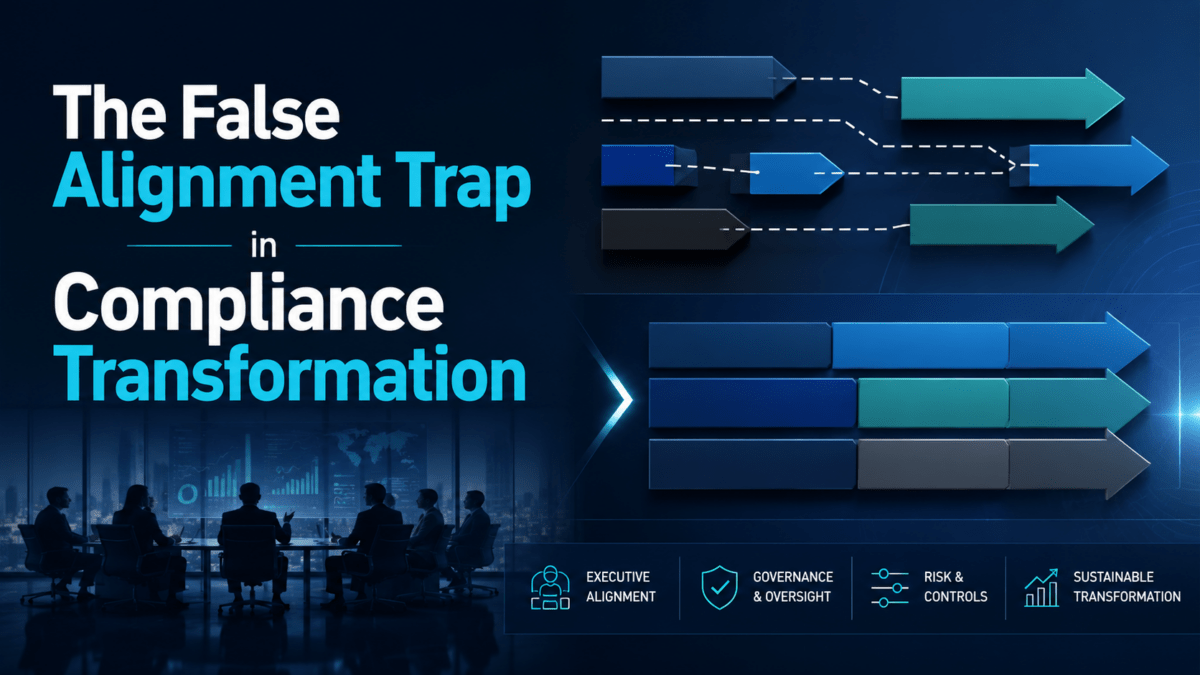
The False Alignment Trap in Compliance Transformation

A major compliance initiative rarely fails because the Chief Compliance Officer (CCO) did not work hard enough. It usually fails because the organization never reached a true agreement on what the initiative was supposed to accomplish.

That is the core lesson from The False Alignment Trap by Julia Dhar, Kristy R. Ellmer, and Philip Jameson. The authors argue that many change efforts fail because senior leaders believe they agree on the “why,” “what,” and “how” of change when, in fact, they do not. A stitched-together flower is an apt metaphor for corporate change: from a distance, the initiative may look whole; up close, it may be held together by fragile threads.

For the CCO instituting a major compliance initiative, this insight is critical. Whether the project is a global third-party risk overhaul, a new sanctions screening program, an AI governance framework, a speak-up culture campaign, or a full redesign of the compliance operating model, the CCO cannot settle for polite nods around the executive table. The CCO must secure true agreement.

The authors frame the three questions every change program must answer: why are we changing, what are we changing, and how will the change occur? It also makes an important distinction between “alignment” and “agreement.” Alignment may mean that executives are not actively blocking one another. An agreement means leaders have made a detailed and explicit compact that allows them to move together and hold one another accountable. That distinction should be posted on every CCO’s wall.

Why This Matters to Compliance

A major compliance initiative always changes more than the compliance department. It changes how a sales function approves intermediaries. It changes how procurement selects vendors. It changes how finance reviews payments. It changes how HR handles discipline and incentives. It changes how legal, internal audit, cybersecurity, operations, and the business share data. It may change who can approve a deal, how quickly a transaction can move, and what documentation must be in place before revenue is booked. That means compliance transformation is not simply a compliance project. It is an enterprise change project.

The Department of Justice’s 2024 Evaluation of Corporate Compliance Programs (ECCP) asks three fundamental questions: whether the program is well designed, whether it is applied earnestly and in good faith through adequate resources and empowerment, and whether it works in practice. DOJ also asks whether senior management has articulated standards clearly, disseminated them in unambiguous terms, and demonstrated adherence by example. Those expectations cannot be met if the C-suite is only “conceptually aligned” on compliance.

A CCO may believe the company has agreed to strengthen compliance. The CEO may believe the initiative is about satisfying the board. The CFO may believe it is about reducing investigation costs. The head of sales may believe it is about avoiding bad distributors but not slowing growth. The general counsel may believe it is about reducing enforcement exposure. Operations may believe it is another documentation exercise. HR may believe it is about training completion rates. Everyone says yes. Everyone means something different. That is the false alignment trap.

The First Lesson: Never Launch on Slogans Alone

Compliance leaders love phrases such as “culture of compliance,” “tone at the top,” “risk-based approach,” “speak-up culture,” and “doing business the right way.” These phrases are useful, but they are not implementation plans. The authors warn that executives often think they agree because their conversations are insufficiently specific. Leaders may agree on a broad goal, but disagree sharply on the levers, trade-offs, timeline, funding, and operational consequences.

For a CCO, this means “we need a stronger third-party program” is not enough. The leadership team must agree on what that means in practice. Does it mean fewer third parties? More due diligence? More audits? Centralized onboarding? Automated screening? New contractual rights? Mandatory business justification? Enhanced payment controls? A right to terminate non-responsive intermediaries? A slower sales cycle in high-risk markets? Until those questions are answered, the CCO does not have agreement. The CCO has a slogan.

The Second Lesson: Silence Is Not Commitment

One of the most dangerous moments in compliance transformation is the executive meeting where everyone nods. The authors describe the “false consensus effect,” where leaders overestimate the extent to which others share their beliefs. It also describes the tendency of executives to pretend to agree rather than surface disagreement. In one example, executives used vague phrases such as “I am aligned,” “partly aligned,” and “conceptually aligned,” even though real disagreement remained unresolved.

Compliance professionals see this all the time. A regional president says, “We fully support the new due diligence process.” What she may mean is, “We support it unless it slows down strategic distributors.” A sales leader says, “We support compliance training.” What he may mean is, “We support it as long as it does not take people out of the field during the quarter.” A procurement leader says, “We support vendor controls.” What he may mean is, “We support them for new vendors, but not for legacy vendors.”

The CCO’s job is to make those reservations visible before launch. That does not mean creating conflict for conflict’s sake. It means creating a process where disagreement becomes a source of better design.

The Third Lesson: Invite Dissent Early

The authors recommend provoking an early exchange. Leaders should write down what they agree with, what they disagree with, and what they are unsure about. The authors specifically note that written reactions can reduce groupthink. They also recommend asking questions that invite contrary views, such as “What could go wrong with this approach?”

This is directly applicable to compliance. Before launching a major compliance initiative, the CCO should ask each executive to answer, in writing:

What risk are we trying to reduce?

What business process will this initiative change?

What are you worried this initiative will disrupt?

What resources will your function need?

What decisions are you willing to give up or share?

What part of this proposal do you not support?

Where do you believe compliance is underestimating the operational impact?

These questions are uncomfortable. That is the point. A compliance initiative that cannot survive executive-level dissent in a planning meeting will not survive business-level resistance during implementation.

The Fourth Lesson: Deferred Agreement Becomes Compliance Debt

The authors warn against the idea that leaders can “sort out the details later.” That may work for small experiments, but the authors argue that it is dangerous for transformative organizational change because vague or contradictory premises create confusion, delay, and employee frustration. They describe deferred agreement as a debt that leaders expect to repay quickly but often never repay at all. For compliance, deferred agreement is especially costly.

When the CCO launches without a clear executive agreement, the business will find the gaps. If sales and compliance disagree on third-party approval standards, the business will escalate every hard case. If finance and compliance disagree on payment controls, exceptions will multiply. If HR and legal disagree on discipline standards, investigations will produce inconsistent outcomes. If IT and compliance disagree on data ownership, monitoring dashboards will never mature. The result is not simply inefficiency. It is a control failure.

A CCO should treat unresolved executive disagreement as a known risk. It should be tracked, assigned, escalated, and resolved before the initiative moves from design to deployment.

The Fifth Lesson: Watch for the Three Failure Modes

The authors identify three consequences of false alignment: paralysis, hyperactivity, and tunnel vision. These are also classic symptoms of a failing compliance initiative.

Paralysis occurs when teams are stuck between competing executive priorities. In compliance, this looks like endless working groups, repeated risk assessments, draft policies that never finalize, and technology projects that remain in “requirements gathering” for months.

Hyperactivity occurs when teams launch too many initiatives to please too many stakeholders. In compliance, this looks like a dozen training campaigns, multiple dashboards, overlapping third-party reviews, new certifications, new attestations, and new committees, but no meaningful risk reduction.

Tunnel vision occurs when teams make progress on the wrong thing. In compliance, this may mean achieving 100% training completion while employees still do not know how to raise concerns. It may mean onboarding vendors faster while missing beneficial ownership risk. It may mean closing investigations more quickly while weakening root cause analysis.

The CCO should use these three symptoms as early warning indicators. If the initiative is stuck, too busy, or moving in the wrong direction, the problem may not be execution. It may be false alignment at the top.

Lessons in Building True Agreement for a Compliance Initiative

The authors offer a five-step path to true agreement: set clear parameters, provoke an early exchange, have a substantive debate, reach a formal verdict, and send a unified message. That framework can be translated directly into a CCO playbook.

  1. Set clear parameters. The CCO should define the decision rights before the project begins. Who decides the risk appetite? Who approves the budget? Who owns business process changes? What decisions require CEO approval? What issues go to the board? What happens if a regional business leader disagrees?
  2. Provoke an early exchange. The CCO should require written input from the CEO, CFO, general counsel, CHRO, CIO, internal audit, procurement, and key business leaders. This is where hidden objections should surface.
  3. Have a quality debate. The CCO should hold one-on-one conversations with executives before the group decision meeting. The point is not to lobby for superficial support. The point is to understand red lines, trade-offs, and operational realities.
  4. Come to a formal verdict. The authors recommend asking for each individual’s agreement, documenting the decision, and creating a formal record of the agreed terms. For a compliance initiative, this should become a written executive charter. It should specify scope, budget, timeline, metrics, decision rights, business obligations, and escalation paths.
  5. Send a unified message. The authors warn against each executive’s team receiving its own version of events. Instead, the decision should be broadcast simultaneously in a single format to everyone who needs to know. For compliance, this is essential. Employees should hear one message: this is why we are changing; this is what will change; this is what will not change; this is who owns what; and this is how success will be measured.

The bottom line is clear. A major compliance initiative is not successful because the CCO announces it, the board approves it, or the executive team says it is “aligned.” It is successful when the company reaches true agreement on the risk, the change, the trade-offs, the ownership, and the evidence of effectiveness.

For the compliance professional, The False Alignment Trap provides a powerful reminder: do not launch a transformation on implied consent. Build the compact first. Then execute.