Categories
Blog

A Textbook Declination: Lessons Learned from the USRA Declination

In the fast-moving world of enforcement actions and corporate misconduct, we rarely get an actual “bottle episode” of compliance—a neatly wrapped case that functions almost like a compliance case study come to life. That is precisely what we see in the recent declination issued to the Universities Space Research Association (USRA), a nonprofit organization working with NASA on advanced scientific research. The Declination is found here.

This declination tells us as much about what to do right as it does about what went wrong. USRA’s prompt and resolute response to employee misconduct provides a blueprint for companies, regardless of size, to attain the ideal result: a DOJ declination. This decline in the Trump Administration’s second term provided crucial lessons for compliance professionals.

The Story: Export Controls and a Rogue Employee

The facts are obvious. Between April 2017 and September 2020, USRA employee Jonathan Soong used his position to oversee export compliance and sell restricted software and source code to Beihang University in China. Mr. Soong did not simply mishandle sensitive materials; he willfully bypassed export laws, concealed his actions, and even embezzled from USRA in the process. Soong pleaded guilty to violating export control laws in connection with secretly funneling sensitive aeronautics software to a Beijing university.

But here is the key takeaway: once USRA learned of the misconduct, they acted fast. They alerted NASA. They conducted an internal investigation. They self-reported to the Department of Justice within days. They cooperated fully. And in the end, the DOJ rewarded them, not with a fine, but with a complete declination.

The Power of Prompt Self-Disclosure

USRA’s leadership did not wait to see if the issue would disappear or downplay it internally. Instead, they engaged with enforcement agencies early and often. This fits squarely within the DOJ’s National Security Division Guidance, which outlines how voluntary self-disclosure, cooperation, and timely remediation can mitigate or eliminate penalties.

Let’s be clear: this was a national security matter, not just a regulatory breach. The software involved may have had potential military applications, making USRA’s response all the more commendable and critical.

Internal Controls and Oversight: Where the Breakdown Happened

As much as this is a story of compliance success, it is also a reminder that internal controls must work in practice, not just on paper. There were three key control failures:

  1. Export compliance oversight was left to the same employee who committed the fraud.
  2. Internal monitoring failed to detect red flags.
  3. Supervisory negligence enabled the misconduct to continue for three years.

One of Mr. Soong’s supervisors was eventually disciplined or terminated. However, the lesson is that even well-designed controls fail when not executed or appropriately monitored.

What Made This Declination Possible?

  1. Voluntary, timely self-disclosure within days of learning of the misconduct.
  2. When the USRA discovered potential wrongdoing, they didn’t hesitate; they immediately self-reported the issue to NASA and the Department of Justice. This type of proactive disclosure is precisely what the DOJ expects when evaluating a company’s response to misconduct. The timeliness demonstrates a functioning internal control system and an ethical culture prioritizing transparency. Rather than hiding behind bureaucracy or launching a months-long internal cover-up, USRA made the call within days. That decision set the tone for everything that followed and paved the way for trust-based engagement with enforcement authorities.
  3. Full cooperation, including sharing internal findings and offering access to witnesses.
  4. USRA didn’t just make a phone call and then sit back. They actively cooperated with investigators at every stage. Their actions included providing access to key internal documents, conducting an internal investigation, and turning over their findings to the DOJ. Equally important, they facilitated interviews with relevant employees, supported the legal process, and ensured that authorities had all the resources necessary to pursue the case against the wrongdoer. In short, USRA became a partner to the government, not an adversary. Comprehensive, good-faith cooperation carries tremendous weight in a declination decision.
  5. Swift and meaningful remediation, including terminating the wrongdoer and disciplining supervisors.
  6. USRA didn’t stop at self-reporting. They took tangible steps to clean the house. Mr. Soong, the employee at the center of the misconduct, was promptly terminated. However, the company didn’t stop there; USRA also reviewed its supervisors’ actions (or inactions). At least one supervisor was disciplined or let go for failing to oversee export control responsibilities properly. The move sends a strong message internally and externally, emphasizing that accountability extends throughout the entire chain of command. This swift and meaningful remediation satisfies DOJ expectations and helps rebuild trust with business partners, regulators, and the broader public.
  7. Strong risk awareness of their role in handling sensitive, export-controlled material.
  8. USRA operates in a field where national security risks are inherent. As a NASA contractor handling sensitive aerospace research, they were well aware of the dangers posed by improper exports of data and source codes. The incident wasn’t just a case of a company claiming ignorance, as they were aware of the potential consequences. Their compliance failures came down to one rogue actor and a breakdown in oversight, not a lack of awareness. When problems surfaced, they acted with the urgency such risks demand. This situational awareness, recognizing how export control violations could ripple across global security, played a major role in helping the DOJ see them as a responsible actor.
  9. Responsiveness to the DOJ and NASA, including prompt answers and evidence production.
  10. Throughout the investigation, USRA maintained consistent and open lines of communication with both NASA and the DOJ. They promptly responded to any questions posed. They delivered the requested documents promptly and in excellent order. Such responsiveness isn’t just about meeting deadlines; it is about demonstrating respect for the investigative process and showing that the company values ethical resolution over self-preservation. By staying accessible, professional, and efficient throughout the inquiry, USRA signaled to prosecutors that they were committed to helping resolve the matter fairly and thoroughly. That level of responsiveness is precisely what the DOJ wants to see.

Lessons Learned for Compliance Professionals

  1. Speed Matters
  2. In the world of corporate enforcement, timing can be everything. Companies do not always receive declinations for self-reporting, but it often makes a significant difference when they do.  USRA moved within days to notify NASA and the DOJ of serious misconduct. That speed demonstrated a culture of integrity, robust internal reporting, and a commitment to doing the right thing even under pressure. Quick action also preserves evidence, signals accountability, and allows enforcement agencies to act more efficiently. The faster a company responds, the more credible its leadership appears and the more likely it is to be viewed as a trusted partner.
  3. Controls Must Work in Real Life
  4. Too often, compliance programs look good on paper but fail in execution. A policy isn’t controllable or effective unless it’s well-designed and implemented correctly. In the USRA case, while policies existed, execution faltered, and an employee responsible for oversight violated the law. That’s a stark reminder: your controls must work in the real world. We must regularly evaluate the effectiveness of supervisory review, dual controls, cross-checks, and audit testing. Failure to test a control could result in liability, enforcement, or worse.
  5. Know Your Risk Profile
  6. USRA dealt with export-controlled scientific software, which is a high-risk domain. Their failure wasn’t in identifying risk but in adequately mitigating and monitoring it. For every company, the starting point must be understanding your unique risk profile. Is it corruption and bribery? Data privacy? Sanctions exposure? What are the ethics of the supply chain? Compliance officers must align risk assessment, control design, and resource allocation accordingly. Implementing a universally applicable compliance program can lead to failure. Regulators expect a risk-based approach that demonstrates thoughtfulness and proportionality. You can’t mitigate what you don’t understand or defend a program that overlooks its most critical vulnerabilities.
  7. Use the Right Tone from the Top
  8. When the misconduct came to light, USRA leadership did not equivocate. They acted decisively, demonstrating a tone from the top that prioritizes ethical behavior and transparency. That tone matters. It influences how quickly issues are escalated, how freely employees speak up, and how credible regulators perceive your organization. Leadership must consistently communicate that compliance is not just a legal necessity but a core business priority. Words are important, but so is behavior: executives who support investigations, invest in controls, and respond to crises with accountability send a powerful message. That tone sets the cultural foundation for the entire compliance program.
  9. Partner with Enforcement, Don’t Oppose Them
  10. USRA’s interaction with NASA and the DOJ reflected a cooperative mindset. They partnered; they didn’t stonewall, delay, or obscure the facts. That approach is increasingly essential in today’s enforcement environment. Regulators are clear: they are looking for good-faith actors. A company that cooperates, provides relevant data promptly, and engages constructively in dialogue is far more likely to receive credit, whether in a declination, reduced penalties, or favorable settlement terms. Fighting regulators at every turn rarely results in positive outcomes. Instead, view enforcement as an opportunity to demonstrate integrity and operational maturity. Compliance should be a bridge, not a barricade.

Final Thoughts: Don’t Wait for the Crisis

USRA did not plan to become a compliance case study. However, they were ready when the time arrived. And preparation, coupled with integrity, made all the difference. This declination was not granted out of charity. We earned it. It resulted from a well-executed compliance framework, fast action, and an unrelenting drive to do the right thing. If your company faced a similar incident tomorrow, would you be ready to act like USRA? That’s the benchmark. And that’s the challenge for every compliance officer reading this.

So, take this as more than a good news story. Take it as your Monday morning prompt: check your controls, reassess your key risks, and remind your leadership that compliance isn’t about fear but readiness.
Categories
Sunday Book Review

Sunday Book Review: May 11, 2025, The Celebrating Texas Writer’s Month Edition

In the Sunday Book Review, Tom Fox considers books that would interest the compliance professional, the business executive, or anyone who might be curious. These could be books about business, compliance, history, leadership, current events, or anything else that might interest Tom. Today, we look at five books that have been honored for Texas Writers Month.

  1. The Call of Wonder by Bryan Cranley
  2. You Cannot Mess This Up by Amy Weinland Daughters
  3. The Editors by Stephen Harrison
  4. The IVF Blueprint by Abby Eblen MD MSHS, Carrie Bedient MD, and   Susan Hudson MD, MBA
  5. Sunrise by Kristin Abello

Resources:

Texas Writer’s Month in Texas Lifestyle Magazine.

Recently, The Sunday Book Review received recognition as one of the Top 100 Book Podcasts.

Categories
Because That's What Heroes Do

Deep Space 9 – Episode 32: The Dogs of War: Setting the Stage in Deep Space Nine

This season, they take a deep dive into their favorite episodes of Deep Space 9. In this exploration, Tom and Megan are joined by Star Trek maven Alex Murphy (Murphy) from Montreal, a local historian, and a cinema and TV fan who loves weird foreign films, all things horror, and obscure media. He has been watching Trek since he was a tiny punk, and it’s been a lifelong love. In this episode, the team concludes an exploration of the introduction of a new character for DS9’s final season. Today, they review the episode The Dogs of War.

In this episode, the hosts discuss the penultimate episode of ‘Star Trek: Deep Space Nine’ before the series finale. They expressed mixed feelings about the episode’s placement and its role in setting up the final events. Notable topics include the resolution of various character arcs, like Rom’s ascension, Odo’s realizations about the Federation’s actions, and Kira’s role in motivating Cardassian rebels. They also cover lighter moments like the humorous bar transaction involving Rom and Quark and the surprise news of Sisko and Kasidy’s baby. The conversations also explore both the technological predictions of the Star Trek series and the ethical discussions that make the franchise distinct. The hosts touch on themes of civil rebellion and military strategies orchestrated by characters like Damar and Garak. Finally, viewers are anticipating the upcoming two-part series finale.

Key highlights:

  • Episode of Convenience?
  • Sisko and Kasidy‘s Baby Surprise
  • Rom’s Rise and the New Pope
  • The New Defiant
  • Kira, Damar, and Gara’s Revolution
  • Looking Ahead to the Finale

Resources:

Megan Dougherty

LinkedIn

One Stone Creative

Twitter

Tom

Instagram

Facebook

YouTube

Twitter

LinkedIn

Categories
10 For 10

10 For 10: Top Compliance Stories For the Week Ending May 10, 2025

Welcome to 10 For 10, the podcast that brings you the week’s Top 10 compliance stories in one podcast each week. Tom Fox, the Voice of Compliance, brings you the compliance professional and the compliance stories you need to know to end your busy week. Sit back, and in 10 minutes, hear the stories every compliance professional should know from the prior week. Every Saturday, 10 For 10 highlights the most important news, insights, and analysis for the compliance professional, all curated by the Voice of Compliance, Tom Fox. Get your weekly filling of compliance stories with 10 for 10, a podcast produced by the Compliance Podcast Network.

  • Malaysia wants Tim Leissner. (WSJ)
  • Aussie regulator goes after Macquarie Bank for corruption. (Reuters)
  • Only $1MM in legal fees for a Presidential pardon. (Bloomberg)
  • UnitedHealth sued over response to exec’s death. (Reuters)
  • The EU Parliament cracks down on lobbyists. (Politico)
  • Adani tries to settle the corruption case. (Bloomberg)
  • Albemarle gets out of the DPA early. (ComplianceWeek)
  • Whistleblower payments coming to the UK? (FT)
  • Amtrak bribery scandal. (Railway Supply)
  • China likens ABC to preparing for war. (South China Morning Post)

You can check out the Daily Compliance News for four curated compliance- and ethics-related stories each day here.

Connect with Tom 

Instagram

Facebook

YouTube

Twitter

LinkedIn

You can purchase a copy of my new book, Upping Your Game, on Amazon.com

Categories
Compliance Tip of the Day

Compliance Tip of the Day – Empowering Middle Managers to Drive Compliance Transformation

Welcome to “Compliance Tip of the Day,” the podcast where we bring you daily insights and practical advice on navigating the ever-evolving landscape of compliance and regulatory requirements. Whether you’re a seasoned compliance professional or just starting your journey, we aim to provide bite-sized, actionable tips to help you stay on top of your compliance game. Join us as we explore the latest industry trends, share best practices, and demystify complex compliance issues to keep your organization on the right side of the law. Tune in daily for your dose of compliance wisdom, and let’s make compliance a little less daunting, one tip at a time.

How a compliance function can use middle managers to drive real transformation in a compliance program.

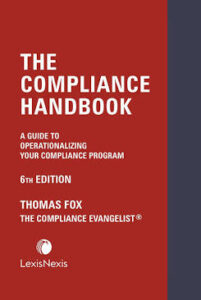
For more on this topic, check out The Compliance Handbook, a Guide to Operationalizing Your Compliance Program, 6th edition, which was recently released by LexisNexis. It is available here.

Categories
12 O’Clock High-a podcast on business leadership

12 O’Clock High, a podcast on business leadership – Emotional Health and High Achievers: A Journey to Balance with Dr. Karthik Ramanan

12 O’Clock High, an award-winning podcast on business leadership, brings together stories from history, the arts, sports and movies, research, and current events to consider leadership lessons. Tom takes a solo turn to visit with Dr. Karthik Ramanan (Dr. K), a licensed naturopathic physician specializing in emotional health for entrepreneurs and executives.

Dr. K shares his professional background and insights into emotional health, defining it as the absence of disease and the ability to identify, process, and act upon emotions. He introduces his book, ‘The Emotionally Healthy You,’ and discusses his unique writing process. The discussion is about the five pillars of emotional health: psychology, relationships, nutrition, sleep, and body movement. Dr. K emphasizes the importance of morning routines, maintaining a sense of purpose, and balancing high achievement with emotional resilience.

Key highlights:

  • Emotional Health and Mentorship
  • Defining Emotional Health
  • The Five Pillars of Emotional Health
  • Balancing High Achievement and Emotional Well-being
  • Finding Purpose and Mentorship

Resources:

Website

 Tom Fox

Instagram

Facebook

YouTube

Twitter

LinkedIn

Categories
Daily Compliance News

Daily Compliance News: May 9, 2025 – The Bring Out Your Dead Pardon Edition

Welcome to the Daily Compliance News. Each day, Tom Fox, the Voice of Compliance, brings you compliance-related stories to start your day. Sit back, enjoy a cup of morning coffee, and listen in to the Daily Compliance News—all from the Compliance Podcast Network. Each day, we consider four stories from the business world: compliance, ethics, risk management, leadership, or general interest for the compliance professional.

Top stories include:

  • Credit Suisse whistleblowers will share in a $150MM bounty. (WSJ)
  • Corpses for cash = corruption. (WSJ)
  • CZ to ask for a Presidential pardon. (CoinDesk)
  • OpenAI governance issues still exist. (FT)
Categories
Compliance and AI

Compliance and AI: Navigating Regulatory Challenges in 2025 with Allison Lagosh

What is the role of Artificial Intelligence in compliance? What about Machine Learning? Are you using ChatGPT? These questions are but three of the many we will explore in this cutting-edge podcast series, Compliance and AI, hosted by Tom Fox, the award-winning Voice of Compliance. In this episode, Tom is joined by Allison Lagosh, Head of Compliance at Saifr.ai, to discuss the current and future landscape of regulatory compliance.

Lagosh discusses key regulatory focus areas for 2025, including AI and its intersection with compliance, the expansion of AML rules to investment advisors, and the importance of accurate AI representation. She also touches on the challenges of an ever-changing regulatory environment, providing strategies for future-proofing compliance programs and managing uncertainty. Lagosh offers practical advice for compliance officers, emphasizing continuous education, reliance on sound vendor management, and integrating AI governance within firms.

Key highlights:

  • What are the key regulatory focus areas for 2025, particularly from the SEC and FINRA?
  • How are firms adjusting their compliance strategies to align with these expectations?
  • What are the new AML rules for investment advisors?
  • How are compliance functions currently leveraging AI technologies?
  • What are the practical challenges and benefits of integrating AI into a firm’s compliance infrastructure?
  •  What can compliance officers do now to future-proof their programs for upcoming regulatory changes?

Resources:

Allison Lagosh on Linkedin

Saifr.ai

Tom Fox

Instagram

Facebook

YouTube

Twitter

LinkedIn

Check out my latest book, Upping Your Game-How Compliance and Risk Management Move to 2030 and Beyond, available from Amazon.com.

Categories
Creativity and Compliance

Creativity and Compliance – From Compliance Enforcers to Trusted Advisors: The Path Forward

Where does creativity fit into compliance? It can be found in more places than you might expect. Problem-solving, accountability, communication, and connection – they all take creativity. Join Tom Fox and Ronnie Feldman on Creativity and Compliance, part of the award-winning Compliance Podcast Network.

Ronnie’s company, Learnings and Entertainment, utilizes the entertainment devices people use to consume information in their everyday, non-work lives and applies it to important topics around compliance and ethics. It is not only about being funny. It is about changing the tone of your compliance communications and messaging to make your compliance program, policies, and resources more accessible.

In this episode, Tom and Ronnie discuss the evolution of compliance roles from merely cleaning up messes to becoming integral business advisors and coaches. They emphasize the necessity of showcasing value through proactive, positive communication and using creative, engaging methods. They highlight insights from the Global Ethics Summit and delve into the importance of humor, human connection, and innovative compliance training and interaction approaches. The episode points out the importance of transitioning compliance perceptions within organizations and offers practical, cost-effective ways for compliance officers to engage, educate, and support their colleagues.

Key highlights:

  • From Cleaning Up Messes to Becoming Advisors
  • The Role of AI in Compliance
  • Advertising Your Role as Advisors
  • Using Humor and Creativity in Compliance
  • Engaging Communication Strategies
  • Low-Cost, High-Impact Compliance Ideas

Resources:

 Ronnie

  • Learnings & Entertainments (Website)
  • Compliance Confessions – inspired by “Mean Tweets” these 90-second commercials address misconceptions and excuses to promote speak up culture and the E&C team as positive and helpful.
  • E&C Training Jams – a soulful singer banters with ethics & compliance explaining policies, sharing examples and debunking excuses. 
  • Tales from the Hotline – Real speak up-themed stories about workplace behavior gone wrong.
  • Workplace Tonight Show! – E&C meets SNL Weekend Update explaining corporate risk topics and why employees should care.
  • 60-Second Communication & Awareness Shorts – A variety of short, customizable, music and multimedia, quick-hitter “commercials” promoting integrity, compliance, speaking up and the E&C team as helpful advisors and coaches.
  • Custom Live & Digital Programing – Custom creative programming that balances the seriousness of the subject matter with a more engaging delivery. After all, you can’t bore people into learning.

 Tom

Instagram

Facebook

YouTube

Twitter

LinkedIn

Categories
TechLaw10

TechLaw10 – AI: New Laws in the US & Enforcement in Europe

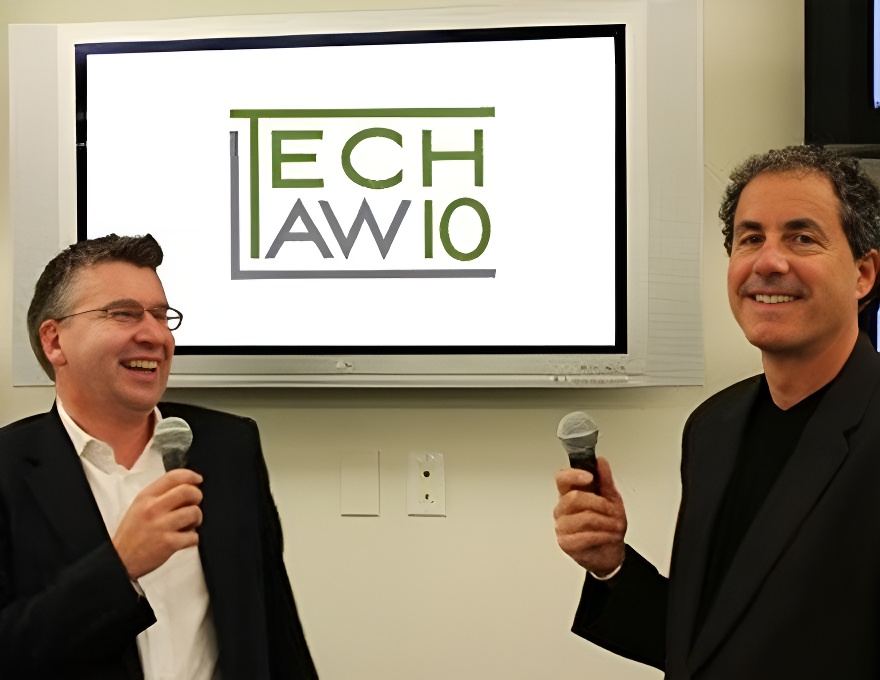
In this film, Punter Southall Law’s Jonathan Armstrong discusses new AI laws with Eric Sinrod, California professor and attorney at Duane Morris LLP. This is episode 292 in the popular TechLaw10 series. You can listen to earlier podcasts at Duane Morris. The podcast starts with a round-up from Eric of the latest legal proposals in California dealing with issues, including AI concerns over:

  • Deepfakes
  • Identity Theft
  • Digital Replicas (including of the dead)
  • Elections
  • Healthcare
  • Watermarking for AI-generated Content
  • AI Voice Messages & Calls

Jonathan talks about the EU AI Act. There are FAQs on that here: https://bit.ly/euaifaq. There is also a glossary of AI terms here: https://puntersouthall.law/insights/eu-ai-act-glossary/. Jonathan looks at a round-up of recent GDPR cases involving AI, including cases relating to:

  • ChatGPT/OpenAI
  • Grok/X
  • ReplikaAI
  • Deepseek
  • Google
  • Deliveroo
  • Foodinho
  • ClearviewAI
  • Budapest Bank

Jonathan also talks about recent UK AI regulation announcements from Minister Peter Kyle. He discusses the need for those running businesses to take a balanced view of AI, including taking risks with AI in some cases to promote the business. Jonathan talks about the NYSBA AI Task Force. There are details of that here: https://nysba.org/app/uploads/2022/03/2024. Jonathan also talks about regulatory findings against Deepseek in South Korea. The details are here https://www.pipc.go.kr/np/

You can learn more about Eric at Duane Morris LLP: https://www.duanemorris.com/attorneys/ericjsinrod.html and Jonathan here at Punter Southall Law: https://puntersouthall.law/about-us/jonathan-armstrong/

Connect with the Compliance Podcast Network at:

LinkedIn: https://www.linkedin.com/company/compliance-podcast-network/

Facebook: https://www.facebook.com/compliancepodcastnetwork/

YouTube: https://www.youtube.com/@CompliancePodcastNetwork

Twitter: https://twitter.com/tfoxlaw

Instagram: https://www.instagram.com/voiceofcompliance/

Website: https://compliancepodcastnetwork.net/