In today’s edition of Daily Compliance News:



UK’s new Plastic Packaging Tax set to begin soon.
Loren Steffy and Tom Fox have another conversation as The Enron Trial series nears the end. In episode 4, Loren Steffy recalls the aftermath of the guilty verdict.
The Verdict and Counts of Conviction
Jeffrey Skilling was convicted of 19 counts, his sentence totaling 185 years, and Kenneth Lay was looking at 120 years in prison. Skilling was actually sentenced to 17 years, which was then reduced to 12. Kenneth Lay passed away prior to his sentencing, and so, the verdict was vacated.
The Prosecution and Defence
“The defense team was stunned,” said Loren, “I think that the attorneys, as well as the defendants, believed that they were going to get a not guilty verdict.” The prosecution, on the other hand, felt a great sense of relief and accomplishment; this was an uphill battle from a prosecution standpoint in many ways. Jeffrey Skilling appeared stoic; though there were stories that indicated he disagreed with the verdict, he seemed to have accepted his fate.
The Jurors and The Judge
Loren commends the jurors, believing they deserve a lot of credit for their involvement in the trial. “I think they did a really good job of listening to the arguments and considering them,” he said. What was interesting, to him, was their response to Andrew Fastow’s testimony, one that Loren found to be credible, “It was like that didn’t really factor into their decision nearly as much as we thought it would when we were watching all of it unfold.” According to him, the judge certainly understood the magnitude of the case, and tried to be very careful in his administration of the case to avoid mistakes that could have led to a mistrial, “Everyone really understood that this was a big trial, and they were playing on the big stage.”
RESOURCES
Loren Steffy | LinkedIn | Twitter
Welcome to the only roundtable podcast in compliance. The entire gang was also thrilled to be honored by W3 as a top talk show in podcasting. In this episode, we have the quintet of Karen Woody, Jonathan Armstrong, Tom Fox, Matt Kelly and Jay Rosen. We discuss some of the key issues from the Activision Blizzard acquisition by Microsoft in the context of the BeeGees. We also have a special tribute section to Meatloaf as well as Shout Outs and Rants.
1. Karen Woody used Staying Alive to look at the SEC angle on the acquisition. Karen shouts out to workers in the travel industry for getting travelers home during the holidays. Woody paid tribute to Meatloaf’s acting career, the Rocky Horror movie and the song Hot Potootie Bless My Soul which her father still loves and is played annually at his birthday.
2. Jay Rosen reviewed To Love Somebody in asking what role can a monitor play in this matter? Rosen ranted about longtime Boston sportswriter Dan Shaughnessy who voted against David Ortiz for the HOF and shouted out to Big Papi’s response. Jay paid tribute to You Took the Words Right Out of My Mouth, Meatloaf’s acting and SNL performances.
3. Matt Kelly considered Massachusetts to consider the anti-trust angles and whether Microsoft can turn the corruption culture at Activision around. Kelly laments the missing child Heather Montgomery and all the officials who did not take her mother’s report of her disappearance seriously. Matt paid tribute to those listeners who are too young to remember Meatloaf.
4. Jonathan Armstrong used How Can You Mend a Broken Heart to look at EU and UK anti-trust issues as well as data privacy concerns under GDPR. Armstrong shouts out artist Tracy Emin for demanding No. 10 pull her artwork due to the corruption of BoJo. Jonathan paid tribute to Meatloaf’s financial support of Jonathan’s local football club Hartlepool United.
5. Tom Fox considered the role of the Microsoft Board of Directors in the acquisition. He shouted out to the Joel Coen movie Macbeth and started Oscar buzz by further shouting out to Kathryn Hunter for her portrayal of the 3 sisters. Tom paid tribute to Paradise by the Dashboard Lights.
The members of the Everything Compliance are:
• Jay Rosen– Jay is Vice President, Business Development Corporate Monitoring at Affiliated Monitors. Rosen can be reached at JRosen@affiliatedmonitors.com
• Karen Woody – One of the top academic experts on the SEC. Woody can be reached at kwoody@wlu.edu
• Matt Kelly – Founder and CEO of Radical Compliance. Kelly can be reached at mkelly@radicalcompliance.com
• Jonathan Armstrong –is our UK colleague, who is an experienced data privacy/data protection lawyer with Cordery in London. Armstrong can be reached at jonathan.armstrong@corderycompliance.com
• Jonathan Marks is Partner, Firm Practice Leader – Global Forensic, Compliance & Integrity Services at Baker Tilly. Marks can be reached at jonathan.marks@bakertilly.com
The host and producer, ranter (and sometime panelist) of Everything Compliance is Tom Fox the Voice of Compliance. He can be reached at tfox@tfoxlaw.com. Everything Compliance is a part of the Compliance Podcast Network.
In today’s edition of Daily Compliance News:
Malcolm Wright is the founder of InnoFi Advisory. As a former Chief Compliance Officer at a large cryptocurrency exchange, Malcolm now advises companies on ensuring responsible innovation in digital finance. All companies, and their compliance officers, need to be familiar with cryptocurrencies and the trend towards decentralized finance. Malcolm describes how current compliance concepts such as “Compliance by Design” and “Know Your Customer (KYC)” are still applicable in the crypto space and gives practical advice to legal and compliance professionals on how to navigate in the crypto future.
The year 2021 brought with it an explosion of different non-fungible tokens (NFTs) used for funding projects of all shapes and sizes, which often happens in decentralized finance where the whole ecosystem is run by smart contracts – automated contracts driven by code. Having an NFT is basically a digital certificate of provenance. The emergence of these NFTs and their uses has heralded the creator economy, and will revolutionize the way culture, finance, and our societies work.
For the last few years in crypto, there has been significant focus on centralized exchanges and custodians, but recently focus has shifted towards other areas of risk. At InnoFi, they consider how risks can present themselves not only from an anti-money-laundering perspective, but also a consumer protection perspective.
Resources
Malcolm Wright on LinkedIn
To learn more, and contact Vincent Walden, please visit Alvarez and Marsal
EU prolongs Russia sanctions over the Ukraine situation.
Loren Steffy and Tom Fox sit down for part 3 of The Enron Trial series. In this episode, they discuss some of the significant testimonies by witnesses, and the effect they had on the trial.
The Star Witnesses
Loren names Andrew Fastow, former CFO, and Ben Glisan, former Treasurer, as the star witnesses in the trial. However, the most moving testimony for him, as an observer, was that of Joanne Cortez, Enron’s bookkeeper. “She was a very credible witness,” said Loren, “and to me, it just showed how there were so many innocent people at Enron that didn’t want to believe what was happening. And when they finally found it out, there was just no denying it.”
Employee Losses
The goal of the prosecutors was to emphasize the real-world consequences of Enron’s malfeasance. Many employees were encouraged to invest their entire retirement savings into the company, and ended up paying a significant price. Loren details the heartbreaking story of a pipeline worker by the name of Johnnie Nelson. “He didn’t really know anything about the stock market,” Loren tells Tom. “Enron was a good company to work for, and they told him, ‘Take your retirement money, buy the stock. It’ll benefit you in the long run.’ He did it because that’s what they told him to do. Then, one day he comes into the field office, and everybody’s long in the face and looking scared, and he realizes he’s basically lost everything he’s been working for.”
Executive Testimonies
The testimonies of Jeffrey Skilling and Kenneth Lay mimicked their personalities; Skilling being very professorial, and Lay acting like he was conducting an investor seminar. “I think they were very convinced that they were going to get off, or at least get a light sentence,” Loren told Tom. Ben Glisan’s testimony was very damaging to Kenneth Lay, revealing that Lay was more aware of what was happening at Enron than he let on.
RESOURCES
Loren Steffy | LinkedIn | Twitter
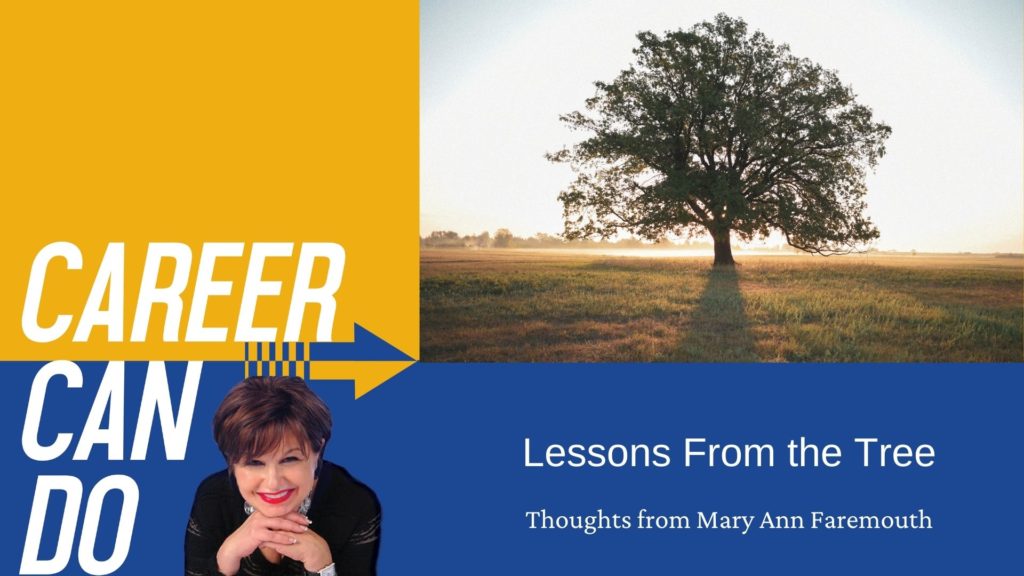
In this solo episode of Career Can Do, Mary Ann Faremouth shares valuable insights and life lessons we can all take from the Tree of Life. The Tree is a symbol of togetherness and the interconnectedness of everything in the universe. It serves as a reminder that you are never alone or isolated. Trees also often represent strength, as they can weather the toughest storms.
Mary Ann advises listeners to learn from the Tree of Life by doing the following: nourish your unique abilities to become a better you; stay grounded; connect with your roots; turn over a new leaf; bend before you break; and keep growing.
Resources
Faremouth.com
Welcome to the Great Women in Compliance Podcast, co-hosted by Lisa Fine and Mary Shirley.
In 2011, Mary attended a conference in Singapore and listened to a learned lawyer speak about the FCPA. Her name is Wendy Wysong and though they did not speak, Mary remembered Wendy’s name and many years later, connected with her on LinkedIn and ten years later asked Wendy to be on the Great Women in Compliance podcast. Such was the lasting impression Wendy left from her talk that day. Wendy is an American based in Hong Kong and shares some of her experiences of what work and life has been like during the pandemic.
The two GWIC discuss the lessened guidance coming from US regulators in 2021 vs 2020, making adaptions to investigations during the pandemic with less ability to travel and how data privacy requirements have changed the way Wendy thinks about doing business. This episode is snappy and right to the point with astute observations from Wendy packed into a relatively short timeframe – it’s perfect for filling a spare 20 minutes of your time or to keep you company while decluttering your drawers or vacuuming (iPods an essential for listening in while doing housework!).
The Great Women in Compliance Podcast is on the Compliance Podcast Network with a selection of other Compliance related offerings to listen in to. If you are enjoying this episode, please rate it on your preferred podcast player to help other likeminded Ethics and Compliance professionals find it. You can also find the GWIC podcast on Corporate Compliance Insights where Lisa and Mary have a landing page with additional information about them and the story of the podcast. Corporate Compliance Insights is a much appreciated sponsor and supporter of GWIC, including affiliate organization CCI Press publishing the related book; “Sending the Elevator Back Down, What We’ve Learned from Great Women in Compliance” (CCI Press, 2020).
You can subscribe to the Great Women in Compliance podcast on any podcast player by searching for it and we welcome new subscribers to our podcast.
Join the Great Women in Compliance community on LinkedIn here.