Categories
Blog

Compliance Lessons from Venice – Part 1: Doing It the Old-Fashioned Way

Welcome to a journey through compliance with a Venetian twist. Paired with the podcast series Compliance Lessons from Venice, running this week on the Compliance Podcast Network, we will examine three areas where Venice’s time-honored methods inform modern compliance practices. In this first part, we explore the importance of staying grounded in the fundamentals and, as Venice shows us, the value of “doing it the old-fashioned way.”

Lessons from Venice’s Historic Construction

One of Venice’s unique characteristics is its resistance to change. The city is seemingly untouched by the fast-paced innovations of the 21st century. Just as Venice has retained its unique charm, with materials brought in via boats and moved through a basic block-and-tackle pulley system, a compliance program requires a solid, reliable foundation. There is no cutting corners or relying solely on the latest technology; it’s about creating structures that work effectively within the constraints of the environment.

Look at Venice’s construction methods. They may seem archaic, with building materials transported by boat and lifted by hand to upper floors because there’s no room for cranes or heavy machinery. Yet, they work. And just as Venice requires time-tested systems to manage its challenges, compliance professionals must remember that the most effective compliance programs start with well-resourced, accessible basics.

The DOJ’s Emphasis on Resources and Accessibility

The DOJ echoed similar values when outlining the foundational elements of effective compliance in the 2020 FCPA Resource Guide, 2nd edition, and the recently released 2024 Evaluation of Corporate Compliance Programs (2024 ECCP). Compliance isn’t about building an impenetrable wall of policies and procedures. Instead, it’s about creating a support structure that employees can rely on to address their needs and clarify their doubts.

In 2012, in the Pfizer Deferred Prosecution Agreement (DPA) and Enhanced Compliance Obligations, the DOJ highlighted the need for a compliance department to maintain “significant resources” dedicated to its anti-corruption and ethics functions. In practice, this means having policies in place and ensuring these policies are actively implemented and that the compliance department remains a resource employees can turn to for guidance and clarity. Likewise, the DOJ’s original FCPA Resource Guide from 2012 emphasized the importance of having systems that foster compliance and a centralized function that employees can contact when questions arise.

Venice teaches us that the old-fashioned way, ensuring accessibility and resource allocation, may seem basic, but it is also foundational. Every organization, no matter its size, needs people dedicated to compliance who are both available and empowered to respond to inquiries and provide guidance. The 2024 ECCP is clear that headcount matters, stating that a compliance program should have “sufficient resources, namely, staff to undertake the requisite auditing, documentation, and analysis effectively.” If your compliance function lacks adequate staffing, your program’s integrity is compromised before it even starts.

Ensuring There is Someone to “Answer the Phone”

For compliance to work, there needs to be someone at the other end ready and able to “answer the phone.” This is not just a metaphor; it represents the importance of having an accessible and approachable compliance team that employees can contact for help. If your employees are uncertain about compliance requirements but can’t get an answer because the compliance department is understaffed or unresponsive, your organization risks creating a culture of indifference or confusion.

Mike Volkov, another veteran in the compliance field, often warns against a “Dr. No” compliance function, a department known for obstruction rather than support. If compliance professionals become unapproachable or unavailable, it creates an environment where employees may hesitate to seek guidance, increasing the risk of non-compliance. Just as Venice’s pulley systems rely on someone physically there to operate them, your compliance department needs people actively involved and available.

Consider this scenario: It is a Friday afternoon, and an employee urgently needs clarity on a compliance policy before engaging with a third-party vendor. If the compliance department is a ghost town, the employee is left to make judgment calls, risking misinterpretation and potential non-compliance. Ensuring availability isn’t just about headcount; it’s also about building an infrastructure of responsiveness so there’s always someone qualified and ready to help.

Building Compliance Expertise: Beyond Just Numbers

But more than simply answering the phone is required. The compliance function needs a knowledgeable team offering real-time, accurate, and practical guidance. The 2016 DOJ FCPA Pilot Program stressed the importance of expertise in the compliance function, and that has been brought forward in the 2024 ECCP, stating “those responsible for compliance [should] have: (1) sufficient qualifications, seniority,  and stature (both actual and perceived) within the organization”. Not only should compliance practitioners be present, but they must also possess the knowledge and understanding required to answer complex queries effectively.

Compliance professionals who need more expertise risk giving complete or correct advice. This lack of expertise in the compliance department can erode trust in the program and lead to risky decision-making. Sometimes, the basics are most easily overlooked. We may get caught up in strategic initiatives, technology, and risk assessments, but a compliance program can truly function with a well-staffed, knowledgeable team to implement the essentials.

Drawing from Venetian Basics for your Compliance Program

Venice’s construction methods may be basic, but they serve a purpose. Sometimes, simplicity works best, especially when it is supported by reliability and consistency. The same is true in compliance. A well-resourced, well-trained team that handles daily queries is far more effective than an elaborate system that leaves employees confused or unsupported.

Venice reminds us that while modernization and innovation are important, there is immense value in sticking to the basics. Your compliance program does not need to be flashy; it needs to be effective. Compliance means providing employees with clear policies, support when they have questions, and a well-organized system that encourages ethical decision-making.

Operating the Block-and-Tackle of Compliance

In the first episode of our “Compliance Lessons from Venice” series, we’ve seen how important it is to keep compliance programs grounded in accessible, practical foundations. Just as Venice depends on traditional, hand-operated pulleys to move building materials, compliance programs must rely on consistent human resources—dedicated professionals who are available, knowledgeable, and ready to answer questions.

Doing it the “old-fashioned way” isn’t about resisting change but creating a strong foundation. Compliance programs should be built with the latest innovations, practical, sustainable structures, and accessible resources. Sometimes, returning to these basics can be the most effective way to foster a compliant, ethical culture within an organization.

Join us in the next part of this series as we delve into lessons from Venice’s Arsenale. We will consider the role of culture in incentivizing compliance and ensuring employees are treated with respect. By looking at Venice’s enduring history, we can find timeless principles that strengthen the foundations of any effective compliance program.
Categories
Sunday Book Review

Sunday Book Review: November 24, 2024 – The Thanksgiving Mysteries Edition

In the Sunday Book Review, Tom Fox considers books that interest the compliance professional, the business executive, or anyone curious. It could be books about business, compliance, history, leadership, current events, or anything else that might interest Tom. In today’s edition of the Sunday Book Review, we look at murder mystery books for your Thanksgiving enjoyment.

  1. The Cat Who Talked Turkey by Lilian Braun
  2. Thanksgiving by Janet Evanovich
  3. Turkey Trot Murder by Leslie Meier
  4. The Thanksgiving Day Murder by Lee Harris

For more information on the Ethico Toolkit for Middle Managers, available at no charge, click here.

Categories
Fox on Podcasting

Fox on Podcasting – Unleashing Creativity and Profit Through Podcast Seasons

Join Tom Fox as he explores the world of podcasting, and get ready to be inspired to start your podcast. In this episode, Tom explores how podcasters can use Podcast Seasons to expand their creativity and profitability.

Tom discusses the limitless possibilities of podcasting, emphasizing that creativity and imagination can drive the growth and engagement of a podcast. He shares his experiences running two podcast networks: the Compliance Podcast Network, a legal and regulatory compliance network, and the Texas Hill Country Podcast Network, a personal interest podcast network, focusing on the stories of people, places, and things from the Texas Hill Country. He elaborates on his innovative use of podcast seasons to offer diverse content, enhance monetization, and attract new audiences. Examples from his shows include compliance-themed series rooted in popular culture, such as Sherlock Holmes, Star Trek, the MCU, and Shakespeare, and regionally focused podcasts highlighting local artists and events. He also touches on effective communication with your audience, leveraging existing content to create new assets, and tailoring marketing strategies to feature-focused seasons.

Key highlights:

  • Expanding Podcast Growth with Seasons
  • Innovative Podcast Series and Themes
  • Exploring Podcast Seasons: Case Studies
  • Repurposing Content for New Seasons
  • Creating Other Assets from Podcasts
  • Engaging with Your Audience and Marketing Strategies

Resources:

Compliance Podcast Network

Texas Hill Country Podcast Network

Tom

Instagram

Facebook

YouTube

Twitter

LinkedIn

Categories
Kerrville Weekly News Roundup

Kerrville Weekly News Roundup: November 23, 2024

Welcome to the Kerrville Weekly News Roundup. Each week, veteran podcaster Tom Fox and his colleagues Andrew Gay and Gilbert Paiz get together to go over a couple of their favorite stories from the past week from Kerrville and the greater Hill Country. Sit back, enjoy a cup of morning coffee, and listen in to get a wrap-up of the Kerrville Weekly News. We each consider two of our favorite stories and talk about the upcoming weekend’s events, which we will enjoy or participate in this weekend.

In this episode, Tom and Andrew are back to examine some of the things that caught their attention over the past week.

Stories include:

  • Ranger Museum Controversy
  • 391 workshop turns into chaos
  • Lead pipe removal/replacement in Kerrville
  • Christmas Holiday Parade
  • UT v. A&M

Resources

Tom Fox on LinkedIn

Gilbert Paiz on LinkedIn

Andrew Gay on LinkedIn

Texas Hill Country Podcast Network

The Lead

Kerrville Daily Times

Categories
10 For 10

10 For 10: Top Compliance Stories For the Week Ending November 23, 2024

Welcome to 10 For 10, the podcast that brings you the week’s Top 10 compliance stories in one podcast each week. Tom Fox, the Voice of Compliance, brings you the compliance professional and the compliance stories you need to know to end your busy week. Sit back, and in 10 minutes, hear the stories every compliance professional should know from the prior week. Every Saturday, 10 For 10 highlights the most important news, insights, and analysis for the compliance professional, all curated by the Voice of Compliance, Tom Fox. Get your weekly filling of compliance stories with 10 for 10, a podcast produced by the Compliance Podcast Network.

  • Is bribery how business is done in India? (NYT)
  • Adami Group charged with fraud, FCPA violations. (NYT)
  • Trafigura heads to trial in Switzerland. (Bloomberg)
  • A layer of crypto corruption. (TheBulwark)
  • Firings as layoffs without benefits. (FT)
  • KPMG rehabbed in the UK.  (FT)
  • Founder of Crypto mixer sentenced to 3 years in prison. (WSJ)
  • Bill Hwang gets 18 years. (NYT)
  • Gary Wang receives no prison time. (NYT)
  • Jay Clayton was picked to head SDNY. (FT)

For more information on the Ethico Toolkit for Middle Managers, available at no charge, click here.

You can check out the Daily Compliance News for four curated compliance and ethics-related stories each day here.

Check out the full 3-book series, The Compliance Kids, on Amazon.com.

Connect with Tom 

Instagram

Facebook

YouTube

Twitter

LinkedIn

Categories
Compliance Tip of the Day

Compliance Tip of the Day – Policy Week: Extortion Payments

Welcome to “Compliance Tip of the Day,” the podcast where we bring you daily insights and practical advice on navigating the ever-evolving landscape of compliance and regulatory requirements. Whether you’re a seasoned compliance professional or just starting your journey, we aim to provide bite-sized, actionable tips to help you stay on top of your compliance game. Join us as we explore the latest industry trends, share best practices, and demystify complex compliance issues to keep your organization on the right side of the law. Tune in daily for your dose of compliance wisdom, and let’s make compliance a little less daunting, one tip at a time.

Today, we conclude our week-long series on key anti-corruption policies. In this episode, we review policies on extortion payments.

For more information on the Ethico Toolkit for Middle Managers, available at no charge, click here.

Check out the full 3-book series, The Compliance Kids, on Amazon.com.

Categories
Compliance and AI

Compliance and AI: Demystifying AI Integration in Compliance: Insights from the DOJ

What is the role of Artificial Intelligence in compliance? What about Machine Learning? Are you using ChatGPT? These questions are but three of the many we will explore in this cutting-edge podcast series, Compliance and AI, hosted by Tom Fox, the award-winning Voice of Compliance. In this episode, Tom reflects on recent DOJ speeches on AI and the 2024 ECCP revisions concerning AI and compliance.

Tom discusses Deputy Assistant Attorney General Nicole Argentieri’s September speech and the 2024 Evaluation of Corporate Compliance Programs (ECCP). He also unpacks how compliance professionals are expected to manage AI-related risks rigorously. He offers actionable steps, such as conducting comprehensive risk assessments, implementing robust compliance controls, and ensuring ongoing monitoring and employee training. This episode is essential listening for compliance professionals aiming to stay ahead of AI-related challenges and align with the DOJ’s latest expectations.

Key highlights:

  • DOJ’s New Approach to AI in Compliance
  • Steps to Align Compliance Programs with DOJ Expectations
  • 2024 ECCP: Key Questions for Compliance Professionals
  • Proactive Strategies for Managing AI Risks

Resources:

For additional information check out the FCPA Compliance and Ethics Blog.

Tom Fox

Instagram

Facebook

YouTube

Twitter

LinkedIn

Categories
Daily Compliance News

Daily Compliance News: November 22, 2024 – The All NYT Edition

Welcome to the Daily Compliance News. Each day, Tom Fox, the Voice of Compliance, brings you compliance-related stories to start your day. Sit back, enjoy a cup of morning coffee, and listen in to the Daily Compliance News—all from the Compliance Podcast Network. Each day, we consider four stories from the business world: compliance, ethics, risk management, leadership, or general interest for the compliance professional.

Today’s stories:

  • Matt Gaetz withdraws from AG nomination. (NYT)
  • Is bribery how business is done in India? (NYT)
  • Bill Hwang gets 18 years. (NYT)
  • Gary Wang receives no prison time. (NYT)

For more information on the Ethico Toolkit for Middle Managers, available at no charge, click here.

Check out the full 3-book series, The Compliance Kids on Amazon.com.

Categories
Regulatory Ramblings

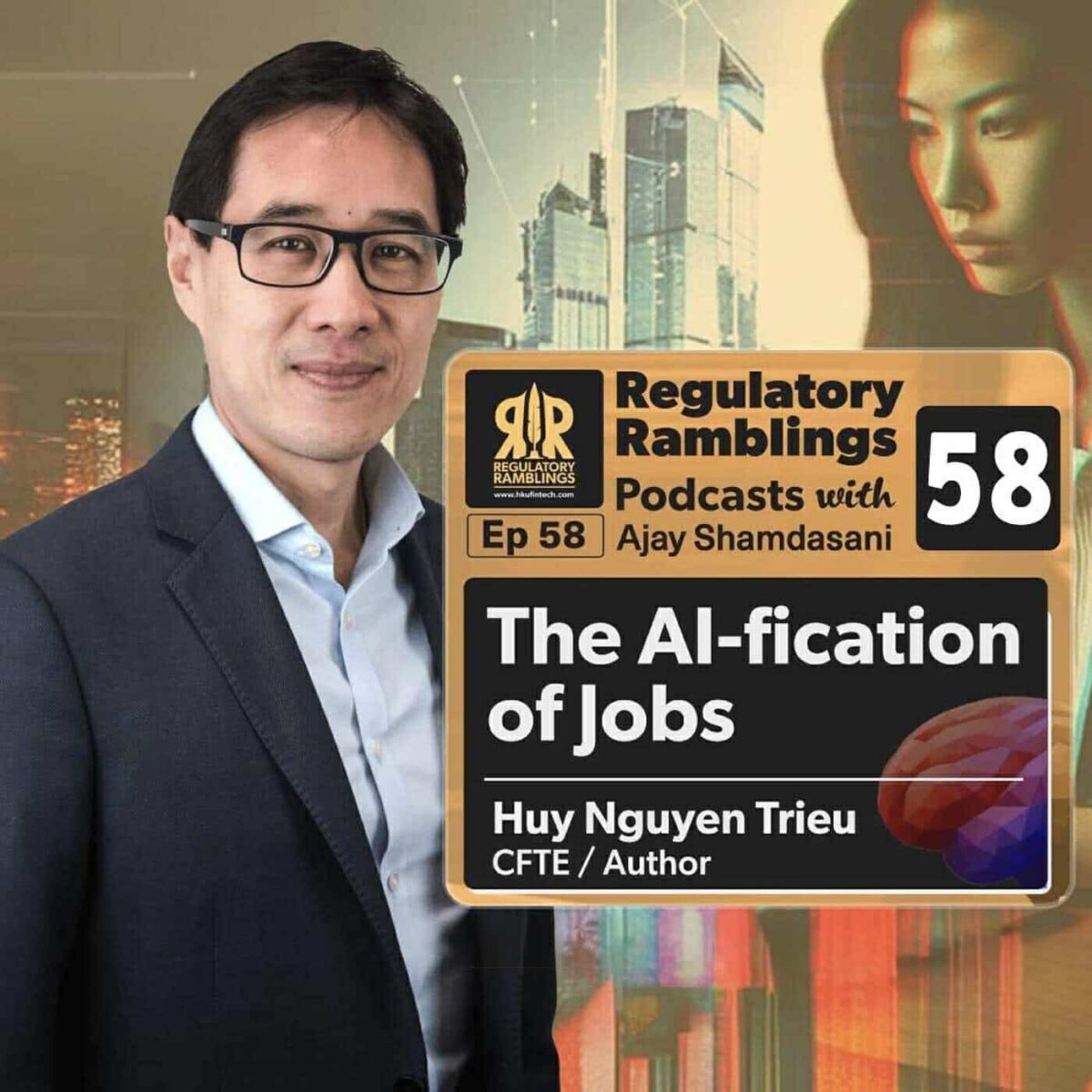
Regulatory Ramblings: Episode 58 – The AI-fication of Jobs with Huy Nguyen Trieu

Huy Nguyen Trieu is the author of the new book The AI-fication of Jobs. He is the co-founder and Ms. Tram Anh Nguyen of the London-headquartered Centre for Finance, Technology and Entrepreneurship (CFTE). As a global FinTech knowledge platform, CFTE opened its Abu Dhabi office earlier this year and its Singapore office.

A leading voice in the world of AI, Huy’s book is the product of 10 months of effort and debuted at the recent Singapore FinTech Festival in early November 2024. It explores how AI reshapes the workforce and moves beyond the common question of “Will AI take my job?”

Huy shares with Regulatory Ramblings host Ajay Shamdasani how his book provides a structured framework for understanding AI’s impact from displacement to augmentation and how such changes and trends can be leveraged for future success and insights. It is an accessible, future-focused guide and a must-read for anyone interested in AI’s role in shaping careers, industries, and society.

As Huy puts it: “AI is a complex, personal topic – 85 percent of workers believe it will significantly impact their jobs. But understanding what that means is often confusing.”

Huy goes on to describe his professional background: He is an engineer by training and an entrepreneur by nature. As a “big picture” person, he’s interested in the revolution in technology that is transforming finance—what he calls Disruptive Finance.

To quote Huy: “Put simply, we are facing a Napster moment: technology is set to revolutionize finance, which will massively impact the global economy, business, and society.”

His passion, he says, is building and growing businesses—especially in changing environments. This passion led him from being a tech CEO in New York to managing director at an investment bank in London to founding partner at a Hong Kong-based accelerator and now co-founder of the CFTE.

As a managing director at Citi, Huy grew a business that helped Europe’s largest insurance companies, major pension funds, and international banks adapt to an increasingly complex environment.

He also adores teaching at scale, having co-created some of the largest FinTech courses in the world at Oxford University’s Said Business School, the University of Hong Kong University, Imperial College, and now CFTE.

As CEO of The Disruptive Group, he’s developing a firm that builds innovative finance businesses that leverage technology and advises CEOs of large organizations. One of TDG’s projects is the CFTE, which is dear to Huy’s heart as he explains the impetus for the body’s creation.

“CFTE is the answer to a very simple question: as a professional in financial services, how do I acquire the skills to be future-proof? The question is simple, but the solution is hard because there is much knowledge to acquire, the industry is changing all the time, and professionals do not have time to learn,” Huy says.  “Together with hundreds of experts [from heads of innovations in banks to CEOs of challenger banks and CEOs of FinTech venture capital firms], we have created a platform that helps the industry acquire this knowledge quickly, from FinTech to artificial intelligence to open banking,” he concluded.

A key observation of the book is that AI and its massive impact on careers portends a shift that will give rise to a class of “supercharged professionals” – those who combine their skills with tech to thrive like never before. And then there are the “creative disruptors,” a select few poised to build entirely new industries from scratch. Huy urges us all to embrace this future, not just for ourselves, but to ensure the potential benefits of AI for everyone.

“On average, we are all about average most of the time. Yet, the results that can be gained through AI are now consistently above average,” he warns while acknowledging there are no easy answers to how the workforce can ‘raise their game’ to avoid redundancy.

In addition to London, the CFTE is also based in Singapore and Hong Kong and earlier this year opened an office in Abu Dhabi, given the deep need in the Middle East and, in particular, the GCC nations for education in the technologies that will shape the future of work. The CFTE works with most Tier 1 financial institutions, governments, and central banks.

The Regulatory Ramblings podcasts are brought to you by the University of Hong Kong—Reg/Tech Lab, HKU-SCF Fintech Academy, Asia Global Institute, and HKU-edX Professional Certificate in Fintech, with support from the HKU Faculty of Law.

Useful links in this episode:

  • Follow Huy Nguyen Trieu on LinkedIn

  • “The AI-fication of Jobs” on: Amazon

  • CFTE book page: Webpage

You might also be interested in:

Connect with RR Podcast at:

LinkedIn: https://hk.linkedin.com/company/hkufintech 
Facebook: https://www.facebook.com/hkufintech.fb/
Instagram: https://www.instagram.com/hkufintech/ 
Twitter: https://twitter.com/HKUFinTech 
Threads: https://www.threads.net/@hkufintech
Website: https://www.hkufintech.com/regulatoryramblings 

Connect with the Compliance Podcast Network at:

LinkedIn: https://www.linkedin.com/company/compliance-podcast-network/
Facebook: https://www.facebook.com/compliancepodcastnetwork/
YouTube: https://www.youtube.com/@CompliancePodcastNetwork
Twitter: https://twitter.com/tfoxlaw
Instagram: https://www.instagram.com/voiceofcompliance/
Website: https://compliancepodcastnetwork.net

Categories
Blog

Auditors and Compliance: Part 2 – Ten Key Takeaways for Compliance Professionals

The PCAOB’s recent information release, SPOTLIGHT Auditor Responsibilities for Detecting, Evaluating, and Making  Communications About Illegal Acts, is a critical guide for compliance professionals. The SPOTLIGHT sets out the role of auditors in assessing a company’s compliance with laws and regulations, particularly how auditors must identify, evaluate, and communicate potential illegal acts. However, for compliance officers, the SPOTLIGHT highlights areas where compliance and audit functions intersect and emphasizes collaboration’s importance to maintaining regulatory adherence and upholding financial integrity. Yesterday, we reviewed the roles and duties assigned to auditors. Today, we will dive into the 10 key takeaways for compliance professionals, outlining what they need to know to align their efforts with audit processes and effectively support their organization’s commitment to compliance.

  • Understand the Auditor’s Role in Identifying Illegal Acts

Auditors have a duty to detect and evaluate illegal acts that could materially impact a company’s financial statements. This includes assessing the potential effect of any illegal activity on the company’s financials and reporting these issues to management, the audit committee, and sometimes to the SEC. Compliance professionals need to understand this role to support auditors in fulfilling these obligations, especially by maintaining a strong compliance program that actively monitors regulatory adherence. Compliance should ensure that internal policies align with PCAOB standards and legal requirements, helping auditors conduct a thorough risk assessment as part of their evaluation.

  • Maintain Transparent and Open Communication Channels

Transparency and open communication are vital for a successful compliance-audit relationship. Auditors depend on information from management, the audit committee, and legal counsel to identify and evaluate potential violations. Compliance professionals should facilitate open communication with auditors and provide timely access to relevant information. This includes documentation from internal investigations, responses to auditor inquiries, and any corrective actions taken to address potential illegal acts. Proactively sharing information about compliance efforts demonstrates a commitment to ethical practices and supports auditors’ work to provide an accurate assessment of the company’s financial statements.

  • Foster a Strong Internal Reporting Culture

Auditors must inquire about complaints and tips, including those from whistleblower programs. For compliance professionals, this highlights the importance of fostering an internal reporting culture where employees feel safe raising concerns. A robust whistleblower program and other internal reporting mechanisms help identify potential illegal acts early, allowing the company to take action before issues escalate. Compliance teams should ensure employees know how to report concerns confidentially and clearly communicate that the company prohibits retaliation against whistleblowers. This can help create a steady pipeline of information that aids both compliance and audit functions in proactively addressing potential issues.

  • Document Document Document

Thorough documentation is crucial in every compliance arena, whether regulatory reporting, high-value transactions, or industry-specific regulations. (The Tom Fox Mantra Document Document Document.) Compliance professionals should maintain clear records of all compliance activities, internal investigations, and responses to auditor inquiries. By providing auditors with well-documented information, companies can help auditors assess whether any potential illegal acts are isolated incidents or indicative of broader compliance concerns. Such documentation facilitates the audit process and demonstrates to regulators a serious commitment to compliance.

  • Prioritize High-Risk Areas with Targeted Monitoring

Auditors focus on high-risk areas in their evaluations, such as transactions or activities with greater potential for legal violations. Compliance professionals should proactively monitor these high-risk areas to detect and mitigate issues before they escalate. For instance, compliance in industries with high regulatory scrutiny should ensure that the organization adheres to all industry-specific legal requirements. Regularly evaluating high-risk areas through targeted monitoring helps create a solid foundation for internal and external financial statement audits, reducing the chance of undetected illegal acts.

  • Be Prepared to Act on Auditor Findings Promptly

When auditors identify potential illegal acts, it is essential for compliance to respond swiftly and decisively. This involves conducting a thorough internal investigation and determining any required disclosures or corrective actions. From there, you should perform a Root Cause Analysis and then proactively address any concerns from auditors to help the organization maintain transparency and avoid further regulatory scrutiny. A prompt response strengthens the relationship between the compliance and audit functions and demonstrates to auditors and regulators a proactive approach to managing and mitigating compliance risks.

  • Strengthen Leadership’s Commitment to Compliance

The PCAOB emphasizes the importance of a “tone at the top” in its guidance, noting that auditors consider a company’s commitment to compliance when assessing potential illegal acts. Compliance teams should work with executive leadership to promote a strong culture of ethics and compliance, as this can significantly impact employee behavior and organizational practices. A commitment to compliance at the leadership level signals to employees that ethical conduct is a priority, supporting the organization’s overall compliance efforts. When leadership promotes compliance, employees are more likely to report concerns, and auditors can rely on the company’s internal controls and integrity.

  • Prepare for Potential Notification

If auditors discover a material illegal act and management fails to take appropriate action, the auditor may be required to notify the SEC or DOJ. For compliance professionals, this highlights the importance of swift and transparent responses to any findings of illegal activity. Working closely with auditors to address material findings and avoid potential SEC/DOJ notification is crucial. When the compliance function demonstrates a proactive approach to addressing auditor findings, it helps maintain the organization’s reputation, strengthens auditor relationships, and reduces the likelihood of regulatory intervention.

  • Regularly Review and Update Compliance Training

Auditors also assess a company’s internal compliance functions, including how well employees understand and adhere to compliance obligations. Regular compliance training ensures that employees are informed about identifying and reporting illegal acts, understand whistleblower protections, and know the resources available to them. Compliance professionals should review and update training programs frequently to address any changes in laws or regulations and any emerging risks specific to the company’s industry. Effective training reinforces employees’ commitment to ethical behavior and supports the company’s internal controls, bolstering the compliance-audit relationship.

  • Emphasize Materiality Assessments in Compliance Evaluations

When auditors evaluate the impact of illegal acts, they consider both quantitative and qualitative materiality. Compliance teams should adopt a similar approach when assessing potential violations. For instance, even a small illegal payment could be material if it raises ethical concerns or results in contingent liabilities. By considering potential violations’ financial and reputational implications, compliance teams can better assess the materiality of issues and take appropriate corrective action. This approach aligns with auditor standards and helps create a thorough and effective compliance environment.

Strengthening Compliance and Audit Collaboration

The PCAOB’s guidance reminds compliance professionals that a proactive approach to detecting, evaluating, and addressing potential illegal acts is essential. By understanding the auditor’s role and aligning compliance practices with PCAOB and SEC standards, compliance teams can effectively support auditors and contribute to a thorough evaluation of the organization’s adherence to laws and regulations.

A corporate compliance function plays a crucial role in creating a transparent, accountable organization where employees feel empowered to raise concerns and management responds promptly to address potential issues. Strong compliance-audit collaboration enables companies to build trust with regulators and stakeholders, demonstrating a commitment to ethical business practices. By implementing these takeaways and fostering a culture of compliance, companies can better navigate regulatory requirements and mitigate the risk of material misstatements or regulatory penalties, upholding the integrity of their financial statements and safeguarding their reputation in an increasingly scrutinized environment.