Categories
Corruption, Crime and Compliance

Board Oversight and Monitoring of AI Risks

As companies rapidly adopt artificial intelligence (AI), it becomes paramount to have robust governance frameworks in place. Not only can AI bring about vast business benefits, but it also carries significant risks—such as spreading disinformation, racial discrimination, and potential privacy invasions. In this episode of Corruption, Crime and Compliance, Michael Volkov dives deep into the urgent need for corporate boards to monitor, address, and incorporate AI into their compliance programs, and the many facets that this entails.

You’ll hear Michael talk about:

  • AI is spreading like wildfire across industries, and with it comes a whole new set of risks. Many boards don’t fully understand these risks. It’s important to make sure that boards are educated about the potential and pitfalls of AI, and that they actively oversee the risks. This includes understanding their obligations under Caremark, which requires them to exercise diligent oversight and monitoring.
  • AI is a tantalizing prospect for businesses: faster, more accurate processes that can revolutionize operations. But with great power comes great responsibility. AI also comes with risks, like disinformation, bias, privacy invasion, and even mass layoffs. It’s a delicate balancing act that businesses need to get right.
  • Companies can’t just use AI, they have to be ready for it. That means adjusting their compliance policies and procedures to their specific AI risk profile, actively identifying and assessing those risks, and staying up-to-date on potential regulatory changes related to AI. As AI grows, the need for strong risk mitigation strategies before implementation becomes even more important.
  • The Caremark framework requires corporate boards to ensure that their companies comply with AI regulations. Recent cases, such as the Boeing safety oversight, demonstrate the severity of the consequences when boards fail to fulfill their responsibilities. As a result, boards must be proactive: ensure that board members have the technical expertise necessary, brief them on AI deployments, designate senior executives to be responsible for AI compliance, and ensure that there are clear channels for individuals to report issues.


KEY QUOTES

“Board members usually ask the Chief Information Security Officer or whoever is responsible for technology [at board meetings], ‘Are we doing okay?’ They don’t want to hear or get into all of the details, and then they move on. That model has got to change.”


“In this uncertain environment, stakeholders are quickly discovering the real and significant risks generated by artificial intelligence, and companies have to develop risk mitigation strategies before implementing artificial intelligence tools and solutions.”


“Board members should be briefed on existing and planned artificial intelligence deployments to support the company’s business and or support functions. In other words, they’ve got to be notified, brought along that this is going to be a new tool that we’re using, ‘Here are the risks, here are the mitigation techniques.’”


Resources:

Michael Volkov on LinkedIn | Twitter

The Volkov Law Group

Categories
Blog

Speaking Up is Awesome

We are on a run of some great, informative and incredibly useful books by some super star compliance professionals. A couple of weeks ago Mary Shirley released Level Up. In her book, Mary shared forward-thinking hacks and ideas to improve the effectiveness of your Ethics and Compliance program to build a stronger, winning function, honoring psychological safety. Her manifesto for Living Your Best Compliance life contained carefully curated tips and takeaways for optimum impact and immediate action, at low or no investment, because the typical Compliance Officer is not always flush with funds and tends to make do like a corporate MacGyver.

Next week Adam Balfour’s Ethics and Compliance for Humans will be released. (It is available for presale here.) In his book, Balfour, a well-known corporate compliance expert writes why ethics and compliance departments, HR and business leaders must keep people top of mind when designing and implementing ethics and compliance programs. The human-centric programs Balfour espouses resonate with and are highly relevant to their audiences. They not only consider the human experience, but also protect those who are—or might otherwise be—harmed by wrongdoing. Or as Carsten Tams might say, it’s all about the UX.

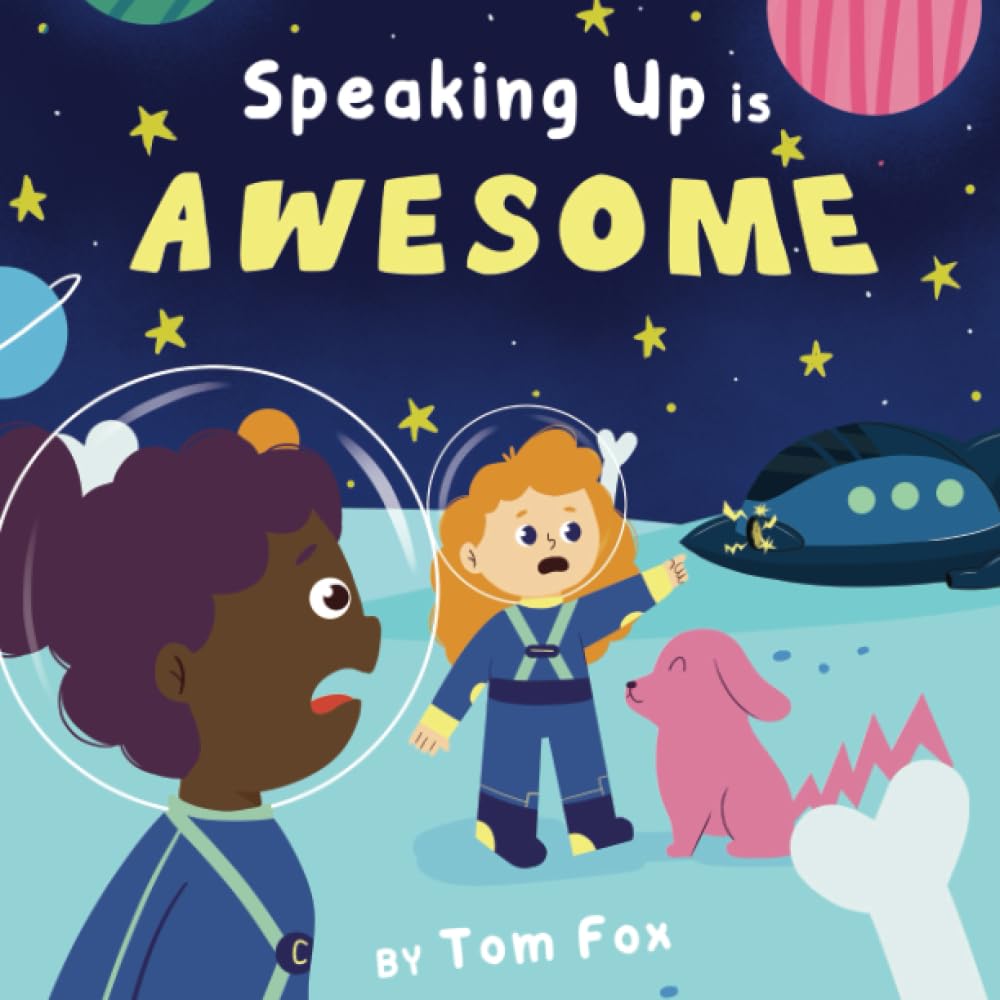
I am thrilled to be sitting between two such compliance luminaries with the release of my second children’s book on compliance Speaking Up is Awesome. This is the second in my three-book series about compliance for children. The first Being a Compliance Officer is Awesome was released last December and within its first week was a best-selling book for children on Amazon.com. Both books were published and illustrated by Dinosaur House.

Many years ago, when my daughter was a teenager, I asked her if she knew what a whistleblower was. I told her that when I person raised their hand and spoke up after they saw something wrong, that was being a whistleblower. Her response was “That’s what we call a rat.” I have long thought about her response (and she is long past being a teenager). I have wanted to try and change the narrative for teenagers and I feel like in this book Speaking Up is Awesome I have created a way to do so.

The book is the story of our intrepid crew traveling across the galaxy to Planet Pawtastic Friends, the dog rescue planet. On Planet Pawtastic Friends, dogs receive enrichment training so they can be adopted and move to their Fur-ever homes. In enrichment training, dogs train work with rescue dogs to make them ‘super-adoptable’. On their journey, one of the crew discovers something wrong with the engine but as she is not an engineer, she is worried the ship’s engineers will be mad at her; call her a rat and punish her by not letting her come to Thanksgiving Dinner. But she listens to her gut and decided she must tell the Captain about the problem.

It turns out the problem with the engine was quite serious and her speaking up saved the ship. She listened to her gut and she learned that by doing so, it can pay big dividends when you speak up. Not only did she potentially save the ship, but her suggestion made the spaceship run more efficiently and they were able to go farther by savings on fuel. Her example led the Captain to install an anonymous hotline so that other crew members could make reports of unsafe situations or even make suggestions on how to make the spaceship run better. Everyone on the spaceship learned that speaking up is awesome.

Just like my first book, this new book, Speaking Up is Awesome is aimed for the children, families and friends of compliance professionals. Or perhaps you could take hold of the suggestion of Carsten Tams who said that my first children’s book was an excellent guide for other corporate executives who might not fully understand the role of compliance in an organization. Whoever you might want to purchase my book for; it is designed to change the narrative about how children think about whistleblowers. If we can get a generational change in this dynamic, it will make companies better about doing business in compliance and with greater ethics. Moreover,  it will allow many companies to take their speak up culture to another level.

Kyle Welch, in his seminal work Evidence on the Use of and Efficacy of Internal Reporting Systems found that when companies had a culture of speaking up, they not only sustained material cost savings but they became better run companies. The reason was simple; engaged employees felt safe in raising their hands and speaking up. When they did so with such safety, these companies became better run. It seems straight-forward and Welch’s research affirmed this.

I hope you will check out and purchase a copy of Speaking Up is Awesome and we can all change the narrative for today’s kids. Just imagine a galaxy where kids felt like they could speak up and what it would mean for corporate America when they get into the workforce.

There is yet one more reason to purchase this book. Profits go to Pawtastic Friends, the dogs enrichment center founded by my good friends Michael and Melissa Novelli. They are literally changing dogs lives with enrichment training. Pawtastic Friends is the specified non-profit partner of the Compliance Podcast Networkand also check out their podcast, The Paw Talk which appears on the CPN. In this podcast, Mike and Melissa talk about dogs available for adoption and some dogs who have found their fur-ever homes. I hope you will consider a donation to Pawtastic Friends.


Categories
Sunday Book Review

Sunday Book Review: August 27, 2023 The Internal Audit Edition

In the Sunday Book Review, I consider books that would interest the compliance professional, the business executive or anyone who might be curious. It could be books about business, compliance, history, leadership, current events or anything else that might interest me. In today’s edition of the Sunday Book Review, I continue my summer exploration of books on crime. Today, look at some of the top books on auditing, both for the audit professional and the compliance professional.

Categories
10 For 10

10 For 10: Top Compliance Stories For the Week Ending August 26, 2023

Welcome to 10 For 10, the podcast which brings you the week’s Top 10 compliance stories in one podcast each week. Tom Fox, the Voice of Compliance brings to you, the compliance professional, the compliance stories you need to be aware of to end your busy week. Sit back, and in 10 minutes hear about the stories every compliance professional should be aware of from the prior week. Every Saturday, 10 For 10 highlights the most important news, insights, and analysis for the compliance professional, all curated by the Voice of Compliance, Tom Fox. Get your weekly filling of compliance stories with 10 for 10, a podcast produced by the Compliance Podcast Network.

  • Venezuela makes last ditch appeal re: CITGO. (Reuters)
  • SFO drops ENRC investigation. (FT)
  • Poverty a direct result of corruption. (Time)
  • Is due diligence over in China? (FCPABlog)
  • Ukraine institutes whistleblower bounty program. (BusinessInsider)
  • Nigerian ex-Energy Minister arrested for corruption by FCA. (Reuters)
  • Ex-Vitol employee to face FCPA charges. (WSJ)
  • ABC ex-prosecutor surges in Guatemalan Presidential race. (WaPo)
  • Lithium batteries scrutinized under UFLPA. (Reuters)
  • More Odebrecht indictments coming. (WSJ)

You can check out the Daily Compliance News for four curated compliance and ethics related stories each day, here.

Connect with Tom 

Instagram

Facebook

YouTube

Twitter

LinkedIn

Categories
Kerrville Weekly News Roundup

Kerrville Weekly News Roundup: August 26, 2023

Welcome to the Kerrville Weekly News Roundup. Each week, veteran podcaster Tom Fox and his colleagues Andrew Gay and Gilbert Paiz get together to go over a couple of their favorite stories from the past week from Kerrville and the greater Hill Country. Sit back, enjoy a cup of morning coffee and listen in to get a wrap up of the Kerrville Weekly News. We each consider two of our favorite stories and talk about the upcoming weekend’s events which will enjoy or participate in this weekend.

In this episode, Tom, Gilbert and Andrew discuss the following stories which caught their attention over the past week.

·      Tom discusses Shelby Balser being name Principal of the Year in Texas and Schreiner University’s upcoming 100th anniversary.

·      Andrew discusses the Kerrville Economic Investment Council and the City of Kerrville’s request for bonding funding for lifestyle improvements in the city.

·      Gilbert talks about the ongoing drought and the more critical need for water conservation moving to Stage 4. He also discusses the upcoming 5K runs in the City.

Resources

Tom Fox on LinkedIn

Gilbert Paiz on LinkedIn

Andrew Gay on LinkedIn

Texas Hill Country Podcast Network

Categories
Because That's What Heroes Do

Firefly – Episode 14, Objects in Space – Unresolved Endings and Fan Loyalty in Firefly

Megan and I go in a different direction for our next sci-fi series as we take up the 2002 series Firefly. The show is an American space Western drama television series. The series is set in the year 2517, after the arrival of humans in a new star system, and follows the adventures of the renegade crew of Serenity, a “Firefly-class” spaceship. The ensemble cast portrays the nine characters who live on Serenity. Join the dynamic and delightful hosts Tom Fox and Megan Dougherty as they dive into the latest episode of Firefly in their podcast, Because That’s What Heroes Do!

Firefly, a beloved sci-fi series, despite its premature cancellation, has left an indelible mark on its dedicated fanbase with its intricate plot, deep character development, and the creative genius of its creator, Josh Whedon. Tom believes that Firefly was a well-orchestrated show with great character development and plot progression. He expresses disappointment over the series’ abrupt end and wishes for more exploration of the character River, an enhanced human with extraordinary abilities.

Megan another ardent fan, appreciates the show despite its short run. She highlights the unique episodic format of Firefly, where each episode can stand alone while still contributing to character and plot development. Despite recognizing the problematic aspects of the show’s creator, Joss Whedon, Megan still believes that he writes good stories. Join Tom Fox and Megan Dougherty on this episode of the Because That’s What Heroes Do podcast as they delve deeper into the world of Firefly by considering the Firefly movie version Serenity.

 Highlights

·      TV Series Firefly

·      Some Great SciFi

·      River’s Plan to Rescue the Crew

·      Fan Loyalty and Unresolved Ending

Resources

Megan Dougherty 

LinkedIn

One Stone Creative

Twitter

Tom 

Instagram

Facebook

YouTube

Twitter

LinkedIn

Categories
Riskology

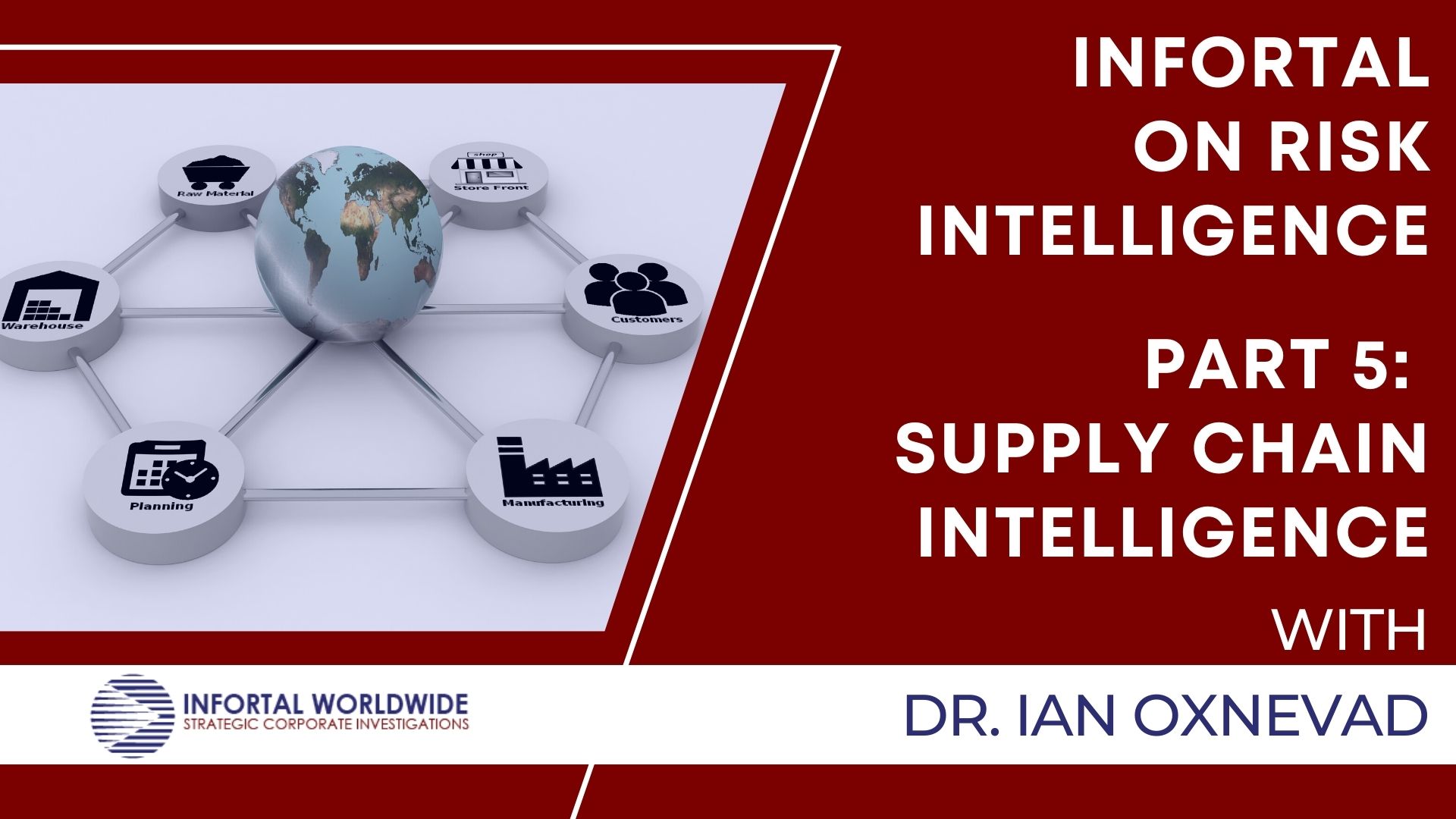
Infortal on Risk Intelligence Part 5: Supply Chain Intelligence with Dr. Ian Oxnevad

In the final part of this week’s five-part special, Tom Fox discusses supply chain risks with Dr. Ian Oxnevad. He talks about the supply chain from a geopolitical risk perspective and the various steps companies can take to prepare themselves against those risks.


Dr. Ian Oxnevad is a political scientist and economist at Infortal Worldwide, a global risk firm that provides due diligence services to support key investment decision-making. Infortal Worldwide supports a lot of private equity investment, mergers, acquisitions, and any risk scenario a business may face.

  • Supply chain intelligence must first begin with a risk analysis. Companies must determine their exposure to geopolitical risks, such as political unrest, social unrest, or war. 
  • How a company de-risks its supply chain depends on which risk is the largest. “Are you looking at closing the distance and reducing logistical costs between a customer and a company?” Ian asks. Suppose your company is considering alternatives to its current supply chain system or systems outside its country. In that case, it must consider corruption, terrorism, organized crime, and ESG. 
  • Ian goes through some steps Infortal takes when counseling companies through de-risking. He describes what it takes to create a solid supply chain risk response plan. 
  • The intelligence process gives companies legal guidance and any other relevant information they need for making the right decisions while mitigating as much risk as possible.

KEY QUOTE

” Supply chain intelligence is key to understanding and avoiding hidden supply chain risks.”-  Dr. Ian Oxnevad 

Resources: 

Infortal Worldwide | Email | Tel: 1.800.736.4999

Categories
Blog

Infortal Worldwide Geopolitical Risk Intelligence 2023 Outlook: Part 5-Supply Chain Intelligence

I recently had the opportunity to visit with, Chris Mason, VP Global Compliance & Investigations at Infortal Worldwide and Dr. Ian Oxnevad, Director, Geopolitical Risk at Infortal Worldwide for a sponsor podcast on Infortal Worldwide’s Geopolitical Risk Intelligence 2023 Outlook. Over this series we considered business intelligence, ESG intelligence, corruption intelligence, sanctions intelligence and supply chain intelligence. In today’s final post in this five-part blog post series, we are joined by Ian Oxevad, Director of Geopolitical Risk at Infortal Worldwide, to discuss supply chain intelligence and how to navigate geopolitical risks. In this concluding blog post in this five-part series, we consider how to use intelligence to de-risk your supply chain and protect your business from geopolitical risks.

Oxnevad holds a PhD in political science and is an expert in in political science, economics, corporate espionage, economic warfare, money laundering, and terrorist financing to help companies understand the risks of their supply chain and how to de-risk it. He explains that supply chain intelligence is far from a new concept and goes as far back as the spice trade in the 15th century. Ian provides a three-step process to navigating supply chain intelligence and de-risking and provides a wealth of knowledge on the subject.

Here are the steps you need to follow to also get risk mitigation.:

1. Assess what your exposure is to certain geopolitical risks.

2. Utilize intelligence to find alternatives that connect a company to its customers.

3. Screen potential alternatives and warning indicators.

1. Assess what your exposure is to certain geopolitical risks.

The first step in assessing a company’s exposure to certain geopolitical risks is to gather information from the client. This includes their risk exposure, concerns, and goals. A company should then use intelligence sources, such as boots-on-the-ground resources and triangulated analysis, to create an intelligence product that can be used to make informed decisions. Once the risks have been identified, a company can then begin to look for potential alternatives to mitigate them. This could involve relocating suppliers to other regions, increasing efficiency, or increasing redundancy. Companies should also be aware of warning indicators that may indicate a rise in risk, such as political unrest, changes in regime, or an increase in militarism. Finally, the company must make an informed decision on which alternative to pursue. For more information on this topic, readers can visit the website Infortal.

2. Utilize intelligence to find alternatives that connect a company to its customers.

Utilizing intelligence to find alternatives that connect a company to its customers requires a two-step process. The first step is to interview the client, assess their risk exposure, and understand their goals. This will then inform the intelligence collection process which should include triangulated analysis, boots on the ground resources, and data from multiple sources. This will be collated into an intelligence product that will provide the client with a clear picture of their potential opportunities to de-risk.

The second step is to screen potential alternatives and conduct due diligence. This includes researching potential suppliers and investors, local conditions, and warning indicators that could signal risk in the future. This should give the company the information they need to make informed decisions and the ultimate decision of which alternative to pursue is left up to them. For more information, listeners can visit the Infortal website.

3. Screen potential alternatives and warning indicators.

The third step in addressing supply chain intelligence is to screen potential alternatives and warning indicators. This involves conducting an intelligence cycle for the company by interviewing the client to determine their risk exposure and goals, and then utilizing boots on the ground resources and triangulating analysis from different sources to refine and integrate information into an intelligence product. Companies can also benefit from due diligence to screen potential suppliers, investors, and local conditions.

It is also important to monitor warning indicators of developing risks. These indicators can include contentious presidential elections, the annexation of Crimea, the integration of Russian mercenaries in the Donatas and Donbas regions, and more. This can help the company anticipate any risk that the company may be exposed to, allowing them to make informed decisions on the best alternative supply chain system for them. Finally, the decision is up to the company and their legal counsel, executives, and other pertinent players.

Navigating supply chain intelligence and de-risking requires a two-step process of gathering information and utilizing intelligence sources to create an intelligence product. Companies should also screen potential alternatives, conduct due diligence, and monitor warning indicators to ensure they make the best decision for their company. With the right strategies and knowledge, any business can protect itself from geopolitical risks and achieve success.

Check out Ian Oxnevard on the Riskology by Infortal podcast here.

Categories
Report from IMPACT 2023

Report from IMPACT 2023: ESG Panel on Ethics, Compliance, and the Future: Navigating Transformation

ECI’s IMPACT 2023 was one of the leading compliance events in 2023. At this conference, Tom Fox, the Voice of Compliance, was able to visit with several of the speakers, exhibitors, participants and one group of ethically minded Girl Scout Troop. In this limited podcast series, Report from IMPACT 2023, Tom explores many of the most cutting-edge topics in ethics and compliance through short podcast episodes. Check out the full series of interviews. You will be enlightened, informed and come away with a fuller and more thorough understanding of the most cutting-edge topics in ethics and compliance. In this episode, Tom visits with a panel of ESG experts including Jacqueline Brevard, former Chief Ethics and Compliance officer of Merck, Andrea Bonime-Blanc, CEO of GeC Risk Advisory and Jose Javier Guadalupe, Integrity Director for the Platform for Social Impact.

In a series of thought-provoking podcast episodes from ECI IMPACT 2023, Tom Fox explores the intersection of ethics and compliance with environmental, social, and governance efforts. These episodes stress the importance of an integrated approach to these areas, emphasizing that businesses prioritizing intangible risks and opportunities are more likely to succeed in the future. The speakers also discuss the challenges of implementing this approach at the board level and the need for forward-thinking board members aligned with the organization’s mission and values. Additionally, the podcasts explore the impact of generational change in the workforce, urging leaders to adapt to the values and mindset of younger generations and create space for their ideas. The importance of ethics as a fundamental part of the future is emphasized, with speakers stressing the need for continuous education and learning amidst rapid changes. Overall, these episodes underscore the relevance of ethics and compliance in guiding organizations through transformative changes.

 Highlights Include 

·      Transformative Integrity

·      Generational Change in the Workforce

·      The Importance of Ethics in a Changing World

Resources 

Jacqueline Brevard on LinkedIn

Andrea Bonime-Blanc on LinkedIn

GEC Risk Advisory

Jose Javier Guadalupe on LinkedIn

Platform for Social Impact

Categories
31 Days to More Effective Compliance Programs

One Month to a More Effective Compliance Program: Day 19 – Compliance Culture At The Bottom

One of the most important focuses of the DOJ’s 2023 ECCP was around culture. This means how far has the culture of compliance been driven down into an organization. The 2019 Guidance posed the following:
Culture of Compliance – How often and how does the company measure its culture of compliance? Does the company seek input from all levels of employees to determine whether they perceive senior and middle management’s commitment to compliance? What steps has the company taken in response to its measurement of the compliance culture?
These questions point to a CCO or compliance practitioner demonstrating how a culture of compliance is being burned into the very fabric of an organization. While leadership at and from the top has long been considered by both the DOJ and compliance professionals as a key element to move compliance forward, the 2019 Evaluation has also crystalized thinking around compliance culture throughout the organization, including at the bottom
Too often, strategies to move a compliance program or even an initiative come from the top of an organization and are pushed down. To fully operationalize compliance, you must have leadership in compliance further down the organization which (hopefully) has been a part of the design process and can lead the implementation throughout an organization.

Three key takeaways:

  1. While tone at the top is critical, the tone at the bottom can work to more fully operationalize compliance.
  2. 95% of the work is done at this bottom level.
  3. Use HR to come up with a strategy to move compliance into the bottom for more complete operationalization.

For more information, check out The Compliance Handbook, 4th edition, here.