Categories
AI Today in 5

AI Today in 5: October 22, 2025, The AI-Bob Edition

Welcome to AI Today in 5, the newest edition to the Compliance Podcast Network. Each day, Tom Fox will bring you 5 stories about AI to start your day. Sit back, enjoy a cup of morning coffee, and listen in to the AI Today In 5. All, from the Compliance Podcast Network. Each day, we consider four stories from the business world, compliance, ethics, risk management, leadership, or general interest that pertain to AI.

Top AI stories include:

  1. AI comes to Builder Bob. (TechEU)
  2. PA aims to lead the nation in AI. (Pittsburgh Post-Gazette)
  3. OpenAI unveils Atlas. (Reuters)
  4. Apple takes on the EU. (PYMNTS)
  5. AI for compliance and security. (CBS42)

For more information on the use of AI in Compliance programs, my new book, Upping Your Game. You can purchase a copy of the book on Amazon.com.

Categories
The Hill Country Podcast

The Hill Country Podcast – Kerr Together: Community Collaboration and Resilience in Kerrville

Welcome to the award-winning The Hill Country Podcast. The Texas Hill Country is one of the most beautiful places on earth. In this podcast, Hill Country resident Tom Fox visits with the people and organizations that make this the most unique area of Texas. ⁠This week, Tom welcomes three pivotal figures from Kerr Together—Theresa Metcalf, Kelly Hagemeier, and Judy Eychner.

Our topic this week is Kerr Connect, which was created in the wake of the devastating July 4th flood in Kerr County. They explore the unique partnership between the city’s government, private businesses, and citizens, which exemplifies the community’s resilience and collaboration, especially during the economic recovery from the devastating July 4th flood. The discussion covers the formation of various working groups, including long-term recovery efforts, economic development, and river stewardship. The leaders share their experiences of community-driven initiatives, the importance of clear communication, and how everyday citizens stepped into leadership roles to aid in disaster recovery. For those interested in learning more or getting involved, they recommend visiting the Kerr Together website.

Key highlights:

  • Economic Recovery from the July 4th Flood
  • Community-Driven Efforts and Long-Term Recovery
  • Reimagining Kerrville’s Future
  • Organizing and Mobilizing Community Support
  • How to Get Involved with Kerr Together

 Resources:

Kerr Together

Other Hill Country Focused Podcasts

Hill Country Authors Podcast

Hill Country Artists Podcast

Texas Hill Country Podcast Network

Cover Art

Nancy Huffman

Categories
Daily Compliance News

Daily Compliance News: October 22, 2025, The Rejection Therapy Edition

Welcome to the Daily Compliance News. Each day, Tom Fox, the Voice of Compliance, brings you compliance-related stories to start your day. Sit back, enjoy a cup of morning coffee, and listen in to the Daily Compliance News. All, from the Compliance Podcast Network. Each day, we consider four stories from the business world, compliance, ethics, risk management, leadership, or general interest for the compliance professional.

Top stories include:

  • Rejection therapy and risk-taking. (FT)
  • BCG appoints new chief risk officer. (FT)
  • How CFPB scraps Citibank Consent Order. (Reuters)
  • Worldline finds AML implementation uneven. (Bloomberg)

The Daily Compliance News has been honored as the No. 2 in the Best Regulatory Compliance Podcasts category.

Categories
Great Women in Compliance

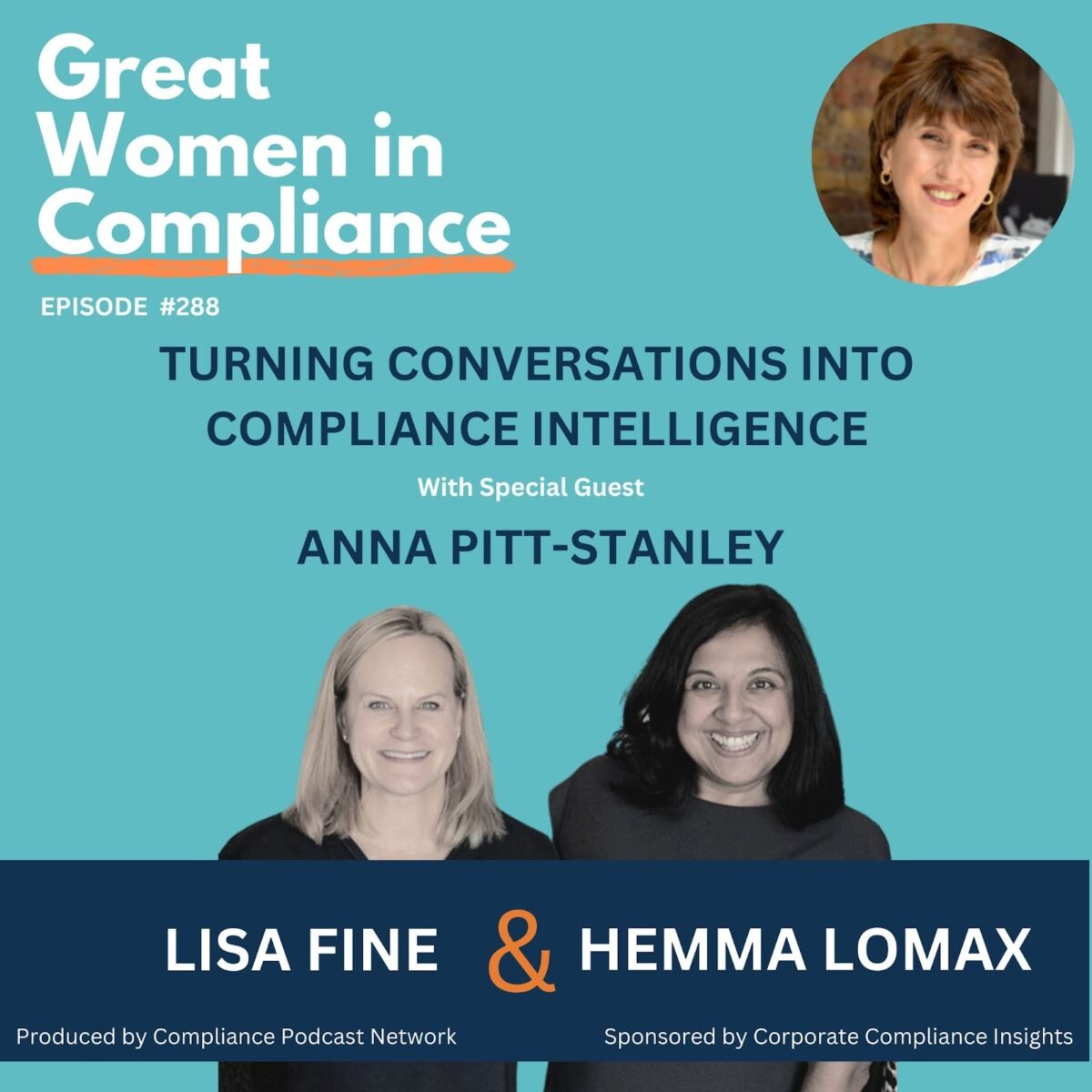
Great Women in Compliance – Turning Conversations into Compliance Intelligence with Anna Pitt-Stanley

In this episode of Great Women in Compliance, co-host Hemma Lomax sits down with Anna Pitt-Stanley, Co-Founder and COO of Umony, to explore how the next generation of compliance technology can transform how organizations listen to their people, their culture, and their risk signals.

From her early work in voice innovation to co-founding Umony, Anna’s journey is rooted in a simple but powerful idea: that the truth of human behavior lives in communication. She and her co-founder, Dean Elwood, were driven by the frustration of seeing compliance programs overwhelmed by data but starved for insight. Together, they set out to build a company that turns conversations into decision-useful intelligence, without losing the human heart at the center of it all.

Anna shares how she leads with empathy, builds trust through operational discipline, and models what it looks like to be a C-suite leader who truly cares. This episode blends technology, leadership, and compassion — and reminds us that compliance done well is less about control and more about connection.

Episode highlight:

  • What does “the truth of behavior lives in communication” mean for compliance and culture?
  • How to balance surveillance and stewardship in modern communications governance.
  • Building a culture of compliance and compassion inside a high-growth tech company.
  • Leadership lessons from scaling with integrity: operational empathy, psychological safety, and trust by design.
  • The future of decision-useful compliance and what human-centric technology looks like in practice.

Biography:

Anna Pitt-Stanley is Co-Founder and Chief Operating Officer of Umony, where she leads operational governance, talent, partnerships, and disciplined execution as the company scales.

Before Umony, Anna co-founded Voxygen, a voice and communications innovation company later acquired by Lebara Group, where she served on the leadership team and board. Over her career, she has built a reputation for bridging complex, regulated environments with practical, people-first execution, delivering programs that align compliance, operations, and culture.

Anna holds an LL.M. in Law from the London School of Economics and Political Science (LSE). She also serves as a Director of Umony Limited and Umony Holdings Limited.

She is known for her focus on operational empathy, governance excellence, and creating workplaces where compliance and compassion thrive side by side.

Resources & Mentions:

Categories
Blog

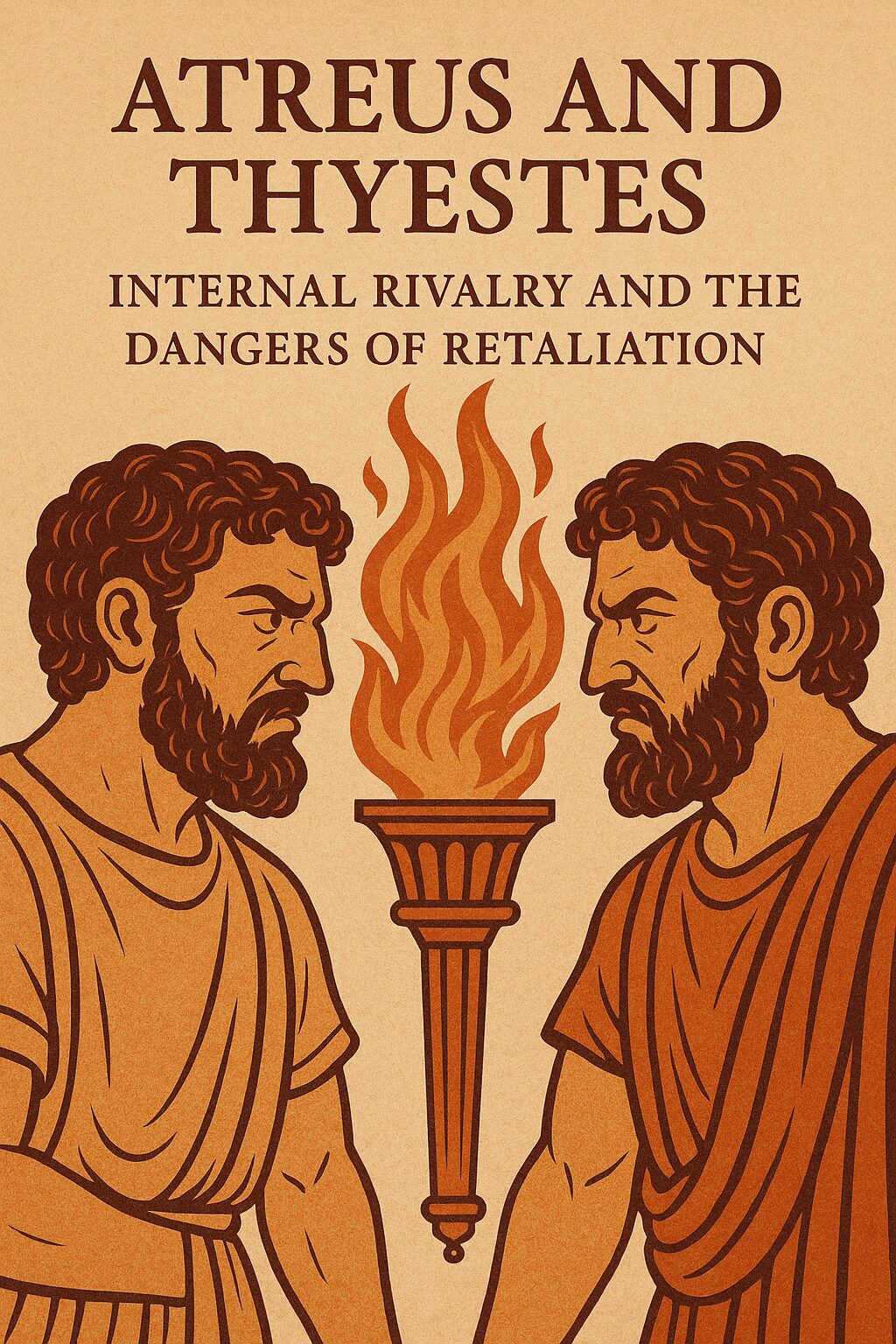
House of Atreus Week: Part 3 – Atreus and Thyestes – Internal Rivalry and the Dangers of Retaliation

We continue to look at the lessons from the House of Atreus for the 21st-century compliance profession, focusing on the key stories and mining them for insights. In today’s Part 3, we take up the feud between Atreus and Thyestes, sons of Pelops and heirs to his poisoned legacy. Their myth is not just about murder and betrayal; it is about what happens when leaders weaponize authority for vengeance rather than stewardship.

Every organization eventually faces conflict within its own ranks. Disagreements over power, vision, and credit are inevitable. But when rivalry turns to revenge, governance collapses, trust erodes, and compliance becomes collateral damage. Today, we take a deep dive into this issue from the 21st-century compliance perspective.

The Feast of Vengeance

After Pelops’ death, his sons Atreus and Thyestes fought over the throne of Mycenae. They began like many corporate siblings, ambitious, capable, and determined to lead. But soon ambition turned into envy. Thyestes seduced Atreus’ wife and stole a prized golden lamb that symbolized kingship.

Atreus, humiliated, plotted revenge. Pretending reconciliation, he invited Thyestes and his sons to a grand banquet. During the feast, Atreus served them a meal of Thyestes’s own children. (Shakespeare used this story much later.) When the truth was revealed, horror swept the hall. Thyestes cursed his brother, and the curse carried through the next generation, consuming Atreus’ son Agamemnon and his grandson Orestes. It is a horrifying tale, but beneath the gore lies a familiar truth: internal retaliation destroys organizations from the inside out.

When Leadership Turns on Itself

Atreus’ banquet is not simply a mythic horror story fit for my classic monster movie month; rather, it is a 21st-century metaphor for every leadership team that devours its own. In terms of compliance, Atreus and Thyestes represent toxic internal politics. They illustrate how leadership rivalries, unchecked ego, and personal vendettas can dismantle governance systems faster than any external scandal.

Modern organizations suffer the same fate when:

  • Executives undermine each other publicly.
  • Managers retaliate against whistleblowers or rivals.
  • Compliance officers are punished for doing their jobs.

When leaders use their authority to punish rather than protect, culture collapses into fear. Employees stop reporting misconduct, colleagues turn on one another, and the compliance function becomes an instrument of control instead of accountability. Atreus’ feast might look extreme, but we have all seen versions of it in the workplace.

The Corporate Equivalent of the Cannibal Feast

Let’s translate the myth into modern terms.

  • Atreus’ “banquet” = a retaliatory campaign designed to humiliate a rival or critic.
  • Thyestes’ seduction = internal manipulation, gossip, or theft of credit.
  • The curse = the lingering culture of distrust that infects every successor.

Retaliation rarely ends with the original act. Once one leader weaponizes power, everyone learns the same lesson: “You’re safe only when you’re silent.” That’s how once-strong organizations become silos of fear. Compliance reports decline not because misconduct has ended, but because employees no longer believe reporting is safe. Like the House of Atreus, the company devours itself while pretending to feast.

The Dangers of Internal Retaliation

From the compliance perspective, retaliation is one of the clearest indicators of cultural rot. It’s also one of the DOJ’s most serious red flags. The 2024 Evaluation of Corporate Compliance Programs (ECCP) explicitly asks prosecutors to evaluate:

  • Whether employees are protected from retaliation.
  • Whether complaints lead to timely investigations.
  • Whether leadership promotes a speak-up culture.

If your organization punishes dissent, even quietly, you may well find yourself already on the DOJ’s radar. Atreus’ actions were the ultimate act of retaliation: gruesome, personal, and destructive. But the underlying pattern is timeless, leadership vengeance disguised as discipline. The lesson is as modern as it is mythic: a compliance program without psychological safety is a compliance program in name only.

Case Study Parallels: When Modern Leaders Feast on Their Own

  • Uber (2017): Retaliation against employees who raised harassment claims led to executive resignations and a cultural overhaul.
  • Wells Fargo: Whistleblowers reported retaliation after flagging fraudulent account practices, compounding reputational damage.
  • Boeing (737 MAX): Internal dissent on safety concerns was suppressed, leading to tragedies that reshaped regulatory scrutiny.

Each of these companies faced its own version of Atreus’ banquet, consuming credibility and trust in the process.

The Role of Compliance in Preventing Organizational Cannibalism

The compliance function exists not just to catch misconduct, but to defend integrity against internal retaliation. A strong compliance culture ensures that ethical leadership trumps personal rivalry. Here’s how to do it:

1. Build governance that transcends personalities. Authority should rest on process, not proximity to power.

2. Separate investigative authority from reporting lines. Compliance officers must have autonomy to act without interference.

3. Educate leadership on the cost of retaliation. Retaliation isn’t just a legal risk — it’s a culture killer.

When leaders understand that internal war erodes value faster than external threats, they start behaving more like guardians than gladiators.

Creating a Culture of Trust After Betrayal

Atreus’ kingdom fell because no one could trust anyone. In business terms, that’s what happens when transparency dies. To rebuild trust, companies must do three things:

1. Acknowledge Harm. Pretending internal feuds never happened only deepens cynicism. Compliance leaders must publicly reinforce that retaliation and toxicity are violations of corporate values. Acknowledgment is the first step toward cultural repair.

2. Reinforce Transparency. Regular reporting on investigations, outcomes, and disciplinary measures builds credibility. Employees must see that misconduct is addressed fairly, not selectively.

3. Model Ethical Reconciliation. Where conflict exists, leaders must model resolution through dialogue, not vengeance. A modern compliance culture is one where accountability coexists with forgiveness, where mistakes are corrected, not avenged.

Leadership Ego and the Compliance Cost

The rivalry between Atreus and Thyestes began with ego, the same ego that drives many corporate meltdowns. Ego tells leaders that compliance is optional, that their moral compass is self-calibrated. It convinces them that retaliation is justified, that “he started it,” or that removing a critic will restore order.

But as every compliance professional knows, ego is expensive. It costs credibility, cooperation, and often millions in remediation and fines. The only sustainable leadership model values humility over hubris. In compliance terms: replace ego with ethics, and rivalry with responsibility.

The Compliance Evangelist’s Reflection: The Curse of the Retaliator

Atreus believed vengeance would bring closure. Instead, it ensured endless conflict. In organizations, retaliation operates the same way. It may silence the critic today, but it guarantees more fear and more silence tomorrow.

The DOJ, SEC, and whistleblower programs worldwide have made one thing clear: protecting those who speak up is not just the right thing to do; it is the smart business approach. The companies that thrive in the modern regulatory landscape are those that treat every internal voice as an asset, not a threat. Atreus’ downfall shows what happens when leaders fail to learn that lesson. His house became a case study in the cost of ignoring culture. For compliance professionals, that’s the real moral: you cannot achieve ethical stability through punishment alone.

From Retaliation to Redemption

The saga of Atreus and Thyestes teaches us that retaliation is never a solution; it is a multiplier of risk. The only way to end the cycle is through structural and cultural change: transparency, accountability, and empathy in leadership. For compliance professionals, that means moving from enforcement to enlightenment, helping leaders understand that the true power of compliance is not control, but trust. Because when leaders stop feeding on their own and start feeding their culture with integrity, the curse finally breaks.

I hope you will join me tomorrow for Part 4 — Agamemnon and Clytemnestra: When Power Breeds Entitlement. In it, we will explore how Agamemnon’s moral compromises and Clytemnestra’s revenge illuminate the modern dangers of performance pressure, ethical trade-offs, and the corruption of power at the top.


Categories
AI Today in 5

AI Today in 5: October 21, 2025, The Oligarchy in AI Edition

Welcome to AI Today in 5, the newest edition to the Compliance Podcast Network. Each day, Tom Fox will bring you 5 stories about AI to start your day. Sit back, enjoy a cup of morning coffee, and listen in to the AI Today In 5. All, from the Compliance Podcast Network. Each day, we consider four stories from the business world, compliance, ethics, risk management, leadership, or general interest that pertain to AI.

Top AI stories include:

  1. What is an oligarchy? (WSJ)
  2. What CFOs need to know about AI for compliance. (PYMNTS)
  3. AI moves from hype to results in compliance. (EQS)
  4. Using AI to tackle tariffs. (PYMNTS)
  5. Human in the loop for compliance is a must. (MedLearnPublishing)

For more information on the use of AI in Compliance programs, my new book, Upping Your Game. You can purchase a copy of the book on Amazon.com.

Categories
Daily Compliance News

Daily Compliance News: October 21, 2025, The All WSJ Edition

Welcome to the Daily Compliance News. Each day, Tom Fox, the Voice of Compliance, brings you compliance-related stories to start your day. Sit back, enjoy a cup of morning coffee, and listen to the Daily Compliance News—all from the Compliance Podcast Network. Each day, we consider four stories from the business world: compliance, ethics, risk management, leadership, or general interest, all relevant to the compliance professional.

Top stories include:

  • What’s on your water menu? (WSJ)
  • The market spanked BNP Paribas. (WSJ)
  • How China took over rare earths. (WSJ)
  • Green shipping plan delayed. (WSJ)

The Daily Compliance News has been honored as the No. 2 in the Best Regulatory Compliance Podcast category.

Categories
Innovation in Compliance

Innovation in Compliance – AI in Financial Crime and Compliance: A Deep Dive with Oracle’s Jason Somrak

Innovation comes in many areas, and compliance professionals need to be ready for it and embrace it. Join Tom Fox, the Voice of Compliance, as he visits with top innovative minds, thinkers, and creators in the award-winning Innovation in Compliance podcast. In this episode,  host Tom Fox welcomes Jason Somrak, the Chief of Product and Strategy for Financial Crime and Compliance at Oracle.

Jason elaborates on his professional background and his decade-long journey at Oracle. He delves into the transformative role of AI in combating financial crimes, exploring how AI has evolved from predicting false positives to using behavioral models and generative AI to enhance investigation processes. Their discussion touches on AI’s potential to shift from detection to prevention, the impact of real-time AML, and the significance of automating noise in compliance investigations. They also discuss the importance of regulatory relationships and the emerging challenges in risk management. The episode concludes with insights into the future skills needed in compliance roles and the critical role of corporate culture in implementing AI solutions.

Key highlights:

  • AI’s Role in Financial Crime Prevention
  • Proactive vs. Reactive Approaches
  • AI in Investigations and Triage
  • Emerging Challenges in Risk Management
  • Future of AI in Compliance
  • Skills for Next-Gen Compliance Officers

Resources:

Jason Somrak on LinkedIn

Oracle Financial Services

Tom Fox

Instagram

Facebook

YouTube

Twitter

LinkedIn

Categories
FCPA Compliance Report

FCPA Compliance Report – Self-Disclosure on Both Sides of the Atlantic

Join Tom Fox as he welcomes Simon Airey and Caitlin Sheard, partners at McDermott Will & Schulte, and both experts in the fields of investigation and compliance from both sides of the Atlantic. They take a deep dive into issues around self-disclosure on both sides of the Atlantic.

Simon Airey and Caitlin Sheard are leading experts in the field of investigations and compliance, each bringing a nuanced perspective to the complexities of self-reporting to the Department of Justice (DOJ) in the US and the Serious Fraud Office (SFO) in the UK. Simon, a distinguished barrister, underscores the incentives for companies to self-report but cautions that the process is fraught with complexities, particularly in the UK, where court approval is required for deferred prosecution agreements. Caitlin highlights the potential benefits of self-disclosure, such as possible declinations, but notes the associated costs, including time, legal fees, and reputational risks. Both experts emphasize the necessity of strategic planning and legal counsel to navigate the intricacies of international compliance, particularly in light of increasing enforcement activity and evolving legal landscapes.

Key highlights:

  • Incentives for Self-Disclosure in DOJ and SFO
  • Strategic Self-Disclosure Consideration for Legal Cases
  • Cross-Border Self-Disclosure Strategies for Companies
  • Global Challenges in Corporate Self-Disclosure Processes
  • Whistleblower Tips Driving Future FCPA Enforcement

Resources:

 McDermott, Will & Schulte

Simon Airey

Caitlin Sheard

Cross-Atlantic Impact: DOJ and SFO Self-Reporting and Enforcement Priorities

Tom Fox

Instagram

Facebook

YouTube

Twitter

LinkedIn

For more information on the use of AI in Compliance programs, my new book, Upping Your Game, is available. You can purchase a copy of the book on Amazon.com.

Categories
Red Flags Rising

Red Flags Rising: S01 E30: Look Before You Leap, Think Before You Speak

Fresh off the October 15, 2025, WIT-NC/PAEI/TTRA “Global Trade Compliance Best Practices Conference” in Santa Clara, California, Mike and Brent discuss the practical takeaways of several recent media reports and statements from the U.S. Congress, including how compliance programs that incorporate the high-probability standard give executives and spokespersons the most options. Specifically, they discuss the conference (00:49); the recent Affiliates Rule (01:27); why straightforward statements that a company “complies with the law” might generate cynicism from the public and inquiries as to how from the government (02:59); why it’s important for companies to consider the context in which their public statements will appear, even where they might not agree with the facts asserted in that context (04:06); how delegitimizing the laws in the eyes of the public might be one of the smugglers’ objectives (05:47); how thinking about compliance as never being a one-and-done solution can help avoid pitfalls in public statements (06:54); why it’s dangerous to rely upon assertions by anonymous “legal experts” reported in articles about the existence of loopholes, including because those loopholes do not actually exist (08:49); the importance of keeping in mind, in the context of the Entity List and the Affiliates Rule, that the List is but one part of U.S. export controls and statements that fixate on the Entity List’s applicability expose corporations to questions about their compliance with other catch-all provisions, with General Prohibition 10, and with the various inchoate provisions (10:27); the importance of appreciating that U.S. regulators read the news too (11:40); how the “high probability” standard can help companies in making enhancements to their compliance programs to better support broader public statements as to their compliance with the law (14:41); recent reports about U.S. items being sold for crime control purposes and attention from the U.S. Congress on those reports (15:03); similar risks related to the recent report by the U.S. House of Representatives’ Select Committee on the Chinese Communist Party (17:23); keeping in mind that your own disagreement with U.S. national security policy is not a defense to export controls promulgated in support of that policy (19:02); and the importance of having advisors who are viewed by the government as honest brokers that are not clinging to legacy views about the government’s intentions or authorities (21:07).

Mike and Brent then conclude with another installment of Brent Carlson’s “Managing Up” (23:29).

Resources:

Contact Brent: brent@redflagsrising.com

Contact Mike: michael.huneke@morganlewis.com

Learn more about the conference’s organizing associations:

Women in International Trade – Northern California (WIT-NC)

Professional Association of Exporters & Importers (PAEI)

Technology Trade Regulation Alliance (TTRA)