Categories
31 Days to More Effective Compliance Programs

One Month to a More Effective Compliance Program: Day 11 – Institutional Justice and Institutional Fairness

Companies have finally come to realize that institutional justice and fairness are perhaps the most basic tenet of any successful workplace. If employees believe they will be treated fairly, it will engender a level of trust that can work to not simply motivate employees but lead to a more successful workplace and, at the end of the day, a more profitable company. This encompasses the entire lifecycle of the employment relationship, from hiring through separation. It works in areas as seemingly disparate as compensation and incentives, discipline, promotion, and internal reporting.

On this final point, Kyle Welch and Stephen Stubben, in their 2019 paper entitled “Evidence on the Use and Efficacy of Internal Whistleblowing Systems”, noted that a robust whistleblower reporting system speaks to a functioning and ethical corporate culture. Employees who can report issues, in a fair manner, without fear of retaliation are more empowered to make the company run more efficiently and profitably. Yet an equally interesting finding was where there was robust internal reporting, employees were more likely to speak up to improve overall business processes, thereby making the company more profitable.

An often-overlooked role of any CCO or compliance professional is to help provide employees with institutional justice. If your compliance function is seen to be fair in the way it treats employees, in areas as varied as financial incentives, to promotions, to appropriate and consistent discipline meted out across the globe; employees are more likely to inform the compliance department when something goes array. If employees believe they will be treated fairly, it will go a long way to more fully operationalizing your compliance program.
Three key takeaways:

  1. The DOJ and SEC have long called for appropriate and consistent application of both incentives and discipline.
  2. The Fair Process Doctrine will help set institutional justice as the norm in your organization.
  3. Inconsistent application of discipline will destroy your compliance program credibility.

For more information, check out The Compliance Handbook, 4th edition here.

Categories
Blog

Mary Shirley’s new book “Living Your Best Compliance Life”

Today, we are diving into the world of compliance with a focus on enhancing compliance programs. We’ll be exploring the key takeaways from my recent conversation with well-known compliance maven Mary Shirley and Tom Fox, where we discuss Mary’s first solo book, “Living Your Best Compliance Life: 65 Hacks and Cheat Codes to Level Up Your Ethics and Compliance Program.” This book offers valuable insights and practical advice for compliance professionals, emphasizing authenticity, engagement, and continuous improvement. Let’s discover some innovative ways to level up your ethics and compliance program!

I asked Mary about her writing style. She began by saying that she had not been confident about her writing skills. She tended to write as she spoke, which served her well for public speaking but not so well in written works. She said she had “tried very hard to improve my writing and part of that has been challenging myself to do things like publish articles because if I didn’t work on it, then it wouldn’t get addressed. The first thing I’d say about writing style is just doing my best with what I have and knowing that it’s not a predominant strength of mine but consciously working on it, listening to feedback from others.”

She added that “as cute as it sounds really being authentic.” For me, speaking in a conversational tone rather than making things legalistic is how I’ve been able to survive as a compliance officer, and it’s how I’m able to survive when talking to other compliance officers as well. We are naturally a stuffy sort of a function, and I’m not really a stuffy person, and so why hide that?”

I asked her about how she wrote, and she said that during the pandemic, she had a bit of extra time since she worked from home and did not have to commute. “Whenever the mood took me, really, I always had in the back of my mind to be thinking about things and conversations with friends and colleagues in the space to note things down as they came to me and to remember to probe people more if they shared an idea that was interesting that I thought could be featured in the book.” She also related that she had  “no kids, no pets, no plants, which I think gives me the unique opportunity to be able to leverage some of my time in ways that I appreciate that others are not necessarily able to. So for me it was, any kind of time. My weekends, I spent a lot of time doing the drafting then.”

We then turned to the chapters of her book, beginning with the first chapter, The Foundation of a Strong Compliance Program. In it Mary highlights the significance of program assessments as the foundation of a compliance program. These assessments help direct compliance programs and provide guidance to new compliance personnel. To make the process more effective, Mary suggests utilizing the free resource guide with customizable worksheets available on Corporate Compliance Insights’ dedicated page for the book. These worksheets help structure and organize ideas, making them adaptable for different environments, organizations, and cultures.

The next chapter is Team Building: Building Stronger Connections, Especially in Remote Work Settings. In the era of remote work, team building has become even more crucial. Mary emphasizes the need for dedicated team building in compliance programs, especially for remote teams. By fostering stronger connections and collaboration, compliance professionals can enhance their program’s effectiveness. Mary’s book offers valuable insights on various team building strategies that can be implemented, even with limited resources.

We next reviewed her chapter entitled, Culture and Communications: Fostering a Culture of Integrity. Creating a culture of integrity within compliance programs is essential for success. Mary’s book delves into the chapter on culture and communications, providing practical guidance on how to foster such a culture. By challenging traditional perceptions of compliance and adopting a more authentic and human-centered approach, compliance professionals can create an environment that promotes ethical behavior and compliance.

In the burgeoning age of AI in compliance, Mary’s next chapter entitled, A Humane Compliance Function: Embracing Authenticity is all the more topical. Gone are the days of a strict and robotic approach to compliance. Mary’s book encourages compliance professionals to embrace a more authentic and humane compliance function. By prioritizing compassion and authenticity, compliance programs can foster trust, engagement, and employee satisfaction. Mary provides cost-effective solutions and practical guidance on how to implement this approach effectively.

It will not surprise compliance professionals to find the next chapter, Unlocking the Power of Compliance Week: Engagement and Feedback. In this chapter Mary focuses on the celebration of Corporate Compliance and  Ethics Week as a powerful tool that is often underutilized. We discussed how Compliance Week can be used as a two-way feedback mechanism to better serve internal clients. Mary shares her experience of using fun and unconventional methods to engage employees during Compliance Week, such as games that require answering compliance questions to earn tools or rewards. This not only tests the absorption of compliance training but also identifies gaps in knowledge.

Compliance Week can provide valuable insights into areas where more work is needed. Mary suggests using Compliance Week to test basic knowledge, such as knowing where to find compliance policies or the name of the chief compliance officer. She even shares an example from her book where people got the answer wrong about the name of the chief compliance officer. By incorporating low-tech methods like easels and whiteboards, compliance professionals can gather information effectively during Compliance Week.

In conclusion, Mary Shirley’s book, “Living Your Best Compliance Life,” offers compliance professionals valuable insights and practical advice for enhancing compliance programs. By focusing on authenticity, engagement, and continuous improvement, compliance officers can create a culture of integrity and foster stronger connections within their teams. Additionally, Compliance Week provides a powerful opportunity for engagement and feedback. By utilizing this tool effectively, compliance professionals can identify areas for improvement and continuously enhance their programs. So, let’s embrace these practical tips and data-driven insights to level up our ethics and compliance programs!

Remember, Mary’s book will be released on August 15th in both Kindle and paperback formats. You can find it on Amazon.com.

You can also reach Mary at the following:

LinkedIn

Book: 65 Hacks & Cheat Codes to Level Up Your Ethics & Compliance Program | from CCI Press | Compliance Communication Handbook (corporatecomplianceinsights.com)


Categories
Daily Compliance News

Daily Compliance News: August 15, 2023 – The All FT Edition

Welcome to the Daily Compliance News. Each day, Tom Fox, the Voice of Compliance brings to you compliance-related stories to start your day. Sit back, enjoy a cup of morning coffee, and listen in to the Daily Compliance News. All, from the Compliance Podcast Network. Each day we consider four stories from the business world, compliance, ethics, risk management, leadership, or general interest for the compliance professional.

  • African Development Bank not using ABC funds. (FT)
  • Aide to Madagascar leader arrested for corruption. (FT)
  • Bosses must take the time to learn from mistakes. (FT)
  • China de-coupling? (FT)
Categories
Career Can D0

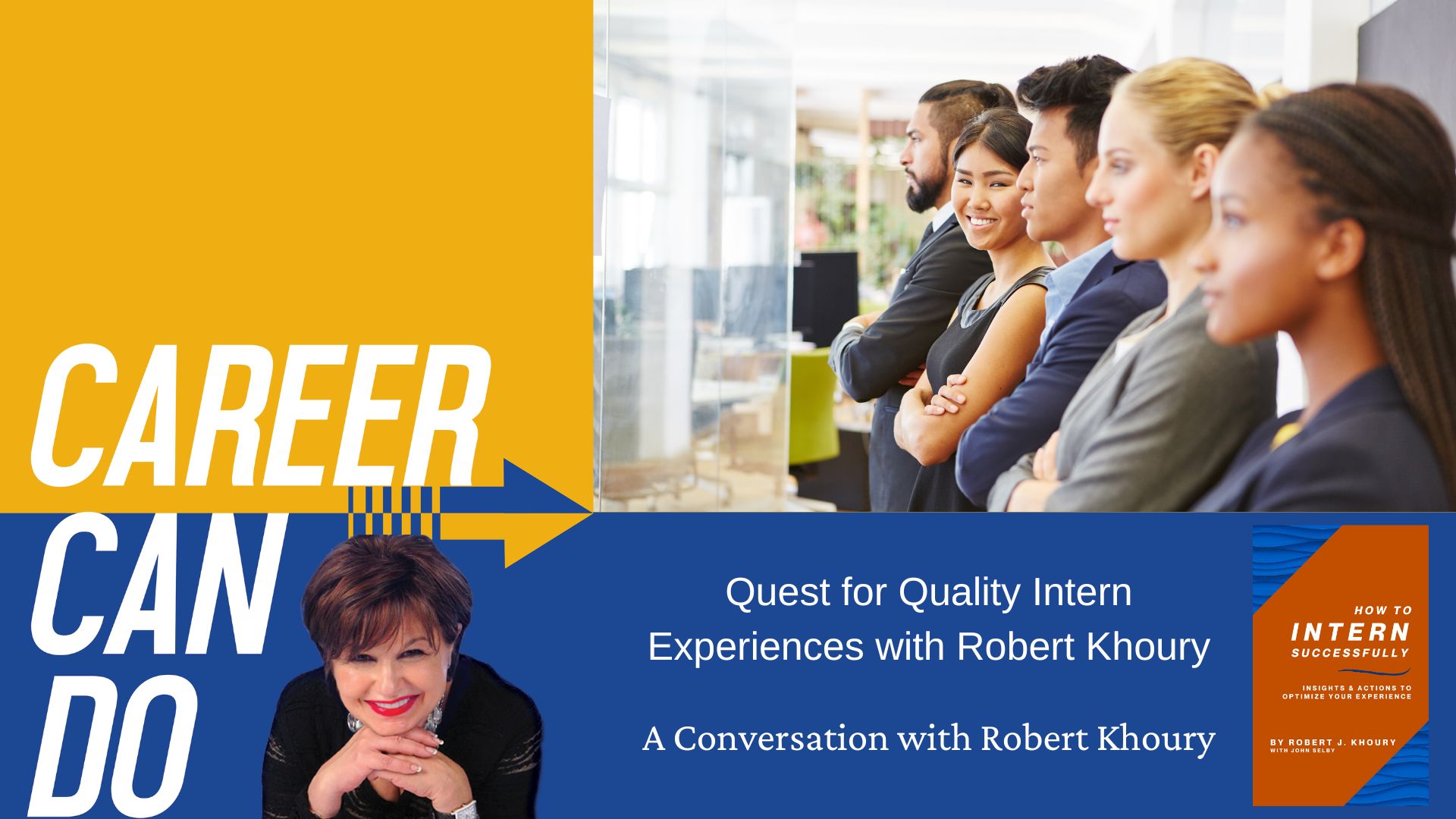
Quest for Quality Intern Experiences with Robert Khoury

Is there a right way to guide young professionals in today’s competitive world? In this episode of Career Can Do, guest Robert Khoury shares insights into Agile Rainmakers’ unique internship program, which offers students a rich blend of autonomy, hands-on experience, and valuable interactions with clients. Robert is the founder and CEO of Agile Rainmakers and author of a groundbreaking series on internships, How to Intern Successfully. A visionary with a keen focus on crafting transformative internship experiences, his approach is rooted in principles like harmony, empathy, intentionality, and empowerment. His commitment to bridging the gap between academia and the corporate world has made him a sought-after figure in discussions around career development and the future of work. Robert joins Mary Ann Faremouth to share  invaluable insights on how to empower students, address talent shortages, and ensure internships offer tangible value for both interns and companies.

Addressing the talent shortage companies face today, Agile Rainmakers embodies principles like harmony and empowerment, ensuring mutual satisfaction for both interns and clients. The program empowers students to set their own goals and engage directly with clients, equipping them with both hard and soft skills needed in the modern workplace. It aims to foster a community of support and mentorship by connecting students with alumni, parents, and employers, emphasizing principles such as empathy and intentional communication.


Robert underscores the importance of the wrap-up process in achieving closure and ensuring satisfaction for all stakeholders. This thorough wrap-up not only facilitates smooth transitions but also encourages students to articulate their gratitude, teaching them the art of professional communication. Through activities like writing thank-you notes and participating in feedback surveys, interns reflect upon their journey, helping them grow and align their career aspirations.


How to Intern Successfully is dedicated to bringing dignity to the internship discourse. With titles covering topics from designing exceptional internships to mentoring and parental involvement, Robert aims to elevate the perception of internships. His holistic view integrates feedback from multiple perspectives, reaffirming the idea that internships can shape the professional future of students while addressing the pressing workforce shortages.


Resources

Robert Khoury on the Web | LinkedIn

Faremouth.com

Categories
Data Driven Compliance

Data Driven Compliance: Heidi Hunter on Leveraging AI and Data-Driven Solutions for Risk Management in The Financial Industry

Are you struggling to keep up with the ever-changing compliance programs in your business? Look no further than the award-winning Data Driven Compliance podcast, hosted by Tom Fox, which is a podcast featuring an in-depth conversation around the uses of data and data analytics in compliance programs. Data Driven Compliance is back with another exciting episode The intersection of law, compliance, and data is becoming increasingly important in the world of cross-border transactions and mergers and acquisitions.

In this podcast episode, Tom Fox and Heidi Hunter, Chief Product Officer – GBG Americas, explore the intersection of compliance, risk analysis, fraud detection, and cybersecurity. They discuss the importance of identity verification solutions in meeting regulatory requirements and mitigating fraud during customer onboarding. The conversation also delves into the challenges and opportunities of AI in compliance, emphasizing the need for transparency and documentation. AI’s role in risk analysis and fraud detection is examined, highlighting the need for human reasoning and oversight to overcome AI’s limitations. The importance of understanding and mitigating cybersecurity risks is emphasized, with a discussion on red-team and blue-team exercises. Overall, the episode provides insights into maintaining compliance, mitigating risks, and addressing threats in the financial industry.

·      Identity verification solutions

·      Challenges and Opportunities of AI in Compliance

·      The Role of AI in Risk Analysis

·      AI and Fraud Detection

·      The Importance of Understanding and Mitigating Cybersecurity Risks

Resources:

Heidi Hunter on LinkedIn

GBG


Tom Fox 

Connect with me on the following sites:

Instagram

Facebook

YouTube

Twitter

LinkedIn

Categories
Blog

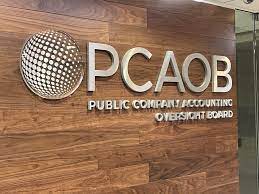
PCAOB Proposed Rule on Compliance Audits

In the realm of auditors intersecting compliance and fraud risk audits, a fierce battle of perspectives rages on. Compliance professionals yearn for a bigger role, a seat at the table to tackle potential compliance violations. Yet, as the storm brews, the audit community hesitates, fearing the unfamiliar waters of becoming compliance and legal violation experts. Brace yourselves, for the unexpected outcome lies just beyond the horizon.

Compliance professionals are generally accepting of the idea that audit firms might look for compliance violations, as long as the proposal includes meeting with the chief ethics and compliance officer and reviewing the state of the compliance program with the audit committee. Many auditors do not want the additional responsibility, claiming it is outside their area of expertise and the requirement will increase audit costs.

Other trade and industry groups have weighed in as well. The American Bankers Association said in a letter “With respect to the legal function, auditors may be put into a position to second-guess a company’s own legal counsel regarding whether noncompliance may have occurred.  “With respect to the management function, the requirement that auditors perform ‘enhanced risk assessment procedures’ could result in auditors second-guessing how management allocates the company’s financial and human resources. This would not only blur responsibility between the legal, management and audit functions, but would also divert auditors’ time, attention and resources away from auditing financial statements.”

The group went on to note that  “Various federal and state regulatory authorities in the United States have a responsibility to examine, monitor and, where appropriate, bring enforcement actions against companies that do not adhere to laws and regulations. Moreover, given the many and varied private rights of action available against corporations in the United States, companies are subject to even further scrutiny and liability for noncompliance.”

Stephen Foley, writing in the Financial Times, said that some companies have objected that the implementation of the proposal might negatively impact the attorney/client privilege. He wrote “companies said the new rules could mean more correspondence with their lawyers would have to be shared with auditors, with the result that it loses its legal privilege and could become evidence in litigation.” He cited to Ronald Edmonds, controller at the chemicals group Dow, that “Company personnel could be more hesitant to disclose legal violations to their counsel if they fear that the communication will not be privileged. Attorneys may also hesitate to prepare written analysis for their clients for fear that it would end up non-privileged and ultimately in the hands of a legal adversary.”  Amy Johnson, controller at RTX said “The broad scope and volume of information that would be required to be shared with auditors is likely to encompass sensitive attorney advice.”

Conversely, PCAOB Chair Erica Williams told the FT, “Companies’ non-compliance with laws and regulations, including fraud, can really have devastating consequences for investors. This proposal is simply making sure that the protection investors think they’re getting today matches what the standard requires.” Foley cited to Brandon Rees, the AFL-CIO deputy director who said “All too often when a fraud is exposed, it rarely comes to light from the auditors. Auditing standards should require auditors to have uncomfortable conversations with management.”

The PCAOB will have to consider this feedback from its consultation period before deciding whether to push ahead with the proposal, or to amend or scrap it. Two of the five board members have said they are opposed to the new rules, but a simple majority is all that is needed. What are some of the issues that auditors may face if the proposed rule is enacted?

If auditors are mandated to assume more compliance responsibilities as per the proposal, there may be several challenges to address. One of the primary concerns is whether auditors have the requisite knowledge and training to identify and manage compliance violations efficiently. Furthermore, the elevated costs associated with hiring legal experts, coupled with the increased liability facing auditors can potentially create a barrier to the rule’s successful implementation.

The proposal has the potential to shape how audit firms approach their investigations into client companies, particularly with regard to compliance and legal violations. By requiring auditors to look more closely at non-compliance with laws and regulations, the proposal is intended to deliver more comprehensive audits and prevent financial fraud. However, the incorporation of duties usually performed by legal professionals into the auditing process could complicate the auditors’ role, potentially raising costs and increasing liability.

The proposed rule generates divided opinions between compliance professionals and the audit community. Compliance executives generally support the proposal, provided it includes engagement with the chief ethics and compliance officer, and necessitates a comprehensive review of the compliance program with the audit committee. On the contrary, most auditors, represented by the PCAOB, argue against the implementation of this rule, citing a lack of necessary expertise to identify compliance violations, and increased burden of audit fees.

If auditors are mandated to assume more compliance responsibilities as per the proposal, there may be several challenges to address. One of the primary concerns is whether auditors have the requisite knowledge and training to identify and manage compliance violations efficiently. Furthermore, the elevated costs associated with hiring legal experts, coupled with the increased liability facing auditors can potentially create a barrier to the rule’s successful implementation.

Compliance professionals and the audit community clash over a proposed rule on auditors reporting compliance violations. As tensions rise and perspectives collide, can these two groups find common ground or will they remain at odds, leaving the fate of the proposal uncertain?

Categories
Corruption, Crime and Compliance

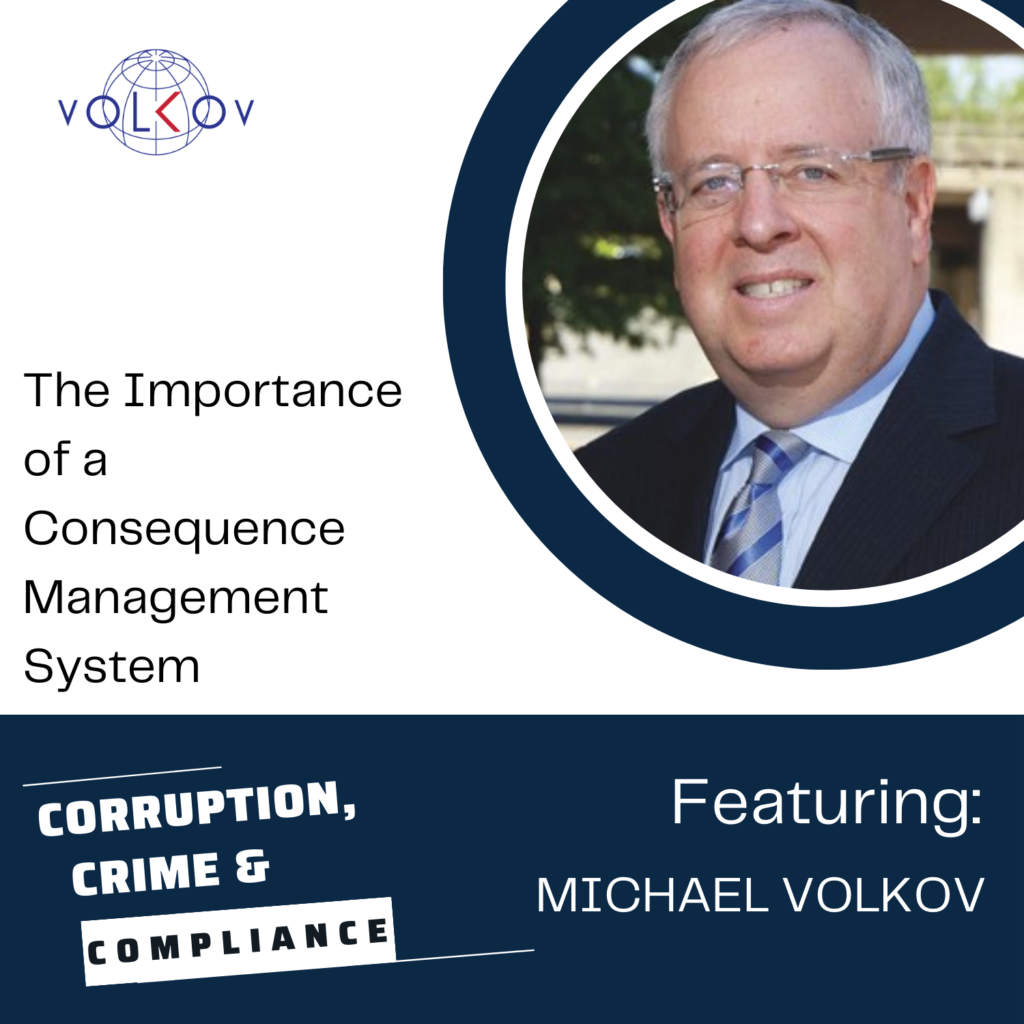
The Importance of a Consequence Management System

Transparency, ethics, and compliance are more than just corporate buzzwords; they’re foundational to building trust in today’s global organizations. Consequence management systems encompass elements like transparency, robust employee reporting, protective measures for whistleblowers, and effective internal investigations. These are all essential for maintaining organizational justice, trust, and integrity. In this episode of Corruption, Crime and Compliance, Michael Volkov underscores the value of collecting and analyzing employee reports, the pivotal role of Chief Compliance Officers, and the integration of compliance compensation with consequence management.

You’ll hear Michael talk about:

  • Global companies now recognize the significance of robust consequence management systems, which encompass vital processes from internal investigations to disciplinary actions. A pivotal aspect of these systems is transparency, especially when designing and implementing employee reporting.
  • When it comes to effective employee reporting, a system is more than just a hotline; it involves tracking and addressing concerns in real-time. To foster trust, such systems must operate promptly, fairly, and consistently, ensuring that reporters are protected against obstruction and/or retaliation.
  • Key components of an effective reporting system include:
    • Clear internal communication, which ensures employees feel heard.
    • Foundational support, which bolsters efficiency.
    • Collated reports from diverse sources, which offers insights into the company’s culture and potential risks.
    • Transparency and consistency, as sporadic disclosure can negatively influence employees’ perceptions of a company’s intentions.
  • A CCO’s commitment is reflected when issues are investigated and addressed swiftly and justly. They play a crucial role in collecting and analyzing employee reporting data, as well as educating senior management and boards on the significance of employee reports.
  • Companies need to establish written protocols for internal investigations to ensure that they are conducted fairly and impartially. These protocols should outline the steps that will be taken during an investigation, as well as the rights of the employees involved. The protection of employees and whistleblowers is paramount.
  • An internal oversight committee should be responsible for overseeing internal investigations. Regular reviews ensure that procedures are followed consistently and that there is a focus on quality. Additionally, all investigations should be properly documented and resolved in order to maintain integrity.
  • Compliance and consequence management systems should work together to meet the expectations of the DOJ, promoting corporate citizenship and financial success. 


KEY QUOTES

“A true employee reporting system includes reports to supervisors, walk-ins to human resources, walk-ins to legal and compliance, and an automated reporting system.” – Michael Volkov


“The real question is whether the company backs up its statement through specific actions. This cannot be accomplished through words, but really only through deeds, through actions. All too often, companies get ahead of themselves. They make these broad pronouncements. They sound good, they pat each other on the back, and they don’t build the essential foundations and infrastructure needed to establish an effective employee reporting system.” – Michael Volkov


“As a basic initial requirement, every company should adopt a written internal investigation protocol that is published internally, promoted internally to demonstrate a commitment to transparency, and those protocols and procedures should be followed to the T.” – Michael Volkov


Resources:

Michael Volkov on LinkedIn | Twitter

The Volkov Law Group

Categories
FCPA Compliance Report

FCPA Compliance Report – Mike DeBernardis on the Cognizant Investigation Ruling

Welcome to the award-winning FCPA Compliance Report, the longest-running podcast in compliance. In this episode, Tom Fox welcomes back fan favorite Mike DeBernardis, partner at Hughes Hubbard Reed. We take a deep dive into the trial court ruling in the Coburn and Schwartz claim that the Cognizant internal investigation which identified them was run by the DOJ and should be tossed for the lack of federal criminal procedural protections.

A recent district court decision on an FCPA case has significant implications for future investigations. The trial court emphasized the importance of a fully developed record and provided guidance for companies conducting internal investigations while cooperating with the government. The episode emphasizes the need for independent investigations, the distinction between government-directed investigations and cooperation with the DOJ, and the timeline of events that shows the importance of self-disclosure by the company. It also discusses the significance of independent decision-making in corporate investigations and the importance of documenting investigations to build a strong record. The restrictions placed on employee interviews during investigations are also addressed, with a suggestion for clear guidelines and procedures to ensure fair and effective interviews. Overall, the episode highlights the practical implications of the court decision and sets a standard for future investigations in FCPA cases.

 Key Highlights

·      FCPA Pretrial Work

·      Importance of Independent Decision-Making

·      Importance of Documenting Investigations

·      Restrictions on Employee Interviews

·      Investigation world cases

Resources

Mike DeBernardis

Hughes Hubbard Reed

Court Opinion in US v. Coburn

Tom Fox

Instagram

Facebook

YouTube

Twitter

Categories
31 Days to More Effective Compliance Programs

One Month to a More Effective Compliance Program: Day 10 – Sales Incentives and Compliance

In the DOJ’s 2023 ECCP, Incentives and Disciplinary Measures it stated:
Incentive System – Has the company considered the implications of its incentives and rewards on compliance? How does the company incentivize compliance and ethical behavior? Have there been specific examples of actions taken (e.g., promotions or awards denied) as a result of compliance and ethics considerations? Who determines the compensation, including bonuses, as well as discipline and promotion of compliance personnel?
When considering how a company could use incentives to further a compliance program and the role of HR in this process, we should also consider how incentives might lead to the converse, as they did in the now-infamous Wells Fargo fraudulent-accounts scandal. When you misalign these two concepts with a faulty sales strategy it can lead to a catastrophic failure, literally costing the company millions of dollars in fines, loss of business and depreciation of shareholder value. Whatever your incentive structure, there will be employees who try to game the system. Some will do it with the tacit or explicit approval of management. You, as the CCO, may be required to act.

Three key takeaways:

  1. Even a benign sales incentive program came become skewed.
  2. A sales incentive program can become high risk or illegal if not properly monitored.
  3. If there is alignment between the strategy, purpose and structure of an incentive system, it often makes the difference between a good and a bad one.

For more information, check out The Compliance Handbook, 4th edition here.

Categories
Daily Compliance News

Daily Compliance News: August 14, 2023 – The Odebrecht Strikes Again Edition

Welcome to the Daily Compliance News. Each day, Tom Fox, the Voice of Compliance brings to you compliance-related stories to start your day. Sit back, enjoy a cup of morning coffee, and listen in to the Daily Compliance News. All, from the Compliance Podcast Network. Each day we consider four stories from the business world, compliance, ethics, risk management, leadership, or general interest for the compliance professional.

  • Grupo Aval settles FCPA enforcement action. (WSJ)
  • What does SCt grant of cert mean? (NYT)
  • Health care corruption sweep in China. (South China Morning Post)
  • SBF headed to jail for witness tampering. Who is next? (Reuters)