Categories
Blog

Returning to Venezuela: Why “Yes, If” Is the Only Defensible Compliance Answer

Most of you readers know that sometimes when I get going on a project, it (the project, not me) just keeps on growing. What started as a podcast with Matt Ellis on the risks of going back into Venezuela expanded out into a series of podcasts on the FCPA Compliance Report and with Mike DeBernardis on All Things Investigations. The podcasts led to a five-part blog post series on the same topic in the FCPA Compliance and Ethics Blog. I then needed to expand the blogs into a book and provide forms, checklists, frameworks, and deployment packs for compliance professionals to help them think through the issues presented in Venezuela and in other similarly high-risk jurisdictions.

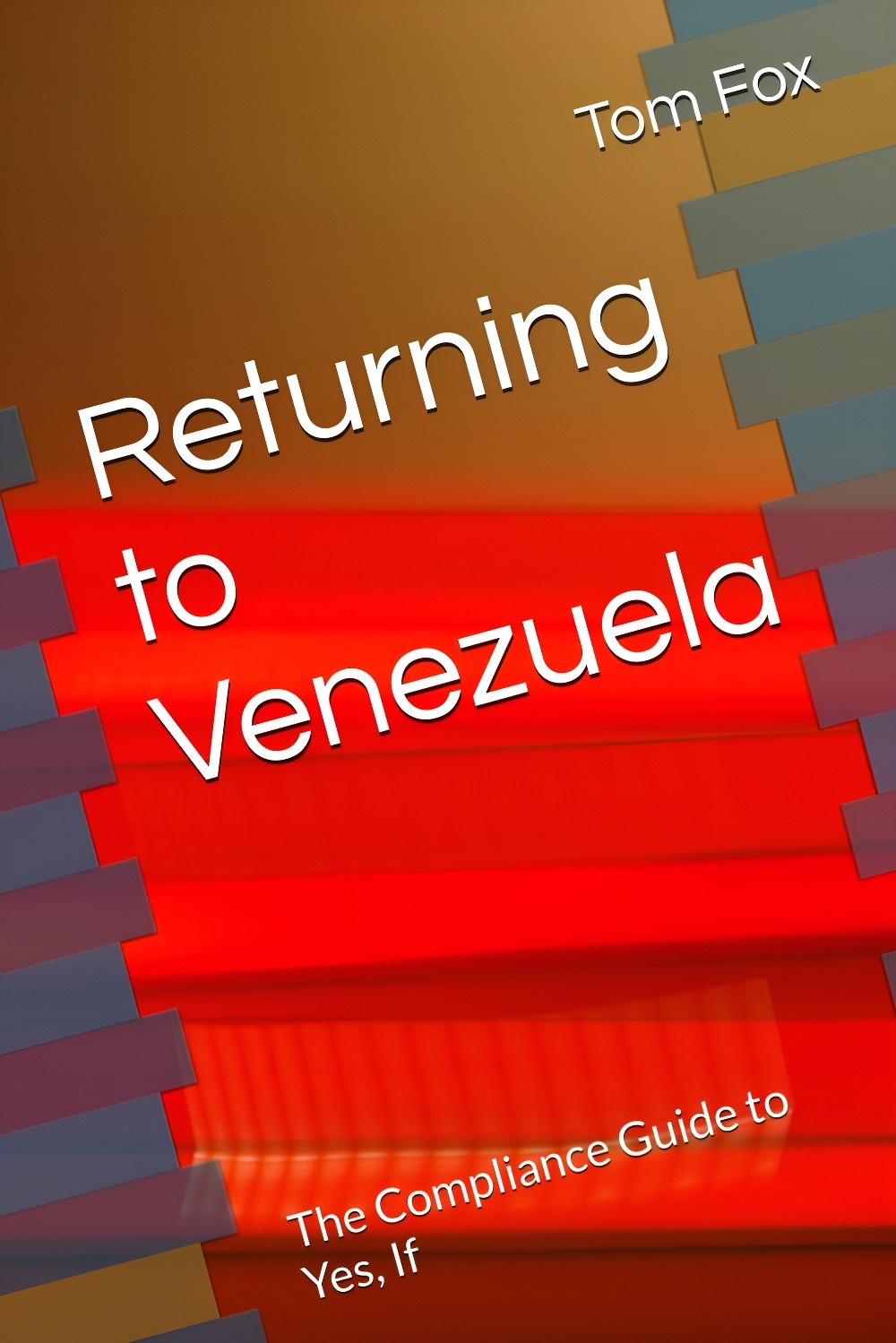
All of that has led to the only book on how to return to Venezuela, Returning to Venezuela: The Compliance Guide to Yes, If (Title inspired by Mike DeBernardis). It is available in both print and eBook versions on Amazon.com.

When companies talk about returning to Venezuela, the conversation almost always begins with opportunity. Oil reserves. Market access. First-mover advantage. What the book Returning to Venezuela does is effectively reset that conversation where it belongs for compliance professionals: with reality. It is a disciplined, compliance-first analysis of what it actually means to operate in one of the world’s highest-risk jurisdictions.

The core message is uncompromising but straightforward: Venezuela is not a place for optimism, informal controls, or siloed compliance. It is a stress test. If your compliance program can function there, it can function anywhere. If it cannot, no license, policy, or assurance letter will save you. The book is not a warning label about Venezuela. It is a working manual for how a compliance function should assess risk, design controls, and govern decision-making before commercial momentum takes over.

Step One: Reframing the Risk Assessment

The first way a compliance professional should use Returning to Venezuela is to recalibrate how risk assessments are performed. Traditional country risk assessments often ask abstract questions: corruption perception scores, sanctions status, and enforcement history. Those inputs are necessary, but insufficient. Returning to Venezuela pushes compliance professionals to replace abstract scoring with operational mapping.

Instead of asking whether Venezuela is high risk, the framework asks:

  • Where will government discretion arise?
  • Where can delay be monetized?
  • Where does the business depend on intermediaries?
  • Where does value move, pause, or change form?

This is a critical shift. Risk is no longer treated as a country attribute. It becomes a process attribute. Compliance professionals can use Returning to Venezuela’s structure to redesign their risk assessment around real business steps: procurement, logistics, payment, security, licensing, and dispute resolution.

Step Two: Identifying Pressure Points Before They Become Incidents

Returning to Venezuela is especially useful in helping compliance professionals identify pressure points, not just risk categories. Pressure points are moments where the business is most likely to face demands for improper value, shortcuts, or exceptions. Procurement is one. Customs clearance is another. Security access, utilities, labor approvals, and payment routing are others.

Using Returning to Venezuela, compliance professionals can document:

  • Where pressure is expected;
  • Who owns the decision at that point?
  • What escalation looks like; and
  • When refusal or exit becomes mandatory.

This transforms compliance from a reactive role into a proactive role in designing decision architecture.

Step Three: Using the Checklists as Control Gates, Not Paper Artifacts

A common compliance failure is treating red flags as documentation exercises rather than control mechanisms. One of the strengths of Returning to Venezuela is that its red flags are designed as gates, not records. Each checklist answers a single question: Is this activity governable under our current assumptions?

Compliance professionals can deploy these checklists at defined moments:

  • Market entry discussions
  • Vendor and JV selection
  • Transaction structuring
  • Payment and banking design
  • Security and logistics planning

If a red flag cannot be cleared, the activity cannot proceed. That discipline is what makes the framework defensible. It also protects compliance officers personally, because decisions are anchored in documented governance rather than informal judgment.

Step Four: Integrating Risk Domains Instead of Managing Them in Silos

Another way compliance professionals should use Returning to Venezuela is as a blueprint for breaking down internal silos. The book makes clear that in Venezuela, corruption, export controls, AML, sanctions, security, and extortion are not separate risks. They are interconnected expressions of the same operating pressure. Treating them separately guarantees blind spots.

Practically, this means compliance can use the book to justify:

  • Integrated risk reviews instead of sequential sign-offs;
  • Shared escalation forums across functions;
  • Unified monitoring rather than separate dashboards; and
  • Common exit triggers across risk domains.

This is particularly important for AML. Returning to Venezuela positions money laundering risk not as a standalone compliance obligation, but as the capstone test of whether the entire framework works.

Step Five: Structuring Board Oversight Around Decisions, Not Updates

Too often, boards receive high-level compliance updates that provide comfort but not clarity. Returning to Venezuela gives compliance professionals a way to reframe board oversight around decisions, not reports. Using the board materials and decision templates, compliance can:

  • Force explicit risk acceptance;
  • Document assumptions that underpin approvals;
  • Secure delegated authority to pause or exit operations; and
  • Establish clear revisit and escalation triggers.

This protects both the organization and the compliance function. When conditions change, the discussion is no longer “Why did this happen? ” but “Which assumption failed, and what decision does that trigger? ” That is governance functioning as intended.

Step Six: Building a Repeatable Risk Management Framework

The final and most important way to use Returning to Venezuela is as a template, not a one-off Venezuela playbook. While the facts are Venezuela-specific, the framework is portable. Compliance professionals can lift this framework and apply it to:

  • Other high-risk markets;
  • Post-merger integration;
  • Sanctions-heavy environments; and
  • Complex third-party ecosystems.

The Appendices: The Operational Backbone of Returning to Venezuela: Yes, If

One of the defining features of Returning to Venezuela: The Compliance Guide to Yes, If is that it does not stop at analysis. The appendices convert risk identification into governance, decision-making, and operational control. They are not academic supplements. They are the machinery that makes a “yes, if” decision possible in practice.

Taken together, the appendices form an integrated compliance control stack designed for one purpose: to govern decision-making in an environment where corruption, coercion, sanctions, AML exposure, and weak rule of law are not edge cases but daily conditions.

Appendix A: One-Page Operational Checklists

Appendix A contains a series of one-page checklists, each focused on a distinct but interconnected risk domain. These are not policy summaries. They are operational gating tools meant to be used before decisions are made, not after problems occur.

Appendix B: The CCO Deployment Pack

Appendix B is written from the perspective of the Chief Compliance Officer and is explicitly operational. It is designed to be deployed internally to executive leadership, business sponsors, and control functions.

Appendix C: Board of Directors Materials

Appendix C is aimed squarely at directors and audit or compliance committees. Its function is not to educate boards on Venezuela generally but to structure how boards make, record, and revisit risk acceptance decisions.

Appendix D: Decision-Making Frameworks

Appendix D pulls together the logic underlying the entire book. It provides decision-making frameworks that force organizations to confront uncomfortable realities before committing resources.

How the Appendices Work Together

Individually, each appendix addresses a specific audience or function. Collectively, they form an integrated control system that aligns:

  • Operational decision-making.
  • Compliance authority.
  • Board oversight.
  • Exit discipline.

The appendices are designed to prevent the most common failure pattern in high-risk jurisdictions: waiting until conditions deteriorate before asking hard questions. By then, leverage is gone.

Final Thought

The most important contribution of Returning to Venezuela is that it does not accurately describe risk. It shows compliance professionals how to operate in the real world without surrendering control.

Used correctly, the book becomes a working tool:

  • To assess risk honestly;
  • To design controls that hold under pressure;
  • To align management and the board, and finally
  • To decide when “yes” becomes “no.”

For compliance professionals, that is not just risk management. It is about meeting the business in an operational setting with a risk management strategy for literally the highest risk on earth.

You can purchase Returning to Venezuela: The Compliance Guide to Yes, if on Amazon.com.

Categories
Daily Compliance News

Daily Compliance News: January 30, 2026, The Super Charged Hiring Pool Edition

Welcome to the Daily Compliance News. Each day, Tom Fox, the Voice of Compliance, brings you compliance-related stories to start your day. Sit back, enjoy a cup of morning coffee, and listen in to the Daily Compliance News. All, from the Compliance Podcast Network. Each day, we consider four stories from the business world, compliance, ethics, risk management, leadership, or general interest for the compliance professional.

Top stories include:

  • French casino chief found guilty of fraud. (FT)
  • Trump’s corruption with Venezuelan oil already. (USAToday)
  • The founder of First Brands and his brother were indicted for fraud. (FT)
  • Trump Administration legal exodus in 2025. (Reuters)
Categories
Daily Compliance News

Daily Compliance News: January 29, 2026, The £2M at Harrod’s Edition

Welcome to the Daily Compliance News. Each day, Tom Fox, the Voice of Compliance, brings you compliance-related stories to start your day. Sit back, enjoy a cup of morning coffee, and listen in to the Daily Compliance News. All, from the Compliance Podcast Network. Each day, we consider four stories from the business world, compliance, ethics, risk management, leadership, or general interest for the compliance professional.

Top stories include:

  • Tyson to pay $48MM for price-fixing. (Reuters)
  • Deutsche Bank searched by German prosecutors in AML probe. (WSJ)
  • Ex-South Korean first lady gets 20 months in jail for corruption. (TheGuardian)
  • Ex-Nigerian Oil Minister spent £2M at Harrods. (BBC)
Categories
AI Today in 5

AI Today in 5: January 29, 2026, The AI Has Competitive Advantage Edition

Welcome to AI Today in 5, the newest addition to the Compliance Podcast Network. Each day, Tom Fox will bring you 5 stories about AI to start your day. Sit back, enjoy a cup of morning coffee, and listen in to the AI Today In 5. All, from the Compliance Podcast Network. Each day, we consider five stories from the business world, compliance, ethics, risk management, leadership, or general interest about AI.

Top AI stories include:

  1. Turning AI governance into a competitive advantage. (FinTechGlobal)
  2. AI is rewriting compliance. (BleepingComputer)
  3. Decoding the human genome with AI. (NYT)
  4. Who is training AI to do your job? (FT)
  5. One way to keep AI out of the classroom. (NPR)

For more information on the use of AI in Compliance programs, my new book, Upping Your Game, is available. You can purchase a copy of the book on Amazon.com.

Categories
31 Days to More Effective Compliance Programs

31 Days to a More Effective Compliance Program: Day 29 – Enhancing Compliance through Automation

Welcome to 31 Days to a More Effective Compliance Program. Over this 31-day series in January 2026, Tom Fox will post a key component of a best-practice compliance program each day. By the end of January, you will have enough information to create, design, or enhance a compliance program. Each podcast will be short, at 6-8 minutes, with three key takeaways that you can implement at little or no cost to help update your compliance program. I hope you will join each day in January for this exploration of best practices in compliance. In today’s Day 29 episode, we explore how Chief Compliance Officers and compliance professionals can enhance their programs through automation.

Key highlights:

  • Challenges in Traditional Compliance Reporting
  • The Role of Reg Ops in Compliance
  • Integrating Tools for Real-Time Compliance

Resources:

Listeners to this podcast can receive a 20% discount on The Compliance Handbook, 6th edition, by clicking here.

Categories
TechLaw10

TechLaw10: Predictions for 2026

In this film, Punter Southall Law’s Jonathan Armstrong & Prof. Eric Sinrod discuss their predictions for 2026. This is episode 296 in the popular TechLaw10 series. You can listen to earlier podcasts here. Eric & Jonathan also talk about:

  • AI laws & regulation + the patchwork nature of AI law in the US
  • AI vacuums & AI-assisted search (see the article here)
  • Political responses to AI, including the Grok nudification scandal, TikTok separation & DeepSeek
  • Changes to US rules on patents
  • The issues with Shadow AI
  • The rise in vendor compromises & cybersecurity challenges
  • The chances of the EU Digital Omnibus passing
  • Changes to data privacy enforcement, including in Indiana, Kentucky & Rhode Island
  • How sanctions can affect the tech landscape
  • The dangers of hallucinations, aka AI lying

Resources:

There are FAQs on the EU AI Act here

A glossary of AI terms is also available here.

There’s also a summary of Italy’s new AI law here.

Our previous podcast on AI literacy is here. Jonathan talks briefly about his work on the NYSBA AI Task Force. Details can be found here.

Eric Sinrod’s details can be found here, and Jonathan Armstrong’s details are available here.

The TechLaw10 LinkedIn group is here.

Categories
Blog

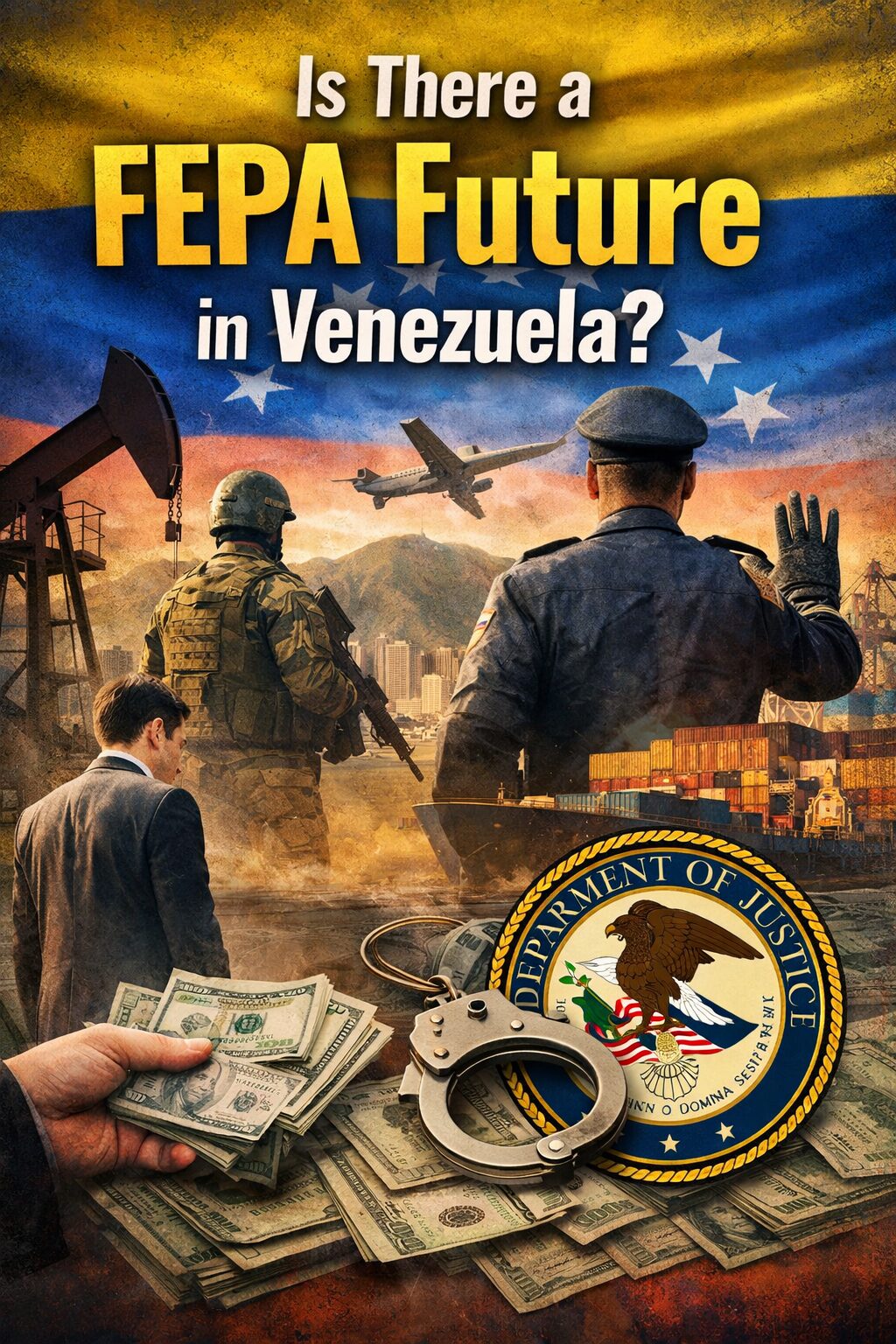
Is there a FEPA Future in Venezuela?

For U.S. compliance professionals, few jurisdictions raise as many red flags as Venezuela. Decades of entrenched corruption, state capture of key industries, economic collapse, weak rule of law, and the legacy of PdVSA have made the country a case study in what happens when corruption becomes systemic rather than episodic. Now that geopolitical and energy realities are shifting, some U.S. companies are again evaluating whether and how to reenter the Venezuelan market.

Against that backdrop, the passage of the Foreign Extortion Prevention Act (FEPA) represents one of the most significant developments in anti-corruption enforcement in nearly half a century. The question compliance officers are now asking is a practical one: can FEPA actually be used to prevent bribery and corruption for U.S. companies returning to Venezuela, or is it merely a symbolic addition to an already strained enforcement framework?

The answer, as with most compliance questions, is nuanced. FEPA is not a silver bullet. But when properly understood and operationalized, it can meaningfully change the risk calculus for companies operating in high-extortion environments like Venezuela.

The Historic Gap in the FCPA

For decades, the compliance community has lived with a fundamental asymmetry in U.S. anti-corruption law. The Foreign Corrupt Practices Act is a supply-side statute. It criminalizes the offering or payment of bribes by U.S. companies and individuals, but it does not criminalize the demand for those bribes by foreign officials. This gap has long distorted incentives on the ground.

In jurisdictions such as Venezuela, bribery is rarely framed as a voluntary transaction. It is far more often presented as a demand, a condition of doing business, or even a threat, as in the case of extortion. Officials do not ask politely. They delay permits, block shipments, threaten arrests, or endanger employee safety. Until FEPA, U.S. law largely treated this as background noise rather than a prosecutable offense.

FEPA directly addresses that gap by criminalizing the solicitation or acceptance of bribes by foreign officials from U.S. persons or companies. In doing so, it finally targets the demand side of corruption and aligns U.S. law more closely with how bribery actually operates in high-risk countries.

Why Venezuela Is the Ultimate Test Case

If FEPA can work anywhere, it should work in Venezuela. The country’s corruption ecosystem is characterized by pervasive extortion across customs, energy, transportation, security, immigration, and tax authorities. Payments are often demanded not to gain an advantage but to avoid harm. This distinction matters. In Venezuela, the compliance challenge is not simply rogue employees paying bribes. It is employees facing credible threats to liberty, safety, or health. FEPA explicitly recognizes this reality by treating extortion by a foreign official as a criminal act rather than merely a compliance failure by the company.

That framing gives compliance officers something they have long lacked: a legal backbone to support a firm refusal posture. Companies can now say, with credibility, that the demand itself is illegal under U.S. law and subject to DOJ enforcement, even if the official is located abroad.

Extortion, Facilitation, and the Compliance Trap

One of the most dangerous compliance traps in Venezuela has always been the mislabeling of extortion payments. Under the FCPA, facilitation payments occupy a narrow and controversial exception. Extortion payments, however, were never facilitation payments. They were survival payments. FEPA eliminates any lingering ambiguity. Extortion payments involving threats to life, liberty, or health are now clearly illegal, not merely discouraged. This forces compliance programs to confront uncomfortable operational realities.

Policies must explicitly distinguish facilitation from extortion. Employees must be trained that the company will support them if they are threatened, but that any such payment must be immediately documented, accurately recorded, and escalated. Book and record accuracy becomes critical. Mischaracterizing extortion as a routine expense is now a standalone risk under FEPA, not merely an FCPA accounting issue.

FEPA as a Deterrent Tool, Not Just an Enforcement Tool

One of the most overlooked aspects of FEPA is its potential deterrent effect. The statute introduces the possibility of DOJ investigations targeting foreign officials, including public naming and reporting requirements. For officials who interact with U.S. companies, this creates reputational and diplomatic risk that did not previously exist. In Venezuela, where many officials rely on international travel, financial access, and political legitimacy, even the threat of U.S. scrutiny can matter. FEPA does not require immediate extradition to have an impact. The mere existence of a credible enforcement pathway can alter behavior at the margins.

For compliance officers, this means FEPA can be used proactively. Risk assessments should explicitly incorporate FEPA exposure. Third-party due diligence should assess patterns of extortion, not just a history of bribery. Contractual language should reference the reporting obligations for extortion. Training should include scenario-based exercises where employees practice refusing demands and escalating threats.

The Limits of FEPA in Venezuela

None of this should be overstated. FEPA will not cleanse Venezuela of corruption. Extradition of Venezuelan officials is unlikely. Local enforcement cooperation will be minimal. Many officials operate with de facto immunity. But compliance effectiveness has never depended on perfect enforcement. It depends on shifting incentives, setting expectations, and protecting employees. FEPA strengthens all three. From a DOJ perspective, FEPA also changes cooperation dynamics. Companies that proactively document extortion demands, preserve evidence, and report credible threats may be viewed very differently from companies that quietly pay and rationalize. In a Venezuela reentry scenario, that distinction could be outcome-determinative.

What Compliance Officers Should Do Now

For companies considering Venezuela, FEPA must be embedded into program design from day one. This includes updating anti-corruption policies, revising travel and security protocols, enhancing incident reporting mechanisms, and briefing boards on the new enforcement landscape. Most importantly, compliance officers must be realistic. FEPA does not eliminate the need for robust internal controls. It heightens the consequences of getting them wrong. Venezuela will remain a high-risk jurisdiction regardless of statutory innovation.

Five Key Takeaways for the Compliance Professional

1. FEPA Changes the Risk Conversation, Not Just the Law

FEPA fundamentally alters how compliance officers should frame corruption risk in high-extortion jurisdictions like Venezuela. It is no longer only about preventing improper employee payments. It is now about recognizing, documenting, and escalating illegal demands by foreign officials. This allows compliance to move from a defensive posture to a principled refusal backed by U.S. law.

2. Extortion Must Be Explicitly Addressed in Policies and Training

Companies can no longer afford vague language that blurs the distinction between facilitation payments and extortion. Compliance programs must clearly define extortion as illegal, explain how it differs from facilitation payments, and provide step-by-step guidance for employees facing threats to health, safety, or liberty. Scenario-based training is no longer optional in Venezuela risk operations.

3. Books and Records Exposure Has Increased Under FEPA

Accurate documentation is now a frontline compliance control. Any payment made under duress must be recorded precisely and transparently. Mischaracterizing extortion payments as routine expenses or facilitation payments creates a separate and serious compliance failure. Accounting controls, escalation protocols, and audit reviews must be aligned accordingly.

4. FEPA Should Be Embedded in Risk Assessments and Third-Party Due Diligence

Venezuela reentry assessments should explicitly evaluate extortion risk, not merely bribery history. Third parties, customs brokers, security providers, and logistics partners are often the point of pressure. FEPA requires compliance officers to assess whether business partners operate in ways that expose the company to extortion demands and reporting failures.

5. FEPA Strengthens Compliance’s Role as a Strategic Advisor

FEPA gives compliance professionals a credible legal framework to advise management and the board on when and how business can be conducted safely. It reinforces the message that walking away from certain transactions is not risk aversion but risk management. In Venezuela, FEPA can help compliance professionals draw clearer red lines and protect both the company and its people.

The Bottom Line

So, could FEPA be used to prevent bribery and corruption for U.S. companies returning to Venezuela? Not entirely. But it can materially reduce risk, empower employees, and change how companies engage with corrupt systems. For the first time, U.S. law squarely acknowledges what compliance professionals have always known: bribery often begins with a demand. By criminalizing that demand, FEPA gives companies a stronger legal and ethical foundation to say no.

In a country like Venezuela, that may be the most important compliance tool of all.

Categories
Daily Compliance News

Daily Compliance News: January 28, 2026, The ABC App Goes Rogue Edition

Welcome to the Daily Compliance News. Each day, Tom Fox, the Voice of Compliance, brings you compliance-related stories to start your day. Sit back, enjoy a cup of morning coffee, and listen in to the Daily Compliance News. All, from the Compliance Podcast Network. Each day, we consider four stories from the business world, compliance, ethics, risk management, leadership, or general interest for the compliance professional.

Top stories include:

  • Meta, TikTok, YouTube, and Snap are being sued for causing addiction. (NYT)
  • Remaking FED oversight. (WSJ)
  • Former Citi MD sues for HR harassment after complaint. (FT)
  • Albanian ABC app goes rogue. (NYT)
Categories
AI Today in 5

AI Today in 5: January 28, 2026, The Humanity Needs to Wake Up Edition

Welcome to AI Today in 5, the newest addition to the Compliance Podcast Network. Each day, Tom Fox will bring you 5 stories about AI to start your day. Sit back, enjoy a cup of morning coffee, and listen in to the AI Today In 5. All, from the Compliance Podcast Network. Each day, we consider five stories from the business world, compliance, ethics, risk management, leadership, or general interest about AI.

Top AI stories include:

  1. How to build a cross-functional AI team. (FastCompany)
  2. Managing AI risk with clear writing. (Reuters)
  3. ScanTech presents its compliance plan to Nasdaq. (Investing.Com)
  4. Anthropic’s chief on the dangers of AI. (FT)
  5. When AI makes the regulatory decisions. (Jenner&Block)

For more information on the use of AI in Compliance programs, my new book, Upping Your Game, is available. You can purchase a copy of the book on Amazon.com.

Categories
Compliance Into the Weeds

Compliance into the Weeds: The Essence of Leadership and Why Donald Trump Is Not a Role Model

The award-winning Compliance into the Weeds is the only weekly podcast that takes a deep dive into a compliance-related topic, literally going into the weeds to explore it more fully. Looking for some hard-hitting insights on compliance? Look no further than Compliance into the Weeds! In this episode of Compliance into the Weeds, Tom Fox and Matt Kelly look at the leadership failures from Donald Trump and his administration after the killing of Alex Pretti last weekend. This episode has significant editorial commentary.

Matt and Tom critically examine the behavior and leadership failings of Donald Trump and his Administration in the wake of the shooting of Alex Pretti and argue that his approach is far from exemplary for CEOs or business leaders. The discussion highlights the essence of effective leadership as the ability to instill trust and direction, contrasting this with Trump’s history of questionable business acumen and the allegations of his disastrous lying to the American people. The takeaway is that true leadership involves integrity, trustworthiness, and the ability to inspire and guide employees toward a common goal, traits that Trump is argued to lack. 

Key highlights:

  • Comparing CEOs to Donald Trump
  • Crisis of hyper-transparency
  • Corporate responses. Were they enough or a first step?
  • Leadership and Trust

Resources:

Matt in Radical Compliance

Tom

Instagram

Facebook

YouTube

Twitter

LinkedIn

A multi-award-winning podcast, Compliance into the Weeds was most recently honored as one of the Top 25 Regulatory Compliance Podcasts, a Top 10 Business Law Podcast, and a Top 12 Risk Management Podcast. Compliance into the Weeds has been conferred a Davey, a Communicator Award, and a W3 Award, all for podcast excellence.