Categories
Regulatory Ramblings

Regulatory Ramblings: Episode 54 – From Secret Service Agent to Global Financial Crime Fighter: David Caruso’s 30-Year Journey

David Caruso is the founder and managing director of the Dominion Advisory Group, a consulting firm based in Virginia, near the nation’s capital. The firm works with banks facing regulatory enforcement actions across the U.S., Europe, and Asia. David aids institutions and organizations in navigating financial crime risk and compliance modernization globally.

As a former special agent with the US Secret Service and a graduate of George Washington University since 1996, he has been at the forefront of shaping the financial crime risk and compliance profession more generally. Building anti-money laundering (AML) and sanctions compliance programs at banking and financial institutions across the US and internationally, overseeing headline-grabbing corruption and money laundering investigations, and building and selling a RegTech software firm have afforded him an ideal perspective to reflect on every major issue and trend occurring in the financial crime compliance space for the past 25 years.

In this episode of Regulatory Ramblings, David shares his reflections on a nearly three-decade career in AML and financial crime compliance with our host, Ajay Shamdasani. 

He recounts having worked at global institutions like JP Morgan, Riggs Bank, Wachovia, Washington Mutual, and HSBC, to name a few. His notable achievements include his time as Riggs Bank’s chief compliance and AML officer.

In that role, he was hired to address some program weaknesses cited by the US Treasury Department’s Office of the Comptroller of the Currency (OCC). While at Riggs, David’s team uncovered two notorious international corruption schemes involving the government of Equatorial Guinea and former Chilean dictator Augusto Pinochet. The team’s work led to investigations by the Department of Justice and the U.S. Senate Permanent Subcommittee on Investigations. 

The cases drew worldwide media attention from justice authorities in the US, UK, Spain, and Chile. The facts uncovered by David at Riggs shook US lawmakers and regulators, kicking off 10 years of active regulatory and law enforcement action against banks across the US. 

After Riggs, David founded The Dominion Advisory Group in 2005. From his ringside seat near Washington, DC, he works closely with executive management, boards, and outside counsel to craft responses and build entire financial crime risk and compliance programs to address regulatory concerns—of which there has been no shortage in recent years. 

David also discusses the allure of AML and financial crime compliance and what brought him to the professional path he has been on for over three decades. Methodologically speaking, he recounts what has changed in AML and financial crime in that time and what has remained the same. 

He concurs that since 1970, so many additional requirements and expectations have been created that AML teams still need to catch up on their primary mission. Reflecting on the impact of the Bank Secrecy Act (1970), the USA PATRIOT Act (2001), the Foreign Account Tax Compliance Act (2010), or FATCA, and the more recent Anti Money Laundering Act (2020), he shares his views on how the impact of regulatory action has distracted from compliance professionals’ more critical tasks—with an eye towards how the regulatory exam-focused mindset of money laundering reporting officers (MLROs) affects operations and innovation. 

David also depicts the pervasive and ongoing discrepancies between what domestic and international/supernational policy-setting organizations, like the Financial Action Task Force (FATF), based in Paris, say and what they do. He says, “No one wants to ask if new rules and regulations are working and whether they prevent crime or have the unintended consequence of reducing [economic] growth?” 

He acknowledges the degree of geopolitical hypocrisy when it comes to AML and financial crime compliance, as well as when it comes to fighting bribery, fraud, and corruption internationally. Washington, New York, London, and Brussels all too often regulated the financial world. Yet, while the US and UK, and increasingly the EU, are some of the most aggressive jurisdictions regarding financial crime enforcement actions, their regulatory apparatus is often used to further their geopolitical goals. It is a view that many outside the West hold. 

The conversation concludes with David’s views on why sanctions against Russia stemming from its 2022 invasion of Ukraine have largely been unsuccessful, how technologies such as artificial intelligence can help AML/KYC/FCC compliance, and what policy recommendations he suggests moving forward. 

We are bringing you the Regulatory Ramblings podcasts with assistance from the HKU Faculty of Law, the University of Hong Kong’s Reg/Tech Lab, HKU-SCF Fintech Academy, Asia Global Institute, and HKU-edX Professional Certificate in Fintech.

Useful links in this episode:

  • Connect or follow David Caruso on LinkedIn

  • Dominion Advisory Group: Webpage

You might also be interested in:

Connect with RR Podcast at:

LinkedIn: https://hk.linkedin.com/company/hkufintech 
Facebook: https://www.facebook.com/hkufintech.fb/
Instagram: https://www.instagram.com/hkufintech/ 
Twitter: https://twitter.com/HKUFinTech 
Threads: https://www.threads.net/@hkufintech
Website: https://www.hkufintech.com/regulatoryramblings 

Connect with the Compliance Podcast Network at:

LinkedIn: https://www.linkedin.com/company/compliance-podcast-network/
Facebook: https://www.facebook.com/compliancepodcastnetwork/
YouTube: https://www.youtube.com/@CompliancePodcastNetwork
Twitter: https://twitter.com/tfoxlaw
Instagram: https://www.instagram.com/voiceofcompliance/
Website: https://compliancepodcastnetwork.net/

Categories
Blog

Argentieri Speech and 2024 ECCP: Complying with the 2024 ECCP on AI

The Department of Justice (DOJ), in its 2024 Update, has explicitly directed companies to ensure they have robust processes in place to identify, manage, and mitigate emerging risks related to new technologies, including AI. As compliance professionals, it’s crucial to integrate these mandates into your enterprise risk management (ERM) strategies and broader compliance programs. The DOJ posed two sets of queries for compliance professionals. The first was found in Section I, entitled Is the Corporation’s Compliance Program Well Designed? These are the following questions a prosecutor could ask a company or compliance professional going through an investigation.

Management of Emerging Risks to Ensure Compliance with Applicable Law

  • Does the company have a process for identifying and managing emerging internal and external risks, including risks related to the use of new technologies, that could potentially impact its ability to comply with the law?
  • How does the company assess the potential impact of new technologies, such as artificial intelligence (AI), on its ability to comply with criminal laws?
  • Is management of risks related to using AI and other new technologies integrated into broader enterprise risk management (ERM)  strategies?
  • What is the company’s approach to governance regarding the use of new technologies, such as AI, in its commercial business and compliance program?
  • How is the company curbing any potential negative or unintended consequences resulting from using technologies in its commercial business and compliance program?
  • How is the company mitigating the potential for deliberate or reckless misuse of technologies, including by company insiders?
  • To the extent that the company uses AI and similar technologies in its business or as part of its compliance program, are controls in place to monitor and ensure its trustworthiness, reliability, and use in compliance with applicable law and the company’s code of conduct?
  • Do controls exist to ensure the technology is used only for its intended purposes?
  • What baseline of human decision-making is used to assess AI?
  • How is accountability over the use of AI monitored and enforced?
  • How does the company train its employees on using emerging technologies such as AI?

The second question ties AI to a company’s values, ethics, and, most importantly, culture. It is found in Section III, entitled Does the Corporation’s Compliance Program Work in Practice?, Evolving Updates, and poses the following questions:

  • If the company is using new technologies such as AI in its commercial operations or compliance program, is the company monitoring and testing the technologies so that it can evaluate whether they are functioning as intended and consistent with the company’s code of conduct?
  • How quickly can the company detect and correct decisions made by AI or other new technologies that are inconsistent with the company’s values?

Thinking across both questions will lead to more questions and a deep dive into your compliance culture, philosophy, and corporate ethos. It will also bring about unprecedented opportunities for businesses. However, with these opportunities come significant risks, especially in the context of legal compliance. The DOJ has now explicitly directed companies to ensure they have robust processes to identify, manage, and mitigate emerging risks related to new technologies, including AI. As compliance professionals, it is both crucial and even obligatory to integrate these mandates into your ERM strategies and broader compliance programs. Below are some ways a compliance professional can think through and you can effectively respond to the DOJ’s latest guidance for the first series of questions.

Establish a Proactive Risk Identification Process

Managing emerging risks begins with a proactive approach to identifying potential threats before they manifest into significant compliance issues.

  • Implement a Dynamic Risk Assessment Framework. Develop a risk assessment process that continuously scans internal and external environments for emerging risks. This should include regular updates to risk profiles based on the latest technological developments, industry trends, and regulatory changes. Incorporating AI into your business and compliance operations requires that you assess its immediate impact and anticipate future risks it might pose as the technology evolves.
  • Engage Cross-Functional Teams. Ensure that your risk identification process is not siloed within the compliance function. Engage cross-functional teams, including IT, legal, HR, and operations, to provide diverse perspectives on potential risks associated with new technologies. This collaboration will help you capture a more comprehensive view of the risks and their potential impact on your organization’s ability to comply with applicable laws.

Establish Rigorous Monitoring Protocols

Monitoring AI and other new technologies isn’t just a box-ticking exercise; it’s a continuous process that requires a deep understanding of the technology and the ethical standards it must uphold.

  • Set Up Continuous Monitoring Systems. Implement real-time monitoring systems that track AI outputs and decisions as they occur. This is crucial for identifying deviations from expected behavior or ethical standards as soon as they happen. Automated monitoring tools can flag anomalies, such as decisions that fall outside predefined parameters, for further review by compliance officers.
  • Define Key Performance Indicators (KPIs). Develop KPIs that specifically measure the alignment of AI outputs with your company’s code of conduct. These include fairness, transparency, accuracy, and ethical impact metrics. Regularly review these KPIs to ensure that AI systems perform within acceptable boundaries and contribute positively to your compliance objectives.

Integrate AI Risk Management into Your ERM Strategy

The DOJ expects companies to manage AI and other technological risks within the broader context of their enterprise risk management strategies.

  • Align AI Risk Management with ERM. Ensure that risks related to AI and other new technologies are integrated into your ERM framework. This means treating AI-related risks like any other enterprise with appropriate controls, governance, and oversight. AI should not be viewed as a standalone issue but as an integral part of your organization’s overall risk landscape.
  • Develop AI-Specific Risk Controls. Establish controls that specifically address the unique risks posed by AI. These might include measures to prevent algorithmic bias, safeguards against AI-driven fraud, and protocols to ensure data privacy and security. Regularly review and update these controls to keep pace with technological advancements and emerging threats.

Implement Comprehensive Testing and Validation

Testing and validating AI technologies should be an ongoing practice, not just a one-time event during the deployment phase. The DOJ expects companies to evaluate whether these technologies are functioning as intended rigorously.

  • Stress-Test AI Systems. Subject your AI systems to scenarios that test their decision-making processes under different conditions. This includes testing for biases, errors, and unintended consequences. By simulating real-world situations, you can better understand how the AI might behave in practice and identify any potential risks before they manifest.
  • Periodic Audits and Reviews. Conduct regular audits of your AI systems to verify their continued compliance with company policies and ethical standards. These audits should include technical assessments and ethical evaluations, ensuring the AI’s decisions remain consistent with your company’s values over time.
  • External Validation. Consider bringing in third-party experts to validate your AI systems. External validation can objectively assess your AI’s functionality and ethical alignment, offering insights that might not be apparent to internal teams.

Develop a Rapid Response Mechanism

Every system is infallible; even the best-monitored AI systems can make mistakes. The key is how quickly and effectively your company can detect and correct these errors.

  • Establish a Rapid Response Team. Create a dedicated team within your compliance function responsible for addressing AI-related issues as they arise. This team should be equipped to investigate flagged decisions quickly, determine the root cause of any inconsistencies, and implement corrective actions.
  • Implement Feedback Loops. Develop feedback loops that allow for continuous learning and improvement of AI systems. When an error is detected, ensure that the AI system is updated or retrained to prevent similar issues in the future. This iterative process is essential for maintaining the integrity of AI systems over time.
  • Document and Report Corrections. Keep detailed records of any AI-related issues and the steps taken to correct them. This documentation is critical for internal tracking and for demonstrating to regulators, like the DOJ, that your company is serious about maintaining ethical AI practices.

Strengthen AI Governance and Accountability

Governance is key to ensuring that AI and other new technologies are used responsibly and in compliance with the law.

  • Create a Governance Framework for Technology Use. Develop a governance framework outlining how AI and other emerging technologies will be used within your organization. This framework should define roles and responsibilities, set clear guidelines for the ethical use of technology, and establish protocols for monitoring and enforcement. Ensure that this framework is aligned with your company’s code of conduct and compliance objectives. Ensure these guidelines are communicated clearly to all stakeholders, including AI developers, compliance teams, and business leaders.
  • Enforce Accountability. Accountability for the use of AI should be clearly defined and enforced. This includes assigning specific oversight roles to ensure that AI systems are used as intended and that any deliberate or reckless misuse is swiftly addressed. Establish a chain of accountability spanning from the C-suite to the operational level, ensuring all stakeholders understand their responsibilities in managing AI risks.

Mitigate Unintended Consequences and Misuse

The DOJ is particularly concerned with the potential for AI and other technologies to be misused, deliberately or unintentionally, leading to compliance breaches.

  • Monitor for Unintended Consequences. Implement monitoring systems that can detect unintended consequences of AI use, such as biased decision-making, unethical outcomes, or operational inefficiencies. These systems should be capable of flagging anomalies in real-time, allowing your compliance team to intervene before issues escalate.
  • Restrict AI Usage to Intended Purposes. Ensure that AI and other technologies are used only for their intended purposes. This involves setting clear boundaries on how AI can be applied and establishing controls to prevent misuse. Regular audits should be conducted to verify that AI systems operate within these defined parameters and that any deviations are promptly corrected.

Ensure Trustworthiness and Human Oversight

As Sam Silverstein continually reminds us, culture is all about trust. The same is true for the use of AI in the workplace. AI’s trustworthiness and reliability are paramount in maintaining compliance and protecting your company’s reputation.

  • Implement Trustworthiness Controls. Develop controls to ensure the trustworthiness of AI systems, including regular validation of AI models, thorough testing for accuracy and reliability, and ongoing monitoring for performance consistency. These controls should be designed to prevent the AI from producing outputs that could lead to legal or ethical violations.
  • Maintain a Human Baseline. AI should complement, not replace, human judgment. Establish a baseline of human decision-making to assess AI outputs and ensure that human oversight is maintained where necessary. This could involve having human review processes for high-stakes decisions or integrating AI outputs into broader decision-making frameworks that involve human input.

Train Employees on Emerging Technologies

As AI and other technologies become more prevalent, employee training is essential to ensure that your workforce understands both the benefits and risks.

  • Develop Comprehensive Training Programs. Create training programs that educate employees on using AI and other emerging technologies, focusing on compliance and ethical considerations. Training should cover the potential risks, the importance of adhering to the company’s code of conduct, and the specific controls to mitigate those risks. Employees should understand how the technology works and how to identify and address any decisions that may conflict with company values. Regular training sessions reinforce the importance of ethical AI use across the organization.
  • Promote a Culture of Awareness. Encourage a culture where employees are vigilant about the risks associated with new technologies. This involves fostering an environment where employees feel empowered to speak up if they notice potential issues and are actively engaged in ensuring that AI and other technologies are used responsibly.
  • Promote a Speak-Up Culture. Encourage employees to report concerns about AI-driven decisions, just as they would report other misconduct. A robust speak-up culture is critical for catching ethical lapses early and ensuring that AI systems remain aligned with company values.

The DOJ’s mandate on managing emerging risks, particularly those related to AI and other new technologies, underscores the need for a proactive, integrated approach to compliance. Compliance professionals can confidently navigate this complex landscape by embedding AI risk management within your broader ERM strategy, strengthening governance and accountability, mitigating unintended consequences, ensuring trustworthiness, and investing in employee training. The stakes are high, but with the right plan in place, your organization can harness the power of AI while staying firmly on the right side of the law.

Categories
Blog

Argentieri Speech and 2024 ECCP: Argentieri on Navigating AI Risks

Deputy Assistant Attorney General Nicole M. Argentieri’s speech highlighted a critical shift in the Department of Justice’s (DOJ) approach to evaluating corporate compliance programs. As outlined in the updated 2024 Evaluation of Corporate Compliance Programs (2024 ECCP), the emphasis on data access signals a new era where compliance professionals are expected to wield data with the same rigor and sophistication as their business counterparts. This week, I am reviewing the speech and 2024 ECCP. Over the next couple of blog posts, I will look at the most significant addition, that around AI. Today, I will review Argentieri’s remarks to see what she has said. Tomorrow, I will dive deeply into the new areas in the 2024 ECCP around new technologies such as Artificial Intelligence (AI).

In her remarks, Argentieri said, “First, … Our updated ECCP includes an evaluation of how companies assess and manage risk related to using new technology such as artificial intelligence in their business and compliance programs. Under the ECCP, prosecutors will consider the technology that a company and its employees use to conduct business, whether the company has conducted a risk assessment of using that technology, and whether the company has taken appropriate steps to mitigate any associated risk. For example, prosecutors will consider whether the company is vulnerable to criminal schemes enabled by new technology, such as false approvals and documentation generated by AI. If so, we will consider whether compliance controls and tools are in place to identify and mitigate those risks, such as tools to confirm the accuracy or reliability of data the business uses. We also want to know whether the company monitors and tests its technology to evaluate its functioning as intended and consistent with its code of conduct.”

Argentieri emphasizes the importance of managing risks associated with disruptive technologies like AI. These updates signal a clear directive for compliance professionals: you must take a proactive stance on AI risk management. You can take the following steps to align your compliance program with the DOJ’s latest expectations.

Conduct a Comprehensive Risk Assessment of AI Technologies

The first step in meeting the DOJ is to thoroughly assess the risks that AI and other disruptive technologies pose to your organization.

  • Identify AI Use Cases. Start by mapping out where AI is being used across your business operations. This could include everything from automated decision-making processes to AI-driven data analytics. Understanding the scope of AI use is essential for identifying potential risk areas.
  • Evaluate Vulnerabilities. Once you have a clear picture of how AI is utilized, conduct a detailed risk assessment. Look for vulnerabilities, such as the potential for AI to generate false approvals or fraudulent documentation. Consider scenarios where AI could be manipulated or fail to perform as expected, leading to compliance breaches or unethical outcomes.
  • Prioritize Risks. Not all risks are created equal. Prioritize them based on their potential impact on your business and the likelihood of occurrence. This prioritization will guide the allocation of resources and the development of mitigation strategies.

Implement Robust Compliance Controls and Tools

Once risks have been identified, the next step is to ensure that your compliance program includes strong controls and tools specifically designed to manage AI-related risks.

  • Develop AI-Specific Controls. Traditional compliance controls may not be sufficient to address AI’s unique challenges. Develop or adapt controls to monitor AI-generated outputs, ensuring accuracy and consistency with company policies. This might include cross-referencing AI decisions with manual checks or implementing algorithms that flag unusual patterns for further review.
  • Invest in AI-Compliance Tools. Specialized tools are available that can help compliance teams monitor AI systems and detect potential issues. Invest in these tools to enhance your ability to identify and mitigate AI-related risks. These tools should be capable of real-time monitoring and provide insights into the functioning of AI systems, including the accuracy and reliability of the data they generate.
  • Regular Testing and Validation. AI systems should not be a set-it-and-forget-it solution. Regularly test and validate your AI tools to ensure they function as intended. This should include stress testing under different scenarios to identify any weaknesses or biases in the system. The DOJ expects your company to implement AI and rigorously monitor its performance and alignment with your compliance objectives.

Monitor, Evaluate, and Adapt

AI technology and its associated risks constantly evolve, so your compliance program must be flexible and responsive.

  • Ongoing Monitoring. Continuously monitor AI systems’ performance to ensure they align with your company’s code of conduct and compliance requirements. This involves technical monitoring and assessing the ethical implications of AI decisions.
  • Adapt to New Risks. As AI technology advances, new risks will emerge. Stay informed about the latest developments in AI and disruptive technologies, and be ready to adapt your compliance program accordingly. This may involve updating risk assessments, enhancing controls, or revising your company’s overall approach to AI.
  • Engage with Technology Experts. Compliance professionals should work closely with IT and AI experts to stay ahead of potential risks. This collaboration is crucial for understanding the technical nuances of AI and ensuring that compliance strategies are technically sound and effectively implemented.

Ensure Alignment with the Company’s Code of Conduct

Finally, all AI initiatives must follow your code of conduct and ethical standards.

  • Training and Awareness. Ensure that all employees, particularly those involved in AI development and deployment, are trained on the ethical implications of AI and the company’s code of conduct. This training should cover the importance of transparency, fairness, and accountability in AI operations.
  • Ethical AI Use. Embed ethical considerations into the AI development process. This means complying with the law and striving to use AI to reflect your company’s values. The DOJ will be looking to see if your company is avoiding harm and proactively promoting ethical AI use.

Argentieri’s remarks underscore the importance of managing the risks associated with AI and other disruptive technologies. Compliance professionals must take a proactive approach by conducting thorough risk assessments, implementing robust controls, and continuously monitoring AI systems to ensure they align with regulatory requirements and the company’s ethical standards. By taking these initial steps, you can meet the DOJ’s expectations and leverage AI to enhance your compliance program and overall business integrity. Join us tomorrow to take a deep dive into the new language of the 2024 ECCP and explore how to implement it.

Categories
Business Integrity Innovations

Business Integrity Innovations: Innovating Against the Odds – Dr. Amy Jadesimi on Ethical Business Practices in Nigeria

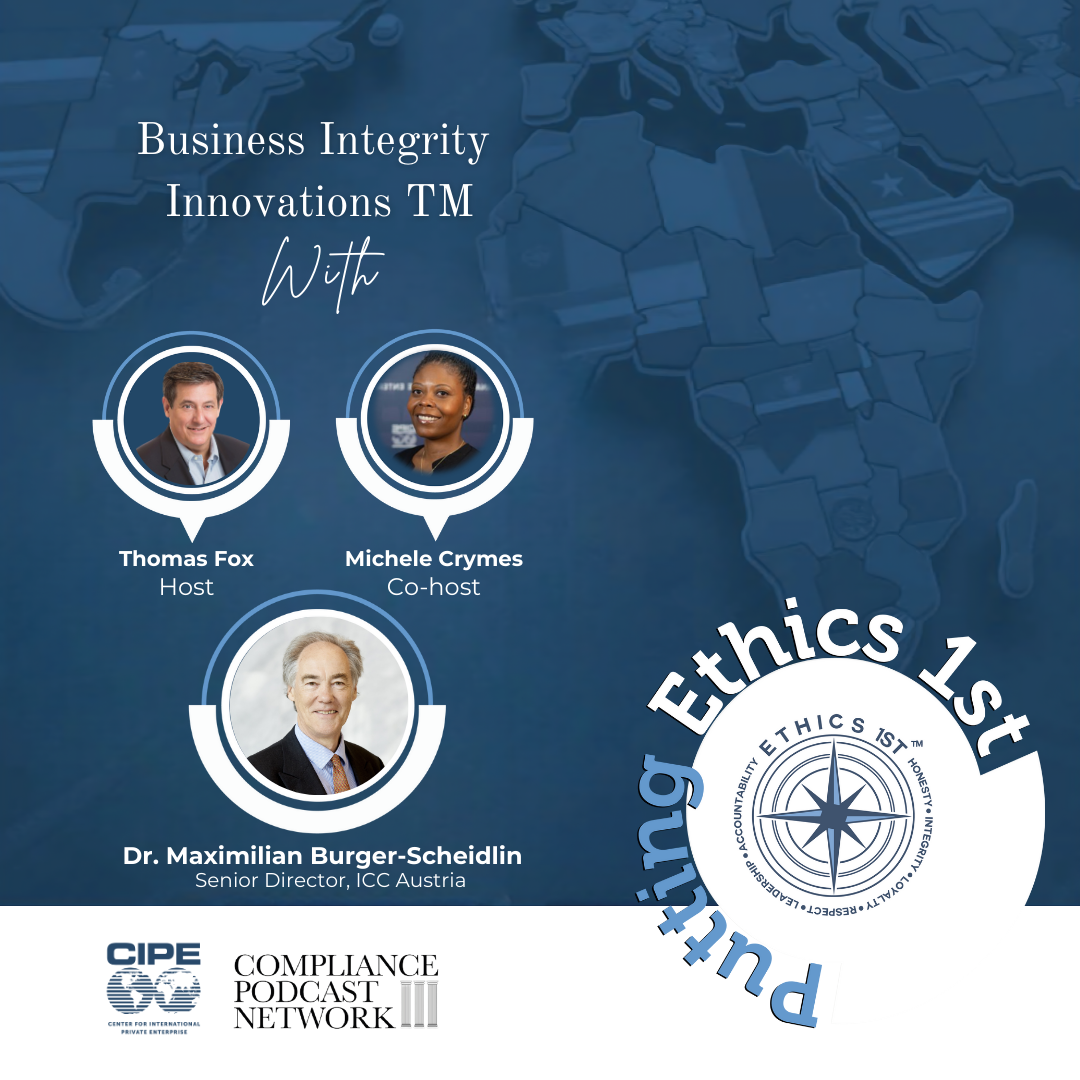
The Compliance Podcast Network (CPN) and the Center for International Private Enterprise (CIPE) bring you Business Integrity Innovations. This podcast is inspired by Ethics 1st – a multi-stakeholder initiative led by CIPE that creates pathways for accountable and sustainable investment in Africa. Companies can standardize their business practices, develop sound corporate governance systems, and demonstrate their commitment to compliance and business ethics using Ethics 1st.

In this episode of the Ethics 1st podcast, hosts Tom Fox and Lola Adekanye welcome Dr. Amy Jadesimi, a committee member of the Ethics First Advisory and a trailblazer in Nigerian industrial development. Dr. Jadesimi shares her incredible journey from being a medical graduate at Oxford and a banker at Goldman Sachs to earning her MBA at Stanford and leading LADOL in Nigeria. LADOL transformed from a single warehouse into a sprawling industrial hub during her leadership, slashing deep offshore logistics support costs and partnering with major companies like Samsung to create significant job opportunities and foster local industry growth.

Dr. Jadesimi discusses key aspects of her work, highlighting how compliance, sustainability, and ethical business practices drive innovation and competitiveness in challenging environments. She explains the importance of maintaining compliance to build trust, secure investment, and enable sustainable growth, emphasizing the positive impact on local communities and economies. Dr. Jadesimi’s insights provide valuable lessons for businesses striving to navigate regulatory challenges and make ethical decisions that lead to long-term success.

Key Highlights:

  • Building LADOL: Challenges and Successes
  • Navigating Regulatory Challenges
  • The Importance of Compliance
  • Sustainability and Business Efficiency
  • Future of Business in Nigeria

Resources:

CIPE

Dr. Amy Jadesimi on LinkedIn

LADOL

Categories
Compliance Tip of the Day

Compliance Tip of the Day: Lesson from The John Deere FCPA Enforcement Action – Post Acquisition Integration

Welcome to “Compliance Tip of the Day,” the podcast where we bring you daily insights and practical advice on navigating the ever-evolving landscape of compliance and regulatory requirements.

Whether you’re a seasoned compliance professional or just starting your journey, our aim is to provide you with bite-sized, actionable tips to help you stay on top of your compliance game.

Join us as we explore the latest industry trends, share best practices, and demystify complex compliance issues to keep your organization on the right side of the law.

Tune in daily for your dose of compliance wisdom, and let’s make compliance a little less daunting, one tip at a time.

In this episode, we review why post-acquisition integration is mandatory for any deal that closes.

Categories
Compliance Tip of the Day

Compliance Tip of the Day: Lesson from The John Deere FCPA Enforcement Action – Pre – acquisition Due Diligence

Welcome to “Compliance Tip of the Day,” the podcast where we bring you daily insights and practical advice on navigating the ever-evolving landscape of compliance and regulatory requirements.

Whether you’re a seasoned compliance professional or just starting your journey, our aim is to provide you with bite-sized, actionable tips to help you stay on top of your compliance game.

Join us as we explore the latest industry trends, share best practices, and demystify complex compliance issues to keep your organization on the right side of the law.

Tune in daily for your dose of compliance wisdom, and let’s make compliance a little less daunting, one tip at a time.

Today, we review why pre-acquisition due diligence is so critical in any best practices compliance program.

Categories
Compliance Tip of the Day

Compliance Tip of the Day: Lesson from The John Deere FCPA Enforcement Action – Gifts, Travel and Entertainment

Welcome to “Compliance Tip of the Day,” the podcast where we bring you daily insights and practical advice on navigating the ever-evolving landscape of compliance and regulatory requirements.

Whether you’re a seasoned compliance professional or just starting your journey, our aim is to provide you with bite-sized, actionable tips to help you stay on top of your compliance game.

Join us as we explore the latest industry trends, share best practices, and demystify complex compliance issues to keep your organization on the right side of the law.

Tune in daily for your dose of compliance wisdom, and let’s make compliance a little less daunting, one tip at a time.

The basics of GTE have been in place since 2007, in opinion Release 07-01. Pressure tests your GTE policies and procedures to make sure your compliance program still meets them.

Categories
Compliance Tip of the Day

Compliance Tip of the Day: Everything Old is New Again: The John Deere FCPA Enforcement Action

Welcome to “Compliance Tip of the Day,” the podcast where we bring you daily insights and practical advice on navigating the ever-evolving landscape of compliance and regulatory requirements.

Whether you’re a seasoned compliance professional or just starting your journey, our aim is to provide you with bite-sized, actionable tips to help you stay on top of your compliance game.

Join us as we explore the latest industry trends, share best practices, and demystify complex compliance issues to keep your organization on the right side of the law.

Tune in daily for your dose of compliance wisdom, and let’s make compliance a little less daunting, one tip at a time.

Today we review the basics of the John Deere enforcement action and why it is so instructive for compliance professionals.


Categories
Blog

Tone at the Top Week: Part 5 – CCOs Using Town Halls to Build Compliance

This week, we have been exploring how Chief Executive Officers and other senior executives can set an appropriate Tone at the Top by actually walking-the-walk of compliance rather than simply talking-the-talk of compliance. For any corporate compliance program to succeed, the commitment of senior leadership is essential. When establishing and maintaining the right Tone at the Top, few opportunities are as effective and personal as town hall meetings.

Town halls provide CEOs and senior executives with a direct platform to engage with employees across the organization, offering an authentic way to reinforce the importance of compliance. Unlike emails or formal reports, town halls allow real-time interaction, allowing leadership to connect directly with employees and make compliance a part of the company’s culture.

In this concluding blog post from this 5-part series, we will explore how CEOs and other corporate leaders can use town hall meetings to establish and maintain an appropriate tone at the top for a best practices compliance program. From including compliance in every meeting to addressing specific ethical challenges and fostering open dialogue, these strategies will help create a culture where compliance is seen as a shared responsibility and a driver of long-term success.

  • Include Compliance in Every Town Hall

One of the most effective ways to reinforce the importance of compliance is to make it a regular topic of discussion in every town hall meeting. Whether covering updates on regulatory changes, sharing new company policies, or discussing recent compliance issues, consistently integrating compliance into your messaging demonstrates that it is a key part of the company’s business strategy.

The obvious significance is that when compliance is a constant in company communications, employees start to understand that it is not a separate, siloed responsibility but a core element of the business’s operations. Regularly addressing compliance issues signals to employees that ethical behavior is as critical to the company’s success as financial performance or market expansion.

How to Implement

  • Dedicate a section of each town hall to discussing compliance. This could include updates on new business regulations, how the company adapts to changing legal landscapes, or reminders of key compliance policies.
  • Use the platform to highlight how compliance contributes to business objectives. For example, explain how maintaining compliance with environmental regulations helps the company avoid penalties while supporting sustainability goals.
  • Regularly including compliance topics also shows that leadership views compliance as proactive rather than reactive and that ethical behavior is a forward-thinking component of company strategy.

By consistently including compliance in town hall discussions, you reinforce its value and ensure it stays at the top of employees’ minds.

  • Address Specific Ethical Challenges

Town halls are an ideal venue to address specific compliance or ethical challenges the company may be facing. Whether dealing with emerging regulatory risks, handling a recent compliance breach, or navigating ethical dilemmas in high-stakes business decisions, discussing these issues openly with employees helps build trust and foster transparency.

It is not so much that employees need to know that leadership is aware of compliance challenges and actively working to address them. Discussing these challenges openly sends a message that compliance is a shared responsibility across the organization. This approach also helps demystify the compliance process and shows employees that issues are handled systematically and transparently.

How to Implement

  • When a new compliance challenge emerges—whether it’s a change in industry regulations, a data privacy issue, or a new ethical dilemma in business operations—use the town hall to explain the issue clearly. Describe what the company is doing to address it and what is expected of employees to help navigate the challenge.
  • Emphasize that compliance is not just the responsibility of the legal or compliance team but requires every employee’s involvement. This ensures that compliance issues are not seen as external or distant from day-to-day operations.
  • Consider sharing examples of companies or industries where a failure to address ethical challenges led to significant risks or damages. This helps illustrate the real-world consequences of neglecting compliance.

By openly addressing specific ethical challenges, you build a culture of accountability in which employees feel empowered to participate in compliance efforts.

  • Invite Questions About Compliance

One of the most powerful aspects of town hall meetings is their interactive nature. Inviting employees to ask questions about compliance-related topics shows that leadership is open to dialogue and committed to resolving concerns. This openness encourages a culture where employees feel safe raising potential compliance issues and know their voices will be heard.

As I have said many times, the flip side to a culture of speaking up is a culture of listening up. Nothing shows this better than soliciting questions at a town hall, for encouraging questions demonstrates compliance as a collaborative effort. It shows employees that leadership values their input and is willing to engage in a two-way conversation about ethical issues. This is especially important for fostering an environment where employees feel comfortable reporting concerns, knowing that leadership will take them seriously.

How to Implement

  • Set aside time during each town hall for a Q&A session focused on compliance. Let employees know they are welcome to ask about compliance issues related to company policies, regulatory changes, or ethical dilemmas.
  • Ensure that responses to compliance-related questions are thoughtful and demonstrate a commitment to transparency. If an employee raises a concern, provide an actionable response or explain how the company will investigate further.
  • Follow up after the town hall on any unresolved questions. This shows that leadership is committed to addressing compliance concerns beyond the meeting and reinforces trust.

Inviting questions and engaging in meaningful dialogue helps build a culture of openness and encourages employees to take an active role in compliance.

  • Highlight Compliance Success Stories

Town halls also provide an excellent opportunity to celebrate successes. By sharing stories of how compliance actions have helped the company avoid risks or achieve positive outcomes, you reinforce the idea that compliance is a value driver, not a burden. Highlighting these stories shows employees that compliance is not just about avoiding penalties but enabling the company to thrive in a complex regulatory environment.

This is one of the time-honored ways to build incentives in an organization. Sharing success stories helps build employee buy-in and engagement with the compliance program. When employees see the tangible benefits of compliance, they are more likely to view it as a positive and necessary part of their work. This also helps combat the perception that compliance is simply about limiting risk or avoiding punishment.

How to Implement

  • Use town halls to share specific examples of compliance successes. For instance, you might highlight how the company avoided a regulatory fine by proactively addressing a compliance risk or how strong compliance practices helped secure a valuable business partnership.
  • Frame compliance successes in a way that shows how they contribute to broader company goals, such as market expansion, reputation management, or innovation.
  • Recognize the individuals or teams who contributed to these compliance successes. This public recognition reinforces that the organization values and rewards ethical behavior.

You highlight compliance success stories and demonstrate that compliance drives long-term value and growth.

  • Building a Strong Compliance Culture Through Town Halls

Town hall meetings are one of the most powerful tools CEOs and senior executives can use to establish and maintain an appropriate tone at the top for a best practices compliance program. By including compliance in every meeting, addressing specific ethical challenges, inviting questions, and sharing success stories, leaders can foster a culture where compliance is not just a requirement but a shared responsibility and a source of competitive advantage.

When employees hear directly from leadership about the importance of compliance, they are more likely to internalize the message and make ethical behavior part of their daily work. Through regular and open communication in town halls, CEOs can build a strong compliance culture that drives long-term success for the organization.

I hope you have enjoyed and found this five-part series on Tone at the Top. Equally importantly, I hope this more outline format will allow you to cut and paste this information into a Memo you can send to your CEO and other senior executives to give them some concrete steps they can take to improve your organization’s culture so that your organization will do business ethically and in compliance. Additionally, it will give you an audit trail on this issue if a regulator ever comes knocking.

Categories
Compliance Tip of the Day

Compliance Tip of the Day: How A CEO Can Set The Tone at The Top with Town Halls

Welcome to “Compliance Tip of the Day,” the podcast where we bring you daily insights and practical advice on navigating the ever-evolving landscape of compliance and regulatory requirements.

Whether you’re a seasoned compliance professional or just starting your journey, our aim is to provide you with bite-sized, actionable tips to help you stay on top of your compliance game.

Join us as we explore the latest industry trends, share best practices, and demystify complex compliance issues to keep your organization on the right side of the law.

Tune in daily for your dose of compliance wisdom, and let’s make compliance a little less daunting, one tip at a time.

Today we review how a CEO can use the power of a Town Hall to set the right ‘tone at the top’ for any compliance program.