Categories
Blog

The First Line of Defense: How Smarter Hiring Strengthens Compliance Programs

I have long advocated that your ethics and compliance program should be embedded directly into your hiring process. However, let me be even more succinct: compliance begins with the hiring process. A recent article in the Sloan Management Review, by William Reed, entitled “Ten Expert Tips for Smarter Hiring,” reviewed the hiring process and noted that “Each hiring decision shapes not only who joins your team but also how your company defines itself .” This means that every employee you bring on shapes not just the culture but also the risk profile of your organization. The flip side is that a single poor hiring choice can have a lasting impact on a business for years, while a strong hire can reinforce integrity and resilience.

For compliance professionals, the hiring process is more than a human resources function. It is a frontline defense against misconduct, reputational damage, and regulatory scrutiny. This makes the “Ten Expert Tips for Smarter Hiring” directly relevant for us. I have adapted this article through a compliance lens to determine lessons we can apply to building a workforce that supports ethics, integrity, and accountability.

1. Ask the Right Questions: Digging Past the Facade

Candidates often arrive at interviews with polished, even AI-generated, answers. The key is not just asking what they have done, but probing how and why they did it. Questions designed to elicit authentic responses, what Harris calls “bank-shot” questions, reveal traits like self-awareness, accountability, and judgment. In compliance-sensitive roles such as procurement, finance, or third-party management, probing questions can help determine whether a candidate dares to speak up, navigate ethical dilemmas, and handle pressure effectively. Hiring managers should coordinate with compliance to build integrity-related questions into interviews.

2. Probe for Substance, Not Scripts

It is not enough for candidates to recite processes. Follow-up questions should push them to explain reasoning, trade-offs, and lessons learned. This exposes whether the candidate has merely memorized best practices or internalized critical thinking. The DOJ consistently emphasizes the importance of judgment and decision-making. This is a key theme of the 2024 Evaluation of Corporate Compliance Programs (2024 ECCP). Compliance officers can coach hiring teams to listen for signs of genuine ethical reasoning rather than canned responses.

3. Character Over Competence

Competence can be trained; character is more complex to teach. Research cited in the article emphasizes that while technical skills vary, core attributes such as honesty, resilience, and fairness are universal and should be given significant weight in hiring decisions. Compliance programs thrive in cultures of integrity. Hiring for character builds the foundation for a speak-up culture, ethical decision-making, and long-term trust. Compliance should partner with HR to design behavioral interview questions that test for integrity and moral alignment.

4. Highlight Meaningful Work

Top candidates want more than compensation; they want purpose. Cues from the recruiting process, as well as stories of meaningful work and culture, affect not just acceptance decisions but also long-term engagement. Compliance professionals can play a role in branding the organization as a place where doing the right thing is valued. When candidates see integrity celebrated, it strengthens your ethical brand and attracts talent that aligns with your compliance values.

5. Employer Branding as a Compliance Asset

Strong employer branding is not simply about market competitiveness. It communicates the company’s identity and priorities. A well-articulated employer brand can establish expectations for ethical conduct and compliance from the outset. Compliance messaging should be embedded in employer branding. For example, highlight your whistleblower program as a sign of transparency and fairness. Utilize recruitment materials to convey that ethical leadership is integral to the company’s culture.

6. Autonomy and Accountability

Flatter hierarchies and broader spans of control mean employees must self-manage more. The right employees thrive in autonomy, while others struggle to do so. With increased autonomy comes increased risk. Compliance should ensure that hiring processes screen for accountability and conscientiousness. Self-directed employees must be able to manage risks without constant oversight.

7. Don’t Overlook Internal Talent

Internal lateral moves can unlock untapped potential. They often produce better long-term outcomes because employees already understand the company’s values and systems. Promoting internal talent not only saves costs but also rewards employees who have demonstrated a commitment to compliance with company policies and culture. It signals that integrity and alignment with values are valued, thereby strengthening the culture.

8. Beware Over-Reliance on Vendor Tools

Pre-packaged talent management software may simplify hiring, but it risks overlooking the nuances of your organizational needs. Just as with third-party risk, outsourcing too much of hiring to generic tools can create blind spots. Compliance officers should advocate for custom criteria that reflect ethical considerations, industry-specific risks, and regulatory obligations.

9. Skills-Based Hiring Requires Culture Change

Skills-based hiring is valuable, but it is not a quick fix. It requires cultural change and consistency across hiring, promotion, and retention practices. The same applies to compliance. Hiring for skills like ethical reasoning, critical thinking, and cultural competence must be reinforced through training, promotion decisions, and leadership modeling. Otherwise, skills-based hiring risks being performative.

10. Deploy Your Best Interviewers

Data shows that some interviewers are consistently better at identifying strong hires. Yet few organizations systematically identify and deploy these interviewers. Compliance professionals should advocate for training interviewers to recognize the red flags of unethical behavior. Identifying your “compliance-savvy interviewers” and deploying them in critical hiring processes strengthens your ability to hire ethically aligned candidates.

Final Thoughts

Hiring is not just about filling positions; it is about shaping culture, building resilience, and protecting the enterprise. For compliance professionals, more innovative hiring means embedding compliance into the very first step of the employee lifecycle.

Harris tips provide a roadmap: ask the right questions, probe for substance, hire for character, highlight meaningful work, strengthen employer branding, embrace autonomy responsibly, value internal talent, customize tools, make cultural shifts for skills-based hiring, and deploy your best interviewers. When compliance is part of the hiring process, you don’t simply acquire talent; you utilize the entire process to help build a culture of integrity. That is the ultimate compliance win.

Categories
Great Women in Compliance

Great Women in Compliance – 2025 SCCE Roundup with Special Guest Adam Turteltaub

Breaking News!  #teamgwic was at the Society of Corporate Compliance and Ethics (SCCE) annual Ethics & Compliance Institute in Nashville and is here to give you an update on our experience.  Ellen, Lisa, and Hemma all caught up mid-conference to interview each other about their panels and also what people were talking about outside the presentations. We had the chance to recap on our earlier panels:  Ellen about how to train leaders to hear and act on bad news in a way to improve our programs; Hemma speaking about how to move your program from a risk-avoidant program to a forward-thinking ethics and compliance program, which is ultimately a competitive advantage, and Lisa’s panel which discussed data analytics for humans – intended to be a practical discussion of what data analytics are and how we are all analyzing data.

At the end, we were able to bring in a surprise guest – the one and only Adam Turteltaub, SCCE’s Chief Strategy and Engagement Officer.  He provided highlights of the conference so far and updates about SCCE’s new CEO, Garth Jordan.

Sarah was unable to join the recording, but all would agree that CEI left us with new ideas, new friends, and the chance to catch up with this great community.

Categories
Trekking Through Compliance

Trekking Through Compliance: Episode 73 – Power, Secrecy, and Responsibility: Business Ethics Lessons from Requiem for Methuselah

In corporate life, ethical decision-making is not only a question of right and wrong. It is also a test of leadership, trust, and long-term vision. Missteps in ethics erode corporate culture, destroy reputations, and invite regulatory and shareholder scrutiny.

Few Star Trek episodes present an ethical crucible as layered as Requiem for Methuselah. The story unfolds into a complex web of secrecy, autonomy, manipulation, and unintended consequences, a rich territory for ethical reflection. From this episode, we can draw five business ethics lessons directly applicable to today’s corporate compliance environment.

Lesson 1: Transparency Is Essential to Trust

Illustrated by: Flint initially hides critical facts from Kirk, Spock, and McCoy about his true identity. His secrecy stems from a desire to control the situation, but it breeds mistrust and escalating tension.

Ethics Lesson. Stakeholders, whether employees, customers, or regulators, expect honesty. Concealing facts creates suspicion, damages credibility, and can lead to decisions made on false assumptions.

Lesson 2: Autonomy Must Be Respected, Even with Good Intentions

Illustrated by Flint, Rayna was designed to be his companion, controlling her environment and limiting her exposure to the outside world.

Ethics Lesson. Corporations sometimes restrict employee autonomy under the guise of protection, micromanaging, withholding career opportunities, or blocking external engagement. Ethical leadership means equipping people to act responsibly, not controlling every move they make.

Lesson 3: Ends Do Not Justify the Means

Illustrated by: To achieve his goal, Flint manipulates the Enterprise crew, withholds the cure they need until his conditions are met, and engineers circumstances to force emotional outcomes for Rayna.

Ethics Lesson. Compromising ethics for results can cause long-term damage far outweighing the immediate gain.

Lesson 4: Emotional Intelligence Is Critical in Ethical Decision-Making

Illustrated by: Kirk fails to foresee that forcing Rayna to choose between him and Kirk will overwhelm her, leading to her breakdown.

Ethics Lesson. Leaders may overlook red flags, delay action, or make decisions based on personal feelings rather than principles. Ethical clarity often requires stepping back and separating personal attachment from professional responsibility.

Lesson 5: Ethical Leadership Includes Considering Long-Term Impact

Illustrated by: Flint’s immortality has given him a unique long view of history, but in this episode, he fails to account for the long-term consequences of his actions toward Rayna and the Enterprise crew.

Ethics Lesson. Businesses that focus solely on short-term gains, without assessing long-term impacts, risk harming their reputation, eroding stakeholder trust, and creating systemic problems. Ethical leaders anticipate not just the next quarter, but the next decade.

Final ComplianceLog Reflections

Requiem for Methuselah is ultimately a cautionary tale about the cost of ethical missteps, even for someone with the wisdom of centuries. Flint’s intellect and resources could not compensate for a failure to act with transparency, respect, and foresight.

For today’s corporate leaders, the lesson is simple: ethical decision-making is not a luxury—it is the foundation of sustainable success. The compliance function’s role is to embed these values so deeply into the corporate DNA that they guide every choice, from the boardroom to the front line.

Resources:

⁠⁠Excruciatingly Detailed Plot Summary by Eric W. Weisstein⁠⁠

⁠⁠MissionLogPodcast.com⁠⁠

⁠⁠Memory Alpha

Categories
FCPA Compliance Report

FCPA Compliance Report – Navigating Corporate Scandals: Insights on Governance, Compliance, and Recovery with Steve Vincze

Welcome to the award-winning FCPA Compliance Report, the longest-running podcast in compliance. In this episode, Tom welcomes Steve Vincze back to discuss the recent corporate scandal involving executives from Astronomer.

Tom and Steve take a deep dive into governance, compliance, and internal controls, drawing parallels with historical cases like Boeing’s 2003 CEO scandal. Vincze shares five critical success factors and three essential elements for establishing an effective ethics and compliance program, emphasizing the importance of transparency, strong leadership, and re-establishing trust. He also discusses how military leadership and open communication can help rebuild a company’s culture post-scandal. The episode closes with practical advice for companies facing similar challenges and how they can recover and thrive.

Key highlights:

  • The Viral Incident and Its Implications
  • Corporate Recovery Strategies
  • Five Critical Success Factors
  • Establishing Trust and Credibility
  • Military Insights on Leadership
  • Addressing Scandals and Rebranding

Resources:

Steve Vincze on LinkedIn

Trestle Compliance

Tom Fox

Instagram

Facebook

YouTube

Twitter

LinkedIn

For more information on the use of AI in Compliance programs, Tom Fox’s new book is Upping Your Game. You can purchase a copy of the book on Amazon.com

Categories
Blog

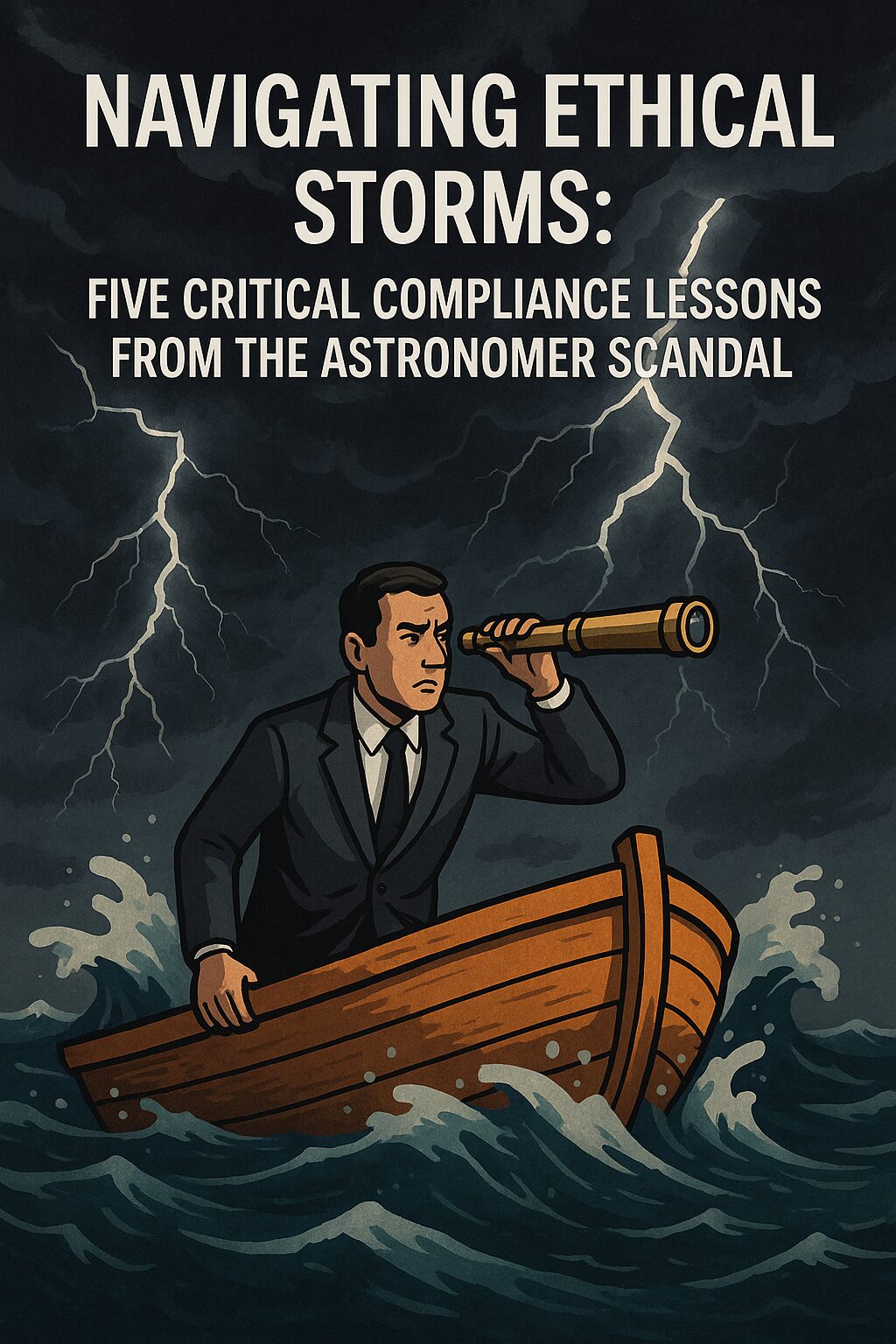
Navigating Ethical Storms: Five Critical Compliance Lessons from the Astronomer Scandal

Recently, we witnessed the Astronomer scandal unfold, making headlines not just for its salacious nature but also for the significant corporate governance and compliance questions it raised. I had the opportunity to sit down with Steve Vincze, founder of Trestle Compliance, for an episode of the FCPA Compliance Report, to consider what a company might do when such an ethics crisis hits. Vincze has extensive experience with just this issue from a similar scandal involving Boeing back in 2003.

Vincze unpacked five critical lessons compliance professionals must heed when confronted with an ethical crisis resembling Astronomer’s.

1. Own the Problem: Transparency Above All

The first, and arguably most important lesson, is the necessity of transparency. Acknowledge the issue unequivocally. Vincze stressed that a corporate crisis is fundamentally a corporate responsibility, regardless of individual faults. Resist the urge to minimize or dismiss the event as merely a lapse in personal judgment. The scandal is yours to manage, and your response will directly impact your organization’s credibility. Owning the problem conveys to stakeholders that your organization prioritizes accountability and transparency, crucial traits for long-term recovery.

2. Leadership Front and Center: Demonstrate Integrity and Commitment

The role of leadership during a crisis cannot be overstated. Vincze’s insights emphasized the need for the highest-ranking executive, especially the new leadership stepping in after a scandal, to be visibly and actively involved in both internal and external communications. Leaders must embody the change they seek, modeling integrity and reinforcing trust. Active, visible leadership sends a strong signal that ethical standards and compliance culture are fundamental and non-negotiable.

3. Establish a Robust Ethics and Compliance Framework

An ethical crisis offers a potent opportunity to recalibrate your corporate culture. As Vincze recommended, clearly define or redefine your organization’s core values through a robust ethics and compliance program. Ensure that these values permeate every policy and procedure. Such a program should go beyond mere regulatory compliance. The company must foster a genuine culture of integrity and trust. This sends a powerful message internally, bolstering employee morale, and externally, enhancing brand reputation.

4. Clarity and Precision: Communicate the Path Forward

Vincze underscored that organizations must communicate their steps to address the crisis, including the rationale behind each decision. Clarity is critical; employees, customers, and stakeholders need to understand not only what actions are being taken but also why. Ambiguity in crisis management breeds distrust and confusion. Conversely, transparent, precise communication builds confidence and illustrates genuine intent to rectify and improve organizational behavior.

5. Courage to Walk Away: Integrity Over Short-term Gains

Compliance often requires difficult choices. Vincze’s fifth lesson highlights the importance of having the courage to walk away from individuals and business relationships that are misaligned with your ethical standards. Not every stakeholder or employee will adapt to new cultural expectations or moral guidelines. It’s essential to prioritize integrity over short-term financial or relational benefits. By demonstrating a strict and uniform enforcement of your compliance policies, you solidify trust and establish a clear ethical boundary.

In addition to these lessons, Vincze shared three essential elements critical for establishing an effective ethics and compliance program post-crisis.

Personal Engagement from Leadership

The Astronomer’s leader(s) and the Chief Compliance Officer must actively participate in every aspect of the program. They should set examples through actions, not just words, exemplifying the standards they wish to instill across the organization. Leaders must engage with employees through regular communication, training sessions, and personal interactions to reinforce the importance of ethical conduct. By visibly aligning their behavior with the organization’s values, leaders inspire trust and confidence among staff. Moreover, their hands-on involvement helps address concerns quickly and effectively, ensuring employees feel heard and valued during the recovery phase.

Right People, Right Roles

Surround yourself with individuals who not only possess technical expertise but also have the interpersonal skills to effectively bridge gaps between legal compliance requirements and practical business operations. Whether building a large team or operating with limited resources, prioritize quality, integrity, and practical expertise. The right individuals should demonstrate strong ethical judgment and possess the ability to communicate compliance standards clearly and persuasively across various organizational levels. Selecting team members who can translate complex regulatory demands into actionable strategies helps facilitate a culture where compliance is not just mandated but embraced as a crucial element of business success.

Balanced Approach to Public Relations

While it is beneficial to maintain a humanizing and approachable image, Vincze advised caution regarding overly humorous or irreverent messaging during a sensitive period. Humor and creativity can indeed facilitate relatability, but they should follow the serious groundwork of rebuilding ethical credibility and trust. PR strategies must carefully balance transparency and accountability with a tone that resonates positively with internal and external stakeholders. Leveraging strategic messaging that acknowledges past issues while clearly outlining proactive measures ensures stakeholders understand your commitment to rectifying mistakes. Ultimately, maintaining an appropriate, thoughtful public image reinforces credibility and supports long-term recovery.

Drawing upon his military experience, Vincze also emphasized the importance of open, respectful dialogue between leadership and employees. Creating safe, transparent channels for communication ensures that employees feel heard and valued. This environment fosters mutual trust and aids in surfacing potential issues proactively, long before they become public crises.

Moreover, an intangible yet crucial consideration emerged from our discussion—talent acquisition and retention. As compliance professionals, we must acknowledge how ethical breaches can significantly damage our organization’s reputation among potential hires and existing employees alike. The fallout from a scandal impacts the very fabric of corporate culture, often more profoundly than immediately quantifiable losses.

Ultimately, the Astronomer scenario underscores that ethical crises, while uncomfortable and challenging, can also serve as critical turning points. They present opportunities to strengthen corporate integrity, enhance transparency, and demonstrate genuine leadership. Compliance officers must be proactive, transparent, and resolute in establishing and upholding ethical standards.

Recovery is always possible; the response is thoughtful, strategic, and aligned with the core values of integrity and transparency. Compliance professionals, armed with these five lessons, can guide their organizations through the storm toward a robust ethical culture and lasting organizational success.

Remember, the road to recovery might be challenging, but as compliance professionals, our commitment to integrity will illuminate the path forward. Let’s keep the conversation going, continue learning, and always strive to elevate the ethical standards of our corporate communities.

Categories
12 O’Clock High-a podcast on business leadership

12 O’Clock High, A Podcast on Business Leadership – Building Trust and Relationships: The Power of Compliance and Ethics with Jacqui Pruet

12 O’Clock High, an award-winning podcast on business leadership, brings together stories from history, the arts, sports, movies, research, and current events to consider leadership lessons. In this episode, Tom Fox interviews Jacqui Pruet, founder of A. C. E. Austin Compliance & Ethics Professional.

Pruet shares her journey of creating ACE to address the lack of local networking opportunities for compliance professionals in Austin, Texas. She discusses her passion for ethics and compliance, stemming from her background as a state regulator and strategist, as well as her innovative approach to building high-trust leadership communities. Pruet emphasizes the importance of relationships and trust in compliance, sharing insights on how effective compliance can drive business efficiency and profitability. She also explores the evolving alignment between innovation, governance, and compliance, and discusses how her regulatory background gives her a unique perspective in the compliance field.

Key highlights:

  • Jacqui Pruet’s Journey to Founding ACE
  • The Importance of Compliance and Ethics
  • Executing the Vision of ACE
  • High-Trust Leadership Communities
  • Confidentiality and Trust in Leadership
  • Building Relationships and Trust
  • Revenue and Ethics: A Strategic Advantage
  • Regulatory Background and Compliance Strategy

Resources:

Jacqui Pruet on LinkedIn

Tom Fox

Instagram

Facebook

YouTube

Twitter

LinkedIn

Categories
Blog

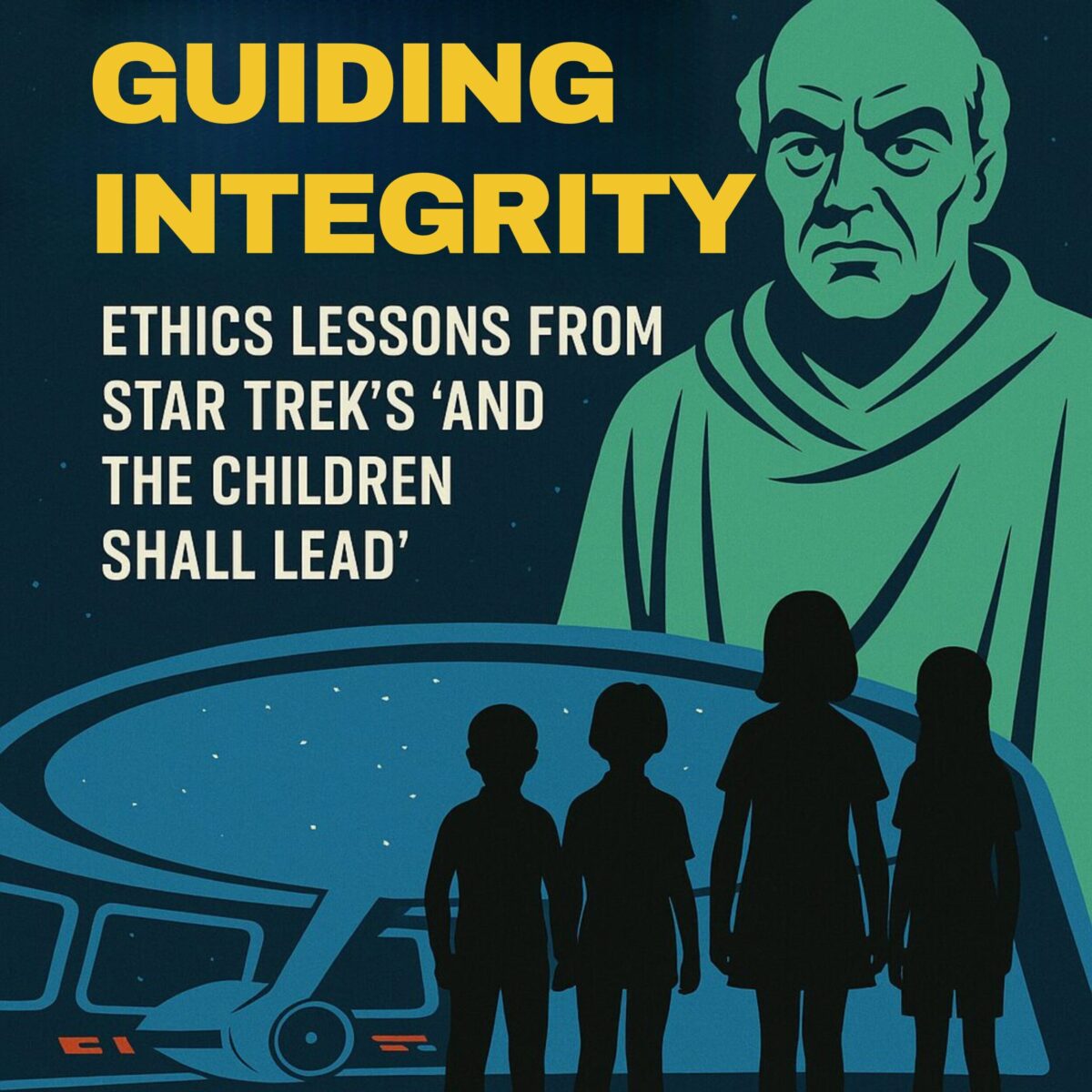
Guiding Integrity: Ethics Lessons from Star Trek’s ‘And The Children Shall Lead’

My winner for the worst of Star Trek: The Original Series is the episode, “And the Children Shall Lead”. Yet there are clear ethics lessons as the episode itself stands out for its disturbing exploration of power, manipulation, and ethical responsibility. Compliance professionals tasked with safeguarding their organizations from ethical lapses can draw powerful insights from this intriguing narrative. Today, we explore five key ethical lessons every compliance leader should internalize from this episode.

Lesson 1: Influence and Ethical Leadership

Illustrated By: The children aboard the Enterprise, manipulated by an alien entity known as Gorgan, exercise dangerous control over the crew, compelling them to abandon rational judgment.

Compliance Lesson: Leadership wields tremendous influence. Ethical leaders must recognize their power and consciously deploy it to uphold ethical standards, not undermine them. A misuse of influence can erode trust and corrupt organizational culture. Ethical leadership requires self-awareness and a steadfast commitment to organizational values. Leaders who misuse their influence often set negative precedents, creating an environment where unethical behavior becomes normalized. Conversely, leaders who consistently demonstrate ethical decision-making inspire similar behavior in their teams, fostering a culture of integrity.

What can you do now? Ensure your leaders understand the impact of their actions. Implement regular leadership training that focuses on ethical decision-making and raises awareness of how leaders’ actions impact company behavior and culture.

Lesson 2: Recognizing and Addressing Manipulation

Illustrated By: Kirk and Spock realize that the children’s unnatural behavior stems from external manipulation by Gorgan, who exploits their innocence and vulnerability for his gain.

Compliance Lesson: Organizations must be vigilant against manipulative practices. Ethical compliance involves recognizing manipulation, whether internal or external, and actively counteracting it to protect the organization’s integrity. Manipulation can manifest subtly through coercion, exploitation of vulnerabilities, or abuse of power dynamics. Compliance leaders must educate employees on the nuances of manipulation and how it undermines ethical practices, ultimately compromising organizational integrity. Early detection and proactive intervention are key to safeguarding the organization.

What can you do now? Develop training programs designed to empower employees to recognize and report manipulative behavior. Establish clear communication channels for raising ethical concerns safely and anonymously.

Lesson 3: Ethical Courage in Speaking Truth to Power

Illustrated By: Nurse Chapel and Captain Kirk courageously confront the children with the harsh truths about their manipulated behavior and its devastating consequences.

Compliance Lesson: Speaking truth to power, especially in ethical matters, requires considerable courage. Compliance leaders must foster environments where employees feel empowered to speak openly, even against popular opinion or powerful interests. It is crucial to establish a corporate culture that not only permits but actively encourages transparency and honesty. Compliance officers play a pivotal role in creating platforms where ethical concerns can be voiced without fear of retaliation. The ability to challenge unethical practices openly is essential for maintaining organizational integrity.

What can you do now? Create a robust whistleblower program, emphasizing protection and support for those who courageously voice ethical concerns. Celebrate instances where employees have demonstrated bravery in upholding ethical standards.

Lesson 4: Awareness of Ethical Blind Spots

Illustrated By: Initially, the Enterprise crew underestimates the threat posed by the children, blinded by assumptions of innocence and vulnerability.

Compliance Lesson: Ethical blind spots often emerge from assumptions and biases. Organizations must cultivate awareness and self-reflection, understanding that ethical risks can arise unexpectedly from overlooked or underestimated sources. Blind spots can be particularly dangerous because they often remain invisible until significant damage occurs. Compliance teams must foster an environment of continual vigilance, where assumptions are routinely challenged, and biases openly discussed and addressed. Training programs should incorporate scenario-based exercises to reveal hidden ethical vulnerabilities.

What can you do now? Conduct regular ethics risk assessments to uncover hidden vulnerabilities. Encourage ongoing discussions and training sessions about implicit biases, assumptions, and overlooked ethical threats within the organization.

Lesson 5: Responsibility and Accountability in Ethics

Illustrated By: After breaking Gorgan’s hold, Kirk ensures that the children confront and understand the severity of their actions, instilling a crucial sense of accountability.

Compliance Lesson: Ethical accountability must permeate all organizational levels. Leaders and employees alike should clearly understand their responsibilities and the consequences of unethical behavior. Accountability ensures that ethical standards are upheld consistently and that violations are addressed promptly and appropriately. Leaders must communicate clearly that ethical breaches will have real and proportionate consequences, reinforcing the importance of personal and organizational integrity. Accountability measures help maintain trust within and outside the organization.

What can you do now? Establish transparent accountability systems, reinforcing individual and collective responsibility for ethical behavior. Regularly communicate the importance of ethical accountability and the organizational commitment to enforce ethical standards uniformly.

You Must Lead With Ethics

And The Children Shall Lead” reminds compliance professionals that ethical vigilance and leadership are essential for organizational health. Through ethical influence, courageous confrontation of manipulation, awareness of blind spots, and unwavering accountability, organizations can protect their integrity and thrive.

Compliance professionals must continuously embody these lessons, creating robust ethical cultures resilient against manipulation, corruption, and ethical lapses. Let the lessons of the Enterprise crew guide us, fostering environments where integrity leads and compliance thrives.

Resources:

⁠⁠Excruciatingly Detailed Plot Summary by Eric W. Weisstein⁠⁠

⁠⁠MissionLogPodcast.com⁠⁠

⁠⁠Memory Alpha

Categories
Trekking Through Compliance

Trekking Through Compliance: Episode 58 – Child’s Play and Serious Ethics: Lessons from “And The Children Shall Lead”

Universally panned as perhaps the worst episode of Star Trek: The Original Series, “And the Children Shall Lead”; it nevertheless stands out for its disturbing exploration of power, manipulation, and ethical responsibility. Compliance professionals tasked with safeguarding their organizations from ethical lapses can draw powerful insights from this intriguing narrative. Today, we explore five key ethical lessons every compliance leader should internalize from this episode.

Lesson 1: Influence and Ethical Leadership

Illustrated By: The children aboard the Enterprise, manipulated by an alien entity known as Gorgan, exercise dangerous control over the crew, compelling them to abandon rational judgment.

Compliance Lesson: Leadership wields tremendous influence. Ethical leaders must recognize their power and consciously deploy it to uphold ethical standards, not undermine them. A misuse of influence can erode trust and corrupt organizational culture.

Lesson 2: Recognizing and Addressing Manipulation

Illustrated By: Kirk and Spock realize that the children’s unnatural behavior stems from external manipulation by Gorgan, who exploits their innocence and vulnerability for his gain.

Compliance Lesson: Organizations must be vigilant against manipulative practices. Ethical compliance involves recognizing manipulation, whether internal or external, and actively counteracting it to protect the organization’s integrity.

Lesson 3: Ethical Courage in Speaking Truth to Power

Illustrated By: Nurse Chapel and Captain Kirk courageously confront the children with the harsh truths about their manipulated behavior and its devastating consequences.

Compliance Lesson: Speaking truth to power, especially in ethical matters, requires considerable courage. Compliance leaders must foster environments where employees feel empowered to speak openly, even against popular opinion or powerful interests.

Lesson 4: Awareness of Ethical Blind Spots

Illustrated By: Initially, the Enterprise crew underestimates the threat posed by the children, blinded by assumptions of innocence and vulnerability.

Compliance Lesson: Ethical blind spots often emerge from assumptions and biases. Organizations must cultivate awareness and self-reflection, understanding that ethical risks can arise unexpectedly from overlooked or underestimated sources.

Lesson 5: Responsibility and Accountability in Ethics

Illustrated By: After breaking Gorgan’s hold, Kirk ensures that the children confront and understand the severity of their actions, instilling a crucial sense of accountability.

Compliance Lesson: Ethical accountability must permeate all organizational levels. Leaders and employees alike should clearly understand their responsibilities and the consequences of unethical behavior.

Final ComplianceLog Reflections

And The Children Shall Lead” reminds compliance professionals that ethical vigilance and leadership are essential for organizational health. Through ethical influence, courageous confrontation of manipulation, awareness of blind spots, and unwavering accountability, organizations can protect their integrity and thrive. Compliance professionals must continuously embody these lessons, creating robust ethical cultures resilient against manipulation, corruption, and ethical lapses. Let the lessons of the Enterprise crew guide us, fostering environments where integrity leads and compliance thrives.

Resources:

⁠⁠Excruciatingly Detailed Plot Summary by Eric W. Weisstein⁠⁠

⁠⁠MissionLogPodcast.com⁠⁠

⁠⁠Memory Alpha

Categories
Trekking Through Compliance

Trekking Through Compliance: Episode 50 – Five Ethics Lessons from ‘Patterns of Force’ for the Modern Compliance Professional

One of the defining strengths of Star Trek: The Original Series (TOS) is its willingness to confront the thorniest questions of morality, leadership, and power. Few episodes tackle these issues as directly, or as provocatively, as “Patterns of Force.” For compliance professionals, “Patterns of Force” offers a cautionary tale about the dangers of compromising ethical principles, even for seemingly pragmatic reasons. The story serves as a powerful reminder that organizations cannot pursue “efficiency” or “success” at the expense of their core values. The lessons are as relevant for today’s boardrooms and C-suites as they are for starships in the 23rd century.

Lesson 1: The Danger of Ethical Shortcuts—The Ends Never Justify the Means

Illustrated By: John Gill, the Federation historian, justifies the creation of a Nazi-like regime on Ekos by arguing that it is the “most efficient state Earth ever knew.”

Compliance Lesson: One of the oldest ethical traps is believing that good intentions justify unethical means. John Gill’s fatal error is to separate efficiency from morality, imagining that a “system” can be controlled and its inherent evils contained.

Lesson 2: Leadership Responsibility—Ethics Must Flow from the Top

Illustrated By: Throughout the episode, the regime’s horror is magnified by the passivity and silence of John Gill, who, under the manipulation of his subordinate Melakon, allows atrocities to proceed. Gill’s abdication of responsibility is a direct contributor to the disaster.

Compliance Lesson: Tone at the top is not a cliché; it is a living, breathing necessity. Leaders who abdicate their ethical responsibilities or look the other way empower bad actors and create environments where misconduct flourishes.

Lesson 3: Unintended Consequences—Control Over Ethical Outcomes is an Illusion

Illustrated By: Gill’s initial plan is to use the Nazi system “without the hate.” But he is quickly manipulated by Melakon, who exploits the machinery of power for his ends.

Compliance Lesson: Rationalizing minor code of conduct violations or tolerating small acts of corruption can quickly escalate beyond your ability to contain them.

Lesson 4: The Importance of Speaking Up—Silence Enables Unethical Behavior

Illustrated By: On Ekos, many citizens and officials are complicit in the regime’s crimes, not through malice but through silence and inaction.

Compliance Lesson: A culture of silence is fertile ground for ethical misconduct. If employees feel they cannot speak up or if whistleblowers are punished or ignored, misconduct becomes normalized.

Lesson 5: Vigilance Against Ethical Blind Spots—History Repeats if We Forget

Illustrated By: The episode closes with a pointed warning that “the price of liberty is eternal vigilance.”

Compliance Lesson: Patterns of Force” reminds us that even the best intentions can lead to disaster if we forget the lessons of the past.

Final ComplianceLog Reflections

Patterns of Force” remains a chilling, relevant parable for compliance professionals. It warns us that even the noblest intentions can go awry when ethical principles are sacrificed for expedience or efficiency. The lessons are clear. As compliance officers, our mission is to ensure that our organizations stay true to their core values, never allowing expediency, pressure, or misguided reasoning to compromise our ethical bearings. In the words of Captain Kirk, “The first duty of every Starfleet officer is to the truth.” For us, the first duty of every compliance professional is to ethics, no matter the circumstances.

Resources:

Excruciatingly Detailed Plot Summary by Eric W. Weisstein

MissionLogPodcast.com

Memory Alpha

Categories
Blog

“Patterns of Force”: Five Ethics Lessons from Star Trek for the Modern Compliance Professional

One of the defining strengths of Star Trek: The Original Series (TOS) is its willingness to confront the thorniest questions of morality, leadership, and power. Few episodes tackle these issues as directly, or as provocatively, as “Patterns of Force.” In this controversial episode, the crew of the USS Enterprise discovers a planet where a well-intentioned Federation historian has recreated the organizational structure of Nazi Germany, believing its efficiency could bring order and peace. Instead, the society devolves into oppression and brutality, proving once again that the ends can never justify the means when it comes to ethics.

For compliance professionals, “Patterns of Force” offers a cautionary tale about the dangers of compromising ethical principles, even for seemingly pragmatic reasons. The story serves as a powerful reminder that organizations cannot pursue “efficiency” or “success” at the expense of their core values. The lessons are as relevant for today’s boardrooms and C-suites as they are for starships in the 23rd century. Today, we explore five key ethics lessons for the modern compliance professional, drawn straight from the pivotal scenes of “Patterns of Force.”

Lesson 1: The Danger of Ethical Shortcuts—The Ends Never Justify the Means

Illustrated By: John Gill, the Federation historian, justifies the creation of a Nazi-like regime on Ekos by arguing that it is the “most efficient state Earth ever knew.” He believes that by adopting its organizational structure, but stripping away its evil, he can bring order and peace to a chaotic planet. The result is a nightmare: the re-emergence of fascism, oppression, and genocide.

Compliance Lesson: One of the oldest ethical traps is believing that good intentions justify unethical means. John Gill’s fatal error is to separate efficiency from morality, imagining that a “system” can be controlled and its inherent evils contained. In the corporate world, this translates to shortcuts: ignoring policies for expediency, rationalizing small acts of fraud for the sake of business survival, or tolerating toxic cultures for the sake of “results.”

Compliance officers must reinforce that ethical lapses, no matter how small or “practical,” are never justified. Once the door is opened to compromising values for perceived efficiency, the consequences can be catastrophic. Gill’s experiment failed because the foundation itself was rotten. Embed ethical decision-making frameworks into your risk assessments and strategic planning. Make it clear that no result, no matter how profitable, can ever excuse unethical conduct.

Lesson 2: Leadership Responsibility—Ethics Must Flow from the Top

Illustrated By: Throughout the episode, the regime’s horror is magnified by the passivity and silence of John Gill, who, under the manipulation of his subordinate Melakon, allows atrocities to proceed. Gill’s abdication of responsibility is a direct contributor to the disaster.

Compliance Lesson: Tone at the top is not a cliché; it is a living, breathing necessity. Leaders who abdicate their ethical responsibilities or look the other way empower bad actors and create environments where misconduct flourishes. Those in charge set the moral climate of any organization. If leadership is disengaged, passive, or silent on matters of ethics, the consequences can spiral rapidly, just as on Ekos.

A compliance program must ensure that senior leaders not only model ethical behavior but also actively reinforce it at every opportunity. Passivity in the face of unethical conduct is itself dishonest. Develop ongoing training and communications for leadership, focusing on ethical accountability, the importance of speaking up, and the personal responsibility of setting the right example.

Lesson 3: Unintended Consequences—Control Over Ethical Outcomes is an Illusion

Illustrated By: Gill’s initial plan is to use the Nazi system “without the hate.” But he is quickly manipulated by Melakon, who exploits the machinery of power for his ends. The regime becomes a vehicle for oppression, anti-Semitism, and war—exactly what Gill intended to prevent.

Compliance Lesson: When an organization embraces questionable tactics or overlooks ethical red flags for the sake of “greater good,” it can never fully control where those choices will lead. Rationalizing minor code of conduct violations or tolerating small acts of corruption can quickly escalate beyond your ability to contain them. Compliance officers should remember that the ethical “slippery slope” is real, and you rarely control where it leads.

The episode’s warning is clear: systems built on unethical foundations are easily hijacked and can have far-reaching, destructive consequences. Implement regular ethics audits and scenario testing. Encourage employees at all levels to challenge policies or practices that may risk unintended harm, regardless of their good intentions.

Lesson 4: The Importance of Speaking Up—Silence Enables Unethical Behavior

Illustrated By: On Ekos, many citizens and officials are complicit in the regime’s crimes, not through malice but through silence and inaction. Only a handful, like the underground resistance leader Isak, speak out and act against the injustice.

Compliance Lesson: A culture of silence is fertile ground for ethical misconduct. If employees feel they cannot speak up or if whistleblowers are punished or ignored, misconduct becomes normalized. Compliance professionals must cultivate a speak-up culture where ethical concerns can be raised without fear of retribution.

Organizations should provide multiple, easily accessible avenues for employees to report concerns anonymously and without retaliation. Moreover, employees should be trained to recognize that failing to report is itself a form of complicity. Regularly communicate and reinforce the importance of speaking up. Celebrate examples of ethical courage and ensure that every employee knows how to report concerns and is confident they will be heard.

Lesson 5: Vigilance Against Ethical Blind Spots—History Repeats if We Forget

Illustrated By: Kirk and Spock are horrified by the resurgence of Nazi imagery and tactics, and work to remind the people of Ekos—and the audience—that history’s darkest chapters must never be repeated. The episode closes with a pointed warning that “the price of liberty is eternal vigilance.”

Compliance Lesson: Ethical blind spots are the hidden risks that can undo organizations, especially when we convince ourselves that “it couldn’t happen here.” “Patterns of Force” reminds us that even the best intentions can lead to disaster if we forget the lessons of the past. Compliance officers must continually review, update, and stress-test ethics and compliance programs to ensure they are relevant, resilient, and responsive to evolving threats.

Never assume your organization is immune to ethical lapses. The most successful compliance cultures are those that actively seek out and address blind spots—before they grow into existential risks. Include historical case studies, both from inside and outside your industry, in compliance training. Use them as springboards for honest discussion about ethical risk and organizational vulnerability.

Final ComplianceLog Reflections

Patterns of Force” remains a chilling, relevant parable for compliance professionals. It warns us that even the noblest intentions can go awry when ethical principles are sacrificed for expedience or efficiency.

As compliance officers, our mission is to ensure that our organizations stay true to their core values, never allowing expediency, pressure, or misguided reasoning to compromise our ethical bearings. In the words of Captain Kirk, “The first duty of every Starfleet officer is to the truth.” For us, the first duty of every compliance professional is to ethics, no matter the circumstances.

In the ongoing journey of compliance, let “Patterns of Force” serve as both a warning and a guidepost. Only by holding fast to our ethical compass can we boldly go where no organization has gone before, successfully, sustainably, and with integrity.

Resources:

Excruciatingly Detailed Plot Summary by Eric W. Weisstein

MissionLogPodcast.com

Memory Alpha