Categories
Blog

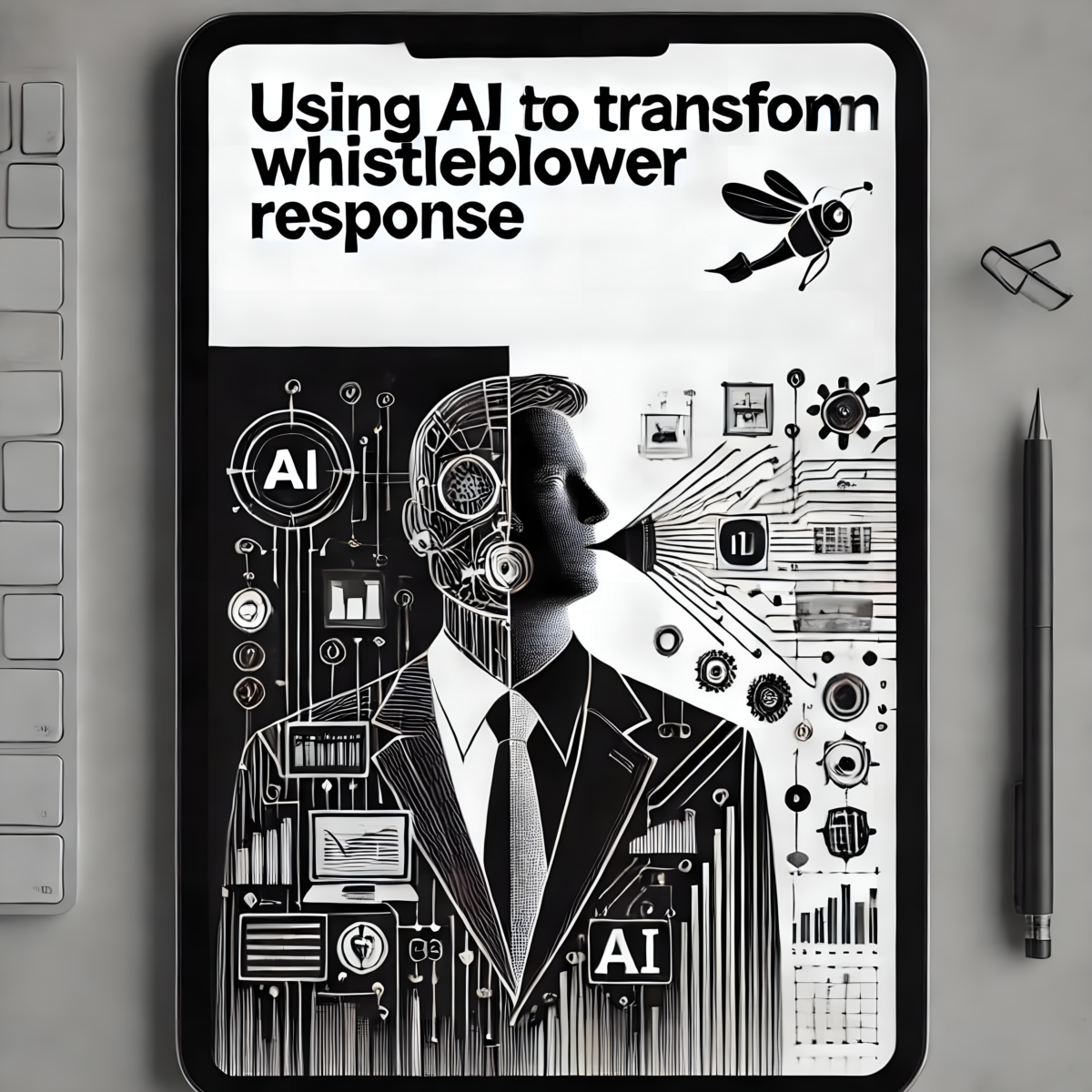
Using AI to Transform Whistleblower Response

When it comes to internal reporting programs, the days of the lonely 1-800 hotline are over. Today’s compliance landscape demands real-time action, smarter triage, greater protections for whistleblowers, and trust. Fortunately, we now have the tools to meet that demand. Artificial Intelligence (AI) and predictive analytics transform whistleblower programs from sluggish, reactive systems into powerful, proactive compliance assets.

This shift could not be timelier. Regulators like the DOJ and SEC have clarified that robust, responsive whistleblower programs are not just a “nice to have” but mandatory. Companies that fail to get this right risk regulatory penalties and devastating hits to their reputation and employee trust. AI offers the compliance community a tremendous opportunity to enhance whistleblower protection, build credibility, and drive a true culture of compliance. Today, I want to summarize key lessons compliance professionals can draw from this evolving space.

Lesson 1: AI as a Guardian of Whistleblower Anonymity

Historically, fear of retaliation has been the Achilles’ heel of internal reporting programs. Employees hesitate to come forward when they don’t trust the system to protect them.

AI changes that. Using sophisticated Natural Language Processing (NLP), AI systems can automatically strip away identifiers, names, job titles, and department names from reports while preserving the critical context needed for an investigation. This is not simply a technical improvement. Instead, it should be seen as a trust builder. Compliance officers must lean into these anonymization technologies and communicate their existence to employees. If employees know the system genuinely protects their identities, the likelihood of them speaking up and doing so internally increases dramatically.

The bottom line: anonymity protections powered by AI are no longer optional; they’re essential.

Lesson 2: Real-Time Prioritization Through Machine Learning

Another game-changer AI brings is the ability to sort and prioritize whistleblower reports in real-time. In the old world, investigators had to slog through hundreds or thousands of cases manually, often missing the truly high-risk ones. Machine learning algorithms today can review incoming reports, categorize them by urgency, and identify patterns that would otherwise go unnoticed.

This means faster action on serious allegations and earlier intervention to mitigate legal and reputational risks. Compliance professionals should build KPIs around AI-driven triage: How quickly are high-risk reports escalated? How often are machine-prioritized cases substantiated? What’s the employee satisfaction rate with the process?

AI-powered triage means your whistleblower system can evolve from a passive intake mechanism to a real-time risk management engine.

Lesson 3: Meet Employees Where (and How) They Communicate

Here is a hard truth in compliance: if your speak-up program is still just a hotline, you are losing the next generation of reporters. Vince Walden puts it best: different generations communicate differently. Millennials, Gen Z, and certainly Gen Alpha are far more comfortable with digital chat-based systems than voice calls. In fact, in one major telecom company, the top question employees asked the compliance chatbot was, “Is this a conflict of interest?” Thus, proving how valuable and revealing these interactions can be.

The lesson is clear: You need chatbots, mobile-first platforms, and AI-driven systems that not only receive reports but also interact, guiding users through the reporting process, clarifying ambiguous issues, and capturing better data upfront. Modernizing your intake channels is not just about technology; it’s about inclusivity and building a true culture of compliance that meets employees where they are.

Lesson 4: Expansion of the Grievance Mechanism Use Case

Compliance isn’t just about FCPA violations and insider trading anymore.

New regulatory frameworks like Europe’s Corporate Sustainability Due Diligence Directive (CSDDD) require grievance mechanisms that extend to supply chain employees and local communities affected by a company’s operations. Your AI-enhanced grievance mechanisms must be flexible enough to receive and triage various issues, such as code of conduct violations, human rights complaints, community grievances, and more.

Andrew McBride has noted that AI-driven intake systems can immediately ask follow-up questions when an initial report is unclear, vastly improving the quality of the information collected. That front-end improvement makes triage, investigation, and resolution much more efficient.

Lesson learned: Build a grievance mechanism that isn’t one-size-fits-all. Flexibility is the new mandate.

Lesson 5: AI for Smarter, Scalable Triage

Finally, Matt Galvin has pointed out the richest opportunity: using AI to automate and scale the triage process fully. Imagine a system trained on thousands of past investigations that can predict the most likely next steps for each new report, whether a simple follow-up, a deep-dive investigation, or escalation to senior leadership.

AI models developed from 5,000 annual complaints identified predictable investigative paths at one company, making triage faster, smarter, and far more cost-effective. Of course, Galvin wisely cautioned that you need a robust and affordable solution to make this practical, especially if you’re operating across high-cost jurisdictions. But the payoff is immense: more efficient investigations, lower operating costs, and a stronger, data-driven compliance posture.

Lesson: The future of whistleblower response is not simply about responding; rather, it is about predicting, prioritizing, and preempting risk.

Final Thoughts

The future of whistleblower programs is not about adding more hotlines or printing more posters. It is about embedding AI and predictive analytics into every layer of your reporting system, from intake to triage to resolution. AI helps compliance teams protect anonymity, prioritize real risk, meet employees where they are, expand the use cases for grievance mechanisms, and scale triage operations without scaling costs.

AI doesn’t replace the demands of human judgment compliance—it amplifies them. The compliance officers who understand this shift, embrace these tools, and lead their organizations through the transition will not just improve whistleblower response. They will make compliance a strategic asset that drives transparency, trust, and sustainable growth.

In short, the future of whistleblower programs is here—and it’s intelligent.

The above is from my latest book, Upping Your Game: How Compliance and Risk Management Move to 2030 and Beyond, available from Amazon.com.

Categories
Compliance and AI

Compliance and AI: Transforming Compliance Through AI with Marcelo Erthal

What is the role of Artificial Intelligence in compliance? What about Machine Learning? Are you using ChatGPT? These questions are but three of the many we will explore in this cutting-edge podcast series, Compliance and AI, hosted by Tom Fox, the award-winning Voice of Compliance. In this episode, Tom is joined by Marcelo Erthal, CEO of ClickCompliance, to discuss the transformative role of AI in driving compliance.

Marcelo shares his professional background in computer science and the journey that led to the founding of ClickCompliance. He highlights the unique challenges faced by the compliance industry in Brazil and how AI can be leveraged to address these issues effectively. Marcelo delves into the innovative applications of AI by ClickCompliance, including their AI-powered whistleblower channel, and emphasizes the importance of integrating technology with human decision-making to enhance ethical practices and compliance culture within organizations. Tune in to gain insights into the future of compliance and how AI shapes the industry.

Key highlights:

  • AI’s Impact on Compliance in Brazil
  • The AI-Powered Whistleblower Channel
  • The Future of AI in Compliance
  • User Experience and Ethical Considerations

Resources:

Marcelo Erthal on Linkedin

ClickCompliance

Email Marcelo – marcelo.erthal@clickcompliance.com

 Tom Fox

Instagram

Facebook

YouTube

Twitter

LinkedIn

Check out my latest book, Upping Your Game: How Compliance and Risk Management Move to 2030 and Beyond, available from Amazon.com.

Categories
2 Gurus Talk Compliance

2 Gurus Talk Compliance – Episode 50 – The Tariffs Tariffs Tariffs Edition

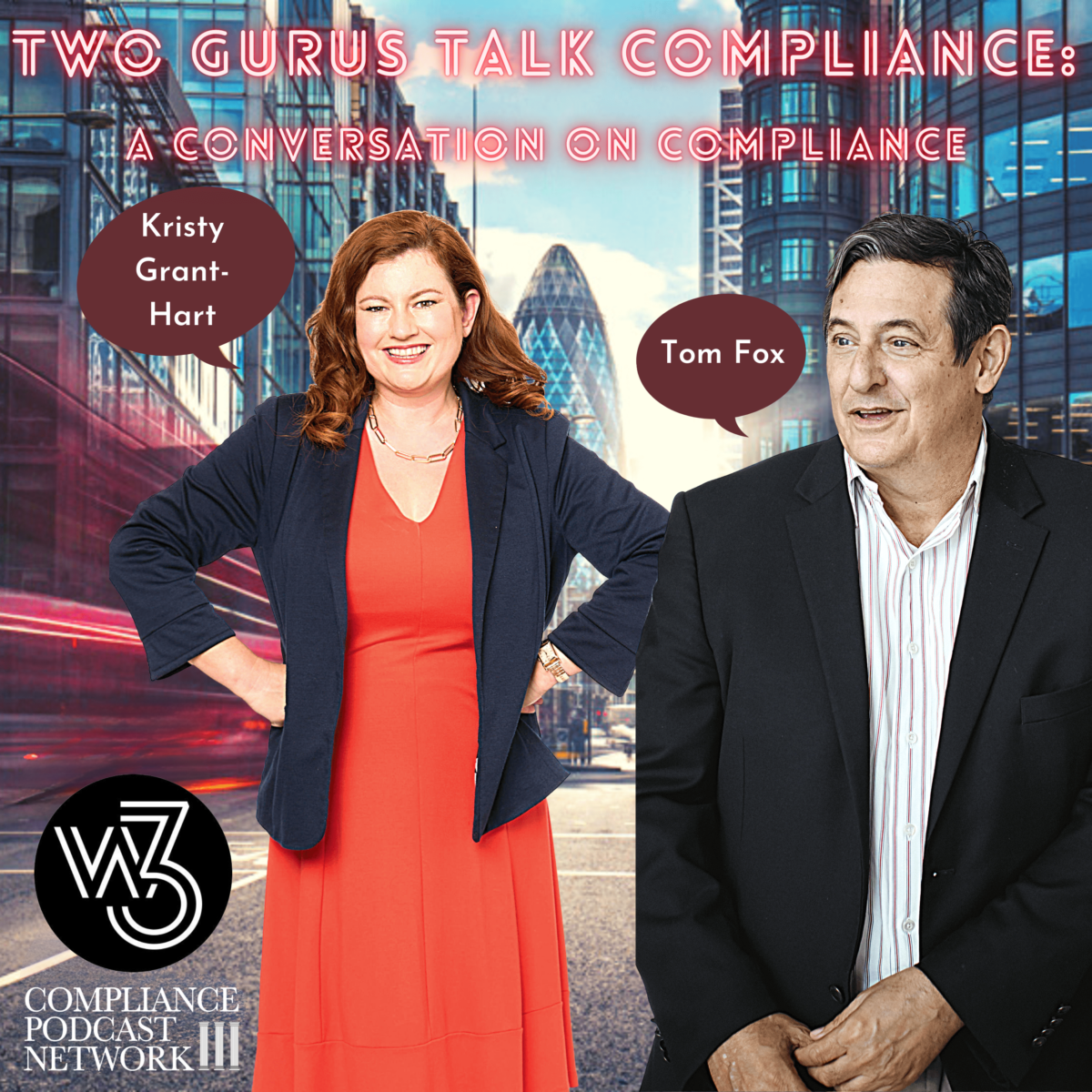
What happens when two top compliance commentators get together? They talk compliance, of course. Join Tom Fox and Kristy Grant-Hart in 2 Gurus Talk Compliance as they discuss the latest compliance issues in this week’s episode!

Stories this week include:

  • Trump is redefining what corruption is. (Axios)
  • The pain of doing business with the Trump Administration. (FT)
  • The fired DOJ lawyer accused the current DOJ leadership of corruption. (AP)
  • 8 arrested in Huawei corruption probe. (Bloomberg)
  • Whistleblowers awarded $6.7 million against Texas AG. (Houston Chronicle)
  • New Tariffs Promise Increased False Claims Act Scrutiny on Importers and Other Companies in the Import Chain (Gibson Dunn)
  • Justice Department Scales Back Crypto Enforcement (WSJ)
  • DOJ Monitorship Policy Disappears (Radical Compliance)
  • Navigate Career Chaos: 5 Steps to Find Clarity Now (Psychology Today)
  • Woman arrested after accidentally texting sheriff’s department instead of drug dealer (KKTV)


Resources:

Kristy Grant-Hart on LinkedIn

Prove Your Worth

Tom

Instagram

Facebook

YouTube

Twitter

LinkedIn

Categories
10 For 10

10 For 10: Top Compliance Stories For the Week Ending, April 12, 2025

Welcome to 10 For 10, the podcast that brings you the week’s Top 10 compliance stories in one podcast each week. Tom Fox, the Voice of Compliance, brings you the compliance professional and the compliance stories you need to know to end your busy week. Sit back, and in 10 minutes, hear about the stories every compliance professional should know from the prior week. Every Saturday, 10 For 10 highlights the most important news, insights, and analysis for the compliance professional, all curated by the Voice of Compliance, Tom Fox. Get your weekly filling of compliance stories with 10 for 10, a podcast produced by the Compliance Podcast Network.

  • China has a trade-war arsenal ready. (WSJ)
  • Was tariff whiplash ‘open corruption’?(TNR)
  • How Intel complies with steel and aluminum tariffs. (Tom’s Hardware)
  • DOJ wipes out crypto enforcement. (WSJ)
  • HBO does on dark money corruption in Ohio. (Columbus Dispatch)
  • Meta whistleblower says the company aided China in the AI race. (Bloomberg)
  • Whistleblowers awarded $6.7 against Texas AG. (Houston Chronicle)
  • Clothes rental company CaaStle mired in allegations of fraud. (Forbes)
  • Head of Cayman Islands AML efforts found dead in burning car. (Cayman Compass)
  • 8 arrested in Huawei corruption probe. (Bloomberg)

You can check out the Daily Compliance News for four curated compliance- and ethics-related stories each day here.

Connect with Tom 

Instagram

Facebook

YouTube

Twitter

LinkedIn

Categories
2 Gurus Talk Compliance

2 Gurus Talk Compliance – Episode 49 – The Depression Episode

What happens when two top compliance commentators get together? They talk compliance, of course. Join Tom Fox and Kristy Grant-Hart in 2 Gurus Talk Compliance as they discuss the latest compliance issues in this week’s episode!


Stories This Week Include:

  • Rivals pounce on Paul Weiss lawyers. (NYT)
  • The court dismissed the FCPA case against Cognizant Technologies defendants. (Law360)
  • Boeing sued for wrongful death of whistleblower. (WSJ)
  • US presses French companies to stop DEI. (NYT)
  • Disney is under investigation for DEI. (BBC)
  • The Charlie Javice Verdict: A Wake-Up Call For Fintechs And Banking – (Forbes)
  • The Brave New World — Due Diligence to Identify Cartels and TCOs – (Volkov Blog)
  • Nuggets From Navex on Internal Reporting – (Radical Compliance)
  • The Five Things You Shouldn’t Tell ChatGPT – (WSJ)
  • Florida man points a gun at the man at a karaoke bar after getting ‘upset’ about the music: police – (Fox 35 Orlando)

Resources:

Kristy Grant-Hart on LinkedIn

Prove Your Worth

Tom

Instagram

Facebook

YouTube

Twitter

LinkedIn

Categories
Compliance Into the Weeds

Compliance into the Weeds: Global Anti-Corruption Leadership

The award-winning Compliance into the Weeds is the only weekly podcast that takes a deep dive into a compliance-related topic, literally going into the weeds to explore a subject more fully. Are you looking for some hard-hitting insights on compliance? Look no further than Compliance into the Weeds! In this episode, Tom Fox and Matt Kelly are joined by Mary Inman, a founding partner at Whistleblower Partners.

Matt, Tom, and Mary reflect on the global response to anti-corruption measures following an executive order issued by former President Trump. The conversation highlights webinars conducted in early 2025 that addressed concerns over who would enforce anti-corruption laws worldwide if the United States stepped back. The sentiment among countries like Brazil, Hong Kong, Singapore, England, and France was clear; they were ready to take on the mantle themselves.

Mary reports on her conversations with the SFO in London about instituting a whistleblower program and similar initiatives in the United Kingdom at His Majesty’s Revenue and Customs and the Financial Conduct Authority.

Key highlights:

  • Global Anti-Corruption Sentiment Post-Trump’s Executive Order
  • Encouraging International Enforcement
  • Evidence of Global Enforcement Actions
  • Whistleblower Incentives in the UK
  • Global Leadership in Anti-Corruption

Resources:

Mary Inman on LinkedIn

Whistleblower Partners

Matt in Radical Compliance 

Tom

Instagram

Facebook

YouTube

Twitter

LinkedIn

Compliance into the Weeds was recently honored as one of the Top 25 Regulatory Compliance Podcast.

Categories
Compliance Tip of the Day

Compliance Tip of the Day – AI for Whistleblower Anonymity

Welcome to “Compliance Tip of the Day,” the podcast where we bring you daily insights and practical advice on navigating the ever-evolving landscape of compliance and regulatory requirements. Whether you’re a seasoned compliance professional or just starting your journey, we aim to provide bite-sized, actionable tips to help you stay on top of your compliance game. Join us as we explore the latest industry trends, share best practices, and demystify complex compliance issues to keep your organization on the right side of the law. Tune in daily for your dose of compliance wisdom, and let’s make compliance a little less daunting, one tip at a time.

Today, we look at how to harness AI for whistleblower anonymity and incident management.

Categories
Blog

AI Game-Changing Compliance: Part 4, AI Can Improve Whistleblower Response

Whistleblower programs have long been a cornerstone of corporate compliance, providing employees and stakeholders with a crucial mechanism to report misconduct, fraud, and ethical violations. However, whistleblower response programs in many organizations remain burdened by slow triage processes, an overwhelming volume of reports, and inconsistent follow-ups. The result? Potentially high-risk cases get lost in the shuffle, and employees lose confidence in the system, sometimes opting to go straight to regulators instead of utilizing internal reporting channels. AI-powered tools allow compliance teams to cut through the noise, identify patterns of misconduct, and proactively address risks before they escalate into regulatory or reputational disasters.

Lessons Learned for Compliance Professionals

Integrating cutting-edge technology with traditional investigative methods has ushered in a new era of efficiency and precision in addressing internal concerns. By harnessing advanced analytics, organizations can speed up case prioritization while maintaining essential human oversight. The following five lessons provide strategic insights into how AI can be optimally deployed to enhance whistleblower response times and streamline investigations.

1. Leveraging AI to Augment Strategic Decision-Making Capabilities

When discussing AI in whistleblower response and investigations, it’s imperative to understand that these advanced tools are a force multiplier for human expertise. AI systems can rapidly sift through vast volumes of data and flag anomalies and surface patterns that might otherwise go unnoticed. However, as any seasoned compliance professional will attest, context is king. While highly valuable, AI-generated alerts must be interpreted within the nuances of organizational culture, legal frameworks, and human behavior. This is where human judgment becomes indispensable.

Consider a scenario in which an AI system identifies a cluster of complaints that could suggest systemic misconduct. The tool might rank these cases by urgency, yet the final decision on how to proceed rests on experienced eyes that can assess subtle cues and contextual factors. This hybrid approach ensures that the investigative process is both swift and accurate. Human oversight can identify when an AI might be overzealous or missing context-specific insights, thus better calibrating the technology to suit the organization’s compliance needs.

2. Expedited, Transparent, and Data-Driven Whistleblower Response Frameworks

Various laws and regulatory requirements mandate that organizations react swiftly to whistleblower reports. With AI-driven systems, compliance teams can dramatically reduce the lag between submitting a report and initiating an investigation. Traditional manual processes might delay the evaluation, leading to enhanced regulatory scrutiny, fines, or significant reputational harm. AI-powered platforms can immediately triage the report, cross-reference it with existing data, and prioritize cases based on risk and historical patterns. This level of responsiveness not only meets the high expectations of regulators but also reinforces internal trust in the organization’s commitment to ethical conduct.

Transparency is another key facet. AI systems can log every step of the investigative process, creating an audit trail that is accessible for internal reviews and regulatory inspections alike. Such transparency is invaluable, demonstrating that the organization is serious about addressing compliance concerns in real-time. When employees see that their reports are acted upon swiftly and openly, it cultivates an environment of trust and accountability.

3. Leveraging Diverse Data Sets  

One of the most critical lessons for compliance professionals leveraging AI in whistleblower investigations is the need for diversity in the data used to train these systems. AI is only as unbiased as the information it learns from. When processing sensitive whistleblower reports, any embedded bias can lead to unfair prioritization, potentially skewing investigations and undermining trust in the system.

Your AI tool should be continuously refined with diverse datasets representing various employee backgrounds, complaint types, and contextual factors. This practice ensures that the algorithms can handle the varied nature of whistleblower reports without favoring or penalizing any group or type of complaint. Compliance professionals should work closely with data scientists to conduct regular audits of AI outputs, ensuring the system’s decisions remain equitable and legally sound.

4. Fortifying Employee Confidence Within the Whistleblower Ecosystem

Building a robust and responsive whistleblower system is not about the technology. Rather, it is about fostering trust among employees. AI-driven systems can significantly enhance transparency and timeliness, but without employee buy-in, even the most sophisticated platform will fall short. When employees trust their concerns will be addressed promptly and fairly, they’re more likely to report issues internally rather than taking their concerns to external regulators, which can be more damaging to the organization’s reputation and finances.

AI’s role in this equation is pivotal. By automating the initial stages of case triage and providing real-time updates on the status of investigations, AI ensures that whistleblower reports are not lost in bureaucratic limbo. This immediacy reinforces the message that the organization is committed to addressing issues as they arise. The transparency AI systems offer—through comprehensive audit trails and clear reporting metrics—provides employees with tangible evidence that their voices are heard.

5. Elevating Stakeholder Confidence 

While the initial investment in AI-driven whistleblower systems may seem steep, the long-term benefits, especially cost savings, are substantial. One of the key lessons for compliance professionals is that the deployment of AI is not merely a technological upgrade; it is a strategic decision that can transform the financial landscape of compliance operations. AI streamlines the investigative process by reducing the time to sift through and prioritize whistleblower reports, cutting down on labor-intensive tasks that often drive up costs.

By automating routine processes, organizations can reallocate human resources to more complex issues that require nuanced judgment. This speeds up the response time and minimizes the risk of costly errors or oversights that could lead to regulatory fines and legal liabilities. The efficiency gains from AI-driven investigations often translate into fewer disruptions and lower operational costs. For example, when a potential compliance issue is flagged and resolved promptly, the organization avoids the cascading expenses associated with prolonged investigations, legal battles, and reputational damage.

In addition, the transparency and accuracy provided by AI systems can serve as a form of risk mitigation. Detailed audit trails and systematic data analysis ensure that every step of the investigative process is documented, providing a solid defense in the event of regulatory scrutiny. This comprehensive documentation can be a lifesaver during audits, saving time and legal fees. Ultimately, while the upfront costs of AI implementation should be weighed, the return on investment is clear: faster, more efficient investigations lead to lower compliance costs, a stronger legal standing, and a healthier corporate reputation. In today’s high-stakes regulatory environment, AI is not just a tool—it’s a long-term financial strategy that benefits the organization’s bottom line and integrity.

The Future is Here: How AI Enhances Whistleblower Response and Investigations

In “Artificial Intelligence and Whistleblowing: Can A.I. be Useful for Whistleblowing Processes?” Kalliopi Zouvia detailed the evolving relationship between whistleblower protection and artificial intelligence. She reviews the emerging role of AI in strengthening mechanisms for detecting, reporting, and investigating unethical practices, making it a vital read for corporate compliance professionals seeking to harness technology in upholding ethical standards.

She reviews key milestones, including Council of Europe recommendations and, more recently, the EU’s Whistleblower Directive (Directive 2019/1937), which sets a standardized baseline for protecting individuals across the EU. For corporate compliance officers, understanding these regulatory benchmarks is essential for designing internal policies that comply with legal mandates and foster a culture of transparency and accountability. Central to the discussion is the three-tier reporting model outlined by the Directive, which offers multiple channels for whistleblowers to report concerns—internally, externally, to competent authorities, or, ultimately, publicly via the media. Confidentiality and, where possible, anonymity remain crucial elements, ensuring that the identity of the reporting individual is safeguarded against unnecessary disclosure. While providing flexibility, this model also imposes significant operational challenges on organizations tasked with responding swiftly and effectively to such reports.

A major focus of the article is the potential of artificial intelligence to enhance each stage of the whistleblowing process. AI-driven reporting systems, such as chatbots, are highlighted as powerful tools that can guide individuals through the reporting process, reducing the likelihood of incomplete submissions and providing simple instructions about reporting requirements. Real-time translation services powered by AI can break down language barriers, broadening access to reporting channels across diverse cultural and ethnic groups, a critical factor for multinational corporations committed to global ethical standards.

Beyond the initial report submission, AI shows promise in streamlining the vetting and investigative processes. Automated data extraction and advanced analytics can sift through vast amounts of information to isolate relevant details, significantly reducing the manual burden on compliance teams. This technology speeds up the preliminary review of allegations and helps identify patterns or red flags that may show deeper systemic issues. Such efficiencies are valuable considering increasing report volumes, as evidenced by European and American whistleblowing statistics trends.

AI-driven whistleblower response programs are no longer futuristic concepts but essential tools for modern compliance teams. By integrating AI into whistleblower programs, companies can prioritize high-risk cases, accelerate investigations, enhance transparency, and protect whistleblowers from retaliation. As regulatory bodies continue emphasizing whistleblower protections, organizations that fail to modernize their response programs risk falling behind in compliance maturity and exposing themselves to legal and reputational risks.

The call to action for compliance professionals is clear: Embrace AI-driven whistleblower programs now or risk facing regulatory scrutiny later. The technology is available, the benefits are measurable, and the time to act is now.


Categories
Compliance Tip of the Day

Compliance Tip of the Day: The Wolf Man and Supporting Whistleblowers

Welcome to “Compliance Tip of the Day,” the podcast where we bring you daily insights and practical advice on navigating the ever-evolving landscape of compliance and regulatory requirements.

Whether you’re a seasoned compliance professional or just starting your journey, our aim is to provide you with bite-sized, actionable tips to help you stay on top of your compliance game.

Join us as we explore the latest industry trends, share best practices, and demystify complex compliance issues to keep your organization on the right side of the law.

Tune in daily for your dose of compliance wisdom, and let’s make compliance a little less daunting, one tip at a time.

How does the Wolf Man’s story inform how you should treat whistleblowers?


Categories
Great Women in Compliance

Great Women in Compliance: Mary Inman and Jane Norberg on Current Developments in Whistleblower Laws and Practice

Welcome to the Great Women in Compliance podcast with Hemma Lomax and Lisa Fine, sponsored by Corporate Compliance Insights.  Over the past few months, the Department of Justice put forth the Whistleblower Pilot Program, and the update to the Evaluation of Corporate Compliance Programs.  It was the perfect time to focus on how these impact whistleblower laws. Jane Norberg, who is a partner at Arnold & Porter and the former Chief of the Office of the Whistleblower and Mary Inman, who is a founding partner of Whistleblower Partners. Mary is also an advocate for the power of whistleblowers and is known for representing Facebook Files whistleblower Frances Haugen and Theranos whistleblower Tyler Shultz.

They provide insight into what makes a credible and legitimate whistleblower, how the SEC reviews tips from whistleblowers and what we as compliance professionals can do to build effective programs. All focused on the review of all concerns that are raised, regardless of the source. They provide some thoughts about how to handle different situations before, during, and after an investigation, providing practical advice.

The group discusses the new DOJ Whistleblower Pilot program and where it follows the past programs like the SEC program and where it is filling new gaps. One part of the program includes the 120-day requirement for reporting an issue, and they focused on what that would mean for organizations. Mary and Jane share their views on the requirements and the best practices and reference how most compliance professionals are using the DOJ Evaluation of Corporate Compliance to develop their programs, which means that an issue is investigated. In practical terms, following the ECCP requirement to investigate, and the pilot program has a “race to report,” is a challenge, and this is discussed in depth.

Mary and Jane both provided “one thing you should know” to conclude the discussion. Both points are significant ones for anyone who is dealing with any point of the whistleblower or building a strong speak up/anti-retaliation culture.

Join the Great Women in Compliance community on LinkedIn here.