Categories
Blog

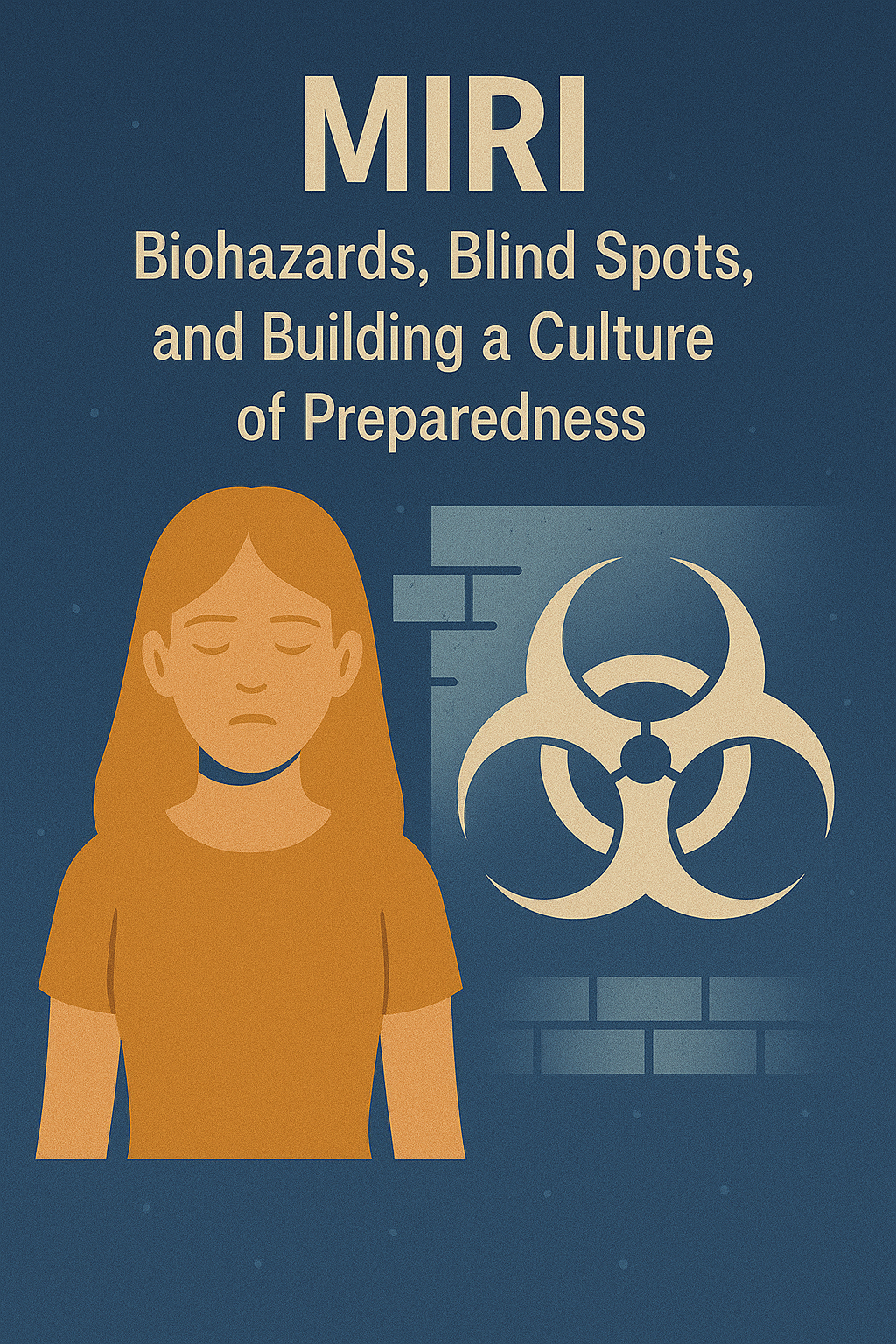
Miri: Biohazards, Blind Spots, and Building a Culture of Preparedness

Show Summary

Today, we explore one of the eeriest and most profound cautionary tales in the Star Trek canon—Miri. When the crew responds to a distress signal from a planet that’s an exact duplicate of Earth, they find a society ravaged by a failed experiment in human longevity. Only children remain, while the adult “grups” have all died from a virulent disease.

This haunting story is not science fiction. It’s a case study of what happens when risk management is treated as an afterthought. We draw parallels between the biohazard breakdowns on the planet and the kinds of failures that modern compliance officers must guard against, whether in public health readiness, supply chain risk, or workforce welfare.

Key Highlights and Risk Management Case Illustrations

1. Disaster Preparedness—A Cure Without a Contingency Plan

Illustrated by: The civilization’s experiment to extend life, which instead wipes out all adults.

This central failure underscores the risks associated with scientific advancement that lacks proper risk assessment. The developers had no fallback, no regulatory oversight, and no crisis management framework in place. For compliance professionals, this serves as a reminder that innovation must be paired with effective scenario planning and disaster recovery protocols.

2. Environmental and Public Health Compliance—Invisible Risks Become Existential Threats

Illustrated by: The crew’s infection with the disease upon beaming down, with lesions appearing days later.

This serves as a metaphor for health and safety non-compliance. Enterprises must be vigilant about how workplace conditions, unseen hazards, and biological risks can impact staff and operations. Proactive monitoring and rapid-response mechanisms are essential components of any risk management strategy.

3. Data Governance and Early Warning Systems—Responding Too Late

Illustrated by: The automated distress signal continued even though no adult survivors remained.

The signal was still active, but no one was listening until it was far too late. In modern organizations, this is equivalent to ignoring audit logs, internal control alerts, or whistleblower reports that go unread. A culture of attentiveness to data and signals is crucial to catching issues before they cascade.

4. Supply Chain Risk—Critical Resource Shortages in the Field

Illustrated by: The crew’s struggle to develop a cure with limited time, no labs, and deteriorating conditions.

Kirk and McCoy were caught without adequate resources. This scenario mirrors the real-world risks companies face when they lack redundancy in their supply chains, fail to audit vendor health, or fail to plan for logistical disruptions. A robust compliance framework includes stress-testing the supply chain for resilience under duress.

5. Employee Welfare and Isolation—Psychological and Ethical Concerns in Hazard Zones 

Illustrated by: Spock’s decision not to return to the Enterprise due to the risk of contamination.

Spock’s sacrifice is a model of ethical risk containment. In any risk environment, whether it is a pandemic, data breach, or financial misconduct, companies must empower employees to make ethically sound decisions while providing mental health support for those isolated by crisis response roles.

Final ComplianceLog Reflections

Miri is a chilling illustration of what happens when ambition outpaces ethics and planning. The children left behind are the victims of a society that prioritizes progress over protection. For compliance professionals, this episode serves as a vivid reminder that a well-crafted compliance program is not just about preventing misconduct; rather, it is about preparing for the unknown.

Resources:

Excruciatingly Detailed Plot Summary by Eric W. Weisstein

MissionLogPodcast.com

Memory Alpha

Categories
The Ethics Experts

Episode 217 – Matt Fawcett

In this episode of The Ethics Experts, Nick welcomes Matt Fawcett.

Matt Fawcett serves as the general counsel for DXC Technology. He serves as principal counsel and advisor to senior leadership and the DXC Board of Directors. He has global responsibility for all legal, privacy, contracting, mergers and acquisitions, litigation, and compliance activities, as well as government and regulatory affairs.

Connect with Matt Fawcett on LinkedIn.

Categories
Corruption, Crime and Compliance

DOJ Applies False Claims Act to Tariff and Trade Violations

What if your trade compliance misstep became tomorrow’s federal prosecution headline? In this episode, Michael Volkov issues a powerful warning to corporate leaders and compliance professionals: the DOJ is no longer treating trade violations as minor infractions—they’re targeting them as fraud under the False Claims Act. With trade compliance now framed as a national security issue, this administration is on a mission to protect domestic industries and punish companies that cut corners. If your organization engages in international trade—especially with China—this episode is a must-listen.

You’ll hear him discuss:

  • Why corporate leaders should not confuse the pause in FCPA enforcement with a wider drop in corporate prosecutions, as the DOJ is intensifying its focus on other high-risk areas like customs and trade compliance
  • How the False Claims Act is being used to prosecute companies for tariff evasion, misclassification of goods, and country-of-origin fraud, creating major new exposure for import-heavy businesses
  • The administration’s positioning of trade compliance as a national security priority signals tougher penalties and more aggressive enforcement tactics.
  • Examples of recent DOJ cases, including multimillion-dollar settlements with Barco Uniforms, International Vitamins Corporation, and Danco Laboratories, highlight how quickly companies can become targets.
  • The expanding role of whistleblowers under new DOJ incentives makes it more likely that internal missteps will be reported and investigated.
  • Why supply chains involving China and other flagged jurisdictions are under heightened scrutiny, and how companies can prepare for increased oversight
  • The risks of becoming a public example of trade fraud and the steps companies should take now to stay ahead of enforcement and protect their brand and bottom line.

Resources

Michael Volkov on LinkedIn | Twitter

The Volkov Law Group

Categories
Compliance Tip of the Day

Compliance Tip of the Day – Mapping Your Internal Controls

Welcome to “Compliance Tip of the Day,” the podcast that brings you daily insights and practical advice on navigating the ever-evolving landscape of compliance and regulatory requirements. Whether you’re a seasoned compliance professional or just starting your journey, our goal is to provide you with concise, actionable tips to help you stay ahead in your compliance efforts. Join us as we explore the latest industry trends, share best practices, and demystify complex compliance issues to keep your organization on the right side of the law. Tune in daily for your dose of compliance wisdom, and let’s make compliance a little less daunting, one tip at a time.

Today, we discuss the importance of mapping your internal controls to supplement a gap analysis.

For more information on this topic, refer to The Compliance Handbook: A Guide to Operationalizing Your Compliance Program, 6th edition, recently released by LexisNexis. It is available here.

Categories
FCPA Compliance Report

FCPA Compliance Report – Revolutionizing Speak Up: Ariel D. Weindling on Enhancing Whistleblower Systems

Welcome to the award-winning FCPA Compliance Report, the longest-running podcast in compliance. Today, Tom Fox welcomes back Ariel D. Weindling, founder of NotMe Solutions, a whistleblower reporting solution, to discuss innovations and strategies for enhancing speak-up cultures in organizations.

Weindling, with a background in employment law, critiques current whistleblower systems for prioritizing regulatory compliance over genuine employee engagement. He shares insights on implementing effective speak-up programs, emphasizing the importance of trust, timely resolution, and a culture of listening. Weindling also highlights key findings from over 20,000 reports through NotMe Solutions, including common issues reported and the importance of leadership in fostering a culture of speaking up.

Key highlights:

  • Challenges in Current Speak Up Cultures
  • Building Effective Compliance Programs
  • Evaluating Existing Speak Up Systems
  • The Importance of Listening in Speak Up Cultures
  • Role of Leadership in Speak Up Culture
  • Innovations in the Speak Up Space

Resources:

Ariel D. Weindling on LinkedIn

Not Me (Company)

Tom Fox

Instagram

Facebook

YouTube

Twitter

LinkedIn

For more information on the use of AI in Compliance programs, see my new book, Upping Your Game. You can purchase a copy of the book on Amazon.com

Categories
Daily Compliance News

Daily Compliance News: June 9, 2025, The Repugnant Edition

Welcome to the Daily Compliance News. Each day, Tom Fox, the Voice of Compliance, brings you compliance-related stories to start your day. Sit back, enjoy a cup of morning coffee, and listen in to the Daily Compliance News. All from the Compliance Podcast Network. Each day, we consider four stories from the business world: compliance, ethics, risk management, leadership, and general interest, all of which are relevant to the compliance professional.

Top stories include:

  • Families of Boeing victims call NPA repugnant. (BBC)
  • The EU wants to impose additional sanctions on Russia. (FT)
  • Dams holding back corruption in the US are breaking. (NYT)
  • The Trump Administration is attempting to weaken Russian sanctions. (WSJ)
Categories
Adventures in Compliance

Adventures in Compliance: The Novels: The Sign of Four – Applying Sherlock Holmes’ Methods to Modern Corporate Compliance

In this new season of Adventures in Compliance, host Tom Fox takes a deep dive into the Sherlock Holmes novels. Over the course of this season, Tom Fox will take a deep dive into each novel in a four-part series. The four novels we will consider from the ethics and compliance perspective are A Study in Scarlet, The Sign of Four, The Hound of the Baskervilles, and The Valley of Fear. We continue our four-episode series on the second novel, The Sign of Four, by reviewing how Holmes’ investigative techniques can be applied to enhance corporate compliance efforts.

We unpack five key lessons, including methodical investigation, clear communication, understanding human behavior, constant vigilance, and unwavering integrity. By adopting these principles, organizations can enhance transparency and proactive risk management, ultimately safeguarding their reputation and ethical standing.

Highlights include:

  • Lesson 1: Methodical Investigation and Attention to Detail
  • Lesson 2: The Importance of Clear Communication
  • Lesson 3: Understanding Human Behavior
  • Lesson 4: Vigilance Against Complacency
  • Lesson 5: Integrity and Ethical Fortitude
  • Conclusion: Applying Holmes’ Principles to Modern Compliance

Resources:

The New Annotated Sherlock Holmes

Sherlock Holmes FAQ by Dave Thompson

Connect with Tom Fox

Instagram

Facebook

YouTube

Twitter

LinkedIn

Categories
Blog

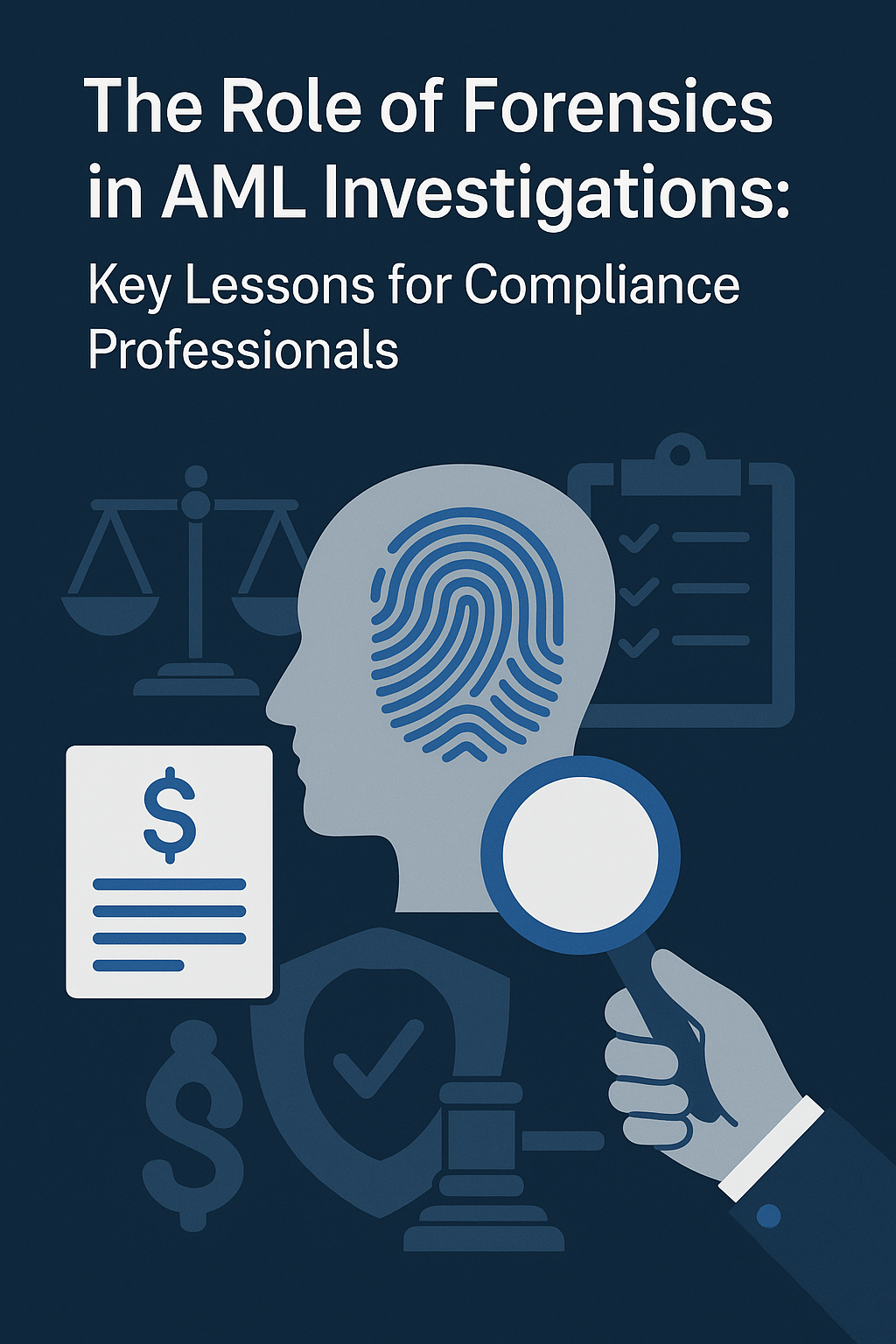
The Role of Forensics in AML Investigations: Key Lessons for Compliance Professionals

Effective anti-money laundering (AML) strategies rely heavily on forensic methodologies, which combine investigative expertise, advanced analytical technologies, and meticulous procedural rigor. Elaine Wood and Niall Murphy, from Charles River Associates, recently wrote an article that appeared in GIR, an extract from the third edition of The Guide to Anti-Money Laundering. Drawing insights from recent enforcement cases and best practices, their article outlined the five top lessons learned for compliance professionals regarding the role of forensic analysis in AML investigations. I have adapted it for the compliance professional.

1. The Power of Advanced Technology

Artificial intelligence (AI) and machine learning (ML) technologies have significantly enhanced the effectiveness of forensic analysis in anti-money laundering (AML) investigations. Leveraging these advanced technologies allows investigators to identify suspicious activities swiftly and accurately by recognizing anomalous behaviors through outlier detection and natural language processing. For instance, the U.S. Department of the Treasury’s successful recovery of over $1 billion from check fraud in fiscal year 2024 was primarily achieved through AI-driven solutions, representing a substantial increase compared to previous recoveries.

Compliance professionals should embrace AI and ML tools to strengthen their AML programs. Implementing these technologies can significantly enhance detection capabilities, streamline investigative processes, and mitigate risks more effectively.

2. Comprehensive Forensic Reviews

A comprehensive forensic review is critical when a company faces allegations of involvement in money laundering schemes. These forensic audits meticulously analyze transactional data across jurisdictions, mapping complex networks and pinpointing irregular activities. The case involving TD Bank, which resulted in a $3 billion penalty for AML failures, highlights the importance of thorough forensic reviews in uncovering long-term deficiencies and systemic lapses.

Compliance professionals must prioritize comprehensive forensic audits and continuously review their AML policies and controls. Robust and proactive forensic analyses help prevent substantial financial losses, severe penalties, and considerable reputational damage.

3. Rigorous Documentation and Record-Keeping

Proper documentation and record-keeping are essential in AML forensic investigations. These practices facilitate accurate transaction mapping, precise identification of irregular activities, and effective remediation strategies. During forensic examinations, each transaction alert, including how it was triggered, reviewed, escalated, and resolved or reported, must be meticulously recorded, along with assessments of existing AML controls.

In recent enforcement actions against financial institutions, regulatory agencies have highlighted deficiencies in documentation and record-keeping as contributing factors to compliance failures. Thus, compliance professionals must ensure that robust documentation protocols are in place and consistently adhered to, safeguarding against lapses and ensuring readiness for regulatory scrutiny.

4. Asset Tracing and Recovery Techniques

Forensic analysis extends beyond identifying irregular activities to include asset tracing and recovery, a crucial component of anti-money laundering (AML) investigations. Skilled forensic accountants and investigators track illicit funds across multiple jurisdictions and through various entities. An example of successful asset tracing is illustrated in the investigation of Central and South American drug cartels, where forensic techniques traced funds used to purchase illegally mined gold, highlighting complex laundering schemes involving international trade.

Compliance professionals should be adept at or closely collaborate with experts skilled in asset tracing and recovery. Understanding how to effectively track the flow of illicit funds through financial statements, transaction records, and ownership details significantly enhances the ability to reclaim assets and mitigate organizational exposure.

5. Calculating Economic Impact and Loss

Forensic specialists also play a pivotal role in determining the economic impact of money laundering, a complex task involving meticulous financial forensics. Calculating losses consists of assessing both the impact of the predicate crime and the economic damage resulting from subsequent laundering activities. Financial forensic analyses provide essential data for criminal forfeitures, civil judgments, and administrative penalties, offering precise quantifications of losses incurred.

In the Brink’s Global Services case, for instance, the assessment involved evaluating the company’s failure to adhere to AML regulations, resulting in a significant settlement. Compliance professionals must understand the methodologies and implications of calculating economic losses, as these calculations significantly impact legal outcomes and regulatory penalties.

Conclusion

Effective AML compliance demands integrating advanced forensic methodologies, technologies, and expertise into organizational frameworks. By learning from prominent cases and incorporating the above lessons, leveraging AI technology, conducting thorough forensic audits, maintaining rigorous documentation, mastering asset tracing techniques, and understanding economic impact calculations, compliance professionals can significantly enhance their AML capabilities.

A proactive and informed approach to forensic analysis not only aids in identifying and mitigating AML risks but also safeguards organizations from severe financial and reputational consequences. Compliance professionals equipped with robust forensic tools and methodologies are uniquely positioned to ensure organizational integrity, regulatory compliance, and resilience in the increasingly complex financial landscape.

Categories
Trekking Through Compliance

Trekking Through Compliance – Episode 8 – Miri

In this episode of Trekking Through Compliance, we consider the episode Miri, which aired on October 27, 1966, Star Date 2713.5. In this episode of Trekking Through Compliance, we explore one of the eeriest and most profound cautionary tales in the Star Trek canon: “Miri.” When the crew responds to a distress signal from a planet that’s an exact duplicate of Earth, they find a society ravaged by a failed experiment in human longevity. Only children remain, while the adults, the “grups,” have all died from a virulent disease.

This haunting story is not simply science fiction. It is a case study of what happens when risk management is treated as an afterthought. We draw parallels between the biohazard breakdowns on the planet and the kinds of failures that modern compliance officers must guard against, whether in public health readiness, supply chain risk, or workforce welfare.

Episode Summary

A disfigured man attacks a landing party, who die after Kirk strikes him. They discover a preadolescent, Miri, who ran away from them because “grups” kill and maim children before dying. She and her friends are “onlies,” the only ones left. The distress call is traced to an automated signal. The landing party, except for Spock, notices purple lesions on their bodies; Miri tells them that these are the first signs of the disease, and they will soon develop into the same condition as the other adults. When the disease begins, its victims have seven days to live. Although Spock is immune, he considers himself a carrier who could infect the Enterprise if he returns.

Back on the Enterprise, after vaccinating everyone and leaving the children in the care of a medical team, Kirk sends for teachers and advisers to help the children improve their lives.

Key highlights:

1. Disaster Preparedness—A Cure Without a Contingency Plan

🖖Illustrated by: The civilization’s experiment to extend life, which instead wipes out all adults.

This central failure underscores the risks associated with scientific advancement that lacks proper risk assessment. The developers had no fallback, no regulatory oversight, and no crisis management framework in place. For compliance professionals, this serves as a reminder that innovation must be paired with effective scenario planning and disaster recovery protocols.

2. Environmental and Public Health Compliance—Invisible Risks Become Existential Threats

🖖Illustrated by: The crew’s infection with the disease upon beaming down, with lesions appearing days later.

This serves as a metaphor for health and safety non-compliance. Enterprises must be vigilant about how workplace conditions, unseen hazards, and biological risks can impact staff and operations. Proactive monitoring and rapid-response mechanisms are essential components of any risk management strategy.

3. Data Governance and Early Warning Systems—Responding Too Late

🖖Illustrated by: The automated distress signal continued even though no adult survivors remained.

The signal was still active, but no one was listening until it was far too late. In modern organizations, this is equivalent to ignoring audit logs, internal control alerts, or whistleblower reports that go unread. A culture of attentiveness to data and signals is crucial to catching issues before they cascade.

4. Supply Chain Risk—Critical Resource Shortages in the Field

🖖Illustrated by: The crew’s struggle to develop a cure with limited time, no labs, and deteriorating conditions.

Kirk and McCoy were caught without adequate resources. This scenario mirrors the real-world risks companies face when they lack redundancy in their supply chains, fail to conduct thorough vendor audits, or fail to plan for logistical disruptions. A robust compliance framework includes stress-testing the supply chain for resilience under duress.

Employee Welfare and Isolation—Psychological and Ethical Concerns in Hazard Zones

🖖Illustrated by: Spock’s decision not to return to the Enterprise due to the risk of contamination.

Spock’s sacrifice is a model of ethical risk containment. In any risk environment, whether it is a pandemic, data breach, or financial misconduct, companies must empower employees to make ethically sound decisions while providing mental health support for those isolated by crisis response roles.

Final Starlog Reflections

Miri is a chilling illustration of what happens when ambition outpaces ethics and planning. The children left behind are the victims of a society that prioritizes progress over protection. For compliance professionals, this episode serves as a vivid reminder that a well-crafted compliance program is not just about preventing misconduct—it’s about preparing for the unknown.

Resources

Excruciatingly Detailed Plot Summary by Eric W. Weisstein

MissionLogPodcast.com

Memory Alpha