Categories
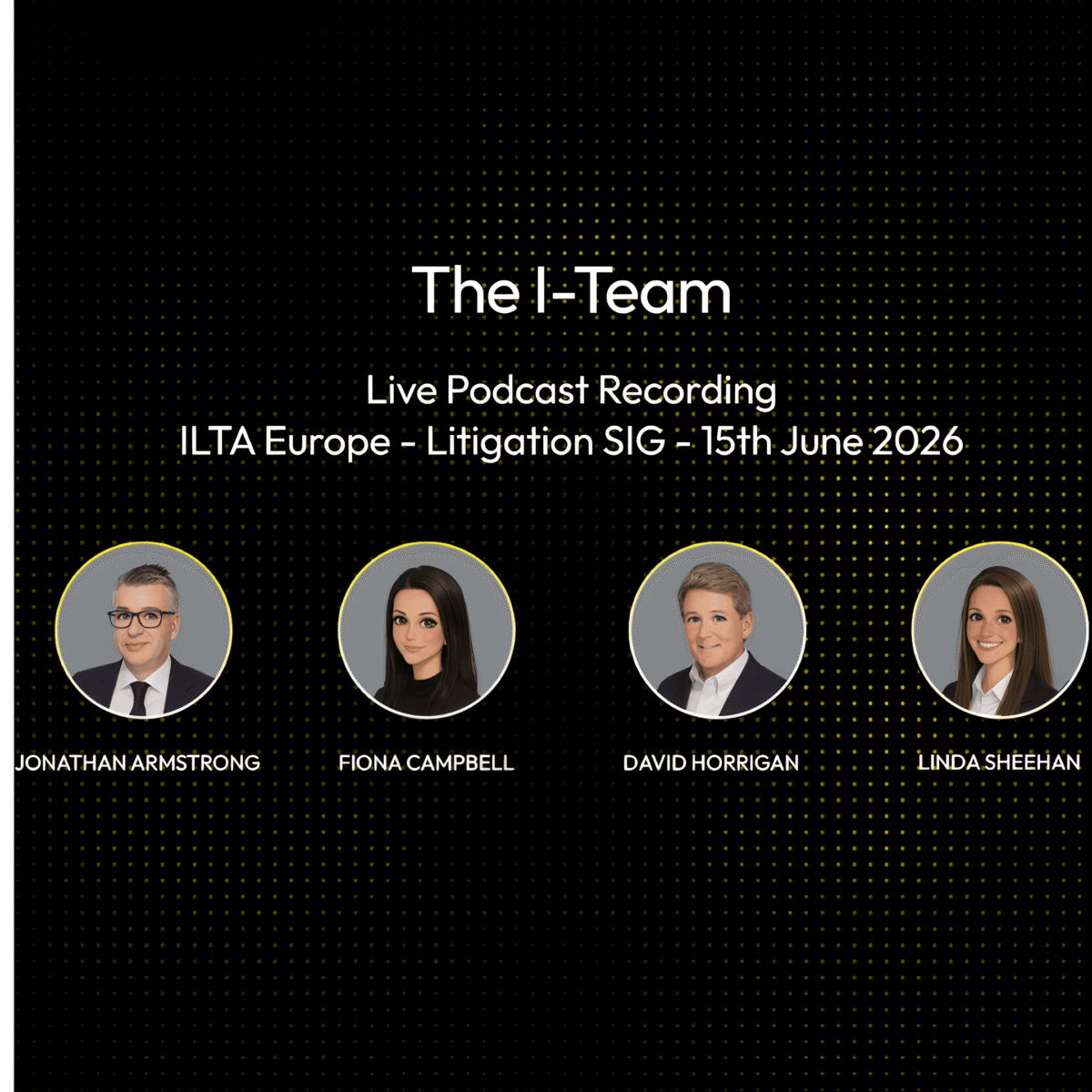
The I-Team Podcast

The I-Team Podcast: What’s Happening Around the World in the Law of AI

Categories
AI Today in 5

AI Today in 5: August 18, 2026, The Demand Shock from AI Edition

Welcome to AI Today in 5, the newest addition to the Compliance Podcast Network. Each day, Tom Fox will bring you 5 stories about AI to start your day. Sit back, enjoy a cup of morning coffee, and listen in to AI Today in 5. All from the Compliance Podcast Network. Each day, we consider five stories from the business world on compliance, ethics, risk management, leadership, or general interest in AI.

Top AI stories include:

  1. Procurement, AI, and compliance. (Procurement Magazine)
  2. What prevents RegTech adoption? (FinTechGlobal)
  3. A compliance framework for chatbots. (Law360)
  4. AI as a compliance imperative in finance. (FutureCFO)
  5. AI wants more of everything. (Bloomberg)

For more information on using AI in compliance programs, Tom Fox’s new book, Upping Your Game, is available. You can purchase a copy of the book on ⁠Amazon.com⁠.

To learn about the intersection of Sherlock Holmes and the modern compliance professional, check out Tom’s latest book, The Game is Afoot-What Sherlock Holmes Teaches About Risk, Ethics and Investigations on ⁠Amazon.com⁠.

Categories
Blog

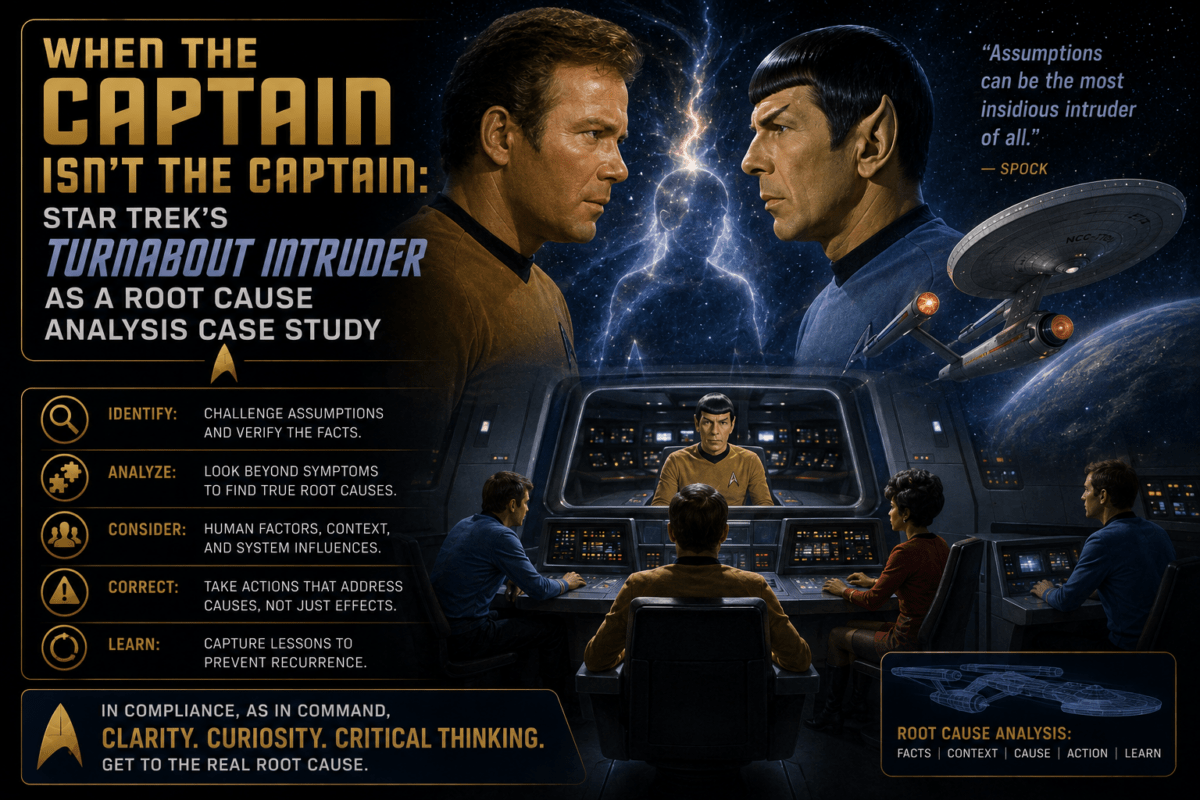
When the Captain Isn’t the Captain: Star Trek’s Turnabout Intruder as a Root Cause Analysis Case Study

One of the Department of Justice’s most consistent themes in its 2024 Update to the Evaluation of Corporate Compliance Programs (ECCP) is the need for companies to conduct effective root cause analysis following misconduct or control failures. It’s not enough to identify what went wrong; you must understand why it happened and implement measures to prevent it from happening again.

That principle is front and center in the Star Trek: The Original Series finale, Turnabout Intruder. In this episode, Captain Kirk is on an archaeological survey mission when he encounters Dr. Janice Lester, an old acquaintance from Starfleet Academy. Through a mysterious alien device, Lester transfers her consciousness into Kirk’s body, trapping his mind in her own body. What follows is a tense series of events in which “Kirk” behaves increasingly erratically, prompting suspicion among the crew.

For compliance professionals, the episode is a surprisingly apt case study in the perils of failing to dig past the surface when something seems off. Just as the crew needed to piece together the real cause of their captain’s strange behavior, compliance teams must be adept at peeling back layers to discover the true root cause of problems.

Here are five key root cause analysis lessons from Turnabout Intruder.

Lesson 1: Unusual Behavior Should Trigger an Investigation

Illustrated by: Shortly after the mind swap, “Kirk” begins making uncharacteristic decisions, belittling subordinates, ignoring Starfleet protocols, and punishing dissent in ways that are entirely out of character for the captain.

Compliance Lesson:

Behavior that deviates from established patterns should be a red flag. In corporate compliance, abrupt changes, whether in employee conduct, financial reporting patterns, or transaction activity, often indicate deeper issues.

Too often, organizations rationalize away early warning signs: “He’s under stress” or “That’s just her style.” But effective root cause analysis begins with the willingness to ask, Why is this happening now? Early detection is often the difference between a manageable problem and a full-blown crisis. Develop and maintain behavioral baselines for key personnel and functions. If something deviates sharply, investigate promptly rather than waiting for more evidence to emerge.

Lesson 2: Multiple Data Points Build a Stronger Case

Illustrated by: Several crew members—Spock, McCoy, and Scotty—each notice something odd about “Kirk.” At first, their observations are anecdotal and separate. Only when they share information do they begin to see a pattern that suggests something is seriously wrong.

Compliance Lesson. Root cause analysis is stronger when it integrates multiple perspectives and data sources. If you rely on a single source, one audit, or one complaint, you risk drawing incomplete or biased conclusions.

In the episode, no single crew member had enough to prove that Kirk wasn’t himself. But when their observations were combined, the collective evidence pointed toward an anomaly that needed urgent action. Create processes that encourage information sharing across departments. Compliance, audit, HR, and operations should have mechanisms to cross-reference findings because the root cause may only emerge when different pieces are put together.

Lesson 3: Be Alert to Hidden Motives

Illustrated by: In Kirk’s body, Lester uses her new authority to sideline suspected opponents, reassigning or threatening crew who question her behavior. Her motive isn’t mission success; it’s consolidating her stolen command.

Compliance Lesson. The apparent cause of a problem may mask deeper personal or organizational motives. Misconduct often occurs because someone pursues goals that conflict with corporate policy, whether for financial gain, personal vendettas, or reputational enhancement.

If your analysis stops at “This person violated policy,” you miss the opportunity to uncover why they were willing to risk consequences. In many cases, systemic issues, misaligned incentives, toxic culture, and weak oversight drive the behavior. In every investigation, ask, “What’s in it for them? Understanding incentives, pressures, and personal agendas can reveal root causes that process analysis alone won’t uncover.

Lesson 4: Authority Structures Can Delay Recognition of the Problem

Illustrated by: Even when evidence mounts, the crew is reluctant to challenge “Kirk” because of the chain of command. Starfleet discipline dictates deference to the captain, making it harder to act on suspicions.

Compliance Lesson. In organizations, hierarchy can block efforts to identify root causes. Employees may hesitate to report misconduct by senior leaders, or they may assume questionable directives are “above their pay grade” to question.

This dynamic often allows problems to persist far longer than they should. A compliance program must be designed to bypass those bottlenecks, giving employees safe, confidential, and credible ways to report concerns, even about top executives. Ensure that escalation procedures allow for independent review of senior management conduct. Whistleblower protections, ombuds functions, and anonymous hotlines can help surface issues that otherwise stay buried.

Lesson 5: Validate Assumptions Before Acting

Illustrated by: Spock eventually confronts “Kirk” and demands an explanation. Through logical analysis and a mind meld, he confirms the truth of the body swap. Only then can the crew take decisive action to restore the captain to his rightful body.

Compliance Lesson. One of the biggest pitfalls in root cause analysis is acting on unverified assumptions. If you jump to conclusions too early, you may “fix” the wrong problem—or make it worse. Spock’s mind meld was the ultimate verification step. In compliance, your “mind meld” might be corroborating whistleblower claims with independent documentation or testing an internal control in multiple scenarios before concluding it’s defective.

Build verification into your root cause analysis process. Don’t settle for the first plausible explanation; pressure-test your conclusions before implementing remediation.

Connecting Star Trek to DOJ Expectations

The DOJ’s ECCP explicitly asks:

  • “What is the root cause of the misconduct? ”
  • “Were prior opportunities to detect the misconduct missed? ”
  • “What systemic failures contributed to the issue? ”

Turnabout Intruder illustrates the importance of addressing these questions. If the crew had stopped at “the captain is acting oddly” and focused on damage control, they might never have uncovered the deeper truth of Lester’s body swap. Similarly, in corporate investigations, stopping at the surface level (“employee violated policy”) without probing the environment that allowed it to happen fails both the DOJ’s expectations and your prevention mandate.

Final ComplianceLog Reflections

In Turnabout Intruder, the crew’s slow realization of the true problem nearly cost them their captain and perhaps the Enterprise itself. In the compliance arena, a slow or shallow root cause analysis can let misconduct persist, control weaknesses remain unaddressed, and systemic issues metastasize.

Effective compliance leadership means not just spotting what’s wrong but relentlessly pursuing why it went wrong. That’s how you fix the problem in a way that prevents recurrence.

Like Spock confronting “Kirk,” we must gather evidence methodically, test our conclusions, and act decisively once the truth is clear. Root cause analysis isn’t about blame—it’s about ensuring your organization emerges stronger, more transparent, and more resilient than before.

Because in the end, just like the Enterprise, your mission depends on having the right people in the right roles, operating with integrity, and that’s a result only a thorough, well-executed root cause analysis can guarantee.

Resources:

⁠⁠Excruciatingly Detailed Plot Summary by Eric W. Weisstein⁠⁠

⁠⁠MissionLogPodcast.com⁠⁠

⁠⁠Memory Alpha

Categories
Innovation in Compliance

Innovation in Compliance: Clarence Chio on Rethinking Third-Party Due Diligence in the Age of AI

Innovation comes in many areas, and compliance professionals need to not only be ready for it but also embrace it. Join Tom Fox, the Voice of Compliance, as he visits with top innovative minds, thinkers, and creators in the award-winning Innovation in Compliance podcast. In this episode, host Tom Fox visits with Clarence Chio, co-founder and CEO of Coverbase, about modernizing third-party risk management as AI reshapes vendor due diligence.

Chio describes how traditional onboarding relies on long questionnaires, SOC 2/ISO documentation, and trust centers that streamline document exchange but were built for human-driven workflows. He argues AI makes the process risky and increasingly meaningless because vendors can auto-complete questionnaires convincingly and customers can analyze them with AI, eroding the value of nuance and attestation. Chio contrasts static, point-in-time evidence with the need for dynamic, continuous security evidence, noting software changes faster than annual assessments and third-party software frequently appears in breach chains. He proposes moving from check-the-box questionnaires to first-principles risk validation, including continuous information sharing, deeper technical evidence, and machine-readable artifacts such as SBOMs. He highlights Coverbase’s open-source Trust MCP, which provides scoped, standardized access to verified vendor evidence for an agent-driven future.

Key highlights:

  • Why Coverbase Exists
  • Trust Centers Explained
  • AI Makes Due Diligence Risky
  • Attestation and Human Loop
  • Static vs. Dynamic Evidence
  • Machine-Readable Trust Future

Resources:

Coverbase

Clarence Chio on LinkedIn

Innovation in Compliance was recently honored as the Number 4 podcast in Risk Management by 1,000,000 Podcasts

Categories
Trekking Through Compliance

Trekking Through Compliance: Episode 79 – Beneath the Surface: Turnabout Intruder and the Hunt for Root Causes

One of the Department of Justice’s most consistent themes in its 2024 Update to the Evaluation of Corporate Compliance Programs (ECCP) is the need for companies to conduct effective root cause analysis following misconduct or control failures. It’s not enough to just identify what went wrong; you must understand why it happened and implement measures to prevent it from happening again.

For compliance professionals, the episode is a surprisingly apt case study in the perils of failing to dig past the surface when something seems off. Just as the crew needed to piece together the real cause of their captain’s strange behavior, compliance teams must be adept at peeling back layers to discover the true root cause of problems. Here are five key root cause analysis lessons from Turnabout Intruder.

Lesson 1: Unusual Behavior Should Trigger an Investigation

Illustrated by: Shortly after the mind swap, “Kirk” begins making uncharacteristic decisions, belittling subordinates, ignoring Starfleet protocols, and punishing dissent in ways that are completely out of character for the captain.

Compliance Lesson:

Behavior that deviates from established patterns should be a red flag. In corporate compliance, abrupt changes, whether in employee conduct, financial reporting patterns, or transaction activity, often indicate deeper issues.

Lesson 2: Multiple Data Points Build a Stronger Case

Illustrated by: Several crew members—Spock, McCoy, and Scotty—each notice something odd about “Kirk.” Only when they share information do they begin to see a pattern that suggests something is seriously wrong.

Compliance Lesson. Root cause analysis is stronger when it integrates multiple perspectives and data sources. If you rely on a single source, one audit, or one complaint, you risk drawing incomplete or biased conclusions.

Lesson 3: Be Alert to Hidden Motives

Illustrated by: In Kirk’s body, Lester uses her new authority to sideline suspected opponents, reassigning or threatening crew who question her behavior.

Compliance Lesson. The apparent cause of a problem may mask deeper personal or organizational motives. Misconduct often occurs when someone pursues goals that conflict with corporate policy, whether for financial gain, personal vendettas, or reputational enhancement.

Lesson 4: Authority Structures Can Delay Recognition of the Problem

Illustrated by: Even when evidence mounts, the crew is reluctant to challenge “Kirk” because of the chain of command.

Compliance Lesson. In organizations, hierarchy can block root-cause identification. Employees may hesitate to report misconduct by senior leaders, or they may assume questionable directives are “above their pay grade” to question.

Lesson 5: Validate Assumptions Before Acting

Illustrated by Spock, he eventually confronts “Kirk” and demands an explanation. Through logical analysis and a mind meld, he confirms the truth of the body swap.

Compliance Lesson. One of the biggest pitfalls in root cause analysis is acting on unverified assumptions. If you jump to conclusions too early, you may “fix” the wrong problem—or make it worse.

Final ComplianceLog Reflections

In Turnabout Intruder, the crew’s slow realization of the true problem nearly cost them their captain and perhaps the Enterprise itself. In the compliance arena, a slow or shallow root cause analysis can let misconduct persist, control weaknesses remain unaddressed, and systemic issues metastasize. Effective compliance leadership means not just spotting what’s wrong but relentlessly pursuing why it went wrong. That’s how you fix the problem in a way that prevents recurrence.

Resources:

⁠⁠Excruciatingly Detailed Plot Summary by Eric W. Weisstein⁠⁠

⁠⁠MissionLogPodcast.com⁠⁠

⁠⁠Memory Alpha

Fiona is an AI-generated voice

Categories
Daily Compliance News

Daily Compliance News: August 18, 2026, The FT Business Book of the Year-Long List Edition

Welcome to the Daily Compliance News. Each day, Tom Fox, the Voice of Compliance, brings you compliance-related stories to start your day. Sit back, enjoy a cup of morning coffee, and listen in to the Daily Compliance News. All, from the Compliance Podcast Network. Each day, we consider four stories from the business world, compliance, ethics, risk management, leadership, or general interest for the compliance professional.

Top stories include:

  • DOJ probes over interlocking Boards. (Bloomberg)
  • The Lakers and a federal probe. (The Athletic)
  • FT Business books of the year-the long list is out. (FT)
  • L3Harris CEO ousted for COI. (WSJ)

To learn about the intersection of Sherlock Holmes and the modern compliance professional, check out Tom’s latest book, The Game is Afoot-What Sherlock Holmes Teaches About Risk, Ethics and Investigations on Amazon.com.

Categories
Blog

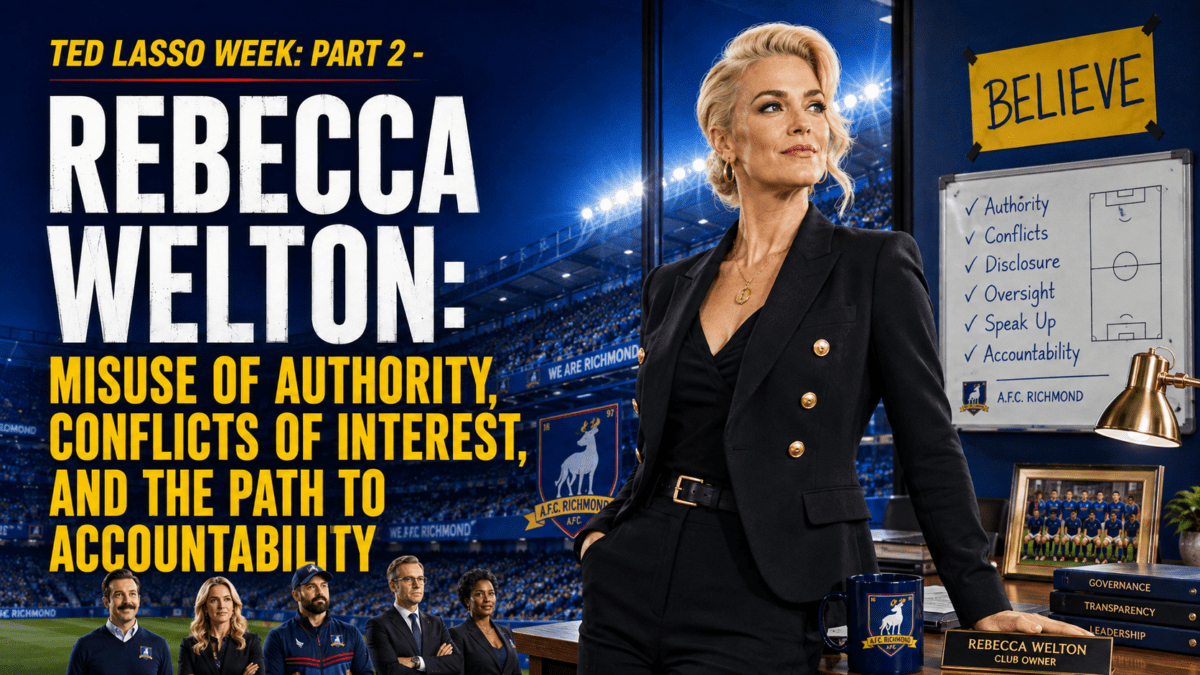
Ted Lasso Week: Part 2 – Rebecca Welton: Misuse of Authority, Conflicts of Interest, and the Path to Accountability

Season 4 of Ted Lasso is out. Matt Kelly reposted a blog he wrote during the original run of the series, and he and I did a deeper dive into the show and its popularity for compliance professionals in an episode of Compliance into the Weeds. I decided to take a deep dive into five characters from the show and use them to explore compliance topics. Over five blog posts, I will consider Manager Ted Lasso, Assistant Manager Nate Shelley, player and later coach Roy Kent, and social media influencer Keeley Jones. Today in Part 2, we consider compliance lessons through the character of team owner Rebecca Welton.

In Part 1, we considered how Ted Lasso built psychological safety and an ethical culture while sometimes allowing empathy to outrun accountability. Rebecca Welton presents the problem from the other side of the executive table. She begins as the source of AFC Richmond’s misconduct, then becomes the leader best positioned to acknowledge it.

Rebecca’s story is not simply a redemption arc. It is a governance case study about what happens when personal objectives capture corporate authority. It also shows why confession, forgiveness, and improved behavior are necessary but insufficient elements of an effective remediation program. The compliance lesson is direct: power creates risk when no independent mechanism can question the person exercising it.

When the Owner Becomes the Risk

In “Pilot” (Season 1, Episode 1), Rebecca hires Ted, an American football coach with no soccer experience, to manage a Premier League club. Her stated rationale is irrelevant because her actual purpose is to destroy the institution Rupert Mannion loves. She uses Richmond’s people, reputation, competitive position, and financial value to pursue a private grievance.

That is a classic conflict between personal interest and organizational duty. Rebecca is not accepting an envelope of cash or steering a contract to a relative. Her conflict is more fundamental: she has converted corporate decision-making into an instrument of revenge. The COSO Internal Control Framework begins with the control environment, including integrity, ethical values, oversight, authority, and accountability. At Richmond, the control environment fails at the top. The owner sets an improper objective, possesses the authority to execute it, and faces no visible independent challenge.

Compliance officers should take note. Conflicts of interest do not end with disclosure forms. They arise whenever personal relationships, status, resentment, financial incentives, or outside interests can distort business judgment. The greater the executive’s authority, the stronger the required safeguards.

Concentrated Authority Silences Challenge

Rebecca’s plan requires assistance. Higgins facilitates her agenda even though he recognizes the harm. In “Make Rebecca Great Again” (Season 1, Episode 7), Rebecca arranges for a photographer to capture Ted and Keeley in a compromising image. The objective is not legitimate media strategy. It is manufactured reputational damage intended to destabilize Ted and the club.

Higgins is not merely an unfortunate bystander. He is a senior employee who allows access, information, and organizational machinery to serve the owner’s improper purpose. His eventual resignation is a delayed act of conscience, but the episode demonstrates how authority can corrupt the escalation process. Employees may know that conduct is wrong and still conclude that challenging the owner is futile or career-ending.

The DOJ Evaluation of Corporate Compliance Programs asks whether “compliance personnel (1) sufficient qualifications, seniority, and stature (both actual and perceived) within the organization; (2) sufficient resources, namely, staff to undertake the requisite auditing, documentation, and analysis effectively; and (3) sufficient autonomy from management, such as direct access to the board of directors or the board’s audit committee.” It also asks whether managers encourage or discourage compliance through their conduct. Richmond has no credible independent function capable of reviewing Rebecca’s decisions, investigating her conduct, or escalating around her.

Accountability Begins With Truth

Keeley becomes the effective speak-up channel Richmond lacks. Once she discovers Rebecca’s scheme, she does not accept friendship, hierarchy, or reputational risk as reasons to stay silent. She insists that Rebecca tell Ted the truth. Rebecca finally does so in “All Apologies” (Season 1, Episode 9). She admits that she hired Ted to fail, orchestrated the paparazzi scheme, and engineered Jamie Tartt’s return to Manchester City to weaken Richmond. Most importantly, she does not minimize her purpose. She explains that she wanted to hurt Rupert and used Ted and the club to do it.

This is an effective apology because it identifies conduct, intent, and harm. It also accepts the possibility of consequences. Yet it is not a remediation. Nevertheless, Ted forgives her immediately, but an actual organization could not stop there. The U.S. Sentencing Guidelines require an organization to respond appropriately after misconduct and take reasonable steps to prevent similar conduct. DOJ asks whether the company performed a root-cause analysis, disciplined responsible individuals, repaired controls, and tested whether remediation works.

Richmond would need an independent review of affected personnel decisions, financial consequences, sponsor and stakeholder impacts, the use of confidential information, and Higgins’s role. It would also need governance changes that prevent one executive from repeating the conduct. An apology can reopen trust. Only remediation can reduce recurrence risk.

The Conflict Problem Returns With Sam

Rebecca’s growth does not eliminate conflicts. In “The Signal” and “Headspace” (Season 2, Episodes 6 and 7), Rebecca discovers that her anonymous Bantr match is Sam Obisanya, a Richmond player. Their relationship develops in “Man City” (Season 2, Episode 8) and continues secretly into “No Weddings and a Funeral” (Season 2, Episode 10).

The relationship is portrayed with warmth and mutual affection. That does not resolve the organizational issue. Rebecca owns the club that controls Sam’s employment environment. Her decisions can affect contracts, playing resources, sponsorships, reputation, and career opportunities. Even if she never exercises that power improperly, the imbalance creates an appearance of favoritism and raises questions about consent, retaliation, confidentiality, and recusal.

The compliance response is not moral judgment. It is a process. A conflict policy must apply to owners and senior executives, not only employees. Disclosure should go to an independent board member or committee. The organization should document safeguards, remove the conflicted leader from relevant decisions, protect the less powerful party, and monitor for retaliation or preferential treatment. Rebecca eventually pauses the relationship, but Richmond never appears to activate a formal conflict-management process. Personal restraint is not a control.

From Personal Ownership to Stewardship

Rebecca’s leadership changes when she stops treating Richmond as property and begins treating it as an institution held in trust for others. In “Do the Right-est Thing” (Season 2, Episode 3), Sam protests sponsor Dubai Air because of its connection to environmental damage in Nigeria. Rebecca backs the players despite the commercial risk. She recognizes that sponsorship revenue does not outrank organizational values.

Her transformation is clearest in “International Break” (Season 3, Episode 10). Edwin Akufo invites elite club owners to join an exclusive league built around scarcity, control, and profit. Rebecca rejects the proposal by reminding the room that football belongs to the people whose lives and communities give it meaning. She chooses stakeholder legitimacy over a lucrative insiders’ arrangement.

In “So Long, Farewell” (Season 3, Episode 12), she completes that shift by selling 49 percent of Richmond to its supporters. The woman who once used the club as a weapon ultimately distributes part of its ownership to the community.

This is what ethical remediation should seek: not a return to the status quo, but a more accountable operating model.

Questions for CCOs

Rebecca’s journey should prompt five questions:

  1. Can an allegation against the CEO, founder, controlling shareholder, or board chair bypass that person and reach an independent decision-maker?
  2. Do conflict rules cover personal relationships, vendettas, reputational motives, and executive discretion, or only financial interests?
  3. When senior misconduct occurs, who controls the investigation, discipline, disclosure, and remediation plan?
  4. Does the board receive reliable information about culture and mission-critical risks without management filtering?
  5. Are remediation measures tested, documented, and sustained after the responsible leader apologizes?
  6. Rebecca Welton shows that leaders can change. Compliance must make that change governable. Trust is rebuilt when truth is followed by independent review, proportional accountability, control improvements, and evidence that the organization learned.

Next Up: Nate Shelley and Culture Risk

Rebecca’s failure begins with power concentrated at the top. Nate Shelley’s failure develops lower in the organization, where insecurity, humiliation, status, and unaddressed resentment turn a once-overlooked employee into a destructive manager and trusted insider. In Part 3, we will examine the warning signs Richmond missed, the consequences of promoting technical talent without preparing them to lead, and why a speak-up culture must detect harm committed by newly empowered employees as readily as misconduct committed by executives.