Categories
Blog

There is No ‘One Path’: Ethics and Compliance Education

In the ever-evolving field of ethics and compliance, one question remains: What kind of education do you need to become a great compliance officer? This topic was at the forefront of an episode of Great Women in Compliance. In this fascinating episode, hosts Hemma Lomax and Lisa Fine welcomed two guests: Barbara-Ann Boehler, Senior Director of Compliance and Ethics at Fordham Law, and Cindy Marsh, Senior Manager of Global Trade and Compliance at Victaulic, who shared their unique journeys and the educational paths they took.

Boehler has over 20 years of experience in financial services compliance. Before joining Fordham, she spent many years teaching compliance practice skills at Suffolk Law School and Boston University. Her extensive financial services and education background made her transition to Fordham a natural fit, where she now directs the corporate ethics and compliance program.

On the other hand, Marsh has been working in compliance since the 1990s, when the field was relatively unknown. Her career began in importation for an ocean carrier, and she is a licensed customs broker. To expand her knowledge, Cindy pursued a Master’s in Studies of Law (MSL) in Corporate Ethics and Compliance at Fordham. Her focus on trade compliance highlights the niche areas within the broader compliance field.

Boehler and Marsh underscored the significance of advanced studies in compliance. Boehler explained Fordham’s offerings, including a Master’s in Studies of Law for non-lawyers and an LLM in Corporate Compliance for lawyers. These programs are tailored to address the needs of highly regulated industries such as financial services, healthcare, and human resources.

One key benefit of these advanced studies is learning from peers equally passionate about compliance. Marsh noted that being surrounded by like-minded individuals who understand and respect the nuances of compliance was an invaluable aspect of her education at Fordham. This community fosters rich discussions and a deeper understanding of complex regulatory issues.

The practical application of compliance education was another focal point of the discussion. Boehler highlighted the importance of capstone courses, where students can engage in real-world compliance scenarios. These courses are designed to be highly interactive, with students often leading the discussions based on their experiences and insights.

Marsh shared her experience with the MSL program, noting how it allowed her to delve deeper into areas of compliance she hadn’t previously explored. For instance, a crisis management class opened her eyes to the compliance aspects of public relations and crisis communication. This broadened perspective is crucial for compliance professionals navigating various challenges.

Both Boehler and Marsh emphasized the importance of community in the compliance profession. Boehler articulated how Fordham fosters community among its students, including lunch-and-learn sessions and networking events. These initiatives help students and alumni stay connected and continue learning from each other.

Marsh’s experience with her cohort, which she affectionately called “Compliance Force Five,” exemplifies the lasting bonds formed through the program. Her connections with her peers have been instrumental in her professional development, providing a support network beyond the classroom.

The compliance landscape constantly evolves, and educational programs must adapt to keep pace. Boehler discussed how Fordham continuously updates its curriculum to reflect the latest developments in the field. This includes adding new courses on emerging topics such as cannabis compliance and market regulation.

Flexibility is also key. Marsh praised Fordham for its responsiveness to student feedback, noting how the program has expanded to include more diverse subject areas based on student interests. This adaptability ensures the program remains relevant and valuable to current and future compliance professionals.

Not everyone can pursue a formal degree program, but there are numerous other ways to enhance one’s knowledge and skills in compliance. Both guests highlighted the wealth of resources available to those interested in the field, from podcasts and webinars to professional organizations and certifications.

The guests advised a thoughtful approach to those considering further education. Understanding one’s career goals and how a specific program aligns with those goals is essential. Boehler emphasized that the MSL program is ideal for those passionate about compliance, but there may be a better fit for someone aiming to become a litigator.

Both Boehler and Marsh’s experiences underscore the multifaceted nature of a career in compliance. There is no right or wrong path. Indeed, there is no One Path. Whether through formal education or ongoing professional development, the path to becoming a successful compliance officer is paved with continuous learning and community engagement.

This discussion offers valuable guidance for compliance professionals on the importance of advanced studies, practical skills, and the supportive community that makes this profession unique. As the compliance field continues to grow and evolve, so must the educational opportunities and professional networks that support it.

By being endlessly curious and staying informed and connected, compliance professionals can not only navigate the complexities of their roles but also contribute to advancing the field.
Categories
Trekking Through Compliance

Trekking Through Compliance – Episode 24 – Compliance Lessons from a This Side of Paradise

In this episode of Trekking Through Compliance, we consider the episode This Side of Paradise, which aired on March 2, 1967, with a Star Date of 3417.3.

The Enterprise is ordered to a Federation colony on Omicron Ceti III to evacuate them from some deadly rays. Kalomi offers to show Spock how the colonists have survived and expose him to spores that protect humans from the rays. Kirk returns to the ship while the rest of its crew, under the influence of spore plants brought on board, beams down to the planet.

After exposure to the spores, Kirk prepares to leave, but he is frustrated at his abandonment of the ship. The spores’ effect disappears, and Kirk surmises violent emotions destroy them. Kirk lures Spock back aboard the Enterprise and uses derogatory racial remarks to goad him into attacking. Kirk and Spock induce a similar effect on the planet below by broadcasting an irritating subsonic frequency to the crew’s communicators, provoking fights among the colonists and crew.

As they leave orbit with the colonists aboard, Kirk asks Spock about his experiences on the planet. Spock replies, “I have little to say about it, Captain, except that for the first time in my life … I was happy.”

Commentary

The episode examines organizational complacency, vigilance, resilience against external manipulation, the balance between individual autonomy and organizational interests, and the importance of a principled decision-making framework. Key scenes and characters, such as Spock under the influence of spores and Captain Kirk’s controversial tactics, provide a rich backdrop for these lessons.

Key Highlights

  • Plot Summary of ‘This Side of Paradise’
  • Spock’s Transformation and Kirk’s Struggle
  • Resolution and Aftermath
  • Facts and Behind-the-Scenes
  • Compliance Lessons from ‘This Side of Paradise’

Resources

Excruciatingly Detailed Plot Summary by Eric W. Weisstein

MissionLogPodcast.com

Memory Alpha


Categories
Blog

The DOJ Boeing Conundrum

The Department of Justice (DOJ) is currently in a conundrum over its Deferred Prosecution Agreement (DPA) for the Boeing 737 Max crashes. Understanding the implications of the DOJ’s upcoming decision on whether to prosecute Boeing under the existing criminal law is crucial. This decision carries significant weight and presents a multifaceted challenge for Boeing and the broader corporate compliance and governance landscape.

The criminal justice system’s fundamental purpose encompasses several key aspects: retribution, justice for victims, and the rehabilitation of offenders. While straightforward when applied to individuals, these principles become more complex in the context of corporate entities. For the families of the 346 victims of the 737 Max crashes, justice might mean seeing Boeing held criminally accountable, literally with senior executives or even Board members facing criminal charges. This desire for justice is understandable and necessary for those who have suffered immeasurable loss.

However, the broader societal interest in maintaining a safe and reliable aviation industry adds complexity. Ensuring that Boeing undergoes a cultural shift towards prioritizing safety over profit is crucial to preventing future tragedies. This balance between justice for the families of the crash victims and ongoing public safety is at the heart of the DOJ’s dilemma.

At the core of this issue is Boeing’s corporate culture. The company’s aggressive pursuit of profit and rapid production schedules has led to significant safety oversights. Incidents such as the recent mid-flight door detachment from a Boeing airliner and allegations of using falsified or contaminated titanium underscore ongoing safety concerns. Addressing these issues necessitates a fundamental shift in Boeing’s approach to safety and governance.

Compliance officers face the daunting task of ensuring that DPAs are effectively implemented. Boeing’s situation raises critical questions about the enforcement of DPAs, the criteria for determining violations, and the appropriate remedies when violations occur. The rarity of formal DPA violations adds to the uncertainty and complexity.

The DOJ’s decision on Boeing involves balancing multiple interests: the victims’ families, Boeing’s employees, the air-traveling public, and the broader economic and national economic and national security implications of Boeing’s operations. As the “People’s Law Firm,” the DOJ must navigate these diverse and often conflicting interests to reach a peaceful resolution.

A key consideration is whether financial penalties alone can drive meaningful corporate reform. Historical evidence suggests that financial penalties, while necessary, may not suffice to instill lasting cultural change. More stringent measures, such as operational limits and enhanced monitoring, may be required.

The concept of a monitorship is particularly relevant. A monitor could provide ongoing oversight and guidance, ensuring Boeing meets stringent compliance standards. Transparency in monitoring, including public disclosure of monitor reports, could enhance accountability and public trust.

The Federal Aviation Administration (FAA) also plays a crucial role. However, the FAA’s past performance overseeing Boeing raises questions about its ability to enforce safety standards effectively. Ensuring that the FAA undergoes its cultural transformation and maintains rigorous oversight is essential for any comprehensive solution.

Boeing’s status as a major aircraft manufacturer has significant implications for national security and the economy, which makes its case unique. Compliance professionals in other industries must recognize that the consequences of non-compliance can vary significantly based on a company’s strategic importance. While some companies might face severe penalties or even closure, critical industries like aviation may require more nuanced solutions to balance justice and operational continuity.

Compliance officers should closely monitor the DOJ’s handling of Boeing’s DPA. The potential introduction of CEO and Chief Compliance Officer (CCO) certifications for compliance program effectiveness in future DPAs is a significant development. These certifications could greatly impact how compliance programs are designed and evaluated, making it crucial for compliance officers to stay informed and prepared.

The Boeing case underscores the complexities of enforcing corporate compliance in industries with significant public safety implications. The DOJ’s decision will likely set important precedents for future DPAs and compliance practices. As we await the DOJ’s final decision, it’s clear that achieving justice and ensuring safety requires a multifaceted approach, balancing financial penalties, operational oversight, and cultural transformation.

For compliance professionals, the key takeaway from this case is the importance of robust compliance programs and the necessity of adapting to new regulatory expectations. The introduction of CCO certifications, the potential for increased transparency in monitorships, and the evolving nature of DPA enforcement are all critical factors to consider in developing and maintaining effective compliance strategies. Compliance officers must remain vigilant and adaptable, drawing lessons from high-profile cases like Boeing’s to enhance compliance programs and contribute to a safer and more accountable corporate landscape.

Categories
Daily Compliance News

Daily Compliance News: June 25, 2024 – The Assange Freed Edition

Welcome to the Daily Compliance News. Each day, Tom Fox, the Voice of Compliance, brings you compliance-related stories to start your day. Sit back, enjoy a cup of morning coffee and listen to the Daily Compliance News. All from the Compliance Podcast Network.

Each day, we consider four stories from the business world: compliance, ethics, risk management, leadership, or general interest for the compliance professional.

In today’s edition of Daily Compliance News:

  • Julian Assange pleads guilty and is freed.   (NYT)
  • Microsoft sued the EU for anti-trust violations. (WSJ)
  • The former EIB president is under investigation for corruption.  (FT)
  • Delaware to allow big investors greater sway over corporations. (Reuters)

For more information on the Ethico ROI Calculator and a free White Paper on the ROI of Compliance, click here.

Categories
Innovation in Compliance

Innovation in Compliance: Lisa Levy – Succession Planning and The Evolving Workforce: From Millennials to Gen Z

Innovation comes in many forms, and compliance professionals need to not only be ready for it but also embrace it.

In this episode, Tom Fox visits with Lisa Levy,  a thought leader renowned for her expertise in addressing succession planning challenges. We take a deep dive into this topic on this edition of Innovation in Compliance.

Lisa believes that succession planning in 2024 is more important than ever due to the complexities introduced by having five generations in the workforce, each with diverse expectations and work ethics. Lisa advocates for embedding succession planning into company culture as a strategic, intentional exercise that involves understanding employees’ skills, aspirations, and institutional knowledge to nurture and grow talent internally. She champions the use of technology, such as AI tools, to personalize growth plans and emphasizes the need for continuous evaluation, transparency, and communication to implement a successful succession planning framework, ensuring organizational resilience and smooth leadership transitions.

We discuss how the younger generations, including millennials and Gen Z, have shifted the employment paradigm by seeking roles that align with their values. Lisa reflects on their own journey of becoming ‘wholly unemployable’ over 15 years and highlights how Gen Z entered the workforce during the pandemic, taking on gigs like Uber and DoorDash as traditional roles were shut down. This generational shift shows a move towards prioritizing personal fulfillment over conventional job security.

Key Highlights:

  • Lisa Levy on her Unemployable Journey
  • Millennials and Value-Driven Careers
  • The Paradigm Shift in Employment
  • Gen Z’s Workforce Entry During the Pandemic

Resources:

Lisa Levy on  LinkedIn 

The Preferred Disruption and Innovation Catalyst

Tom Fox

Instagram

Facebook

YouTube

Twitter

Categories
Compliance Tip of the Day

Compliance Tip of the Day: Strategic Considerations for Implementing AI in Compliance

Welcome to “Compliance Tip of the Day,” the podcast where we bring you daily insights and practical advice on navigating the ever-evolving landscape of compliance and regulatory requirements.

Whether you’re a seasoned compliance professional or just starting your journey, our aim is to provide you with bite-sized, actionable tips to help you stay on top of your compliance game.

Join us as we explore the latest industry trends, share best practices, and demystify complex compliance issues to keep your organization on the right side of the law.

Tune in daily for your dose of compliance wisdom, and let’s make compliance a little less daunting, one tip at a time.

In today’s episode, we consider some of the strategic considerations for implementing AI in  your compliance program.

For more information on the Ethico ROI Calculator and a free White Paper on the ROI of Compliance, click here.

Categories
All Things Investigations

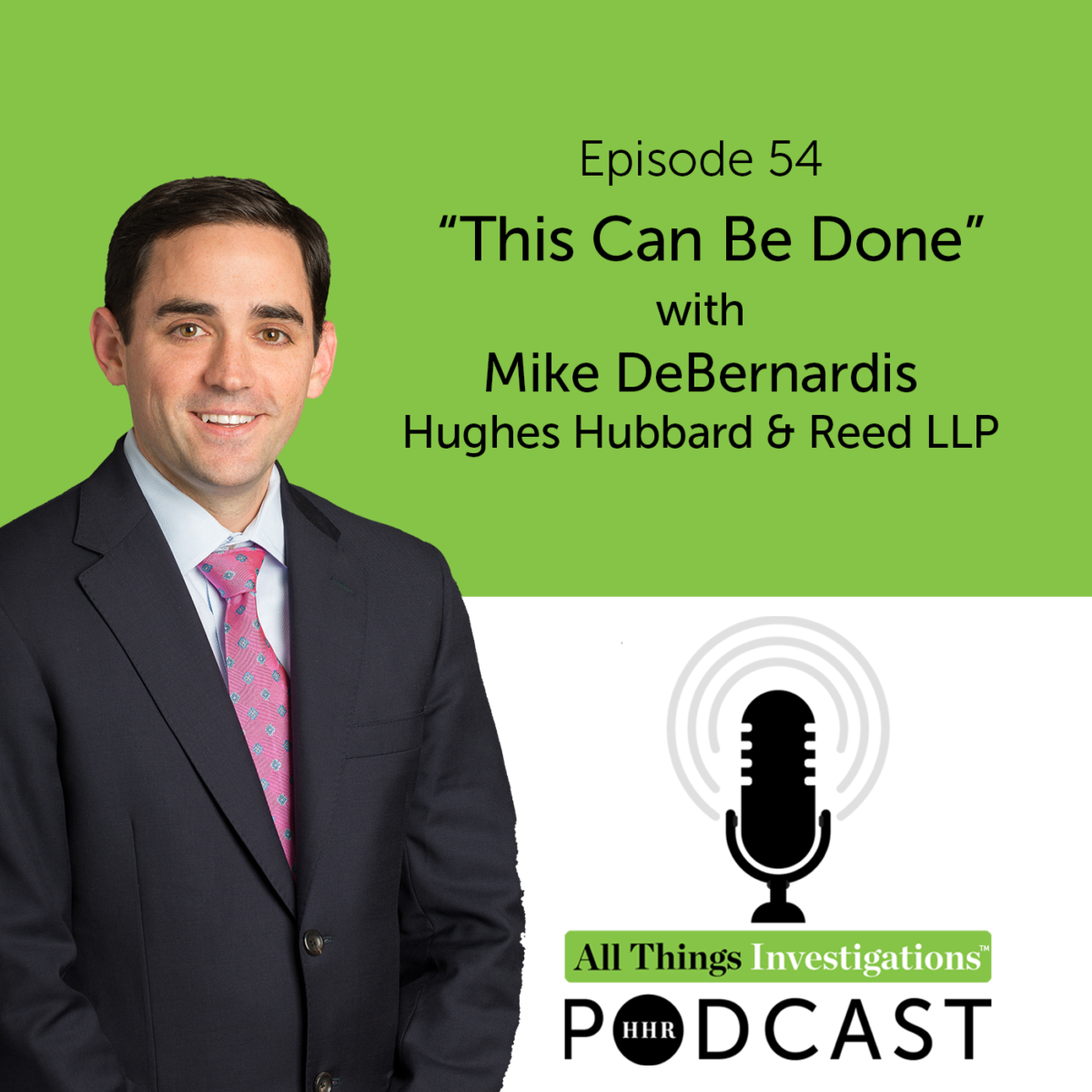
All Things Investigations: ‘This Can Be Done’: Mike DeBernardis on Navigating Compliance in High – Risk Jurisdictions

Welcome to the Hughes Hubbard Anti-Corruption & Internal Investigations Practice Group’s podcast, All Things Investigation.

In this podcast, host Tom Fox welcomes back Mike DeBernardis to discuss recent corruption convictions involving individuals connected to Venezuela, as highlighted in Hughes Hubbard & Reed’s ‘Month in a Minute.’

We use these criminal matters as a starting point to discuss how companies can effectively manage compliance in high-risk areas by assessing risks, crafting risk management strategies, implementing specific controls, documenting processes, and training employees. We emphasize the importance of maintaining thorough documentation to meet regulatory requirements and auditing standards.

Key Highlights:

  • Month-in-a Minute Overview
  • Compliance in High-Risk Areas
  • Risk Management Strategies
  • Documenting and Presenting Compliance

Resources:

Hughes Hubbard & Reed website

Mike DeBernardis

Categories
Trekking Through Compliance

Trekking Through Compliance – Episode 23 – Business Ethics Lessons from A Taste of Armageddon

In this episode of Trekking Through Compliance, we consider the episode A Taste of Armageddon, which aired on February 23, 1967, with a Star Date of 3192.1.

The Enterprise arrives at Eminiar VII to open diplomatic relations. Unfortunately, a tri-cobalt satellite explosion from Vendikar declared it destroyed, and all persons aboard were ordered to report for disintegration within 24 hours.

Kirk manages to tell Scotty to issue General Order 24 (destruction of the planet) in two hours. Kirk then overpowers his guards and is joined by Spock. They destroy the central computer. This nullifies the treaty with Vendikar and initiates a real war unless Anan 7 agrees to make peace with its ancient enemy. Now faced with the grisly consequences of a real war, Anan agrees, and Fox offers to mediate the negotiations. As the Enterprise heads towards Organna 2, Fox reports from Eminiar VII that the outlook is hopeful.

 Commentary

The Enterprise encounters a planet in a simulated war with severe compliance and ethical implications. Key takeaways include prioritizing human rights, embedding corporate responsibility, fostering transparency, encouraging ethical leadership, empowering employees to speak up, and conducting proactive risk assessments. These lessons can help compliance professionals build ethically grounded and financially successful organizations.

Key Highlights

  • Plot Summary of ‘A Taste of Armageddon’
  • Interesting Factoids and Analysis
  • Business Ethics Lessons from the Episode

Resources

Excruciatingly Detailed Plot Summary by Eric W. Weisstein

MissionLogPodcast.com

Memory Alpha


Categories
Corruption, Crime and Compliance

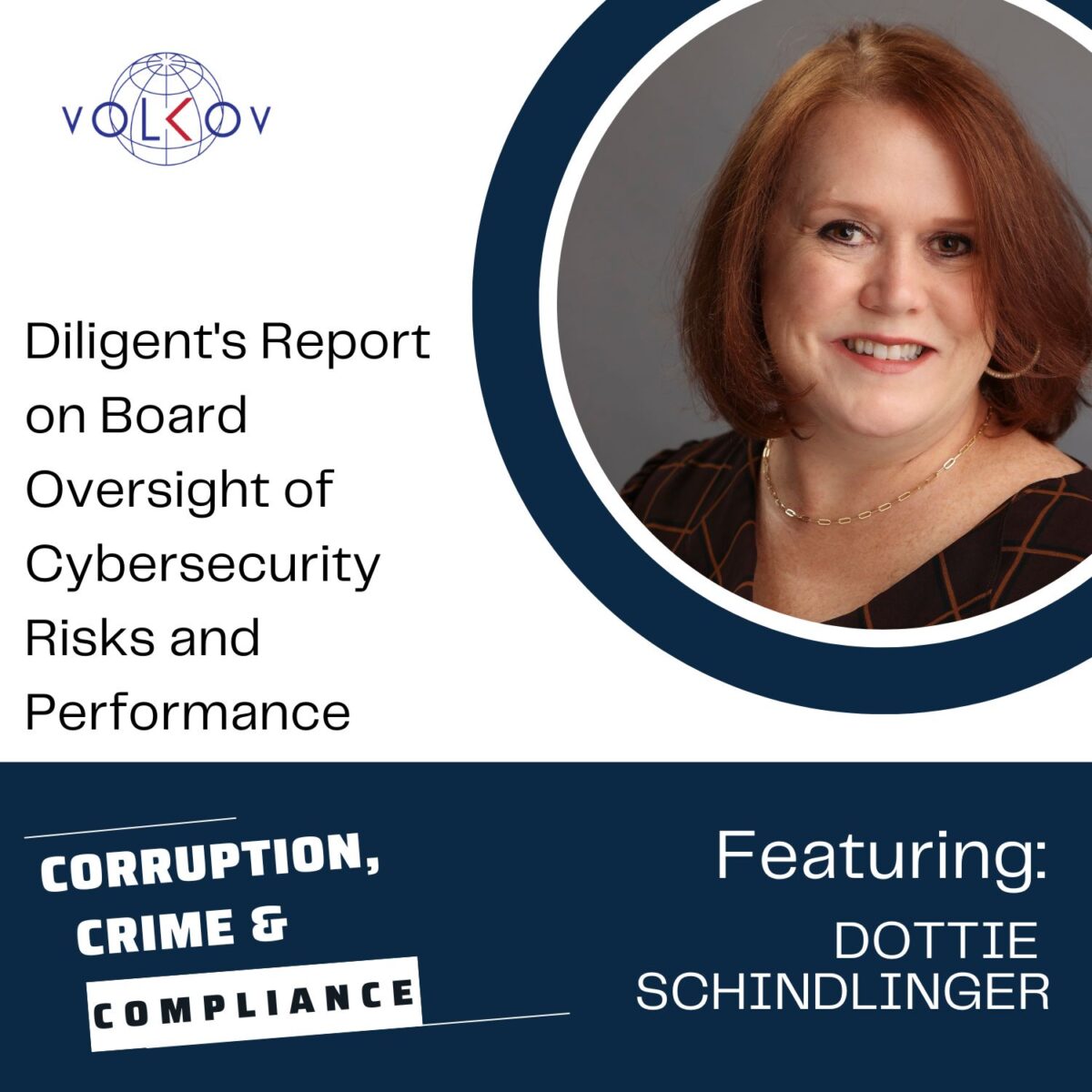
Dottie Schindlinger on Diligent’s Report on Board Oversight of Cybersecurity Risks and Performance

Dottie Schindlinger is Executive Director of Diligent Institute, the global corporate governance research arm of Diligent, the largest SaaS software company in the Governance, Risk, Compliance (GRC), and ESG space. She co-authored the book Governance in the Digital Age: A Guide for the Modern Corporate Board Director, co-hosts “The Corporate Director Podcast,” and co-created Diligent Institute’s Certification programs for directors and executives, including AI Ethics & Board Oversight. Dottie was a founding team member of the tech start-up BoardEffect, acquired by Diligent in 2016. She graduated from the University of Pennsylvania and is a Fellow of the Salzburg Global Seminar Corporate Governance Forum. Diligent and Bitsight recently issued an important report on corporate board oversight of cybersecurity risks. 

Dottie Schindlinger, Executive Director of Diligent Institute, joins Michael Volkov to discuss the important findings of Diligent’s report.

You’ll hear Dottie and Michael discuss:

  • Companies with advanced security ratings create nearly four times the amount of value for shareholders as companies with basic security ratings. On average, the Total Shareholders’ Return (TSR) over three and five years for companies in the advanced security performance range is approximately 372% and 91% higher, respectively, than their peers in the basic security performance range.
  • Companies with a specialized risk or audit committee had higher security performance ratings on average. Companies falling within these two categories have an average security rating of 710, whereas companies lacking both committees have an average security rating of 650.
  • The findings also suggest that the distribution of security ratings among companies with specialized risk and audit committees tends to skew towards the advanced security performance range, whereas companies lacking either of these committees tend to skew toward the basic security performance range.
  • Having a cybersecurity expert on the board is not enough. Integrating a cybersecurity expert into the board committee tasked with cybersecurity risk oversight makes a significant difference in an organization’s performance.
  • Merely having a cybersecurity expert on the board does not correlate to having a higher security performance rating. Highly regulated industries tend to outperform other industries in terms of cybersecurity performance. 
  • Of the companies with advanced-level security performance ratings, a full third (33%) came from the financial services sector – with an average rating of 720. The sector with the highest average rating overall was healthcare at 730. 
  • Nearly a quarter (24%) of companies with basic security performance ratings came from the industrial sector. 


Resources:

Dottie Schindlinger on LinkedIn

Diligent Institute | Diligent | Board Effect

The Report can be downloaded at: Cybersecurity, Audit and the Board Report

Michael Volkov on LinkedIn | Twitter

The Volkov Law Group

Categories
Riskology

Riskology by Infortal Episode 27: Going Global – Why Culture Matters

Dive into the latest episode of Riskology by Infortal

In this episode, Dr. Ian Oxnevad and Christopher Mason, Esq., welcome Sam Silverstein, founder of the Accountability Institute, author, and CPAE Hall of Famer, for a deep dive into how corporate culture and non-negotiable core values shape business success.

In a rapidly globalizing market, the allure of tapping into new markets brings with it the challenge of navigating diverse cultural landscapes. This podcast episode breaks down corporate culture’s critical role in international business expansion. It also offers insights into how businesses can synchronize their corporate culture with the diverse cultural norms encountered in new markets.

Entering new international markets necessitates a nuanced understanding of local business practices and cultural norms. Assimilation into the local culture requires finding a harmonious balance where the existing corporate culture adapts to and enriches the local practices. 

Fostering a culture that’s inclusive, adaptable, and respectful of local customs and values requires deliberate effort, and leadership plays a pivotal role in the cultural integration process. 

The challenge lies in guiding international branch employees into a company’s culture without sidelining the local cultural context that shapes their work ethics and behaviors. This may require a detailed audit of the company’s culture, identifying core values, and mapping out a plan for cultural integration that highlights the company’s ethos and accounts for local cultural intricacies.

Ever wonder why some brands soar in new markets while others stumble? 

It’s all about cultural awareness. It’s crucial to embrace and understand local customs, values, and workplace norms. Differences in gender norms, religious practices, and even concepts of time can make or break your business abroad.

At the heart of every successful organization is a distinctive corporate culture. Culture encompasses the behaviors, values, and practices that are routinely accepted and repeated within the organization. 

Organizations can have a culture by design, where leaders deliberately define, model, teach, protect, and celebrate their culture, or by default, without deliberate cultural shaping. A thoughtfully designed corporate culture is a competitive advantage, especially when expanding into international markets.

Corporate culture isn’t static; it evolves with the organization and its people. A company’s employees’ collective attitudes, experiences, and backgrounds influence it. Therefore, when a company looks to establish itself in a new market, understanding and integrating with the local culture requires consistent effort and reinforcing your firm’s core cultural identity.

Finally, culture is a reflection of your core values. 

Again, we hope you can join us for another intriguing episode of Riskology by Infortal!

Resources:

Infortal Worldwide

Email

Dr. Ian Oxnevad on LinkedIn

Chris Mason on LinkedIn