Categories
Blog

AI in Compliance Week: Part 2 – A Comprehensive Governance Approach

We continue our weeklong exploration of issues related to using Generative AI in compliance by examining some AI governance issues. In the rapidly evolving landscape of AI, the importance of robust governance frameworks cannot be overstated. The need for comprehensive governance structures to ensure compliance, ethical alignment, and trustworthiness has become paramount as AI systems become increasingly integrated into compliance. Today, we will consider the critical areas of compliance governance and ethics governance and present a holistic approach to mitigating the risks associated with these issues.

MIA AI Governance: The Problems

Missing compliance governance can have far-reaching consequences, undermining the integrity of an entire AI-driven initiative. Businesses must ensure alignment with enterprise-wide governance, compliance, and control (GRC) frameworks. This includes aligning with model risk management practices and embedding robust compliance checks throughout the AI model lifecycle. By promoting awareness of how the AI model works at your organization, you can minimize information asymmetries between development teams, users, and target audiences, fostering a culture of transparency and accountability.

The lack of ethical governance can lead to misalignment with an organization’s values, brand identity, or social responsibility. The answer is that companies should develop comprehensive AI ethics governance methods, including defining ethical principles, establishing an AI ethics review board, and creating a compliance program that addresses ethical concerns. Adopting frameworks like Ethically Aligned AI Design (EAAID) can help integrate ethical considerations into the design process while incorporating AI governance benchmarks beyond traditional measurements to encompass social and moral accountability.

Another outcome of the lack of trustworthy or responsible AI governance can result in unintentional and significant damage. To address this, compliance professionals should help develop accountable and trustworthy AI governance methods that augment enterprise-wide GRC structures. This can include establishing a committee such as an AI Advancement Council or similar structure in your company to oversee mission priorities and strategic AI advancement planning, collaborating with service line leaders and program offices to align with ethical AI guidelines and practices, and developing compliance programs to guide conformance with ethical AI principles and relevant legislation. Finally, implementing AI-independent verification and validation processes can help identify and manage unintentional outcomes.

The Solution

By addressing the critical areas of compliance governance and ethics governance through a more holistic approach, businesses can create a comprehensive framework that mitigates the risks associated with the absence of these crucial elements. This approach ensures that AI systems comply with relevant regulations and standards and align with your company’s values, ethical principles, and the pursuit of trustworthy and responsible AI. As the AI landscape evolves, this comprehensive governance framework will be essential in navigating the complexities and safeguarding the integrity of AI-driven initiatives.

Here are some key steps compliance professionals and businesses can think through to facilitate AI governance in your company:

  1. Establish a Centralized AI Governance Body:
    • Create an AI Governance Council that oversees your organization’s AI strategy, policies, and practices.
    • Ensure the council includes representatives from various stakeholder groups, such as legal, compliance, ethics, risk management, IT, and other subject matter experts.
    • Empower the council to develop and enforce AI governance frameworks, guidelines, and processes.
  2. Conduct AI Risk Assessments:
    • Identify and assess the risks associated with the organization’s AI initiatives, including compliance, ethical, and other compliance-related risks.
    • Prioritize the risks based on their potential impact and likelihood of occurrence.
    • Develop mitigation strategies and action plans to address the identified risks.
  3. Align AI Governance with Enterprise-wide Frameworks:
    • Ensure the AI governance framework is integrated with the organization’s existing GRC and Risk Management processes.
    • Establish clear lines of accountability and responsibility for AI-related activities across the organization.
    • Integrate AI governance into the organization’s broader risk management and compliance programs.
  4. Implement Compliance Governance Processes:
    • Develop and enforce AI-specific compliance controls, policies, and procedures.
    • Embed compliance checks throughout the AI model lifecycle, from development to deployment and monitoring.
    • Provide training and awareness programs to educate employees on AI compliance requirements.
  5. Establish Ethics Governance Mechanisms:
    • Define the organization’s AI ethics principles, values, and code of conduct.
    • Create an AI Ethics Review Board to assess and monitor the ethical implications of AI initiatives.
    • Implement processes for ethical AI design, such as the Ethically Aligned AI Design methodology.
    • Incorporate ethical AI benchmarks and accountability measures into the organization’s performance management and reporting processes.
  6. Implement Reliance-Related Governance:
    • Develop responsible and trustworthy AI governance practices that align with the organization’s enterprise-wide GRC frameworks.
    • Establish an AI Advancement Council to oversee strategic AI planning and alignment with ethical guidelines.
    • Implement AI-independent verification and validation processes to identify and manage unintended outcomes.
    • Provide comprehensive training and awareness programs on AI risk management for employees, contractors, and other stakeholders.
  7. Foster a Culture of AI Governance:
    • Promote a culture of accountability, transparency, and continuous improvement around AI governance.
    • Encourage cross-functional collaboration and communication to address AI-related challenges and opportunities.
    • Review and update the AI governance framework regularly to adapt to evolving regulatory requirements, technological advancements, and organizational needs.

By following these steps, organizations can implement a comprehensive governance framework that addresses compliance, ethics, and reliance-related governance. This framework enables organizations to harness the power of AI while mitigating the associated risks. 

AI Governance Resources

There are several notable resources the compliance professional can tap into around this issue of AI governance practices. The Partnership on AI Partnership on AI is a multi-stakeholder coalition of leading technology companies, academic institutions, and nonprofit organizations. It has been at the forefront of developing best practices and guidelines for the responsible development and deployment of AI systems. It has published influential reports and frameworks, such as the Tenets of Responsible AI and the Model Cards for Model Reporting, which have been widely adopted across the industry.

The Algorithmic Justice League (ALJ) is a nonprofit organization dedicated to raising awareness about AI’s social implications and advocating algorithmic justice. It has developed initiatives such as the Algorithmic Bias Bounty Program, encouraging researchers and developers to identify and report biases in AI systems. The AJL has highlighted the importance of addressing algorithmic bias and discrimination in AI.

IEEE Global Initiative on Ethics of Autonomous and Intelligent Systems is a multidisciplinary effort to develop standards, guidelines, and best practices for the ethical design, development, and deployment of autonomous and intelligent systems. It has produced key documents and reports, such as the Ethically Aligned Design framework, which guides the incorporation of ethical considerations into AI development.

The AI Ethics & Governance Roundtable is an initiative led by the University of Cambridge’s Leverhulme Centre for the Future of Intelligence. It brings together industry, academia, and policymaking experts to discuss emerging issues, share best practices, and develop collaborative solutions for AI governance. The roundtable’s insights and recommendations have influenced AI governance frameworks and policies at the organizational and regulatory levels.

These examples demonstrate the power of industry collaboration in advancing AI governance practices. By pooling resources, expertise, and diverse perspectives, these initiatives have developed comprehensive frameworks, guidelines, and standards being adopted across the AI ecosystem. Compliance professionals should avail themselves of these resources to prepare your company to take the next brave steps in the intersection of compliance, governance, and AI.
Categories
Riskology

Riskology By Infortal™ Episode 26: Election Risk – How Polls Lie

Welcome to Episode 26 of Riskology by Infortal™ – Election Risk: How Polls Lie. 

In this episode, Dr. Ian Oxnevad and Christopher Mason, Esq., illuminate the complexities and pitfalls that bedevil the world of political polling.

Across the globe, the winds of change are blowing. From the US to the UK and beyond, from pro-business shifts to the rise of populism, the world is in a state of flux. 

With over 50% of the world’s population heading to the voting booth, companies and investors are focused even more heavily on election polling.

However, over-reliance on polling presents risks as polls often fail to provide an accurate prediction of election outcomes. Companies should avoid overrelying on polls in shaping their operational and investment strategies.  

Polling inaccuracies are often attributed to various methodological challenges, including the design of survey questions, the selection of survey participants, and the interpretation of data collected from a subset of the population.

Enhanced technology and societal shifts demand new strategies to gauge public opinion accurately. Pollsters are struggling to keep pace in a world that no longer picks up the phone.

In addition, elections aren’t just political; they’re potential game-changers for your industry. Staying informed can mean the difference between missing out and moving ahead. 

Instead of relying on polling alone, it is best practice to employ multifaceted analysis that incorporates polling insights, along with a comprehensive assessment of political, economic, and social trends. 

We hope you join us for this timely conversation on how your business can prepare for the upcoming election season and avoid the pitfalls of overreliance on polls. 

Resources:

Infortal Worldwide

Email

Dr. Ian Oxnevad on LinkedIn

Chris Mason on LinkedIn

Categories
Corruption, Crime and Compliance

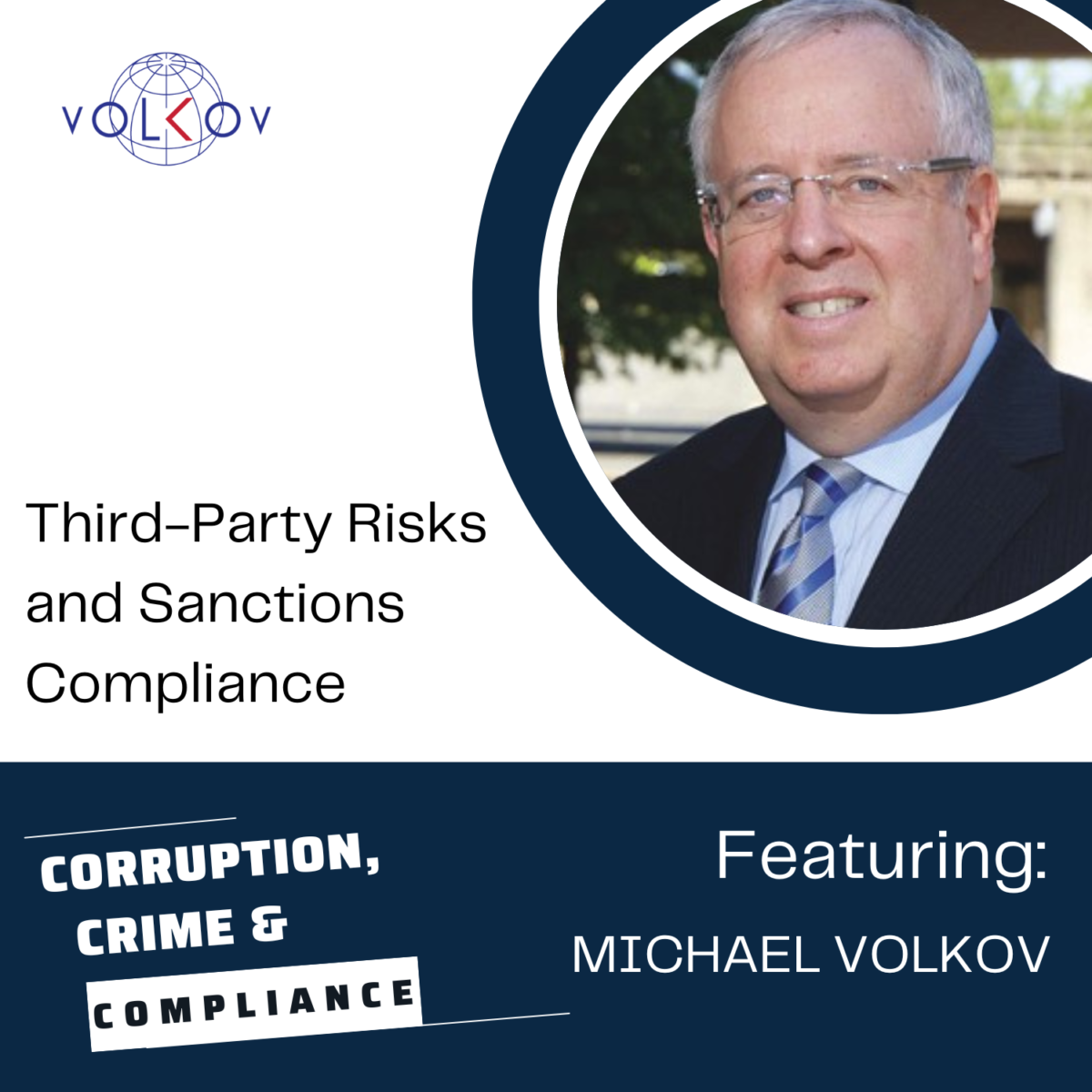
Third-Party Risks and Sanctions Compliance

With the beginning of the “New FCPA” era coined by DOJ’s Deputy Attorney General Lisa Monaco, we now need to focus on third-party risk and sanctions enforcement. The law, the practice, and the risks are important and not just the same as FCPA legal requirements. As we embark on a new criminal enforcement era surrounding sanctions violations, companies have to address this issue and do it correctly. 

In this episode, Michael Volkov takes a comprehensive look at third-party risks from the distribution and supply sides and outlines appropriate strategies to manage these risks.

  • Epsilon Electronics serves as a stark reminder of the financial consequences of non-compliance. The company faced an OFAC enforcement action due to a shipment to Iran, resulting in a staggering penalty of over $4 million.
  • Apollo Aviation Group settled with OFAC for $210,600 for leasing aircraft engines, which ultimately ended up being placed in to aircraft of a prohibited entity, Sudan Airways, violating sanctions regulations.
  • ELF Cosmetics settled with OFAC for $996,000 for importing false eyelash kits containing materials sourced from North Korea, highlighting supply chain due diligence failures.
  • The ELF Cosmetics case underscores the crucial role of supply chain due diligence in preventing sanctions violations. Instead of sticking their heads in the sand, companies must undertake basic supply chain due diligence when sourcing products from regions close to high-risk countries or regions.
  • “Reason to know” is now the key phrase guiding the New FCPA era. OFAC does not need to prove goods ultimately end up in a sanctioned country. When you see red flags, you must resolve them or they could be considered a “reason to know” in OFAC’s eyes.
  • Seven essential elements to boost your compliance program and effectively mitigate third-party sanctions risks include risk assessment, varying levels of due diligence, end-user documentation, monitoring, training, and red flag identification.

Resources:

Michael Volkov on LinkedIn | Twitter

The Volkov Law Group

Categories
Compliance Tip of the Day

Compliance Tip of the Day: How AI is Transforming Risk Management

Welcome to “Compliance Tip of the Day,” the podcast where we bring you daily insights and practical advice on navigating the ever-evolving landscape of compliance and regulatory requirements.

Whether you’re a seasoned compliance professional or just starting your journey, our aim is to provide you with bite-sized, actionable tips to help you stay on top of your compliance game.

Join us as we explore the latest industry trends, share best practices, and demystify complex compliance issues to keep your organization on the right side of the law.

Tune in daily for your dose of compliance wisdom, and let’s make compliance a little less daunting, one tip at a time.

In today’s episode, we begin a week-long look at some of the ways Generative AI is changing compliance and Risk Management.

For more information on the Ethico ROI Calculator and a free White Paper on the ROI of Compliance, click here.

Categories
FCPA Compliance Report

FCPA Compliance Report: Evie Wentink on Making Compliance Training Practical

Welcome to the award-winning FCPA Compliance Report, the longest running podcast in compliance.

In this edition of the FCPA Compliance Report,  Tom Fox has a fascinating visit with Iveta (Evie) Wentink, a 15-year compliance veteran. Evie has worked in the public and private sectors and has expertise in compliance training, hotlines, government contract compliance, data privacy, reporting, & due diligence.

Evie has one of the most unique opening lines for hotline training, which is ‘Do You Know Your Hotline Number?” This simple yet incredibly important question encapsulates Evie’s approach to compliance training: make it simple, direct, and practical for the listeners. (Or, as Carsten Tams would say, ‘It’s all about the UX’).

Our conversation focuses on the critical role of hotline numbers in corporate compliance programs, emphasizing the need for employees to know and trust the hotline. Evie shares insights from her career, highlights the significance of marketing compliance hotlines effectively, and discusses the broader culture of compliance and non-retaliation in organizations. She shares practical tips for improving hotline awareness and usage, making this episode a valuable resource for compliance professionals and organizations alike.

Highlights in this Episode:

  • Enhancing Trust through Active Compliance Reporting
  • Promoting Reporting Culture Through Creative Marketing
  • Ethical Culture: Encouraging Compliance Reporting Safely
  • Enhancing Compliance Programs Through Anonymous Hotlines

Resources:

Evie Wentink on LinkedIn

Evie’s Top 10 Compliance Back to Basics

Tom Fox

Instagram

Facebook

YouTube

Twitter

LinkedIn


For more information on the Ethico ROI Calculator and a free White Paper on the ROI of Compliance, click here.

Categories
Adventures in Compliance

Adventures in Compliance: Compliance Lessons from The Second Stain, Part 2

Welcome to a review of all the Sherlock Holmes stories that are collected in the work “The Return of Sherlock Holmes.

It is a collection of thirteen detective stories written by Sir Arthur Conan Doyle, marking the reappearance of the brilliant detective Sherlock Holmes after his apparent death in “The Final Problem.” The collection spans various intriguing cases and mysteries that Holmes and his loyal friend Dr. John Watson tackle.

Today we conclude our exploration of the third group of short stories found in The Return of Sherlock Holmes with the second of a two-part look at the final story in this series, The Adventure of the Second Stain.

In the third season of Adventures in Compliance, the podcast reviews Sir Arthur Conan Doyle’s detective stories from ‘The Return of Sherlock Holmes.’ The season, sponsored by Ethico, delves into investigative lessons from Sherlock Holmes’ methods, including thoroughness, critical thinking, attention to detail, persistence, information gathering, and analytical skills.

The current episode analyzes ‘The Adventure of the Second Stain,‘ where Holmes retrieves a potentially catastrophic government document. Key topics include Holmes’ investigative techniques and the application of data analytics in compliance.

Key Highlights:

  • Overview of ‘The Second Stain’
  • Investigative Lessons from ‘The Second Stain’
  • Data Analytics in Compliance
  • Pattern Recognition in Investigations

 Resources:

The New Annotated Sherlock Holmes

Sherlock Holmes FAQ

Connect with Tom Fox

Instagram

Facebook

YouTube

Twitter

LinkedIn

For more information on Ethico and a free White Paper on top compliance issues in 2024, click here.

Categories
Daily Compliance News

Daily Compliance News: June 10, 2024 – The Never Break Up Via Text Edition

Welcome to the Daily Compliance News. Each day, Tom Fox, the Voice of Compliance, brings you compliance-related stories to start your day. Sit back, enjoy a cup of morning coffee and listen to the Daily Compliance News. All from the Compliance Podcast Network.

Each day, we consider four stories from the business world: compliance, ethics, risk management, leadership, or general interest for the compliance professional.

In today’s edition of Daily Compliance News:

  • Never break up via text.  (WSJ)
  • TD Bank is under scrutiny for alleged AML violations. (Bloomberg)
  • Corruption claims in US Bankruptcy court. (FT)
  • Jose Uribe starts testimony in the Bob Menendez corruption trial. (ABC 7 News)

For more information on the Ethico ROI Calculator and a free White Paper on the ROI of Compliance, click here.

Categories
Blog

AI in Compliance Week: Part 1 – Transforming Risk Management

Compliance professionals face increasing pressures to adapt and innovate in today’s rapidly evolving landscape. On a recent episode of Innovation in Compliance, I visited with Matt Lowe, the Chief Strategy Officer at MasterControl. We discussed how AI is revolutionizing quality management in the life sciences industry. With a background in engineering and extensive experience at MasterControl, Matt offered a unique perspective on integrating AI into compliance processes. We deeply explored how AI is poised to transform the compliance field.

Generative AI is being utilized to create comprehension-based testing automatically. This innovation significantly reduces the time required for compliance-focused training, transforming a process that once took hours into a task completed in minutes. This approach resonates with the broader compliance community, where efficiency and accuracy are paramount. By automating the generation of training materials, AI can help ensure that employees are adequately trained on your internal policies and procedures, helping your organization maintain compliance with regulatory standards.

Perhaps one of AI’s most exciting promises is the shift from reactive to predictive and preventative compliance. Traditionally, risk management has focused on identifying and correcting issues after they occur. However, AI offers the potential to predict and prevent problems before they arise. By analyzing vast amounts of data, AI can identify patterns and anomalies, allowing organizations to address potential issues proactively.

This predictive capability is precious in the life sciences industry, where the stakes are high. Ensuring the highest quality products can directly impact patient safety and regulatory compliance. Leveraging AI to predict and prevent quality issues represents a transformative shift in managing compliance.

When implementing AI in compliance, you should take a risk-based approach. This involves starting with low-risk AI applications to gain confidence in the technology before moving on to more critical areas. For instance, generating training exams is a low-risk application that can still deliver significant benefits. As organizations become more comfortable with AI, they can explore its use in more complex and higher-risk areas.

This cautious approach aligns with the principles of compliance, where assessing and managing risk is a fundamental aspect of the profession. By gradually incorporating AI, organizations can mitigate potential risks while harnessing the technology’s power to enhance compliance processes.

While AI offers tremendous potential, we both stressed the importance of the “Human in the Loop” approach. AI can provide valuable insights and automate processes, but human oversight remains crucial. This is particularly important in life sciences, where the consequences of errors can be severe. Ensuring that humans review and validate AI-generated outputs helps maintain the accuracy and reliability of compliance efforts. This “Human in the Loop” reflects a balanced approach to AI integration. By combining the strengths of AI with human expertise, organizations can achieve a more robust and effective compliance framework.

Lowe shared his vision for the future of AI in compliance. He envisions a world where AI becomes integral to software applications, transforming how professionals interact with technology. Instead of navigating complex interfaces, users will engage with AI-driven chatbots that provide instant answers and guidance. This shift will enable compliance professionals to access the information they need more efficiently and effectively. AI has the potential to identify gaps in compliance frameworks and suggest appropriate controls. This capability can significantly enhance the effectiveness of compliance programs by ensuring that organizations are always prepared for audits and regulatory scrutiny.

As AI continues to evolve, collaboration within the industry will be essential. Lowe mentioned initiatives like the Convention for Healthcare AI, where industry players and regulators discuss the ethical implications and best practices for AI use. Such collaborations are vital to ensure that AI is leveraged responsibly and ethically, particularly in industries like life sciences, where the impact on human health is significant.

AI has transformative potential for compliance. By automating routine tasks, shifting from reactive to predictive compliance, and adopting a risk-based approach, AI can significantly enhance the efficiency and effectiveness of compliance programs. However, the human element remains crucial to ensure accuracy and reliability. As the industry continues to explore and embrace AI, collaboration and ethical considerations will play a vital role in shaping the future of compliance. By harnessing the power of AI, organizations can stay ahead of regulatory requirements, improve product quality, and ultimately protect patient safety. The journey towards AI-driven compliance is just beginning, and the possibilities are exciting and profound.

Categories
Trekking Through Compliance

Trekking Through Compliance: Episode 8 – Risk Management Lessons from Miri

In this episode of Trekking Through Compliance, we consider the episode Miri, which aired on October 27, 1966, with a Star Date of 2713.5.

Episode Summary

A disfigured man attacks a landing party who dies after Kirk strikes him. They discover a preadolescent, Miri, who ran away from them because “grups” kill and maim children before dying. She and her friends are “onlies,” the only ones left. The distress call is traced to an automated signal. The landing party, except for Spock, notices purple lesions on their bodies; Miri tells them that these are the first signs of the disease, and they will soon become like the other adults. When the disease begins, its victims have seven days to live. Although Spock is immune, he considers himself a carrier who could infect the Enterprise if he returns.

Back on the Enterprise, after vaccinating everyone and leaving the children in the care of a medical team, Kirk sends for teachers and advisers to help the children improve their lives.

Commentary

In this episode of Trekking Through Compliance, host Tom Fox explores the Star Trek original series episode ‘Miri.’ Responding to a distress signal, the Enterprise crew discovers a planet that is a duplicate of Earth, inhabited only by children due to a disease that kills anyone who has reached puberty. The episode delves into themes of disaster preparedness, environmental and public health compliance, data governance, supply chain management, and employee welfare. The episode offers crucial compliance and risk management lessons relevant to modern organizations through these themes.

Key Highlights

  • Plot Summary of ‘Miri’
  • Behind the Scenes and Fun Facts
  • Risk Management Lessons from ‘Miri’

Resources

Excruciatingly Detailed Plot Summary by Eric W. Weisstein

Categories
Sunday Book Review

Sunday Book Review: June 9, 2024 Business Books on Teaching Edition

In the Sunday Book Review, Tom Fox considers books that would interest the compliance professional, the business executive, or anyone who might be curious.

It could be books about business, compliance, history, leadership, current events, or anything else that might interest me.

In today’s edition of the Sunday Book Review, we look at four of the best books on teaching as curated by Salman Khan in the Wall Street Journal.

  • A Connecticut Yankee in King Arthur’s Court, by Mark Twain
  • Candid by Voltaire
  • Foundation by Issac Asimov
  • Siddhartha by Hermann Hesse

For more information on Ethico and a free White Paper on ROI for your compliance program, click here.

Resource

Five Best: Book on Teachers (WSJ)