Categories
Principled Podcast

Season 8 – Episode 11 – Part 1: Geopolitics are Impacting Workplace Ethics and Compliance Programs

What you’ll learn on this podcast episode

As the world emerges from a pandemic mindset, we confront new geopolitical realities with Putin’s war in Ukraine and increasingly fraught relations between the US and China. How is this geopolitical landscape changing the compliance landscape? In this episode of the Principled Podcast, host Susan Divers is joined by Tom Fox, the founder of the Compliance Podcast Network and aptly accredited “Voice of Compliance.” Listen in as the two discuss the impact of geopolitics on ethics and compliance and what issues should be top-of-mind for E&C leaders in the near future.

To learn more, download a copy of Tom Fox’s white paper Never the Same: Five Key Areas in Which Business Will Never Be the Same After the Russian Invasion.

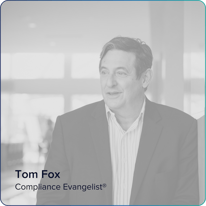
Guest: Tom Fox

Tom_Fox_grayscale

Tom Fox is literally the guy who wrote the book on compliance with the international compliance best-seller The Compliance Handbook, 3rd edition, which LexisNexis released in May 2022. Tom has authored 23 other books on business leadership, compliance, ethics, and corporate governance, including the international best-sellers Lessons Learned on Compliance and Ethics and Best Practices Under the FCPA and Bribery Act, as well as his award-winning series “Fox on Compliance.”

Tom leads the social media discussion on compliance with his award-winning blog and is the Voice of Compliance, having founded the Compliance Podcast Network and hosting or producing multiple award-winning podcasts. He is an executive leader at the C-Suite Network, the world’s most trusted network of C-Suite leaders. He can be reached at tfox@tfoxlaw.com.

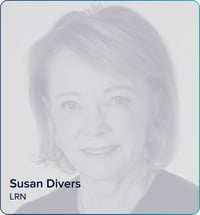
Host: Susan Divers

Susan_Divers_Principled_Podcast

Susan Divers is the director of thought leadership and best practices with LRN Corporation. She brings 30+ years of accomplishments and experience in the ethics and compliance arena to LRN clients and colleagues. This expertise includes building state-of-the-art compliance programs infused with values, designing user-friendly means of engaging and informing employees, fostering an embedded culture of compliance, and sharing substantial subject matter expertise in anti-corruption, export controls, sanctions, and other key areas of compliance.

Prior to joining LRN, Mrs. Divers served as AECOM’s Assistant General for Global Ethics & Compliance and Chief Ethics & Compliance Officer. Under her leadership, AECOM’s ethics and compliance program garnered six external awards in recognition of its effectiveness and Mrs. Divers’ thought leadership in the ethics field. In 2011, Mrs. Divers received the AECOM CEO Award of Excellence, recognizing her work advancing the company’s ethics and compliance program.

Before joining AECOM, she worked at SAIC and Lockheed Martin in the international compliance area. Before that, she partnered with the DC office of Sonnenschein, Nath & Rosenthal. She also spent four years in London and is qualified as a Solicitor to the High Court of England and Wales, practicing in the international arena with Theodore Goddard & Co. and Herbert Smith & Co law firms. She also served as an attorney in the Office of the Legal Advisor at the Department of State. She was a member of the U.S. delegation to the UN, working on the first anti-corruption multilateral treaty initiative.

Mrs. Divers is a member of the DC Bar and a graduate of Trinity College, Washington D.C., and of the National Law Center of George Washington University. In 2011, 2012, 2013, and 2014 Ethisphere Magazine listed her as one of the “Attorneys Who Matter” in the ethics & compliance area. She is a member of the Advisory Boards of the Rutgers University Center for Ethical Behavior and served as a member of the Board of Directors for the Institute for Practical Training from 2005-2008. She resides in Northern Virginia and is a frequent speaker, writer, and commentator on ethics and compliance topics.

Categories
Creativity and Compliance

Training Jams – Using Music to Communicate E&C

Where does creativity fit into compliance? In more places than you think. Problem-solving, accountability, communication, and connection – all take creativity. Join Tom Fox and Ronnie Feldman on Creativity and Compliance, part of the award-winning Compliance Podcast Network.

Ronnie’s company, Learnings and Entertainment, utilizes people’s entertainment devices to consume information in their everyday, non-work lives and apply it to important topics around compliance and ethics. It is not only about being funny. It is about changing the tone of your compliance communications and messaging to make your compliance program, policies, and resources more accessible.

In this episode, Tom and Ronnie discuss a great new series of offerings by L&E, entitled ‘E&C Training Jams.’ E&C Training Jams are an offering by L&E using music as a non-traditional way to communicate with your employees and to build an overall culture of compliance in your organization. In Training Jams, a soulful singer banters about ethics & compliance, explaining policies, sharing examples, and debunking excuses. Ronnie goes so far as to say about E&C Training Jams, “quite frankly, the coolest thing that I’ve ever made because the music gets stuck in your head, and they leave you with a smile.”

Resources:

Check out  Ronnie Feldman on LinkedIn

Check out Learnings & Entertainments on LinkedIn

Follow Ronnie Feldman on Twitter

Learnings & Entertainments 

 L&E Offerings-E&C Training Jams

E&C Jams Sizzle Reel

E&C Jams Promo Reel Landing page

E&C Jams Web Page

Categories
Daily Compliance News

December 9, 2022 – The Goldilocks Balls Edition

Welcome to the Daily Compliance News. Each day, Tom Fox, the Voice of Compliance, brings you four compliance-related stories to start your day. Sit back, enjoy a cup of morning coffee and listen to the Daily Compliance News. All from the Compliance Podcast Network.

Stories we are following in today’s edition of Daily Compliance News:

  • KPMG was caught cheating again. (WSJ)
  • Sunny Bulwani was sentenced to 13 years. (NYT)
  • More corruption in baseball? (Twinkietown)
  • Wirecard trial begins. (Reuters)

Categories
Blog

ABB FCPA Resolution: Part 5 – A Win for Compliance

We conclude our exploration of the latest resolution of a Foreign Corruption Practices Act (FCPA) violation involving the Swiss construction giant, ABB Ltd. There have been several reference documents used this week and they include the Securities and Exchange Commission Complaint (SEC Order); the Department of Justice (DOJ) Press Release. Plea Agreement (ABB Plea Agreement) and Deferred Prosecution Agreement(DPA), the ABB South Africa Plea Agreement and Criminal Information, the ABB Management Services Plea Agreement and Criminal Information.

Over this blog post series, we have been exploring these key questions: How did ABB obtain such a superior resolution? And, as a three-time FCPA violator, how did the company avoid a monitor? Today, we celebrate how this most unusual FCPA enforcement action is a huge victory for compliance.

How did ABB obtain such a superior resolution?

There appears to be three components to ABB’s avoidance of a monitor. It all began with ABB’s attempt to self-disclose. Please note this attempt was not successful as the South African press broke the story of ABB’s bribery and corruption between the time ABB called to set up meeting and actually sat down with the DOJ. Yet the DOJ was impressed enough with ABB’s intent or at least desire to self-disclose that it spent a considerable amount of ink in the resolution documents detailing how ABB got close but missed timely self-disclosing.

Yet this putative failure at self-disclosure laid the groundwork for everything that followed, eventually leading to the stunning result. As the DOJ stated in the DPA, “in evaluating the appropriate disposition of this matter-including the appropriate form of the resolution-considered evidence that, within a very short time of leaning of the misconduct, the Company contacted the Fraud Section and scheduled a meeting to discuss matters under investigation by the Fraud Section and the Company. The Company did not specifically identify the South Africa misconduct in that meeting request, but it disclosed the South Africa misconduct during the scheduled meeting, subsequently presented evidence to the Offices that it intended to disclose the misconduct related to South Africa during the scheduled meeting and did not know of any imminent media reports when the meeting was scheduled.”

The second component is the above-noted discussion about ABB’s near self-disclosure. While it could have amounted to an own goal, given the lengthy DOJ discussion in the settlement documents, it appears the DOJ received ABB’s near miss more favorably. The second point is something every Chief Compliance Officer (CCO) and outside counsel need to understand; that being truly extraordinary.

Matt Kelly identified the one piece of information which took what is now this standard recitation of extraordinary cooperation to a truly high level of ‘extraordinary’. In a blog post, Kelly pointed out that in the SEC Order, it stated, “ABB’s cooperation included real-time sharing of facts learned during its own internal investigation.” This meant “ABB was sharing information with regulators as quickly as it found those facts, without necessarily knowing how such admissions might affect its overall case and settlement chances.” He then opined, “When you don’t know the full extent of your sins and the punishment to follow, but you cooperate with regulators anyway — that’s an impressive commitment to the culture of compliance that the Justice Department wants to see.”

Next were the actions by ABB in their remediation. The Plea Agreement reported that ABB “engaged in extensive remedial measures, including hiring experienced compliance personnel and, following a root-cause analysis of the conduct described in the Statement of Facts, investing significant additional resources in compliance testing and monitoring throughout the organization; implementing targeted training programs, as well as on-site supplementary case-study sessions; conducting continuing monitoring and testing to assess engagement with new training measures; restructuring of reporting by internal project teams to ensure compliance oversight; and promptly disciplining employees involved in the misconduct.” This final point was expanded on in the SEC Order which reported that all employees involved in the misconduct were terminated.

As a three-time FCPA violator, how did the company avoid a monitor?

ABB essentially created its own monitorship around testing its compliance program and reporting to the DOJ. In a section entitled “Written Work Plans, Reviews and Reports”, ABB agreed to conduct a first review and prepare a first report, followed by at least two follow-up reviews and reports. But more than simply reporting, ABB agreed to create and submit for review a workplan for this ongoing testing of its compliance program, as the program was detailed in the DPA. The DPA specified, “No later than one (I) year from the date this Agreement is executed, the Company shall submit to the Offices a written report setting forth:

  • a complete description of its remediation efforts to date;
  • a complete description of the testing conducted to evaluate the effectiveness of the compliance program and the results of that testing; and
  • its proposals to ensure that its compliance program is reasonably designed, implemented, and enforced so that the program is effective in deterring and detecting violations of the FCPA and other applicable anti-corruption laws.”

ABB also agreed to meet with the DOJ quarterly to submit and discuss the results of its ongoing testing. While I am sure many other companies have made a similar proposal to the DOJ, through its actions during the pendency of the investigation, ABB convinced the DOJ it could be trusted to follow through with its commitment.

How does all of this work into the DOJ decision not to require a monitor? There is now a 10-factor test that was laid out in the Monaco Memo. Factor 1 is whether the company self-disclosed the incident at issue. Factors 4-6 all relate to conduct and actions when the illegal activity occurred, not after discovery and self-disclosure. Factor 4 relates to the length or pervasiveness of the conduct and whether senior management was involved. Factor 5 reviews “the exploitation of an inadequate compliance program or system of internal controls.” Factor 6 asks if compliance personnel were involved or were basically negligent in failing to “appropriately escalate or respond to red flags.” Factors 7-10 considered ABB’s actions post-reporting, how the company became aware of the matter, its root cause analysis, its remedial actions and overall reduction in the company’s risk profile. While there was no substantive discussion of these factors in the any of the resolution documents, it appears the DOJ criteria for a monitor was not met.

The ABB FCPA resolution represents one of the biggest wins for corporate compliance that we have seen in recent memory. A now thrice-recidivist received a discount on its overall fine and penalty and avoided a monitor through truly exception work after the bribery and corruption was uncovered. Every compliance officer should thoroughly study this matter to see the specific steps ABB engaged in, starting with their first phone call to the DOJ. During your investigation, embrace the DOJ’s need for speed in communicating new and salient facts as they are uncovered, perform a root cause analysis and then remediate, remediate, and remediate. ABB is to be commended and indeed celebrated for its success in this matter.


Categories
GalloCast

Gallocast – Episode 5

Welcome to the GalloCast. You have heard of the Manningcast in football. Now we have the GalloCast in compliance. The two top brothers in compliance, Nick and Gio Gallo, come together for a free-form exploration of compliance topics. It is a great insight on compliance brought to you by the co-CEOs of Ethico. Fun, witty, and insightful with a dash of the two brothers throughout. It’s like listening to the Brothers Gallo talk compliance at the dinner table. Hosted by Tom Fox, the Voice of Compliance.

Topics in this episode include:

  • FTX
  • Elizabeth Holmes was sentenced. End of an era in tech?
  • Compliance program incentives and clawbacks.
  • Assessing culture.
  • Monaco Memo

Resources

Nick Gallo on LinkedIn

Gio Gallo on LinkedIn

Ethico

Categories
Daily Compliance News

December 8, 2022 – The Support Pollution Edition

DECEMBER 8, 2022, BY TOM FOX

Welcome to the Daily Compliance News. Each day, Tom Fox, the Voice of Compliance, brings you four compliance-related stories to start your day. Sit back, enjoy a cup of morning coffee and listen to the Daily Compliance News. All from the Compliance Podcast Network.

Stories we are following in today’s edition of Daily Compliance News:

  • Climate risk is about risk. (WSJ)
  • Argentinian VP found guilty of corruption. (NYT)
  • The ‘coal mafia’ is not in West Virginia. (The Diplomat)
  • Support pollution and do business with the state of Texas. (Reuters)
Categories
Blog

ABB FCPA Resolution: Part 4 – ABB Shines

We continue our exploration of the latest resolution of a Foreign Corruption Practices Act (FCPA) violation involving the Swiss construction giant, ABB Ltd. The most obvious significance is from the fact that ABB is now the first three-time convicted violator of the FCPA, having prior FCPA resolutions in 2004 and 2010. The moniker of a three-time FCPA violator is certainly not one that any corporation wants to claim, yet here we are. The total fine and penalty for the violation was $315 million, with credited amounts going to South Africa, Switzerland, and Germany for ABB’s violations of those country’s anti-corruption laws. There was also a $75 million fine credited to the Securities and Exchange Commission (SEC). In addition to the SEC Order, the DOJ Press Release and Plea Agreement are also available. Conspicuously missing at this point are resolution documents from South Africa, Switzerland, and Germany.

We are exploring this FCPA enforcement action to see what lessons might be garnered from it. While we are doing so, please keep three key questions in mind: (1) How did ABB obtain such a superior resolution? (2) As a three-time FCPA violator, how did the company avoid a monitor? (3) Why was there no requirement for Chief Compliance Officer (CCO) certification? Today, we consider how ABB was able to obtain such a superior result.

Initially, I should note that question 3 which I have posed all week was answered in the Deferred Prosecution Agreement (DPA), released Wednesday. There is a CCO certification. It was not referenced in the DOJ Press Release or the ABB Plea Agreement.

The (almost) Self-Disclosure

The FCPA Corporate Enforcement Policy discounts up to and including a full declination on self-disclosure. But now, it is about  a ‘timely’ self-disclosure. When announcing the Monaco Memo, Deputy Attorney General Lisa Monaco emphasized not only the requirement for self-disclosure but the need for speed in self-disclosure. The DOJ wants speed as well because, “If disclosures come too long after the misconduct in question, they reduce the likelihood that the government may be able to adequately investigate the matter in time to seek appropriate criminal charges against individuals. The expiration of statutes of limitations, the dissipation of corroborating evidence, and other factors can inhibit individual accountability when the disclosure of facts about individual misconduct is delayed.” Additionally, the first factor the DOJ uses in making a determination of whether a monitor will be assigned is “Whether the corporation voluntarily self-disclosed the underlying misconduct in a manner that satisfies the particular DOJ unit or sections component’s self-disclosure policy.”

The sequence around this issue of self-disclosure is every company’s nightmare, a press report comes out and blindsides an organization (think the New York Times (NYT) breaking the Walmart FCPA story.) The detail provided in the Plea Agreement is as insightful as it is instructive. It details that although “within a very short time of learning of the misconduct, the Parent Company [ABB] contacted the Fraud Section and scheduled a meeting to discuss matters under investigation by the Fraud Section and the Parent Company. The Company did not specifically identify the South Africa misconduct in that meeting request, but it disclosed the South Africa misconduct during the scheduled meeting, subsequently presented evidence to the Offices that it intended to disclose the misconduct related to South Africa during the scheduled meeting and did not know of any imminent media reports when the meeting was scheduled. However, before the scheduled meeting occurred and prior to making any such disclosure to the Fraud Section, a media report was published related to the misconduct.”

While I doubt ABB would have been given a full declination if they had timely self-disclosed, this lengthy discussion in the Plea Agreement clearly focuses on the DOJ’s desire for a timely self-disclose. It was also equally probable that it was a factor in the lack of assignment of a monitor. We do not know the length of time between initial notice of the bribery and corruption to the corporate headquarters of the Board, we do know the gold standard for self-reporting which was Cognizant Technology Solutions, who self-disclosed two weeks after the initial report to the company’s Board of Directors. (Also recall that Cognizant had C-Suite involvement in the bribery scheme.)

This fact pattern also demonstrates why the need for speed in self-disclosure is so critical. A company can never know in what forum, who or how information about bribery and corruption will be made public. In Walmart’s case it was above the fold, on the front page of the Sunday NYT. In addition to the DOJ’s prescription for timely reporting, this matter demonstrates the public relations disaster which will befall a company which sits on a self-disclosure. Imaginably the answer is the one suggested by Matt Kelly, writing in Radical Compliance, who said, “So perhaps the lesson here is that when you have an FCPA issue, just announce it on Twitter and [hash] tag the Criminal Division.”

Extensive Cooperation

This component of the FCPA Corporate Enforcement Policy is a bit harder to suss out as the Plea Agreement stated that ABB received credit for extraordinary cooperation based on the following: “(i) promptly providing information obtained through its internal investigation, which allowed the Offices to preserve and obtain evidence as part of their own independent investigation; (ii) making regular and detailed factual presentations to the Offices; (iii) voluntarily making foreign-based employees available for interviews in the United States; (iv) producing relevant documents located outside the United States to the Offices in ways that did not implicate foreign data privacy laws; and (v) collecting, analyzing, and organizing voluminous evidence and information that it provided to the Offices, including the translation of certain foreign language documents.”

However, once again, it was Kelly who identified the one piece of information which took what is now this standard recitation of extraordinary cooperation to a truly high level of ‘extraordinary’. He pointed out that in the SEC Order, it stated, “ABB’s cooperation included real-time sharing of facts learned during its own internal investigation.”  This meant “ABB was sharing information with regulators as quickly as it found those facts, without necessarily knowing how such admissions might affect its overall case and settlement chances.” He then opined, “When you don’t know the full extent of your sins and the punishment to follow, but you cooperate with regulators anyway — that’s an impressive commitment to the culture of compliance that the Justice Department wants to see.”

It also ties directly into what DAG Monaco said in the Monaco Doctrine, which noted, “it is imperative that Department prosecutors gain access to all relevant, non­ privileged facts about individual misconduct swiftly and without delay.” [emphasis supplied] This now means, “to receive full cooperation credit, corporations must produce on a timely basis all relevant, non-privileged facts and evidence about individual misconduct such that prosecutors have the opportunity to effectively investigate and seek criminal charges against culpable individuals.” If a company fails to meet this burden, it will “place in jeopardy their eligibility for cooperation credit.” The DOJ goes the next step by placing the burden on companies to demonstrate timeliness, stating they “bear the burden of ensuring that documents are produced in a timely manner to prosecutors.”

Extensively Remediate

Finally, were the actions by ABB in their remediation. The Plea Agreement reported that ABB “engaged in extensive remedial measures, including hiring experienced compliance personnel and, following a root-cause analysis of the conduct described in the Statement of Facts, investing significant additional resources in compliance testing and monitoring throughout the organization; implementing targeted training programs, as well as on-site supplementary case-study sessions; conducting continuing monitoring and testing to assess engagement with new training measures; restructuring of reporting by internal project teams to ensure compliance oversight; and promptly disciplining employees involved in the misconduct.” This final point was expanded on in the SEC Order which reported that all employees involved in the misconduct were terminated.

At this point, there are not many specific components of the ABB remediation available, but we do know that ABB was given credit for hiring “experienced compliance personnel,” starting with the hiring of Natalia Shehadeh, SVP and Chief Integrity Officer, and then allowing Shehadeh to hire a dream team of compliance professionals to work with her. I would go so far as to say Shehadeh and her team are Compliance Dream Team II as the first (which Shehadeh was a part of) was the Compliance Dream Team created by Billy Jacobson at Weatherford to get that company through its FCPA and Oil-For-Food enforcement actions.

Join us tomorrow where we conclude our look at the ABB FCPA resolution and posit why it is a complete win for compliance.

Categories
Jamming with Jason

Brass In Pocket

Do you feel heavy and weighed down? Are you carrying rocks in your backpack or pennies in your pocket? In this #jammingwithjason #podcast episode, we celebrate our 300th episode and share lessons learned from the first 300 episodes.

FOR FULL SHOW NOTES AND LINKS, VISIT:

E300 Brass In Pocket

DO YOU LOVE MUSIC LIKE ME?

If so, learn how to use it to intentionally heal and change your emotions and use it for entertainment at: https://bit.ly/MeffordMusic.

LIKE THE PODCAST?

If you’re the kind of person who likes to help others, then share this with your friends and family. If you find value, they will too. Please leave a review [https://itunes.apple.com/us/podcast/jamming-with-jason-mefford/id1456660699] on Apple Podcasts so we can reach more people.

Join my Facebook group: https://www.facebook.com/groups/beinguniquely

OTHER RESOURCES YOU MAY ENJOY:

My YouTube channel [https://www.youtube.com/c/jasonleemefford] and make sure to subscribe

My Facebook page [https://www.facebook.com/jammingwithjasonmefford]

My LinkedIn page [https://www.linkedin.com/in/jasonmefford/]

My website [https://jasonmefford.com]

STAY UP TO DATE WITH NEW CONTENT:

It can be difficult to find information on social media and the internet, but you get treated like a VIP and have one convenient list of new content delivered to your inbox each week when you subscribe to Jason’s VIP Lounge at: https://jasonmefford.com/vip/ plus; that way, you can communicate with me through email.

Categories
Hill Country Authors

Mark Pryor – Author of Die Around Sundown

Welcome to the award-winning The Hill Country Authors Podcast. In this podcast, Hill Country resident Tom Fox visits with authors who live and write up the Texas Hill Country. In this episode, I visit with Mark Pryor, author of the recently released Die Around Sundown and the award-winning Hugo Marsten mystery series. Mark grew up in England but now lives in Austin, Texas, with his wife and three young children. He has one varied and interesting career, ranging from a newspaper reporter in Colchester, Essex, where he covered police and crime beats and international assignments. In 1994, he and his now wife moved to America, where he attended journalism school at the University of North Carolina and then law school at Duke University.

Mark spent sixteen years as an Assistant District Attorney with the Travis County DA’s office, where, as he told his kids when they were young, “I help catch bad guys.”  Mark is now a partner at one of the top criminal defense firms in Austin, Cofer & Connelly. He practices criminal law, defending the rights of adults and juveniles charged with criminal offenses.

While writing mystery novels, he prosecuted a Mexican Mafia enforcer, murderers, rapists, and robbers. As he said, “By day, I solve crimes, and by night I commit them!”

Highlights of this podcast include:

·      His journalistic career

·      Covering foreign affairs from Northern Ireland to the Romanian Revolution

·      Moving to America

·      What got Mark into writing mysteries

·      Life as a prosecutor

·      Life as a defense lawyer

Resources

Mark Pryor’s author site

Cofer & Connelly

Categories
Great Women in Compliance

Kortney Nordrum – Social Media and Compliance

Welcome to the Great Women in Compliance Podcast, co-hosted by Lisa Fine and Mary Shirley.

One of the things about social media is that it is always changing and always a challenge for us to address in ethics and compliance.  Today, Lisa is speaking with Kortney Nordrum, VP, Regulatory Counsel and Chief Compliance Officer at Deluxe.  Kortney has been a thought leader in this area through many changes, or as Lisa thinks of it, “from Facebook to TikTok.”

In this wide-ranging discussion, Kortney provides insight on how to develop effective policies to address the use of social media, particularly if there are inappropriate statements.  She talks about the importance of constantly adapting to changes, and how we can use social media in our field.  She also shares her views about ephemeral communications like WhatsApp and WeChat, and how to address the concerns that they raise.

These days, no conversation about social media and compliance would not be complete without a discussion of Twitter.  Kortney gives her perspective what has happened since Elon Musk took over as well as Twitter’s historic issues with hate speech and incendiary accounts and what we can learn from this as E&C professionals.

The Great Women in Compliance Podcast is on the Compliance Podcast Network with a selection of other Compliance related offerings to listen in to.  If you are enjoying this episode, please rate it on your preferred podcast player to help other likeminded Ethics and Compliance professionals find it.  If you have a moment to leave a review at the same time, Mary and Lisa would be so grateful.  You can also find the GWIC podcast on Corporate Compliance Insights where Lisa and Mary have a landing page with additional information about them and the story of the podcast.  Corporate Compliance Insights is a much-appreciated sponsor and supporter of GWIC, including affiliate organization CCI Press publishing the related book; “Sending the Elevator Back Down, What We’ve Learned from Great Women in Compliance” (CCI Press, 2020).

If you enjoyed the book, the GWIC team would be very grateful if you would consider rating it on Goodreads and Amazon and leaving a short review.  Don’t forget to send the elevator back down by passing on your copy to someone who you think might enjoy reading it when you’re done, or if you can’t bear parting with your copy, consider it as a holiday or appreciation gift for someone in Compliance who deserves a treat.

You can subscribe to the Great Women in Compliance podcast on any podcast player by searching for it and we welcome new subscribers to our podcast.

Join the Great Women in Compliance community on LinkedIn here.