Categories
Great Women in Compliance

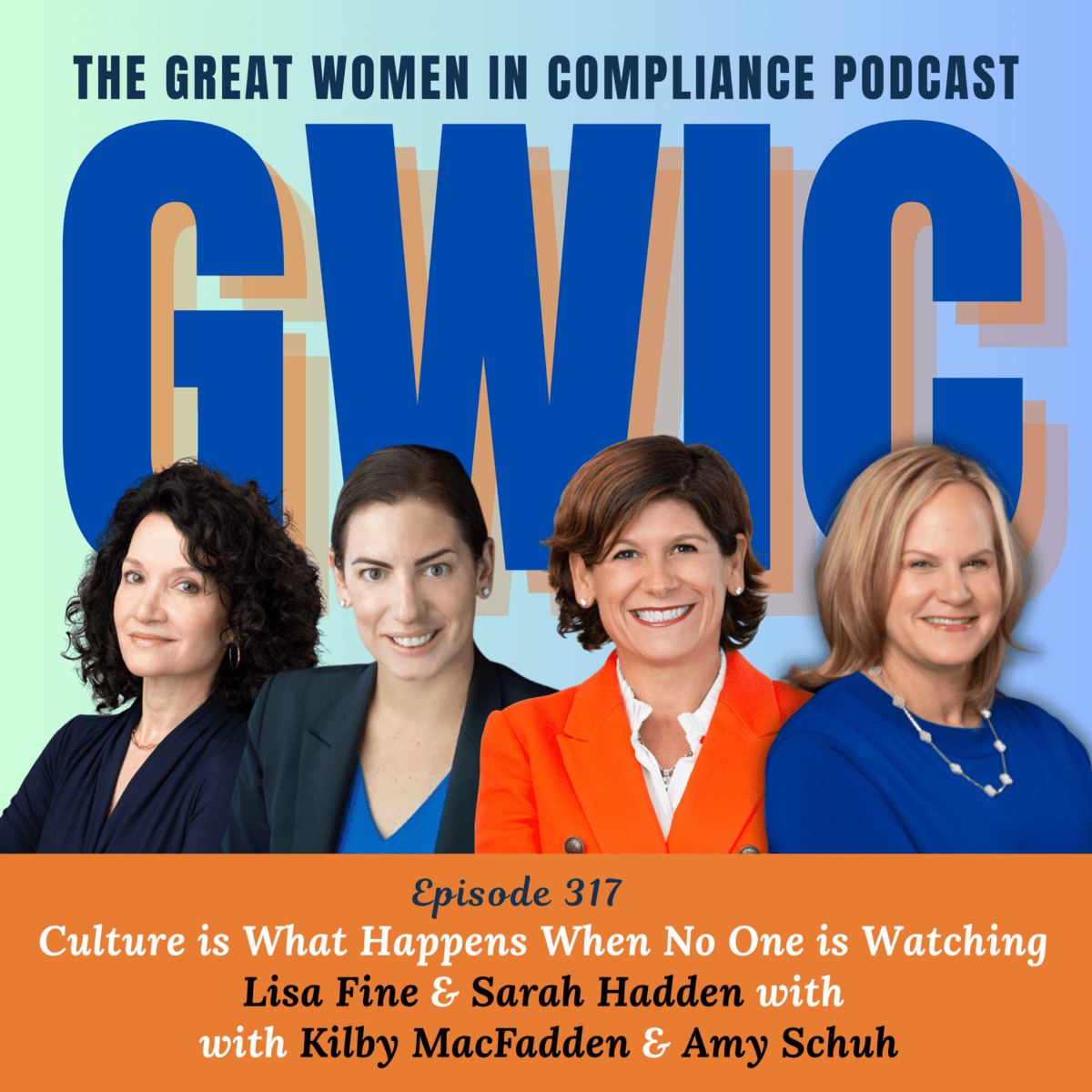
Great Women in Compliance: Culture is What Happens When No One is Watching

Culture is one of those topics in ethics and compliance that everyone talks about—but it’s also one of the hardest things to define and even harder to build. At Compliance Week, Lisa Fine discussed this with Amy Schuh, partner at Morgan Lewis; Kilby McFadden, Managing Director and Head of Investigations at KPMG; and Michael Ortwein, Chief Compliance Officer and Assistant General Counsel at GM. Today, Amy and Kilby continue the discussion with Lisa Fine and Sarah Hadden.

They start by discussing what they see as a strong compliance culture. As Kilby says, it’s what happens when no one is watching. The conversation focuses on how organizations move beyond policies and training to build trust, encourage employees to speak up, and empower leaders to make ethical decisions—even when those decisions are difficult.

Amy and Kilby share practical insights from years of experience leading investigations and advising organizations, discussing who really owns culture, how companies can create trust in the reporting process, and why relationships with the business matter just as much as policies and procedures. They also explore the challenges of building a consistent culture across global organizations and offer ideas for strengthening culture even when resources are limited.

They also include key takeaways for compliance professionals, such as the importance of listening, staying curious about the business, and building relationships before issues arise, and each shares one “myth” about Ethics & Compliance they think should be debunked.

Categories
Blog

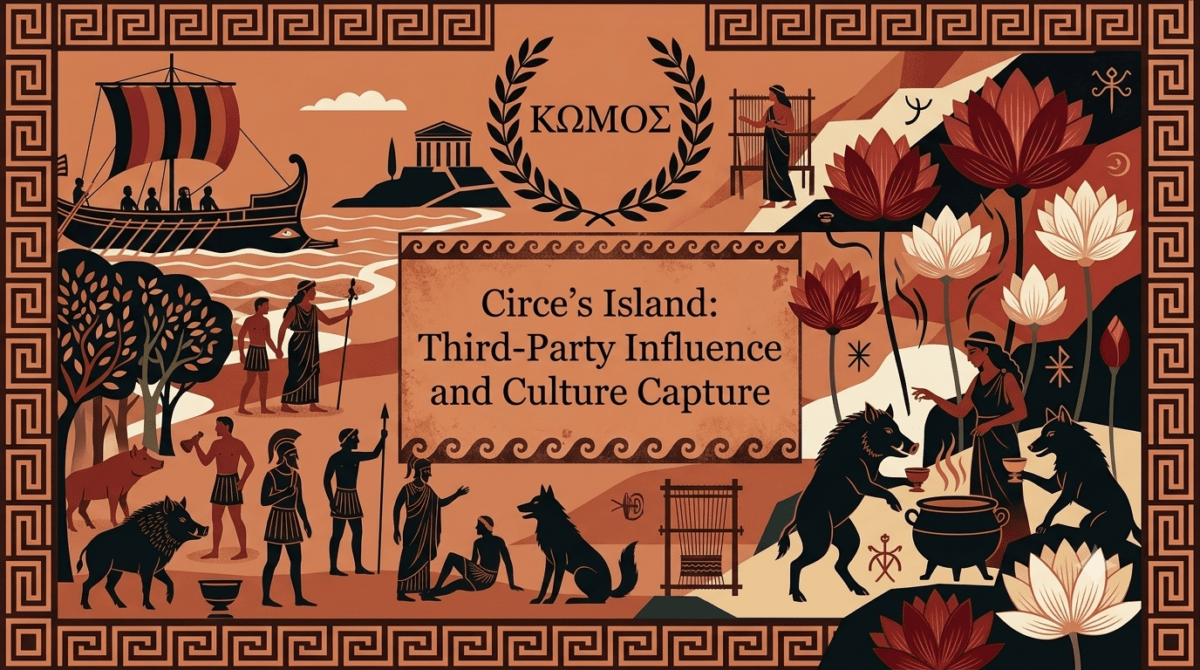
The Odyssey and Compliance, Part 3 – Circe’s Island: Third-Party Influence and Culture Capture

We continue our series of compliance lessons from The Odyssey. Today, we consider the tale of Circe’s Island and how third parties can not simply influence but also capture organizations.

Odysseus had seen danger before. He had survived war, storms, and the occasional poor travel decision that would have caused any modern risk committee to request an immediate meeting. But then he came to Circe’s island, where the threat did not begin with open violence. It began with hospitality. Circe welcomed Odysseus’s men. She offered food. She offered a drink. She offered comfort. Then, in one of the more memorable compliance-adjacent transformations in Greek mythology, she turned them into swine.

Subtle? Not especially. Useful for corporate compliance? Absolutely. In the corporate world, third parties rarely transform employees into literal pigs. That would at least make the investigation easier. The modern version is quieter. A consultant becomes indispensable. A reseller knows “how things work here.” A lobbyist explains that the official process is for amateurs. A distributor normalizes side payments. A strategic partner begins to shape internal decisions. A vendor’s gifts, favors, travel, and access slowly change what employees consider acceptable.

No one wakes up and says, “Today I shall surrender my professional judgment.” Instead, judgment softens and then stretches. Then outsourced. That is Circe’s island.

The Corporate Translation

Circe is the consultant, agent, lobbyist, reseller, distributor, broker, introducer, or strategic partner who makes questionable conduct feel sophisticated. She does not have to say, “Break the rules.” That would be too obvious. She says something more dangerous:

“This is how business is done.”

“Everyone uses this structure.”

“You are being too rigid.”

“The policy was not written for this situation.”

“You can trust me.”

“We have relationships you do not have.”

That is the language of culture capture. The third party does not merely provide a service. The third party begins to influence the organization’s standards. This is why third-party risk is not just a procurement issue. It is not just an anti-bribery issue. It is not just a contracting issue. It is a cultural issue. The most dangerous third parties do not always demand a bribe. Sometimes they simply change what your people think is normal.

The Paperwork Trap

Most companies have a third-party process. There is a questionnaire. There is a risk rating. There is a certification. There is a contract clause. Somewhere, there may even be a spreadsheet with conditional formatting, because nothing says “control environment” like a cell turning amber. These tools matter. But paperwork alone does not manage influence.

A company can collect every form and still miss the real risk. Whom is this third party influencing? Who inside the company is advocating for them? Why are they needed? What access do they have? What discretion do they exercise? Are they interacting with government officials, customers, healthcare professionals, regulators, state-owned entities, procurement teams, or other sensitive stakeholders? Are they being paid in a way that makes sense? Are they actually doing the work? Are they unusually close to the decision-maker?

The DOJ’s Evaluation of Corporate Compliance Programs (ECCP) asks whether companies apply risk-based due diligence to third-party relationships and understand the qualifications, associations, business rationale, reputation, compensation, and actual services performed by third parties. It also asks whether companies engage in ongoing monitoring through refreshed due diligence, training, audits, or certifications.

That is the point. Third-party compliance is not a one-time onboarding ritual. It is a relationship management discipline. Circe’s danger was not that she existed. The danger was that Odysseus’s men entered her house without understanding the risk.

Gifts, Hospitality, and the Slow Erosion of Judgment

Gifts and hospitality are often discussed as if the only question is whether the amount is above or below a policy threshold. That is too narrow. A meal may be permissible and still influential. A conference invitation may be properly approved and still create pressure. A vendor-sponsored trip may be documented and still tilt the relationship. A series of small favors may do more damage to independence than one obviously improper gift.

Compliance officers understand this. Business leaders sometimes resist it because influence is uncomfortable to discuss. No one wants to admit that lunch, access, flattery, or convenience can affect judgment. We prefer to believe we are all rational actors, floating above human weakness like minor gods with expense reports. We are not.

Behavioral ethics teaches a humbler lesson: people are influenced by relationships, reciprocity, loyalty, fatigue, social norms, and self-interest. A third party who becomes a friend, fixer, sponsor, or “trusted guide” can reshape decisions without issuing a single improper instruction.

That is why gifts-and-hospitality controls should look beyond monetary value. They should examine frequency, timing, recipient role, pending decisions, public-sector touchpoints, tender activity, regulatory matters, and cumulative patterns. The better question is not only, “Was this gift allowed? “The better question is, “What might this gift be trying to make feel normal? ”

Conflicts of Interest: Circe with a Business Card

Conflicts of interest are another form of enchantment. The employee recommends a vendor owned by a family member. A manager hires a consultant whom he previously employed. A procurement lead has a side investment in a supplier. A sales executive pushes a reseller because the reseller has promised future employment. A board member has ties to a strategic partner.

Often, the conflicted person does not experience the conflict as corruption. They experience it as trust.

“I know them.”

“They are good people.”

“They understand our business.”

“This will move faster.”

That may all be true. It may also be irrelevant. Conflicts do not require proof that someone acted dishonestly. A conflict means that personal interest may interfere with, or appear to interfere with, professional judgment. In compliance, appearance matters because trust matters. Circe did not need to tell the crew they were compromised. They simply became something other than what they had been. That is what unmanaged conflicts do. They transform decision-makers into advocates for interests they may not even fully recognize.

Risk-Based Due Diligence Means Asking Better Questions

A strong third-party program should be risk-based. That does not mean treating every vendor like a potential international crime syndicate. It means applying the right level of scrutiny to the right relationship. The office coffee supplier probably does not need the same review as a customs broker, government-facing consultant, high-commission sales agent, data processor, clinical partner, reseller, lobbyist, or distributor in a high-risk market.

Risk-based due diligence should ask direct questions:

What will this third party do for us?

Why do we need them?

Who selected them?

What relationships do they bring?

How will they be paid?

What access will they receive?

What decisions can they influence?

What laws, regulations, or policy areas do they touch?

What red flags appeared, and how were they resolved?

The ECCP also emphasizes risk assessment across factors such as business partners, third-party use, gifts, travel, entertainment, and other areas that may contribute to the risk of misconduct. That is a useful reminder: third-party risk rarely travels alone. It often brings friends. Gifts risk. Conflicts are risky. Books-and-records risk. Data risk. Sanctions risk. Cyber risk. Antitrust risk. Fraud risk. Reputational risk. Circe’s island is crowded.

Training the People Who Meet Circe

Third-party policies are necessary, but people need training before they sit across the table from Circe. Sales teams need to understand the red flags for resellers and agents. Procurement teams need to spot conflicts and unusual payment terms. Finance needs to recognize vague invoices, round-dollar payments, split payments, and services that cannot be verified. Legal needs to ensure that contracts describe real services and include rights to audit, termination, compliance, and cooperation. Business sponsors need to understand that “I trust them” is not due diligence.

The ECCP asks whether training and communications are tailored to the audience and whether companies provide practical guidance, case studies, and ways for employees to get ethics advice as issues arise. It also contemplates training for appropriate agents and business partners. That is exactly right.

Do not train employees only on the policy. Train them in the moment. The moment when the consultant says the invoice needs to be vague. The moment when the distributor asks for payment to an offshore account. The moment when the lobbyist says no one can know about the meeting. The moment when the vendor offers to fly the team to a “strategy session” at a resort, suspiciously light on strategy. The moment when the business sponsor says, “Compliance is slowing this down.” That is where the program either works or becomes decorative.

What a Better Program Does

A better third-party program examines influence, not just paperwork. It connects due diligence, contracting, training, payment controls, gifts and hospitality, conflict disclosures, monitoring, audits, and termination rights. It reviews third-party activity after onboarding. It checks whether services were actually performed. It compares compensation to market value. It looks for unusual payment structures. It refreshes diligence when risk changes. It trains business sponsors, not just compliance staff. It monitors the internal champions who may become too close to the third party they manage.

Most importantly, it permits employees to be skeptical. Not cynical. Skeptical. There is a difference. Cynicism says everyone is corrupt. Skepticism says facts, controls, and accountability should support trust. Odysseus survived Circe because he received a warning, protection, and guidance before walking into the risk. Your employees need the same, preferably without needing Hermes to appear with magical herbs.

The Compliance Takeaway

Circe’s island is not just a story about transformation. It is a story about influence. Third parties can help companies grow, enter new markets, solve complex problems, and operate more effectively. Many are essential. Many are ethical. Many know things the company genuinely needs to know. But a third party should never become a substitute for the company’s judgment. When a consultant, agent, reseller, lobbyist, vendor, or strategic partner begins to redefine what is acceptable, the company has moved from third-party management to third-party capture.

That is the lesson for compliance officers and business leaders. Do not ask only whether the forms are complete. Ask whether the relationship is changing behavior. Ask whether gifts, conflicts, access, dependence, or pressure are making questionable conduct feel normal. Ask whether employees still know where the company’s standards end and Circe’s influence begins. Because in business, as in mythology, transformation rarely announces itself. One day, your people are professionals exercising independent judgment. The next day, they are defending the island.

Join us on Thursday for Post 4, where we consider The Cattle of Helios: Non-Negotiables and Control Breaches.

Categories
Trekking Through Compliance

Trekking Through Compliance: Episode 44 – Furry Lessons: The Case for Humor in Compliance Training, from The Trouble with Tribbles

If you ask any Star Trek fan to name a classic episode that brings a smile to their face, you’re likely to hear a chorus of “The Trouble with Tribbles! “The episode, famous for its furry creatures and lighthearted spirit, stands out not just as a fan favorite but as a masterclass in the effective use of humor to deliver meaningful lessons, something all compliance professionals can learn from when it comes to training and engagement.

Why does this matter for compliance? Too often, compliance training is seen as dry, mandatory, and, for even the most well-intentioned teams, something to be “gotten through” rather than truly absorbed. Here are five key training lessons, each tied to a classic scene, that show why humor belongs in your compliance toolbox.

Lesson 1: Humor Lowers Defenses—Use It to Open the Door to Learning

Illustrated by: The first appearance of Tribbles in the Enterprise rec room, as Lieutenant Uhura and crew are charmed by the adorable creatures, leading to laughter and playful banter. Humor, at its core, is a universal icebreaker. In this scene, the crew’s initial reaction to the Tribbles—coos, smiles, and gentle teasing—sets the tone for a more relaxed and open environment. No one is bracing for a lecture; they’re engaged, curious, and, most importantly, willing to participate.

Compliance Lesson: Start your training with humor, an anecdote, a funny compliance video, or a self-deprecating story about compliance “gone wrong.” This isn’t about making light of serious subjects but about lowering barriers and inviting employees to engage. When people laugh, they are not defensive; they are receptive. Set the tone early, and the message will go farther.

Lesson 2: Humor Makes the Message Memorable—Embed It in Your Key Points

Illustrated by: Kirk’s deadpan reaction as he opens a storage compartment, only to be buried under an avalanche of Tribbles. Few moments in compliance (or television history) are as iconic as Captain Kirk being engulfed by a cascade of Tribbles. Why does this stick in our collective memory? Because it’s funny, unexpected, and visually memorable.

Compliance Lesson: Tie humor directly to your key training points. Whether it’s a short skit, a humorous meme, or a role-play gone slightly sideways, link your core compliance lesson to a moment of levity. Employees are more likely to remember “that time the manager dressed up as a ‘compliance villain’” than another slide about policy violations. Humor etches learning into memory.

Lesson 3: Humor Builds Camaraderie—Make Compliance a Team Effort

Illustrated by: The barroom brawl between the Enterprise crew and Klingons, sparked by good-natured ribbing and escalating into comic chaos. This classic scene is not just slapstick; rather, it is a reminder that shared laughter unites a team. The brawl, though farcical, reveals camaraderie and loyalty among the crew.

Compliance Lesson: Use humor to create shared experiences during training; try team quizzes, compliance-themed games, or humorous competitions. When employees laugh together, they build bonds that foster a culture where compliance is everyone’s responsibility. Humor turns compliance from an individual burden into a collective mission.

Lesson 4: Humor Allows for Safe Failure—Encourage Experimentation and Questions

Illustrated by: Scotty sheepishly admitting to Captain Kirk that he started the fight with the Klingons, not to defend the Captain’s honor, but the Enterprise’s. When Kirk questions his crew after the barroom incident, Scotty’s honest (and hilarious) confession, delivered with perfect comic timing, creates a safe space for truth. The crew knows they can speak candidly, even about mistakes.

Compliance Lesson: Use humor to create an environment where mistakes are learning opportunities, not sources of shame. Incorporate funny compliance “fails” into your sessions and invite employees to share their own stories, anonymously or otherwise. When the cost of failure is laughter (not punishment), people are more willing to ask questions, admit confusion, and truly learn.

Lesson 5: Humor Reveals Hidden Risks—Spotting Problems Before They Multiply

Illustrated by: Dr. McCoy’s revelation that Tribbles are born pregnant, and their exponential population growth threatens the Enterprise’s operations. The Tribbles’ explosive reproduction is played for laughs, but it serves as a brilliant metaphor for how small issues, if left unchecked, can spiral into major crises. The crew’s laughter quickly gives way to action as the true scope of the problem emerges.

Compliance Lesson: Inject humor into hypothetical scenarios that illustrate how minor compliance lapses can escalate—think of the “snowball effect” as the “Tribble effect.” By making risk tangible (and a little bit funny), you highlight the importance of vigilance and early intervention. Employees will be more likely to remember the “Tribbles in the grain” than an abstract risk chart.

Final ComplianceLog Reflections

Too often, compliance training is a solemn, check-the-box affair. But “The Trouble with Tribbles” reminds us that humor is not the enemy of seriousness; it is an ally. Humor can make difficult topics more approachable, encourage open conversation, and ultimately drive better learning outcomes.

Captain Kirk didn’t solve the Tribble crisis with a stern lecture; he solved it by staying nimble, engaging his crew, and responding with creativity—qualities every compliance professional should embrace. When training is infused with laughter, employees lean in. When they lean in, they learn.

So, the next time you design a compliance training session, ask yourself: Where can I find the “Tribbles”? Where can I use humor to open minds, break down silos, and make the message stick? You’ll find that laughter, much like Tribbles, spreads quickly, multiplies engagement, and leaves your organization stronger (and perhaps a little furrier) than before.

Resources:

Excruciatingly Detailed Plot Summary by Eric W. Weisstein

MissionLogPodcast.com

Memory Alpha

Timothy and Fiona are AI-generated voices.

Categories
Blog

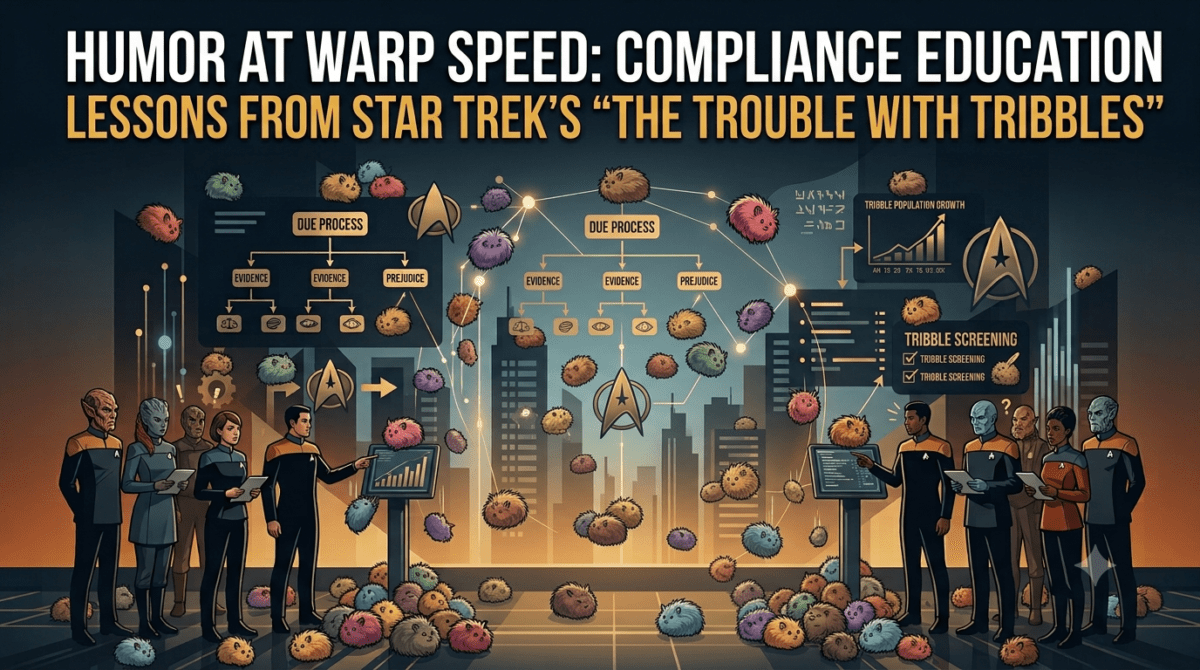
Humor at Warp Speed: Compliance Education Lessons from Star Trek’s “The Trouble with Tribbles”

If you ask any Star Trek fan to name a classic episode that brings a smile to their face, you’re likely to hear a chorus of “The Trouble with Tribbles! “The episode, famous for its furry creatures and lighthearted spirit, stands out not just as a fan favorite but as a masterclass in the effective use of humor to deliver meaningful lessons, something all compliance professionals can learn from when it comes to training and engagement.

Why does this matter for compliance? Too often, compliance training is seen as dry, mandatory, and, for the most well-intentioned teams, something to be “gotten through” rather than truly absorbed. Yet, as Captain Kirk and his crew discovered, laughter can disarm resistance, break down barriers, and make even the most serious topics stick. Let’s beam in for a closer look at how humor, when used with intent, can supercharge your compliance training program.

In “The Trouble with Tribbles,” the crew of the USS Enterprise encounters a seemingly innocuous species of cuddly, purring creatures called Tribbles. What starts as a minor amusement soon escalates into chaos, with Tribbles multiplying at an exponential rate, getting into grain stores, and ultimately foiling a Klingon sabotage plot. Throughout, the tone remains light, even as the stakes rise, delivering a pitch-perfect balance between humor and operational seriousness.

What can compliance professionals learn from this blend? Here are five key training lessons, each tied to a classic scene, that show why humor belongs in your compliance toolbox.

Lesson 1: Humor Lowers Defenses—Use It to Open the Door to Learning

Illustrated by: The first appearance of Tribbles in the Enterprise rec room, as Lieutenant Uhura and crew are charmed by the adorable creatures, leading to laughter and playful banter. Humor, at its core, is a universal icebreaker. In this scene, the crew’s initial reaction to the Tribbles—coos, smiles, and gentle teasing—sets the tone for a more relaxed and open environment. No one is bracing for a lecture; they’re engaged, curious, and, most importantly, willing to participate.

Compliance Lesson: Start your training with humor, an anecdote, a funny compliance video, or a self-deprecating story about compliance “gone wrong.” This isn’t about making light of serious subjects but about lowering barriers and inviting employees to engage. When people laugh, they are not defensive; they are receptive. Set the tone early, and the message will go farther.

Lesson 2: Humor Makes the Message Memorable—Embed It in Your Key Points

Illustrated by: Kirk’s deadpan reaction as he opens a storage compartment, only to be buried under an avalanche of Tribbles. Few moments in compliance (or television history) are as iconic as Captain Kirk being engulfed by a cascade of Tribbles. Why does this stick in our collective memory? Because it’s funny, unexpected, and visually memorable.

Compliance Lesson: Tie humor directly to your key training points. Whether it’s a short skit, a humorous meme, or a role-play gone slightly sideways, link your core compliance lesson to a moment of levity. Employees are more likely to remember “that time the manager dressed up as a ‘compliance villain’” than another slide about policy violations. Humor etches learning into memory.

Lesson 3: Humor Builds Camaraderie—Make Compliance a Team Effort

Illustrated by: The barroom brawl between the Enterprise crew and Klingons, sparked by good-natured ribbing and escalating into comic chaos. This classic scene is not just slapstick; rather, it is a reminder that shared laughter unites a team. The brawl, though farcical, reveals camaraderie and loyalty among the crew.

Compliance Lesson: Use humor to create shared experiences during training; try team quizzes, compliance-themed games, or humorous competitions. When employees laugh together, they build bonds that foster a culture where compliance is everyone’s responsibility. Humor turns compliance from an individual burden into a collective mission.

Lesson 4: Humor Allows for Safe Failure—Encourage Experimentation and Questions

Illustrated by: Scotty sheepishly admitting to Captain Kirk that he started the fight with the Klingons, not to defend the Captain’s honor, but the Enterprise’s. When Kirk questions his crew after the barroom incident, Scotty’s honest (and hilarious) confession, delivered with perfect comic timing, creates a safe space for truth. The crew knows they can speak candidly, even about mistakes.

Compliance Lesson: Use humor to create an environment where mistakes are learning opportunities, not sources of shame. Incorporate funny compliance “fails” into your sessions and invite employees to share their own stories, anonymously or otherwise. When the cost of failure is laughter (not punishment), people are more willing to ask questions, admit confusion, and truly learn.

Lesson 5: Humor Reveals Hidden Risks—Spotting Problems Before They Multiply

Illustrated by: Dr. McCoy’s revelation that Tribbles are born pregnant, and their exponential population growth threatens the Enterprise’s operations. The Tribbles’ explosive reproduction is played for laughs, but it serves as a brilliant metaphor for how small issues, if left unchecked, can spiral into major crises. The crew’s laughter quickly gives way to action as the true scope of the problem emerges.

Compliance Lesson: Inject humor into hypothetical scenarios that illustrate how minor compliance lapses can escalate—think of the “snowball effect” as the “Tribble effect.” By making risk tangible (and a little bit funny), you highlight the importance of vigilance and early intervention. Employees will be more likely to remember the “Tribbles in the grain” than an abstract risk chart.

Final ComplianceLog Reflections

Too often, compliance training is a solemn, check-the-box affair. But “The Trouble with Tribbles” reminds us that humor is not the enemy of seriousness; it is an ally. Humor can make difficult topics more approachable, encourage open conversation, and ultimately drive better learning outcomes.

Captain Kirk didn’t solve the Tribble crisis with a stern lecture; he solved it by staying nimble, engaging his crew, and responding with creativity—qualities every compliance professional should embrace. When training is infused with laughter, employees lean in. When they lean in, they learn.

So, the next time you design a compliance training session, ask yourself: Where can I find the “Tribbles”? Where can I use humor to open minds, break down silos, and make the message stick? You’ll find that laughter, much like Tribbles, spreads quickly, multiplies engagement, and leaves your organization stronger (and perhaps a little furrier) than before.

Resources:

Excruciatingly Detailed Plot Summary by Eric W. Weisstein

MissionLogPodcast.com

Memory Alpha

Categories
Daily Compliance News

Daily Compliance News: July 14, 2026, The Settlement Voided Edition

Welcome to the Daily Compliance News. Each day, Tom Fox, the Voice of Compliance, brings you compliance-related stories to start your day. Sit back, enjoy a cup of morning coffee, and listen in to the Daily Compliance News. All, from the Compliance Podcast Network. Each day, we consider four stories from the business world, compliance, ethics, risk management, leadership, or general interest for the compliance professional.

Top stories include:

  • Judge voids Trump/IRS settlement. (Reuters)
  • Iraq seizes gold in corruption crackdown. (AlJazeera)
  • States sue to block Paramount/Warner Bros. deal. (NYT)
  • Goldman Sachs GC stays on after announcing departure due to Epstein’s relationship. (WSJ)

To learn about the intersection of Sherlock Holmes and the modern compliance professional, check out Tom’s latest book, The Game is Afoot-What Sherlock Holmes Teaches About Risk, Ethics and Investigations on Amazon.com.

Categories
Innovation in Compliance

Innovation in Compliance: AI Compliance at the Speed of Content with Kunal Vankadara

Innovation comes in many areas, and compliance professionals need to not only be ready for it but also embrace it. Join Tom Fox, the Voice of Compliance, as he visits with top innovative minds, thinkers, and creators in the award-winning Innovation in Compliance podcast. In this episode, host Tom Fox visits Kunal Vankadara, CEO & Co-founder of Haast, to discuss how AI can help regulated organizations scale compliance as content volume explodes and regulatory scrutiny increases.

Vankadara believes AI-powered compliance automation is especially valuable in content review because many decisions are subjective and context-driven, such as judging whether a disclaimer is sufficiently prominent. In his view, LLMs can be trained on a company’s risk tolerance to apply those standards consistently at scale, reducing false positives and sending only gray-area issues to human experts. As AI-driven content creation and regulatory scrutiny continue to grow, he sees this approach as a way to make compliance faster, more reliable, and less of a bottleneck.

Key highlights:

  • AI-driven content surge overburdens compliance teams
  • Training Agents to Match Company Risk Tolerance
  • Teaching AI Risk Tolerance Beyond False Positives
  • Compliance agents as digital twins for content
  • Sanctions and Regulatory Changes into Actionable Intelligence

Resources:

Connect with Kunal Vankadara on LinkedIn

Haast

Innovation in Compliance was recently honored as the Number 4 podcast in Risk Management by 1,000,000 Podcasts.

Categories
AI Today in 5

AI Today in 5: July 14, 2026, The Bank Run in Seconds Edition

Welcome to AI Today in 5, the newest addition to the Compliance Podcast Network. Each day, Tom Fox will bring you 5 stories about AI to start your day. Sit back, enjoy a cup of morning coffee, and listen in to AI Today In 5. All, from the Compliance Podcast Network. Each day, we consider five stories from the business world, compliance, ethics, risk management, leadership, or general interest about AI.

Top AI stories include:

  1. Star Compliance reshapes ELT. (FinTechGlobal)
  2. Agentic compliance issues: AI v. Humans. (Security BLVD)
  3. Meta drops AI photoshopping feature. (TechCrunch)
  4. AI could create new divides in financial services. (ETFStream)
  5. Could AI trigger a bank run in seconds? (Banking Dive)

For more information on the use of AI in compliance programs, Tom Fox’s new book, Upping Your Game, is available. You can purchase a copy of the book on ⁠Amazon.com⁠.

To learn about the intersection of Sherlock Holmes and the modern compliance professional, check out Tom’s latest book, The Game is Afoot-What Sherlock Holmes Teaches About Risk, Ethics and Investigations on ⁠Amazon.com⁠.

Categories
Everything Compliance - Shout Outs and Rants

Everything Compliance: Shout Outs and Rants – Supreme Court Power, Curiosity in Compliance, and Metrics on the Pitch

Welcome to a revamped Everything Compliance Shout Out & Rants. We have a new host, Adam Turteltaub, and a new panelist, Rebecca Walker, who joins returning regulars Matt Kelly, Jonathan Armstrong, and Karen Moore for the next iteration of Everything Compliance Shout Outs and Rants.

  • Adam Turteltaub rants about flopping in the World Cup.
  • Matt Kelly rants about the Supreme Court’s Slaughter decision for allowing the president to fire independent agency commissioners, warning it will end bipartisan stability, drive away minority-party commissioners, and create volatile, hyper-partisan regulation.
  • Rebecca Walker shouts out about curiosity, citing Harvard graduate Noah Eckstein’s speech “The Punchline” and the advice to “listen like you might be wrong,” applying it to investigations, risk assessment, and compliance decision-making; a book and TED Talk on being wrong are recommended.
  • Jonathan Armstrong highlights Slaughter’s implications for EU/UK/Swiss-US data transfers and gives a football transfer shout-out.
  • Karen Moore shouts out to America ahead of its 250th birthday and to her child’s partner, Ren Nguyen, for training to become a certified air traffic controller.

Everything Compliance Shout Outs and Rants is a production of the Compliance Podcast Network.

Categories
Blog

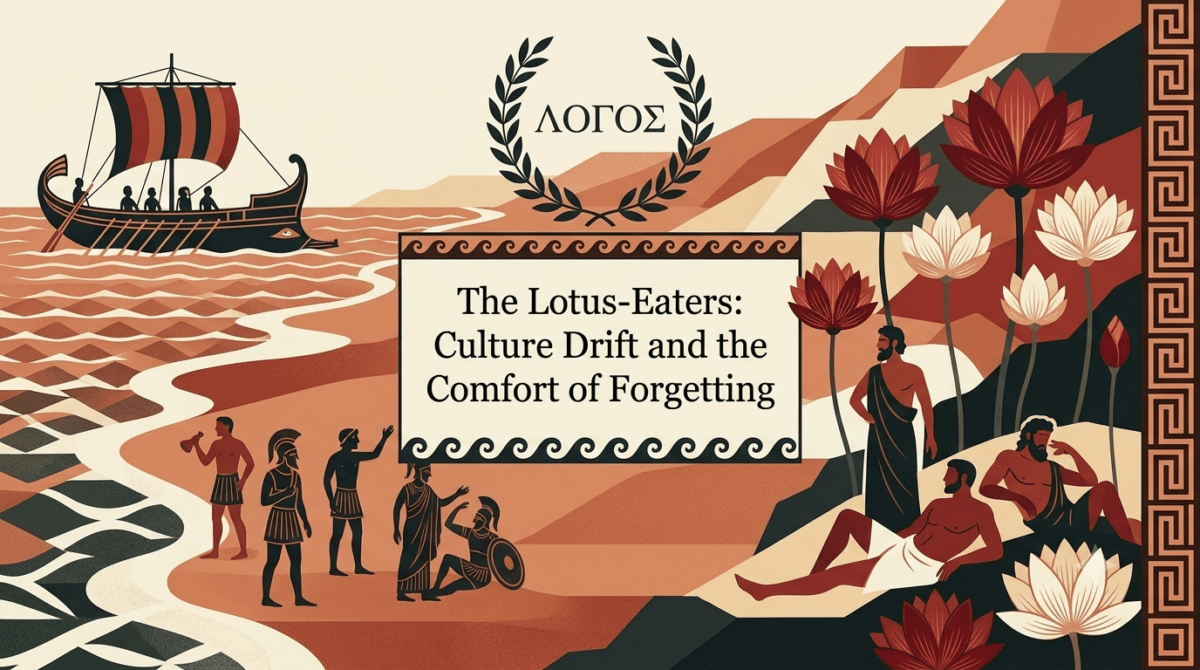
The Odyssey and Compliance, Part 2 – The Lotus-Eaters: Culture Drift and the Comfort of Forgetting

We continue our series of compliance lessons from The Odyssey. Today, we consider the tale of the Lotus-Eaters and the drifting of corporate culture.

Odysseus and his crew did not always face monsters with teeth. Sometimes the danger was softer. After leaving Troy, Odysseus and his men came to the land of the Lotus-Eaters. There was no battle. No ambush. No roaring beast. No angry god hurling thunderbolts. The locals simply offered the crew lotus flowers. Those who ate them lost all desire to return home. They forgot the mission. They forgot Ithaca. They forgot the purpose of the journey.

That is what makes the episode so unsettling. The Lotus-Eaters did not defeat Odysseus’s crew by force. They defeated them through comfort, distraction, and forgetfulness. Welcome to one of the most common compliance risks in modern corporate life: culture drift.

Not every compliance failure begins with greed. Not every ethical collapse starts with a suitcase of cash, a fake invoice, or someone whispering, “Let’s take this offline.” Some failures begin when people simply forget why the rules matter. They remember the annual training deadline. They remember the attestation. They remember where the Code of Conduct lives, assuming the intranet search function is having a good day. But they no longer connect compliance to the company’s mission. That is the lotus.

The Corporate Translation

Every organization has its own version of the island of the Lotus-Eaters. It may be a high-performing business unit that hits its numbers, avoids obvious scandal, and quietly stops engaging with compliance. It may be a remote office that has not seen a live compliance conversation in years. It may be a leadership team that talks about values during onboarding, but never mentions them again unless there is an investigation. It may be a group of employees who click through training modules while answering emails, eating lunch, and wondering whether the quiz has unlimited attempts.

Everyone is pleasant. Everyone is busy. Everyone is productive. Everyone is slowly detaching from the company’s stated values. This is the direct analogy: the lotus is the business unit where nothing looks obviously wrong, but no one can explain how compliance connects to the work they actually do. That is a dangerous place. Not because people are evil. Because they are comfortable.

Risk Assessment: Finding the Islands Before People Forget

A good compliance program begins with risk assessment, not vibes. Odysseus had to know where his crew was vulnerable. Were they hungry? Exhausted? Demoralized? Homesick? Easily distracted by local hospitality? The answer, unfortunately, was yes.

Companies need the same kind of self-awareness. Where are employees most likely to forget the mission? Where are they under the most pressure? Where are the policies most disconnected from daily operations? Where has training become a ritual instead of a reinforcement?

The DOJ’s Evaluation of Corporate Compliance Programs emphasizes risk-tailored compliance and asks how a company identifies, assesses, and addresses risks, including whether it updates policies, procedures, and training as those risks evolve. It also asks whether training is tailored, whether employees understand it in practice, and whether the company measures effectiveness rather than merely delivering content.

That is an important distinction. A weak risk assessment asks, “Did everyone receive the training? “A better risk assessment asks, “Who needs what training, on which risks, at what level of depth, in what language, through what format, and how do we know it changed behavior? “That is the difference between counting lotus flowers and understanding why people are eating them.

Policies: The Mission Written Down

Policies are supposed to tell employees how the company expects them to act. But too many policies are written as if they were designed to survive litigation rather than to guide human beings. They are long, dense, passive, and beloved mainly by the people who drafted them. Employees do not use them. Managers do not reinforce them. Business teams treat them like airport terms and conditions: technically available, rarely read, and accepted under pressure.

That is a policy failure by design. A policy is not effective because it exists. It is effective when employees can find it, understand it, apply it, and believe the company expects them to follow it. The DOJ’s Evaluation of Corporate Compliance Programs (ECCP) asks whether policies and procedures are accessible, searchable, communicated to employees and relevant third parties, integrated into operations, and reinforced through internal control systems. It also asks whether gatekeepers receive guidance and training on what misconduct to look for and when to escalate concerns.

That is practical compliance. Policies should not be museum pieces. They should be field guides. The anti-corruption policy should help a sales manager understand what to do before a government customer asks for “support.” The data privacy policy should help an operations team understand when customer information can be shared. The conflicts policy should help a procurement employee understand why her cousin’s consulting firm is not just “a good local option.” The speak-up policy should help employees know where to go before silence becomes complicity. Policies should bring people back to Ithaca. They should remind the organization: this is who we are; this is how we do business; and this is the route home.

Training: More Than the Annual Click-Through

Now we come to training, the place where many compliance programs go to become lotus farms. You know the scene. An employee gets an email: “Mandatory Compliance Training Due Friday.” The employee opens the module, clicks through the slides, answers a few questions, and receives a certificate. Somewhere, a dashboard turns green. The compliance team exhales. The business moves on.

But did anyone learn anything? That is the uncomfortable question. As Ronnie Feldman continually reminds us, training is not effective because it was assigned. Training is not effective because completion rates are high. Training is not effective because the quiz average was 94 percent, especially if the questions were written so that “Do not commit fraud” was the challenging option.

Effective training helps employees recognize risk in the moment. It gives managers language to lead. It teaches employees how to pause, ask, escalate, and document. It uses realistic scenarios, not cartoon villains. It respects the audience’s time without insulting their intelligence. The ECCP specifically points to tailored training and communications, including practical advice, case studies, shorter, targeted sessions, opportunities for employees to ask questions, and measures of employee engagement and learning. It also asks whether training affects employee behavior or operations. The goal is not training completion. The goal is better decisions.

Ethical Fatigue Is Real

There is another reason the Lotus-Eaters matter. They remind us that people get tired. Employees face pressure, complexity, change, layoffs, new systems, reorganizations, market stress, and competing messages from leadership. Then compliance arrives with another policy update, another module, another certification, another “quick reminder” that is neither quick nor memorable.

Ethical fatigue sets in. When employees are exhausted, they do not necessarily become unethical. They become passive. They stop asking questions. They stop reading carefully. They assume someone else reviewed the issue. They treat compliance as background noise. This is where culture drift becomes dangerous. The organization may still have the right words, but the words no longer move anyone.

The solution is not more noise. It is better communication. Compliance teams should ask, “What does this audience need to know?” What decisions do they actually face? What mistakes are we seeing? What near misses have occurred? What questions are employees asking? What risks are emerging? What would make this guidance useful on Tuesday afternoon when the customer is angry, the deadline is real, and the manager wants an answer? That is where compliance becomes practical.

What a Better Program Does

A better program treats culture as something to be measured, tested, and renewed. It does not assume that because employees took training, they absorbed it. It does not assume that because a policy exists, employees know how to use it. It does not assume that because leadership talks about integrity, middle management reinforces it. A better program looks for signs of forgetting.

Are hotline reports dropping because misconduct is down, or because trust is down? Are policy questions coming from all regions or only headquarters? Are employees passing training but failing audits? Are managers escalating issues or solving them quietly? Are high-risk teams receiving generic training when they need tailored guidance? Are employees afraid to ask “basic” questions because they think they should already know the answer? The compliance function should use surveys, training analytics, audit results, hotline data, investigation trends, control testing, manager feedback, and employee questions to understand whether the message is landing. And when the message isn’t landing, the answer isn’t to blame the crew. Odysseus did not leave his men among the Lotus-Eaters and say, “Well, they should have remembered Ithaca.” He dragged them back to the ships. That is leadership.

The Compliance Takeaway

The land of the Lotus-Eaters is not a place of obvious corruption. That is why it is so dangerous. It is the place where mission fades into routine, where values become posters, where policies become files. Where training becomes a click, where employees are not hostile to compliance but simply detached from it.

For compliance officers and business leaders, the lesson is clear: culture must be refreshed before it drifts. Policies must be usable before they are needed. Training must be memorable before the crisis. Risk assessment must identify not only where misconduct could occur but also where people are most likely to forget why compliance matters.

Odysseus’s crew did not need a lecture. They needed to be reminded of the journey. So do organizations. The question is not whether your people have eaten the lotus. The question is whether your compliance program would know.

Join us tomorrow in Part 3, where we consider Circe’s Island: Third-Party Influence and Culture Capture.

Categories
FCPA Compliance Report

FCPA Compliance Report: Episode 815 – AI in Compliance and Eastward AI’s Continuous Risk “Reality Check”

Welcome to the award-winning FCPA Compliance Report, the longest-running podcast in compliance. In this episode, Tom welcomes back Gerry Zack, and they discuss the growing use of AI in compliance and the launch of Eastward AI.

Zack says many organizations are uncertain and paralyzed, while others range from using ChatGPT at a basic level to building or buying specialized tools rather than seeking a “big machine.” AI is now embedded across compliance functions, from hotline chatbots and policy/control mapping to monitoring, investigations (which Zack cautions against over-automating), and behavioral analytics. Eastward AI began as a CSRD double-materiality assessment tool but expanded to encompass broader enterprise and compliance risk management, aligned with frameworks including COSO ERM, DOJ expectations, ISO 37301, and ISO 31000. Zack describes development with a skilled programming team, beta “design partners,” and a “Reality Check” feature that rapidly scans global information to update risk assessments and support scenario modeling continuously. This combination has drawn interest from CCOs, CROs, GCs, and strategy leaders. Eastward.ai is now publicly available.

Key highlights:

  • AI in Compliance Today
  • Eastward AI Origin Story
  • MVP and Design Partners
  • Reality Check Feature
  • Scenario Modeling and Strategy
  • Expanding Compliance Remit

Resources:

Gerry Zack on LinkedIn

RiskTrek

Eastward AI

Tom Fox

Instagram

Facebook

YouTube

Twitter

LinkedIn

The FCPA Compliance Report was recently named the world’s Best Business Ethics Podcast by FeedSpot.