Categories
Blog

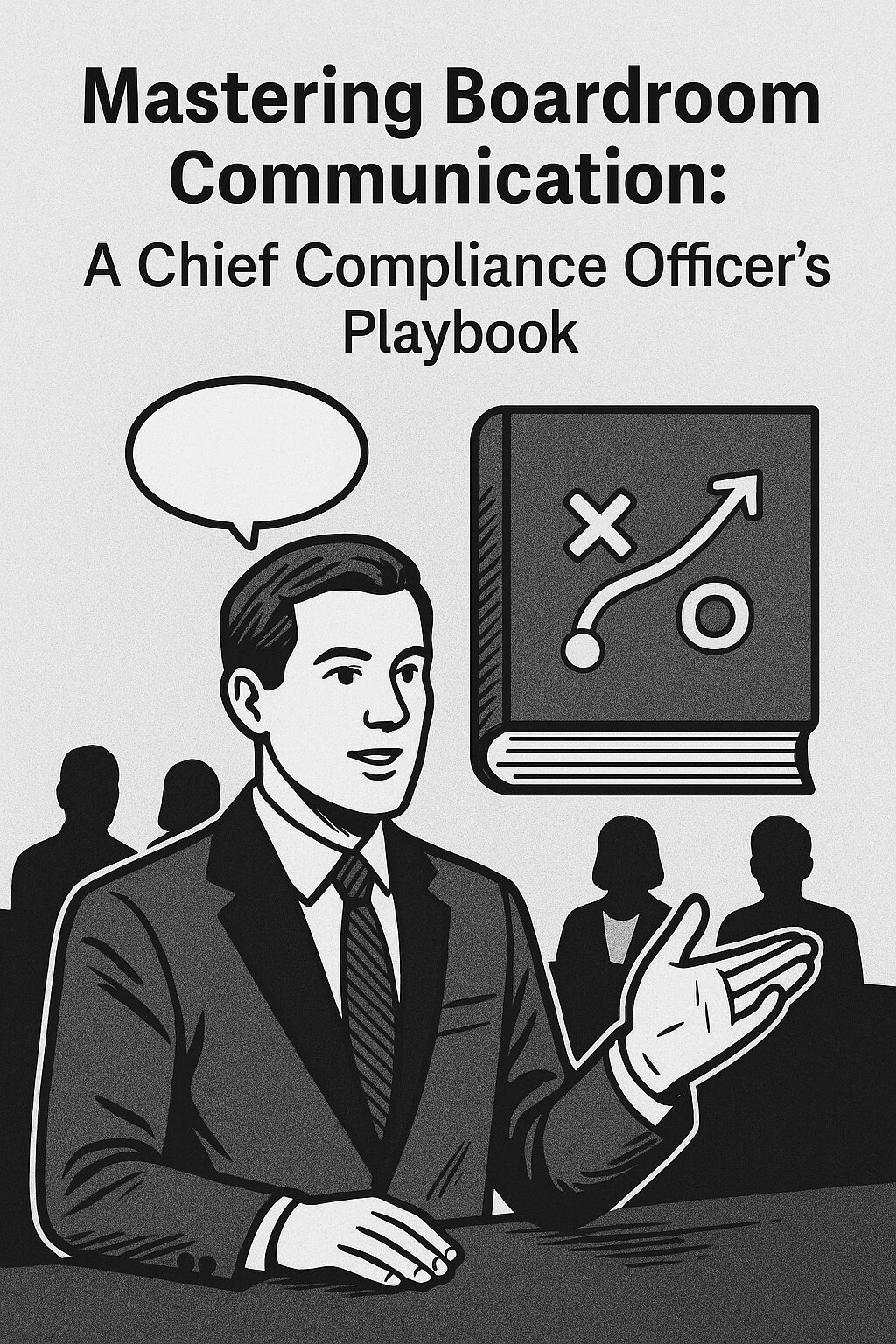
Board Week, Part 2: Mastering Boardroom Communication: A Chief Compliance Officer’s Playbook

Boardroom communication is not just a matter of style; it is a skill much needed for every Chief Compliance Officer (CCO). In today’s environment of heightened regulatory scrutiny, geopolitical disruption, and rapid technological change, a CCO sits squarely at the intersection of risk, ethics, and strategy. How a CCO communicates with the board can shape director confidence, influence resource allocation, and ultimately determine whether compliance is viewed as a strategic partner or a cost center.

A recent Harvard Law School Forum on Corporate Governance article outlined five essentials for executives engaging with their boards. For CCOs, these essentials carry even more weight. Compliance is often the messenger of uncomfortable truths: misconduct uncovered, regulatory inquiries, or cultural red flags that leadership may prefer to avoid. Delivering these messages effectively requires preparation, precision, and presence. In this blog post, we will explore how CCOs can adapt these five essentials to elevate their boardroom communication.

1. Invest in Relationships: Building Trust Before the Crisis

For CCOs, credibility with the board is currency. Relationships cannot be built during a crisis; they must be established well in advance of one arriving. Intentional relationship-building with directors pays dividends. CCOs should regularly meet with audit and compliance committee chairs outside of formal sessions. These pre-meeting touchpoints allow you to test messaging, gauge concerns, and set expectations. They also build the trust needed when delivering difficult news, such as a whistleblower report implicating senior leadership or an FCPA investigation.

Equally important, CCOs must present a united front with fellow executives. Fragmented messaging from the CCO versus the CFO or General Counsel undermines board confidence. Directors want assurance that compliance is embedded across all functions, not confined to silos. Demonstrating cross-functional collaboration signals maturity and readiness. You can provide directors with candid “heads-up” updates on emerging risks. If the Department of Justice signals a shift in compliance program evaluation (as it did with the 2024 ECCP Update), brief your directors in advance. Early transparency fosters credibility.

2. Know Your Audience: Translating Compliance into Board Priorities

Directors are a distinct audience; they are seasoned leaders with broad but varied expertise. The article emphasizes the importance of tailoring messages to individuals’ backgrounds and perspectives. For CCOs, this means translating compliance risks into business-relevant language. For example, when discussing data privacy, it is best to avoid using technical jargon. Instead, connect privacy risks to reputational harm, customer trust, and market access. When discussing sanctions enforcement, frame it in terms of geopolitical instability and supply chain resilience.

CCOs must also bridge perspective gaps between management and the board. Senior executives often want boards to add expertise in emerging areas, such as AI, but directors are slower to prioritize it. The CCO’s role is to highlight how these gaps translate into real risk exposure. If the board does not see the value of AI oversight on its agenda, provide evidence, such as regulator speeches, enforcement trends, and peer actions. Do your homework: know which directors come from legal, financial, or technology backgrounds. A director with former regulatory experience will expect different details than one with private equity experience. Anticipating these perspectives ensures that your compliance story resonates.

3. Prepare What You Will Share: Making Compliance Digestible

The board’s time is scarce. As the article notes, directors want strategy, not operations. That makes the pre-read and presentation materials critical tools for the CCO. Your pre-read should strike a balance: concise enough to be digestible, but substantive enough to demonstrate rigor. A best practice is a one-to-two-page executive summary highlighting:

  • Key compliance risks and emerging issues.
  • Required board actions (e.g., policy approval, risk appetite setting).
  • High-level metrics (e.g., hotline trends, third-party due diligence outcomes).

Supporting dashboards or appendices can provide depth for directors who want to dive in. Use visuals such as heat maps, trend charts, and red/yellow/green risk indicators to cut through dense text. During the meeting, avoid repeating the pre-read. Instead, highlight the “so what”: why a risk matters now, how it aligns with strategy, and what action is needed. For example: “We are seeing a 40% increase in third-party red flags in Latin America. This aligns with the DOJ’s recent statements on third-party risk. We recommend enhanced monitoring of intermediaries before the next audit committee meeting.”

End with a clear ask: whether you need endorsement, resources, or merely board awareness. Ambiguity is the enemy of effective compliance communication.

4. Manage the Meeting: Maximizing Scarce Minutes

Most CCOs are allocated just 15–20 minutes on a crowded board agenda. This means every minute counts. Enter with a game plan: two or three key messages, delivered crisply. Speak for no more than half the time; reserve the rest for questions and answers. Board members’ questions are where trust is built and oversight is demonstrated.

If the meeting drifts into operational details, such as the specifics of a particular investigation, steer the conversation back to the strategic view: patterns, controls, and lessons learned. Capture follow-up items and commit to deliver them post-meeting. This demonstrates respect for the board’s time while ensuring no issue is left unresolved. Align with the corporate secretary to understand time allocations and broader agenda flow. If your presentation follows the CFO’s, anticipate financial framing; if it precedes the General Counsel’s, coordinate on legal versus compliance perspectives. Seamless alignment avoids director confusion and reinforces management cohesion.

Above all, project confidence. If you appear tentative when discussing risks, directors may question the maturity of your program. Credibility is as much about presence as it is about content.

5. Continue the Conversation: Compliance as a Constant Dialogue

Boardroom communication does not end when the gavel falls. You should reach out to board members to cultivate ongoing engagement. For CCOs, this is mission-critical. Complex topics, such as sanctions, cybersecurity, or ESG reporting, cannot be fully explored in a single board session. Utilize committee meetings or off-cycle workshops for in-depth discussions and analysis. For example, a compliance officer might host a session with the audit committee on DOJ expectations for root cause analysis, tying it to the company’s investigation protocols.

Follow up after meetings with concise updates. If a regulator issues new guidance relevant to a recent board discussion, send a one-page summary highlighting its implications. Demonstrating responsiveness keeps compliance at the forefront and positions you as a trusted advisor. Finally, monitor evolving board concerns. Directors’ focus shifts with the environment—activist campaigns, regulatory changes, or high-profile enforcement actions. Staying attuned allows you to tailor communications to what keeps your directors up at night.

The CCO and the 3 ‘T’s”

Boardroom communication is not about dazzling directors with slides or overwhelming them with data. For the Chief Compliance Officer, it is about trust, translation, and truth. (1) Trust, because relationships established before crises determine how your messages are received in a storm. (2) Translation, because directors need compliance framed in terms of strategy, value, and risk, not technical minutiae. (3) Truth, because your role is to surface uncomfortable realities. This means discussing topics such as cultural weaknesses, compliance failures, and regulatory gaps that others may prefer to avoid.

Board time is limited and precious. For CCOs, mastering the art of concise, transparent, and strategic communication is not optional. It is the difference between compliance being perceived as a watchdog or as a partner in building resilient, ethical, and sustainable business practices.

The boardroom is your stage. Prepare, practice, and perform with clarity. The future of your compliance program and your credibility as its leader may depend on it.

Categories
Career Can D0

Where Writers Find Community with Alicia Richardson

Maybe the secret to becoming a better writer isn’t about writing harder, but about finding the right people to write with? In this episode of Career Can Do, Mary Ann Faremouth welcomes Alicia Richardson, CFO of the Houston Writers Guild, to share how this long-standing community has been helping writers sharpen their skills, connect with peers, and stay motivated in a sometimes lonely craft.

Alicia talks about the Guild’s open-door approach – you don’t need to be a published author to join – and how that inclusivity sets it apart from many other writing groups. Members can dive into critique groups, attend year-round events, or take part in the highly anticipated fall conference, which offers everything from business and tax insights for writers to workshops on craft and inspiration. Whether you’re polishing your first short story or managing a full publishing career, the Guild creates space for writers to grow together.

She also shares success stories of members who found their voice, built confidence, and went on to publish their work after benefiting from feedback and encouragement within the group. Beyond the technical skills, Alicia stresses the importance of simply talking with other writers, having people who understand the challenges and joys of writing can be the boost that keeps you going.

Resources

Alicia Richardson on Houston Writers Guild | LinkedIn

Houston Writers Guild offers:

Social Saturday: Weekly Zoom call at 10:00 a.m. CST on Saturdays – (except conference weekend). Sign up via website

Social Saturday Lunch Bunch: Monthly in-person luncheon for writers.

Houston Writers Guild Fall Conference 2025:

  • Dates: September 27–28
  • Location: Rice University, Houston
  • Friday night (26th): Book launch for the anthology at Brazos Bookstore
  • Saturday (27th): Main conference day with keynote and multiple sessions
  • Sunday (28th): Half-day workshop with keynote speaker Wolf Moon

Mary Ann Faremouth on the Web | X (Twitter)

Categories
Daily Compliance News

Daily Compliance News: September 15, 2025, The AI CCO Edition

Welcome to the Daily Compliance News. Each day, Tom Fox, the Voice of Compliance, brings you compliance-related stories to start your day. Sit back, enjoy a cup of morning coffee, and listen in to the Daily Compliance News. All, from the Compliance Podcast Network. Each day, we consider four stories from the business world, including compliance, ethics, risk management, leadership, or general interest, relevant to the compliance professional.

Top stories include:

  • First AI CCO. (BBC)
  • CFTC probes Google, Amazon over advertising. (Reuters)
  • Can Zoom make your meetings better? (NYT)
  • DOJ is looking at Uber for Disabilities violations. (WSJ)
Categories
FCPA Compliance Report

FCPA Compliance Report – Suhail Motwani on Balancing Oversight and Autonomy in a Best Practices Compliance Program

Welcome to the award-winning FCPA Compliance Report, the longest-running podcast in compliance. In this episode, join Tom as he interviews Suhail Motwani from FTI Consulting on the FCPA Compliance Report. Suhail, a Senior Director in risk advisory and investigations, shares insights from his article ‘Navigating the Compliance Paradox. They discuss the challenges of balancing global oversight with local adaptation in compliance frameworks, emphasizing the importance of a hybrid model for multinational corporations.

Key takeaways:

– 🌍 Understanding the compliance paradox: global vs. local

– 🏢 Importance of hybrid compliance structures for MNCs

– 📊 Key considerations in compliance frameworks

– 🗣️ The role of communication and training in compliance

– 🤝 Building trust and relationships in compliance teams

Key highlights:

  • Navigating the Compliance Paradox
  • Centralized vs. Decentralized Compliance
  • The Hybrid Compliance Model
  • Concluding Thoughts on Relationship Dynamics 

Resources:

Suhail Motwani on LinkedIn

Suhail Motwani at FTI

The Compliance Paradox

Tom Fox

Instagram

Facebook

YouTube

Twitter

LinkedIn

For more information on the use of AI in Compliance programs, my new book, Upping Your Game. You can purchase a copy of the book on Amazon.com.

Categories
Compliance Tip of the Day

Compliance Tip of the Day – Why Compliance Professionals Should Not Overlook Board Oversight

Welcome to “Compliance Tip of the Day,” the podcast that brings you daily insights and practical advice on navigating the ever-evolving landscape of compliance and regulatory requirements. Whether you’re a seasoned compliance professional or just starting your journey, our goal is to provide you with concise, actionable tips to help you stay ahead in your compliance efforts. Join us as we explore the latest industry trends, share best practices, and demystify complex compliance issues to keep your organization on the right side of the law. Tune in daily for your dose of compliance wisdom, and let’s make compliance a little less daunting, one tip at a time.

In this 5-part series, we will consider several questions about compliance officers working with or on the Board. Today, we begin with a look at why compliance officers need to embrace Board Oversight.

For more on this topic, check out The Compliance Handbook, a Guide to Operationalizing your Compliance Program, 6th edition, which was recently released by LexisNexis. It is available here.

Categories
AI Today in 5

AI Today in 5: September 15, 2025, The AI as ABC Minister Episode

Welcome to AI Today in 5, the newest edition to the Compliance Podcast Network. Each day, Tom Fox will bring you 5 stories about AI, so start your day, sit back, enjoy a cup of morning coffee, and listen in to the AI Today In 5, all from the Compliance Podcast Network. Each day, we consider four stories from the business world, compliance, ethics, risk management, leadership, or general interest related to AI.

Top AI stories include:

  • Albania appoints AI as the first Minister of ABC. (BBC)
  • AI compliance deadlines looming. (Bloomberg Law)
  • AI Doomers are losing. (Bloomberg)
  • Promises and perils of Agentic AI. (CCI)
  • Finance teams double the use of AI. (CCI)

For more information on the use of AI in Compliance programs, my new book, Upping Your Game. You can purchase a copy of the book on Amazon.com.

Categories
Blog

Board Week, Part 1: Governance Matters – Why Compliance Professionals Should Not Overlook Board Oversight

In the world of corporate governance, certain responsibilities of boards of directors are well understood. Boards are expected to oversee management, safeguard shareholder interests, and set a company’s long-term strategic direction. But one of the most overlooked aspects of board governance—at least in the day-to-day discussions of compliance professionals—is the degree of oversight that boards themselves receive. A recent article in the Harvard Law School Forum on Corporate Governance, entitled “Governance Matters, Don’t Overlook Board Oversight,” addressed this issue. I have used it as a starting point to explore the role of a compliance professional in Board oversight.

Too often, boards operate with a degree of insulation, shielded by tradition or by the assumption that their strategic decisions are unassailable. Yet as the recent research and findings by AllianceBernstein highlight, board oversight is not only critical but also directly correlated with corporate performance. Put, effective boards create more value; ineffective boards destroy it. And this is where compliance professionals must bring their focus.

If you are a compliance officer, general counsel, or governance leader, you cannot afford to treat the board as outside your scope of influence. In fact, the oversight of boards, particularly through director elections and ongoing accountability mechanisms, is where compliance intersects most directly with corporate governance and shareholder value.

The Power of Director Elections

Shareholder proposals and debates over executive compensation often dominate the headlines of the proxy season. Yet the real power lies in director elections. Voting for or against directors, especially those who chair key committees such as governance, compensation, or audit, is the single strongest way investors hold boards accountable.

In the 2024 proxy season, directors who chaired their nominating and governance committees received 5% more dissenting votes than their peers. This statistic is telling. Investors are no longer content to observe board performance passively; they are sending direct messages when governance is misaligned or oversight is ineffective.

For compliance professionals, this matters because director elections can be used as a form of leverage. They are a barometer of investor confidence in the board’s ability to manage risk, oversee strategy, and deliver long-term value. If investors are expressing dissent, compliance leaders should view this as an opportunity to engage with both the board and management about governance improvements.

Effective Boards Drive Better Performance

The AllianceBernstein findings are clear: companies with boards deemed “effective” by director election outcomes consistently deliver stronger stock returns than those with underperforming boards. The article notes that U.S. companies whose boards received full investor support showed an annualized average total return of 12.8% between 2018 and mid-2025. By contrast, companies where multiple directors were opposed delivered a paltry 1.2% median return.

This is not a coincidence. Effective boards ask the right questions, challenge management when necessary, and ensure alignment between corporate strategy and the interests of shareholders. Ineffective boards rubber-stamp poor decisions, fail to check management excesses, and ultimately allow risks, whether operational, financial, or cultural, to metastasize. Compliance professionals should take note: the effectiveness of your board is not just a governance issue; it is also a compliance and risk management issue.

What Makes a Board Effective?

What separates effective boards from ineffective ones? According to the research, three factors are most important: composition, structure, and actions.

  • Composition: High-quality boards are majority-independent, diverse in skills and backgrounds, and free from chronic attendance issues or overcommitments. A board packed with insiders or directors stretched too thin across other boards is a recipe for groupthink and poor oversight.
  • Structure: Strong boards have formal committees, majority-vote standards, and annual elections of directors. These structural mechanisms ensure accountability and prevent entrenchment.
  • Actions: Ultimately, boards must prove their effectiveness through their behavior—aligning executive pay with performance, ensuring disciplined capital allocation, and actively engaging with shareholders.

This framework is highly relevant for compliance professionals. For instance, when conducting governance risk assessments, evaluating board composition and independence should be part of the exercise. Likewise, compliance leaders can advocate for structural safeguards, such as mandatory annual elections, as part of governance reforms.

Case Study: Oversight Failures at a Major U.S. Bank

The research cites a major U.S. bank where historical governance failures, ranging from fraud and risk management breakdowns to workplace misconduct, were tied directly to board shortcomings. For years, these issues went unchecked, undermining trust and shareholder value.

AllianceBernstein engaged in a multiyear dialogue with the bank’s board and senior leaders, consistently voting against relevant directors until changes were made. Over time, this pressure led the bank to implement improved oversight mechanisms and make management incentives more accountable.

For compliance professionals, the lesson is clear: governance failures at the board level often cascade into compliance risks throughout the entire organization. Weak boards allow cultural rot to take hold. Strong boards reinforce accountability and create an environment where compliance programs can thrive.

Lessons for Compliance Professionals

What does all this mean for those of us in the compliance profession? I see five clear lessons:

  1. Board Oversight Is Part of Compliance Oversight
  2. Compliance programs cannot exist in a vacuum. They are only as strong as the board that oversees them. If a board is disengaged, conflicted, or ineffective, compliance initiatives will falter.
  3. Use Data to Evaluate Governance Risks
  4. Just as compliance uses data analytics to detect fraud or waste, governance effectiveness can be monitored through director election outcomes, shareholder dissent levels, and engagement activity. These are risk indicators for board oversight.
  5. Engage with Investors as Allies
  6. Investors are increasingly using their voting power to hold boards accountable. Compliance professionals should view this as an opportunity to align governance reforms with investor expectations.
  7. Advocate for Structural Safeguards
  8. Push for board practices such as annual elections, majority-vote standards, and the recruitment of diverse directors. These mechanisms prevent stagnation and strengthen oversight.
  9. Link Culture to Governance
  10. A board that tolerates poor oversight also tolerates poor culture. Compliance professionals should emphasize that governance effectiveness is not just about strategy; it is about setting the cultural tone for the entire organization.

Keep Your Eye on the Board

As the authors conclude, investors and stakeholders should ask one simple question: Is the board delivering for shareholders? Disappointing boards often yield disappointing results. Boards that earn full investor confidence, by contrast, consistently outperform.

For compliance professionals, this insight is invaluable. Governance effectiveness is not a secondary issue; rather, it is central to the organization’s resilience and performance. Director elections may not grab headlines, but they are where the battle for governance accountability is truly fought.

Boards perform best when they know investors, employees, and compliance leaders are watching. When compliance functions collaborate with shareholders and regulators to demand accountability at the board level, organizations are stronger, cultures are healthier, and risks are mitigated.

Elevating Compliance Through Governance Oversight

Effective boards drive better corporate performance, safeguard shareholder interests, and provide the necessary oversight to ensure management accountability. Ineffective boards, by contrast, create fertile ground for governance failures, compliance breaches, and cultural erosion.

For compliance professionals, this means that governance oversight must be viewed as part of the compliance mandate. Compliance is not simply about monitoring transactions or training employees; it is about ensuring that the board itself is fit for purpose. By applying the same rigor we bring to anti-corruption or fraud prevention to board governance, we elevate the compliance function into a true partner in corporate value creation.

Director elections are a powerful mechanism for accountability. But they are only the beginning. Compliance leaders should engage proactively with investors, advocate for robust board structures, and ensure cultural alignment from the top.

In today’s environment of heightened scrutiny, where investors demand stewardship and regulators demand accountability, compliance professionals have a unique opportunity. By stepping into the governance conversation and making board oversight part of the compliance agenda, we can help build organizations that are not only compliant but resilient, trusted, and positioned for long-term success.

That is the mandate for the modern compliance professional.

Categories
Sunday Book Review

Sunday Book Review: September 14, 2025, The James VI/James I Edition

In the Sunday Book Review, Tom Fox considers books that would interest compliance professionals, business executives, or anyone curious about the subject. It could be books about business, compliance, history, leadership, current events, or any other topic that might interest Tom. This year is the 500th anniversary of the combination of the Kingdoms of England and Scotland to form what became the United Kingdom. As a part of this merger, James VI of Scotland became James I of the UK. Today, we review three new books on James VI of Scotland, who became James I of the Kingdom of England and Scotland.


Resources:

Jacobean glory — reappraising the life of King James VI and I by Stephen Bush in the FT

The Sunday Book Review was recently honored as one of the world’s Top 100 Book Podcasts.

Categories
10 For 10

10 For 10: Top Compliance Stories For the Week Ending September 13, 2025

Welcome to 10 For 10, the podcast that brings you the week’s Top 10 compliance stories in one podcast each week. Tom Fox, the Voice of Compliance, brings to you, the compliance professional, the compliance stories you need to be aware of to end your busy week. Sit back, and in 10 minutes, hear about the stories every compliance professional should be aware of from the prior week. Every Saturday, 10 For 10 highlights the most important news, insights, and analysis for the compliance professional, all curated by the Voice of Compliance, Tom Fox. Get your weekly filling of compliance stories with 10 for 10, a podcast produced by the Compliance Podcast Network.

Stories include:

  • NYT Magazine on Epstein and JP Morgan. (NYT)
  • Was it fraud or something else? (FT)
  • Citi and UBS settle with the CFTC over commodity trading compliance violations. (Bloomberg)
  • Goldman Sachs GC was once Epstein’s administrator. (WSJ)
  • The son of a Chinese regulator under investigation is detained. (FT)
  • Gen Z protestors force recognition of Nepali PM. (Reuters)
  • Using AI to detect AI-generated fake receipts. (NYT)
  • The challenges of responsible AI development. (Forbes)
  • Former Head of Security for WhatsApp Sues Meta. (NYT)
  • CFTC ends Enforcement Sprint. (ComplianceWeek)

You can check out the Daily Compliance News for four curated compliance and ethics-related stories each day, here.

Connect with Tom 

Instagram

Facebook

YouTube

Twitter

LinkedIn

You can purchase a copy of my new book, Upping Your Game, on Amazon.com.

Categories
2 Gurus Talk Compliance

2 Gurus Talk Compliance – Episode 59 – The Foot Fetish Edition

What happens when two top compliance commentators get together? They talk compliance, of course. Join Tom Fox and Kristy Grant-Hart in 2 Gurus Talk Compliance as they discuss the latest compliance issues in this week’s episode!

 Stories this week include:

  • AI vs. AI: The Battle Over Fraudulent Receipts
  • Whistleblower Lessons: Nestlé CEO Dismissal Case
  • Forced Labor Legislation: UK and EU Developments
  • Boeing, DOJ, and the Role of Corporate Monitors
  • Workplace Activism: Managing Political Debate at Work
  • Data Privacy: French Fines Against Google and Shein
  • Corporate Wellness: Innovative Employee Perks
  • Children’s Data Privacy: Disney’s FTC Settlement
  • Florida Man Story: Compliance Lessons from the Absurd

Connect with the hosts:

Resources:

Prove Your Worth

Tom

Instagram

Facebook

YouTube

Twitter